

At Albrecht Law, we provide a fully tailored M&A and Transactional Tax representation to Independent Sponsors, Searchers, and Private Equity.
Joined June 2024
- Tweets98
- Following3
- Followers282
- Likes115







Pinned Tweet
Albrecht Law is seeking a litigation attorney licensed in Delaware to join our Litigation Division for a remote position.
Our Litigation practice, headed by @RitterLawyer, has been busy with high-stakes commercial cases and is now hiring a Delaware-licensed lawer.

1
3
3,203
Albrecht Law Client Alert. Tax Implications from One Big Beautiful Bill Act (H.R. 1) passed by the House and Senate and is set to be signed into law by the President. Here are some of the relevant tax implications for businesses from @JoshuaASiegel, Chair of Transactional Tax.

M&A Monday - Carried Interest of Independent Sponsor

M&A Monday - How Does an Independent Sponsor Make Money? (Part III of III)
Part III - Carried Interest
This M&A Monday post is Part III and will cover the third way an Independent Sponsor makes money, Carried Interest. This is the IS’ most significant upside and the most complex of the three buckets.
In Part I, we covered the first way an Independent Sponsor gets paid, the Transaction Fee. In Part II, we covered the Management Fee, and in Part III, we cover the most lucrative (and complex) part of the economics, the Carried Interest. This part also has the most variation. This post will be a high-level summary.
Traditionally, in a PE-style/Indy Sponsor acquisition, 100% of the equity of the business is allocated to those who put in real money. For example, with a $30M Purchase Price + transaction costs ($20M Senior Debt / $10M), 100% of the acquisition is owned by the $10M. $1M investment gets 10%.
In that case, where is the IS’ interest, ownership, and upside?
Of course, they get a management fee (see Part I), and they can roll in their Transaction Fee (see Part II), but no ownership.
Enter, Carried Interest.
Carried Interest is an economic share of the profits that acts like equity ownership. The Sponsor slots into the waterfall and has the right to economic profit after the Investors (called Preferred Investors because they have preference over others).
In the simplest form, after Investors receive their investment back plus a certain return on their investment (MOIC, IRR, or annual interest), then, the IS starts to receive 15%/20% of all profits.
Straight Waterfall vs. Variable Waterfall
Traditionally, and most of the time, Indy Sponsors have a variable waterfall, whereby they get escalating percentages of carry the more investors make - in other words, every return Hurdle, the IS gets higher percentage carry. (i.e., 15% until investors get 1.5x MOIC, 20% for a 2x MOIC, 25% for 2.5x MOIC – the numbers are all negotiable and vary). Usually, there is a catch-up included for the Sponsor.
The 2024 IS Survey says 71% are variable and 29% are straight. In my experience, this is moderately overstated.
What is Market for a variable waterfall?
More traditional IS will start at around 10%/15% for the first Hurdle of about 1.5x MOIC or 10% IRR. Second hurdle gets the IS 20% carry if the Investor gets 2x MOIC or 15% IRR. For those with a third hurdle, it is often 25% to the IS for achieving returns of 2.5x MOIC or 20% IRR plus. A catch-up for the IS is common.
Straight Waterfall
In a minority of Indy Sponsor deals, there is a straight waterfall. For example, Investors get their money back plus 10% annual interest, and thereafter, all profit is split 80%/20% (often, with a catch-up).
While the straight waterfall is simpler, the variable waterfall is supposed to incentivize the IS to shoot for a higher exit and reward the IS in a “home run” scenario.
What is market for straight waterfall?
In traditional IS deals, the straight waterfall tends to be around 20% - 30% carry to the IS after a return for investors of their investment plus a preferred return percentage. The 2024 Indy Sponsor Survey reflected this.
However, increasingly, I am seeing higher splits. I have done 3 deals this past year where, once investors received their money back plus their percentage return, all profits were split 50/50 and 60/40 (the IS received 60). This is more common on deals where the leverage is higher, the seller holds a large promissory note and/or rollover, and the equity funds come from outside the traditional IS community. Additionally, the first return hurdle for the investor tends to be higher (i.e., 15%+ annual return)
Finally, there is a structure where lenders are putting in all of the debt and if needed, the equity (uni-tranche). While the lender usually requests warrants and the IS usually has to roll their fee into equity (see Part II), this results in the IS owning practically all of the acquisition without putting almost any of their own money in the deal. I have closed several of these deals and I will break down one of these deals in a future post.
Final note - be very careful how you structure this from a tax perspective. Your carried interest should be treated as capital gains, but we often see this messed up.
The carried interest part of the IS’ economics is the most important and the most complex. There are tons of other factors to consider, including, and importantly, tax treatment.
In the next post, I will do a deeper dive into how to finance an Indy Sponsor deal and then I will break down the structure of a recently closed Indy Sponsor deal.


M&A Monday: Independent Sponsor Economics. Part II: Management Fees
M&A Monday - Independent Sponsor Economics – How does an Independent Sponsor make money? (Part II of III)
Part II - The Management Fee
In Part I, we covered the first way an Independent Sponsor gets paid, the Transaction Fee. In Part II, we cover (ii) the Management Fee, and (iii) Carry.
Once an acquisition by the Independent Sponsor is closed, the Management Fee begins to be paid to the Sponsor. This is a fee paid by the newly acquired operating company (OpCo) to an entity affiliated with the IS’ principals. This fee is in consideration of the IS overseeing the portfolio company, but does not include professional services provided (i.e., CFO services).
The Management Fee tends to be 5.5% of trailing 12-month EBITDA, with a floor depending on deal size, and paid quarterly (I prefer monthly). This is what the IS uses to keep their lights on.
This is done pursuant to a separate Management Agreement or Advisory Agreement.
Lenders and Investors negotiate the following points.
A. The percentage of EBITDA paid as the Management Fee. 5%-6% of EBITDA has become standard. While lenders/investors may try to negotiate this, few end up outside of 5%-6%. The fee is ordinarily paid quarterly, but I encourage clients to have it paid monthly (this is not usually controversial). The Management Fee will be frozen and (usually) accrued if subordinated by the lender (see below).
B. Trailing EBIDTA. Often, I try to get the Management Fee paid on pro-forma budgeted EBITDA. To be honest, I rarely win this point for obvious reasons.
C. Floors and Ceilings. The IS will want a Management Fee floor (even if the business declines the IS will receive a certain amount of management fee) and Lender/Investor may argue against this. On a $2m-$4m business, the floor is usually $250k/$300k. The Lender/Investors may want a ceiling. For example, even if 5% of EBITDA exceeds $750k, the Management Fee is capped at $750k. I argue against a cap because it misaligns incentives for IS to grow the business. If the IS can grow the business so much to hit the ceiling, that should make everyone happy. I often see floors, but almost never agree to caps. I win this point on most deals.
D. Management Fee Subordination. The Lender will have a Management Fee Subordination Agreement to freeze the Management Fee from being paid to the IS in the event the business is not doing well and trips their covenants. The trigger and whether the fees accrue are heavily negotiated. I argue for the Management Fee to be accrued and paid out when the business is back out of default. The Lender will want the fee to be lost if frozen. Lots of options and compromises exist here. This agreement must be closely scrutinized and negotiated.
A few additional points.
1. The mechanics of the Management Fee are included in a Management Fee Agreement or Advisory Agreement. This agreement is an agreement between the OpCo and the Sponsor and includes a lot more provisions, including term, indemnification, and dispute resolution.
2. The IS should use the same ManagementCo entity for all of their platform acquisitions (i.e., the same entity receives management fees from multiple platforms) because eventually, a stake in this entity can be sold to a private equity group (or taken public). This is called a GP Stakes Acquisition and while more common in real estate and PE, can be done with an IS seeking liquidity or an exit.
3. On rare occasions, the investors/lenders are also paid a management fee. While this is rare, this is a tool that can be used if particularly in need of capital.
4. Finally, the Management Fee usually cannot be changed without lender and investor's consent. This is because the loan documents prohibit it, and the operating agreement/shareholder agreement usually prohibits the IS from engaging in affiliated agreements without the majority of investors’ consent (sometimes a different threshold). The lender’s negotiations should take place in the Management Fee Subordination Agreement because the Management Fee Agreement cannot be changed even after the lender is paid off. Lenders like to negotiate both documents, it should be resisted.
Part III will cover the third way an Independent Sponsor makes money, Carried Interest. This is the IS’ biggest upside and the most complex of the three buckets.
*A note on the data. I am using data from MW Independent Sponsor survey. For reasons I can discuss, this data is heavily skewed to be lender and investor-friendly. I tend to get much better terms for my clients than the data in this survey.


If you are considering a partnership, read this post by our Chair of Litigation, @RitterLawyer

Business Marriage Prenuptials: Practicable Optimism
Starting a new partnership. Investing in a new deal. Inking a new joint venture.
Ever wondered how many business relationships end in divorce?
A “fun” fact for you: It’s higher than first-time marriages.
According to many sources, between 50% and 70%+ end badly. Only 40% to 50% of first-time marriages end in divorce.
Among even those that stay together, many live under dysfunction — materially affecting growth, profit, and headspace. They eventually stagnate or suffer a silent death. All because of poor legal structures or counsel when a dispute arises.
Nothing ventured; nothing gained. I eat, sleep, and breathe it too. Get it.
But think *very* carefully through what may go wrong, including how the business and business relationships may (and likely will) change over time.
Not just the downside scenario. That’s obviously critical. Think through how your business relationship(s) and governing document(s) may crack when your venture exceeds all expectations. I’ve seen character chameleon when millions of dollars are suddenly in play.
And be focused — very focused — on how the governing state law and your operating agreement (or governing documents) account for various outcomes. Including potential litigation.
“I’m an optimist, but I’m an optimist who carries a raincoat,” Harold Wilson. So I can think of at least a dozen critical clauses I’d present and consider papering in your business marriage.
I’ve drafted these clauses. I’ve tested many in litigation. Not plain vanilla business disputes. The legal equivalent of business Vietnams (posts for another day).
I recently spoke to a litigator (former big law equity partner) who’s view overlapped with mine: If the litigator or M&A attorney has never seen or been through a business war, they have no business drafting or advising you — by themselves — on your governing documents.
Because “it ain’t what you don't know that gets you into trouble. It’s what you know for sure that just ain’t so." Mark Twain (and The Big Short, Paramount Pictures 2015).
An Example: The (Aptly Named) Shotgun Clause
An example of a clause your deal attorney probably didn’t raise for you to consider: A shotgun clause. Something I hope you don’t need.
I usually present a shotgun clause (or something like it) as an option for clients, especially for real estate deals or joint ventures. These clauses can be drafted in various forms.
An example: A provision permitting one partner to buy out the other for a set price. Sometimes a 2x multiple of a third-party expert’s valuation of the business or deal. This type of clause, and others like it, create an escape valve for the business when faced with problematic partners or non-overlapping visions for the future.
Prevention Is the Best Cure
If you don’t consider or incorporate these dozen or so critical clauses to protect against business and relationship volatility over time, you are, statistically speaking, likely to regret and pay (more) for it later.
Then you’ll have to hire someone like me to clean up a mess. A lot like a surgeon, I hope you never need me. If you do, I’m highly skilled at, among other things, un-morass-ing a morass. And turning an ugly mess into a net NPV positive situation.
Chaos and crises can often beget opportunity. But, it’s still risky to play for a huge win at the edge of oblivion.
So if you need me, I hope we’ve already spoken. That either I, or one my partners, already helped box in whatever issue is now in play.
If you haven’t, you should consider reaching out to me (or someone else great) as soon as practicable.
Particularly when you see any extreme outcome on the horizon, whether storms or treasure; whether litigation or deal structuring.
Because I can tell you — as a lawyer, self-reflective person, and former private equity founder and CEO — an ounce of prevention is worth a pound of cure.

M&A Monday: Independent Sponsor Economics
Independent Sponsor Economics – How Does An Independent Sponsor Make Money? (Part I of III)
An Independent Sponsor (i.e., fundless sponsor) is a private equity buyer without a permanent fund – meaning they raise debt and equity for each investment.
These are complex transactions that involve significant expertise from an M&A lawyer to navigate (see (nitter.cf/Eli_Albrecht/status/19…), for a breakdown of the structuring of this type of deal). Today’s post focuses on how an IS’ makes money, what the market is, what is negotiable, and where I see these terms landing on my deals.
One note, I will use data from MW Independent Sponsor Survey (2023) because it is the only data, however, I find that the sponsors I represent are getting much better terms than this survey. I have my theory as to why, but across the board, MW’s data is not sponsor-friendly.
Typically, an IS has three streams of economics, (i) Transaction Fees, (ii) Management Fees, and (iii) Carry.
(i) Transaction Fees. This is a fee resulting from the IS acquiring the platform target, each add-on acquisition, and refinancings/new capitalizations. (This is also called, Acquisition Fee or Diligence Fee.)
The market for Transaction Fees is around 2.5% for the initial transaction and 2.5%-3% for add-ons and financings.
Often, an IS will be compelled to “roll” in their Transaction Fee for the initial platform acquisition. This means they do not take the transaction fee in cash at closing, rather they roll it in as the IS’ contribution to the deal. This is in exchange for preferred equity, profits interests, or on rare occasions, the Sponsor’s carry (i.e., nothing).
When IS is forced to roll the transaction fee I push hard for this to come in as preferred equity alongside other equity investors. One step down, the Transaction Fee is exchanged for profits interests, which sits below investors in the waterfall. Finally, and rarely, it is rolled into the deal in exchange for the Sponsor’s Carried Interest (see Part III).
Sometimes, part of the transaction fee is rolled and some is taken in cash. For add-ons, it is almost always taken in cash. MW survey says half of deals roll 100% of the Transaction Fee – this is not true in my deals. Only 25% of deals are forced to roll 100% of the Transaction Fee into equity, but of course, this is because I am fighting for my clients.
These points are heavily negotiated by lenders and professional investors. They want the acquisition fee to be lower, rolled, and rolled into nothing or profits interests.
I vigorously negotiate this with lenders and investors. I have been on calls with lenders and investors where I describe the 13 months the IS’ was working on this deal. These are people who risked everything to leave their jobs, max out credit cards, destroy relationships, are tortured by dead deals, and when they finally get to closing, they need the acquisition fee to pay off debts, and put money in the bank to prepare for the next bruising battle. Frankly, no one deserves the Transaction Fee more than them.
Comes along the lender two months before closing (who by the way has no problem taking their own fees at closing and every turn) and says, oh, don’t be greedy, roll in your fee - you should have skin in the game. The IS is practically bleeding out from one of the hardest acquisition structures in the world and the lender says, Where is your skin in the game?
Nonsense.
Sponsors should take a fee and feed their families. Lenders/Investors asking for fees to be rolled are hypocritical and rude. The IS is sufficiently motivated to grow the business to get the management fee and upside of the Carried Interest. I am happy to share who the lenders are who are totally fine with Transaction Fees and those who try to squeeze sponsors just because they can.
In Part II, I will do a deep dive into Management Fees and in Part III, Carried Interest.


Congratulations to our client on closing a Consumer Packaged Good acquisition. For this deal, we structured a convertible seller note, which will give the seller a stake in the buyer and drive them to continue to support the business.

Albrecht Law is honored to be ranked by Chambers in California.

In today's deal market, buyers and sellers alike are faced with a critical question:
Who is the best M&A lawyer to represent me in my transaction?
With many lawyers flocking to the practice, the decision has become even more difficult for buyers and sellers. So Albrecht Law sat down to draft what really sets us apart from the competition — then we realized, Chambers already did it for us.
chambers.com/department/albr…
@Albrecht_Law @elialbrecht @RitterLawyer

Congratulations to this client and the Albrecht Law team on this deal closing.
I remember my first call with this Independent Sponsor - he had an unconventional background for a Sponsor, but I saw right away he had two critical skills, (1) an uncanny ability to connect with people and gain trust through being genuine and honest, and (2) the ability to address challenges with creative solutions.
I remember I told him, don't worry, I'll walk you through everything else.
Since then, we have grown together. We gathered an incredible team around him - other people who are also talented in unique ways.
Yesterday, we closed another platform acquisition for this Indy Sponsor team.
Watching and participating in the group's success has been deeply gratifying and rewarding. I am very grateful to our incredible team, @JoshuaASiegel, Anthony Desiderio (incredible M&A lawyer working alongside me on every deal), and Marina Pittano Jones (M&A paralegal, who is an essential part of our team) - each dedicated themselves to helping this client succeed.
We did not need @RitterLawyer for Litigation, but we know he is ready and waiting if we need him.

M&A Monday: Independent Sponsor Structure and Economics
M&A Monday – Structure and Financing an Independent Sponsor Deal
This M&A Monday, we are discussing the structure and financing of an Independent Sponsor deal (called, Fundless Sponsor, or my favorite, Indy Sponsor). Indy Sponsors usually take down deals between $2m-$10m EBITDA, with some outliers. The IS can be extremely flexible, creative, and is often favored by founder-sellers. I lovingly refer to Indy Sponsors as Cashless Sponsors – they have everything except money. As such, we have developed a special legal engagement for Indy Sponsors.
Structure -
Each deal is structured with its own mini-fund. In its simplest form, the Indy Sponsor forms an SPV, that SPV takes in funds from outside investors and buys the target through a BuyerCo (see chart). (If seeking QSBS, this is different.)
Financing –
Any Indy Sponsor deal finances an acquisition through, (i) debt, (ii) contingent purchase price tools, and (iii) equity from investors or lender.
Because most deals are over $2m EBITDA, the purchase price is often 5x-8x EBITDA.
(i) Debt. A combination of senior debt (50%-60% of PP), sometimes Mezz debt (10%-20%), and Seller financing (10%-20%). This debt often comes from SBIC lenders who make both debt and equity investments into the deal. On a minority of occasions, a lender will do a unitranche – a combo of Senior, Mezz, and Equity (sometimes in partnership with other lenders) to provide all the needed capital for the deal. Lenders will often take warrants (a right to equity at a future date).
There are some fantastic lenders in this market and some sharks – stay away from the sharks. Consider asking your lawyer (me) for recommendations or engaging a capital broker.
(ii) Contingent Purchase Price tools. The more a Sponsor can push to after closing the better. This includes, promissory note, rollover, earnout, holdback, consulting agreement, and bonuses. This usually makes up 15%-30% of the purchase price.
(iii) Equity. Usually about 10%-20% of the PP comes from equity. I have done several deals where $0 of sponsor equity was used, but this requires a great deal of creativity. The Indy Sponsor usually raises from friends, family, and investors to cover this portion. Sometimes Lenders provide equity, but most want to see the sponsor bring equity. Sometimes equity investors fund a portion of the costs incurred between LOI and Closing.
Indy Sponsor Economics -
How does the Indy Sponsor get paid? 3 ways (i) Transaction Fees, (ii) Management Fees, and (iii) Carry.
(i) Transaction Fees. The Sponsor gets a transaction fee of 2%-3% of the purchase price of the deal to compensate the sponsor for closing the deal. Some lenders require the Sponsor to not take these fees out at closing, but roll them into the deal (I hate this – I’ll tell you why in another post). The Sponsor also gets fees if they execute an add-on, refinancing, or sale.
(ii) Management Fees. The acquired target pays management fees to the Sponsor. This is usually 5.5% of EBITDA, with a floor (ceiling is less popular). The floor is usually around $250k depending on deal size.
(iii) Carry. Because the Indy Sponsor usually does not invest equity, they do not own any percentage of the Fund – the investors do. However, the Sponsor has a right to Carry – a percentage of the profits from a sale after Investors have received their money back + a hurdle (negotiated return). These waterfalls can get very complex, but the usually (1) investors get money back, (2) preferred return/MOIC hurdle, (3) Sponsor catch up of up to the initial carry (usually, 20%), lastly, (4) a percentage to investors, and a percentage to Sponsor. (Often, there are more hurdles and Sponsor has a higher upside).
Sponsor Post-Closing Role
After closing a deal, a Sponsor is supposed to be moderately hands-off, however, most of the good Indy Sponsors are very hands-on – spending time on location and driving improvements.


1
114
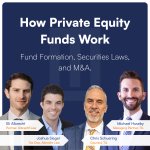
We are hosting a webinar on private equity (PE) funds.
Sign-up link is in the comments 👇
The teams at TIL and Abrecht Law will cover the following:
✅ A clear breakdown of how private equity funds are structured
✅ The typical lifespan of a PE fund — and how it ends
✅ What’s new in fund formation: 506(c) and open-end PE
✅ How to structure your LOI and win deals
✅ Optimizing tax structure (to save everyone money)
✅ Market trends in lower-middle-market PE
This session is perfect for:
Fund managers, business owners, lawyers, LPs, and anyone navigating the fund formation or M&A space.
Details:
📅 Date: April 23, 2025
⏰ Time: 9:00am PT | 12:00pm ET
📍 Location: See below in the comments
@elialbrecht @JoshuaASiegel
@investing_law @Chris_Schuering

M&A Monday: The Power and Risk of the Earnout
M&A Monday: The Power and Risk of the Earnout
Many PE and Independent Sponsor deals use an Earnout (many Searcher deals funded by SBA 7a debt have forgivable Notes). Earnouts are not allowed in SBA 7a funded deals (for a deep dive into the mechanics of forgivable notes see nitter.cf/Eli_Albrecht/status/17…; and how to get a seller comfortable: elialbrecht.substack.com/p/m…).
This post will discuss the Earnout, when to use it, tips for constructing an Earnout, common negotiation points, and a warning for those inclined to deploy the Earnout.*
The Earnout is a portion of the purchase price that is not paid at closing, rather at a future date and contingent on a future occurrence. It can be simple one time payment upon an occurrence or complex based on milestones and multiple future dates.
A. When to use an Earnout. If there is an assumption that impacts the Target’s valuation, but it is unclear whether that assumption is true, consider an Earnout. E.g., Target’s financials are unstable, but Seller wants an offer based on last year’s financials that were 30% above average (e.g., EBITDA averages were 2022: $5m, 2023: $5m, 2024: $6.5m). Or there is a customer concentration issue, but Seller wants an offer based on all those customers staying on after closing. Another example (less common) could be a key employee staying on after closing or even Seller staying on for transition services.
B. Constructing an Earnout. The Earnout should be the amount of purchase price value attributed to the uncertain assumption. Dig down until you hit bedrock – the bedrock should be your non-contingent purchase price, everything above should be Earnout. In our 30% above average financials example, the Buyer should take the average of non-outlier years (let’s say, $5m) and that should be the non-contingent purchase price ($30m (at 6x EBITDA)). Then, take the outlier amount (let’s say, $1.5m) and attribute an Earnout to that amount ($9m (at 6x EBITDA)). The same can be done with key customers, key employees, transition services, or anything else.
C. Key points of negotiation. Adding an Earnout adds about 20% to your negotiations. All of the key aspects of the Earnout will be negotiated: (i) Earnout amount, (ii) measure for the earnout and definitions (e.g., revenue, EBTIDA, gross profit), (iii) threshold for earning the earnout, (iv) when it is calculated, and (v) when it is paid. These terms will have a direct economic impact and are heavily negotiated.
In addition, operating covenants are heavily negotiated. Operating covenants govern how the new buyer can run the business after closing. Buyers hate to be restricted in how they can run the business, but the seller needs to make sure the buyer is maintaining the same level of employees, marketing, expenses (if relevant), and behaving in a way that maximizes the earnout. At a minimum, buyer should be willing to give a covenant stating, they will not take any action [direct/indirect] to decrease [that has the effect of decreasing] the earnout (this single is one of the most heavily negotiated aspects of an earnout) (i.e., business judgment carveout).
Sometimes the consequence of breaching a covenant is the attribution of phantom Earnout (what would the earnout be if the covenants were not breached). Other times, there is a full acceleration of the earnout if a covenant is breached.
Another issue is whether seller can remain in control or at least, involved during the earnout period to ensure the earnout is earned. What if seller is fired during the earnout period? For Cause/leaves with Good Reason?
There are tens of other negotiation points.
A couple of other considerations.
1. Indemnification Offset. The Buyer will want to be able to use any earned Earnout for offsetting indemnifications.
2. Tax point: the purchase agreement should specifically state the Earnout is an increase to the purchase price for the tax benefits of additional purchase price payment. We consult closely with our Chair of Transactional Tax, Josh Siegel on this point.
3. Complexity. Finally, two words of immense caution. First, Earnouts are extremely complex and there are hundreds of variables. If your lawyer is not skilled, this could cost you real money. This also adds about 20% in complexity to your deal and expect it to take longer.
Finally, as a Partner at my prior law firm once told me, an Earnout is a Litigator’s best friend. Be ready to either pay the Earnout or litigate this issue down the road. Save your negotiation discussions and document redlines, because you may need it. If you are engaged in a dispute, you can reach out to our Litigation Group, headed by @RitterLawyer.
*There is great debate about the spelling of the “Earnout”. Some spell Earnout, some Earn Out, or Earn-out. It is just important to be consistent.

A great write up by @RitterLawyer, our Head of Litigation on litigation and fighting corrupt adversaries.
On Charlie Munger, Corrupt Clients, and Lessons from the Universe.
The late Charlie Munger — Warren Buffett’s long-time partner at Berkshire Hathaway — explained he left the practice of law (among other reasons) because he found the most profitable clients were often the worst humans.
They jump into expensive fights for ego-first reasons — frequently divorced from suit economics, rational thinking, and good ol’ fashion right and wrong.
In short, they’re rich, get into lots of trouble, and (at least this particular breed of human) don’t care about right and wrong.
This is very profitable for lawyers and law firms.
Many lawyers — caring about profit over working with nightmarish humans on unjust causes — run with them. These clients undergird many of the largest law firm’s profit numbers.
They also happen to be the must fun lawyers, law firms, and clients to oppose.
The last “international” “Vault 10” law firm I went up against that fit this glove: Head of Litigation & Legal Minions churned $6MM+ in fees, we billed a few hundred thousand. We won.
Show me a corrupt and ego-driven client, and the apple (hired counsel) won’t fall far from the tree.
They cut corners. They lie. They make mistakes. Pound the table for unjust and unlawful causes.
But their chase of the unjust makes them vulnerable.
This breed of humans (lawyers and clients) behave in ways that make them primed, across many attack vectors, to be on the receiving end of a hard lesson from the Universe.
Is it always easy? No. Is it rewarding? If you care about clients and causes, immeasurably. Is it profitable to fight them? It can be, for both the client and lawyer.
Lawyers get the clients they deserve; clients get the lawyers they deserve.
Same with dating, friends, and marriage — usually. You tend to attract what you resonate.
Because as goes life, so goes law.
2
96
M&A Monday: the Importance of a Litigator in M&A and Common Issues Post-Closing
M&A Monday - The Importance of a Litigator in M&A and Common Issues Post-Closing
This post is co-posted with @RitterLawyer, our new Chair of Litigation. You can DM him with questions.
We do M&A deals and tax structuring, so why did we add a Litigation Group led by Travis Ritter, an experienced commercial litigator?
The ugly truth is many M&A deals have post-closing disputes - some small and some significant. This is even more prevalent in small deals and we have seen them a fair amount. Getting a litigator involved early helps to avoid significant and more costly issues in the future.
Here are some of the issues in our deals -
1. Breach of Covenants. In a deal we did last year, after closing, a seller started soliciting customers, competing, and disparaging the business – all restricted by the provisions of the purchase agreement. We immediately brought in a litigator and demanded recourse. In addition to the seller ceasing, we also reduced the promissory note by the amount of losses the seller caused due to our offset provisions.
2. Misrepresentations. This may be the most common post-closing issue. In the purchase agreement seller makes promises about what is true about the business (nitter.cf/Eli_Albrecht/status/18…). In a deal we closed, the seller represented that employee’s salaries were $ X and no employee had been promised a raise. We found out post-closing that the most key employee had been promised a raise. We have uncovered tons of misrepresentations after closing, including misstating inventory, AR, litigation, and even their ownership of equity (there was a co-founder).
3. Fraud. In more rare circumstances, the seller fraudulently misstates something. On one deal, the seller was paying employees cash under the table and paying for the employee’s home leases. This reduced expenses and boosted EBITDA by almost $1m. We brought in a litigator and multiplied $1m by the going-in multiple to equal a $5m loss (not including attorney’s fees and other damages). Once the seller received the lawyer letter, they conceded quickly.
4. Earnout and contingent payments. As a partner at my prior firm said, an earnout is a litigator’s best friend. Contingent payments (earnout, forgivable note) are almost always disputed. We represented a seller who was denied their earnout. We litigated on behalf of the seller to recover what was due to him.
5. Employment Issues. There are tons of employment issues after purchasing a business. Recently, a buyer took over and the employee immediately threatened a discrimination lawsuit.
These issues can get very complex. Combining the power of a litigator and the knowledge of a skilled M&A and tax team is the best combination for post-closing disputes.
If you raise these issues to a litigator early, the cost is often lower and can result in real money being recovered. Often some guidance and strategy brainstorming helps to guide a dispute to a successful resolution.
If you have any questions regarding M&A or other commercial litigation, you can contact Travis Ritter, Chair of Litigation at Albrecht Law.

At Albrecht Law, @JoshuaASiegel works with each client on their tax structuring.
If you are thinking of selling a business then you should be thinking of tax planning in parallel. Sell-side tax structuring can be one of the highest ROIs from a professional service standpoint. It’s never too early to begin sell-side tax planning. Longer lead times, generally equal more flexibility.
@Albrecht_Law
118
On behalf of Partners, @elialbrecht (M&A) and @JoshuaASiegel (Transactional Tax), we are excited to announce the launch of our Litigation Department led by @RitterLawyer.
Travis handles a range of litigation and disputes for businesses with a particular focus on post-closing M&A disputes. Travis will launch the Litigation Group at Albrecht Law and our Miami, Florida office.
Former Boies Schiller Litigator Joins Albrecht Law to Launch Litigation Group
I am incredibly excited to welcome Travis Ritter (@RitterLawyer) to @Albrecht_Law Law to launch our Litigation Department. Travis is a brilliant litigator and the person our clients want in their corner for their disputes. Travis worked for two leading commercial and trial law firms, clerked for federal appellate and trial court judges, and founded a PE firm.
Travis handles a range of litigation and disputes for businesses with a particular focus on post-closing M&A disputes. Travis will launch the Litigation Group at Albrecht Law and our Miami, Florida office.
***
The Litigation Group, led by Travis, gives our clients access to a razor-sharp litigator and allows us to serve our clients in their M&A transactions, tax structuring (led by @JoshuaASiegel), and any issue that arises during the life of running their business. Our team now has a breadth of understanding of your business, corporate transactions, tax issues, and litigation that is unusual even among the most sophisticated, largest law firms in the country.
Clients and colleagues love working with Travis. “Travis is a rare deep genius, and one of the hardest workers. He gets results. I have experienced his transformative work firsthand.” Luis Suarez, Founding Shareholder of Heise Suarez Melville PA & Former Equity Partner at Boies Schiller Flexner.
Travis handles a range of litigation and pre-dispute counsel for companies and individuals across the country. Travis has a particular focus on supporting our clients in post-M&A disputes (i.e., indemnification claims and breaches), and post-acquisition business litigation.
Travis honed his skills as a hired gun litigating high-stakes cases, including representing America’s largest companies in business disputes, law firms in bet-the-firm malpractice cases, individuals in partnership disputes, a cigarette company at trials, a gun manufacturer in defect cases, as well as individuals and businesses in various non-compete and employment matters.
He also clerked for federal appellate and federal trial court judges, where he worked on a wide range of criminal and civil matters, including death penalty cases.
Albrecht Law is laser-focused on building a team of people who are the absolute best at their craft. Our clients deserve the same top-notch legal minds as Wall Street private equity groups. Travis is one of those brilliant practitioners.
Travis is licensed in Florida and based in Miami.
Please reach out to me directly (or to Travis) to schedule some time to meet him and discuss how he can support you.
***
Albrecht Law is a full-service boutique M&A, Tax, and Litigation law firm, focused on exceptional client service.
We represent Private Equity, Independent Sponsors, Searchers, and Companies through the deal process and beyond, including as fractional general counsel, transactional tax (tax structuring and tax diligence), and tax opinions.
Welcome, Travis Ritter, to Albrecht Law, we are honored to have you.

This M&A Monday is how @JoshuaASiegel and the rest of the Albrecht Law team achieved an incredible result for our sell-side client and a win-win structure.
We always strategically and aggressively advocate to structure the best possible deal for our clients. @elialbrecht and I love to have happy clients!!
@Albrecht_Law
140

Albrecht Law is proud to announce the closing of the sale of a lumber company.
@JoshuaASiegel

As of today, BOI reporting is still on hold and entities are not required to file.
Despite the Supreme Court ruling yesterday in the Texas Top Cop Shop, the Smith case still remains in place.
FinCen issued updated clarity that BOI is still on hold.
Despite some reports that BOI was back in effect, as I said yesterday, the BOI IS CURRENTLY STILL ON HOLD.
FinCen reported today that Companies are not currently required to report. This is because of the Smith case, which remains unresolved.
nitter.cf/Eli_Albrecht/status/18…
