






Alexander Karollus retweeted

Extra non-commercial API quota request: forms.gle/ftBfHGH7NUrCZEjN6
Commercial API is rolling out on Google Cloud, currently in private preview.
Model weights & AG2 Skills in Antigravity will be released in the future.
Huge thanks to the @GoogleDeepMind team, early testers & data consortia!

Alexander Karollus retweeted

Most genetic variants linked to human disease sit outside genes and act only in specific cell states.
Today we are sharing AlphaGenome 2 to help connect those variants to the cells and genes driving disease.
Preprint: storage.googleapis.com/deepm…
Blog: deepmind.google/blog/alphage…

RT @pushmeet: I’m very pleased to introduce AlphaGenome 2, @GoogleDeepMind’s next-generation genomics model that deciphers how DNA changes…

Alexander Karollus retweeted

Single-cell atlases continue to map the diversity of cell states, but how can we use them to interpret non-coding genetic variants?
Excited to share AlphaGenome 2, our model for predicting cell-type-specific regulatory activity and variant effects from DNA sequence.
deepmind.google/blog/alphage…
Alexander Karollus retweeted
AlphaGenome is out in @nature today along with model weights! 🧬
📄 Paper: nature.com/articles/s41586-0…
💻 Weights: github.com/google-deepmind/a…
Getting here wasn’t a straight path. We sat down @googledeepmind to discuss the story behind the model, paper & API: youtu.be/V8lhUqKqzUc

Alexander Karollus retweeted

I'm excited that our paper, "scooby: modeling multimodal genomic profiles from DNA sequence at single-cell resolution," has been published in Nature Methods! scooby is a new deep-learning framework to understand how DNA sequence shapes gene expression in individual, single cells.

Alexander Karollus retweeted
Happy to share that Flashzoi is now published!
We enhanced Borzoi with RoPE & FlashAttention for >3x faster training/inference & 2.4x reduction in memory usage.
This brings large-scale genomic analysis and fine-tuning within reach of academic budgets.
📄: doi.org/10.1093/bioinformati…

Alexander Karollus retweeted

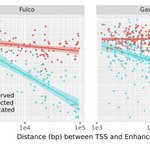
Excited to share #AlphaGenome, a start of our AlphaGenome named journey to decipher the regulatory genome! The model matches or exceeds top-performing external models on 24 out of 26 variant evaluations, across a wide range of biological modalities.1/6

Alexander Karollus retweeted
Introducing Flashzoi⚡! We’ve upgraded the Borzoi model with rotary pos. encodings and FlashAttention, resulting in a 3x speedup with similar or better accuracy for faster variant effect prediction or model development, and more efficient genomic analysis biorxiv.org/content/10.1101/…

Alexander Karollus retweeted

Excited to share our preprint: Efficient Inference, Training, and Fine-tuning of Protein Language Models! ⚡We introduce advanced techniques to make large protein models accessible to more researchers. Read it here: doi.org/10.1101/2024.10.22.6…
Alexander Karollus retweeted

Information leakage due to homology: A pervasive and non-trivial issue in bioinformatics. Excited to hear about @muntakim_rafi's insights and recommendations for sequence-based modeling on Wednesday at the Kipoi seminar.

Join us for the next Kipoi Seminar with with Abdul Muntakim Rafi (Rafi) @muntakim_rafi @CarldeBoerPhD @UBC!
👉Detecting and avoiding homology-based data leakage in genome-trained sequence models
📅Wed Nov 6, 5:30pm CET
🧬tum-conf.zoom.us/meeting/reg…
Alexander Karollus retweeted

Excited to present “scooby”, which models multi-omic profiles (scRNA-seq coverage & scATAC-seq insertions) directly from 500 kb DNA sequence at single-cell resolution. This was a fantastic collaboration co-led with @thisisjohahi.
biorxiv.org/content/10.1101/…

Alexander Karollus retweeted

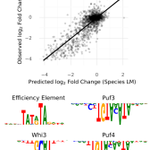
Have you ever wondered what the genome looks like through the eyes of a DNA language model? In our newest preprint we use DNA LMs to study nucleotide dependencies in the genome, revealing functional elements, characterizing variants and evaluating DNA LMs tinyurl.com/6wbwjaf4

Alexander Karollus retweeted

Hope you are ready for our kick-off meeting #MunichRNA21F! Come and hear the great research by @shu_bhayankar from @ProtzerLab and @AlexKarollus from @gagneurlab . See you very soon!
📅21F 3pm
📍@HelmholtzMunich

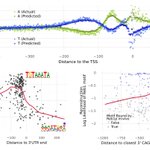
Cracking the regulatory code: We have genomes for 1000s of species, but ENCODE only for 2 – what do we do? Natural language models have shown that syntax and semantics can be learned from text alone. Can we do the same for genomes?⬇️
biorxiv.org/content/10.1101/…

Finally, our models have learned representations that can boost supervised learning. In fact, we outperform SOTA on gene expression and mRNA half-life tasks using simple regression on the last layers embeddings.

1
4
770