

Follow for AI in the Life Sciences @NVIDIA, ex Insilico Medicine, ex Yale, PhD UMaryland, views are mine, DM for collabs
Boston, MA
Joined November 2013
- Tweets10.1K
- Following501
- Followers4.6K
- Likes22.1K





Pinned Tweet
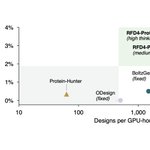
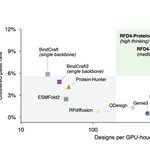
Need compute to compete in protein design competitions like this one?
proteinbase.com/competitions…
RFD4-Proteina is now on Hugging Face with two weeks of NVIDIA-sponsored access. 🧵👇

Kyle Tretina, Ph.D. retweeted

I think others have done this too but here is a quick look at ipSAE vs ipDAE vs ipTM across folding models
ipDAE (BindCraft2) is consistently good, but OpenDDE+ipTM is surprisingly good and this is robust across different thresholds
Consensus doesn't help as much as I expected

Kyle Tretina, Ph.D. retweeted

NVIDIAが作用機序を考慮したAIエージェントによるタンパク質設計手法BindClawを発表しました
生物学的な作用機序を計算アッセイに落とし込み、設計と評価を繰り返します
実験的にカルシウム結合状態のカルモジュリンを選択的に認識するバインダーの設計にも成功しています
ソースリプ🔽
🤖 Made with AI

ALT 概要図は ChatGPTを用いて作成しています。 内容の理解を助けるための要約図のため、構造式、細かな数値や表現、ニュアンスに一部誤りが含まれる可能性があります。 特には構造式は大きく構造が異なる可能性が高いので、あくまでもLLMによる模式図と捉えて下さい。

🚀 Excited to share BindClaw! 🦀
Starting from a prompt or research paper, BindClaw connects biological mechanisms to protein design: identify targets and binding sites → build mechanism-specific computational assays → generate and assess binders → refine designs using the results.
We use agents to evaluate whether designs fit the intended biological objective, including competition with a native partner and preference for a particular molecular state. 🧬
In a human-guided calmodulin campaign, 15 of 18 designs showed binding to calcium-loaded CaM, including subnanomolar binders supported by both BLI and SPR.
This work is an incredible team effort together with @DidiKieran , @saint__ai, @ Kyle Gion and @sacdallago and many others!
📄paper/project: research.nvidia.com/labs/dbr…
💻code: will be released in a few weeks!
Kyle Tretina, Ph.D. retweeted

Time for the biggest drop of the week: auto-optimizations of eleven bioinformatics packages, focusing on read alignment. Each auto-optimization includes: a new unit test suite, the optimizations stacked on top, and a list of issues found during the validation.
Kyle Tretina, Ph.D. retweeted

I encourage protein design tool developers to consider first-class support for apple silicon. My experience with BindCraft has been eye-opening. With a little kernel engineering, an M5 max MBP can hold its own against dedicated NVIDIA cards. Time per full trajectory shown below.

Kyle Tretina, Ph.D. retweeted

Powerful generative models like RFD4-Proteina have a lot of knobs to tune, and agentic frameworks like BindClaw are very good at tuning them! Fortunate to be part of this work lead by the amazing @ChoYehlin!
🚀 Excited to share BindClaw! 🦀
Starting from a prompt or research paper, BindClaw connects biological mechanisms to protein design: identify targets and binding sites → build mechanism-specific computational assays → generate and assess binders → refine designs using the results.
We use agents to evaluate whether designs fit the intended biological objective, including competition with a native partner and preference for a particular molecular state. 🧬
In a human-guided calmodulin campaign, 15 of 18 designs showed binding to calcium-loaded CaM, including subnanomolar binders supported by both BLI and SPR.
This work is an incredible team effort together with @DidiKieran , @saint__ai, @ Kyle Gion and @sacdallago and many others!
📄paper/project: research.nvidia.com/labs/dbr…
💻code: will be released in a few weeks!
Kyle Tretina, Ph.D. retweeted

Language models can learn new tasks from just a few examples in their prompt, with no retraining. This is called in-context learning (ICL). Now genome language models can do it too.
With a handful of examples, Evo 2 ICL generates proteins, de novo antibodies, CRISPR-Cas9 loci, mitochondrial genomes and entire bacteriophages.
We can even use the synthetic sequences iteratively to construct a chain-of-thought (CoT) and achieve harder design goals.
New work with Yukun A. Hao, @BrianHie and team 🧵
Kyle Tretina, Ph.D. retweeted

Prompt to Binders with BindClaw!
🚀 Excited to share BindClaw! 🦀
Starting from a prompt or research paper, BindClaw connects biological mechanisms to protein design: identify targets and binding sites → build mechanism-specific computational assays → generate and assess binders → refine designs using the results.
We use agents to evaluate whether designs fit the intended biological objective, including competition with a native partner and preference for a particular molecular state. 🧬
In a human-guided calmodulin campaign, 15 of 18 designs showed binding to calcium-loaded CaM, including subnanomolar binders supported by both BLI and SPR.
This work is an incredible team effort together with @DidiKieran , @saint__ai, @ Kyle Gion and @sacdallago and many others!
📄paper/project: research.nvidia.com/labs/dbr…
💻code: will be released in a few weeks!
Kyle Tretina, Ph.D. retweeted

Closing the loop from target discovery, to binder design, and computational validation is hard.
BindClaw with RFD4-Proteina allows us to now use agents to tighten and automate this loop.
Through it, we discovered highly state specific binders.
Read: research.nvidia.com/labs/dbr…
🚀 Excited to share BindClaw! 🦀
Starting from a prompt or research paper, BindClaw connects biological mechanisms to protein design: identify targets and binding sites → build mechanism-specific computational assays → generate and assess binders → refine designs using the results.
We use agents to evaluate whether designs fit the intended biological objective, including competition with a native partner and preference for a particular molecular state. 🧬
In a human-guided calmodulin campaign, 15 of 18 designs showed binding to calcium-loaded CaM, including subnanomolar binders supported by both BLI and SPR.
This work is an incredible team effort together with @DidiKieran , @saint__ai, @ Kyle Gion and @sacdallago and many others!
📄paper/project: research.nvidia.com/labs/dbr…
💻code: will be released in a few weeks!
Kyle Tretina, Ph.D. retweeted

Agents plus domain models are more than the sum of their parts. Huge release, congratulations!

Closing the loop from target discovery, to binder design, and computational validation is hard.
BindClaw with RFD4-Proteina allows us to now use agents to tighten and automate this loop.
Through it, we discovered highly state specific binders.
Read: research.nvidia.com/labs/dbr…
Kyle Tretina, Ph.D. retweeted

🎃 All treats, no tricks.
Run RFD4-Proteina on RTX PRO 6000 GPUs on @huggingface, free until Nov 4. You can design proteins in your browser without installing anything. huggingface.co/spaces/nvidia…

Kyle Tretina, Ph.D. retweeted

🚀 Excited to share BindClaw! 🦀
Starting from a prompt or research paper, BindClaw connects biological mechanisms to protein design: identify targets and binding sites → build mechanism-specific computational assays → generate and assess binders → refine designs using the results.
We use agents to evaluate whether designs fit the intended biological objective, including competition with a native partner and preference for a particular molecular state. 🧬
In a human-guided calmodulin campaign, 15 of 18 designs showed binding to calcium-loaded CaM, including subnanomolar binders supported by both BLI and SPR.
This work is an incredible team effort together with @DidiKieran , @saint__ai, @ Kyle Gion and @sacdallago and many others!
📄paper/project: research.nvidia.com/labs/dbr…
💻code: will be released in a few weeks!
Kyle Tretina, Ph.D. retweeted
RFD4-Proteina on HuggingFace, both in Diffusers and interactive spaces to work with, try it out and let us know what you think!

Kyle Tretina, Ph.D. retweeted

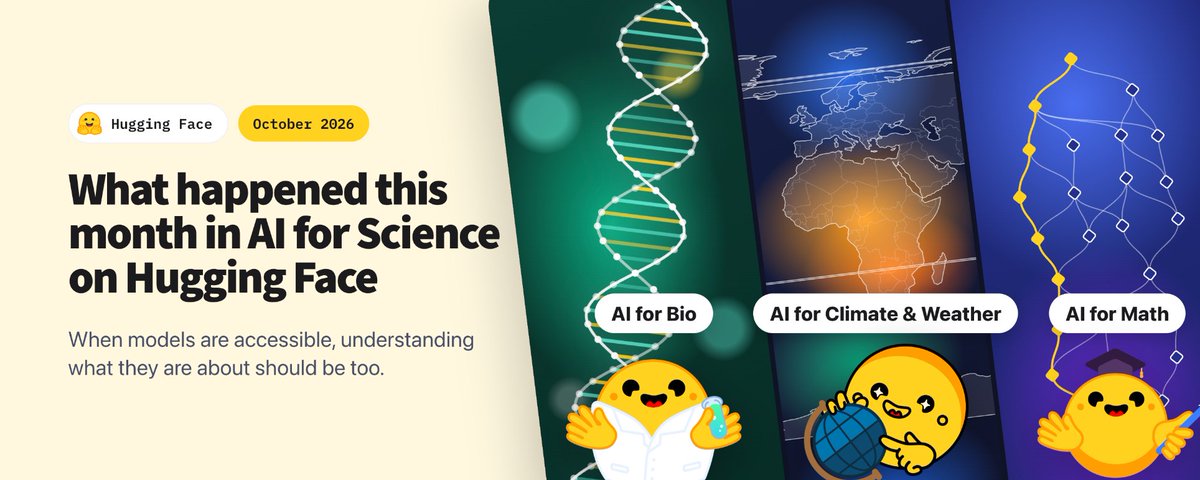
So much happened in AI for Science on the 🤗 Hub this month!
I summarized what these new models and datasets are about, to make them accessible to anyone curious about AI for Science 🚀
Kyle Tretina, Ph.D. retweeted

Introducing Pythia-1, a frontier generative model for protein design.
In our new study, we used it to rapidly design full-length human agonist and antagonist antibodies for hard-to-drug targets.
We’re sharing complete sequences of all lead antibodies to support independent validation and further research. 1/8
Kyle Tretina, Ph.D. retweeted

Introducing Mol-1: Open Frontier Biomolecular Intelligence 🚀🚀🚀
📊 75.0% on FoldBench-AB, near IsoDDE's reported 75.58%!!!
🧬 60k-token assemblies on one single H20, outperforming Anthropic 8/10.
🎯 VHHs binding hit rate as high as 63% with best SPR KD at 43 pM.
GitHub: github.com/molence/Mol-1
Try it: lab.molence.com
Kyle Tretina, Ph.D. retweeted
Previous times included model loading, here's times without model loading


Kyle Tretina, Ph.D. retweeted

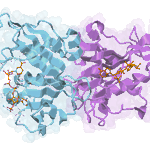
I used RFD4 Proteina to generate putative binders for the CD98hc protein (cyan), a blood-brain-barrier receptor. This binder (magenta) was the highest scoring candidate, with an ipTM of 0.88

Kyle Tretina, Ph.D. retweeted

We built a website to make it super easy to get started with protein design and participate in the Anthropic x Adaptyv protein design competition
▶️ design-a-protein.com
This week, we're challenging people to design an Ozempic-like drug. You can get started in just a few clicks, using the newly released RFD4 model to design proteins targeting the GLP-1 receptor.
We'll synthesize and test 1000+ of these designs in our automated biology lab, including whether they actually activate the cell receptor, and make all the results publicly available
Kyle Tretina, Ph.D. retweeted

AI x bio has had an insane week.
> Radical Numerics: Omnii-1 designed phages given to a human patient
> Claude: 17 scorpion-toxin binders validated in the lab
> OpenAI: acquired Orchestra Bio
> OpenAI + PerturbAI: agents found new neurodegeneration leads in 32 minutes
> RFD4-Proteina: open programmable protein design model
> BioEmu2: new biomolecular simulation model
> Chaperone: agent framework connecting 50+ protein design tools
> Xaira: launched X-Scientist for agentic drug discovery
> Sophont: Holon-S1 predicts gene activity from pathology slides
> Boltz + BMS: bringing biomolecular models into pharma workflows
> Phylo + Bayer: deploying Biomni Lab across research teams
> Kevin Weil, ex-OpenAI, launches Warp Sciences: AI + robotic labs for drug discovery
> Carbon-X: open DNA model its team says matches GPT-6.1 Sol at ~1,000x lower cost
This is happening across the whole stack: models, protein design, simulation, agents, robotic labs, pathology, pharma workflows, and actual patient use. Bio is becoming computer.
