

Global Communications & Social Impact Campaign Strategist.
Nairobi, Kenya
Joined March 2010
- Tweets21.7K
- Following1.2K
- Followers70.9K
- Likes3.1K


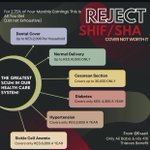


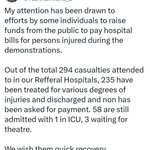


Wait! What did she say again?

Karen Nyamu: I recently tried to help a very staunch campaigner of mine join the police force. Tukakarabati (we forged) a form 4 certificate.
She went to Kiganjo for training, but after investigations, she was arrested for forgery alongside 17 others.
#ThePeoplesBreakfast
#HomeOfHardTruths
@ctmuga & @mungalambuvi
Katusia Angel retweeted

🚨𝐀𝐬𝐤𝐞𝐝 𝐡𝐨𝐰 𝐜𝐨𝐮𝐧𝐭𝐫𝐢𝐞𝐬 𝐜𝐚𝐧 𝐥𝐞𝐚𝐫𝐧 𝐟𝐫𝐨𝐦 𝐞𝐚𝐜𝐡 𝐨𝐭𝐡𝐞𝐫, 𝐚𝐧𝐝 𝐜𝐢𝐭𝐢𝐧𝐠 𝐡𝐨𝐰 𝐞𝐯𝐞𝐫𝐲 𝐜𝐨𝐮𝐧𝐭𝐫𝐲 𝐰𝐚𝐧𝐭𝐞𝐝 𝐢𝐭𝐬 𝐨𝐰𝐧 𝐯𝐚𝐜𝐜𝐢𝐧𝐚𝐭𝐢𝐨𝐧 𝐜𝐞𝐧𝐭𝐫𝐞 𝐚𝐟𝐭𝐞𝐫 𝐂𝐎𝐕𝐈𝐃 𝐢𝐧𝐬𝐭𝐞𝐚𝐝 𝐨𝐟 𝐮𝐬𝐢𝐧𝐠 𝐫𝐞𝐠𝐢𝐨𝐧𝐚𝐥 𝐡𝐮𝐛𝐬, 𝐃𝐫. 𝐌𝐚𝐫𝐲-𝐀𝐧𝐧 𝐄𝐭𝐢𝐞𝐛𝐞𝐭, 𝐏𝐫𝐞𝐬𝐢𝐝𝐞𝐧𝐭 𝐚𝐧𝐝 𝐂𝐄𝐎 𝐨𝐟 𝐕𝐢𝐭𝐚𝐥 𝐒𝐭𝐫𝐚𝐭𝐞𝐠𝐢𝐞𝐬, 𝐫𝐞𝐬𝐩𝐨𝐧𝐝𝐞𝐝:
📌 Countries need to learn from each other. Her approach is to "create the space and get out of the way."
📌She linked this to sovereignty. A Vital Strategies report, Foundations and Futures, looked at how well countries across the Global South are building their foundations.
📌From an AI policy perspective, she said she thinks less than half of the countries on the continent have a specific AI policy for health.
📌Without that policy, it is hard to answer how data is protected, and how to think about data sovereignty and data privacy.
📌Policy making must include the public. There should be no policy without the public.
📌Citizens must hold governments accountable for including the public in policy making and policy formulation.

🚨𝐕𝐈𝐃𝐄𝐎: Speaking at the #AHTS2026, which kicked off yesterday,@TeamIrembo CEO @israb12 spoke about the role of digital public infrastructure in health:
📌It rests on three layers: digital identity, digital payments, and the data exchange layer, where things get complicated.
📌Every Rwandan citizen has a digital identity, which is being scaled up into a single digital identity.
📌Payments are digitized, with a national switch and the success story of mobile money.
📌The data exchange layer needs base registries. In healthcare, that means a registry of every provider and a codification of every health facility, the entire health pyramid.
📌Clinical conditions and drugs must also be codified, so the data collected is properly structured and can be used.
📌#Rwanda is creating a health information exchange. The government has one electronic medical records system for all health facilities, while private and big facilities have their own.
📌The government is the largest insurer through community based health insurance, covering 98% of citizens.
📌Private insurers have their own rules and mechanisms. All these systems must talk to each other.
📌Patients have a right to know what they have, when and where they were treated, what was found and recorded, and who is using their data for research or other purposes.
📌Patients must be able to give or withdraw consent, whether it is perpetual or lasts two weeks.
📌At Irembo, about 60 institutions deliver government services. Each has its own ERP and a different digital maturity, but the citizen should have one experience.
📌Rwanda went paperless in public health facilities a couple of months ago. This is the "zero trip, zero paper" principle, where data is input once. With 95 plus percent of births at hospitals, this matters.
📌"Leave no one behind" means access for people in cities using smartphones, people in rural areas using USSD or voice, and people with visual impairment.
📌At #UNGA81 last week, @TeamIrembo joined the Gates Foundation to build language models that work in local languages.
Katusia Angel retweeted

MY REFLECTIONS ON THE KENYA HEALTH SUMMIT 2026
I listened keenly to the Presidential Town Hall at the Kenya Health Summit yesterday. There are achievements in the health reforms that deserve acknowledgement. However, a Health Summit must not become a SHA praise forum. It must also provide an honest account of what is not working and, most importantly, what will be done about it.
The fundamental purpose of any social health insurance system is simple: to enable people to access healthcare when they need it without being pushed into financial hardship.
That must therefore be the test by which we judge SHA—not merely the number of people registered, the number of claims processed or the billions reportedly paid to hospitals.
My concern is that many Kenyans are still experiencing significant out-of-pocket expenditure, while healthcare providers continue to face serious financial strain.
There are several issues that the Government must confront honestly:
1. The cost of healthcare to households
Universal Health Coverage should progressively reduce catastrophic health expenditure. Yet Kenyan households are simultaneously carrying multiple statutory deductions and taxes that reduce disposable income, including the Housing Levy and SHA contributions.
The SHA contribution model also deserves continued debate. Contributions are tied to income, while the benefits available to members are defined and limited. We must continually ask whether this financing model is equitable, sustainable and actually protecting households from catastrophic expenditure.
2. The benefit package remains inadequate
The gazetted SHA tariffs and benefit packages contain significant exclusions and limitations. For many patients, particularly those requiring outpatient, chronic, specialised or prolonged treatment, the amount payable by SHA may not meet the actual cost of care.
When the insurance benefit ends, the disease does not end. The patient pays the difference.
That is not yet universal financial protection.
3. Digital Health Authority challenges
Digitisation can greatly improve healthcare, and I support appropriate digital transformation. But technology must facilitate healthcare—not become another barrier to accessing or paying for it.
Providers continue to report system interruptions, difficulties with pre-authorisations and claims rejected for reasons they consider unjustified. A healthcare worker may examine a patient, make the diagnosis, provide treatment and submit a claim—only for a digital system to reject payment.
Every rejected claim represents work already done, medicines already used and costs already incurred by a healthcare facility.
4. The NHIF legacy debt remains unresolved
Hospitals treated patients in good faith under NHIF. That debt did not disappear when NHIF was replaced by SHA.
We have repeatedly been told that claims are being verified. Meanwhile, some facilities are reportedly being asked to accept discounts or “haircuts” on legitimate historical claims.
These debts must be settled.
Failure to pay providers has real consequences: facilities downscale services, suppliers go unpaid, healthcare workers lose jobs and, in some cases, facilities close.
Ultimately, it is the patient who suffers.
5. SHA itself is accumulating unpaid obligations
Government should publish, transparently and regularly, how much SHA has collected, how much has been claimed, how much has been approved, how much has been rejected, how much has actually been paid and how much remains outstanding—broken down by public, faith-based and private facilities.
Transparency builds confidence.
6. PHC and chronic and critical illness financing remains inadequate
For FY 2026/27, Parliament allocated KSh19.1 billion to the Primary Healthcare Fund and KSh4 billion to the Emergency, Chronic and Critical Illness Fund.
We must ask whether these amounts realistically correspond to the healthcare needs of more than 50 million Kenyans.
Cancer, renal disease, cardiovascular disease, diabetes, major trauma and other chronic and critical illnesses are expensive. Universal Health Coverage cannot be achieved by promising comprehensive care while inadequately financing the funds expected to purchase that care.
The Government should therefore resist the temptation to measure SHA’s success by how often we say, “SHA is working.”
The more challenges a system has, the less useful it becomes to repeatedly defend it with slogans.
The better approach is to say:
This is what is working.
This is what is not working.
This is what patients are experiencing.
This is what healthcare providers are experiencing.
And this is what we are going to fix.
I want SHA to succeed because Kenya desperately needs a functional social health insurance system.
Criticism of SHA is therefore not opposition to Universal Health Coverage. It is a demand that Universal Health Coverage actually works.
A successful SHA will ultimately be judged not by the applause at a summit, but by something much simpler:
Can a Kenyan fall sick, receive the healthcare they need, have the healthcare provider paid promptly and fairly, and return home without being pushed into poverty?
That should be our measure of success.
Dr Simon Kigondu
Immediate Past President
@KenyaMedics_KMA

Has anyone actually received a title deed for an Affordable Housing unit? Or do you know someone who has?
Asking for myself. Genuinely curious.
1
782
Transparency in Kenya = 0. Free and fair elections means transparency in every process! Who proposed this bill? The people’s enemy!

A new Bill has been proposed that seeks to stop the IEBC from livestreaming election results from polling stations.
If passed into law, Kenyans will no longer be able to follow the results live as they are announced at polling stations.
829
Katusia Angel retweeted

I respect politicians and their trade!
But to propose that Community Health Promoters should become politicized party agents of whichever party is WRONG and not to be entertained - in fact, should be condemned @WilliamsRuto

When do we expect the completion of the other centres? Where are they located? @HonAdenDuale


174
Katusia Angel retweeted

Public Health 101:
We treat and quarantine at source.
The proposed facility should be built and maintained at source, in the DRC, where the outbreak risk exists and where response capacity is most urgently needed.
Outbreaks are managed at source using tried and tested public health measures: surveillance, isolation, contact tracing, diagnostics, PPE, trained personnel, community engagement, safe transport systems, and accountable emergency coordination.
Preparedness is not the importation of confirmed, infected, or exposed patients into a population that has not consented to carry that risk.
Preparedness is building capacity where the threat exists, protecting affected communities, and ensuring that neighbouring countries are not turned into holding grounds for geopolitical convenience.
America is trying to rewrite international infectious disease preparedness by pretending that importing exposed patients into Kenya is the same as strengthening preparedness.
#EbolaVirus

Uganda and DRC have capability to handle Ebola, they have done it before! Why is Kenya taking in Ebola patients?
Why is there no transparency in this deal?
Countries denied the hantavirus patients in a cruise to dock & get into their country? Whats different with this deal?


Katusia Angel retweeted

In the dailies
A shocking new deal has just been exposed and it involves importing one of the deadliest viruses on Earth directly onto Kenyan soil. Why did the government secretly agree to this and what are they not telling the public?
Hosts:@nduokoh & @dennisaseto
Producer:@EverlyneMungai
#TheSituationRoom
Are we prepared for anything? Why allow an Ebola quarantine center in a country that has not reported any case at all? Why! Who thinks in this country?


82

This message can be better! What time? On what ?From where? What do you want your audience to do with this information!

If this is true, as a country we are doomed!

Matatu sector leaders were each given KSh 500,000 in a quiet deal reportedly facilitated through Governor Sakaja.
With about 30 leaders involved, the total payout is said to be around KSh 15 million.
I am also told flight tickets have been booked for them to travel to Mombasa for a meeting with President William Ruto.
359


We have a problem as a country! We are dealing with fuel price crisis and this is the direction we are going?

Kipchumba Murkomen: When I was in the Senate, I was a very serious critic of the way oil prices were handled by the government. I see my clips going around online,no lives were lost, and we never organized protests. Why did transport stakeholders not protest when Uhuru Kenyatta was president? They did not protest then. I am proud of the statements I made in the Senate then.
#FuelPrices