

This account is no longer active. You can now find us on Bluesky - https://nitter.cf/t.co/oR9vwn2IZ3.
- Tweets1.2K
- Following247
- Followers227
- Likes234









ALT On a pink background, there are two speech bubbles in white with a blue outline. Above the first speech bubble it says: 'What we say' in blue bold print. Underneath is a bubble saying "I'm fine." Below that in blue bold print it says 'What we mean'. Underneath is a speech bubble containing the following words in various sizes "overwhelmed, anxious, stressed, fed up, struggling, scared, tired, nervous, embarrassed."


ALT Collage of 4 photographs. Albert Memorial, Manchester by Francis Frith & Co., c1870. From Manchester, VPH.9. Brewery Women, Coopers and Cask Cleaners, Manchester by Arthur Reavil, 1914-18. From Women's Work in Wartime, VPH.5. Fireplace at Dawpool, Thurstaston. by Henry Bedford Lemere, 1896. From Intérieurs Anglais, VPH.6. Llandudno by Roger Fenton, c1850s. From English architecture and landscapes, VPH.7


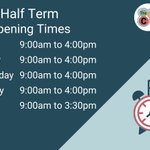
ALT The Learning Centre is open this half term. Monday to Thursday 9am to 4pm and Friday 9am to 3.30pm.


ALT Christmas opening times. We are closed from 12pm on 2oth December and reopen on 2nd January 2024. On the 2nd and 3rd of January we will be open from 9am to 4pm. Merry Christmas to you all.

ALT The Learning Centre half term opening times are Mondays to Thursdays from 9am to 4pm and Fridays from 9am to 3.30pm. This includes Thursday 19th and Friday 20th October.

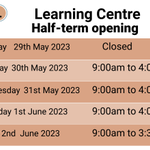
ALT Learning Centre Half-term opening Monday 29th May 2023 Closed, Tuesday 30th May 2023 to Thursday 1st June 2023 open 9.00am to 4.00pm, and Friday 2nd June 2023 open 9.00am to 4.00pm

ALT Tips to be exam ready. Combining self belief with active revision can help you to be exam ready. The image includes an arrow, indicating there are more images in the post.

ALT Believe in yourself. Successful revision is all about repetition, practice, correcting mistakes, and filling in the gaps. Anyone can do these things if they take a chance on themselves. There is an icon of a smiley face making a thumbs up. There is also an arrow, indicating there are more images in the post.

ALT Use active revision - pull information from your memory. Don’t just reread your textbooks and notes! Divide a sheet of paper into two columns. In the first column, write questions about the topic you’re revising. In the second use your textbook and notes to write answers to the questions. Cover the answers, what can you recall? Uncover them to see what you’ve got right and what you missed. Repeat recalling the information at increasing time intervals.

ALT Other active revision techniques to try. Past papers - test yourself by writing plans or full answers. Try first without looking at your notes, to get an idea of which areas need more work. Then with your notes, planning your answers. Finally, without your notes. Flashcards - write a topic on the front of the card and condensed notes on the back, or a question on the front, and the answer on the back, or a term on one side and definition on the other. Before turning the card, see what you can recall from memory. Mindmaps - make connections between ideas. Use colour and images to aid memory and diagrams for processes and cycles. Don’t just look at it, test yourself! Can you recreate it from memory?

ALT A post promoting Autism Awareness Month (April), and highlighting new titles available in our library. The book covers shown are: ‘M in the Middle: Secret Crushes, Mega-Colossal Anxiety and the People's Republic of Autism’, by Vicky Martin, ‘A Boy Called Bat’ by Elana K Arnold, ‘Christine McGuinness: A Beautiful Nightmare’, and ‘M Is For Autism’ by Vicky Martin.


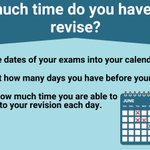
ALT How much time do you have left to revise? Write the dates of your exams into your calendar. Work out how many days you have before your exams. Decide how much time you are able to allocate to your revision each day. There is an arrow indicating there is another image.

ALT How much time are you able to allocate to your revision each day? Add your daily commitments to your calendar. Think about college, work, eating meals, hobbies, sleeping etc. Work out what time you have remaining for revision. Divide the time into short revision blocks of about 30 minutes each. Be realistic about the time you will commit to revising and remember to include breaks between sessions. There is an arrow indicating there is another image.

ALT Identify revision blocks for each of your subjects. Share the revision blocks between each of your subjects. Prioritise your revision by working which of your subjects and topics need more of your time. Use tutor feedback, previous assessments (including self assessments), and course specifications to help you decide which topics need more time. Don’t forget to make some time for your stronger topics too. There is an arrow indicating there is another image.

ALT When planning your revision blocks: Try to make time to revise topics more than once. Ideally, have a plan that covers all of the topics and then has refresher sessions for each. Write the topics on the blocks, scheduling the topics you find challenging for times in the day when you know you work best. Build in time to review how your revision is going, so you can adjust things as needed. There is a thumbs up icon, indicating that this is the last image in the post.


ALT Table showing the opening times, which are Monday 3rd April to Thursday 6th April 9.00am to 4.00pm, Good Friday 7th April and Easter Monday 10th April closed, Tuesday 11th April to Thursday 13th April 9.00am to 4.00pm and Friday 14th April 9.00am to 3.30pm.


ALT Promoting International Women’s Day 8 March with #EmbraceEquity. Explore resources in the library, including ‘I am Malala’, Victoria Pendleton ‘Between the Lines’, ‘Becoming’ Michelle Obama, and Laura Bates ‘Girl Up’.