

Avicennian | Ḥanafī Sunnī | MB ChB
Joined July 2023
- Tweets13.3K
- Following221
- Followers2.3K
- Likes20.9K





Pinned Tweet
In sha Allah, once I finish my medical degree I hope to complete the Dars-e-Nizami at a local madrasah and fund the studies myself. I’ve had a look, and there are several madāris in my city that actually offer it, so hopefully I’ll have the opportunity to study it one day. And of course I plan to continue studying logic and philosophy alongside it.
The Non-DS Muslim will never, not even until the day of judgement, be able to rebut the Non-DS Trinitarian. More on this coming soon in my forthcoming article on 'Deconstructing Orthodox Trinitarianism with Avicennian Metaphysics'...

Out of curiosity I asked Grok to analyze the last Triad debate- amazing accuracy
“Jay’s strongest line, and the one that landed hardest in the February twenty twenty-four Trinity versus Tawhid debate, was the counting argument. Jake affirms real, distinct attributes that are inseparable from Allah’s essence but not identical to it. Jay’s move: that means Jake is counting by both identity and division simultaneously — the same two-step he accuses Trinitarians of — so by Jake’s own standard, Athari theology collapses into the very composition it condemns. That was scored as Jay’s single highest-value exchange.
Second, Jay attacked Jake’s nominalism from below: if universals are purely mental and there’s no empirical access to necessity, being, or cause, then Jake’s entire metaphysical vocabulary — Tawhid included — is ungrounded. You can’t predicate “one” or “distinct” or “inseparable” about God if those terms have no real content outside the mind.
Third, the composition charge: real eternal attributes that aren’t the essence itself makes Allah a composite, which directly contradicts the doctrine of divine simplicity that even classical Sunni theology leans on.
Jake’s best counter was a dilemma — Jay can’t call the attributes both meaningless and anthropomorphic at once. But Jay’s framework objection about hypostatic properties versus powers, and his appeal to Maximus and Damascus that universals are created while God isn’t, gave him the sharper edge on the day.
If they met again, I’d expect Jay to reopen the criteria problem — how does the fitra tell you which self-evident truths are actually self-evident without circularity? That’s the one Jake never fully closed.”
Armour retweeted

I’m not Ash’ari but the Taymi view of divine speech you believe in is far worse than the Ash’ari view. The Ash’ari view is philosophically coherent because speech requires meaning that’s being communicated and the Ash’aris properly distinguish between the uncreated meaning and its created linguistic expressions. But you guys reduce meaning and speech to the linguistic expression only but then you also affirm that God’s sounds and letters are unlike ours; so divine speech for you remains unintelligible and inaccessible and yet it is also temporal yet uncreated which is a silly idea.

With all respect, this is the problem with the Ash’ari school.
“We believe Allah speaks!” But what they really mean is speech used in an idiosyncratic meaningless way.
“We believe Allah’s actions are successive” But what we really mean is that the created effects are successive while God himself doesn’t act in succession.
“We believe the Quran is uncreated!” But what we really mean is that the Arabic Quran we recite is created, what is uncreated is this thing called “internal speech” that is not comprised of letter or sound.
If you will disagree, do so with manners in the comments. Thanks
Not a single response from any Taymiyyan. I think they silently acknowledge that creation ex materia is one of Ibn Taymiyyah's most rationally indefensible doctrines, on top of not even being supported by any scripture or Salaf.

Ibn Taymiyyah on Creation ex Materia
I remember reading this book a few years ago, and I have no doubt that Ibn Taymiyyah’s account of creation is confused and counterintuitive.
Ibn Taymiyyah holds that God perpetually creates, such that every temporally originated thing or hādith, is preceded by another originated thing or muhdath. Upon corruption, the preceding thing, including its matter and form, are annihilated, and God creates another thing. He rejects the philosophers’ doctrine of an eternal material substrate underlying generation and corruption.
He attempts to answer both the philosophers and theologians. To the philosophers, he says that no particular created existent is eternal, although the genus of creation is eternal, thereby avoiding what he considers their 'heretical' doctrine of eternal creation.
Against the theologians, he rejects their argument from the temporal origination of bodies or hudūth al-ajsām. The theologians maintain that the series of originated things or hawādith must be finite and terminate in a first creation, Ibn Taymiyyah maintains that this series extends infinitely with no first.
But his reasoning makes no sense for several reasons.
Firstly, his belief that matter and form are annihilated together upon corruption fails to answer the philosophers’ argument from the principle kullu hādith masbūq bil-māddah, every temporally originated thing is preceded by matter. The argument is that the possibility of temporal origination must either exist or not exist. If it does not exist, then there is no real possibility for the thing to originate, rendering its origination (metaphysically) impossible. But possibility, understood as real potentiality, cannot subsist independently, since it is an attribute requiring a subject, we call this subject matter. Therefore, every temporally originated thing requires prior matter.
If Ibn Taymiyyah holds that both matter and form are annihilated upon corruption, then the potentiality for the subsequent origination of another existent is also annihilated, making its origination metaphysically impossible. If he responds that its possibility is grounded in God’s creative agency and its intrinsic possibility, this is merely the theologians’ position, which undermines his own argument that creation must perpetually be generated and corrupted. His doctrine of creation ex materia is therefore redundant.
Secondly, there appears to be no compelling positive argument for perpetual creation within Taymiyyan metaphysics. One of the philosophers’ main arguments for the eternity of the universe is from divine immutability and the principle that a complete cause necessitates its effect, if God is eternally and immutably the complete cause of the universe, He must eternally necessitate His effect, viz. the universe.
But Ibn Taymiyyah rejects this. He holds that God undergoes real change, temporal accidents subsist in the divine essence, and that God acts in genuine temporal succession. The upshot of this is that he cannot use the philosophers’ argument from an eternally complete, immutable cause. He also can't use their argument from the necessity of prior matter.
What argument, then, remains for perpetual creation? Ibn Taymiyyah may appeal to divine perfection, in some places he claims that perpetual activity is more perfect than inactivity. But Ibn Taymiyyah's notion of perfection here is completely arbitrary and ad hoc, with no demonstration or burhan. In other works Ibn Taymiyyah makes similar ad hoc 'arguments from perfection', e.g. when he argues that the capacity to laugh is a perfection and therefore belongs to God because 'a being that can laugh is more perfect than one that cannot'. These 'arguments' presuppose a notion of perfection that is completely unjustified and asserted by Ibn Taymiyyah as 'self evident', when they are in fact not, and require burhan. Why is an eternally creating God more perfect than one that began creating? (1/2)
The theologian can simply dismiss these 'arguments from perfection' and maintain that we know creation began temporally due to their proofs, and Ibn Taymiyyah does not have a rejoinder to that.
Finally, Ibn Taymiyyah rejects the philosophers’ belief that any particular created existent can be eternal, while accepting the eternity of the genus of creation. He believes this distinguishes him from the philosophers' 'heretical' beliefs. But he has no basis for this claim.
He appeals to scriptural evidences like the hadīth of Imrān ibn Husayn in Ibn Hibbān, transmitted with the wording that nothing existed ‘before’ Allah, as opposed to another narration stating that nothing existed ‘besides’ Him. The former is compatible with an eternal created order, whereas the latter supports the view of the theologians. But these same evidences are also brought by the philosophers to show that their views are compatible with scripture! So Ibn Taymiyyah cannot use scripture to save himself and charge the philosophers with heresy.
If he instead argues philosophically that creation must necessarily entail temporal origination, the philosophers can simply reject this premise. Creation is the instantiation of an essence through an efficient cause, and the eternally caused existent remains entirely dependent upon its cause, and there is no reason why this must involve temporal origination.
If he instead argues that eternal creation results in a creature possessing a divine attribute, viz. eternality, which is shirk, the philosophers simply say that the eternity of a created existent does not entail that, since eternity has no positive ontological status, it is simply the negation of temporal origination. Therefore no divine attribute is ontologically possessed by any creature, and thus there is no shirk.
Ibn Taymiyyah believes in an eternal succession of contingent existents while believing that the possibility of an individually eternal contingent existent is kufr, but, as we have shown, he has no scriptural or philosophical basis for this claim. Either he can relinquish the claim that the philosophers' view is kufr, or accept that his own view is kufr, as per the understanding of the theologians.
I believe Ibn Taymiyyah was sincere but he committed major blunders, in his own theology, in his arguments against the philosophers and theologians, and in his branding the philosophers as heretics. I hope that he repented for this and I pray that Allah forgives him. Ameen. (2/2)
13
1,130
Armour retweeted

You simply cannot dismiss the things around you as mere coincidence. The very structure and design of plants, animals, and the skies clearly point to the divine order established by God.
— Ibn Sina

Armour retweeted
In Ibn Sina's thought, every feeling is a sign for the Existence of God.
Consider feeling ashamed:
The soul realises how it has fallen from goodness and desires protection against human judgment. This makes it reach higher and long for the source of all goodness, the 𝑶𝒏𝒆.

Armour retweeted

By 20, you should've mastered Classical Arabic and Persian. By 25, you should've finished Dars-e-Nizami, gotten two PhDs, had 2 wives, and had 8 kids. Then disappear and practice tasawwuf in solitude for 20 years, followed by another 20 years initiating people into your tariqah.
Armour retweeted

I worry the Islamic tradition has been through something MacIntyrean.
That we've been left with fragments, we've tried stitching them together in isolation of the broader context in which they were originally situated in, and have made something incoherent and somewhat ghastly.


Which pedagogical approach is best for learning Arabic? Madrasah: Nahw, Sarf, Balaghah, memorisation, classical texts. University: Reading, writing, listening, speaking, through textbooks and exercises. A combination of both, or something else entirely?
29%Madrasah
17%University
42%Both
12%Alternative
24 votes • Final results 1
2
1,225
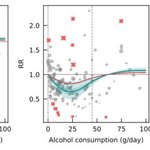
The relationship between alcohol consumption and RR of IHD, Imam Abu Hanifa and Shaykh Ibn Sina vindicated.

8
750
Armour retweeted

It's an objective fact that Christian apologetics against Islam is generally poor. Conversely, Islamic apologetics against Christianity is equally unimpressive. Anyone who thinks Salafis constitute the majority of Muslims clearly has no understanding of Islamic demographics.
This is the calamity and muṣībah of divine voluntarism. Not only does your theology leave the determination of the divine will without a sufficient reason, but it also leads to conclusions like this. Rather, God’s acts are necessarily good by virtue of proceeding from His perfect essence, in accordance with His necessary knowledge and wisdom. This preserves divine sovereignty (the sufficient reason of His act is entirely intrinsic), and divine justice, without reducing God to an arbitrary moral agent.

Armour retweeted
From the current Shaykh al-Azhar, Ahmad at-Tayyib, in the new Saudi edition of the Shaykh’s Metaphysics of the Healing:
“I believe that teaching metaphysics in the intellectual heritage of the Shaykh al-Ra’īs, Ibn Sīnā, along with the other minds of this great tradition, has become an utmost necessity from which there is no escape, in order to form an authentic Eastern awareness that confronts the incoming Western culture—a culture that is not satisfied to operate only within its own bounds in Europe and America, but has begun to impose itself forcefully and insidiously, step by step, on the Muslim household in the East, on the sons and daughters, men and women, of the Muslims.”

“A prophet, therefore, must exist, and he must be a human. He must also possess a special characteristic not present in other people so that people would recognize in him something they do not have, whereby he is differentiated from them. Therefore, he will perform the miracles about which we have been informed.
When this man's existence comes about, he must lay down laws about men's affairs by the permission of God, exalted be He, by His command, inspiration, and "the descent of the Holy Spirit" on him [Qur'an 16:102]. The first principle governing his legislation is to let them know that they have a Maker, One and Omnipotent; that "He knows the hidden and the manifest" [Qur'an 16:19]; that obedience to His command is His due, for "command must belong to Him who creates" [Qur'an 7:54]; that He has prepared for those who obey Him an afterlife of bliss, but, for those who disobey Him, an afterlife of misery, so that the multitude will hear and obey the decrees put in the prophet's mouth by God and the angels.”
📕 — Abū ʿAlī al-Ḥusayn ibn ʿAbd Allāh ibn Sīnā, al-Shifāʾ: Al-Ilāhiyyāt (The Metaphysics of The Healing), Book X, Chapter 2, “On the Proof of Prophecy; the Manner of the Prophet’s Call to God, Exalted be He; and the ‘Return’ to Him.”

