

Independent analysis of AI
San Francisco
Joined January 2024
- Tweets3.9K
- Following689
- Followers174K
- Likes2.8K





Pinned Tweet
Thanks for the support @AndrewYNg! Completely agree, faster token generation will become increasingly important as a greater proportion of output tokens are consumed by models, such as in multi-step agentic workflows, rather than being read by people.

Shoutout to the team that built artificialanalysis.ai/ . Really neat site that benchmarks the speed of different LLM API providers to help developers pick which models to use. This nicely complements the LMSYS Chatbot Arena, Hugging Face open LLM leaderboards and Stanford's HELM that focus more on the quality of the outputs.
I hope benchmarks like this encourage more providers to work on fast token generation, which is critical for agentic workflows!

In AA-PersonalityBench, each recent Grok release from has become less sycophantic, more sincere, and produces less slop
The Slop trait assesses how much generic filler or AI-flavored padding models use; Sycophantic measures whether models excessively flatter or agree with the user rather than responding honestly; Sincere measures a model’s tonal authenticity, as opposed to forced enthusiasm or templated responses.
Across the last three Grok releases from @elonmusk’s @SpaceXSI, Slop fell 62 percentile points, Sycophantic fell 17, and Sincere rose 64:
➤ Slop: Grok 4.5 (68), Grok 4.6 (38) and Grok 4.7 (6)
➤ Sycophantic: Grok 4.5 (18), Grok 4.6 (3) and Grok 4.7 (1)
➤ Sincere: Grok 4.5 (26), Grok 4.6 (63) and Grok 4.7 (90)

Build your own personality ranking and explore more detailed results on the AA-PersonalityBench page.
Explore the results: artificialanalysis.ai/evalua…
Methodology: artificialanalysis.ai/method…
On Tuesday, we brought together partners and friends in San Francisco to launch Artificial Analysis Intelligence Index v5 and our new Progress Index
Micah Hill-Smith (@_micah_h) introduced Intelligence Index v5, including two new benchmarks and three upgrades, with greater weighting on agentic coding and science. For the first time, the majority of the Index is based on private test sets or held-out answers.
We also introduced Artificial Analysis Progress Index, which uses item response theory to estimate a general capability score for each model across dozens of evaluations measured over time, including those retired or excluded from the Intelligence Index. It builds on prior work from @EpochAIResearch and @AnthropicAI to place models on a single capability scale. Intelligence Index remains the flagship metric for choosing which current model to use for a use case today; Progress Index is the better tool for plotting trends over time.
George Cameron (@grmcameron) led a discussion with Silas (@silasalberti) from @cognition, Steven (@StevenDillmann) from @Stanford and Terminal-Bench-Science, and our own Declan Jackson about building evaluations as models become more capable.
The evening also covered our work on 3D modeling, personality, cyber defense, custom enterprise evaluations and robotics. Thank you to our speakers, partners and everyone who joined us!
Explore Intelligence Index v5: artificialanalysis.ai/
Explore Progress Index: artificialanalysis.ai/trends


We’ve announced the Artificial Analysis Progress Index: a single capability scale for every language model since 2022, launched alongside Intelligence Index v5
The Intelligence Index is still our primary measure of current model intelligence. It uses the evaluations most relevant to developers today, so its mix changes as evaluations are added and retired, and scores from different versions can’t be compared.
The Progress Index is built for comparisons across time. It uses item response theory, a statistical method used to score standardized tests, to estimate one general capability score for each model from the underlying tasks in all our evaluations, including those that are retired or excluded from the Intelligence Index.
Use the Intelligence Index to choose a model today. Use the Progress Index to see how capability has changed over time.
The Progress Index builds on prior work placing models on a single capability scale, in particular @EpochAIResearch's Epoch Capabilities Index and the capability scale @AnthropicAI published in its Claude Mythos Preview system card.
Key takeaways:
➤ Since reasoning models arrived, the frontier has risen ~65 to 70 points a year, about double the 2023 pace: the highest score among released models rose 35 points in 2023 (GPT-3.5 Turbo 125 to GPT-4 Turbo 160), 67 in 2024 (to o1 at 228), 68 in 2025 (to GPT-5.2 at 296) and 56 so far in 2026 (to Gemini 4 Carbon at 352).
➤ Open weights models generally trail proprietary models by about 4 months: since January 2025, each new highest open weights score came 2-8 months (median ~4) after a proprietary model first reached it. DeepSeek V4.1 Flash 1017 is the highest-scoring model with released weights at 324, a level Claude Fable 5 reached in June 2026. Kimi K3.1 Pro (weights not yet released) scores 341, about two months after the closed frontier
➤ New frontier scores are being set more often: the highest score among released models was raised on 2 release dates in 2023, 4 in 2024, 9 in 2025 and 11 so far in 2026. That is about once every four weeks this year.
➤ OpenAI has held the top score most of the time since November 2022, but the frontier has become a close contest: OpenAI held the number one position for the first 27 months measured, but in 2026 especially there have been rapid changes in the leader between OpenAI, Anthropic, and now Google

Among open weights models, China has led since September 2025. The US and China traded the lead seven times between July 2023 and September 2025, most recently when DeepSeek V3.1 Terminus passed gpt-oss-120b.
DeepSeek V4.1 Flash 1017 now scores 324, ahead of the highest-scoring US open weights model, Muse Spark Open, at 307.

Explore the full results: artificialanalysis.ai/trends
See how the Progress Index is calculated: artificialanalysis.ai/method…

Phonic's Phonic 1 (High) is the new leading Speech to Speech model, debuting at #1 on the Artificial Analysis Speech to Speech Index at 87.1, while also leading on agentic performance and being competitive on latency
Phonic 1 is @phonic_co 's Speech to Speech model, available through the Phonic API at $0.07 per minute. We evaluated Phonic 1 at its high intelligence level through the Phonic API.
Key takeaways:
➤ Speech to Speech Index: #1 of 22 at 87.1, ahead of Grok Voice 3.0 (86.9) by a very small margin. The Index averages Speech Reasoning (Big Bench Audio), Agentic Performance (Tau Voice), Arena Preference and Task Success Rate
➤ Speech Agent Arena: #8 of 30 on preference (Elo 1012) and #4 on Task Success Rate (92.3%)
➤ Tau Voice: #1 at 79.9%, a clear lead of 5.4 points over the next model
➤ Big Bench Audio: #3 at 98.9%, behind StepAudio 3 Realtime (99.7%) and Qwen Audio 3.0 Realtime Plus (99.2%)
➤ Speed: #4 on Time to First Audio at 0.61s, and the fastest of the top 5 models in the Index
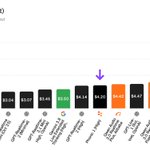
➤ Cost: $4.20 per hour of input audio
Congrats to the @phonic_co team 🚀
See below for more detail ⬇️
Phonic 1 (High) costs $4.20 per hour of input audio ($0.07 per minute). That is below Grok Voice 3.0 ($4.80), GPT-Live-1 (Sol, low) ($4.47) and GPT-Live-1 (Astra, medium) ($5.83), above Gemini 3.8 Live Extended Thinking (High) at $3.50, and ~2.6x cheaper than GPT-Realtime-2.1 High ($10.75).

Compare Phonic 1 (High) to other native Speech to Speech models: artificialanalysis.ai/models…
Speech Agent Arena leaderboard: artificialanalysis.ai/speech…
Methodology: artificialanalysis.ai/method…
Fish Audio Drama 3 is the #1 open weights model on both Artificial Analysis Speech Arenas, and #1 of all models on Pronunciation Robustness
@FishAudio has released Drama 3. We evaluated it across both Speech Arenas and our Pronunciation Robustness benchmark.
Key takeaways:
➤ Text to Speech, Provider Voice: Drama 3 scores an Elo of 1,278 across 1,512 arena appearances, ranking #6 overall and #1 among open weights models, 38 points clear of its own Drama 3 Preview at 1,240 and 50 ahead of BreezeBlue's Breeze TTS 2 at 1,228
➤ Text to Speech, Controlled Voice: Drama 3 scores 1,085 across 1,958 appearances, ranking #12 overall and #1 among open weights models, ahead of Ant Group's Ming-3.0-tts at 1,068 and its own Preview at 1,063
➤ Pronunciation Robustness: Drama 3 scores 94.6% across 2,157 rated spans, ranking #1, ahead of Ming-3.0-tts and Drama 3 Preview, both at 93.2%
➤ Speed: Drama 3 generates 66.6 characters per second, ahead of its own Drama 3 Preview at 60.7 and Murf's Speech Gen 2 at 63.0, and behind ElevenLabs' Eleven v4 at 70.0 and v3 Conversational at 66.8
➤ Pricing: Drama 3 is priced at $15/1M characters. Every model ranked above it on Provider Voice costs more: Gemini 3.8 Flash TTS at $16.5/1M, Qwen-Audio-3.1-TTS-Plus at $19.3/1M, Eleven v4 Turbo at $40/1M, Sonic 3.6 at $49/1M and Eleven v4 at $80/1M
➤ Open weights: released under the Fish Audio Community License.
See more details and listen to samples below ⬇️
Drama 3 generates 66.6 characters per second, ahead of its own Drama 3 Preview at 60.7 and Murf's Speech Gen 2 at 63.0, and behind ElevenLabs' Eleven v4 at 70.0 and v3 Conversational at 66.8.
At $15/1M characters it is priced below Gemini 3.8 Flash TTS at $16.5/1M, Qwen-Audio-3.1-TTS-Plus at $19.3/1M, Eleven v4 Turbo at $40/1M, Sonic 3.6 at $49/1M and Eleven v4 at $80/1M. Every model ranked above it on Provider Voice costs more.

Drama 3 is open weights under the Fish Audio Community License: huggingface.co/fishaudio/dra…
See the top models on the Artificial Analysis Text to Speech leaderboards:
artificialanalysis.ai/text-t…
artificialanalysis.ai/text-t…
Vote for models in the Speech Arena:
artificialanalysis.ai/text-t…
Explore sample clips in the Speech Explorer:
artificialanalysis.ai/text-t…
