

Financial economist. Studies asset pricing, ML, text/NLP, information. Teaches fintech. Dad x 3. Coding nerd. Rarely funny.
Underwater
Joined December 2011
- Tweets2K
- Following696
- Followers1.9K
- Likes2.8K


Pinned Tweet
Wow, the JFE is fast.
Forthcoming in its Nov 2026 issue, Chronologically consistent LLMs, coauthored with the amazing @hesongrun @LinyingLyu and @JimmyCMWu

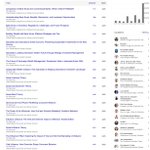
With job market season in full swing, I thought I’d share the latest CFAR rankings of finance research departments to give applicants more information. Unlike other rankings, these are per capita, so you can see how many faculty are actually load-bearing.

I pulled the last 10 years, but you can slice the data your way here: cfar-ranking.olin.wustl.edu/
If you spot an error, they provide a handy form (no need to email me ;) forms.gle/ZDh2rLBDjQsRGvtY6
Good luck and good decisions!
108
In case you missed it, we are on the rookie market this and looking to hire excellent assistant professors of finance passionate about AI.
Apply at apply.interfolio.com/196794
Asaf Manela retweeted

How much of published finance holds up?
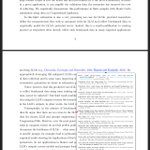
I attempted to replicate the main result of every paper in JF, JFE & RFS, 2000–2020.
1,328 in-sample replications; 1,005 out-of-sample. 75% reproduced in sample. But only 42% in later data. Median coeff. : 0.93 → 0.45 of the published.

a great service to the asset pricing research community


Not a bad program ;)
Many thanks to all of you who sent us your papers. The quality of submissions was so good that we expanded the conference a bit to accomodate, but still had to pass on some very interesting ones. Registration is open so consider joining us in St. Louis this November.
event.olin.washu.edu/22-wash…

Asaf Manela retweeted

If you’re building an AI trading or investing agent, you probably want to give it data from Substack, podcasts, YouTube, and X.
Your first thought will be: “I’ll just vibe code this myself.”
Then you realize this data is much messier and more expensive to ingest, structure, and maintain than it looks. You just want to focus on what makes your product unique: the agent, execution, UX, etc.
That’s exactly the problem we’ve spent months solving @trydrip.
Drip turns unstructured financial content into structured data that agents can actually use, without burning tokens processing the raw content.
If you’re building an AI trading or investing product, we’d love to help you integrate Drip. DM me.
Video explainer for humans: youtu.be/TtiiAe_GoQY?si=JoGS…
The gated but open paper: authors.elsevier.com/sd/arti…
The forever ungated paper: arxiv.org/abs/2502.21206
The models: huggingface.co/manelalab
3
174
Asaf Manela retweeted

suppose you ask a language model the probability it will rain tomorrow. then you ask the probability it will not rain tomorrow
whatever happens tomorrow, those two probabilities should sum to one
but suppose the model generates P(rain) = 0.7 and P(no rain) = 0.2

don't you just love a good puzzle?
this new draft incorporates some great new potential explanations we heard from smart colleagues while presenting the paper in seminars and conferences.
yet the puzzle still stands ...

Are you advising a promising finance phd student who is on the job market?
The deadline for phd poster nominations for the Olin Finance Conference is August 31, so consider nominating them.
(if you are that student, ask your advisor)
Faculty must submit nominations through the conference registration page: event.olin.washu.edu/washu-f…
This year, we made the form as confusing as possible in order to extract a costly signal from the nominating faculty.
Asaf Manela retweeted

Banger paper from Google.
If you maintain a skill library for your agents, you might want to check this out.
(bookmark it)
This work separates three things that skill-evolution systems usually collapse into one. Raw execution traces, a persistent wiki of accumulated knowledge, and the executable skills themselves.
Experience gets consolidated into the wiki, and every later skill update builds on that wiki instead of on a scattered optimization history.
Ablations confirm the wiki is what carries a lot of the gain. Two results stand out in particular. Smaller models with evolved skills beat substantially larger models without them. And skills evolved by one model transfer across families, where skills evolved elsewhere sometimes beat self-evolved ones.
Paper: arxiv.org/abs/2608.27454
Chat with Paper: academy.dair.ai/papers/wikis…

Asaf Manela retweeted

I was part of that team. Basically ChatGPT one year before it came out. Called LMChat and then another codename.
Google was too nervous to release it and DeepMind was blocked from shipping products that could disrupt Google.
I think about this a lot.
⏰ Deadline is TONIGHT: submissions for the 22nd Annual Olin Finance Conference at WashU close at 11:59 PM CT.
Don't be the one refreshing your inbox in August wishing you'd hit submit. Asset pricing, corporate, behavioral, intermediation — all welcome.
Get your paper in now ⬇️
event.olin.washu.edu/washu-f…
1
190
📢 Call for Papers: 22nd Annual Olin Finance Conference at WashU, Nov 12–13, 2026, St. Louis.
All areas of finance welcome: asset pricing, corporate, behavioral, intermediation & more. Empirical + theoretical.
Deadline: July 31. Submit ⬇️
event.olin.washu.edu/washu-f…
#Finance #CallForPapers
PhD students on the 2026–2027 finance job market: ask your advisor to nominate you for the poster session at the Olin Finance Conference at WashU.
Winners get lodging, paid registration & free poster printing. Faculty nominations due Aug 31.
event.olin.washu.edu/washu-f…
#Finance #PhD #JobMarket
If you use cursor in windows you should probably stop
mindgard.ai/blog/cursor-0day…

1
3
650
What it feels like to work with Mythos, by @emollick open.substack.com/pub/oneuse…