

Bearing Witness
USA
Joined September 2018
- Tweets2K
- Following54
- Followers57
- Likes10.6K







BREAKING NEWS: DHS Secretary Markwayne Mullin speaks on the FAA ground stop at airports.
"You just can't rule out anything at this point."
Anything?! Can’t rule out anything?!
1
616
Bryan Davis retweeted

There has been a temporary telecommunications outage - out of an abundance of caution all flights have been halted. Every flight has been accounted for and international flights will be handled on a case by case basis.
Bryan Davis retweeted

Installing this spaceX looking radiant barrier on a sunny day, had to put on welding glasses. Reminds me of the time I was painting grandpa’s garage roof with aluminized paint in cutoff sweat shorts commando. Sunburned my anus, perineum and nuts so bad I was laid up for a week.

Bryan Davis retweeted
Calling Orwell…

🚨 TODAY IS THE DAY!
Stephen Gray is in court today to appeal his conviction under Section 127 of the Communications Act 2003 for posting a joke about Islam on Facebook.
Stephen is an FSU member and a retired police officer who gave 27 years of service to his community.
The joke was an image of a rasher of bacon beside a man in a turban, with the caption: “Fun facts about bacon! People who eat bacon have a lower chance of marrying a 9-year-old!”
It referred to the Prophet Muhammad’s marriage to Aisha, who was six at the time, and the consummation of the marriage when she was nine.
Stephen told the court that the post was satirical, but that he also hoped it would prompt serious debate about whether the marriage had helped make child marriage acceptable in parts of the Muslim world.
He was ordered to pay more than £1,000 in fines and costs, and now has a criminal record.
This is astonishing in a country that abolished blasphemy laws in 2008 — 18 years ago.
The Free Speech Union is proud to support Stephen, and we hope he wins his appeal today.
Please donate to Stephen’s crowdfunder and help us stop an Islamic blasphemy law from taking root in Britain 👇
Clue is playing at the playhouse theater 🎭.
I’ll be there.
Other fun events coming up include:
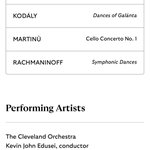
Nemanja Radulović and Double Sens | clevelandorchestra.app.link/…

1
41


🚨 AMERICA'S ISLAMIC TAKEOVER EXPOSED!
CAIR FOUNDER UNVEILS 20-YEAR POLITICAL TAKEOVER STRATEGY FROM U.S. MOSQUE
“We Will Write Our Own Narrative… We Will Produce Lawmakers… We May Have a Supreme Court Judge.”
A newly uncovered 2024 sermon by CAIR founder Nihad Awad reveals a structured, long-term political strategy aimed at transforming America’s legal, media, academic, and political systems, openly laid out from the pulpit of an American mosque in Maryland.
This was not a religious sermon, it was a strategic briefing.
Awad described what he called a “framework for success” for the Muslim community - a generational plan to convert mosques into operational hubs, scholarships into recruitment pipelines, and CAIR into a permanent legal-political enforcement arm.
“We have almost 4,000 mosques in America… That’s the infrastructure of the Muslim community,” Awad declared.
“Establish a scholarship fund… for five students: one to study journalism, one filmmaking, one law, one political science, and one history.”
🔺He then spelled out the scale and purpose of the project:
“If we start in 2025 or 2026… four years from now we will have 4,000 new journalists, filmmakers, lawyers, political scientists, and history students.”
🔺 And the end goal:
“Twenty years from now, the Muslim community will have 50,000 attorneys, 50,000 journalists, 50,000 filmmakers, 50,000 professors… We will write our own history. We will write our own narrative.”
“The Muslim community will be able to produce policymakers and lawmakers… We may have 50 members of Congress, five senators, and potentially a Supreme Court judge.”
🔺 This is a blueprint for institutional capture.
Mosque Money → Political Infrastructure
Awad explicitly instructs mosque leadership to establish annual scholarship funds to finance careers in:
• Journalism
• Filmmaking
• Law
• Political science
• History
These are media, legal, and political power lanes.
By his own words, the purpose is not education for its own sake - it is narrative control, policymaking influence, and long-term political dominance.
🔺 CAIR Named as the Enforcement Vehicle
After laying out the generational strategy, Awad directly names CAIR as the institutional engine for execution:
“Allah has blessed us to create an organization called CAIR — the Council on American-Islamic Relations…
The purpose of it is to empower the American Muslim community socially and politically and defend the rights of American Muslims.”
🔺 “CAIR Is Not Afraid to Sue the U.S. Government”
Awad then openly boasts about courtroom warfare against federal agencies:
“CAIR is not afraid to sue the U.S. government. In fact, we did many times.”
“We sued the FBI… it went all the way to the Supreme Court… and the result was 9–0 in favor of CAIR.”
He frames litigation not as accountability - but as strategic leverage:
“That shows our nation is still in good shape. But we need political and legal advocates…
If we are safe, we will succeed as Muslims.”
This is not grievance rhetoric; it is power-building doctrine.
🚨Why This Sermon Matters🚨
Awad’s own words confirm:
• A 20-year political growth plan
• A mosque-funded recruitment pipeline
• A media and narrative-control strategy
• A lawfare-based pressure apparatus
• An explicit goal of placing Muslims into Congress, the Senate, and even the Supreme Court
• CAIR positioned as the institutional weapon to enforce it
They Told Us the Plan - Now It’s in Motion
Awad presented a step-by-step roadmap for building political, legal, and media dominance - using American mosques as infrastructure nodes and CAIR as the enforcement arm.
WHERE IS THE FEDERAL GOVERNMENT - WHY ARE THEY NOT PROTECTING AMERICA FROM THIS TERROR-TIED ORGANIZATION!?
23

🚨 AMERICA'S ISLAMIC TAKEOVER EXPOSED!
CAIR FOUNDER UNVEILS 20-YEAR POLITICAL TAKEOVER STRATEGY FROM U.S. MOSQUE
“We Will Write Our Own Narrative… We Will Produce Lawmakers… We May Have a Supreme Court Judge.”
A newly uncovered 2024 sermon by CAIR founder Nihad Awad reveals a structured, long-term political strategy aimed at transforming America’s legal, media, academic, and political systems, openly laid out from the pulpit of an American mosque in Maryland.
This was not a religious sermon, it was a strategic briefing.
Awad described what he called a “framework for success” for the Muslim community - a generational plan to convert mosques into operational hubs, scholarships into recruitment pipelines, and CAIR into a permanent legal-political enforcement arm.
“We have almost 4,000 mosques in America… That’s the infrastructure of the Muslim community,” Awad declared.
“Establish a scholarship fund… for five students: one to study journalism, one filmmaking, one law, one political science, and one history.”
🔺He then spelled out the scale and purpose of the project:
“If we start in 2025 or 2026… four years from now we will have 4,000 new journalists, filmmakers, lawyers, political scientists, and history students.”
🔺 And the end goal:
“Twenty years from now, the Muslim community will have 50,000 attorneys, 50,000 journalists, 50,000 filmmakers, 50,000 professors… We will write our own history. We will write our own narrative.”
“The Muslim community will be able to produce policymakers and lawmakers… We may have 50 members of Congress, five senators, and potentially a Supreme Court judge.”
🔺 This is a blueprint for institutional capture.
Mosque Money → Political Infrastructure
Awad explicitly instructs mosque leadership to establish annual scholarship funds to finance careers in:
• Journalism
• Filmmaking
• Law
• Political science
• History
These are media, legal, and political power lanes.
By his own words, the purpose is not education for its own sake - it is narrative control, policymaking influence, and long-term political dominance.
🔺 CAIR Named as the Enforcement Vehicle
After laying out the generational strategy, Awad directly names CAIR as the institutional engine for execution:
“Allah has blessed us to create an organization called CAIR — the Council on American-Islamic Relations…
The purpose of it is to empower the American Muslim community socially and politically and defend the rights of American Muslims.”
🔺 “CAIR Is Not Afraid to Sue the U.S. Government”
Awad then openly boasts about courtroom warfare against federal agencies:
“CAIR is not afraid to sue the U.S. government. In fact, we did many times.”
“We sued the FBI… it went all the way to the Supreme Court… and the result was 9–0 in favor of CAIR.”
He frames litigation not as accountability - but as strategic leverage:
“That shows our nation is still in good shape. But we need political and legal advocates…
If we are safe, we will succeed as Muslims.”
This is not grievance rhetoric; it is power-building doctrine.
🚨Why This Sermon Matters🚨
Awad’s own words confirm:
• A 20-year political growth plan
• A mosque-funded recruitment pipeline
• A media and narrative-control strategy
• A lawfare-based pressure apparatus
• An explicit goal of placing Muslims into Congress, the Senate, and even the Supreme Court
• CAIR positioned as the institutional weapon to enforce it
They Told Us the Plan - Now It’s in Motion
Awad presented a step-by-step roadmap for building political, legal, and media dominance - using American mosques as infrastructure nodes and CAIR as the enforcement arm.
WHERE IS THE FEDERAL GOVERNMENT - WHY ARE THEY NOT PROTECTING AMERICA FROM THIS TERROR-TIED ORGANIZATION!?
19


I could absorb the consequences of China spy scandal.
See also: I am no one.
I am a brilliant lifestyle designer.
1
21

If scoundrel, proudly scoundrel.

Jensen Huang should have spent more time studying @nntaleb. Trying to maintain a reputation as a family man and a wholesome guy is what made him fragile. If he instead went down the Elon Musk route and cared nothing for his reputation, he would have been antifragile in this situation. Now he might lose half his shares, his job, and his reputation for acting like the rockstar he was not supposed to be. Elon’s reputation not only survives attacks, criticism and controversy - it becomes stronger by it. Elon is antifragile. Jensen Huang, however, decided to brand himself as a good guy, but only played a part.
That’s why he became fragile, and will most likely be asked to stand down.
1
1
179
Bryan Davis retweeted
Hey boss! Got Christmas gifts for your employees already?
sskosmos.ee

Bryan Davis retweeted

David Bratman has passed away after an illness that he kept absolutely private (so I will, also).
Even though I knew this was coming, I am having a lot of trouble processing this loss because I have been working with David since 2004, when he wrote his first Year's Work in Tolkien Studies for the journal. I had this big idea to write up in Tolkien Studies what we used to have in the Old English Newsletter: a brief evaluative summary of all the major work published in a given year so that new scholars or scholars entering a new subdivision could easily orient themselves to the field. The deadline for TS2 was rapidly approaching and I had not even started the systematic reading I would need to do when Doug Anderson said "You know, David Bratman already does something a lot like that. We should see if he would do it for Tolkien Studies." And, being David, he wildly exceeded my highest hopes for the Year's Work, which under his author- and then editorship synthesized the entire rapidly growing field of Tolkien Studies from 2005-2024 (the final Year's Work had 6 contributing authors and was over 60 pages long).
In 2011 David took over the annual Bibliography from me and my students when the combination of students graduating and my family responsibilities put me far behind on that chore. From that moment on I never had to worry about the completeness or accuracy of the Bibliography.
After Doug Anderson stepped away from the journal in 2012, Verlyn and I asked David to join us as co-editor, and in 2013 he agreed. In addition to evaluating and editing every submitted article (multiple times in most cases), David took special responsibility for the "back of the book" parts of the journal: not only the Year's Work and Bibliography, but all the Book Reviews that Doug had handled.
So for eleven years David, Verlyn, and I exchanged several dozen emails per week--sometimes 5-10 per day--as we put together Tolkien Studies volumes 10-20. You get used to 'hearing' someone's voice that way, and then hearing it again on the few conference calls or in-person meetings we managed to have as we put out the journal--no issue was ever entirely drama-free.
In 2025, when Verlyn retired, I begged David not to step down at the same time (which had been his plan), and despite even then being substantially affected by his illness, he worked with me to recruit Yvette Kisor as co-editor; the three of us co-edited volume 21. David then helped us recruit Kris Larsen to replace himself as co-editor, and even in what must have been close to in extremis, he completed the Bibliography for 2025, which will be printed in Tolkien Studies volume 22 (to be released any day now (some people may have already received their copies).
This bare summary--and even the somewhat more fleshed-out announcement in TS26 cannot possibly communicate what it was like to work with a scholar like David on a day-to-day basis for so long. I have never met anyone who held to standards of scholarly integrity with such meticulous accuracy and attention to detail. David had a reputation for being prickly, and he often was with me, but NEVER in a case in which he was unsure: if he told you you were wrong, you almost certainly were, and he knew how to draw bright lines between facts and opinions, interpretations, and evaluations (and much preferred the former). I wince at the thought of the number of emails of his that started "No. That was NOT what I meant, which was what I said ..." as a response to my sometimes awkward efforts to smooth over a rough interaction. It was not that David didn't care about people's feelings--you'll note that he never embarrassed junior scholars or students when they made public mistakes--but that he cared so intensely about scholarly accuracy, down to the last Elvish spelling, inverted comma, and extra white space (or last thereof). He had no patience for anyone calling him- or herself a "Tolkien scholar" who didn't know that Middle-earth has a hyphen and a lower-case e. And he rode herd on my tendency to be "flip" and "dismissive" even of people like Edmund "Bunny" Wilson, who didn't give JRRT the same respect David demanded we show them (he was right about this, also).
All that meticulous attention to detail, solid librarianship and bibliographic skill, however, should not distract from how subtle, nuanced, and sophisticated David's readings were. He was really the first person to explain how to use--and how to READ--the History of Middle-earth volumes, identifying the different voices Tolkien uses and explaining how each produces different kinds of aesthetic effects and has different levels of authority in the texts. The same 'ear' that made him such a connoisseur of Classical music made David a superb editor. Whereas I would get frustrated with authors and edit with a heavy hand, David was much better at nudging writers to develop the more effective arguments that lay unrecognized in their drafts. He was particularly good with the few undergraduate writers who have ended up publishing in Tolkien Studies and, perhaps even more importantly, in encouraging those we had to reject.
David was so rigorous about his very high standards that he could be trusted to judge his friends--and even his co-editors--just as strictly as he judged everyone else. At times this led to some tension among the co-editors, as David kept rejecting our articles for not making 100% of the revisions that he (and the anonymous outside reviewers) had demanded, but he never wavered, and he was right, and what was published in the journal met the highest standards regardless of who wrote it. If David Bratman said that your work was good, you should feel a warm glow inside, because there was no higher praise, and you could only receive it if you deserved to have it said about you.
I know David was very happy that Yvette and Kris had replaced him and Verlyn as co-editors and that Andy Higgins agreed to become the Book Review Editor of Tolkien Studies, and he was relieved that the changes planned for the Year's Work, Bibliography, and Book Reviews would preserve the Tolkien Studies "back of the book."
I know I am going on and on in a way that David would have made me cut if he were editing this, and he would probably be right, but it is really impossible to imagine that he is not going to be on the other side of the computer screen, meticulously catching even the slightest errors, cheerfully looking up all the page numbers for the standard reference editions of The Hobbit and The Lord of the Rings, and resolving and combining all the suggestions of the co-editors into one document for the press. It's impossible to think that if I include a "flip" comment or try to sneak an unsupported argument by through rhetorical tricks David won't be there to call me out and suggest more "measured" language. Most of all, I can't believe that I'll never again feel a smile creeping across my face as I recognize one of his subtle, understated, but perfectly on-point jokes or sarcastic asides or wry observations. I don't think they make scholars like David Bratman anymore, and even if they did, there will never be another David, and I really, really miss him.
Rest in Peace, my friend. I hope you are enjoying having all your Tolkien questions AND all your music questions answered.
We were on the SF Bay Area.
There was a lot to learn culturally.
I was doing in home sales. And each day brought me into a different cultural home.
I was really lucky to have such a good mentor at that time.
1
16