






Pinned Tweet
In this post, I explore the genetics and predicted phenotypes/traits of three populations present in the Iberian Peninsula during the period of Visigothic rule — the Visigoths, the Hispano-Goths of Northern Spain (Catalunya), and the Hispano-Romans of Southern Spain (Granada).
I have utilized publicly-available sample data from sources like Vahaduo and aDNAXP. I have also utilized qpAdm admixture & trait results that were compiled and shared by Andrei Kharchenko.
*Note that phenotypic/trait data was only available for a number of these aDNA samples (5/9 Visigoths, 1/5 Hispano-Goths, and 4/11 Hispano-Romans).
I understand that these are loaded terms that carry a great deal of historical sociocultural and sociopolitical baggage; so, to clarify what these terms are denoting [in this specific context], please note the following:
•Visigoths — The [predominantly genetically non-local] samples found at a mid-6th century Visigothic burial site in Girona.
•Hispano-Goths — Visigothic-period (mid-7th century) local samples from a Visigothic burial site in Catalunya.
—These samples are from an important period in the timeline, as they come following King Reccared’s conversion of Visigothic Kingdom and after the Kingdom’s subsequent adoption of the Lex Visigothorum (a set of universal laws for all subjects, which formally eroded the legal and institutional separation of the Visigoths and Iberians). Gothic genetic introgression is evident in these samples.
•Hispano-Romans — Visigothic-period (early-6th century) local samples found in Granada.
—The dating for these samples precedes the aforementioned Visigothic legal/institutional reforms and are genetically distinct unto themselves [even in relation to modern mainland Iberians, as they show much stronger levels of southern drift — surpassing even modern Canary Islanders in MENA orientation.] No clear Visigothic genetic introgression is evident in these samples.


✘ 𝔇𝔢 𝔄𝔠𝔲𝔫𝔞 ✘ retweeted

Rappel que Philippe III et le duc de Lerma sont parvenus à dégager 300 000 morisques d'Espagne en quelques années alors qu'ils disposaient de moyens infiniment moins importants que les états actuels.


✘ 𝔇𝔢 𝔄𝔠𝔲𝔫𝔞 ✘ retweeted
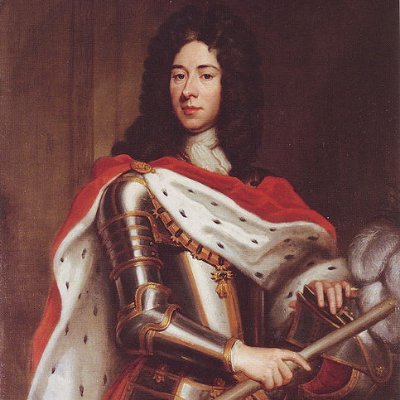
This battle is often seen as the beginning of domination of Western sailing ships over Ottoman galleys.
Despite heavy numerical supremacy, Ottoman galleys were no match for powerful Spanish galleons!


✘ 𝔇𝔢 𝔄𝔠𝔲𝔫𝔞 ✘ retweeted

Según el test más preciso para haplogrupos disponible, pongo este ejemplo.
La rama R-FGC31068del DF27, entra en la península ibérica en el periodo ventana a partir del año 1250 a.C.
Seguramente cruzó los Pirineos al final de la Edad de Bronce o en los inicios de la de Hierro.


✘ 𝔇𝔢 𝔄𝔠𝔲𝔫𝔞 ✘ retweeted

Super excited to share our two papers published in Nature today! 🧬 We use ancient genomics to explore how Germanic and Celtic languages spread across Europe. Here's a video of our findings, produced by Nicolas Delgado Clausen!
youtube.com/watch?v=gyxAROOa…


✘ 𝔇𝔢 𝔄𝔠𝔲𝔫𝔞 ✘ retweeted
Here is the timeline summarizing the main demographic events discussed in the Celtic study and proposed times for the formation of Proto-Celtic from the linguistic literature.


On the origin of Germanic languages.
"Tracing the spread of Germanic languages using ancient genomics"
nature.com/articles/s41586-0…

✘ 𝔇𝔢 𝔄𝔠𝔲𝔫𝔞 ✘ retweeted

Scientists pay tribute to Marta Shahbazi Alonso and Tamara González Costa who died on their way to a developmental-biology meeting
go.nature.com/4iTyNO1

✘ 𝔇𝔢 𝔄𝔠𝔲𝔫𝔞 ✘ retweeted
The movie Alatriste (2006) gave us the best depiction of pike and shot era warfare on screen, portraying the last stand of Spanish tercios against the French at Battle of Rocroi in 1643.
An amazing tribute to this overlooked period of military history.


✘ 𝔇𝔢 𝔄𝔠𝔲𝔫𝔞 ✘ retweeted

Dr. Eleanor Scerri of Max Planck Institute says the idea that humans originated in Southern Africa based on the fact that the oldest haplogroups are located there is unlikely. gea.mpg.de/person/52339/2944


✘ 𝔇𝔢 𝔄𝔠𝔲𝔫𝔞 ✘ retweeted

Yamnaya, Corded Ware and Bell Beaker haplogroup similarity.
20 / 135 (14.8%) of Corded Ware have a clade from Yamnaya
156 / 179 (87.2%) of Bell Beaker have a clade from Corded Ware
Using a clade depth of 11 from the first 3 digits


✘ 𝔇𝔢 𝔄𝔠𝔲𝔫𝔞 ✘ retweeted
For anyone who questioned where Reich believes the Modern Human lineage comes and what was living in Africa 300,000 years ago, now it is very clear. biorxiv.org/content/10.64898…

