

احب الصالحين ولست منهم، اللهم اجعلني من الصالحين بيننا وبينكم السلف الصالح وكتبهم
Joined September 2021
- Tweets1.6K
- Following107
- Followers988
- Likes8.4K



مَنْ أَحَبَّ عَائِشَةَ فَقَدْ أَحَبَّ رَسُولَ اللَّهِ وَمَنْ أَبْغَضَهَا فَقَدْ أَبْغَضَ رَسُولَ اللَّهِ
Whoever loves Aisha has loved the Messenger of Allah, and whoever hates her has hated the Messenger. as if I see him
4
231
"Observe, my son, the way you deal with the limits of Allah and see how you can keep yourself with within their bounds.
Indeed, he who takes care of these limits is taken care of, and he who doesn't, is left to himself."
Ibn al-Jawzi
Sincere Advice to the Students of Knowledge, p43.
1
98
Shaykh al-Uthaymeen رحمه الله said:
نَشرُ العِلمِ
Spreading 'īlm (knowledge)
وإِظهَارُهُ
And publicizing it
وبَيَانُهُ
And clarifying it are
مِن أَسبَابِ المَغفِرَةِ
Among the causes to be forgiven
📚Tafsīr Sūrat al-Baqarah

4
179
"Every breath is a step closer to death. The time we spend in this world is short, the time we are held in our graves is long, and the punishment for following our base desires is calamitous."
Ibn al-Jawzi
Sincere Advice to the Students of Knowledge, p38.
4
171
Ibn al Jawzi رحمه الله said:
Trusting people unconditionally and befriending anyone is one of the biggest errors because the worst of enemies are those who used to be friends at one point, for they have been exposed to your secrets.
[Captured Thoughts, p. 408]
Many people have this habit of moving or rocking back and forth while reading the Qur’an. *If you have this habit, correct yourself* .
Shaykh Ṣāliḥ al-Fawzān حفظه الله said:
> “ *It's Impermissible to rock back and forward when reading Qur'an, that is from habits of People of the Book (i.e Jews).* ”
[الإجابات المهمة في المشاكل المُلِمَّة، صـ ٨٨]
Allah says:
> وَإِذَا قُرِئَ الْقُرْآنُ فَاسْتَمِعُوا لَهُ وَأَنصِتُوا
“ _And when the Qur’an is recited, listen to it attentively and be silent._ ”
[سورة الأعراف: ٢٠٤]
If you find yourself doing this without realizing it, *don’t take it lightly. Make the effort to leave the habit* . So when you open the Qur’an, *pay attention to how you are sitting, how you are reciting, and most importantly, whether your heart is actually present* .
We can be so focused on finishing the page, completing the recitation, or keeping a certain rhythm that we forget what we are actually holding in our hands. You are reading the words of your Lord. *How can your body be there while your heart is somewhere else?*
So when you hold the Qur’an, leave behind the habits that have no place in its recitation.
"Laziness in virtuous deeds is an evil companion indeed, and love of comfort causes regret greater than any enjoyment. So take heed and tire yourself for your self."
Ibn al-Jawzi
Sincere Advice to the Students of Knowledge, p39.
10
242
No one can hurt you more than those who say they care about you, because they are the ones who know exactly where it hurts the most.
A poet once said:
Beware of your enemy once, but beware of your friend a thousand times. Perhaps a friend might flip, so he would know how to harm you more.
Ibn al Jawzi رحمه الله said:
Trusting people unconditionally and befriending anyone is one of the biggest errors because the worst of enemies are those who used to be friends at one point, for they have been exposed to your secrets.
[Captured Thoughts, p. 408]
5
184
Response to those who say "Aqeedah is not important".
[Q]:There are some people here, who keep away from [attending] lessons on ‘aqeedah (creed/beliefs), and they say: ‘We are Muslims, we are not unbelievers or id*l-worshippers such that we have to learn ‘aqeedah or attend lectures about it’ So, O noble Shaykh, what is your view regarding this!
[A]: Shaykh Fawzān حفظه الله.
"Hudhayfah ibn al-Yamaan, one of the distinguished Companions رضي الله عنه said:“People used to ask the Messenger about the good, but I used to ask him about the evil, for fear of falling into it (Sahih al-Bukhari 3606).
Teaching the Muslims [the correct] ‘aqeedah does not mean that we have judged them to be unbelievers. Rather, we teach the Muslims about ‘aqeedah in order for them to know about it thoroughly, and know what matters nullify it and what matters are contrary to it.
A person who does not have sound knowledge, may fall into dangers without even realising it; just like a person who walks down a path, but is ignorant of the fact that along this path there is a ditch, or a hole, or even an ambush. Yet [due to his ignorance] he ends up falling into the hole, or the ambush, without even realising it.Thus it is essential to learn about tawheed, since it is tawheed that is the basic foundation [of both the Religion and the correct Islaamic ‘aqeedah].
Indeed, no one abstains from learning about tawheed except one of two people: [i] an ignorant person, [ii] a bigoted deviant."
[Al-Istiqaamah Magazine, Issue No.8 – Shawwal 1418H / February 1998]
4
183
Ibn Taymiyyah رحمه اللّه said,
And everything that troubles a believer from evil has came by way of his sins.
[Majmu al Fatawa 6/274]
Ibn Taymiyyah رحمه اللّه said,
And everything that troubles a believer from evil has came by way of his sins.
[Majmu al Fatawa 6/274]
The best Leader after Prophet Muhammad ﷺ
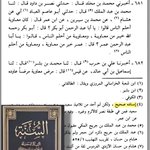
Muhammad ibn Mukhlad informed me, saying: Abu Mansur ibn Dawud ibn Tawq al-Saghani narrated to me, saying: Sa'id ibn Mansur narrated to us, saying: Hushaym narrated to us, from Al-Awwam ibn Hawshab, from Jabalah ibn Suhaym, who said: I heard Ibn Umar saying:
"I have not seen anyone, after the Messenger of Allah, more distinguished in leadership than Muawiyah.' It was said to him, 'Not even your father?' He replied, 'My father, Umar,may Allah have mercy on him, was better than Muawiyah, but Muawiyah was more distinguished in that regard than him."
٦٨٠ - أَخْبَرَنِي مُحَمَّدُ بْنُ مَخْلَدٍ ، قَالَ: حَدَّثَنِي أَبُو مَنْصُورِ بْنُ دَاوُدَ بْنِ طَوْقِ الصَّغَانِيُّ، قَالَ: ثَنَا سَعِيدُ بْنُ مَنْصُورٍ، قَالَ: ثَنَا هُشَيْمُ، عَنِ الْعَوَّامِ بْنِ حَوْشَبِ، عَنْ جَبَلَةَ بْنِ سُحَيْمٍ، قَالَ: سَمِعْتُ ابْنَ عُمَرَ، يَقُولُ: " مَا رَأَيْتُ بَعْدَ رَسُولِ اللَّهِ صَلَّى اللَّهُ عَلَيْهِ وَسَلَّمَ أَسْوَدَ مِنْ مُعَاوِيَةَ، فَقِيلَ: وَلَا أَبُوكَ؟ قَالَ: أَبِي عُمَرُ رَحِمَهُ اللَّهُ خَيْرٌ مِنْ مُعَاوِيَةً، وَكَانَ مُعَاوِيَةُ أَسْوَدَ مِنْهُ "
Note: The Term "أسود" )Aswad): In this classical Arabic context, the word does not refer to color. It is derived from Siyadah )سيادة meaning mastery, leadership, political acumen, and administrative shrewdness.

7
443
Imām Abū ‘Abd al-Raḥmān ‘Abdullāh bin al-Imām Aḥmad bin Ḥanbal said:
"I heard my father [Aḥmad bin Ḥanbal], may Allah have mercy upon him, when he was asked about Irjā’?
He said: 'We say: Īmān consists of speech and action; it increases and it decreases. If a person commits adultery or drinks wine, his Īmān decreases.'
Kitāb al-Sunnah p.300

Imām at-Tirmidhī said in Jami' at-Tirmidhi p.782:
"Qutaybah narrated to us; Bishr bin al-Mufaddal narrated to us, from al-Jurayri, from ‘Abdullāh bin Shaqīq al-‘Uqayli, who said: "The Companions of Muhammad ﷺ did not consider the abandonment of any action to be disbelief, except for the prayer."

Abū al-Dardā رضي الله عنه said:
Entrust your honour to Allah.
Whoever curses you, insults you, or fights you, leave him to Allah.
[الزهد لأبي داود (رقم ٢١٧)]
It is attributed to Umar ibn al-Khattab رضي الله عنه that
"A man must be like a young boy (friendly and joyous) towards his family,
but when the call of duty is given, he is found responding like a man."
المجالسة وجواهر العلم]
Someone once asked a man, “ _Why do we never hear you speak ill of anyone?_ ”
He replied,
> “ *I am still busy fixing my own faults. I have no time left to search for the faults of others.* ”
SubḥānAllāh, what a reminder. While some people spend their time exposing the shortcomings of others, others are busy correcting their own.
Muḥammad ibn Sīrīn رحمه الله said:
> “ *Verily, the people who mention the faults of others the most _have the most mistakes!_* ”
[المجالسة وجواهر العلم، ٦/٨٦]
Before speaking about someone else's faults, ask yourself:
_Would I be pleased if someone spoke about me the way I am speaking about them?_
Isn't it astonishing how a person can be full of faults themselves, yet overlook every one of them just to point out what is wrong with someone else?
You have faults you hope Allah will conceal. So *be careful about exposing the faults of others* . Keep your tongue away from backbiting and stop acting as though you have nothing to correct within yourself.
_You have enough to work on within yourself. Start there._
3
122
Imam al-Lālakāʾī رحمه الله تعالى said in Sharh Usūl I’tiqād Ahlis-Sunnah wal-Jamā’ah (3/132):
Abu Thawr said: "Know—may Allah have mercy on us and you—that Iman is confirmation with the heart, speech with the tongue, and action with the limbs. And that is because there is no disagreement among the people of knowledge regarding a man who, if he says: "I bear witness that Allah, the Mighty and Majestic, is One, and that what the Messengers brought is the truth," and affirms all the laws, then says: "What my heart has tied itself to is nothing of this, and I do not believe it to be true," that he is not a Muslim. And if he says: "The Messiah is Allah," and rejects the matter of Islam, and says: "My heart does not believe anything of that to be true," that he is a disbeliever by expressing that, and not a believer."

13
457
> أغارُ على ظلِّ الحليلةِ أن يُرى، وقولوا إذا شئتم بأنِّي مُعقَّدٌ.
“I am so protective that I would not even like the shadow of my wife to be seen. Say, if you wish, that I am ‘complicated’ or ‘overprotective’. ”
There is a kind of ghayrah that this generation no longer understands.
Many people today mock ghayrah and call it “controlling”. And the believer calls it honour .
Because what Allah commanded to be protected should never be treated as something to display. Ghayrah is not possessiveness. It is protecting the boundaries set by Allah ﷻ .
Imam Ibn al-Qayyim رحمه الله said:
“ And this shows you that the foundation of the deen is ghayrah (protective jealousy), and whoever has no ghayrah has no deen. For ghayrah protects the heart, and the limbs are therefore protected by it, driving away evil and immoralities.”
[الداء والدواء لابن القيم، ١٦٧]
If a man has no protective jealousy (ghayrah) over the honour of his family, then he has no place among the noble people.
Imagine being so afraid of being called controlling that you become careless with the honour Allah entrusted to you . The tragedy is not that people mock ghayrah, but that some men have become so afraid of their mockery that they have stopped feeling it altogether.
What a loss that is.

Shaykh Ṣāliḥ bin Fawzān al-Fawzān حفظه الله said:
"as the Murji'ah says, as they claim that as long as a person believes in their heart and affirms the truth, they are a believer possessing complete and perfect faith, while actions are treated as insignificant; thus, in their view, someone who does not pray, fast, pay Zakat, perform Hajj, or do any righteous deeds of obedience whatsoever is still considered a full believer by virtue of what is merely in their heart, which constitutes one of the greatest forms of misguidance. Therefore, the refutation against them is that sins absolutely do harm a person under all circumstances: among them are sins that entirely nullify faith, and among them are those that do not completely nullify it but rather diminish it, leaving its perpetrator exposed to the divine threat of punishment for committing them."
Al-Ta‘līqāt al-Mukhtaṣarah ‘alā Matn al-‘Aqīdah al-Ṭaḥāwiyyah p.140

1
13
512