

Bioinformatician
Shanghai,China
Joined March 2017
- Tweets32
- Following38
- Followers3
- Likes10


Pinned Tweet
Our New ViMIC 2.0 Database is published! Massive upgrade in virus mutations, integration sites & multi-omics data:
Free access :biomedinfo.cn/ViMIC2.0/index…
Citation: pubmed.ncbi.nlm.nih.gov/4116…

1
12
Our work presents AAKD, a standardized platform advancing acupuncture anesthesia for enhanced recovery and mechanism research.

2
Our work for studying alterations in genomic features and the tumour immune microenvironment predict immunotherapy outcomes in advanced biliary tract cancer patients.
Article: pubmed.ncbi.nlm.nih.gov/4021…

12
Our work for developing an automatic NGS feature extraction algorithm for predicting EBV-associated
nasopharyngeal cancer and high-risk mutation.
Article: pubmed.ncbi.nlm.nih.gov/4118…

8
Our work for developing an open-source multi-semantic annotation dataset and automated recognition tool for viral carcinogenesis factors.
Article: pubmed.ncbi.nlm.nih.gov/4099…

9
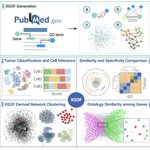
Our work for decoding hepatobiliary-specific immune gene patterns in gastrointestinal cancers via gene ontology fingerprints, multi-omics, and experimental integration.
Article: pubmed.ncbi.nlm.nih.gov/4065…

5
A database of human disease-related virus mutations, integration sites and cis-effects (bmtongji.cn/ViMIC/index.php). Please cite our article for research using this database!

12
Our work published in Precision Clinical Medicine @PrecisionClinMe @OxfordJournals , focusing on apolipoprotein A1 (APOA1) to comprehensively elucidate its value and underlying mechanism in hepatocellular carcinoma (HCC).


Our work published in iScience @CellPressNews for developing a knowledge empowered explainable gene ontology fingerprint approach to improve gene functional explication and prediction. Article link: pubmed.ncbi.nlm.nih.gov/3709….

1
41
Our work published in Bioinformatics @OxfordJournals for developing ViMRT, a text-mining tool and search engine for automated virus mutation recognition (bmtongji.cn:1225/mutation/in…). Article link: pubmed.ncbi.nlm.nih.gov/3634….

24
Our recent study provides evidence for HPV16 E6 sequences containing vital mutation features in the high-grade squamous intraepithelial lesion prediction which can reduce more unneeded colposcopies without a loss of sensitivity to detect cervical cancer.ncbi.nlm.nih.gov/pmc/article…

Our recent study publishing in Frontiers in Immunology for a systematically investigating on the quasispecies characteristics and diversity of HBV s regions in CHB/HCC patients with coexistence of HBsAg and HBsAb using NGS. frontiersin.org/articles/10.…


Y. Wang retweeted
Our work published in Nucleic Acids Research @NAR_Open for developing ViMIC, a database of human disease-related virus mutations, integration sites and cis-effects (bmtongji.cn/ViMIC/index.php). Article link: academic.oup.com/nar/advance…

Our work published in Nucleic Acids Research @NAR_Open for developing ViMIC, a database of human disease-related virus mutations, integration sites and cis-effects (bmtongji.cn/ViMIC/index.php). Article link: academic.oup.com/nar/advance…
#Bioinformatics #Gastroenterology @OxfordJournals Our work for developing GIDB, a panoptic knowledge database that attempts to automate the curation of molecular signatures using natural language processing approaches and multidimensional analyses. pubmed.ncbi.nlm.nih.gov/3108…

#Bioinformatics #MachineLearning #virus @IDSAInfo Our study for providing evidence for the first time that HBV rt sequences contain vital HBV quasispecies features in predicting HCC. pubmed.ncbi.nlm.nih.gov/3304…
