

Nothing has ever been found of irreducible complexity
United Kingdom
Joined April 2016
- Tweets3.8K
- Following17
- Followers9.9K
- Likes108
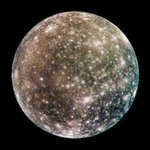


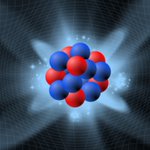
Callisto, Jupiter’s second-largest moon, nearly the size of Mercury, was discovered in 1610 by Galileo Galilei

The neutrino is an elementary subatomic particle first postulated in 1930 by Austrian physicist Wolfgang Pauli to explain the apparent missing energy in radioactive beta decay. It was not until 1956, 26 years later, that the neutrino was experimentally detected for the first time

Our Milky Way moves through space at about 2 million km/h with respect to the Cosmic Microwave Background. Relative to the Andromeda Galaxy, we are approaching each other at approximately 396,000 km/h

The far side of the Moon is much more heavily cratered and has a thicker crust than the near side. This is the result of early thermal history, tidal forces, and a unique chemical asymmetry

Most galaxies around us emit red-shifted light because they are moving away from us; however, Andromeda emits blue-shifted light because it is on a collision course with the Milky Way

The Hubble tension is one of the biggest unresolved problems in modern cosmology. It refers to a puzzling disagreement between measuring how quickly galaxies are receding and calculating what the expansion rate today should be based on the Cosmic Microwave Background

Pluto and Neptune swap their order in terms of distance from the Sun. Pluto can be closer to the Sun than Neptune for about 20 years at a time. The most recent such period began in 1979 and ended in 1999

In 2011, Saul Perlmutter, Brian P. Schmidt, and Adam G. Riess won the Nobel Prize in Physics for the discovery of the accelerating expansion of the Universe

Mars has two natural moons: Phobos and Deimos. Both are relatively small (22 km and 12 km in average diameter, respectively) and are irregularly shaped objects, quite different from Earth's large, nearly spherical Moon

The atomic nucleus was experimentally discovered in 1911 by New Zealand-born British physicist Ernest Rutherford, 14 years after the discovery of the electron

The Many-Worlds Interpretation of quantum mechanics is the idea that every possible outcome of a quantum event happens, but in different branches of reality
🤖 Made with AI

During the full moon, the Earth is between the Sun and the Moon. Then, 14 days and 18 hours later, during the new moon, the Moon is between the Sun and the Earth

When a particle of matter meets its corresponding antiparticle, they can annihilate each other, converting their combined mass into energy, typically in the form of photons, in accordance with Einstein’s equation E=mc²

The first satellite to orbit the Earth was launched by the Soviet Union in 1957. Today there are roughly 20,000 satellites orbiting our planet

Gamma-ray bursts, detected on average once a day, are brief flashes of high-energy radiation produced by some of the most violent events in the Universe, such as the collapse of a very massive star or the collision of two neutron stars

The better you know the position of a quantum particle, the less accurately you can determine its momentum. This is not related to the observational success of current technology. It is a fundamental property of nature

The Robin's Egg Nebula is a planetary nebula about 3 light-years across, displaying the final phase in the evolution of an aging binary star system consisting of two white dwarf stars, less massive but much hotter than our Sun

Except for gravity, the fundamental interactions of nature are described by the Standard Model of particle physics as being mediated by particles called bosons. These interactions are those that cannot be explained in terms of more fundamental interactions

Our Sun is the closest astronomical object to a perfect sphere ever observed. There is just a 10 km difference between the Sun’s polar and equatorial diameters of 1.4 million km

