

Stay curious. Science resources for teens, teachers, and curious homes.
Joined November 2022
- Tweets2K
- Following182
- Followers1.4K
- Likes10.7K





Pinned Tweet
Things to try. Things to notice. Things to explore.
Your curiosity already knows where to start. Follow along, and let's see where it takes you. Stay curious. ✨
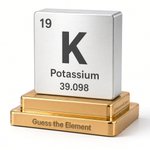
Guess the element — Expert, Keen, Everyday. Try to land it in three.
1/4 Expert:
1. Humphry Davy freed it in 1807 by passing an electric current through a molten caustic alkali — the first metal ever isolated by electrolysis.
2. Its superoxide has been packed into some rebreathers and spacecraft air systems, soaking up exhaled carbon dioxide and giving back oxygen.
3. A tiny fraction of its natural atoms are radioactive, making it the largest source of natural radioactivity inside your own body.
🤖 Made with AI

3/4 Everyday:
7. A steady heartbeat depends on a careful balance of its dissolved ions inside and outside your cells.
8. Salt substitutes for people cutting back on sodium swap much of the table salt for its chloride.
9. Dropped into water, a small lump skates around while the hydrogen it releases bursts into flame — a classic classroom demo.

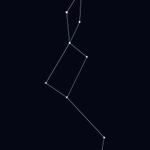
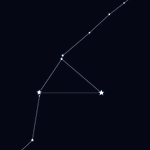
The lizard on the edge of the Milky Way:
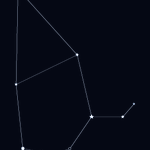
A faint zigzag of stars slips between the Swan and Andromeda.
Lacerta, Latin for lizard, is a modern constellation. It fills the unnamed region between Cygnus and Andromeda.
Its brightest stars form a dimmer twin of Cassiopeia’s W — Little Cassiopeia. Its Alpha star is named Stellio, Latin for a starred lizard.
Stay curious:
Locate Lacerta between Cygnus and Cassiopeia.
Can you see the little W?
What does Stellio mean?

Test Dissection #4: Write the right answer, and why it's right
A red X tells you what's wrong, not what's right. Tonight: for each missed question, find the correct answer (notes, textbook, or ask your teacher). Write it beside your mistake, plus one line on why it's correct.
Why it matters: in an online experiment where people learned foreign words, seeing the correct answer after a mistake boosted recall a week later. Being told only "incorrect" didn't measurably help. And a major review of learning-from-errors research calls corrective feedback, including analysis of the reasoning behind the mistake, "crucial."
Next Thursday: the retest that checks whether your fix stuck.
Sources in the reply.

Sources for Test Dissection #4:
Pashler, Cepeda, Wixted & Rohrer (2005), J Exp Psych: LMC. doi.org/10.1037/0278-7393.31…
Metcalfe (2017), "Learning from errors," Annual Review of Psychology. doi.org/10.1146/annurev-psyc…
The crane that stole a fish’s tail:
A bright blue-white star stands south of Fomalhaut, with a long neck of lesser lights stretching back up toward the Southern Fish.
Grus is the Crane. Dutch sky-mappers drew it at the end of the 1500s. Frederick de Houtman called it a heron; Johann Bayer kept Grus. No Greek myth places this bird in the sky.
Its brightest light is Alnair — from Arabic for “the bright one from the fish’s tail.” Arab astronomers had stretched the Southern Fish farther south than Ptolemy. Gamma Gruis, now the crane’s head, once sat on the tip of that fish’s tail.
Stay curious:
Locate Grus south of Fomalhaut and Piscis Austrinus.
Why does Alnair’s name still talk about a fish?
Which stars once belonged to the Southern Fish?

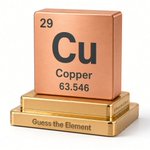
Guess the element — Expert, Keen, Everyday. Try to land it in three.
1/4 Expert:
1. In the 1880s French vine growers began spraying a blue mix of its sulfate and lime — the Bordeaux mixture, one of the first widely used fungicides.
2. Horseshoe crabs and octopuses have blue blood, because their oxygen-carrying protein holds atoms of this metal instead of iron.
3. Ötzi the Iceman, frozen in the Alps about 5,300 years ago, carried an axe whose blade was nearly pure metal of this element.
🤖 Made with AI

3/4 Everyday:
7. Pennies have long been made of it or plated with it, which gives them their warm orange-brown color.
8. Old roofs and statues, like the Statue of Liberty, turn green as its surface slowly weathers.
9. The metal inside most household electrical wires is this reddish one.

1. In 1669, Hennig Brandt boiled down huge amounts of urine and distilled the residue, catching a waxy white solid.
2. Squeezed under high pressure and heat, it turns into a black, flaky form that looks and behaves a lot like graphite.
3. Its white form is made of four-atom pyramid-shaped molecules, melts near 44 °C and bursts into flame in air, so it is stored under water.

7. It is one of the big three nutrients on fertilizer bags, alongside nitrogen and potassium.
8. The tangy acid in many colas is built around it.
9. The rough brown striking strip on a box of safety matches holds its red form.
🤖 Made with AI

The house of the king:
Cepheus is a northern constellation.
Fainter stars sketch a house with a peaked roof near Polaris.
He sits beside his queen on the same side of the pole. Across Polaris, the opposite seat belongs to the Big Dipper.
Greek myth made him king, husband of Cassiopeia and father of Andromeda. On the sky chart, that royal family still sits together.
Stay curious:
Locate Cepheus beside his queen.
Can you find the house shape?
Where is the Big Dipper compared with Cepheus?

The fish that drinks from the water-bearer’s stream:
A lone bright star hangs south of Aquarius and Capricornus.
Piscis Austrinus is the Southern Fish. One of the ancient sky figures Ptolemy listed.
It is usually drawn as a single fish, mouth open to the stream poured from Aquarius’s jar just north of it. That mouth is Fomalhaut — Arabic for “mouth of the fish,” the light that makes the whole figure easy to find.
Stay curious:
Locate Fomalhaut south of Aquarius.
Can you trace the faint fish once you have its mouth?
How is this Southern Fish different from the two in Pisces?

Test Dissection #3: Label every mistake with a cause
Tonight: give each missed question one label, then match the fix.
• Didn't know it → relearn the concept
• Misread the question → underline key words (NOT, EXCEPT, units) next time
• Careless slip → save a few minutes to check your work
• Ran out of time → practice with a timer, and answer what you know first
These labels are a teacher's tool, not a tested method. But the idea underneath, figuring out why you got it wrong, has support. In a study of 8th graders prepping for New York's Algebra 1 Regents exam, the more time teachers spent talking with students about why their errors happened and how to avoid them, the more they learned. Just walking through the right method didn't help.
Next Thursday: what to write beside each mistake.
Sources in the reply.

Source for Test Dissection #3:
Metcalfe, Xu, Vuorre, Siegler, Wiliam & Bjork (2025), British Journal of Educational Psychology. doi.org/10.1111/bjep.12651
