
AI in Medicine PhD Student @HarvardDBMI/@Harvard | Curr/Prev: @MIT_CSAIL @VectorInst @KAUST_News @KAIMRC_KSA
Boston, MA
Joined February 2019
- Tweets307
- Following405
- Followers106
- Likes760
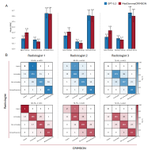


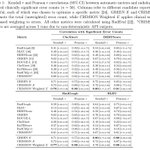


If you've worked on radiology report generation, you know the pain: you report 10 metrics, three go up, two go down, the rest barely move. Which ones matter? Do any capture when an error could actually harm a patient?
The core problem: existing metrics either treat all errors the same or make a crude binary significant/not-significant split. But missing a tension pneumothorax is not the same as missing age-related aortic calcification in an 82-year-old. Current metrics can't tell the difference.
We built CRIMSON to try to fix this.
(1/8)

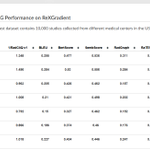
CRIMSON is now integrated into ReXrank (rexrank.ai/). Models like RadPhi4VisionCXR, zzy-RGv2-2b, and MAIRA-2 rise to the top on ReXGradient, while others that score well on traditional metrics drop sharply.
(7/8)

📄 Paper: arxiv.org/abs/2603.06183
💻 GitHub: github.com/rajpurkarlab/CRIM…
🤗 Model: huggingface.co/rajpurkarlab/…
Thanks to my advisor Pranav Rajpurkar (@pranavrajpurkar) and co-authors: Thibault Heintz, Siavash Raissi, Mahmoud Alabbad, Mona Alhammad, Hassan AlOmaish, Sung Eun Kim, and Oishi Banerjee!
(8/8)

سعيد جدًا أنني سأنضم إلى برنامج الدكتوراه في الذكاء الاصطناعي في الطب ضمن تخصص المعلوماتية الطبية الحيوية في جامعة هارفارد، ابتداءً من خريف 2026، بدعم كامل من الجامعة.
ممتن لجميع من دعمني ووجّهني في هذه الرحلة. شكر خاص لمشرفي الحالي الدكتور Pranav Rajpurkar، ولمشرفي الأول وصديقي الدكتور عبدالرحمن الجوعي، وكذلك لمشرفيّ خلال فترات التدريب السابقة الدكتور Bo Wang و الدكتور Dominik L. Michels.

Extremely excited to share that I will be joining the AI in Medicine Ph.D. program (@AIM_Harvard_PhD) in Biomedical Informatics at Harvard Medical School/Harvard Kenneth C. Griffin Graduate School of Arts and Sciences (@harvardmed/@HarvardGSAS).
Grateful to all my mentors for their guidance along the way. I am especially thankful to my current advisor Prof. Pranav Rajpurkar (@pranavrajpurkar), my first advisor and friend Prof. Abdulrhman Aljouie (@aaljouie), and my mentors from previous internships and studies, Prof. Bo Wang (@BoWang87) and Prof. Dominik L. Michels (@dominikmichels).


Mohammed Baharoon retweeted

Thrilled to share that our paper, “Exploring the Design Space of 3D MLLMs for CT Report Generation,” has been accepted to @MICCAI_Society 2025! 🎉
This work—developed during Mohammed Baharoon’s internship at the Vector Institute with Jun Ma (@junma)—secured 2nd place in the MICCAI 2024 AMOS-MM Challenge 🥈.
We systematically explored how to build effective 3D multimodal large language models (MLLMs) for CT report generation, focusing on:
--Architectures: visual encoders, projectors, and language models
--Training strategies: from frozen LLMs to parameter-efficient fine-tuning
--Report completeness: knowledge-driven methods to enrich outputs
💡 Key innovations:
--Binary-based Questioning (BQ): prompts the model to ask yes/no questions about common findings, reducing missed abnormalities.
--Naive Normality (NN): automatically inserts “normal” statements for unmentioned organs, improving clarity and completeness.
Together, these boosted the GREEN score by up to 10%, showing how simple post-processing can make AI-generated reports more clinically accurate.
Takeaways:
1. Architecture matters more than LLM size
2. Higher resolution isn’t always better if pre-training and fine-tuning resolutions mismatch
📄 Full paper: papers.miccai.org/miccai-202…
💻 Code: github.com/bowang-lab/AMOS-M…
Shoutout to Mohammed Baharoon and Jun Ma for their leadership in this project! Also thanks to all other co-authors, Congyu Fang and Augustin Toma, for their tremendous contributions! 🙏
@VectorInst @UHN_Research @UHNAIHUB @UofTCompSci


Mohammed Baharoon retweeted

It's the 17th anniversary of Castle Crashers' initial release on the Xbox Live Arcade! Game babies, they grow up so fast. 💗⚔️

Mohammed Baharoon retweeted

Excited to share #Harmony: A joint self-supervised and weakly-supervised method learning generalized visual features from web-scraped data. It outperforms #CLIP/#SigLIP/MaskCLIP/SLIP/iBOT/MAE on classification/segmentation/detection.
arxiv.org/abs/2405.14239
@KAUST_News @Harvard

Mohammed Baharoon retweeted

MedSAM2: Segment Anything in 3D Medical Images and Videos
"fine-tuning the Segment Anything Model 2 on a large medical dataset with over 455,000 3D image-mask pairs and 76,000 frames, outperforming previous models across a wide range of organs, lesions, and imaging modalities. "

Mohammed Baharoon retweeted
Ready for the most powerful foundation model for medical images/videos?
🚨 Just dropped: MedSAM2
The next-gen foundation model for 3D medical image & video segmentation — built on top of SAM 2.1.
• Project site: medsam2.github.io
• Paper: arxiv.org/abs/2504.03600
Why it matters:
• Trained on 455K+ 3D image–mask pairs & 76K+ annotated video frames
• >85% reduction in human annotation costs (validated in 3 studies)
• Fast, accurate, and generalizes across organs, modalities, and pathologies
Big impact:
We used MedSAM2 to create 3 massive datasets:
• 5,000 CT lesions
• 3,984 liver MRI lesions
• 251,550 echo video frames
Plug & play:
Deployable in:
→ 3D Slicer
→ JupyterLab
→ Gradio
→ Google Colab
We open-sourced everything!
Explore more:
• Models: huggingface.co/wanglab/MedSA…
• Datasets:
→ CT: huggingface.co/datasets/wang…
→ MRI: huggingface.co/datasets/wang…
• 3D Slicer plugin: github.com/bowang-lab/MedSAM…
• Segmentation dataset hub: medsam-datasetlist.github.io
Let’s collaborate:
Have unlabeled 3D medical images or videos?
We’re actively seeking partners to co-create new public datasets. DM us or connect!
#MedSAM2 #MedicalAI #ComputerVision #3Dsegmentation #FoundationModels #AIforHealth
Also shoutout to @JunMa_11, the machine learning lead at our @UHNAIHUB for his amazing leadership in this project!


