

Balkan security, OSINT & strategic warning | Tracking hybrid warfare, foreign interference, disinformation and regional security shifts.
Joined August 2026
- Tweets207
- Following23
- Followers35
- Likes0



MONTENEGRO FACES A TEST OF HOW TO INVESTIGATE FOREIGN INFLUENCE WITHOUT TARGETING FREE MEDIA
Montenegro's debate over foreign influence is shifting from identifying suspect financial links to defining the safeguards of a credible investigation. Civil society is calling for an independent, broad-based parliamentary mechanism rather than a narrowly targeted inquiry into selected media and companies.
On 3 November, the Center for Democratic Transition (CDT) urged parliament to establish a dedicated committee on foreign interference. Its director, Dragan Koprivica, said scrutiny should cover political financing, electoral activity, media ownership, public companies, telecommunications and infrastructure, while avoiding the assumption that lawful foreign contacts or particular editorial positions prove illicit influence.
The strategic challenge is to distinguish coordinated covert interference from legitimate international engagement. An investigation seen as selective could weaken public trust and media freedom; an evidence-led mechanism could identify systemic vulnerabilities across borders. The proposed committee has not yet been established.
Watch: Parliamentary mandate, disclosure of beneficial ownership, evidence standards, protections for media freedom and cooperation with Serbian institutions.
#Montenegro #ForeignInterference #HybridThreats #MediaFreedom #ElectionIntegrity #STRATCOM #BalkanSecuritySignal

NORTH MACEDONIA PLANS A 10% MILITARY PAY RISE — PERSONNEL RETENTION BECOMES A READINESS PRIORITY
North Macedonia is putting military personnel costs at the centre of its 2027 defence plans. A proposed 10% pay rise would address the human-resource side of readiness as NATO members face growing pressure to sustain trained forces and modernise equipment simultaneously.
Defence Minister Vlado Misajlovski announced on 3 November that salaries and allowances for military and defence employees are set to rise by 10% from January 2027 under the proposed budget. Public broadcaster MRT reported an intended increase of around two billion denars in the defence budget, with 30% reserved for modernisation and capital investment. The budget still requires parliamentary approval.
Pay policy is not a substitute for force capability, but retention, recruitment and specialist skills depend on a sustainable personnel system. The test will be whether the spending package produces measurable improvements in staffing and deployability alongside equipment upgrades.
Watch: Parliamentary budget approval, military recruitment and attrition, specialist staffing, exercise readiness and actual modernisation spending.
#NorthMacedonia #DefenceSpending #NATO #MilitaryReadiness #ArmedForces #WesternBalkans #BalkanSecuritySignal

GREECE PREPARES TO RESUME SEABED SURVEYS — THE CYPRUS POWER LINK FACES A NEW MARITIME TEST
Greece is preparing to restart seabed surveys for the electricity interconnector with Cyprus, bringing a strategically important energy project back into an area of contested maritime claims. The next phase could test how Athens and Ankara manage operational encounters at sea.
Greek Foreign Minister George Gerapetritis told a parliamentary committee on 3 November that surveys could resume within five to 15 days, according to a 4 November report by Kathimerini. Athens says operational contingency planning is in place. Türkiye has previously disputed jurisdiction over sections of the proposed route, while Greece and Cyprus reject that position.
The issue connects energy resilience with maritime security: surveys, commercial contractors and naval monitoring may become entangled in a legal and diplomatic dispute between two NATO allies. Renewed survey work is planned, not yet confirmed as underway, and Turkish interference is a risk rather than an established outcome.
Watch: Survey notices, vessel deployments, Turkish NAVTEX responses, naval contacts and the project’s financing and permitting milestones.
#Greece #Cyprus #Türkiye #MaritimeSecurity #EnergySecurity #GreatSeaInterconnector #NATO #BalkanSecuritySignal

RAMA SAYS SERBIA’S NEW LEADERSHIP HAS NOT SHIFTED ON KOSOVO — EU ACCESSION REMAINS THE TEST
Albania's prime minister is warning that electoral change in Serbia has not yet produced a change in Belgrade's position on Kosovo. The message places concrete state behaviour, rather than the identity of a new governing movement, at the centre of the regional security discussion.
Speaking at a European enlargement event in Brussels on 3 November, Edi Rama said Serbia's new political winners had shown no openness on recognition of Kosovo. He also pointed to Serbia's relationship with Russia and its approach to sanctions, while arguing that Serbia should remain on a European path and meet the Union's conditions.
Rama's position is a political assessment, not a newly announced EU accession rule. Its strategic relevance is that normalisation with Kosovo, foreign-policy alignment and regional trust will remain practical measures against which Serbia's transition is assessed. The key question is whether the incoming government changes policy beyond its electoral victory.
Watch: The new Serbian government’s Kosovo platform, sanctions policy, Belgrade–Pristina dialogue steps and EU institutional responses.
#Albania #Serbia #Kosovo #EUEnlargement #Russia #RegionalDiplomacy #BalkanSecuritySignal

SERBIAN STUDENTS REPORT SURVEILLANCE AFTER POLICE RAID — POST-ELECTION ACCOUNTABILITY BEGINS
Claims of police surveillance against student organisers are resurfacing after Serbia's election, placing security-service conduct and the protection of political freedoms under scrutiny. The immediate development is the partial return of property seized from a student organising site before the vote.
N1 reported on 3 November that police returned items taken during a 20 October search of a floating venue on Belgrade's Zemun quay used by agriculture students. Students told N1 that plainclothes officers had followed them on earlier occasions. Those accounts are allegations; the report does not establish the legal basis for the search or independently prove systematic surveillance.
The case matters because a political transition should include clear rules for policing assemblies, investigating complaints and safeguarding lawful activism. It also offers an early test of whether Serbia's security institutions operate under transparent and reviewable procedures rather than partisan pressures.
Watch: Police explanations, legal scrutiny of the search, complaints by student organisers, evidence of surveillance and institutional oversight measures.
#Serbia #StudentMovement #PoliceAccountability #CivilLiberties #SecurityInstitutions #RuleOfLaw #BalkanSecuritySignal

THE OSCE CHAIR HEADS TO BELGRADE AND PRISTINA — SERBIA’S TRANSITION ENTERS REGIONAL DIPLOMACY
Serbia's post-election transfer of power is becoming a regional diplomatic issue as Switzerland's foreign minister, acting as OSCE chairperson-in-office, prepares to visit Belgrade, Pristina and Skopje. The visit places democratic transition and the Kosovo–Serbia dialogue within the same security agenda.
On 3 November, Switzerland announced that Ignazio Cassis would travel to the three countries from 4 to 6 November. In Belgrade, he is scheduled to meet interim president Ana Brnabić and elected Student List representatives to discuss the transition after Serbia's snap parliamentary election. In Kosovo on 5 November, he is due to meet senior officials, discuss the Belgrade–Pristina dialogue and visit KFOR. Meetings with OSCE field missions are planned in all three countries.
The strategic significance lies in whether political change in Serbia produces institutional continuity, credible electoral accountability and a more constructive regional dialogue. The meetings are announced, not yet concluded.
Watch: Messages from the Belgrade talks, OSCE/ODIHR observations, statements in Pristina and any concrete commitments on dialogue implementation.
#Serbia #Kosovo #NorthMacedonia #OSCE #Switzerland #Diplomacy #RegionalSecurity #BalkanSecuritySignal

NATO PARLIAMENTARIANS SEE IMPROVED SECURITY IN KOSOVO — BUT HYBRID THREATS REMAIN
Kosovo's improved security environment is enabling NATO to consider adjustments to KFOR's posture, but Alliance parliamentarians warn that hybrid threats and political tensions remain obstacles to lasting stability. An improving situation does not remove the requirement for credible deterrence.
In a statement issued on 3 November following a fact-finding mission to Pristina, the NATO Parliamentary Assembly said KFOR has begun gradual, conditions-based optimisation of its posture while retaining the ability to respond if the situation deteriorates.
Delegates discussed Kosovo's defence investment, Kosovo Security Force training, interoperability and the continued importance of the EU-facilitated dialogue with Serbia.
The strategic test is whether the reduction of immediate security pressures can translate into stronger institutions and sustained normalisation. KFOR's evolving deployment should be understood as a conditional adjustment, not a withdrawal commitment or a NATO membership decision for Kosovo.
Watch: KFOR force posture, incidents in northern Kosovo, hybrid activity, KSF interoperability and implementation of dialogue commitments.
#Kosovo #KFOR #NATO #HybridThreats #SecurityPolicy #WesternBalkans #BalkanSecuritySignal

DEMOCRATS TAKE CONTROL OF CONGRESS — THE BALKANS FACE A NEW US POLICY BALANCE
The US midterm elections have shifted congressional power to the Democrats, opening a new phase of scrutiny over President Donald Trump's foreign-policy priorities. For the Western Balkans, the immediate issue is not a change of president but how a differently controlled Congress may influence security funding, diplomatic oversight and transatlantic commitments.
Following the 3 November vote, Reuters and the Associated Press reported Democratic victories sufficient to secure both chambers. Democrats reached the 51-seat Senate majority threshold and made gains in Republican-held seats, including Texas, Ohio, Kansas and South Carolina. A House majority requires 218 seats; US news organisations projected Democratic control while individual district counts remained provisional.
Congress can shape defence appropriations, hold hearings and influence nominations and sanctions legislation, while the administration retains major executive powers over diplomacy and military policy. Kosovo, Serbia and Bosnia and Herzegovina therefore need to watch concrete decisions rather than assume an immediate regional policy reversal. The incoming Congress will not take office until January 2027.
Watch: New committee leadership, KFOR-related appropriations, US positions on the Kosovo–Serbia dialogue, Bosnia policy and sanctions oversight.
#USElections #USCongress #Kosovo #Serbia #NATO #WesternBalkans #TransatlanticSecurity #BalkanSecuritySignal

MOSCOW-BOUND FLIGHT WITH VULIN, BAJATOVIĆ AND POPOVIĆ TURNED BACK — SERBIA'S RUSSIAN CONNECTIONS UNDER SCRUTINY
The dramatic return of an Air Serbia flight carrying three prominent figures linked to Serbia's former ruling establishment has raised new questions about political movements towards Moscow during Belgrade's post-election transition. The incident also exposes the continuing importance of Russian energy and political networks in Serbia.
On 3 November, flight JU134 departed Belgrade for Moscow at 18:48 but was ordered to return after reaching Lithuanian airspace. Aleksandar Vulin, Srbijagas director Dušan Bajatović and politician Nenad Popović were reportedly aboard. Air Serbia confirmed that additional passenger security checks prompted the return. Serbian media alleged that Vulin had bypassed mandatory screening, while opposition politicians questioned whether the journey represented an attempted escape. No evidence of an attempted flight from justice has been established.
Bajatović subsequently confirmed his presence and said his Moscow visit concerned gas supplies and payment difficulties involving Alta Bank. He could not explain Vulin's or Popović's travel purposes.
The strategic significance lies in the persistence of Serbia's political and energy connections with Russia during a sensitive transfer of power.
Watch: Investigations into the security breach, possible legal proceedings, Vulin's Moscow contacts, Russian energy negotiations and developments within Serbia's former political-security establishment.
#Serbia #Russia #AleksandarVulin #DusanBajatovic #NenadPopovic #Intelligence #EnergySecurity #PoliticalTransition #WesternBalkans #BalkanSecuritySignal

KOSOVO OPENS PARLIAMENTARY SCRUTINY OF A FAILED PROTECTION SYSTEM AFTER ARLINDA ZEKAJ’S KILLING
Kosovo’s response to Arlinda Zekaj’s killing has moved beyond individual disciplinary measures into parliamentary scrutiny of the institutions responsible for protecting people at risk. The central security question is whether warnings, protection orders and intelligence about imminent violence produce timely, coordinated action.
On 2 November, a parliamentary investigative committee formally began work on the handling of Zekaj’s case and the broader institutional response to domestic violence. Its chairman pledged a fact-based investigation. Earlier police-inspectorate findings reported that one protection order had not been documented as executed and another was implemented late. Eleven officers were suspended, prosecutors faced disciplinary action and Police Director Gazmend Hoxha resigned. These steps do not by themselves establish each official’s legal responsibility.
The institutional test is whether investigations result in enforceable procedures, clearer command responsibility and functioning risk escalation across police, prosecutors, courts and social services. Public confidence depends on operational change rather than resignations alone.
Watch: Committee evidence, independent investigations, protection-order enforcement, cross-agency protocols and concrete reforms for high-risk cases.
#Kosovo #PublicSecurity #InstitutionalAccountability #RuleOfLaw #DomesticViolencePrevention #PoliceReform #HumanSecurity #BalkanSecuritySignal

BOMB THREAT DIVERTS LONDON–SOFIA FLIGHT — NATO AIR-DEFENCE READINESS IS ACTIVATED
A bomb threat against a commercial flight to Sofia triggered an emergency diversion and a military interception, showing how a single aviation-security alert can rapidly require coordination among airlines, civilian authorities and NATO air-policing assets. No explosive device was subsequently found.
On 2 November, Wizz Air flight W64302 from London Luton to Sofia diverted to Budapest after receiving a threat in flight. A Hungarian Gripen fighter escorted the aircraft to a safe landing, where police and airport security teams inspected the plane and passengers. Wizz Air later said checks had found nothing suspicious and the flight would continue toward Sofia.
The event demonstrates the value of fast alerting and civil–military interoperability, not proof of a terrorist operation. Its wider security implications concern threat authentication, aircraft routing and the resilience of cross-border aviation response procedures.
Watch: Police findings, the origin of the threat, flight-security protocols, air-policing response times and any related alerts.
#Bulgaria #Hungary #AviationSecurity #NATO #AirPolicing #CivilMilitaryCooperation #SecurityAlert #BalkanSecuritySignal

NORTH MACEDONIA PUTS ELECTRICITY-GRID CYBERSECURITY ON THE NATIONAL SECURITY AGENDA
North Macedonia is treating cyber resilience in the energy sector as a matter of national security rather than merely IT administration. The key vulnerability is regional interdependence: a cyber incident at one operator, trading platform or shared service provider may disrupt electricity markets across borders.
At a UNDP-supported event on 2 November, Energy Minister Sanja Božinovska discussed a cybersecurity assessment and methodology intended to strengthen incident coordination in the energy sector. UNDP representatives warned that interconnected power systems require clear reporting channels, information-sharing procedures and specialised response capacity. The initiative is directed toward a sectoral computer security incident response capability (CSIRT).
The operational challenge now is implementation. A methodology is not yet a functioning response network. Energy-sector resilience depends on tested procedures, technical expertise and rapid communication among utilities, regulators, grid operators and neighbouring systems.
Watch: Creation of a functioning energy CSIRT, incident-reporting rules, joint exercises, cross-border coordination and resilience assessments of critical operators.
#NorthMacedonia #CyberSecurity #EnergySecurity #CriticalInfrastructure #CSIRT #HybridThreats #UNDP #BalkanSecuritySignal

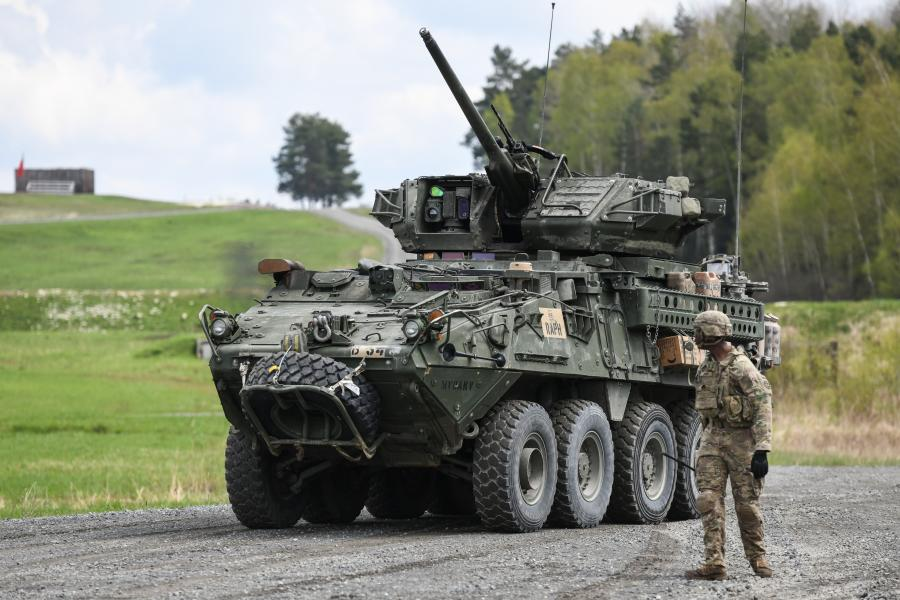
BULGARIA MOVES TO FORMALLY INDUCT STRYKER VEHICLES AS US DEFENCE TALKS FOCUS ON THE BLACK SEA
Bulgaria’s planned formal handover of its first five Stryker combat vehicles for service marks a visible step in its long-running army modernisation programme. The development coincides with renewed high-level discussion of US–Bulgarian defence cooperation and Black Sea security.
Bulgarian public broadcaster BNT reported that a ceremony was scheduled for 3 November at the TEREM military plant in Veliko Tarnovo, attended by the defence minister and chief of defence. Earlier vehicle shipments had already reached Bulgaria, so the event should be understood as an induction milestone rather than the first physical arrival. On 2 November, Prime Minister Rumen Radev met US Deputy Assistant Secretary David Baker to discuss defence, energy and the Black Sea security environment.
The strategic test is operational integration: vehicles must be equipped, maintained, crewed and connected to command systems before procurement becomes usable military capacity. The Black Sea context adds urgency but does not establish any direct connection between the Stryker programme and recent maritime incidents.
Watch: Completion of the handover, crew training, logistics, integration into mechanised units and further US–Bulgarian defence consultations.
#Bulgaria #Stryker #USDefense #NATO #ArmyModernisation #BlackSeaSecurity #MilitaryReadiness #BalkanSecuritySignal
RAMA–RUTTE TALKS PUT ALBANIA’S ROLE IN NATO SECURITY BACK IN FOCUS
Albania’s scheduled meeting with NATO Secretary General Mark Rutte places the country’s Alliance relationship on today’s security agenda. The significance is not the protocol visit itself but the opportunity to assess how Albania’s national defence commitments translate into capabilities and practical cooperation across the Western Balkans.
NATO announced that Prime Minister Edi Rama would be received at Alliance headquarters in Brussels on 3 November. The official notice did not publish an agenda and stated that there would be no media opportunity. As of this morning, no outcome of the meeting should be treated as confirmed.
For a NATO member situated between the Adriatic and the wider Western Balkan security environment, readiness, interoperability and infrastructure resilience remain relevant strategic questions. But any claim that specific deployments, procurements or regional initiatives were agreed must await official confirmation.
Watch: NATO’s post-meeting communications, any defence-capability commitments, Adriatic security cooperation and follow-up announcements from Tirana.
#Albania #NATO #MarkRutte #EdiRama #WesternBalkans #DefenceCooperation #StrategicSecurity #BalkanSecuritySignal

SERBIA ARRESTS ALTA BANK OWNER — A BANKING COLLAPSE IS NOW AN ORGANISED-CRIME INVESTIGATION
The detention of Alta Bank owner Davor Macura has transformed a banking crisis into a major criminal-investigation and financial-governance case. Because Alta’s services and business links extend beyond Serbia, the consequences may also be felt through payment systems and associated companies elsewhere in the Balkans.
On 2 November, Serbian authorities detained Macura and two bank employees on suspicion of abuse of a responsible position. Prosecutors allege unauthorised removal of approximately 45 billion dinars from the bank’s vault; the allegations have not been proven in court. The National Bank of Serbia had revoked Alta Bank’s operating licence days earlier. Investigators conducted searches and ordered a cash inventory.
This is a material new development beyond the earlier regulatory closure. The security implications concern financial-system integrity, supervision of politically exposed business relationships and potential cross-border operational disruptions. An arrest, however, does not establish foreign influence or a wider political conspiracy.
Watch: Prosecutorial evidence, the location of funds, depositor protection, North Macedonian and Montenegrin exposure, and decisions by financial regulators.
#Serbia #FinancialSecurity #ALTA #OrganisedCrime #BankingSupervision #RuleOfLaw #WesternBalkans #BalkanSecuritySignal

ROMANIA AND MOLDOVA SIGN THEIR FIRST JOINT SAFE PROCUREMENT — MILITARY LOGISTICS BECOMES A REGIONAL SECURITY LINK
Moldova’s entry into a joint defence-procurement arrangement with Romania under the EU’s SAFE framework marks a practical step toward military interoperability. The immediate purchase concerns transport vehicles, not offensive weapons, but the longer-term significance lies in connecting a vulnerable non-NATO military to an EU and NATO member’s acquisition system.
On 2 November, defence representatives signed an addendum to Romania’s existing procurement agreement with IDV Defence Vehicles. Moldova is to obtain 62 multifunctional IVECO military trucks through the joint programme. Both defence ministries confirmed the agreement, which builds on an earlier Romanian framework contract.
Reliable logistics determine whether military units can deploy, resupply and sustain operations during a crisis. Shared procurement can also standardise maintenance, training and support arrangements. The agreement does not establish a military alliance or guarantee broader air-defence cooperation; those remain separate policy questions.
Watch: Delivery schedules, maintenance arrangements, additional SAFE projects, counter-drone cooperation and Moldova’s capacity to integrate the new vehicles.
#Romania #Moldova #SAFE #EuropeanDefence #MilitaryLogistics #Interoperability #RegionalSecurity #BalkanSecuritySignal

BLACK SEA SHIPPING ATTACKS ARE TESTING NATO’S SOUTHEASTERN DEFENCE POSTURE
The maritime war around Ukraine is becoming a direct security challenge for NATO’s Black Sea members. Repeated strikes against commercial shipping near Romania and Bulgaria are disrupting trade while forcing the Alliance to confront the limits of its surveillance, interception and escalation-management capabilities.
Reuters reported on 3 November that nine vessels were struck in the western Black Sea during a series of October incidents. NATO has announced additional patrol aircraft, radar and drones for its eastern flank.
Maritime security firm Ambrey recorded 317 merchant and other vessels struck by the warring sides across the Black Sea and Sea of Azov between May and October, compared with 74 in the preceding six months.
Attribution of individual attacks remains contested.
The strategic concern extends beyond ship losses. Threats to the Danube export corridor, Romanian energy infrastructure and commercial navigation could affect European supply chains and food markets. Romania and Bulgaria face a growing requirement for affordable counter-drone and maritime-surveillance capabilities.
Watch: NATO maritime deployments, forensic attribution, attacks near the Sulina corridor, counter-drone investment and proposals for a limited maritime ceasefire.
#BlackSea #NATO #Romania #Bulgaria #MaritimeSecurity #RussiaUkraineWar #CriticalInfrastructure #BalkanSecuritySignal

CYPRUS TAKES TURKISH MARITIME RESEARCH TO THE UN — ENERGY SECURITY AND SOVEREIGNTY CONVERGE
Cyprus's formal complaint to the United Nations over Turkish maritime research activities brings a longstanding sovereignty dispute into renewed diplomatic focus, with potential implications for energy infrastructure and regional maritime security.
In a communication reported on 31 October, Nicosia alleged that the Turkish-flagged research vessel Akdeniz Arastirma 1 conducted scientific activities without Cypriot consent in maritime areas claimed by the Republic of Cyprus during June and August 2026.
Cyprus argues that the operations violated its sovereignty and jurisdiction under the international law of the sea. The complaint is particularly relevant as preparations continue for further surveys connected to the Great Sea Interconnector electricity project.
The strategic issue extends beyond scientific research.
Disputed maritime jurisdiction can complicate energy connectivity, infrastructure investment and cooperation in the Eastern Mediterranean.
However, the complaint represents Cyprus's legal position; it does not by itself establish an internationally adjudicated violation.
The developing question is whether legal and diplomatic friction translates into operational restrictions affecting future infrastructure projects.
Watch: Turkish responses, UN correspondence, Great Sea Interconnector surveys, maritime notices and diplomatic efforts to manage the dispute.
#Cyprus #Türkiye #MaritimeSecurity #InternationalLaw #EnergySecurity #EasternMediterranean #Lawfare #BalkanSecuritySignal

NOVI SAD'S SECOND ANNIVERSARY TESTS SERBIA'S POLITICAL TRANSITION — ELECTION VICTORY HAS NOT DELIVERED JUSTICE
Serbia's political transition has entered a new phase in which electoral change is being measured against demands for institutional accountability. The second anniversary of the Novi Sad railway station disaster demonstrates that removing a governing party does not automatically resolve the failures that generated a protest movement.
On 1 November, tens of thousands gathered in Novi Sad to commemorate the 16 people killed when a railway station canopy collapsed in 2024. The disaster triggered an anti-corruption movement that contributed to the Student List's parliamentary victory on 25 October 2026.
Thirteen individuals have been indicted in connection with the collapse, but court proceedings have not reached trial.
The strategic issue is whether Serbia's changing political leadership can strengthen judicial independence, establish responsibility for public-sector failures and restore confidence in state institutions.
The anniversary also demonstrates that the student movement's demands extend beyond electoral representation to the functioning of Serbia's justice system.
Watch: Progress in the Novi Sad proceedings, prosecutorial independence, transparency in infrastructure investigations and the new parliamentary majority's institutional reforms.
#Serbia #NoviSad #StudentMovement #RuleOfLaw #Corruption #PoliticalTransition #InstitutionalReform #BalkanSecuritySignal

TIRANA'S PROTESTS ESCALATE INTO VIOLENT CLASHES — ALBANIA FACES A GROWING PUBLIC-ORDER CHALLENGE
The escalation of demonstrations in Tirana into confrontations involving incendiary devices and police crowd-control measures highlights a growing public-order challenge amid continuing anti-government mobilisation.
On 31 October, student-led demonstrators and opposition supporters held separate protests demanding political change. Some student participants opposed the involvement of established political parties, demonstrating divisions within the wider protest environment.
Clashes developed near the Ministry of Education and the Prime Minister's Office. Some demonstrators threw stones and Molotov cocktails, while police deployed tear gas and water cannon.
On 1 November, Albanian police announced six arrests, proceedings against three additional individuals and searches for two others in connection with alleged violence during the demonstrations.
The strategic concern is whether repeated confrontations undermine public safety and trust in institutions while narrowing the space for peaceful political expression.
Authorities face the dual responsibility of investigating specific acts of violence and protecting the right to peaceful assembly.
Watch: Further demonstrations, judicial proceedings, police crowd-control practices, political dialogue and possible escalation around government institutions.
#Albania #Tirana #Protests #PublicSecurity #RuleOfLaw #PoliticalStability #WesternBalkans #BalkanSecuritySignal
