

Learning lover & leader, Language4Learning, Biliteracy/ESL, Gringa Latina, Author
Joined October 2014
- Tweets1.3K
- Following327
- Followers299
- Likes2K








Pinned Tweet
Dr. Escamilla’s work and that of her team have been foundational to our work with international schools. Thanks @TanKHuynh for this inspiring episode!

A must listen for educators committed to equity in Teaching MLs | Ep 99. Biliteracy from the Start w/ Dr. Kathy Escamilla on Podbean, check it out! podbean.com/ei/pb-g7iqb-1157…
2
Barbara Noel retweeted

HOMMAGE À BARACK OBAMA : L’architecte de l’espoir et le gardien de la démocratie participative américaine.
Alors que les États-Unis viennent de vivre des élections de mi-mandat historiques, un nom résonne avec une force particulière : celui de Barack Obama. Loin d’être une simple figure de rappel, le 44e président des États-Unis s’est imposé comme le fer de lance d’une bataille pour l’âme de la démocratie américaine, rappelant à tous que le pouvoir réside avant tout dans l’engagement citoyen.
À l’approche du scrutin du 3 novembre 2026, face à une administration Trump contestée, Barack Obama a répondu présent. Il ne s’est pas contenté de soutenir des candidats ; il a insufflé une énergie vitale à tout un parti. Se déployant dans des États clés comme la Géorgie, le Michigan ou l’Ohio, il a tenu une série de meetings où son éloquence a de nouveau fait mouche. Son objectif était limpide : transformer la lassitude et la colère des électeurs en une force de changement constructif. Comme il l’a lui-même déclaré : « Partout dans le pays, j’ai entendu des gens qui en ont assez de ce qu’ils voient de la part des politiciens en ce moment. En ce jour d’élection, nous avons le pouvoir de voter pour les candidats qui apporteront le changement dont nous avons besoin ».
Son implication n’était pas seulement stratégique ; elle était profondément personnelle et incarnée. Il a su créer un lien unique, n’hésitant pas à l’humour pour désamorcer les critiques, comme lorsqu’il a taquiné son épouse Michelle pour mieux souligner l’importance du débat d’idées au sein de la famille démocrate.
Mais au-delà de la campagne, l’héritage le plus précieux d’Obama réside dans sa vision inébranlable d’une démocratie participative. Pour lui, le vote n’est pas une fin en soi, mais le point de départ d’une responsabilité collective. Il a toujours défendu l’idée que le changement ne vient pas d’en haut, mais de l’engagement de chaque citoyen. Comme il l’a si souvent rappelé, « le changement ne se produit que lorsque des gens ordinaires s’impliquent, s’engagent et se rassemblent pour l’exiger ».
Cette foi en la participation citoyenne, il l’a de nouveau exprimée avec force lors de ces midterms. Il a exhorté les Américains à ne pas céder au cynisme et à utiliser leur voix comme une arme pacifique mais puissante. « Ils ne peuvent pas entendre vos huées, mais ils peuvent entendre votre vote » , a-t-il lancé lors d’un rassemblement en Géorgie, transformant la frustration en une action démocratique concrète. Il a ainsi défini ce scrutin comme « notre dernière et meilleure chance de le contenir » , faisant du vote le disjoncteur essentiel pour rétablir la responsabilité à Washington.
Au lendemain de la victoire démocrate, Obama n’a pas cédé à la triomphalisme. Son message a été celui d’un homme d’État, tourné vers l’avenir et le bien commun. Il a interprété le résultat des urnes comme un appel clair du peuple américain : « Ce soir, le peuple américain a envoyé un message clair : il veut une politique qui rassemble les gens plutôt qu’elle ne les divise, et des dirigeants qui offrent des solutions concrètes aux défis auxquels ils sont confrontés ».
Barack Obama reste, plus que jamais, une boussole morale et un catalyseur d’engagement. Son implication dans ces élections de mi-mandat n’était pas seulement celle d’un ancien président venant prêter main-forte à son parti ; c’était celle d’un citoyen convaincu que la démocratie est un jardin qui ne fleurit que si chacun accepte d’y planter et de l’entretenir. En rappelant que « notre démocratie a besoin de vous, pas seulement quand il y a une élection », il nous lègue la clé de sa pérennité : une foi active et exigeante en la participation de tous.
Tout mes Respects Monsieur le PRÉSIDENT @BarackObama

Barbara Noel retweeted

Esta noche los demócratas han ganado las dos cámaras del Congreso. Texas eligió a un senador demócrata por primera vez desde 1988, Kansas por primera vez desde 1932 y Carolina del Sur desde 1998.
Creo en impuestos bajos, en menos regulación, en un presupuesto balanceado y en un Estado que deje trabajar a quien crea riqueza. Pero desde mi punto de vista de una derecha libertaria, Trump cometió grandes errores en sus dos primeros años que llevaron a este resultado.
El primer error fue gobernar la economía como un intervencionista. Un arancel es un impuesto que pagan los consumidores del propio país: según el Yale Budget Lab, los de Trump cuestan 1.077 dólares al año a cada hogar. Y en agosto abrió una guerra comercial con Canadá, su vecino más amistoso. El Gobierno se quedó con cerca del 10% de Intel después de que Trump pidiera la dimisión de su consejero delegado, y en enero propuso limitar al 10% el interés de las tarjetas de crédito, un control de precios que podría haber firmado Mamdani. Un presidente que decide qué empresas ganan, cuánto pueden cobrar y quién las dirige se parece más a un socialista que a Reagan.
El segundo error fue la guerra con Irán. Se puede defender que Irán no debe tener nunca un arma nuclear y que es sin duda junto a Norcorea uno de los dos peores regímenes del planeta, pero aun así ver lo que costó una guerra que desde que empezó en febrero la gasolina ha subido casi un 50% y el gasóleo dos tercios. El 62% de los votantes cree que empezar la guerra fue una mala decisión.
El tercer error fue anteponer la lealtad a la calidad de los candidatos. En Texas, Trump apoyó contra el senador John Cornyn a Ken Paxton, al que la Cámara de Texas, de mayoría republicana, había sometido a juicio político por soborno y corrupción. Paxton perdió esta noche contra James Talarico, un exprofesor de 37 años. En Carolina del Sur empujó a presentarse a Darline Graham, hermana del senador fallecido, que nunca había ocupado un cargo público y perdió contra una pediatra. Un partido que castiga a quien discrepa acaba con candidatos que solo saben obedecer, y esos candidatos pierden en noviembre.
El cuarto error fue la corrupción. Según su declaración de bienes, Trump ingresó en 2025 más de 1.400 millones de dólares por los negocios de criptomonedas de su familia, y en enero el Wall Street Journal reveló que la familia había vendido en secreto el 49% de una de esas empresas a una sociedad respaldada por el consejero de seguridad nacional de los Emiratos. La derecha pasó años denunciando los negocios de Hunter Biden. Los de la familia Trump son mucho mayores.
Los votantes lo vieron. En la encuesta de octubre de Fox News, la corrupción era su primera preocupación, por delante de la inflación, y según NBC el 65% cree que las políticas de Trump empeoraron la economía. Ganó en 2024 prometiendo bajar los precios. Los subió.
Muchos republicanos dirán que el partido del presidente casi siempre pierde escaños a mitad de mandato. Es verdad. Perder escaños es normal. Perder Texas, Kansas y Carolina del Sur, no. El precedente más parecido es 2006, cuando George W. Bush, con otra guerra impopular en Oriente Medio, perdió las dos cámaras. Trump llega con un 38% de aprobación, menos que Bush entonces.
¿Alguien cree que Kansas, que no elegía a un senador demócrata desde 1932, se volvió socialista en una noche? Ganaron un pastor metodista, un exprofesor, una pediatra y un demócrata obrero de toda la vida. Ninguno es de la extrema izquierda. Hablaron de precios y de corrupción, y los votaron independientes y republicanos cansados de Trump.
Dicho esto, hay demócratas y demócratas. Josh Shapiro, reelegido esta noche gobernador de Pensilvania, es el ejemplo de los razonables: prometió bajar el impuesto de sociedades, agilizó los permisos a las empresas y criticó con dureza a la Universidad de Pensilvania por el antisemitismo en el campus. No está solo. Crece una corriente de demócratas pro empresa que culpan a la propia izquierda de que ya no se construyan viviendas ni centrales. Con demócratas así se puede discrepar y aun así gobernar un país.
El peligro está en otra parte: en los Socialistas Democráticos de América, DSA, el ala socialista del Partido Demócrata. Esta noche al menos cinco candidatos de DSA ganaron escaños en la Cámara, más que nunca. Su odio a Israel va mucho más allá de Gaza: su sección de Nueva York convocó una manifestación en Times Square el 8 de octubre de 2023, un día después de la masacre de Hamás, y Mamdani se negó a condenar el lema «globalizar la intifada». Eso es antisemitismo, con o sin Gaza. Son pocos, pero el Tea Party también empezó en 2010 con unos insurgentes en distritos seguros, y seis años después el candidato republicano era Trump.
Donde DSA ya gobierna se ven los resultados. Zohran Mamdani, de DSA, es alcalde de Nueva York desde enero, y en junio su junta congeló el alquiler de un millón de pisos regulados. Un piso cuyo alquiler no paga sus reparaciones se queda cerrado: los pisos regulados vacíos ya habían pasado de 49.000 a más de 57.000 en un año. Congelar precios destruye la oferta y liberarlos la crea. DSA quiere extender ese modelo a todo el país, y por eso me preocupa mucho más que Shapiro.
Esta mayoría demócrata puede incluso ser útil, porque Trump tendrá que negociar cada presupuesto. Lo que importa es quién manda dentro del Partido Demócrata. Si en 2028 eligen a alguien como Shapiro, Estados Unidos tendrá dos partidos que creen en la empresa privada. Si eligen a alguien como Mamdani, tendrá uno solo.
A los republicanos les toca bajar los precios, comerciar con sus aliados y elegir candidatos capaces de ganar en noviembre además de en las primarias. Esta derrota se la buscó Trump.
Here is a well spent- 45 minute explanation about the economics of climate change and other trade offs that can actually help people. Very thought-provoking and surprising. There is an exceptional graph at the end about spending and maximum social payoff.

.@BjornLomborg tells me that if America stopped using fossil fuels, “it would have virtually no impact.”
We discuss here:
33
Barbara Noel retweeted
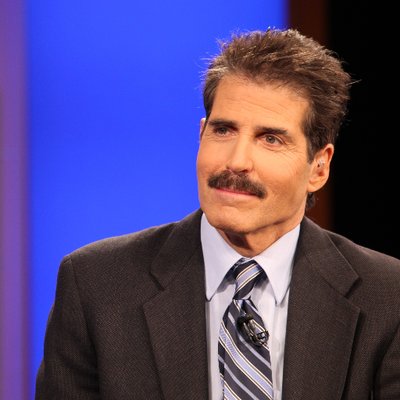
.@BjornLomborg tells me that if America stopped using fossil fuels, “it would have virtually no impact.”
We discuss here:

Barbara Noel retweeted
A socialist will likely be my next mayor!
I don’t often report on local politics, but I make exception for Zohran Mamdani because people BELIEVE in him. He got a record number of votes in the primary!
Yet what he believes is just so STUPID.
Here’s why:
Join Glory and me in voting for our panel at #SXSWEDU on differentiation in the classroom! SyncEd’s innovative leadership shows where our field can head for equity in learning. panelpicker.sxsw.com/vote/14…
32
Please join me in voting for our panel discussion at #SXSWEDU as Glory and I discuss Differentiation in Education. The vision propelling SyncEd shows where our field can effectively personalize student learning. linkedin.com/posts/barbara-n…

23
Barbara Noel retweeted

If you’re curious about 1000happydads.com
Check out the letter Gerald the Gratitude Monk wrote to my father.
1000happydads.com/a-thoughtf…

Barbara Noel retweeted

You can stay in touch w/ @ColorinColorado via:
Facebook: facebook.com/ColorinColorado…
ELL Facebook Group: tinyurl.com/fbk-ell-group
YouTube: youtube.com/user/colorincolo…
#ELL newsletters: colorincolorado.org/newslett…
And check out our new web app, Colorín on the Go! go.colorincolorado.org/

Barbara Noel retweeted

Thank you, Tan; I always look forward to our conversations that you capture in your podcasts as you bring assessment for multilingual learners to light for teachers everywhere!

THE @margogottlieb shares how we can equitably assess MLs so that they are empowered learners. tinyurl.com/4wbpukxb

Barbara Noel retweeted

Children learn best when they are taught in a language they understand.
Here’s how a teacher in India is helping children to learn and thrive by teaching in their mother tongue.
#MotherLanguageDay @UNICEFIndia
Barbara Noel retweeted

Harvard's interim president Alan Garber just sent this message to the Harvard community, saying it also represented the views of the usually silent @Harvard Corporation.
Dear Members of the Harvard Community,
A few groups purporting to speak on behalf of Harvard affiliates recently circulated a flagrantly antisemitic cartoon in a post on social media channels. The cartoon, included in a longer post, depicted what appeared to be an Arab man and a Black man with nooses around their necks. The nooses are held by a hand imprinted with the Star of David, and a dollar sign appears in the middle of the star. Online condemnation of this trope-filled image was swift, and Harvard promptly issued a statement condemning the posted cartoon. While the groups associated with the posting or sharing of the cartoon have since sought to distance themselves from it in various ways, the damage remains, and our condemnation stands.
Perpetuating vile and hateful antisemitic tropes, or otherwise engaging in inflammatory rhetoric or sharing images that demean people on the basis of their identity, is precisely the opposite of what this moment demands of us. As members of an academic community, we can and we will disagree, sometimes vehemently, on matters of public concern and controversy, including hotly contested issues relating to the war in Israel and Gaza, and the longstanding Israeli-Palestinian conflict. But it is grossly irresponsible and profoundly offensive when that disagreement devolves into forms of expression that demonize individuals because of their religion, race, nationality, or other aspects of their identity.
The members of the Corporation join me in unequivocally condemning the posting and sharing of the cartoon in question. The University will review the situation to better understand who was responsible for the posting and to determine what further steps are warranted.
Reckless provocation draws attention without advancing understanding. Jewish, Israeli, Muslim, Palestinian, and Arab members of our community have reported feeling targeted, rejected, and ostracized. The war and its effects on the lives of people directly affected by the conflict demand our profound concern and sympathy. We must approach one another with compassion, open minds, and mutual respect, our discourse grounded in facts and supported by reasoned argument.
Sincerely,
Alan M. Garber
Barbara Noel retweeted

Opposing D.E.I. Does Not Mean Opposing Diversity. "Universities can welcome students from all walks of life without unlawfully censoring speech. They can respond to campus sexual violence without violating students’ rights to due process. They can diversify the student body without discriminating on the basis of race." (In the essay David French cites me & my liberal bona fides.) nytimes.com/2024/01/14/opini…
Barbara Noel retweeted

When I criticize DEI, I'm not criticizing diversity or inclusion or even equity (depending how it's defined), I'm criticizing a specific ideological framework that ultimately works against those values. – at North Potomac, MD
Barbara Noel retweeted

In light of today’s news, I thought I would try to take a step back and provide perspective on what this is really all about.
I first became concerned about @Harvard when 34 Harvard student organizations, early on the morning of October 8th before Israel had taken any military actions in Gaza, came out publicly in support of Hamas, a globally recognized terrorist organization, holding Israel ‘solely responsible’ for Hamas’ barbaric and heinous acts.
How could this be? I wondered.
When I saw President Gay’s initial statement about the massacre, it provided more context (!) for the student groups’ statement of support for terrorism. The protests began as pro-Palestine and then became anti-Israel. Shortly, thereafter, antisemitism exploded on campus as protesters who violated Harvard’s own codes of conduct were emboldened by the lack of enforcement of Harvard’s rules, and kept testing the limits on how aggressive, intimidating, and disruptive they could be to Jewish and Israeli students, and the student body at large. Sadly, antisemitism remains a simmering source of hate even at our best universities among a subset of students.
A few weeks later, I went up to campus to see things with my own eyes, and listen and learn from students and faculty. I met with 15 or so members of the faculty and a few hundred students in small and large settings, and a clearer picture began to emerge.
I ultimately concluded that antisemitism was not the core of the problem, it was simply a troubling warning sign – it was the “canary in the coal mine” – despite how destructive it was in impacting student life and learning on campus.
I came to learn that the root cause of antisemitism at Harvard was an ideology that had been promulgated on campus, an oppressor/oppressed framework, that provided the intellectual bulwark behind the protests, helping to generate anti-Israel and anti-Jewish hate speech and harassment.
Then I did more research. The more I learned, the more concerned I became, and the more ignorant I realized I had been about DEI, a powerful movement that has not only pervaded Harvard, but the educational system at large. I came to understand that Diversity, Equity, and Inclusion was not what I had naively thought these words meant.
I have always believed that diversity is an important feature of a successful organization, but by diversity I mean diversity in its broadest form: diversity of viewpoints, politics, ethnicity, race, age, religion, experience, socioeconomic background, sexual identity, gender, one’s upbringing, and more.
What I learned, however, was that DEI was not about diversity in its purest form, but rather DEI was a political advocacy movement on behalf of certain groups that are deemed oppressed under DEI’s own methodology.
Under DEI, one’s degree of oppression is determined based upon where one resides on a so-called intersectional pyramid of oppression where whites, Jews, and Asians are deemed oppressors, and a subset of people of color, LGBTQ people, and/or women are deemed to be oppressed. Under this ideology which is the philosophical underpinning of DEI as advanced by Ibram X. Kendi and others, one is either an anti-racist or a racist. There is no such thing as being “not racist.”
Under DEI’s ideology, any policy, program, educational system, economic system, grading system, admission policy, (and even climate change due its disparate impact on geographies and the people that live there), etc. that leads to unequal outcomes among people of different skin colors is deemed racist.
As a result, according to DEI, capitalism is racist, Advanced Placement exams are racist, IQ tests are racist, corporations are racist, or in other words, any merit-based program, system, or organization which has or generates outcomes for different races that are at variance with the proportion these different races represent in the population at large is by definition racist under DEI’s ideology.
In order to be deemed anti-racist, one must personally take action to reverse any unequal outcomes in society. The DEI movement, which has permeated many universities, corporations, and state, local and federal governments, is designed to be the anti-racist engine to transform society from its currently structurally racist state to an anti-racist one.
After the death of George Floyd, the already burgeoning DEI movement took off without any real challenge to its problematic ideology. Why, you might ask, was there so little pushback? The answer is that anyone who dared to raise a question which challenged DEI was deemed a racist, a label which could severely impact one’s employment, social status, reputation and more. Being called a racist got people cancelled, so those concerned about DEI and its societal and legal implications had no choice but to keep quiet in this new climate of fear.
The techniques that DEI has used to squelch the opposition are found in the Red Scares and McCarthyism of decades past. If you challenge DEI, “justice” will be swift, and you may find yourself unemployed, shunned by colleagues, cancelled, and/or you will otherwise put your career and acceptance in society at risk.
The DEI movement has also taken control of speech. Certain speech is no longer permitted. So-called “microaggressions” are treated like hate speech. “Trigger warnings” are required to protect students. “Safe spaces” are necessary to protect students from the trauma inflicted by words that are challenging to the students’ newly-acquired world views. Campus speakers and faculty with unapproved views are shouted down, shunned, and cancelled.
These speech codes have led to self-censorship by students and faculty of views privately held, but no longer shared. There is no commitment to free expression at Harvard other than for DEI-approved views. This has led to the quashing of conservative and other viewpoints from the Harvard campus and faculty, and contributed to Harvard’s having the lowest free speech ranking of 248 universities assessed by the Foundation of Individual Rights and Expression.
When one examines DEI and its ideological heritage, it does not take long to understand that the movement is inherently inconsistent with basic American values. Our country since its founding has been about creating and building a democracy with equality of opportunity for all. Millions of people have left behind socialism and communism to come to America to start again, as they have seen the destruction leveled by an equality of outcome society.
The E for “equity” in DEI is about equality of outcome, not equality of opportunity.
DEI is racist because reverse racism is racism, even if it is against white people (and it is remarkable that I even need to point this out). Racism against white people has become considered acceptable by many not to be racism, or alternatively, it is deemed acceptable racism. While this is, of course, absurd, it has become the prevailing view in many universities around the country.
You can say things about white people today in universities, in business or otherwise, that if you switched the word ‘white’ to ‘black,’ the consequences to you would be costly and severe.
To state what should otherwise be self-evident, whether or not a statement is racist should not depend upon whether the target of the racism is a group who currently represents a majority or minority of the country or those who have a lighter or darker skin color. Racism against whites is as reprehensible as it is against groups with darker skin colors.
Martin Luther King’s most famous words are instructive:
“I have a dream that my four little children will one day live in a nation where they will not be judged by the color of their skin but by the content of their character.”
But here we are in 2024, being asked and in some cases required to use skin color to effect outcomes in admissions (recently deemed illegal by the Supreme Court), in business (likely illegal yet it happens nonetheless) and in government (also I believe in most cases to be illegal, except apparently in government contracting), rather than the content of one’s character. As such, a meritocracy is an anathema to the DEI movement. DEI is inherently a racist and illegal movement in its implementation even if it purports to work on behalf of the so-called oppressed.
And DEI’s definition of oppressed is fundamentally flawed.
I have always believed that the most fortunate should help the least fortunate, and that our system should be designed in such a way as to maximize the size of the overall pie so that it will enable us to provide an economic system which can offer quality of life, education, housing, and healthcare for all.
America is a rich country and we have made massive progress over the decades toward achieving this goal, but we obviously have much more work to do. Steps taken on the path to socialism – another word for an equality of outcome system – will reverse this progress and ultimately impoverish us all. We have seen this movie many times.
Having a darker skin color, a less common sexual identity, and/or being a woman doesn’t make one necessarily oppressed or even disadvantaged. While slavery remains a permanent stain on our country’s history – a fact which is used by DEI to label white people as oppressors – it doesn’t therefore hold that all white people generations after the abolishment of slavery should be held responsible for its evils. Similarly, the fact that Columbus discovered America doesn’t make all modern-day Italians colonialists.
An ideology that portrays a bicameral world of oppressors and the oppressed based principally on race or sexual identity is a fundamentally racist ideology that will likely lead to more racism rather than less. A system where one obtains advantages by virtue of one’s skin color is a racist system, and one that will generate resentment and anger among the un-advantaged who will direct their anger at the favored groups.
The country has seen burgeoning resentment and anger grow materially over the last few years, and the DEI movement is an important contributor to our growing divisiveness. Resentment is one of the most important drivers of racism. And it is the lack of equity, i.e, fairness, in how DEI operates, that contributes to this resentment.
I was accused of being a racist from the President of the NAACP among others when I posted on @X that I had learned that the Harvard President search process excluded candidates that did not meet the DEI criteria. I didn’t say that former President Gay was hired because she was a black woman. I simply said that I had heard that the search process by its design excluded a large percentage of potential candidates due to the DEI limitations. My statement was not a racist one. It was simply the empirical truth about the Harvard search process that led to Gay’s hiring.
When former President Gay was hired, I knew little about her, but I was instinctually happy for Harvard and the black community. Every minority community likes to see their representatives recognized in important leadership positions, and it is therefore an important moment for celebration. I too celebrated this achievement. I am inspired and moved by others’ success, and I thought of Gay’s hiring at the pinnacle leadership position at perhaps our most important and iconic university as an important and significant milestone for the black community.
I have spent the majority of my life advocating on behalf of and supporting members of disadvantaged communities including by investing several hundreds of millions of dollars of philanthropic assets to help communities in need with economic development, sensible criminal justice reform, poverty reduction, healthcare, education, workforce housing, charter schools, and more.
I have done the same at Pershing Square Capital Management when, for example, we completed one of the largest IPOs ever with the substantive assistance of a number of minority-owned, women-owned, and Veteran-owned investment banks. Prior to the Pershing Square Tontine, Ltd. IPO, it was standard practice for big corporations occasionally to name a few minority-owned banks in their equity and bond offerings, have these banks do no work and sell only a de minimis amount of stock or bonds, and allocate to them only 1% or less of the underwriting fees so that the issuers could virtue signal that they were helping minority communities.
In our IPO, we invited the smaller banks into the deal from the beginning of the process so they could add real value. As a result, the Tontine IPO was one of the largest and most successful IPOs in history with $12 billion of demand for a $4 billion deal by the second day of the IPO, when we closed the books. The small banks earned their 20% share of the fees for delivering real and substantive value and for selling their share of the stock.
Compare this approach to the traditional one where the small banks do effectively nothing to earn their fees – they aren’t given that opportunity – yet, they get a cut of the deal, albeit a tiny one. The traditional approach does not create value for anyone. It only creates resentment, and an uncomfortable feeling from the small banks who get a tiny piece of the deal in a particularly bad form of affirmative action.
While I don’t think our approach to working with the smaller banks has yet achieved the significant traction it deserves, it will hopefully happen eventually as the smaller banks build their competencies and continue to earn their fees, and other issuers see the merit of this approach. We are going to need assistance with a large IPO soon so we are looking forward to working with our favored smaller banks.
I have always believed in giving disadvantaged groups a helping hand. I signed the Giving Pledge for this reason. My life plan by the time I was 18 was to be successful and then return the favor to those less fortunate. This always seemed to the right thing to do, in particular, for someone as fortunate as I am.
All of the above said, it is one thing to give disadvantaged people the opportunities and resources so that they can help themselves. It is another to select a candidate for admission or for a leadership role when they are not qualified to serve in that role.
This appears to have been the case with former President Gay’s selection. She did not possess the leadership skills to serve as Harvard’s president, putting aside any questions about her academic credentials. This became apparent shortly after October 7th, but there were many signs before then when she was Dean of the faculty.
The result was a disaster for Harvard and for Claudine Gay.
The Harvard board should not have run a search process which had a predetermined objective of only hiring a DEI-approved candidate. In any case, there are many incredibly talented black men and women who could have been selected by Harvard to serve as its president so why did the Harvard Corporation board choose Gay?
One can only speculate without knowing all of the facts, but it appears Gay’s leadership in the creation of Harvard’s Office of Diversity, Equity, Inclusion and Belonging and the penetration of the DEI ideology into the Corporation board room perhaps made Gay the favored candidate. The search was also done at a time when many other top universities had similar DEI-favored candidate searches underway for their presidents, reducing the number of potential candidates available in light of the increased competition for talent.
Unrelated to the DEI issue, as a side note, I would suggest that universities should broaden their searches to include capable business people for the role of president, as a university president requires more business skills than can be gleaned from even the most successful academic career with its hundreds of peer reviewed papers and many books. Universities have a Dean of the Faculty and a bureaucracy to oversee the faculty and academic environment of the university. It therefore does not make sense that the university president has to come through the ranks of academia, with a skill set unprepared for university management.
The president’s job – managing thousands of employees, overseeing a $50 billion endowment, raising money, managing expenses, capital allocation, real estate acquisition, disposition, and construction, and reputation management – are responsibilities that few career academics are capable of executing. Broadening the recruitment of candidates to include top business executives would also create more opportunities for diverse talent for the office of the university president.
Furthermore, Harvard is a massive business that has been mismanaged for a long time. The cost structure of the University is out of control due in large part to the fact that the administration has grown without bounds. Revenues are below what they should be because the endowment has generated a 4.5% annualized return for the last decade in one of the greatest bull markets in history, and that low return is not due to the endowment taking lower risks as the substantial majority of its assets are invested in illiquid and other high-risk assets.
The price of the product, a Harvard education, has risen at a rate well in excess of inflation for decades, (I believe it has grown about 7-8% per annum) and it is now about $320,000 for four years of a liberal arts education at Harvard College. As a result, the only students who can now afford Harvard come from rich families and poor ones. The middle class can’t get enough financial aid other than by borrowing a lot of money, and it is hard to make the economics work in life after college when you graduate with large loan balances, particularly if you also attend graduate school.
The best companies in the world grow at high rates over many decades. Harvard has grown at a de minimis rate. Since I graduated 35 years ago, the number of students in the Harvard class has grown by less than 20%. What other successful business do you know that has grown the number of customers it serves by less than 20% in 35 years, and where nearly all revenue growth has come from raising prices?
In summary, there is a lot more work to be done to fix Harvard than just replacing its president. That said, the selection of Harvard’s next president is a critically important task, and the individuals principally responsible for that decision do not have a good track record for doing so based on their recent history, nor have they done a good job managing the other problems which I have identified above.
The Corporation board led by Penny Pritzker selected the wrong president and did inadequate due diligence about her academic record despite Gay being in leadership roles at the University since 2015 when she became dean of the Social Studies department.
The Board failed to create a discrimination-free environment on campus exposing the University to tremendous reputational damage, to large legal and financial liabilities, Congressional investigations and scrutiny, and to the potential loss of Federal funding, all while damaging the learning environment for all students.
And when concerns were raised about plagiarism in Gay’s research, the Board said these claims were “demonstrably false” and it threatened the NY Post with “immense” liability if it published a story raising these issues.
It was only after getting the story cancelled that the Board secretly launched a cursory, short-form investigation outside of the proper process for evaluating a member of the faculty’s potential plagiarism. When the Board finally publicly acknowledged some of Gay’s plagiarism, it characterized the plagiarism as “unintentional” and invented new euphemisms, i.e., “duplicative language” to describe plagiarism, a belittling of academic integrity that has caused grave damage to Harvard’s academic standards and credibility.
The Board’s three-person panel of “political scientist experts” that to this day remain unnamed who evaluated Gay’s work failed to identify many examples of her plagiarism, leading to even greater reputational damage to the University and its reputation for academic integrity as the whistleblower and the media continued to identify additional problems with Gay’s work in the days and weeks thereafter.
According to the NY Post, the Board also apparently sought to identify the whistleblower and seek retribution against him or her in contravention to the University’s whistleblower protection policies.
Despite all of the above, the Board “unanimously” gave its full support for Gay during this nearly four-month crisis, until eventually being forced to accept her resignation earlier today, a grave and continuing reputational disaster to Harvard and to the Board.
In a normal corporate context with the above set of facts, the full board would resign immediately to be replaced by a group nominated by shareholders. In the case of Harvard, however, the Board nominates itself and its new members. There is no shareholder vote mechanism to replace them.
So what should happen?
The Corporation Board should not remain in their seats protected by the unusual governance structure which enabled them to obtain their seats.
The Board Chair, Penny Pritzker, should resign along with the other members of the board who led the campaign to keep Claudine Gay, orchestrated the strategy to threaten the media, bypassed the process for evaluating plagiarism, and otherwise greatly contributed to the damage that has been done. Then new Corporation board members should be identified who bring true diversity, viewpoint and otherwise, to the board.
The Board should not be principally comprised of individuals who share the same politics and views about DEI. The new board members should be chosen in a transparent process with the assistance of the 30-person Board of Overseers. There is no reason the Harvard board of 12 independent trustees cannot be comprised of the most impressive, high integrity, intellectually and politically diverse members of our country and globe. We have plenty of remarkable people to choose from, and the job of being a director just got much more interesting and important. It is no longer, nor should it ever have been, an honorary and highly political sinecure.
The ODEIB should be shut down, and the staff should be terminated. The ODEIB has already taken down much of the ideology and strategies that were on its website when I and others raised concerns about how the office operates and who it does and does not represent. Taking down portions of the website does not address the fundamentally flawed and racist ideology of this office, and calls into further question the ODEIB’s legitimacy.
Why would the ODEIB take down portions of its website when an alum questioned its legitimacy unless the office was doing something fundamentally wrong or indefensible?
Harvard must once again become a meritocratic institution which does not discriminate for or against faculty or students based on their skin color, and where diversity is understood in its broadest form so that students can learn in an environment which welcomes diverse viewpoints from faculty and students from truly diverse backgrounds and experiences.
Harvard must create an academic environment with real academic freedom and free speech, where self-censoring, speech codes, and cancel culture are forever banished from campus.
Harvard should become an environment where all students of all persuasions feel comfortable expressing their views and being themselves. In the business world, we call this creating a great corporate culture, which begins with new leadership and the right tone at the top. It does not require the creation of a massive administrative bureaucracy.
These are the minimum changes necessary to begin to repair the damage that has been done.
A number of faculty at the University of Pennsylvania have proposed a new constitution which can be found at pennforward.com, which has been signed by more than 1,200 faculty from Penn, Harvard, and other universities. Harvard would do well to adopt Penn’s proposed new constitution or a similar one before seeking to hire its next president.
A condition of employment of the new Harvard president should be the requirement that the new president agrees to strictly abide by the new constitution. He or she should take an oath to that effect.
Today was an important step forward for the University. It is time we restore Veritas to Harvard and again be an exemplar that graduates well-informed, highly-educated leaders of exemplary moral standing and good judgment who can help bring our country together, advance our democracy, and identify the important new discoveries that will help save us from ourselves.
We have a lot more work to do. Let’s get at it.
Barbara Noel retweeted
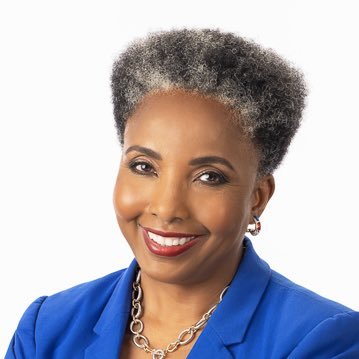
True diversity comes through the practice of nondiscrimination, outreach, and compliance with existing civil rights law and the Equal Protection Clause of the 14th Amendment.
bethepeoplenews.com/a-can-do…
#DEI #Adversity #Diversity #Harvard #Discrimination #NewYorkPost