

Space enthusiast, electronics enthusiast, (symphonic metal enthusiast but generally dont tweet about it)
Joined March 2009
- Tweets1.1K
- Following87
- Followers328
- Likes6.4K


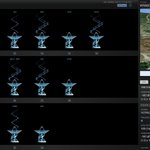


Madrid finally got round to track Voyager1 20mins after the 1 light day milestone. 😇 Still in engineering mode though 😢 maybe some news later during a talk from the Planetary Society with the Voyager team youtube.com/live/GLwOZ_Y8Y08


There seems to be lots of posts about Voyager 1 approaching 1 light day however a certain amount of denial about the health of the spacecraft. It has badly blocked thrusters and its been back in engineering mode for a few days now. Indicated by 40bps eyes.nasa.gov/apps/dsn-now/d…

Bernard Netherclift retweeted
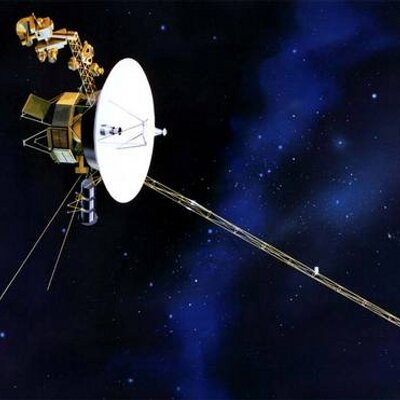
Caltech article “The Silent Ambassador to the Galaxy: Voyager at One Light-Day”
caltech.edu/about/news/the-s…

Nice little alignment of all 3 working space craft that are leaving / have left the solar currently being tracked. VGR1 VGR2 NHPC eyes.nasa.gov/apps/dsn-now/d…

You have to ignore the waffle. Voyager 1 suffered thruster failure, no doubt losing attitude control causing the loss of signal. Amazingly recovered but on last bit of life in I think the last set of operational thrusters 😢jpl.nasa.gov/news/nasas-voya…
Voyager 1 not looking happy for the past few days as indicated by the 40bps bit rate which indicates its in engineering mode. Also appears to be getting a lot of tracking, over 12hrs per day.

Yay, after 2 and a half months since the wild fires at Madrid DSN it looks like the 70m dish DSS63 is back in service currently tracking Voyager 1 which I suspect has had limited tracking especially with DSS14 also being out of service.

Bernard Netherclift retweeted

Launched on Sept. 5, 1977—16 days after Voyager 2—Voyager 1 quickly overtook its twin as they journeyed to explore the outer solar system.
Today Voyager 1 is the most distant human-made object, and on Nov. 18, it will reach another historic milestone: one light-day from Earth. At that distance, a signal from Earth will take 24 hours to reach the spacecraft—and another 24 hours to return.

ALT Black and white photo of the Voyager 1 Titan Centaur 6 spacecraft lifting off from NASA's Kennedy Space Center on September 5, 1977. Credit: NASA

Bernard Netherclift retweeted

Neptune's crescent, imaged by Voyager 2 on September 2, 1989 from a distance of 12.8 million kilometers (about 8 million miles).

Bernard Netherclift retweeted
OTD in 2012, sister Voyager 1 made her final transition from the region dominated by our Sun's solar wind into the region dominated by the other stars' cumulative winds: 'interstellar space.' For the first time, we were measuring particles mainly from other stars.
The measurements are from the LECP instrument, and the oscillations in late July and August show the buffeting nature of the boundary as it billows out from the Sun and then is pushed back by interstellar pressure, with the boundary moving back and forth over Voyager 1 several times. The August 25, 2012 transition occurred at a distance of 16H:51M light-time from the Sun, or about 121.6 AU.
Voyager 2 encountered this boundary in 2018 from early November to early December, but the boundary was smoother and closer in: from 16H30M to 16H32M, or 119.0 to 119.3 AU. Both crossings occurred during solar sunspot cycle 24, with the V2 crossing possibly occurring at a quieter time.

Launched 49 years ago today. Currently 3 instruments still operating, now at 13.3 billion miles, travelling away from us at 34,144mph. One way light time (radio signals delay to and from the space craft) 19hrs 50mins. youtube.com/watch?v=SmIPMhKy…

Following the wild fire at Madrid and Goldstones 70m dish DSS14 being broken the 3 spacraft leaving the solar system are all having to come down through Canberra DSS43. Screen shots from today.


Bernard Netherclift retweeted

A NASA spokesperson released the following statement in regard to the wildfires threatening the Madrid Deep Space Communications Complex:

Bernard Netherclift retweeted

A wildfire is bearing down on NASA's Deep Space Network location about 50 km west of Madrid, one of three tracking stations used for everything from Artemis to Voyager.


Bernard Netherclift retweeted

57 years ago today, DSS46 brought back the video of Neil Armstrong taking those first step on the Moon for the entire world to see. DSS46 was then located at Honeysuckle Creek. Happy Anniversary of the first Moon landing! 📡〰️〰️〰️🌖🚀👨🚀👨🚀👨🚀
#NASA #MoonLanding #DSS46 #Apollo11

ALT A backlight antenna that is facing up. There are some blue skies with cloud behind.
Bernard Netherclift retweeted
At this time, 47 years ago today, July 9, 1979, I made my closest approach to Jupiter, coming within 570,000 km / 354,000 mi of the cloud tops, or 4.89 Jupiter radii: go.usa.gov/gOV & ow.ly/aBYZd

