

Advanced Heart Failure, MCS & Transplant Cardiologist @uoft , Professor @uchile, HF Hospital Salvador/CVICU @Toraxchile. CME @cifacah. #SoMe @sochicaroficial
Santiago, Chile
Joined November 2009
- Tweets5K
- Following1.7K
- Followers1.3K
- Likes12.2K




Pinned Tweet

Meet the #ISHLT2026 Roving Reporters! 💡These members will be sharing key takeaways and moments from Toronto, so be sure to follow along by following their profiles and using #ISHLT2026. 🫀🫁🔗: bit.ly/4sLTJZT


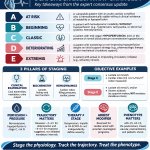
🚨 SCAI SHOCK 2022 ➡️ 2026: What changed?
🔹 Stage A: Broad → Actionable risk
🔹 Stage B/C: Hypoperfusion > hypotension (reinforced)
🔹 Stage D: Escalation → Failure of initial support
🔹 Stage E: Refractory shock → Circulatory collapse
🔹 Greater focus on trajectory & phenotype
💡 Clinical takeaway: Don’t wait for hypotension to recognize shock. Detect hypoperfusion early, reassess response, and escalate support when perfusion fails to improve—not simply when blood pressure falls.
#CardiogenicShock #SCAI
🤖 Made with AI


Bernardita González, MD retweeted

Heart Failure (HF) is now the No. 1 cause of cardiogenic shock, with mortality rising ~4x over 25 years.
👉 Slide 1: Key Stage D HF & shock stats
📊 Slide 2: Etiologies, HF subtypes & mortality
🔁 Share with your cardiology network!
🔗 Full report bit.ly/4iYFe2l


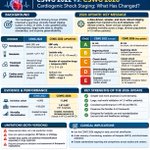
🫀 Cardiogenic Shock: What’s new in CSWG 2026?
A major update to cardiogenic shock staging, supported by 11,640 patients and external evaluation in over 1.4 million patients!
🔹 Simplified criteria: SBP, lactate & treatment intensity
🔹 Refined A–E staging incorporating vasoactive drugs and temporary MCS
🔹 OHCA is now a risk modifier, not automatic stage E
🔹 Serial reassessment captures shock progression
📊 Observed in-hospital mortality in the external cohort (n=1,417,637), by baseline stage:
🟢 A: 4.8% | 🟡 B: 14.0% | 🟠 C: 21.9% | 🔴 D: 34.1% | 🔴 E: 59.8%
These are unadjusted population-level mortality rates, not individualized risk predictions.
💡 The clinical takeaway:
A normalized blood pressure or lactate does not necessarily mean shock resolution—especially when circulatory stability depends on ongoing pharmacological or mechanical support.
Shock severity must be interpreted in the context of treatment intensity and clinical trajectory.
Importantly, deterioration matters: patients progressing to stage E during hospitalization experienced mortality comparable to those presenting in stage E.
🎯 At the bedside, CSWG 2026 reinforces three priorities: recognize evolving shock, reassess severity serially, and identify patients who may require timely escalation of care.
However, staging alone cannot determine the optimal intervention. Hemodynamic phenotyping, shock etiology, and individualized clinical assessment remain essential.
📖 Ton et al. Journal of Cardiac Failure. 2026.
doi.org/10.1016/j.cardfail.2…
#CardiogenicShock #CSWG2026 #CICU #CriticalCareCardiology
🤖 Made with AI

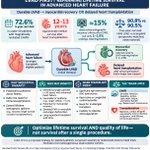
🫀 LVAD first, transplant later?
A JHLT 2026 review challenges the traditional approach to advanced HF.
In selected younger patients, durable LVAD support may enable myocardial recovery, delay transplantation, and potentially extend lifetime survival.
The goal: maximize life years, not just post-procedure survival.
An important paradigm shift—but prospective evidence is still needed.
🔗 doi.org/10.1016/j.healun.202…
#HeartFailure #LVAD #HeartTransplant
🤖 Made with AI

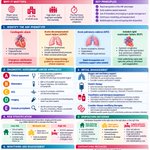
🫀 Acute Right Ventricular Failure: Treat the Physiology, Not Just the Blood Pressure!
Key takeaways from the 2026 HFSA Scientific Statement:
🔹 Optimize preload — avoid unnecessary fluids
🔹 Reduce RV afterload
🔹 Support contractility and systemic perfusion
🔹 Use echo + invasive hemodynamics to guide therapy
🔹 Consider early tMCS in refractory RV failure
💡 Not every failing RV needs fluids. Phenotype first, treat accordingly.
📖 Kanwar et al. J Card Fail. 2026.
#HeartFailure #CardiogenicShock #CriticalCare
🤖 Made with AI

🚨 Normal blood pressure ≠ adequate tissue perfusion!
Ris et al. highlight key concepts in HF-related cardiogenic shock:
🔹 Venous congestion drives hypoperfusion
🔹 Lactate may remain normal
🔹 Microcirculatory dysfunction matters
🔹 Hemodynamic trends > isolated values
Recognize shock before hypotension develops.
📖 Circ Heart Fail. 2026
🔗 doi.org/10.1161/CIRCHEARTFAI…
—
🚨 ¡Presión arterial normal ≠ perfusión tisular adecuada!
Ris et al. destacan aspectos clave del shock cardiogénico asociado a insuficiencia cardíaca:
🔹 La congestión venosa contribuye a la hipoperfusión.
🔹 El lactato puede permanecer normal.
🔹 La disfunción microcirculatoria es fundamental.
🔹 Las tendencias hemodinámicas importan más que los valores aislados.
🫀 ¡Reconocer el shock antes de que aparezca hipotensión!
#HeartFailure #CardiogenicShock #CardioTwitter
🤖 Made with AI

🚨 Acute Heart Failure in Emergency Settings: What’s New in 2026?
New ESC clinical consensus highlights 5 key priorities:
🔹 Recognize the 4 AHF phenotypes early
🔹 Integrate biomarkers, POCUS & lung ultrasound
🔹 Initiate phenotype-guided treatment promptly
🔹 Monitor diuretic response and escalate when needed
🔹 Optimize GDMT and ensure early follow-up
💡 Key message: The first hours matter. Early recognition, targeted treatment, and appropriate disposition can shape outcomes.
📖 European Heart Journal (2026)
🔗 doi.org/10.1093/eurheartj/eh…
#HeartFailure #CardioTwitter #ESC2026 #Cardiology
🤖 Made with AI

🚨 Temporary MCS in Cardiogenic Shock: What’s New in the 2026 ESC Consensus?
🔹 Phenotype before device: SCAI + SHARC + hemodynamics
🔹 Impella: Survival benefit in selected STEMI-CS (DanGer Shock), but more complications
🔹 VA-ECMO: No benefit with routine use in AMI-CS (ECLS-SHOCK)
🔹 Biventricular support: Promising physiology, limited randomized evidence
🔹 Define the exit strategy BEFORE initiating support
💡 More flow ≠ better survival.
The future of MCS lies in selecting the right patient, device, and timing—not simply escalating support.
📖 European Heart Journal, 2026
doi.org/10.1093/eurheartj/eh…
#CardiogenicShock #Impella #ECMO #HeartFailure
🤖 Made with AI

Bernardita González, MD retweeted

Out now in @JCardFail HF STATS 2026 from @HFSA—an updated look at heart failure epidemiology, treatment, disparities, outcomes, and more.
Congratulations to #HFC members and all contributors! @BiykemB @noshreza @EMDeFilippisMD @FudimMarat @MelvinEchols9
onlinejcf.com/article/S1071-…

🫀 Revascularization in Heart Failure: when does it really help?
New @ESC_Journals expert consensus highlights:
💊 GDMT first
🔪 CABG → modest long-term benefit in selected HFrEF
🩺 PCI → no reduction in death/HF hospitalization in REVIVED-BCIS2
🧠 Viability/ischemia-guided selection remains controversial
❤️ Persistent angina—not HF symptoms alone—should drive consideration of revascularization
🤝 PCI vs CABG → individualized Heart Team decision
❓ Major evidence gaps remain, especially in HFpEF
Key message: CAD + HF ≠ automatic revascularization.
#HeartFailure #HFrEF #Cardiology #PCI #CABG #GDMT
🤖 Made with AI

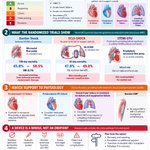
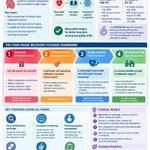
Cardiogenic shock care should aim beyond survival → toward recovery.
A new framework proposes 4 dynamic phases:
🔴 Salvage
🟠 Optimization
🔵 Stabilization
🟢 De-escalation
🎯 The goal: measurable myocardial + end-organ recovery
Key concepts: phenotype-guided care, integrated macro/microcirculatory monitoring, and MCS as a platform for recovery, not simply a bridge to advanced therapies.
A useful shift in perspective:
Rescue → Optimize → Recover → Sustain recovery
#CardiogenicShock #HeartFailure #MCS #CriticalCare #Cardiology
🤖 Made with AI

🫀 Infective Endocarditis: Diagnosis, Antibiotic Therapy, and Management: A Scientific Statement From the American Heart Association @AHAScience @CircAHA
ahajournals.org/doi/pdf/10.1…
Key takeaways!
🤖 Made with AI

🫀 ESC Congress 2026 delivered plenty of practice-changing evidence!
My 🔝 takeaways:
🔹 ACACIA-HCM → Aficamten improves exercise capacity in non-obstructive HCM
🔹 TRIC-I-HF → Transcatheter TR repair moves toward hard outcomes
🔹 STAREE → Statins ↓ CV events ~30% in adults ≥70
🔹 AIR-STEMI → Physiology-guided revascularization improves outcomes
🔹 SINGLE-AF → DOACs may benefit AF with intermediate stroke risk
🔹 PVI-SHAM-AF → Better rhythm control ≠ necessarily better symptoms
🔹 NEXAF → Exercise matters in AF
From new drugs and interventions to prevention and lifestyle: precision, patient selection & implementation remain key.
#ESC2026 #ESCCongress #Cardiology #HeartFailure #AFib #HCM
🤖 Made with AI

🫀 Cardiogenic shock ≠ hypotension.
A new 2026 European consensus proposes a 3-pillar definition of cardiogenic shock:
1️⃣ End-organ hypoperfusion at rest
2️⃣ Hemodynamic abnormality
3️⃣ Underlying cardiac dysfunction
🔑 All 3 must be present.
Important implications:
📌SBP >90 mmHg does not exclude shock
📌Normotensive & euvolemic CS are real
📌Use a multiparametric assessment—not a single BP or lactate value
📌Resting hypoperfusion helps distinguish advanced HF from true HF-related CS
A major step toward a potential Universal Definition of Cardiogenic Shock.
doi.org/10.1093/ehjacc/zuag1…
#CardiogenicShock #HeartFailure #Cardiology #CriticalCare #CICU #Hemodynamics
🤖 Made with AI

🫀New 2026 ESC Guidelines on Cardiovascular Disease & CKD
Key takeaways:
🔹 Screen CVD patients with eGFR + albuminuria
🔹 Think cardio-renal protection, not isolated organ treatment
🔹 SGLT2i are foundational in HF + CKD, regardless of LVEF
🔹 Optimize evidence-based HFrEF therapy despite CKD
🔹 Anticipate diuretic resistance in advanced CKD
🔹 Multidisciplinary cardio-nephrology care matters
One patient. Two interconnected organs. One integrated strategy.
#ESC2026 #Cardiorenal #HeartFailure #CKD #Cardiology #Nephrology
🤖 Made with AI

🔥 Myocarditis is a moving target — and so is its arrhythmic risk.
New 2026 consensus introduces a phase-based framework for arrhythmic myocarditis:
🔥 HOT: active inflammation → polymorphic VA
🔄 HOT-to-COLD: inflammation → evolving scar → key arrhythmogenic window
❄️ COLD: established scar → monomorphic, re-entrant VA
🧠 Key message: integrate CMR/EMB + rhythm phenotype + genetics + ventricular function to guide antiarrhythmics, ICD decisions, ablation and follow-up.
Think phase. Treat cause. Control arrhythmias. Prevent SCD.
academic.oup.com/europace/ar…
#Myocarditis #Cardiology #Electrophysiology #Arrhythmia #SuddenCardiacDeath #CMR
🤖 Made with AI

🫀 ESC 2026 Heart Failure Guidelines: What’s new?
The new guidelines bring an important shift in how we think about heart failure: earlier treatment, better phenotyping, and care across the entire HF trajectory.
Some key takeaways:
🔹 HFrEF is redefined to include LVEF <50%, while the HFmrEF category disappears.
🔹 Early initiation and optimization of foundational therapy remains central.
🔹 SGLT2 inhibitors have a major role across the HF spectrum.
🔹 HFpEF management moves toward a more phenotype- and comorbidity-driven approach.
🔹 Greater emphasis on obesity, CKD, AF, diabetes and other comorbidities as therapeutic targets.
🔹 Decompensated HF replaces the concept of “acute HF,” emphasizing HF deterioration as part of a continuum.
🔹 Earlier identification and referral of advanced HF patients is strongly emphasized.
🔹 Growing roles for remote monitoring, multidisciplinary care and shared decision-making.
Perhaps the most important message is the change in mindset:
Don’t wait for heart failure to progress. Identify risk earlier, initiate effective therapy sooner, treat the phenotype and comorbidities, and anticipate advanced disease.
Treat earlier. Treat better. Treat the whole patient. ❤️
#ESC2026 #HeartFailure #HFrEF #HFpEF #AdvancedHeartFailure #Cardiology #GDMT #HeartFailureManagement #CardiologyEducation
🤖 Made with AI

🫀The Fifth Universal Definition of Myocardial Infarction (2026) is here — and it fundamentally changes how we classify MI.
🔹 Goodbye Types 1–5 → 3 clinical categories
🔴 Primary MI: acute coronary pathology
🔵 Secondary MI: supply–demand imbalance from another acute condition
🟣 Procedure-related MI: complication within 30 days
Other key updates:
• Greater emphasis on mechanism + clinical context
• Sex-specific 99th percentile thresholds for myocardial injury
• Stronger role for coronary/cardiac imaging
• Updated concept of MINOCA as myocardial injury with non-obstructive coronary arteries
• More objective criteria to distinguish MI from myocardial injury
A major conceptual shift: troponin elevation tells us there is myocardial injury—not why it happened.
The 2026 definition moves us toward identifying the mechanism behind the injury and making the diagnosis clinically meaningful. ehag101.pdf
#Cardiology #MyocardialInfarction #Troponin #ACS #MedTwitter #CardioTwitter
🤖 Made with AI

🫀New @escardio Heart Failure Guidelines! 🙌🏻
Full article here: escardio.org/guidelines/clin…
Key takeaways 👇🏼
#HeartFailure #Cardiology #ESC2026
🤖 Made with AI

Gracias @cifacah y @smexcardiologia por la invitación!
Como siempre, un gusto compartir conocimientos y experiencias con colegas de Latinoamérica sobre Insuficiencia Cardiaca! 🫀🙌🏻
#HeartFailure #Cardiologia #EducacionContinua

