

Ancient Egypt through original museum photography, remarkable artifacts, hidden details, and archaeological discoveries. Based in Cairo, Egypt.
Cairo, Egypt
Joined June 2026
- Tweets199
- Following1
- Followers117
- Likes118






Tutankhamun died at around nineteen.
Yet on his little golden shrine, Ankhesenamun offers him symbols of years and royal renewal.
A young king whose life ended early, depicted receiving emblems of enduring kingship.
Filmed at the Grand Egyptian Museum.
Tutankhamun's golden throne hides an unexpected detail: silver.
The royal garments on its back were crafted in silver, contrasting with the surrounding gold.
Ancient Egyptian craftsmanship at its finest.
#Tutankhamun #AncientEgypt


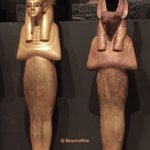
Tutankhamun was buried with 413 workers.
Not living workers, but shabti figures intended to perform labor for him in the afterlife.
365 workers. 36 overseers. 12 additional supervisors.
An extraordinary glimpse into ancient Egyptian beliefs.
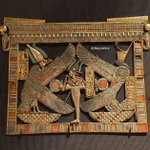
The crowns can mislead you. The hieroglyphs cannot.
This golden pectoral from Tutankhamun's tomb identifies the winged figures as Isis and Nephthys, protecting the king in his Osirian form.
A masterpiece of symbolism hidden in plain sight.

This is real gold from Tutankhamun's innermost shrine.
Yet one side is dramatically darker than the others.
Conservation studies published in 2026 found differences in the gold leaf and evidence of chemical discoloration.
Why do you think this panel looks so different?
1
3
109
Black didn't always mean death in ancient Egyptian art.
On this statue of Tutankhamun, black evokes fertile Nile soil and rebirth, while gold recalls the divine and eternal.
Two colors. A powerful royal image.
Filmed at the Grand Egyptian Museum.
In May 1926, Howard Carter recorded a strange encounter in the Egyptian desert.
He saw an unusually tall, completely black jackal that reminded him of Anubis.
An extraordinary observation from the archaeologist who discovered Tutankhamun's tomb.
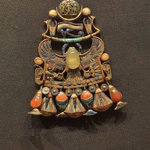
A winged scarab. The Eye of Horus. Two royal cobras.
Three protective symbols brought together in one extraordinary piece of jewelry from Tutankhamun's tomb.
Every detail meant something.

The artistry is in the details.
Tutankhamun's middle coffin combines gold, colored glass, and intricate feather patterns through remarkable craftsmanship.
An extraordinary example of ancient Egyptian precision.
Filmed at the Grand Egyptian Museum.
Why did Anubis appear in both the preparation of the dead and the judgment of their fate in the afterlife?

Ancient Egyptians actually grew barley inside the shape of a dead god.
Found in Tutankhamun's tomb, this Osiris Bed was filled with Nile mud and seeds that were watered until they sprouted.
A remarkable ritual that made the idea of rebirth visible.
1
8
235