

I’m Robin—accountant, Bitcoiner & crypto tax specialist. 🇬🇧 Offering full tax & accounting services. Owner of https://nitter.cf/t.co/d506PaQEYK &
United Kingdom
Joined June 2020
- Tweets21.2K
- Following5.1K
- Followers14.4K
- Likes14.3K




Pinned Tweet
Every Bitcoin influencer is telling you to borrow against your stack instead of selling.
Here's the UK tax reality nobody mentions.
A thread on why "buy, borrow, die" is harder in Britain 🇬🇧 than it looks
The appeal is obvious:
Selling 1 BTC = CGT taxble event, up to 24% to HMRC of gains.
Borrowing against 1 BTC = no disposal, no tax, you keep the upside. Right? 🤔
In theory, you never sell. You die holding it. Heirs inherit at uplifted base cost.
In practice? It's a minefield.
Trap 1: Centralised lenders.
When you "lend" your BTC to most CeFi platforms, beneficial ownership transfers to them.
HMRC's view: that's a disposal. CGT triggered the moment you deposit collateral.
You owe tax on a gain you never realised.
Trap 2: DeFi lending.
HMRC's published position is brutal.
Supply BTC (or wBTC) to a lending protocol and receive a token in return?
That's a disposal.
Taxed at market value when you deposit. Taxed again when you withdraw.
Two CGT events. Per loan.
This is the part most people get wrong:
The loan itself isn't taxable.
It's the COLLATERAL TRANSFER that's taxable, because beneficial ownership moves.
So the real question isn't "is borrowing tax-free?"
It's "can I post collateral without losing beneficial ownership?"
Trap 3: Liquidation.
If your collateral gets margin called and sold, that's an unambiguous disposal at the worst possible price.
You crystallise the gain at the bottom of the dip.
And you still owe the loan principal.
Trap 4: Interest isn't deductible.
The interest you pay on a Bitcoin-backed loan can't be offset against your CGT or income tax.
You're paying 8 to 12% with after-tax money.
Your real cost of capital is much higher than the headline rate.
Trap 5: Counterparty risk.
Celsius. BlockFi. Genesis. Voyager.
Every major crypto lender of the last cycle has been through bankruptcy.
"Not your keys, not your coins" applies to collateral too.
If your lender goes bust, you're an unsecured creditor.
So is the strategy dead in the UK?
Not quite. There's a narrow path:
Lenders where you retain beneficial ownership (multisig escrow)
Self-custodial loan structures
Conservative LTVs under 25% to survive 80% drawdowns
Rare, but they exist.
Here's where the UK actually helps:
Die holding Bitcoin and there's no CGT on death. Heirs inherit at uplifted base cost.
The outstanding loan reduces your estate for IHT.
So "buy, borrow, die" CAN work in Britain. Just with different mechanics than the US version.
The honest view as a UK Bitcoin & crypto tax accountant:
The strategy is real. But it's not the magic bullet Bitcoin Twitter sells.
You're trading CGT risk for:
Counterparty risk
Liquidation risk
High after-tax interest
HMRC disposal risk on most platforms
If you're seriously considering borrowing against your stack and you're a UK taxpayer, get advice BEFORE you deposit anything as collateral.
I see this go wrong every month.
Follow for more UK Bitcoin tax. DMs open if you need a hand or second opinion.
I see many posts about this guy being a millionaire with 6 properties.
Id love to know where people get this from.
My view (After viewing the companies he owns Balance Sheets).
He own a bakery business. It has about 95k in cash.
A big business with overheads should have enough cash for 6 months overheads (staff, rent, rates etc). Id guess at this size 95k is WELL below 6 months runway.
Therefore its a few cost increases away from trouble.
A property business - balance sheet seems to indicate 1 or maybe 2 low value properties in it.
Another dormant business.
Unless he has another companies house record I cannot understand the hate or where the theory hes a millionaire comes from.

Just listen,
understand why businesses are suffering,
understand why this will cost people jobs,
understand why businesses will be forced to close
Hiring a 25-year-old on minimum wage for 37.5 hours a week cost £18,886 a year in 2021.
From April 2027: £29,459
including employer NI and minimum pension. That’s £10,573 more per employee up 56%.
Before Employment Allowance, recruitment or absence cover.
'Breathing Space' was a PR move, don't be fooled.
(Figures compare 2021/22 with April 2027, assuming 37.5 hours/week and minimum employer pension contributions under current thresholds.
Before Employment Allowance, which can reduce actual NI costs for eligible employers. Paid holiday is included; other employment overheads are excluded.)
Some genuinely positive news for UK crypto holders in today's Budget.
The Government has formally confirmed plans to reform the taxation of DeFi lending, liquidity pools and stablecoins from April 2027.
This could remove significant tax complications for millions of transactions.
Where has this been confirmed?
HMRC published its Budget 2026 Overview of Tax Legislation and Rates (OOTLAR) today, 28 October.
Sections 1.35 and 1.48 confirm the Government intends to introduce these reforms through Finance Bill 2026–27.
These are official policy commitments, not speculation.
Does this mean the changes are approved?
Not quite.
The Government consulted on the proposals and published draft legislation in July 2026.
Today's Budget confirms its intention to proceed.
The Finance Bill must still pass through Parliament and receive Royal Assent before becoming law.
The planned implementation is April 2027.
DeFi lending and liquidity pools
Currently, depositing crypto into certain DeFi arrangements can trigger CGT, despite no actual profit being realised.
Under the proposed rules, qualifying transfers will receive no gain, no loss treatment.
Tax would instead arise when a relevant economic disposal occurs.
A major improvement.
Stablecoins
Eligible stablecoins will be treated more like money.
For individuals, qualifying disposals will become exempt from CGT.
Interest-like returns will generally be taxed as savings income.
Companies will have different rules, broadly based on loan relationship taxation.
HMRC estimates around 1.2 million individuals could be affected.
My thoughts
Credit where it's due.
While much of today's Budget increases taxation and compliance obligations, these reforms are sensible.
Bitcoin & Crypto taxation should reflect economic reality rather than create artificial taxable events.
The final legislation and eligibility criteria still matter, but this is a significant step in the right direction.
Official source:
gov.uk/government/publicatio…
#CryptoTax #DeFi #UKBudget

My take on Budget 2026: some help today, but households and businesses still face a squeeze.
Here are the changes I’d pay attention to, including a few less obvious ones.
LANDLORDS & SAVERS: another 2 percentage points on taxable rental income and savings interest.
From April 2027, rates become 24%, 44% and 49%.
The £20,000 cash ISA allowance stays.
BUSINESS OWNERS: BADR’s lifetime limit halves to £500,000 from April 2027.
New founders’ relief offers 10% CGT on qualifying gains up to £10m but eligibility is restricted.
Ordinary business owners shouldn’t assume they qualify.
HMRC: £485m for additional compliance staff.
From 2029, more regular in-year Self Assessment payments and mandatory VAT/PAYE direct-debit arrangements.
Expanded bank-account debt recovery starts rolling out in July 2029.
Cash-flow planning becomes even more important.
THE HELP: £100 for eligible band A–D households in England from January, electricity VAT relief and the fuel-duty freeze extended until July.
Minimum wages rise 3.9% in April.
Whether you’re better off depends on the whole picture.
My concern is purchasing power.
The forecast shows real disposable income per person falling 0.8% in 2026, then growing just 0.1% in 2027.
That strengthens the discussion around diversification, including gold and Bitcoin. Neither guarantees protection.
I’ll be joining @UKBTCSpotlight on Spaces later to discuss the Budget, tax and what it means for Bitcoin holders.
What concerns you most: higher taxes, HMRC powers or the cost of living?
Bring your questions

Just to reiterate from my budget thread
This is where we are heading. More debt, higher inflation and Britain's being poorer
Buy Bitcoin? or....?

🇬🇧 The Bitcoin & Crypto Accountant 🇬🇧🚀 retweeted

🚨 NEW: John Healey has announced he will reform income tax self assessment to bring it in line with the "majority"
People will pay "smaller, more regular payments" instead of one large bill
#Budget
My take: this is a cautious, interventionist Budget with some targeted help. There is limited evidence of a substantial progressive shift.
Energy support and higher minimum wages. But frozen tax thresholds continue squeezing incomes, while several worthwhile reforms are years away.
The government is offering selective relief while strengthening tax collection and taking a bigger role in directing investment.
For households and small businesses, that means continuing pressure on disposable income and cash flow.
The real test is whether living standards improve after tax, inflation and housing costs. Today’s announcements alone don’t establish that.
The living-standards outlook is the bigger concern.
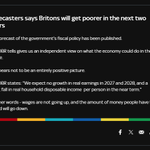
Sky reports that the OBR expects no real earnings growth in 2027 or 2028, alongside a near-term fall in real household disposable income per person.
Pay packets may rise, but purchasing power is forecast to stagnate or fall.
That makes this difficult to present as a Budget delivering a meaningful improvement in living standards.
The broader picture is households continuing to feel squeezed, with lasting improvements still dependent on stronger growth and lower underlying costs.
The living-standards outlook is the bigger concern.
Sky reports that the OBR expects no real earnings growth in 2027 or 2028, alongside a near-term fall in real household disposable income per person.
Pay packets may rise, but purchasing power is forecast to stagnate or fall.
That makes this difficult to present as a Budget delivering a meaningful improvement in living standards.
There is targeted support. But the broader picture is households continuing to feel squeezed, with lasting improvements still dependent.
HMRC: extra compliance funding and stronger debt collection powers also feature which I wanted to mention seperately
These could matter more to business owners than some of the headline giveaways.
The exact new funding figure and implementation details need checking against the published documents.
HMRC AND BANK ACCOUNTS: direct recovery of unpaid tax already exists.
Existing safeguards include leaving at least £5,000 across accounts and a 30-day opportunity to object.
Today’s discussion should not be presented as HMRC gaining unrestricted access to everyone’s money. Yet.
The proposed extension would let HMRC recover smaller tax debts through bank-account instalments where taxpayers can pay but repeatedly fail to engage.
Advance notice, affordability and challenge rights matter. The final rules and start date need confirming.
SELF ASSESSMENT: earlier plans mean taxpayers with sufficient salary or pension income will pay more of their forecast Self Assessment tax through PAYE from April 2029.
That can include people with rental income or a business alongside employment.
For those without PAYE income, reforms to payments on account have been consulted on.
Do not read this as a confirmed monthly tax-payment requirement for every self-employed person.
Quarterly Making Tax Digital reporting is also separate from when tax must be paid. For now.
My practical take: earlier collection can squeeze cash flow even when the total tax bill is unchanged.
Keep records current, budget for tax as income arrives and deal with HMRC letters promptly. If you cannot pay, seek a payment arrangement early.
Budget 2026: what does it mean for your money?
Firstly, John Healy opening by thanking Rachel Reeves for the job she did. Once way to start is not to openly praise clear failure.
Here are the main points for households, savers, landlords and business owners.
New announcements first, followed by earlier tax changes you still need to budget for.
ENERGY: households in council tax bands A–D will receive a £100 payment this winter.
Devolved governments have been asked to introduce equivalent support.
Payment arrangements and detailed eligibility still need confirming.
CASH ISAs: the planned allowance cut is scrapped.
You can continue putting up to £20,000 a year into a cash ISA, regardless of age.
The proposed £12,000 limit for under-65s from April 2027 will not go ahead.
ELECTRICITY: the VAT holiday continues until July 2027.
MINIMUM WAGE: rates will rise by 3.9%.
FUEL DUTY: the freeze continues until July 2027. With current prices, this was inevitable no?
GAS: standing charges will be removed from 2027, or as soon as possible afterwards.
The cost moves into the unit price.
Treasury estimate: 60% of households save an average £45 annually. Higher users could pay more.
This is not a saving for everyone.
PENSIONERS: targeted tax protection will cover pensioners with income up to the full new State Pension.
This is not a blanket income-tax exemption for everyone over State Pension age.
The detailed rules will matter, particularly for people with other income.
BUSINESS MILEAGE: from April 2027:
• 55p for the first 10,000 business miles becomes permanent.
• Above 10,000 miles, 25p rises to 35p.
These are reimbursement/tax-relief limits, not automatic payments. Normal commuting does not qualify. This is long overdue, with current petrol prices, this is probably out of date already.
SIDE BUSINESSES: a £3,000 trading allowance has been reported, up from £1,000.
The start date and conditions need checking.
Do not confuse this with the earlier £3,000 tax-return reporting threshold: less reporting does not itself mean less tax.
FOUNDERS: a new relief is reported at 10% on up to £10m of lifetime gains.
Eligibility and commencement need confirmation.
HIGH STREET: the business rates relief threshold for eligible retail, hospitality and leisure premises rises from £12,000 to £18,000.
Adult gaming centres and vape shops are excluded.
There is also £10m of alcohol-duty relief for small brewers and cider makers.
CARERS: the Carer’s Allowance earnings cliff edge will end.
Instead of losing the entire allowance after exceeding the limit, support reduces by £1 for each £1 of excess earnings.
A worthwhile fix, but implementation is planned within 2030/31.
NEW PARENTS: parental pay extends to eligible self-employed fathers, partners and adopters from April 2029.
Some parents with irregular employment histories will also qualify.
Detailed eligibility is still to come.
SHOPPING: tariffs are being suspended on 100+ products, including food, fertiliser and kerosene heating oil.
Potential savings depend on businesses passing lower costs through to customers.
This does not mean the whole supermarket shop gets cheaper.
HOUSING: an extra £1.5bn is going into the social and affordable housing programme.
Land sales to social housing providers will be VAT-free.
LOCAL TAXES: mayors and other authorities will gain powers to introduce overnight visitor levies from 2028.
More business rates revenue will be retained locally, alongside a share of income-tax receipts.
That is revenue being devolved, not automatically a new income-tax rate.
BANKS: the bank surcharge rises from 3% to 6% for 15 months from January 2027, helping fund energy support.
This is a tax on banks. Any knock-on effect on savings rates, borrowing costs or shareholder returns is uncertain.
ONLINE SELLERS: stronger requirements for marketplaces to collect VAT are being introduced.
Higher-stakes machine games duty also rises from 20% to 25%.
The detailed rules and start dates will determine the impact on individual businesses.
NOW THE EARLIER CHANGES.
These were announced before today but still matter for your finances.
First: frozen income-tax thresholds.
The £12,570 personal allowance and £50,270 higher-rate threshold remain frozen until April 2031. Scottish earnings bands differ.
LANDLORDS: from April 2027, property income rates become 22%, 42% and 47% in England, Wales and Northern Ireland.
That is a 2 percentage point increase announced in Budget 2025.
It is not a further 2-point rise announced today.
On £10,000 of taxable rental profit, that is £200 extra tax before finance-cost relief changes.
Residential finance-cost relief also rises to 22%, offsetting some of the increase for mortgaged landlords.
Property held in a company follows different tax rules.
SAVERS: from April 2027, taxable savings interest rates rise to 22%, 42% and 47%.
That concerns interest outside tax-free wrappers and allowances.
This earlier change makes the decision to retain the £20,000 cash ISA allowance particularly relevant.
COMPANY OWNERS: dividend rates already increased from April 2026.
Basic: 10.75%.
Higher: 35.75%.
Additional: unchanged at 39.35%.
Again, these are earlier changes, not new dividend tax rises announced today.
PENSIONS: the previously announced plan changes the triple lock from April 2030.
Annual increases would use the higher of inflation or 2.5%, with a mechanism intended to maintain the link to earnings over time.
Relevant to retirement planning beyond today’s tax headlines.
My assessment: immediate energy help, higher minimum wages and cash ISA reversal.
But frozen thresholds and earlier tax rises still squeeze households.
Budget Update thread will come shortly after the budget
John Healy has not impressed me thus far, not that I expected anything better.....
The issue isn't simply increasing the minimum wage.
It's the cumulative cost of employing people in the UK.
Higher wages, employer NI, pensions and regulatory costs all add up.
Government seems determined to ignore the economic consequences.
Wage compression is a genuine concern.
When inexperienced workers cost almost as much as experienced employees, why take the additional risk?
The unintended consequence could be fewer opportunities for young people entering the workforce.
Then consider SMEs operating on margins of just 3–5%.
They cannot endlessly absorb rising costs.
They must increase prices, reduce recruitment, cut hours or accept lower profits.
For some, the numbers simply stop working.
The biggest economic damage may never appear in insolvency statistics.
It's the employee never hired, the business never expanded and the investment never made.
You cannot continually make employment more expensive and expect businesses to create more jobs.
Incentives matter. Economics matters.

UK Budget 2026: What can we expect tomorrow?
I've been looking at predictions from the FT, Times, Telegraph, Guardian, Reuters and Sky News.
Here's what's being reported ahead of tomorrow's Budget :
Tax rises
Despite promises of economic growth, further tax increases remain on the table.
Banks could face an increase in their corporation tax surcharge from 3% to 8%, potentially raising £2.2bn annually.
Capital Gains Tax
Reports suggest a general CGT rate increase has been ruled out.
However, changes to reliefs and specific exemptions remain possible.
For investors, business owners and Bitcoin holders, this is one to watch closely.
Income tax & fiscal drag
Headline income tax rates are expected to remain unchanged.
But frozen thresholds mean inflation and wage growth continue pushing more taxpayers into higher bands.
No rate increase doesn't necessarily mean no tax increase.
Businesses
Potential announcements include:
• Business rates relief for smaller firms
• Changes to VAT collection by online marketplaces
• Further HMRC compliance measures
• Possible adjustments to investment incentives
The detail matters considerably more than the headlines.
Inheritance tax & property
Further changes to family business transfers remain under discussion.
Meanwhile, reports suggest plans to lower the proposed mansion tax threshold from £2m to £1.5m have been shelved.
Wages & households
The National Living Wage is expected to rise from £12.71 to £13.20.
Fuel duty may remain frozen, while targeted energy support could be announced.
Higher wages help employees, but also increase employment costs for businesses. (Thread to come later)
The bigger economic question
The UK doesn't just have a tax-rate problem.
It has a growth, productivity, investment and spending problem.
Higher tax rates don't automatically generate proportionately higher receipts.
The behavioural response of taxpayers, businesses and investors matter.
What I'll be watching tomorrow
Not simply how much additional tax the Chancellor announces.
But whether the Budget:
• Encourages investment and entrepreneurship
• Improves incentives to work and build businesses
• Addresses fiscal drag
• Creates credible conditions for long-term economic growth
Final thought
Britain needs a growing tax base, not simply higher taxes on the existing one.
Tomorrow's real test is whether the measures improve the UK's long-term economic outlook.
Predictions aren't policy. Let's see what actually gets announced.
I'll be following the tax announcements closely and posting afterwards.
#Budget2026 #UKTax #Economy
🇬🇧 The Bitcoin & Crypto Accountant 🇬🇧🚀 retweeted
I don't often agree with the FT, particularly on Bitcoin (My teeth still aren't worth millions) but @tejparikh90 raises some important points here. IMO
Britain cannot tax and regulate its way to prosperity.
We need to start talking about growing the economic pie, rather than endlessly dividing it.
The Laffer Curve illustrates something politicians often overlook.
Higher tax rates do not automatically mean higher tax receipts.
At some point, the behavioural response outweighs the increase in rates.
People invest less, defer gains, restructure or leave.
Capital is mobile. Increasingly so.
Entrepreneurs, investors and businesses have choices about where they live, operate and deploy capital.
Britain isn't just competing on tax rates. It's competing on simplicity, certainty and opportunity.
We should be attracting capital, not discouraging it.
As an accountant, I see how unnecessarily complicated our tax system has become.
More rules. More reporting. More compliance. More costs.
Every pound and hour spent navigating unnecessary bureaucracy is a resource that cannot be invested in productive activity.
And taxation is only part of the problem.
Planning restrictions, infrastructure delays, expensive energy and regulatory complexity all affect investment and productivity.
Cutting taxes alone won't solve these problems.
Structural reform matters.
We also need to distinguish between raising tax receipts today and building a sustainable tax base for tomorrow.
A tax increase might raise revenue immediately while discouraging future investment.
That trade-off matters enormously for CGT, entrepreneurship and business formation.
Britain needs a serious conversation about what government should do, what it should cost and how we create the conditions for prosperity and growth.
Simpler taxes. Predictable rules. Less unnecessary bureaucracy. More productive investment.
Growth must be part of the strategy, not an afterthought.


THREAD (1/7) Britain’s Budget on Wednesday is expected to be low-key. After recent chaos, that is no bad thing.
But escaping the country’s economic drift will require something far bolder: a dose of shock therapy.
My latest column for @FT:
as.ft.com/r/aa18babc-96c7-4f…

I don't often agree with the FT, particularly on Bitcoin (My teeth still aren't worth millions) but @tejparikh90 raises some important points here. IMO
Britain cannot tax and regulate its way to prosperity.
We need to start talking about growing the economic pie, rather than endlessly dividing it.
The Laffer Curve illustrates something politicians often overlook.
Higher tax rates do not automatically mean higher tax receipts.
At some point, the behavioural response outweighs the increase in rates.
People invest less, defer gains, restructure or leave.
Capital is mobile. Increasingly so.
Entrepreneurs, investors and businesses have choices about where they live, operate and deploy capital.
Britain isn't just competing on tax rates. It's competing on simplicity, certainty and opportunity.
We should be attracting capital, not discouraging it.
As an accountant, I see how unnecessarily complicated our tax system has become.
More rules. More reporting. More compliance. More costs.
Every pound and hour spent navigating unnecessary bureaucracy is a resource that cannot be invested in productive activity.
And taxation is only part of the problem.
Planning restrictions, infrastructure delays, expensive energy and regulatory complexity all affect investment and productivity.
Cutting taxes alone won't solve these problems.
Structural reform matters.
We also need to distinguish between raising tax receipts today and building a sustainable tax base for tomorrow.
A tax increase might raise revenue immediately while discouraging future investment.
That trade-off matters enormously for CGT, entrepreneurship and business formation.
Britain needs a serious conversation about what government should do, what it should cost and how we create the conditions for prosperity and growth.
Simpler taxes. Predictable rules. Less unnecessary bureaucracy. More productive investment.
Growth must be part of the strategy, not an afterthought.
THREAD (1/7) Britain’s Budget on Wednesday is expected to be low-key. After recent chaos, that is no bad thing.
But escaping the country’s economic drift will require something far bolder: a dose of shock therapy.
My latest column for @FT:
as.ft.com/r/aa18babc-96c7-4f…
I think this is one of those 'both right' in its own way instances
That being said, dropping this as a reoly and turning comments off is a wild way to say
Im right end of......

Nope, that’s not how taxes and price works. The price is determined by demand and supply.
Companies charge the highest price they can given demand. A tax levied on *profits* does not affect a company’s cost ie supply.
Taxes on *windfall* profits (like oil and gas) are the most efficient kind of tax there is.
Readers added context they thought people might want to know
Corporate profit taxes do not directly shift marginal costs but empirical studies show partial pass-through into higher consumer prices. Windfall taxes on oil and gas have deterred investment and production in practice despite theoretical efficiency on rents.
dadun.unav.edu/server/api/cor…
ecb.europa.eu/pub/pdf/scpwps…
taxfoundation.org/blog/big-oil-p…
scottishfinancialreview.com/2025/09/03/win…
Ok, so let's get rid of MakingTaxDigital that adds time, costs and paperwork to small businesses who are already stretched.
Let's actually understand what hits businesses hard in this country and truly take action. Before its too late.
Rather than posting it on X

Bitcoin and Crypto Tax season is here
This one is different. CARF is live, HMRC has more data than ever, and there's a Budget next week.
If you hold Bitcoin or crypto in the UK, read this before 31 January 👇
The Budget lands on Wednesday 28 October.
It's the new Chancellor's first, and the PM has argued the UK taxes work more heavily than wealth. Capital Gains Tax is the obvious place to look.
Nothing confirmed. Will they touch CGT? Drop your prediction below 👇
They've said they wont but do you believe them?
Expect the unexpected
CARF is already running.
Since 1 January 2026, UK exchanges have been collecting your identity and transaction data. The first reports reach HMRC by 31 May 2027.
And it's global.
Platforms in other CARF countries share data on UK users with HMRC. "I used an overseas exchange" is no longer a hiding place.
HMRC also consulted this summer on powers to demand information from crypto firms without tribunal approval.
HMRC's own estimate is that somewhere between 55% and 95% of UK crypto holders are not fully compliant.
If that's you, coming forward first is far cheaper than waiting for a letter. Penalties are lower for voluntary disclosures.
Taxable events people miss:
• Swapping one coin for another
• Spending crypto
• Gifting it (other than to a spouse)
• Staking and mining rewards
• Lending interest
Selling for £ is only part of the picture.
The numbers for 2025/26:
• CGT allowance: just £3,000
• CGT rates: 18% or 24%
• Disposal proceeds over £50,000?
You must report, even with no gain
The Self Assessment return now has its own crypto section. HMRC is looking.
Made losses? Report them.
Capital losses only count if you claim them, and you have 4 years from the end of the tax year to do it.
Unclaimed losses are money left on the table, and they can shelter future Bitcoin gains.
Unpopular opinion: in the UK, HODLing is the most tax efficient strategy there is.
No disposal, no CGT.
The moment you sell, swap or spend, the clock starts. Agree or disagree?
The hardest part is always the records.
Multiple exchanges, wallets, DeFi, dead platforms, missing history from 2017. A clean reconciliation takes time, and January is not the month to start.
My diary is filling up fast and places for this tax season are running out.
If you need help with Bitcoin and Crypto Tax, a records clean up, or putting earlier years right, now is the time to get in touch.
HMRC has just published its first guidance on VAT for Bitcoin & crypto.
If you sell NFTs or digital content for Bitcoin or crypto, or run a platform that does, this one's for you.
Here's what it says.
First, the big one:
There are no special VAT rules for Bitcoin or crypto.
HMRC looks through the token to what it represents.
An NFT of digital art is treated as a sale of digital art. An NFT that unlocks a physical item follows that item.
Who it's NOT aimed at:
If you just buy, sell, hold or trade Bitcoin and other crypto as an investor, this doesn't change anything for you.
It's aimed at creators, sellers and marketplaces.
HMRC's main message:
The blockchain doesn't tell you enough for VAT.
A wallet address doesn't tell you who your customer is, where they live, or whether they're a business. HMRC expects you to find out.
For every sale you need to know 3 things:
• Who the customer is
• Where they're based
• Whether they're a business or a private individual
That decides whether VAT is due, at what rate, and in which country.
For sales to private customers, you generally need 2 pieces of evidence showing where they live.
For business customers, a VAT number works, but other evidence like a business website can also count.
HMRC's own example:
A UK artist sells NFTs for ETH (sorry) on her website.
Her first idea is to just charge UK VAT on everything.
HMRC says that's wrong.
She'd overpay on overseas sales and miss VAT she might owe abroad.
What she does instead:
• Customers create an account
• She collects location evidence
• She asks whether they're a business
• She records the £ value of each sale at the time
That's the template for any creator selling for Bitcoin or crypto.
If you run a marketplace, HMRC says you'll usually be treated as the seller for VAT, not the artist.
You only escape that if contracts and invoices name the real seller AND you don't set the terms, approve the payment or control delivery.
HMRC thinks most platforms will fail that test.
A platform that sets the rules and takes commission through a smart contract? Liable.
An artist selling direct through their own payment link with their own invoice? The artist is liable.
Got it wrong in the past?
HMRC wants errors corrected through the normal VAT error process. Don't ignore it. Penalties and interest can apply, and HMRC can register you for VAT without your agreement.
Summary:
• No special crypto VAT rules
• Look at what the token represents
• The blockchain isn't enough, collect customer info
• Record the £ value of every sale
• Platforms are usually liable
Selling NFTs or digital content for crypto? Now is the time to fix your checkout.
gov.uk/government/publicatio…
🇬🇧 The Bitcoin & Crypto Accountant 🇬🇧🚀 retweeted
The Budget is 13 days away.
There's serious talk of aligning Capital Gains Tax with income tax rates.
If you hold Bitcoin or Crypto with big gains, here's what you should (and shouldn't) be thinking about before 28 October.
First, the facts.
Nothing is confirmed. No CGT change has been announced.
Right now it's 18% for basic rate taxpayers and 24% for higher and additional rate, with a £3,000 annual exempt amount.
Alignment could mean 40% or 45% on gains. That's the fear.
Why it matters for timing:
When the main CGT rate went from 20% to 24% in October 2024, it applied from Budget day itself. No transition period.
If anything changes this time, assume it could bite from 28 October.
Mistake 1: panic selling everything.
Crystallising a gain only makes sense if you'd sell anyway. Selling your stack to "lock in" today's rate means paying tax now on Bitcoin you intended to hold for 10 years.
Don't let a rumour dictate your conviction.
Mistake 2: sell and buy straight back.
The 30-day rule means if you rebuy within 30 days, the disposal is matched to the new purchase, not your old pool cost.
The gain you thought you'd banked may barely exist.
What can make sense:
Married or civil partners can transfer Bitcoin & crypto between them at no gain no loss. Two annual exempt amounts, two sets of bands.
If one of you is a basic rate taxpayer, that can matter.
Use your £3,000 exemption for 2026/27 if you haven't. It doesn't roll forward.
And check you've claimed any losses: dead coins, exchange collapses, rug pulls. Negligible value claims can create losses to offset gains.
If you were planning a partial sale anyway (house deposit, debt, life), the case for doing it before 28 October is stronger. If it matches your investment thesis.
Run the numbers at today's rates vs a possible higher rate. The gap on a £50,000 gain could be thousands. (See image)
And whatever you do, report it.
HMRC is already writing to Bitcoin & crypto holders this year, and from 2027 they get exchange data directly under CARF.
The Budget may change the rate. It won't change the fact they can see the transactions.
Summary:
• Nothing confirmed yet
• Don't panic sell
• Watch the 30-day rule
• Use spouse transfers and your exemption
• Claim your losses
• Report everything
