

Leading Web3 & AI next-gen media & research platform in Asia. 300K+ community. Incubated by (@cyberport_hk). CN Account: @BiteyeCN TG https://nitter.cf/t.co/6Lsbqh6stB
Singapore
Joined May 2022
- Tweets1K
- Following16
- Followers3.5K
- Likes397






AI Is Booming—Which Crypto Projects Are Top VCs Still Backing?
Y Combinator (YC), Silicon Valley's top startup accelerator, recently published the crypto startup directions it will focus on over the next six months—another signal of continued interest in the industry.
With AI sweeping the globe and more capital and founders pivoting toward it, are top VCs still betting on crypto? Which sectors still draw favor, and how have investment priorities shifted?
We reviewed YC's and YZi Labs' publicly disclosed investments and incubation cohorts for 2026—from check size and sector mix to crypto verticals—to see where the money is actually going, and where the two firms agree and diverge.
1. The Investment Landscape
On scale, YC and YZi Labs differ sharply in both capital footprint and strategy.
In 2026, YC's first three batches (Winter, Spring, Summer) admitted about 626 startups. At the standard $500,000 check per company, that comes to roughly $313 million in total.
YZi Labs has been building through its EASY Residency program and direct investments across Web3, AI, and related areas. This year's S3 and S4 cohorts disclosed about 49 startups, with S4 putting $12 million into 24 companies. YZi Labs has also joined multiple standalone financings, some without disclosed check sizes.
Their approaches differ as well. YC invests mainly by batch, with a fixed amount per company; YZi Labs this year opened its residency to year-round applications and plans three global Demo Days.
YZi Labs also launched the Atlas Scout Program, with checks of up to $1 million, so college students can help source and invest in early-stage projects.
2. Where Is the Money Going?
Overall, the two firms show different portfolio structures: YC centers on enterprise software, spanning AI, industrials, fintech, and healthcare; YZi Labs stays deep in Web3 while expanding into AI, robotics, and adjacent fields.
🌟YZi Labs: Web3 remains a core bet; AI is extending into finance and the physical world.
Judging by this year's EASY Residency S3 and S4 plus other public investments, YZi Labs has mainly backed on-chain finance, AI Agents, and related infrastructure—covering stablecoin payments, DeFi, on-chain trading, RWA, and prediction markets.
At the same time, it is pushing beyond crypto into AI infrastructure, robotics, and Physical AI.
🌟YC: B2B software tops 50%; AI is the through-line.
Among the 626 companies in YC's first three 2026 batches, 359 were B2B software (57.3%); 110 were industrials and hard tech (17.6%); fintech and healthcare each had 55 (8.8% apiece); and consumer apps numbered 31 (5.0%).
About 79% of companies involve AI, spanning software development, finance, healthcare, and more. Hard tech is growing too: industrials in the Summer batch reached 56 companies, or about 24%—up from 13% in Spring.
3. Zooming In on Crypto: Which Verticals Are Top VCs Betting On?
Filtering crypto projects from both portfolios makes their real crypto exposure clearer.
🌟YZi Labs: On-chain finance dominates; payments and trading are the two core directions.
Based on 2026 disclosed investments and incubated companies, YZi Labs touched 55 companies, of which 47 were crypto—about 85.5%.
Broken down further: trading, DeFi, and liquidity accounted for 17 (36.2% of crypto deals); stablecoins and payments for 10 (21.3%). Together those two verticals make up 57.4%—the densest concentration.
The rest mainly sit in AI Agents, RWA, asset management, privacy and compliance, institutional custody, and prediction markets. Overall, YZi Labs' crypto book is built around on-chain finance—stretching from trading and payments into asset management and financial infrastructure.
🌟YC: Fewer crypto deals, with a sharper focus on real-world use cases.
Of YC's 626 companies across the first three 2026 batches, 9 were crypto—1.44%.
Among those 9, stablecoins and payments, and trading and DeFi, each had 3 (33.3% apiece). The rest span AI Agent payments and crypto gaming.
YC cares more about whether blockchain solves a concrete problem—cutting cross-border payment costs, improving crypto-asset trading, or letting AI Agents hold and spend funds safely.
Worth noting: YC recently listed the crypto directions it will prioritize over the next six months, including on-chain fundraising for AI projects, new dollar and non-dollar stablecoins, stablecoin banking, RWA tokenization, new trading venues, and AI Agent automated trading plus API infrastructure.
Compared with what it has already funded this year, YC's forward-looking list is broader—especially stablecoin financial services, asset tokenization, and the intersection of AI Agents and crypto.
🌟Closing Thoughts
On October 22, a16z renamed a16z Crypto to a16z Frontier, expanding its mandate from crypto into AI, robotics, and other frontier tech. Around the same time, well-known investor Jason Calacanis publicly turned bearish on bitcoin, urging investors to sell BTC and shift capital into AI.
As more capital and talent pour into AI, what can crypto still use to attract investment?
Looking at YC's and YZi Labs' 2026 layouts, stablecoins, on-chain trading, RWA, and AI Agents still draw sustained attention. Their emphases differ, but both are hunting for projects that solve real needs and can compound into lasting commercial value.
The next wave of crypto opportunity may come not only from inside crypto, but from where it meets AI, finance, and more real-world businesses—and that is exactly where top VCs are putting their money.

One Post to Get Fully Set: Must-Have Skills for Binance Agentic Wallet
Lately, more and more people have started trading Memes with .ai Agent wallets—but when it comes time to trade, they still hit stuck orders, failed sells, constant slippage tweaks, and similar issues. The real question is how to get AI to actually complete on-chain operations for you.
Biteye has put together a roundup of Agent wallet Skills worth watching lately, with install methods and practical prompts. Save this for later👇
1. Meme Launchpads: Find New Tokens, Launch, and Trade
Gang — Agent-native Meme launchpad @gangdotfun
Built specifically around Binance Agentic Wallet. Supports AI token launches, new-token discovery, bonding-curve progress checks, quotes, and buys/sells.
AI capabilities: Find new tokens by filter criteria, track tokens about to graduate, generate trade previews, then execute trades via BAW.
Sample prompt: "Find tokens created on Gang in the last 2 hours, sort by volume, and check buy conditions."
One-click install all: npx skills add gangfun/gang-launchpad/skill
Four.meme — AI Meme trading @fourdotmemezh
The official Agent Skill from Four.meme. Supports AI token creation, screening, quotes, trading, and more.
AI capabilities: Auto-create Memes, discover trending new tokens, check bonding-curve progress, query leaderboards, monitor on-chain trades, calculate buy/sell quotes, and execute token buys/sells.
Sample prompt: "Screen tokens created on Four.meme in the last 1 hour, sort by volume, analyze, and give buy recommendations."
One-click install all:
npx skills add four-meme-community/four-meme-ai
Flap | AI token launches & Agent-exclusive trading @flapdotsh
Flap offers separate AI Skills for token creation and trading. The trading Skill explicitly covers Agent ID–exclusive bonding curves as well as post-graduation BAW trading.
AI capabilities: Query and trade Flap bonding-curve tokens; join exclusive curve trades that require a .ai identity, plus post-graduation market trading.
Sample prompt: "Find Agent-exclusive tokens on Flap that I can join, check bonding-curve trade conditions, estimate how much I'd get buying with 0.05 BNB, and generate a trade preview first."
One-click install all Skills:
npx skills add flap-sh/flap-skills --skill trade-flap-token
2. Wallet Trading: Binance Agentic Wallet
Binance Skills Hub | Binance's official AI Skills collection
Binance's official one-stop Skills toolkit. Lets AI Agents plug into the Binance ecosystem for on-chain trading, token scanning, contract security checks, wallet monitoring, and market analysis.
AI capabilities: Connect Binance Agentic Wallet, query assets, execute swaps, discover trending new tokens, analyze smart-money trades, detect token risks, and chain multiple Skills into a full trading flow.
Sample prompt: "Connect my Binance Agentic Wallet, scan recently launched Memes on BSC, check contract risk and liquidity, filter tokens that meet the criteria, and generate a trade preview."
One-click install all Skills:
npx skills add binance/binance-skills-hub --all
💡 Finally, if your Agent wallet can't buy or sell Memes, go to the Binance App → Agentic Wallet → Security Settings → Tradable Tokens, and change "Limited tokens" to "All tokens."
⚠️ Risk note: Once enabled, AI can also trade unverified tokens. Consider lowering your daily trading limit, keeping abnormal-trade blocking on, and checking contract safety and slippage before placing orders.

Heard Crypto People Average 3 Bots Each? This Grok Bot Update Is Worth Watching
More and more people in crypto seem to be using Grok Bot.
Especially after Binance Agentic Wallet recently sparked a wave of Agent auto-mint NFT plays, many have started letting bots scan projects, watch for opportunities, and run on-chain tasks for them—and discussion around Grok Bot has heated up along with it.
Yesterday Grok Bot shipped another update—and Elon Musk even retweeted it himself. Here's a look at the highlights👇
1️⃣ Pages: visual pages, right away
Ask it to analyze data, read trends, or explain a concept, and it builds a shareable page instead of a long stretch of dry text.
Inspired by Cursor's canvas.
2️⃣ Vault: built-in encrypted vault
Think of it as a password manager baked into the bot: you store logins, cards, and contact details encrypted, and when it autofills on the web it still can't see the plaintext.
The 1Password integration also goes deeper: you don't have to share your whole vault with the bot—when logging in, you approve in 1Password, and the password only goes into the browser.
3️⃣ Connected to the Apple ecosystem
On mobile it can tap into Home, Reminders, Location, Contacts, Alarms, and Calendar.
Examples: find nearby restaurants by location, or have it turn off HomeKit lights at home.
4️⃣ The bot can make videos now
You can have it produce clips with the Imagine model family right in the chat—no separate tool needed. When generating images or video, it also spins up background workers so the main conversation doesn't stall.
5️⃣ More control on X
It can help manage Spaces and create Lists; there's also a Halloween pumpkin-bot Easter egg (likes turn into pumpkins, and you can pick a pumpkin look in the app).
6️⃣ A bunch of quality-of-life tweaks
Fewer approval pop-ups; forwarded email keeps its formatting; send a .docx and it can become a Google Doc; use > in chat to quote; Cmd+/ for shortcuts; when you're at your computer, phone notifications hold off for a bit.
@bot @grok How's my summary?


Switzerland Approves First Spot Bitcoin ETF; BIT Marks a New Milestone in Europe
Spot bitcoin ETFs have been listed in the United States for nearly three years. Switzerland has now approved its first spot bitcoin ETF open to retail investors.
On October 20, the Swiss Financial Market Supervisory Authority (FINMA) announced that it had formally approved the Bitcoin Fund ETF (ticker: BBIT), launched by BIT Asset Management AG, the asset management arm of BIT.
It is Switzerland’s first ETF established under local fund law that invests directly in bitcoin and is open to retail investors. BIT has also described it as currently the only spot bitcoin ETF in Europe. The product is expected to list on the Swiss stock exchange SIX in November.
🌟 Why does this matter?
Europe has long had plenty of bitcoin investment products. BTC ETPs previously launched in markets such as Switzerland and Germany mostly use a debt-security structure. Even when backed by underlying bitcoin, investors still need to consider the issuer’s credit risk.
BBIT, by contrast, uses a Swiss collective investment fund structure. It holds BTC directly, keeps fund assets segregated from the management company’s own assets, and is subject to fund governance, custody, and disclosure requirements under FINMA’s regulatory framework.
Another detail worth noting: Switzerland had previously approved crypto-asset funds, but mainly for professional investors. BBIT goes a step further by opening access to retail investors, allowing them to gain BTC exposure through traditional securities accounts under Switzerland’s fund regulatory framework.
🌟 Why was BIT able to launch this ETF first?
Behind this milestone is an acquisition from two years ago.
In 2024, BIT @BITofficial_CN — formerly Matrixport — acquired Crypto Finance (Asset Management) AG in Switzerland. The firm previously belonged to Crypto Finance Group under Deutsche Börse Group, held FINMA regulatory authorization, and already had experience managing crypto-asset funds.
After the acquisition, the entity gradually became BIT’s key platform for regulated asset management in Europe. BBIT’s approval now marks a new payoff from that deal.
Unlike simply offering crypto trading services, launching an ETF also requires capabilities across fund management, independent custody, compliant operations, and traditional securities-market distribution channels.
From acquiring a licensed Swiss asset manager to launching the country’s first spot BTC ETF, BIT is extending its digital-asset service capabilities into traditional financial markets.


《AI Agent Mint Ultimate Guide: From @Binance Agentic Wallet to Automated Minting》
The wealth effect is, and always will be, the best driver of growth.
The minting of Ptah Relic prompted many people to spend the night actively researching AI Agents, creating a Binance Agentic Wallet (@BinanceWallet), and attempting to let AI complete an on-chain transaction for the first time.
Although the Ptah Mint has ended, the step-by-step workflow is still worth learning. Once your wallet is set up, participating in similar future projects usually just requires swapping out the project URL and the mint command.
Here is a complete walkthrough using Ptah as an example—starting from claiming your Agent ID to letting AI mint for you.
Part 1: Claiming Your Agent ID & Creating a Binance Agentic Wallet
1️⃣Claim a .ai Agent ID
Open the Binance App, navigate to Binance Wallet, find "Claim your exclusive Agent ID" on the wallet homepage, and tap "Claim Now". Choose an available .ai name, then tap "Create Agentic Wallet".
2️⃣Create the Agentic Wallet
Read and check the user agreement to confirm creation. Once completed, the system will automatically create your Agentic Wallet and bind the claimed Agent ID to it—no need to select an address manually.
3️⃣Enable "Developer Mode"
Enter your Agentic Wallet and tap the Settings icon in the top right corner. Scroll down the settings page, locate "Developer Mode", and toggle the switch on.
Note: Ensnaring Developer Mode enables the AI to invoke the Agentic Wallet to sign transactions initiated by third-party applications like Ptah.
4️⃣Install the Binance Agentic Wallet Skill
In an AI Agent that supports Skills and command execution, enter the following prompt:
"Please help me install the Binance Agentic Wallet Skill:npx skills add binance/binance-skills-hub/skills/binance-web3/binance-agentic-walletOnce installed, check for the required baw CLI and initiate the wallet login process for me. Do not execute any transactions yet."
After the AI completes the installation, it will automatically enter the wallet login flow.
5️⃣Connect Your Wallet to the AI
The AI will generate a QR code and a pairing code. Use your Binance App to scan the QR code, verify that the pairing code matches, and confirm the login.
Once the AI displays CONNECTED, the connection is complete and you can proceed to the next step. At no point in this process do you need to provide your private key, seed phrase, or password.
Part 2: Letting the AI Complete the Ptah Mint
Once the wallet displays CONNECTED, enter the following prompt in the AI chatbox:
"Open [ptah.trade/mint](ptah.trade/mint) and help me mint 4 of them. Before executing, tell me the current price, mint quantity, and estimated total fees. Wait for my confirmation before trading."
The AI will automatically load the Ptah Mint page, read the current price, and return the transaction details. Once you confirm the quantity and total fees look correct, reply:
"Confirmed, start minting."
The AI will initiate the transaction via the connected Agentic Wallet. Once the AI returns a "Transaction Successful" message, your minting is complete.
(If you wish to skip the pre-trade confirmation, you can simply input: "Open [ptah.trade/mint](ptah.trade/mint) and directly mint 4 for me.")
Selling Your Minted Assets
After the mint is finished, enter the following in the AI chatbox:
"Find the 4 Relics I just minted. Tell me the current highest offer, service fee, and estimated net proceeds. Do not trade yet."
Once you confirm the price is acceptable, reply:
"Confirmed, sell at the current highest offer. If a Relic doesn't have a valid offer, do not operate on it for now."
After the transaction is complete, have the AI display the sales result, then check your wallet to verify the received funds.
Part 3: Choosing the Right AI Tool for You
Skill installation, wallet connection, and mint operations all require an AI tool. You don't need to use the exact same tool as everyone else; choose from the options below based on your device and budget:
💻 Desktop Options
Codex, Claude, Grok: Stronger execution capability; skill installation and wallet calls are smoother. However, they usually require a paid subscription, making usage costs higher.
WorkBuddy: An easier-to-use option among domestic Chinese tools. Real-world testing shows it can handle skill installation, wallet connection, and subsequent operations at a relatively lower cost.
📱 Mobile Options
If you only have a mobile device, you can choose between Binance's built-in AI Pro or Grok Bot.
AI Pro: Accessible directly inside the Binance App. Operating on mobile is more convenient and requires no desktop environment setup.
Grok Bot: Requires downloading the corresponding tool, logging in with an X account, and subscribing to Premium+ (P+).
⚠️ Risks & Precautions
As reminded by Jackson, turning on Developer Mode allows the AI to invoke your wallet to sign unverified third-party smart contract transactions, which carries inherent capital risk.
Tip 1: It is strongly recommended to only keep a small amount of funds in your Agentic Wallet—just enough to cover the operation.
Tip 2: Once the minting process is complete, promptly revoke AI permissions, log out of your wallet, and disable Developer Mode.

《AI Agent Mint 最全教程:从 Binance Agentic Wallet 到自动 Mint》
财富效应,永远是最好的增长工具。
Ptah Relic 的 Mint 让不少人一晚上主动研究 AI Agent、创建 Binance Agentic Wallet @BinanceWallet ,并第一次尝试让 AI 完成链上交易。
虽然 Ptah Mint 已经结束,但整套操作流程仍然值得学习。钱包配置完成后,遇到下一个类似项目,通常只需要更换项目网址和 Mint 指令即可。
下面就以 Ptah 为例,从领取 Agent ID 开始,完整讲一遍如何让 AI 帮你 Mint。
一、领取 Agent ID 并创建 Binance Agentic Wallet
1. 领取 .ai Agent ID
打开 Binance App,进入 Binance Wallet,在钱包首页找到「领取您的专属 Agent ID」,点击「立即领取」。
选择一个可用的 .ai 名称,然后点击「创建 Agentic Wallet」。
2. 创建 Agentic Wallet
阅读并勾选相关协议,确认创建。完成后,系统会自动创建 Agentic Wallet,并将刚才领取的 Agent ID 与钱包绑定,不需要另外选择地址。
3. 打开「开发者模式」
进入 Agentic Wallet,点击右上角的设置图标。在设置页面向下滑动,找到「开发者模式」,打开右侧开关。
开启后,AI 才能调用 Agentic Wallet 签署 Ptah 等第三方应用发起的交易。
4. 安装 Binance Agentic Wallet Skill
在支持 Skills 和命令执行的 AI Agent 中输入:
帮我安装 Binance Agentic Wallet Skill:
npx skills add binance/binance-skills-hub/skills/binance-web3/binance-agentic-wallet
安装完成后,检查所需的 baw CLI,并帮我发起钱包登录,暂时不要执行任何交易。
AI 完成安装后,会自动进入钱包登录流程。
5. 将钱包连接给 AI
AI 会生成二维码和配对码。使用 Binance App 扫描二维码,核对配对码一致后确认登录。
当 AI 显示 CONNECTED,就说明钱包连接完成,可以进入下一步。整个过程不需要提供私钥、助记词或密码。
二、让 AI 完成 Ptah Mint
钱包显示 CONNECTED 后,在 AI 对话框输入:
打开 ptah.trade/mint,帮我 Mint 4 个。执行前先告诉我当前价格、Mint 数量和预计总费用,等我确认后再交易。
AI 会自动打开 Ptah Mint 页面,读取当前价格并返回交易信息。确认数量和总费用没有问题后,回复:
确认,开始 Mint。
AI 会通过已经连接的 Agentic Wallet 发起交易。等待 AI 返回交易成功结果,即代表 Mint 完成。
如果你想省略交易前确认,也可以直接输入:
打开 ptah.trade/mint,帮我直接 Mint 4 个。
Mint 完成后,在 AI 对话框输入:
找到我刚刚 Mint 的 4 个 Relic。告诉我当前最高 Offer、手续费和预计到账金额,暂时不要交易。
确认价格没有问题后回复:
确认,按当前最高 Offer 卖出。如果某个 Relic 没有有效 Offer,就先不要操作。
交易完成后,让 AI 返回出售结果,并检查钱包是否收到对应资产。
三、选择适合自己的 AI 工具
Skill 安装、钱包连接和 Mint 操作,都需要通过 AI 完成。大家不必使用完全相同的工具,可以根据自己的设备和预算,从下面任选一个:只有手机就看「手机端」,习惯使用电脑就看「电脑端」。
电脑端
- Codex、Claude、Grok:执行能力较强,安装 Skill 和调用钱包比较顺畅,但通常需要付费订阅,使用成本相对较高。
- WorkBuddy:国产工具中较容易上手的选择,实测可以完成 Skill 安装、钱包连接和后续操作,成本相对较低。
手机端
手机端可以选择 Binance 内置的 AI Pro 或 Grok Bot。
- AI Pro:入口在 Binance App 内,使用手机操作更加方便,不需要另外配置电脑环境。
- Grok Bot:需要下载对应工具,使用 X 账号登录,并开通 Premium+(P+)会员。
⚠️风险与注意事项
根据 Jackson 的提醒,开启「开发者模式」后,AI 可以调用钱包签署未经验证的第三方合约交易,存在一定的资金风险。
建议只在 Agentic Wallet 中存放本次操作需要的少量资金;完成 Mint 后,及时撤销 AI 授权、退出钱包并关闭开发者模式。

X Overhauls Its Recommendation Algorithm: What Do Top Influencers Think?
Yesterday, Elon Musk announced two major updates to X's recommendation algorithm:
First, an upgraded AI ranking model that more accurately predicts how long users will spend reading a post.
Second, a new retrieval model that prioritizes content users are more likely to read all the way through.
Musk also shared data suggesting that total user engagement time on X is growing exponentially, reaching new highs almost every day.
📖 Key Takeaway: Content that keeps users engaged is now more likely to get recommended.
🔹 What Do Top Influencers Think? 👇
🇨🇳 Chinese-Speaking Community
👍 Supportive
1️⃣ TechFlow (@techflowpost) | XHunt Global Rank: #680
Take: X is shifting from rewarding "shallow engagement" to "deep reading."
View: Clickbait headlines with little substance may lose visibility, while content that keeps people reading could gain more exposure. Projects and KOLs will need to rethink their content strategies.
2️⃣ Lanhu (@lanhubiji) | XHunt Global Rank: #1,418
Take: AI is getting better at seeing through posts designed purely to farm traffic.
View: Overall, the update should favor higher-quality content.
3️⃣ Leo (@runes_leo) | XHunt Global Rank: #14,854
Take: Don't write long posts just to please the algorithm. Write posts people actually want to finish.
View: After analyzing 366 of his own posts, he found that posts between 280 and 500 Chinese characters generated the highest impressions. He also estimated that a single "Not Interested" action could offset roughly 79 likes.
🤔 Skeptical
1️⃣ BlockBeats (@blockbeatsasia) | XHunt Global Rank: #1,355
Take: Longer reading time doesn't necessarily mean better content.
View: BlockBeats also noted that Musk's claim about record-high engagement time has yet to be independently verified.
2️⃣ Crypto Goddess (@xincctnnq) | XHunt Global Rank: #3,346
Take: Can the algorithm please stop changing? It's getting annoying.
View: Short posts with just a few sentences may suffer the most, effectively pushing everyone to write unnecessarily long posts.
3️⃣ Bulbasaur (@nintendodoomed) | XHunt Global Rank: #4,711
Take: Is Elon trying to turn X into TikTok?
View: Ranking posts based on dwell time and completion rates resembles TikTok's watch-through rate model, raising concerns that X is becoming more like a short-video platform.
🌍 English-Speaking Community
👍 Supportive
1️⃣ Rohan Paul (@rohanpaul_ai) | XHunt Global Rank: #7,415
Take: The new ranking model strengthens an existing objective, while the second update targets the earlier retrieval stage.
View: The AI influencer broke down the technical changes, explaining that posts users frequently abandon halfway through may become less likely to reach new audiences.
2️⃣ Captain Eli (@TheCaptainEli) | XHunt Global Rank: #147,678
Take: Reward outrage, and you get outrage. Reward depth, and people will think before posting.
View: He sees the update as a fundamental shift in incentives, concluding with a memorable line: "Nobody gets to Mars by skimming."
3️⃣ Victor (@TheVictorBuilds) | XHunt Global Rank: #109,191
Take: The old playbook is becoming obsolete. Stop optimizing for clicks. Start optimizing for reading.
View: He believes low-effort, engagement-farming tactics in crypto and finance will become less effective. Hype-driven projects may lose organic reach, while well-researched, in-depth analysis could gain an advantage.
🤔 Skeptical
1️⃣ Fityeth (@Fityeth) | XHunt Global Rank: #3,420
Take: Is this the end of clickbait, or just the beginning of a new engagement-farming game?
View: His one-line question gets straight to the point: Could completion rates simply become another metric that people learn to manipulate?


🚨 A hacker investigating North Korean IT scammers hacked into North Korean computers and found young men in military uniforms working from army barracks.
North Korean Hackers use VPNs and AI-generated résumés to land remote jobs at US and European companies, potentially gaining access to corporate data and crypto assets.
Best way to know? Ask them to look into the camera and insult Kim Jong Un. 😅

《Solana Accelerate China Shanghai Shut Down, VIP Dinner Canceled — What Are Crypto Leaders Saying?》
Solana has been making some serious noise in Shanghai this week.
It opened an office, lit up a massive billboard in Lujiazui, and its official X post saying "ni hao shanghai" racked up 780K views.
But things took an unexpected turn today.
The Shanghai stop of Accelerate China was shut down before it even started. Around 8–9 law enforcement officers arrived at the venue, attendees were kept outside for over an hour, and the VIP dinner scheduled for tonight was also confirmed canceled.
🔹 Official Response
Solana Foundation President Lily Liu (@calilyliu) explained that the massive exposure from the billboard campaign caused registrations to quadruple overnight, far exceeding the venue's capacity and the limits of its prior approvals.
To comply with local requirements, the event had to be postponed.
She thanked the Chinese community for its enthusiasm and apologized to everyone who had traveled to attend.
Meanwhile, the organizers' email to registered attendees cited "venue logistics considerations" as the reason.
🔹 What Are Crypto Leaders Saying? 👇
1️⃣ CZ @cz_binance | XHunt Global Rank: #4
Take: Unfortunate. Looks like they really don't understand local policies.
Perspective: CZ bluntly suggested that Solana had misjudged China's regulatory environment, pointing out that this wasn't the first time and implying that the team was repeating past mistakes.
2️⃣ BroLeon @BroLeon | XHunt Global Rank: #895
Take: Completely speechless.
Perspective: He cut his vacation short specifically to attend. Seeing the massive Shanghai billboard, he assumed the necessary arrangements had already been made. Instead, the event was canceled, capturing the frustration of many attendees who had traveled from afar.
3️⃣ DeFi Teddy @DeFiTeddy2020 | XHunt Global Rank: #1,735
Take: Better to keep a low profile and quietly build.
Perspective: He argued that opening offices and hosting events can be possible, but proper approvals are essential. Publicly showcasing an office and running high-profile ads in Lujiazui were unnecessary risks. He pointed to Wanxiang as an example of a more discreet approach.
4️⃣ Crypto He @Crypto_He | XHunt Global Rank: #2,532
Take: The tallest tree catches the most wind.
Perspective: The more aggressively Solana advertised itself, the more scrutiny it attracted. While organizers cited logistical issues, he suggested there was more to the story than the official explanation.
5️⃣ Tim @timbrobro | XHunt Global Rank: #11,978
Take: This is already the third time.
Perspective: Tim closely documented the event's cancellation and noted reports that registration for the Hangzhou stop had also been suspended, raising serious uncertainty about the remaining events.
6️⃣ Olivia @knowyourself518 | XHunt Global Rank: #14,284
Take: Too much hype. Some walls are thicker than expected.
Perspective: Reporting firsthand from the venue, she described law enforcement officers blocking entry and questioning attendees. Her account highlighted how even massive online attention can run into hard limits in the real world.

10 Minutes, 11 Forgotten On-Chain Assets Recovered with AI
⚠️ Don't forget to check your old wallets. You might still have money waiting to be claimed. ⚠️
The wave of Crypto project shutdowns this year has been worse than expected.
According to DefiLlama's August data, 100 projects had already announced shutdowns in 2026, with 40 shutting down in the preceding 90 days alone.
When a project shuts down, users' assets locked in its protocols don't automatically return to their wallets. Instead, as frontends, APIs, and data services go offline, those assets become increasingly difficult to find.
Even portfolio trackers like DeBank can't cover every old protocol. Over time, this creates a surprisingly common situation:
Your money is still on-chain, but you have no idea it's there.
The same problem is especially common with cross-chain bridges.
Many early bridges didn't deliver assets directly to the destination wallet. Instead, users had to initiate a transfer and then manually claim their funds on the destination chain after a waiting period.
If they forgot that final step, years could pass without them realizing they still had funds waiting to be claimed.
Recently, we've noticed people on the Timeline using Grok Bot to scan their old wallet addresses, tracing historical transactions to uncover forgotten on-chain assets.
Inspired by this approach, Biteye built an "On-Chain Forgotten Assets Scanner" Skill, designed to identify unclaimed cross-chain transfers, assets stranded in discontinued projects, old DeFi positions, and other claimable funds.
💡 We've open-sourced it on GitHub, so anyone can scan their old wallet addresses:
github.com/BiteyeAI/oncha
We tested it on 10 old wallet addresses and uncovered 11 forgotten assets that were still claimable, worth approximately $54 in total.
These included balances on the discontinued zkSync Lite network, as well as positions in Gains Network and Blast that had been sitting unredeemed for over 900 days.
And it's not just on-chain wallets. Old exchange accounts are worth checking too.
@Goupenguin previously shared a comprehensive prompt for tracking down forgotten assets on centralized exchanges.
By reviewing old email records, you can identify exchanges you previously registered with, revisit forgotten accounts, and check past deposits, withdrawals, Earn products, and delisted assets.
We've included the prompt in the comments below. 👇

No TGE, Gradual Shutdown: Why Did StandX Exit at the Peak of the Perp DEX Boom?
Crypto projects have been shutting down at an increasing pace lately, but StandX @StandX_Official is a rather unusual case.
Most projects follow a familiar path: raise funding, launch a token, watch prices fall, and eventually wind down as users drift away. StandX, however, chose to call it quits before its TGE.
Over the past year, Perp DEXs have become one of the most crowded startup sectors in crypto. Projects like Aster @Aster_DEX, Lighter @Lighter_xyz, and Variational @variational_io have emerged one after another, as the market continues searching for the “next Hyperliquid.”
Just as the entire sector was picking up speed, StandX decided to stop.
1️⃣ Just Months Ago, StandX Was Still Expanding Rapidly
StandX initially focused on its yield-bearing stablecoin, DUSD, before shifting its focus to Perp DEXs in the second half of 2025. Its Alpha launched in October 2025, followed by the official Mainnet launch in November. Users could trade perpetual contracts using DUSD as collateral while continuing to earn yield on their DUSD holdings.
StandX's rapid growth coincided with one of the strongest periods for Perp DEXs.
Following the wealth effects generated by Hyperliquid and Aster, the market began searching for the “next Hyperliquid,” drawing substantial capital and users into the sector. StandX benefited from this wave of interest.
By 2026, its metrics were growing rapidly. In January, its daily Perp trading volume reached approximately $158 million. After the launch of Position Yield in April, open interest (OI) grew from around $25 million to more than $100 million.
On June 28, StandX briefly ranked fourth among Perp DEXs by daily trading volume on DeFiLlama. In July, the team reported approximately 235,000 users and $700 million in daily trading volume.
The team was still expanding its product lineup, rolling out Universal Markets, Community Maker Yield, Community Vault, and other products in an effort to evolve beyond a conventional Perp DEX into a more open derivatives market.
Few would have expected a project that appeared to be entering its golden age to hit the brakes so abruptly.
2️⃣ Perp DEXs Are Booming, but Mid-Tier Players Face an Increasingly Difficult Market
The Perp DEX market continues to grow. Hyperliquid, Aster, and Lighter are competing aggressively for users and liquidity, while new entrants like PaperTrade keep emerging.
Liquidity, however, is an expensive business. Platforms need to attract market makers, subsidize maker activity, and compete for traders through points programs, rebates, and airdrop expectations. The larger the platform grows, the greater the resources required to sustain its liquidity.
As a result, some projects are exploring alternatives to building an entire trading and liquidity infrastructure from scratch.
For example, TradeXYZ builds directly on Hyperliquid's HyperCore through HIP-3. Recently launched PaperTrade reads BBO prices from Hyperliquid and uses its own liquidity providers to execute trades.
StandX took a different approach. It built its own order book and operated without VC funding, relying instead on the team's own capital.
But as the platform reached its current scale, one question became increasingly relevant: How much does it actually cost to maintain that kind of liquidity infrastructure?
3️⃣ No TGE. What Happens to Everything Users Put In?
Without a token launch, the most immediate question is what happens to the costs users incurred while farming points and anticipating a TGE.
Over the past year, many users traded continuously to accumulate points, paying real costs in trading fees, slippage, funding rates, and capital tied up in positions.
Those costs do not disappear simply because the token is never launched.
StandX has now announced its wind-down compensation plan: a one-time DUSD airdrop for the community, with no vesting or lockup. Historical participation across Pre-deposit, Alpha, Mainnet trading, market making, referrals, and other activities will be considered in the allocation.
According to the team, most of StandX's historical revenue had already been returned to users through SIP-2 and SIP-3. For this final distribution, the project will allocate all remaining revenue to the airdrop, with additional contributions from the team.
Airdrop eligibility checks open on October 26, claims begin on November 1, and the claim window closes on December 31.
4️⃣ The Final Chapter
StandX's shutdown does not mean Perp DEXs are failing. On the contrary, the sector remains highly active, with new projects continuing to enter the market.
What StandX offers is a rare case study: a project that did not simply fail to build a product or attract users, but one that had already achieved meaningful trading volume and scale before choosing to stop.
Naturally, users who have been waiting for a token launch will be disappointed.
Still, compared with projects that continue dangling points, airdrop expectations, and promises of an imminent TGE despite making little meaningful progress, StandX's approach can be considered relatively responsible.
Rather than packaging a story that had already reached its end into a token launch and leaving the secondary market to deal with the consequences, the team chose to distribute its remaining revenue and contribute additional funds to compensate the community.
At the very least, StandX has given its story a relatively dignified ending.


We have an important update to share.
StandX will airdrop $DUSD with no lockup and will not proceed with a token launch.
Airdrop claims open November 1 and close December 31. Perps moves to Reduce-Only on October 20. Positions close January 15.
Withdrawals and redemptions close January 31.
Full announcement article in the next tweet.

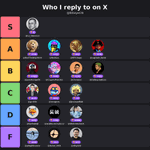
New Grok Bot trick🔥 Make your X social map with one sentence
And it comes with XHunt rankings~🏆
"Using this post as a reference, make a tier list of who @BiteyeCN replies to most on X"
The image was ready in a few minutes👇
🔹 It counts the replies automatically and sorts people into S to F tiers by how often we interact
🔹 It's connected to the XHunt API, so every avatar gets a 🏆 global rank, and a smaller number means more influence
🔹 You can see at a glance who's a big account and who's a rising star. CZ @CZ_binance is #4 globally, and Jesse Pollak @jessepollak is #10
How many XHunt top 1000 accounts are on your map? Share yours in the comments!


After the Ledger Incident, Are Cold Wallets Still Safer Than CEXs?
“A user bought the dip in June, accumulating 80 BTC. Just a week ago, they transferred the entire amount to a Ledger wallet. Now, all of it has been stolen.”
Recent security incidents involving Ledger have once again put cold wallets under the spotlight.
Multiple users in Southeast Asia reportedly lost their assets, with the affected devices all originating from CryptoBilis, an official Ledger reseller. Investigations found that some Nano X devices had been fitted with unauthorized hardware components capable of stealing users’ recovery seed phrases.
In the wake of the incident, OneKey also revoked CryptoBilis’ authorization, suspended the onboarding of new resellers, and began reviewing its existing distribution network.
For years, one of the most common security recommendations in crypto has been straightforward: buy your crypto, withdraw it to a cold wallet, keep your private keys under your own control, and avoid leaving your assets on exchanges whenever possible.
But now, even the cold wallets themselves, their distribution channels, and the supply chains behind them can become potential sources of risk.
So the question is: Where is the safest place to store your crypto assets—a cold wallet or a centralized exchange (CEX)?
🌟 Cold Wallets: Does Holding Your Own Private Keys Guarantee Safety?
Cold wallets have long been considered one of the safest ways to store large amounts of crypto because private keys do not need to remain exposed to internet-connected devices.
However, there is one easily overlooked question: Has the device itself been tampered with?
From manufacturing and shipping to distribution and final delivery, a security failure at any point in the supply chain could directly threaten the safety of users’ private keys.
There are also plenty of crypto events and promotions that give away cold wallets as prizes. This is not to suggest that these wallets are necessarily compromised. However, from a security perspective, it can be difficult to verify the origin and chain of custody of a giveaway device.
Has it been opened before? Was it initialized by someone else? Who handled it along the way? Ordinary users often have no reliable way to verify every step.
Yishi, founder of OneKey, also specifically addressed the question of how users can confirm that a hardware wallet has not been tampered with. Users can check tamper-evident packaging and single-use security seals, inspect the device’s status, and use the official app to verify the device and its security chip.
Supply-chain risks are not merely theoretical. There have been cases in which unusual purchasing channels or suspicious device origins were linked to stolen assets.
In July last year, a user reported that a friend had purchased an imToken cold wallet for RMB 618 from a JD.com store called “ConsenShop Studio.”
The friend subsequently transferred a total of 4.35 BTC from a CEX in several batches. About two hours after the BTC arrived, hackers began draining the funds.
When the user opened the wallet again two days later, the balance had dropped to zero. The store from which the wallet had been purchased had also shut down.
Following the CryptoBilis incident, wallet manufacturers have begun reassessing the security of their resellers and supply chains. OneKey stopped onboarding new resellers and initiated a review of its existing distribution channels. It also offered free device replacements to users who had purchased devices through CryptoBilis.
At this point, another question comes to mind: If a cold wallet fails and the assets are stolen, is there any compensation mechanism?
In most cases, the answer is no.
The hardware wallet industry has no standardized compensation mechanism. The reason is straightforward: a cold wallet may sell for just a few hundred dollars, but the manufacturer has no control over how much money a user chooses to store in it.
The reported losses associated with the CryptoBilis incident have already reached approximately $102 million. Losses attributed to a Coldcard firmware vulnerability this year have also exceeded $100 million.
Since Ledger is a privately held company, its latest reliable financial figures are difficult to obtain from public sources. For comparison, we can look at a larger hardware wallet manufacturer operating in the same market.
Take Tangem, for example. Its revenue in 2025 was approximately $61.3 million. A single major security incident can result in losses that exceed the annual revenue of a large hardware wallet manufacturer.
Therefore, when assets are stored in a cold wallet, if those assets are actually stolen, users will generally have to bear the losses themselves unless the manufacturer explicitly accepts responsibility and voluntarily provides compensation.
That said, it is important to note that such incidents are extremely rare. Hardware wallets have been around for more than a decade, and publicly documented cases of large-scale asset theft directly caused by tampered devices or compromised supply chains remain relatively uncommon.
🌟 CEXs: What Are the Risks of Entrusting Your Assets to an Exchange?
Keeping assets on an exchange may seem much more convenient. You do not need to manage recovery seed phrases yourself or worry about losing a physical device.
But exchanges come with their own risks.
Looking through exchange collapses, hacks, and shutdowns over the past few years, CEX risks can generally be divided into three categories.
1. Account Takeovers
As AI-generated images, videos, and deepfake technology become increasingly sophisticated, account recovery procedures that rely on identity documents and facial recognition are opening up new attack surfaces.
Recently, two similar cases involving stolen user assets have emerged in Chinese-speaking crypto communities.
In these incidents, attackers reportedly obtained extensive personal information about their victims and then exploited identity verification procedures and security-setting changes to take over their accounts.
2. Misappropriation of Customer Assets
FTX was once one of the world's leading cryptocurrency exchanges. However, it had allowed Alameda Research to use customer assets over an extended period while granting Alameda what was effectively unlimited credit.
Large amounts of customer funds were used for trading, investments, and debt repayments, eventually leaving a customer fund shortfall of more than $8 billion.
In November 2022, problems with Alameda's balance sheet came to light. The market began selling FTT, while customers rushed to withdraw their funds from FTX.
The exchange lacked sufficient liquid assets to meet withdrawal requests. It subsequently suspended withdrawals and filed for bankruptcy.
3. Exchange Business and Operational Risks
As market conditions deteriorate, trading volumes and liquidity decline. Major exchanges and on-chain trading platforms put increasing pressure on smaller competitors, while tighter regulatory requirements across jurisdictions continue to raise compliance costs.
This year, shutdowns among smaller and mid-sized CEXs have become increasingly noticeable. BitMart, BitMEX, AscendEX, and CoinEx have all announced the cessation or gradual winding down of trading operations.
Some platforms may simply be exiting the market in an orderly manner, while others have experienced funding shortfalls.
BitMart, for example, was left with a reported reserve shortfall of approximately $319.5 million following an earlier hacking incident. As its business conditions deteriorated this year, users reportedly became unable to withdraw their funds normally in line with their account balances.
Although these three categories of risk are fundamentally different, problems at a CEX do not always mean that assets become inaccessible instantaneously. There may be a brief window in which warning signs emerge and users can take action.
After an account takeover, for instance, an exchange may impose security reviews on changes to account settings and apply withdrawal protection periods. In the FTX case, several days passed between the exposure of Alameda's financial problems, the ensuing bank run, and the eventual suspension of withdrawals.
Of course, none of this guarantees that users will recover their money.
However, compared with a compromised private key that allows assets to be transferred directly on-chain, a CEX at least offers the possibility of intervention through risk controls, account freezes, and manual reviews.
🌟 Final Thoughts
Whether cold wallets or CEXs are safer has always been a contentious debate. It is somewhat like arguing over whether cars or airplanes are safer.
Depending on the metrics used, such as accident rates or passenger miles traveled, airplanes may be significantly safer. Yet many people are still afraid of flying because when a serious aviation accident occurs, the consequences can be catastrophic.
Cold wallets and CEXs operate in a similar way.
From the perspective of asset ownership and control, cold wallets clearly have the advantage. Your private keys remain entirely under your control, and you do not have to worry about an exchange misappropriating your assets.
But if your private keys or device are compromised, your assets could be drained within minutes, with very little opportunity for recovery.
CEXs operate under a different security model. An exchange could be hacked, fail as a business, or misappropriate customer assets internally, as FTX did. However, if the exchange maintains sufficient reserves, effective risk controls, and the financial capacity to compensate users, a security incident does not necessarily have to translate into losses for customers.
Here are two recommendations for ordinary crypto users:
1. Never keep all your assets in one place.
Long-term holdings can be stored in cold wallets, while funds used for active trading can remain on leading CEXs. Diversifying across different storage methods helps reduce concentration risk.
2. If you use a CEX, prioritize platforms with transparent reserves.
Ideally, choose exchanges that provide Proof of Reserves (PoR) and allow users to verify, through a Merkle tree, whether their assets are included in the reported reserves.

《Ledger 出事后,冷钱包还比 CEX 安全吗?》
“某用户 6 月抄底 80 枚 BTC,一周前刚转进 Ledger,现在全部被盗。”
最近,Ledger 的安全事件再次把冷钱包推上了风口浪尖。
东南亚多名用户资产被盗,受影响设备都来自 Ledger 官方经销商 CryptoBilis。调查发现,部分 Nano X 内部被植入了未经授权的硬件组件,可窃取用户的恢复助记词。
事件发酵后,OneKey 也取消了 CryptoBilis 的授权,并暂停新增经销商,同时重新审查现有的经销商网络。
过去币圈最常见的安全建议一直是:买币之后提到冷钱包,私钥自己保管,尽量不要放在交易所。但现在连冷钱包本身、经销商渠道,甚至供应链都可能成为风险来源。
那么问题来了,Crypto 资产放哪最安全?冷钱包,还是 CEX?
🌟冷钱包:私钥在自己手里,就一定安全吗?
冷钱包一直被认为是保存大额资产最安全的方式之一,因为私钥不需要长期暴露在联网设备上。
但它有一个很容易被忽略的问题:手里的这台设备本身有没有被动过手脚?
从生产、运输、经销商,到最终送到用户手里,中间任何一个环节出了问题,都可能直接威胁私钥安全。
币圈还有很多活动会直接抽奖送冷钱包,这里并不是说这些钱包一定有问题,但从安全角度来看,这批冷钱包的来源和流转过程很难核实:它之前有没有被拆封?有没有被初始化过?中间经过了谁的手?普通用户很难完全确认。
OneKey 创始人 Yishi @ohyishi 也专门回应了“如何确认收到的硬件钱包没有被篡改”这一问题:用户可以通过防拆包装、一次性封条、设备状态,以及官方 App 对设备和安全芯片进行验证。
这类供应链风险并不只是理论上的,过去已经出现过因为购买渠道或设备来源异常导致资产被盗的案例。
去年 7 月,就有用户爆料,朋友曾在京东一家名为「ConsenShop 工作室」的店铺花 618 元购买 imToken 冷钱包。随后她从 Cex 分批转入 4.35 枚 BTC,结果 BTC 到账约两小时后,就开始被黑客陆续转走。等两天后再打开钱包时,余额已经变成了 0,而购买钱包的店铺也已经关闭。
CryptoBilis 事件后,钱包厂商也开始重新审视经销商和供应链安全,OneKey 直接停止新增经销商,并重新审核所有现有渠道;同时为曾通过 CryptoBilis 购买设备的用户提供免费换新。
写到这里,小编其实也产生了一个新的疑问:如果冷钱包真的出了问题,资产被盗后,是否有赔付机制?
答案是,大多数情况下不会。钱包行业没有一个统一的赔付机制,原因也不难理解,一台冷钱包可能只卖几百美元,但用户往里面存多少钱,厂商根本无法控制。
这次 CryptoBilis 相关被盗金额已经达到约 1.02 亿美元,今年 Coldcard 固件漏洞造成的损失也超过 1 亿美元。
由于 Ledger 是未上市公司,公开渠道很难查到最新、可靠的财务数据,所以这里只能找同赛道、规模较大的硬件钱包厂商做参考。
以 Tangem 为例,其 2025 年营收约为 6130 万美元。一次严重安全事故造成的损失,甚至可能超过一家大型硬件钱包厂商一整年的营收。
所以如果资产放到冷钱包,一旦资产真的被转走,除非厂商明确认责并主动赔付,否则大多数情况下,损失最终还是由用户自己承担。
不过也需要说明,这类事件的发生概率其实非常低。硬件钱包已经发展十多年,真正因为设备本身或供应链被篡改而造成大规模资产被盗的公开案例并不多。
🌟CEX:把资产交给平台,又有哪些风险?
把资产放在交易所,看起来省心很多,不需要自己保管助记词,也不用担心设备丢失,但交易所同样有自己的风险。
翻了一圈近几年的交易所暴雷、被盗和关停案例后,会发现 CEX 的风险其实也比较集中,大致可以分成三类。
一、账号被盗
随着 AI 生成图片、视频和 Deepfake 技术越来越成熟,过去依赖“身份信息 + 人脸识别”的账户找回流程,也开始出现新的攻击面。
近期中文圈已经出现两起类似的用户资产被盗事件。攻击者掌握了用户的大量个人信息,再通过身份验证、安全项修改等流程接管账户。
二、平台挪用资产
FTX 曾是全球头部交易所,但其实际长期允许 Alameda 使用客户资产,并给予 Alameda 几乎无限的信用额度。大量用户资金被用于交易、投资和偿还债务,最终形成超过 80 亿美元的客户资金缺口。
2022 年 11 月,Alameda 的资产负债表问题曝光后,市场开始抛售 FTT 并集中从 FTX 提现。平台没有足够的流动资产满足用户赎回,随后暂停提现并申请破产。
三、交易所经营风险
市场转差、交易量和流动性下降,头部交易所和链上交易平台不断挤压中小平台的业务,同时各地监管趋严,合规成本也越来越高。
今年中小 CEX 的关停明显变多,BitMart、BitMEX、AscendEX、CoinEx 等都先后宣布停止或逐步停止交易业务。
有的平台只是正常退出,但也有平台出现资金缺口。BitMart 在早年的黑客事件留下约 3.195 亿美元储备缺口,今年业务恶化后,用户已经无法按账户余额正常提现。
这三类风险虽然完全不同,但 Cex 出问题时并不是资产瞬间无法提出,而是会留下短暂的预警和处理时间。账号被盗后,平台通常还有安全项修改审核和提现保护期;FTX 从 Alameda 财务问题曝光、出现挤兑,到最终暂停提现,中间也经历了几天。
当然,这些时间并不代表一定能把钱拿回来,但相比私钥泄露后资产可以直接在链上被转走,CEX 至少还存在风控、冻结和人工介入的可能。
🌟写在最后
冷钱包更安全,还是 CEX 更安全,其实一直是个很有争议的问题,这有点像互联网上争论“汽车和飞机哪个更安全”。如果按照事故率、乘客里程等指标统计,飞机可能明显更安全,但很多人依然害怕坐飞机,因为真正发生严重事故时,死亡人数最多。
冷钱包和 CEX 也是一样。如果看资产控制权,冷钱包无疑更占优势,私钥完全掌握在自己手里,也不用承担交易所挪用资产的风险;但一旦私钥或设备出了问题,资产可能在很短时间内被全部转走,而且几乎没有补救空间。
CEX 则是另一套安全模型。平台本身可能被黑、经营失败,甚至像 FTX 一样出现内部挪用,但如果交易所本身有足够的储备、风控和赔付能力,即使平台发生安全事故,损失也不一定影响到用户资金安全。
最后给普通用户两个建议:
1. 大额资产不要全放一个地方。 长期资产可以放冷钱包,交易资金放一线 CEX,尽量分散风险。
2. 用 CEX 就优先选储备透明的平台。 最好有储备证明( PoR),并支持通过默克尔树验证用户资产是否被计入储备。



TOKEN2049 Media Roundtable | Gate Founder Dr. Han: How Does He View This Wave of Crypto Exchange Shutdowns?
From the FTX collapse to multiple exchange shutdowns in the current cycle, many retail investors have been left facing long and difficult battles to recover their funds.
On October 8, Gate Founder Dr. Han joined a media roundtable at TOKEN2049, where Biteye editor @Web3SisterA asked him about his views on the recent wave of exchange shutdowns.
Dr. Han shared that Gate had not experienced a similar situation in the past, and that he was not familiar with the specific circumstances behind these cases. However, he acknowledged that exchanges that chose to shut down may have been facing significant operational challenges.
He also discussed Proof of Reserves, on-chain transparency, and the key factors users should consider when assessing exchange risks.
As the industry undergoes another round of consolidation, exchange transparency and the security of user assets remain issues that every market participant should take seriously.
🎬 Watch @Han_Gate share his perspective.