

@BobMumgaard
Account based inUnited States
About this account
- Account based in
- United States
- Connected via
- United States Android App
Account-level information from X, not a live location or the device used for a specific post.




AI can improve fusion energy, and the U.S. Department of @ENERGY (DOE) can improve AI. CFS announced today we’re leading an effort that’s part of the DOE’s Genesis Mission that we expect will do both.
Through this Genesis Mission Phase II award, @CFS_energy is leading a group of U.S. companies, universities, and labs to use artificial intelligence to help catalyze commercial fusion energy work. By expanding on our earlier work here, we’ll be able to deliver fusion energy’s benefits sooner: clean, safe, baseload energy that can help answer the country’s growing electricity needs.
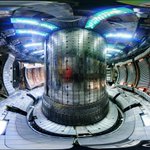
The program will incorporate decades of past learning on tokamaks, the type of fusion machine we’re building now. Scientific teams will use DOE computing horsepower to turn that knowledge and data into AI “surrogate” models that should help us run our tokamaks better, starting with our SPARC machine in Massachusetts. That’ll speed up learning we’ll apply to our ARC power plants.
It’s a strong group and we look forward to digging into the work together.

For more details, check our press release: cfs.energy/news-and-media/co…
We’ve long known that fusion machines perform better when you make them bigger, but 10 years ago, an @MIT tokamak called Alcator C-Mod showed that bigger isn’t always better. Those results helped chart our course at CFS to bring fusion energy to the electricity grid.
Over more than two decades of research, culminating in a final sprint on its final day in service on Sept. 30, 2016, C-Mod showed that compact tokamaks with high magnetic fields deliver the performance we need for economical fusion power. I was there on that last day at the Plasma Science & Fusion Center as we tried three ways to reach a new performance record — basically, three recipes that combined ingredients like magnetic field, plasma current, and plasma density in different ways.
Each recipe provided a good way to crank up performance, and the winning approach set a record for plasma pressure that stands to this day.
C-Mod is the progenitor of our own compact, high-field tokamaks, the SPARC demonstration machine and ARC power plant. We’ve drawn many of the best C-Mod attributes, giving us confidence that our machines will behave similarly.
That’s how innovation and progress occurs. Stay tuned as we put the C-Mod lessons to use pushing #SPARC to Q>1 — net fusion energy — and beyond.

For more on how MIT’s C-Mod paved the way for CFS, check our blog post:
blog.cfs.energy/how-the-alca…

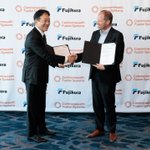
When @CFS_energy got its start, the high-temperature superconducting (HTS) tape necessary for our breakthrough magnets was a relative rarity. We’ve succeeded in dramatically expanding the supply, though, first with our 2021 TFMC magnet prototype and then our SPARC fusion demonstration machine. Today, we’ve announced new progress, a long-term agreement to purchase more than 10,000 kilometers (3 GA-m) of HTS tape from Fujikura Ltd. — the largest single HTS purchase order to date.
This agreement helps us secure HTS tape for our next chapter: ARC fusion power plants. At the same time, Fujikura is investing in a manufacturing capacity expansion so it can deliver HTS tape at larger scale.
Expect more of this trend in the fusion supply chain as our industry develops. To make HTS tape, you need to master a sophisticated manufacturing process. But as we’ve seen with countless other technologies before — microchips, solar panels, Liberty ships, and really anything that’ll come off an assembly line — manufacturers get better at manufacturing, and the supply chain matures.
My thanks to CEO Naoki Okada and the team at Fujikura for working together on a technology that’s crucial to bringing fusion’s clean, safe, secure electricity to the power grid.

For more details on our HTS supply chain agreement with Fujikura, check our press release here: cfs.energy/news-and-media/co…
Cooling our cryogenic system down to its very low operating temperature of 8 kelvin is a big moment for our SPARC fusion demonstration machine. It shows how deeply we’re now into the work of building, commissioning, and running the industrial hardware needed to operate SPARC. We’re steadily checking the check boxes on the SPARC to-do list.
Fusion works by heating and confining a very energetic cloud of charged particles called a plasma. In our case, we do that with very strong magnets that must be cooled to very low temperatures. The plasma is exotic, but the cooling system is ordinary technology you’ll see at liquified natural gas plants and other industrial sites.
But it takes skill and expertise to run cryogenics, and that’s what we’ve shown with this 8 kelvin achievement. We’ve already begun applying this knowledge to designing a very similar cryogenic system for our ARC power plant.
Check out our video and blog post to learn more about this core technology and how CFS is working in parallel on both the core SPARC equipment at the heart of the facility and the support equipment like the cryo system surrounding it.
Congrats to the team that put in long hours to install all the cryogenic system’s pumps, compressors, pipes, and valves and get it working smoothly. This gets us ready to check off one of the big check boxes on SPARC’s path to Q>1, aka net fusion energy.

To create a region with the hottest temperature in the solar system, we also have to create another nearby that’s just about its coldest. For our SPARC fusion machine, that cooling job falls to its cryogenic system — a system that recently reached a major achievement of operating at a very cold 8 kelvin (–445°F or –265°C) temperature.
This cryogenics achievement is a big deal. The system applies well understood cooling technology to the cutting-edge new job of fusion energy. SPARC uses superconducting magnets to confine and control a superhot cloud of charged particles called a plasma, enabling those particles to fuse together and release energy. To perform well, our magnets must be cooled as low as 8 K to carry enormous electrical currents with no resistance.
Bringing the full cryogenic system to 8 K is an example of our shift toward operations at SPARC. We’re testing and commissioning the support systems that surround the heart of the facility in anticipation of a major integrated test called dry dress rehearsal (DDR) that will put the SPARC support equipment through its paces. That allows us to exercise the equipment before we’ve completed assembly of the SPARC tokamak itself — the hardware with the magnets and vacuum vessel where the fusion will occur.
SPARC won’t generate electricity, but its successor, the ARC power plant, will. The ARC cryogenics system will be similar to SPARC’s, though it’ll have to handle the power plant’s continuous operations. That means what we learn on SPARC will apply directly to our work on the ARC plant.
For more details, check the link in the comments for our blog post on the SPARC cryogenic system.
#FusionEnergy
Even though fusion is hard, we’re really confident SPARC will hit its first big goal of Q>1. That milestone means that the amount of fusion energy we get out of the plasma (our very hot fusion fuel) will exceed the heating energy we put in to make the fusion happen.
So far, only one machine in the world has done that, but we expect SPARC will be the second. Check our blog post about this to understand why we’re confident and why achieving Q>1 is important.
To reach Q>1, you don’t just need good science. You also need a team with the skills to engineer, manufacture, build, and operate a fusion machine. @CFS_energy has exactly that. And we put this all together with commercialization in mind: SPARC demonstrates most of the core technology we need for our ARC power plant.
At CFS, we’re very confident that our SPARC tokamak will generate net fusion energy, a crucial performance threshold also called Q>1.
Q is the ratio of fusion power coming out of the heart of a fusion machine to the heating power that’s pumped in to make fusion occur. Achieving Q>1 shows a fusion plasma is generating a surplus of power, and that’s the foundation for a power plant — the electricity source CFS expects to bring to the power grid in the early 2030s.
Fusion is hard, but we have the design, the resources, and the team to make fusion power real. Our conviction that Q>1 is comfortably within reach begins with our 1,000+ person team of physicists, engineers, fabricators, and operators who’ve learned from decades of experience building and running tokamaks. Next is SPARC’s cutting-edge design, which is designed to reach performance well over Q>1.
“We have some margin to achieve Q>1. We’re not sitting right at the threshold, hoping the stars align perfectly,” said Phil Snyder, Vice President of Plasma Physics. “SPARC is designed to reach Q>10, so Q>1 is not an extremely difficult milestone.”
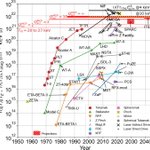
Only one machine so far, the National Ignition Facility (NIF) at Lawrence Livermore National Laboratory, has achieved Q>1 so far. To read about why CFS fully expects SPARC will be the next to reach this enormously important milestone, check our blog detailing our fusion approach.

Dennis Whyte (@MIT_Fusion) is taking over as CEO of the UK Atomic Energy Authority (@UKAEAofficial), and I’m excited to see a longtime friend and collaborator in this new leadership role. I worked for years with Dennis at @MIT's Plasma Science and Fusion Center — where Dennis was Director, I was a grad student getting my PhD, and @CFS_energy has its origins — and now I look forward to his arrival in the UK. CFS has had a joint R&D partnership with UKAEA for four years, including efforts like the LIBRTI program for fusion fuel production.
Dennis is a giant in the fusion world, an author on nearly 400 peer-reviewed papers including several involving the SPARC fusion machine we’re building right now at CFS headquarters. The UKAEA is lucky to have him. Dennis helped build and maintain a strong PSFC program, and now he’ll have a chance to do the same for UKAEA.
His taking this job shows how a well coordinated effort with a strong vision, significant financial and government support, and leading-edge new facilities can attract top talent. Bringing his skill to UKAEA directly strengthens the country’s ability to benefit from fusion energy’s advantages — clean, safe, dispatchable electricity.
One of UKAEA’s most important fusion projects, the Joint European Torus (JET) tokamak, produced important research and operational expertise. It’s also the tokamak that came closest to producing net fusion energy (Q>1), with a Q of 0.67. JET has entered decommissioning now, but there’s more work to be done in fusion. I’m looking forward to seeing how Dennis can help UKAEA push fusion forward now that the world’s attention is focusing not just on experimental projects but commercial fusion technology, supply chains, and the first power plants heading toward the grid.
#FusionEnergy

BREAKING NEWS: Professor Dennis Whyte has been appointed as the new Chief Executive Officer of UKAEA Group.
For the Press Release, visit gov.uk/government/news/fusio…

Neither of these entities is anywhere close to accomplishing what’s needed in their respective domains to warrant working together.
reuters.com/business/energy/…

News today: Commonwealth Fusion Systems has raised an additional $1 billion — the largest amount since our $1.8 billion investment in 2021. That brings our total capital raise since the start of the company to $4 billion — about 30% of what all fusion companies have raised together, according to the latest @Fusion_Industry Association figures.
This new funding cements our position as the global leader in fusion, a maturing company that’s able to attract a maturing investor set: pension funds, sovereign wealth funds, infrastructure investors, and industrial corporate partners.
The reason we’re able to win their confidence is they see the full range of what we do. There’s the bedrock of our science. There’s our execution ability, evident when they come to Devens, Massachusetts, and see our SPARC fusion demonstration machine is now about 80% done. And there’s our progress in delivering our first ARC power plant, including our application to PJM Interconnection, the largest wholesale electricity market in the United States.
This new funding puts us in a position to move at scale and as quickly as we need to deliver fusion energy. We’ll be able to apply what we’ve already learned from SPARC, to build at-scale prototypes of other technology we need, retool our supply chain, expand our manufacturing, prepare the site for our first ARC power plant, and start contracting power for the next plants.
It’s like we’re standing on two feet, shifting our weight gradually from the SPARC foot to the ARC foot. That’s very exciting: once we turn on SPARC, we’ll be able to take off on the next step to ARC.
Today, CFS announced another major advance in our fusion energy push: we raised an additional $1 billion in funding. This is the largest investment round in commercial fusion worldwide since our $1.8 billion funding round in 2021, bringing our total capital raised to $4 billion.
This investment reflects growing confidence from new partners in our technical progress, our team, and our commercialization path. It comes at a time when it’s clear the world needs a new energy option that provides safe, clean, and firm electricity.
“CFS is making what once was impossible into inevitable,” said CFS CEO and Co-founder @BobMumgaard. “In the 2030s, we will put commercial fusion on the grid. We have the science that works and the proven execution that’s consistently validated by the market. We regularly welcome investors from around the world to our headquarters in Devens, Massachusetts, where they see real and tangible progress as we ready support systems and finalize the assembly of SPARC. In unlocking commercial fusion energy, we’re on a path to make an impact at a civilizational level.”
CFS will use the funds raised to further accelerate our commercialization progress. In parallel to completing the assembly of our SPARC fusion demonstration machine, we’ll continue to develop the world’s first grid-scale fusion power plant, called ARC, at our Fall Line Fusion Power Station in Chesterfield County, Virginia.
#FusionEnergy

At Commonwealth Fusion Systems, we value those with proven experience that applies to our fusion energy mission — which is why I’m happy to welcome Lorence Kim as our new Chief Financial Officer. In that role, he’ll be able to apply to CFS his experience maturing a mission-driven, game-changing company from its deep science roots to commercialization.
Lorence has deep experience with strategic advisory work, capital markets, fundraising and venture investing, having led the biotech investment banking effort at Goldman Sachs and co-founded Ascenta Capital. But importantly, he also was CFO for @moderna_tx for six pivotal years of hypergrowth as the company developed its mRNA platform and portfolio of medicines, including its COVID-19 vaccine.
His strong financial leadership will help CFS complete the assembly of our SPARC fusion demonstration machine, design our first ARC power plant and plug it into the grid, and eventually scale up to build many fusion power plants around the world.
#FusionEnergy

This @eni–@UKAEAofficial work is a healthy sign of where things are headed in commercial fusion: integrated systems that fusion companies can buy as a unit instead of doing the work themselves to find, validate, and connect components. This is a sign of a maturing industry and strengthening supply chain.

#Rh3ova, the joint venture launched with @UKAEAofficial, brings together scientific expertise and industrial capabilities to support the growing global #fusion industry, with a focus on one of its critical challenges: the fuel cycle.
bit.ly/4vdfSAF

ALT UKAEA and Eni launch Rh3ova to expedite fusion energy industrialisation
Fusion energy has plenty of challenges, but the first is always plasma physics. You have to control superhot fusion fuel in a way that’s agreeable to the laws of the universe. Today, in a set of five peer-reviewed papers, we’re documenting how we’re confident we’ll be able to do that with our ARC fusion power plant.
The papers, written by 58 experts from CFS and collaborating universities and research institutions, show the scientific foundation. That starts with calculations and simulations backing up our expectation that an ARC plant will produce 1.1 gigawatts of fusion power that we can convert into 400 megawatts of net electricity for the grid. And the papers address how we’ll tackle fusion challenges like heat exhaust, disruptions, and plasma stability.
The bottom line: The science is solid. There are no showstoppers. We begin with decades of tokamak knowledge, extend that with what we’ve learned already from our SPARC demonstration machine, and fine-tune it with what we’ll learn from operating SPARC. Our commercial success is contingent on this successful de-risking of the core science.
We published these papers in the Journal of Plasma Physics through the peer-review process. That brings the independent validation of our work that’s crucial to establishing trust in our results. There’s a reason why peer review is the gold standard in the scientific community: It’s the best way to distinguish ideas from reality. In fusion, where the science and engineering are tough, peer-reviewed research helps leaders, investors, customers, and citizens make informed and unbiased decisions about who to trust and where to invest their dollars.
Congratulations to all who contributed to these papers, and thank you to the Journal of Plasma Physics from @CambridgeUP for taking on their publication. Today the global fusion community can celebrate a new win in the advancement of the last energy source humanity will ever need.
Today, we laid the physics foundation for our ARC fusion power plant. ⚛️
With 5 deeply researched papers — validated by independent peer review and published in the Journal of Plasma Physics — we’ve shown we've nailed the scientific basics of producing copious amounts of fusion power.
The collective assessment from our 58 co-authors? This machine will work.
No scientific breakthroughs are required to bring this clean, secure, abundant source of energy to the grid. Here is how we're handling fusion's biggest challenges:
⚡ Powering the Grid: Using extremely strong magnets, ARC will confine the plasma long enough to generate 1.1 GW of fusion power. We'll convert that into 400 MW of continuous net electricity — enough to power ~280,000 average American homes.
🛡️ Handling Heat Exhaust: To control a superhot, unruly cloud of charged particles, we're utilizing proven methods to safely handle the heat exhaust that acts as a key practical constraint for tokamaks.
✅ Managing Disruptions: We aren't trying to build an operationally perfect machine. We are pragmatically designing ARC to safely handle disruptions and keep the plasma stable for top performance.
🏗️ Proving the Approach: We're building on decades of tokamak research and supercomputer simulations. And we're proving our approach right now with SPARC, the tokamak we are actively building in Massachusetts.
With our transparency, you don’t have to take our assertions on faith. We are really pushing fusion forward.
Happy to see this new $250 million fund from @gigascale Capital designed to let institutional investors become more deeply involved in the startups that’ll build the world’s future infrastructure and other physical technology. This is literally a constructive step forward.
Very few people have successfully scaled cutting-edge technology and delivered it to the world. Even fewer can go deep on the novel physics, the operational work, and the people at the same time. @schrep and his team do all of it, and their expertise shines through.

1/ Today we're announcing Gigascale Capital's $250M first institutional fund to back early-stage founders rebuilding the physical economy.
Bob Mumgaard retweeted

"[This is] the first time [we've had] energy technology that's gone all the way from Newton's laws on some of the biggest scientific compute all the way to a real-time control system and...digital representation of a plant."
On stage at CERAWeek 2026 discussing how to scale new technologies to meet AI demand, CFS CEO and Co-founder @BobMumgaard sat alongside Lucia Tian and Marc Spieler, two of our close working partners at Google and NVIDIA, to discuss how AI and fusion energy benefit each other.
The AI software that we use at CFS, powered in part by technology available through our partnerships with @nvidia, @Google and @Siemens, holds the potential to accelerate how we build, test, and operate the SPARC tokamak and its various support systems. And the fusion power plants we'll build will eventually power the very same AI systems that have supported their construction.
#FusionEnergy #AI
I’m grateful for the opportunity to serve on the President’s Council of Advisors on Science and Technology (PCAST). The United States has long been an innovation powerhouse, helping to tackle some of the world’s most pressing challenges. I look forward to working with other members of the PCAST to ensure the US remains at the forefront of innovation.
whitehouse.gov/articles/2026…

Pacific Fusion just called for commercial fusion energy companies to share their progress achieving specific milestones leading toward competitively priced power on the grid.
Their effort is closely related to an open letter I wrote in 2024 (cfs.energy/news-and-media/bu…) and has the same goals in mind. Specifically, companies should build trust in the fusion industry by demonstrating their progress, and they can ensure credibility through peer-reviewed research that lets investors, press, and policymakers independently assess that progress. Importantly, Pacific Fusion shows their approach, exactly what they’ll measure, and how they’ll report as they click off the milestones.
pacificfusion.com/updates/cl…
The six milestones I’ve detailed frame our long-term direction at @CFS_energy. Expanding on the original open letter, I’m detailing those milestones in a series of blog posts. You can check out the posts on our six milestones below.
1. Produce stable plasma, the superhot fuel for the fusion process:
blog.cfs.energy/first-step-o…
The techniques Pacific Fusion uses does this already at university and national labs.
2. Heat the plasma to 10,000,000° Celsius: blog.cfs.energy/fusion-energ…
Pacific Fusion’s technology does this at universities and national labs.
3. Show plasma performance through a high “triple product” measurement: blog.cfs.energy/fusion-energ…
A closely related technology has done this at @SandiaLabsUVM, but it’s not entirely clear if Pacific Fusion has.
4. Achieve net fusion energy, a threshold called Q>1: blog.cfs.energy/fourth-step-…
Pacific Fusion hasn’t built a machine to do this yet, but they lay out a plan to do so.
5. Operate a plant that produces net electricity: blog.cfs.energy/fifth-step-o…
This requires handling factors like inefficiencies in power generation. Nobody has done this yet.
6. The sixth and last milestone is supplying competitive power on the grid. Nobody has done this yet, either. It’ll be the subject of my final blog post in the series, though. Stay tuned.

In 2024, I introduced a six-milestone framework that the fusion energy industry can use to build trust in fusion energy. This week, we’ve published two blog posts detailing milestones 4 and 5. These are about making the leap from plasma physics into the larger world of fusion power plants.
Milestone 4 is a doozy: Q>1, also called net fusion energy. Put simply, it means more energy out of the heart of the machine than in — and so far only one system in the world has been able to do it. This monumental achievement demonstrates the basis of a power plant, so you’ll hear a lot more about Q>1 as the fusion industry matures. Even if you’ve heard of Q>1 before, this post is a chance to read about some of its subtleties.
Milestone 5 goes a step further by showing you can generate net electricity suitable for the power grid. That extends beyond the plasma physics skills needed for Q>1 into new domains like plant engineering and energy conversion. Of course you only need this if you have a fusion plasma that can make enough fusion power to overcome its own losses — hence the sequencing of the milestones.
I know fusion science and engineering can be confusing, but these milestones are designed to offer a relatively simple guide that investors, journalists, policymakers, and the general public can use to evaluate fusion companies. Ultimately, being able to separate the true progress from shallow marketing hype will build trust in our industry.
Check here for posts on milestone 4 and milestone 5 on the path to competitive fusion energy.
Milestone 4:
blog.cfs.energy/fourth-step-…
Milestone 5:
blog.cfs.energy/fifth-step-o…
#FusionEnergy
