

E-commerce operations software: OMS, WMS, TMS, plus pricing & POS. Set up by our team to fit how you work. 1,000+ merchants since 2008.`
France
Joined July 2011
- Tweets688
- Following92
- Followers492
- Likes75




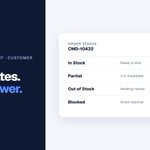


An express order must be visible as urgent before picking. Filter the queue, move urgent orders up, run their wave first, scan at packing, and print labels before carrier cutoff.
See how myFulfillment structures warehouse preparation: boostmyshop.com/en/products/…

Illustrative case: it’s 5:50 pm and the driver is waiting at the dock. Close the pickup with a carrier manifest listing every tracked parcel, get it signed, and move late-packed parcels to the next manifest. Keep the signed manifest as the pickup record.
See the myFulfillment transport workflow: boostmyshop.com/en/products/…

Ten minutes saved on shipping can look too small to matter.
At Repiauto, several gains like that added up to hours and, in Jonathan’s words, capacity for 100 to 200 more orders.
Judge a tool by the minutes the team actually gets back, task by task.
Watch the excerpt and the full webinar replay: boostmyshop.com/en/resources…

Illustrative case: a 32 kg parcel to Corsica contains a fragile SKU. Carrier choice should not wait for packing. A routing rule can combine postal code, weight, fragility and SKU, then generate the label through the assigned carrier API.
See how myFulfillment centralizes carrier rules, labels and tracking: boostmyshop.com/en/products/…
Close to 80% of Repiauto orders contain one item.
They go straight from receipt to packing. Multi-item orders stay in picking until complete.
Measure your single-item share. If it is high, check whether those orders still pass through sorting designed for multi-item work.
See the full workflow in the webinar replay: boostmyshop.com/en/resources…
Order, receive, pick and ship within four hours. That was Repiauto’s requirement.
The ERP projects Jonathan had seen ran for six months to a year. Before comparing feature lists, time your full operating cycle. A broader tool may still be built for the wrong pace.
Watch Jonathan explain the requirement in the webinar replay: boostmyshop.com/en/resources…
Paper did not fail at 300 orders a day. At Repiauto, that was only the psychological threshold. Past 200, paper handling already meant more hiring, stress and errors.
Count how many decisions still depend on a sheet, re-entry or someone’s memory.
Watch the excerpt and the full webinar replay: boostmyshop.com/en/resources…


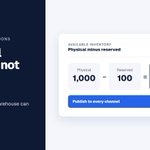
"Ships today" and "ships in 72 hours" should not describe the same stock.
myFulfillment syncs supplier inventory, combines own and supplier stock, then publishes the matching availability message. The supplier PO can follow automatically.
See the procurement workflow for supplier stock: boostmyshop.com/en/products/…
