

Postdoc @Harvard with @marinkazitnik | Ph.D. @UCLA with @sr_sankararaman | Ex-AI Resident @Google-X
Boston, MA
Joined November 2016
- Tweets149
- Following452
- Followers336
- Likes697

Pinned Tweet
🧬 Do genetic variants interact in humans?
For years, the answer was “probably, but we lacked solid statistical evidence.” We now bring one of the strongest pieces of evidence to date.
Thrilled to share our latest work, FAME, now at Nature Genetics: nature.com/articles/s41588-0…

How do cells respond to perturbations in concert with their neighbors? Excited to have played a part in CONCERT! 🎻

When you knock out a gene in a tissue, the effect starts in the perturbed cells and extends into their neighborhood. The same knockout can produce one response in a tumor core and another at a tissue border
CONCERT is a generative model that predicts how perturbation effects propagate across tissue
biorxiv.org/content/10.1101/…
Cells in a tissue act in concert, and CONCERT predicts how the whole ensemble responds when one player changes its part 🧵
When I first read GPN in 2023 PNAS, I thought it was a beautiful idea, struck by its 2 rejections and 4 review rounds. Seeing GPN-Star in Nature is incredibly inspiring. A humbling reminder that great ideas aren’t always recognized at first. Persistence matters.

We are thrilled to share that our GPN-Star manuscript is now published and freely available:
doi.org/10.1038/s41586-026-1…
(1/n)

Boyang Fu retweeted

Do spatial transcriptomics foundation models (SFMs) actually learn biologically meaningful spatial patterns? 🧬
Excited to share our new work assessing if current spatial foundation models learn multi-scale spatial variation in gene expression (spoiler: mostly no)
Timely report. A good reminder to rethink how we evaluate virtual cell models. DE-based metrics remain widely used in perturbation benchmarks, often without sufficient attention to how the underlying DE is defined and calculated.

Boyang Fu retweeted

How Anthropic's new results post would read without the PR:
Claude orchestrated open-source protein design models, PXDesign, RFdiffusion, Genie, BoltzGen, from a 30k-token expert prompt and 12,500 H100-hours of compute, and designed binders against 14 of 15 targets. Hit rates of 22–35% against a 10–15% baseline, where some of those tools already report similar numbers on their own.
The orchestration is genuinely impressive. But the open-source models did most of the lifting, and they came from the Baker lab, Columbia, MIT, ByteDance Seed, and most of them were already wet-lab validated before Claude touched them.
Which also sets the ceiling. All these generators share a single PDB-shaped training distribution, so calling four of them doesn't diversify away the blind spot, since they fail together. The targets that worked are the well-studied ones.
So the valid claim is that an agent can now drive this stack competently in the regime where the stack already works.
Instead, we got this announcement:

Many drugs work by binding to a specific target in the body and blocking or changing what it does. An important first step in the drug development process is designing a molecule that can bind tightly to its target. Traditionally, that's meant weeks or months of expert work per target, sifting through a large number of candidates to identify the few that work.
We wanted to test if Claude could successfully design novel protein binders from scratch (also called de novo design). With a protein design prompt written by a human expert, Claude autonomously designed protein binders against 14 out of 15 targets.
We then worked with Adaptyv Bio and Twist Bioscience, who independently built and tested the proteins Claude designed.
Fully agree that restricted AI ecosystems disadvantage academic labs in defensive tools.
We need an open-source biosecurity policy shaped by multi-stakeholder consensus with domain researchers, not unilateral platform restrictions.

Following the publication of our phage gen paper, I wrote some personal thoughts on biosafety and biosecurity as generative biology improves.
Given the trajectory of progress, there should be concern and urgency -- but also optimism.
brianhie.com/present_and_fut…


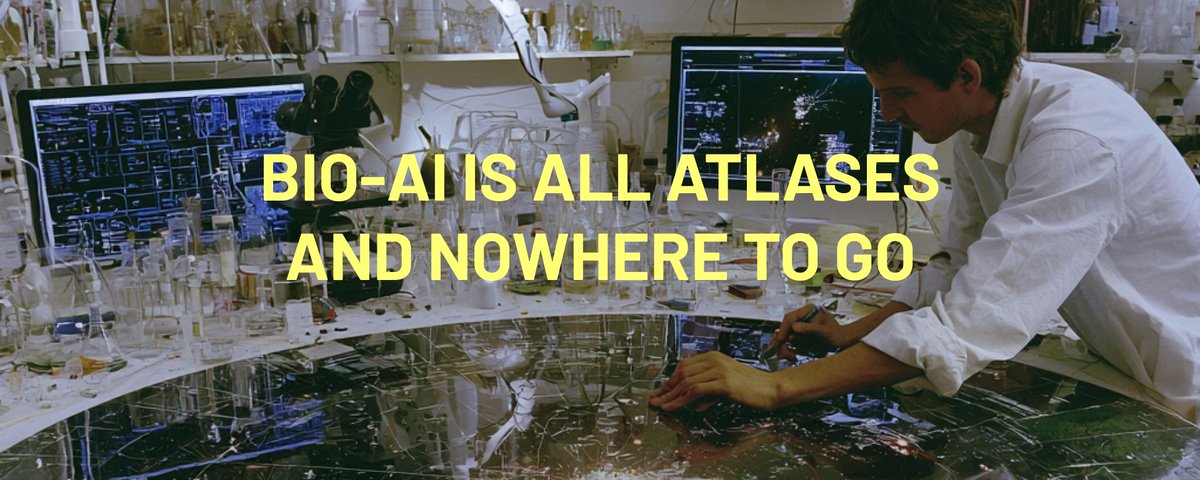
Boyang Fu retweeted

Together with my co-founders Michael @MichaelPoli6, Stefano @Massastrello and Armin @athmsx, I am excited to announce @RadicalNumerics is emerging from stealth with a $50M seed round to build general biological intelligence.
We’re also sharing an early preview of our new model Omnii, the most powerful genome language model to date.
Omnii preview link:
radicalnumerics.ai/blog/radi…
At Radical Numerics, our mission is to master the code of life, and to drive the frontier of biological AI for both design and defense.
This is our dual mandate, which comes from something our own team helped make possible.
Our founding team trained Evo and Evo 2, the largest biological AI models (40B params) trained on DNA sequences. Trillions of tokens across all of life, from microbes to mammals. It’s fully open source, and created the field now known as generative genomics.
Last year, scientists used Evo to generate the world’s first complete genome from scratch using AI. Turns out it was a bacteriophage—a type of virus. It functioned in the real world, and in this case it was harmless. But for us, it was a clear turning point.
It showed that AI is no longer just analyzing biology. It is on the cusp of generating functional lifeforms. Eventually, AI will have the power to design and control life itself.
That should make all of us incredibly excited, and incredibly uneasy. (Anyone can design DNA with a new function, and have it synthesized and delivered, like something from Amazon Prime).
The same technology that will help us cure cancer is the very technology that might create the next global pandemic, or worse, allow the creation of bioweapons that can wipe out populations.
We believe these forces are inseparable. If you work on the frontier of biology, you have to build technology to safeguard it from its misuse. Existing biosecurity tools are sorely losing the arms race, relying on outdated “have I seen this exact thing before?” style algorithms.
We founded Radical Numerics to turn the tide.
And we can’t do that by training on textbooks and natural language. We must understand the language of biology from the raw physical data itself, to reason across every molecule and modality, from DNA to proteins.
The next frontier for AI goes far beyond chatbots or video generators to models that can understand and engineer life.
Today, we’re previewing Omnii, which is already far surpassing Evo 2, and will continue improving as we scale and add new modalities (training now).
1. For human health, Omnii can read and write whole genomes (more on writing later). It’s state of the art (SOTA) on detecting causal variants for disease, and can rank Alzheimer's mutations zero-shot. We’re partnering with a diagnostics company to use Omnii for early cancer detection (pancreatic and multi-cancer).
2. For defense, Omnii is SOTA at detecting AI-generated pathogens. We benchmarked existing detection tools, and they simply can’t detect the AI-generated ones (“deepfake viruses”). We’re partnering with a US national lab to pilot Omnii for detecting the next pandemic, both natural and AI-generated.
We have a data center full of Blackwells in construction now to build the most powerful biological AI models ever. This mission takes a new kind of AI lab that can actually scale on physical, biological data: new alignment research (mid/post training), scaling long context, building out mech interp teams to dissect what these models learn, new architectures and systems designs, all from the ground up.
Our team is made up of AI researchers and scientists from top labs and institutions (e.g. Stanford, MIT, Google DeepMind), but more importantly, we all share the belief that this is the most important challenge of our lifetime. If you feel similarly, we are hiring. We aim to bring the brightest minds in AI and science together to save lives.
Thanks to our partners on this journey, led by Emergence Capital @emergencecap, with Obvious Ventures @obviousvc, Triatomic @TriatomicCap
, and Patrick Collison @patrickc. Our advisors include Eric Horvitz @erichorvitz, CSO of Microsoft, Chris Re @HazyResearch of Stanford, George Church @geochurch of Harvard, and Andrew Weber @AndyWeberNCB, former Assistant Secretary of Defense for Nuclear, Chemical and Biological Defense Programs.
Fortune article: fortune.com/2026/06/15/exclu…
Jobs: radicalnumerics.ai/join-us

1/ Agreed: this paper is not proof that perturbation-native virtual cells cannot scale. But there is a deeper standards issue: what is the null assumption? Right now the burden seems to fall on disproving scaling laws in biology, not on establishing them.

Let’s discuss the scaling law of virtual cells.
A Nature Methods paper (nature.com/articles/s41592-0…) published yesterday is being interpreted by some as evidence that scaling laws do not hold for virtual cells. I read it in detail, and here are my 2 cents:
It is a useful benchmark, but not a direct test of scaling laws in causal single-cell foundation models or perturbation-native virtual cells.
The paper mainly studies PCA, scVI, Geneformer, and SCimilarity (which are relative small models) on observational atlas-style pretraining, with perturbation evaluation limited to a narrow Tahoe small-molecule/cancer-cell-line setting. These are important baselines on scFMs that focuses on learning cell embeddings, but they are not large-scale causal perturbation models (e.g, diffusion-based virtual cells, or other modern architectures designed natively for causal perturbation biology).
The metrics also matter. Cell-type F1 and batch-integration AvgBIO are reasonable atlas/embedding metrics, but they are also tasks that can saturate quickly. They are not direct measures of causal perturbation prediction, target ranking, rare differential-expression tails, OOD genetic perturbations, or generalization across biological contexts.
The “learning saturation point” in the paper is useful, but it is not really a scaling law. It asks: what is the smallest pretraining size that reaches within 95% of the best observed score on this benchmark? That is a helpful diagnostic, but it can be overinterpreted when the downstream task itself is saturated.
The perturbation result is, IMO, limited: a few selected Tahoe-100M small molecules across several cancer cell lines, evaluated with genewise R²/MSE. The paper itself reports that a “no-change” baseline beats fine-tuned models for most drugs, which says as much about the evaluation regime as about model scaling.
In fact, our scGPT work already showed three years ago that simply scaling the number of observational cells saturates quickly after a few million cells. So I agree with the warning: naive “more atlas cells = better virtual cell” is not enough.
But that is not the real scaling question.
In X-Cell, we study scaling across multiple axes: number of perturbation cells, number of biological contexts, perturbation diversity, and model parameters. On our Perturb-seq-scale data, we observe clear and encouraging scaling behavior. Similar trends are emerging from other perturbation-native virtual cell efforts as well.
The important question is not: can more atlas cells improve cell-type F1? It is: with larger Perturb-seq datasets, larger models, better architectures, and harder OOD splits, can we predict causal cellular responses across genes, combinations, doses, cell states, and contexts?
For X-Cell and the next generation of virtual-cell models, the goal is not just better embeddings. It is target ranking, rare DE tails, counterfactual biology, and prospective perturbation prediction.
So my reading is: this paper is a useful caution against naive scaling, not evidence that scaling laws do not apply to virtual cells.
The exciting regime is still open: scaling the right data, the right models, and the right objectives for causal cellular biology.


6/ The positive claim, especially in biology, has to earn belief. Not from a few favorable curves, but by surviving confounding, baselines, replication, and hostile alternatives, and by showing where the gains hold, not just that they appear.
Boyang Fu retweeted

Good to see folks going back to the basics. Been saying this for a while, that the whole AI virtual cell space has been putting parameters first & expt design second (or not at all) when the latter is the most important to match your questions of interest. 1/

Boyang Fu retweeted

I wrote about AI in academia. "PhD-level thinking", LLM bias, grunt work, alignment, AGI, data center water use, AI politics -- something for everyone.

Boyang Fu retweeted

Building autonomous agents for scientific discovery? 🧬🤖
@GoogleDeepMind Science Skills is now available on GitHub. We've open-sourced this specialized toolkit to accelerate your agentic workflows with scientific grounding and higher token efficiency.
Download now ↓
github.com/google-deepmind/s…


