
Electrophysiologist that dabbles in electrophotography at St Vincent Indianapolis.
Carmel, IN
Joined August 2018
- Tweets223
- Following146
- Followers297
- Likes561





Brad Clark retweeted

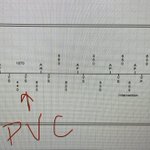
PACs illuminate so many electrophysiological phenomena in this tracing. One could write a book chapter. #ECG #Cardiology #EPeeps

Brad Clark retweeted

Ischaemic stroke in atrial flutter vs fibrillation: a Finnish nationwide study. Read more at doi.org/10.1093/eurheartj/eh…. #IschaemicStroke #AtrialFlutter #AtrialFibrillation #StrokeResearch #FinnishStudy @escardio @ESC_Journals

Brad Clark retweeted

Persistence of atrioventricular nodal re-entrant tachycardia during ventricular fibrillation
heartrhythmcasereports.com/a…

Brad Clark retweeted

I’ve been implanting LBBAP leads in hundreds of ex-vivo hearts, and see entanglement and subsequent endocardial delamination often.
Maybe it’s nothing, I’m not a clinician, but it sure looks scary when it happens.
Want to hear what people think of this.
Brad Clark retweeted

#PFA in swine close to sinus and atrioventricular node➡️no effects at a distance >10mm, permanent #injury at <=6mm, often preceded by transient response, but abrupt in 33% close to SN and 37% close to AVN👇
ahajournals.org/doi/10.1161/…
@RolandTilz @SergeBoveda @ftrae @EuropaceEiC

Brad Clark retweeted

Exercise training reshapes heart electrophysiology post-MI across regions, including scar tissue, explaining its anti-arrhythmic protective effects #Epeeps ahajrnls.org/4p9Jtd9

Brad Clark retweeted

🚨Latest #FreeRead Article in
@JICE_EP
Utility of Slow Conduction Velocity Area Guided Ablation in Patients with Persistent Atrial Fibrillation
🧐📖rdcu.be/focXN
by @OYousaku, Shunsuke Ishida, Sho Okamura, Naoki Ishibashi, Oe Hiroshi, Junji Maeda, Takumi Sakai, Naoto Oguri, Motoki Furutani, Shogo Miyamoto, Shunsuke Miyauchi, Takehito Tokuyama, Noboru Oda & Yukiko Nakano
#EPeeps

Brad Clark retweeted

This ECG looks dangerous.
It may not be.
The Athlete Early Repolarization Pattern is characterized by J-point elevation, convex ST elevation, and anterior T-wave inversion—features that can raise concern during athlete screening.
In professional athletes, we found no adverse cardiovascular events attributable to the pattern with a median follow-up of ~10 years.
Exercise remodels the heart. It also remodels the ECG.
Not all human variation is disease.
🔗 link: bit.ly/4nZXqcS


Brad Clark retweeted

Mark your calendar — April 25, 10:00 AM.
Excited to present at the HRS Late-Breaking Clinical Trials – High Impact Science Session.
📍 McCormick Place, Room S103
“Reentry at Patient-Specific Regions with Steep Repolarization Gradients Is a Mechanism of AF Initiation”
This work reflects years of effort by an extraordinary team. Importantly, it marks a major advance in our understanding of AF mechanisms, one that can move the field forward by enabling a shift from empiric therapy toward patient-specific targeting of the substrate responsible for AF initiation and maintenance.
We set out to answer fundamental questions:
1.What is the mechanism of AF initiation?
2.Is there a localized substrate?
3.What are its ep properties?
4.Can it be identified during sinus rhythm?
5.Can targeted ablation eliminate AF?
This study answers all of these questions and also provides proof-of-concept clinical validation supporting a mechanism-driven, patient-specific approach to AF ablation.
For too long, ablation strategy has remained largely empirical. We hope this work moves us closer to a truly mechanism-based approach.

Brad Clark retweeted

Three years ago, I was asked to speak @westernAFib on whether PFA will obviate the need for epicardial therapies. As a field, we need to collectively understand when and how often PFA is transmural and durable.
Congrats to @Innovate_JJ and team on publishing our observations with simultaneous epi mapping.
Epicardial Validation of Transmural Posterior Wall Isolation During Endocardial Pulsed Field Ablation heartrhythmjournal.com/artic…


Brad Clark retweeted

RCT: Intracardiac echocardiography is non-inferior to transesophageal echocardiography for thromboembolic prevention in atrial fibrillation ablation, with added benefits in safety, efficiency, and patient comfort. ja.ma/3YivdlF

ALT JAMA Cardiology infographic comparing intracardiac (ICE) vs. transesophageal echocardiography (TEE) in atrial fibrillation ablation. It shows population details, intervention methods, key findings, locations, and primary outcomes.
Brad Clark retweeted

“Bloqueo AV en multiples niveles o Wenckebach de latidos alternos”
Se combina el bloqueo suprahisiano e infrahisiano. Al haber bloqueo infrahisiano, no hay P bloqueada, sino que paradójicamente el PR se sigue prolongando”
Este ECG es rarísimo de observar.
@clinica_sec


#ECGNavidad25 #CardioClinica
Paciente de 75 años quien consulta por síncope.
Cómo explican al inicio de la
primera mitad del ECG, en presencia de un bloqueo AV de 2do grado, luego de una P bloqueada, el intervalo PR se sigue prolongando.
@clinica_sec

Thank you @Medtronic for the opportunity to participate in the emerging leaders program last weekend. Excellent job by the presenters and I enjoyed the panel with @JonPicciniSr , @DrRoderickTung, and @DrAnneSophieLR. Another excellent program by @EPrystowskyonEP


Brad Clark retweeted

This tool was NOT designed to navigate the delicate anatomy of the MV apparatus. The risk of structural injury far outweighs any perceived procedural advantage. Precision and respect for structure must always come before innovation. ❤️⚙️ ⚠️
I reviewed my Farapulse cases. 130 cases over the past 16 months.
✅0 perforations/effusions
✅0 strokes
✅100% PVI and >95% first-pass isolation of veins
✅80% freedom from afib at 3-6 months. 35 pts with 1 year follow-up with freedom from afib 74%.
#EPeeps
I just waited on hold for a peer-to-peer on an echo for a pt with LVH and last echo 7 years ago. Has lightheadedness. Apparently not enough to check their box. I gave up after 30 min…you win this one @Centene @AmbetterHealth
Brad Clark retweeted

@drparinpatel kicking of the @inacc annual statewide meeting in Indy! Looking forward to great science, catching up with and making new friends! @DrRyanPDaly
