

Brain Communications is the #OA sister journal to @Brain1878. We aim to publish robust translational neuroscience studies.
Joined March 2019
- Tweets3K
- Following910
- Followers5.3K
- Likes858



Pinned Tweet
Have you read an outstanding paper published in Brain Communications during 2025? Take note of it for the Early Career Researcher Paper Prize! Nominations are Open! #ecr #paperprize #neuroscience
Link to form: buff.ly/8DWT8TV
Find out more at: buff.ly/5WfBuCR

In the letter to the editor Delgado-Ron critically reassesses Peinkhofer et al.’s (2021) hypothesis that near-death experiences and thanatosis share an evolutionary basis.
Read it at 👉buff.ly/UoFs7IQ
#neuroscience #braincommunications

Luzum et al. found that greater walking after stroke was associated with better attention and executive function, but not global cognition and memory. Changes in walking did not predict cognitive changes, or vice versa.
Read it at 👉buff.ly/Hi0DzHW
#neuroscience

Meet Dr Josef Priller, a Professor of Neuropsychiatry at the Charité in Berlin and the Chair of Brain Inflammation and Repair at the University of Edinburgh and UK DRI👋
Dr Priller’s research spans neuroinflammation, neurodegeneration and movement disorders.
#meettheteam

Strýček et al. show that PET-derived metabolic connectivity relates to memory performance in mesial temporal lobe epilepsy, with presurgical network patterns predicting postoperative memory change, supporting network-based risk assessment.
Read it at 👉buff.ly/EGlGwI7

Gunnarsdottir et al. report that supplementing preterm infants with arachidonic and docosahexaenoic acid promotes early white matter maturation, as shown with advanced diffusion magnetic resonance imaging.
Read it at 👉buff.ly/ulHP3wF
#neuroscience #braincommunications

Canori et al. found at-home Microtesla Magnetic Therapy feasible and well tolerated in 30 adults with cognitive impairment from long COVID, with exploratory improvements in cognition and emotional well-being largest at follow-up.
Read it at 👉buff.ly/q3zvMoV
#LongCovid

Canaslan et al. showed that ubiquitin C-hydrolase L1 levels in CSF and blood accurately distinguished sporadic Creutzfeldt–Jakob disease and fatal familial insomnia patients from controls, supporting it as a promising diagnostic biomarker.
Read it at 👉buff.ly/Ao5n0bl

Effiong et al. propose the Metabolic Debt Model, a hypothesis-generating framework that links four metabolic constraints to network dysfunction and clinical symptoms in myalgic encephalomyelitis and long COVID.
Read it at 👉buff.ly/rLazwQr
#neuroscience #LongCovid

Mirloo et al. describe how dynamic contrast-enhanced MRI detects age-related blood–brain barrier dysfunction independent of the mild cognitive impairment diagnosis and associated with domain-specific cognitive deficits.
Read it at 👉buff.ly/DWcNUvD
#neuroscience

Meet Dr Nicola Pavese, a Professor of Clinical Neuroscience at Newcastle University and Professor of Translational Research at Aarhus University👋
He investigates non-motor symptoms in Parkinson’s disease and neuroinflammation in neurodegenerative diseases.
#meettheteam

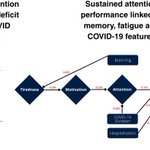
Using a large dataset of COVID-19 patients, Higgins et al. show Long COVID-specific memory and attention deficits, with structural equation modelling implicating on-task fatigue and subjective symptoms in post-COVID cognitive impairment.
Read it at 👉buff.ly/Tn0mJmw

Pérez-Millan et al. link MRI markers of subcortical sleep–wake regions to polysomnographic patterns in ageing and Alzheimer’s disease, with hypothalamic and locus coeruleus measures associated with sleep duration and arousals.
Read it at 👉buff.ly/WSK8Qoj
#neuroscience

Öijerstedt et al. found elevated, progressively increasing plasma cardiac troponin T in amyotrophic lateral sclerosis compared with benign fasciculation syndrome, with multimodal evidence indicating a skeletal muscle origin.
Read it at 👉buff.ly/E2JA3Ke
#neuroscience

Meyer et al. show that subthalamic deep brain stimulation improves movement but can increase impulsivity in Parkinson’s disease by altering response inhibition through a shared subthalamic nucleus-supplementary motor cortex pathway.
Read it at 👉buff.ly/UuSQMO0

Mouraux et al. review fluid biomarkers in hereditary cerebellar ataxias, highlighting neurofilament light chain as a sensitive marker of disease activity, progression and treatment response, detectable before symptom onset.
Read it at 👉buff.ly/ywx1GJy
#neuroscience

Fotouhi et al. report marked heterogeneity in Alzheimer’s disease progression, demonstrating discordance between CSF and PET biomarker positivity and mismatches between clinical diagnosis and cognitive trajectories.
Read it at 👉buff.ly/dDu3Nfx
#neuroscience

Meet Dr Francesco Papaleo, a group leader of the Genetics of Cognition Laboratory at the IIT👋
He combines genetically modified mouse models with human clinical studies, using advanced neural techniques to link cell- and circuit-specific mechanisms to socio-cognitive behaviours.

Rodríguez Nieto et al. showed that changes in GABA+/Glx balance in two executive brain hubs relate to functional connectivity during cognitive flexibility performance, with important differences between young and older adults.
Read it at 👉buff.ly/19L8nHM
#neuroscience

Monopoli et al. demonstrate that Parkinson’s disease patients with early hallucination-related phenomena show reduced MRI-derived volume of neuromodulatory brainstem nuclei, most robustly the left laterodorsal tegmental nucleus.
Read it at 👉buff.ly/ychshPw
#Parkinsons

Zich et al. report that in acute stroke, initial severity relates to structural brain damage, whereas 6-months outcome is linked to neural activity, with combined measures providing the most accurate model of outcomes.
Read it at 👉buff.ly/vnMnc8v
#neuroscience #stroke
