

I do R&D and Math. Views are my own, not those of my employers, clients, partners, or collaborators. Repost/Follow≠Endorsement. signal: AOS.69
Canada
Joined June 2026
- Tweets2.6K
- Following392
- Followers314
- Likes29.4K







Alexander retweeted

If the Generalized Riemann Hypothesis (the stronger version of the Riemann Hypothesis) is proven, these become proven facts:
Algorithms that no longer need randomness
- Primality testing: Miller's fast test becomes proven correct with no randomness
- Square roots mod a prime: becomes solvable fast and with no coin flips (today that's an open problem)
- Cube roots and other roots mod a prime: same.
- Factoring polynomials over finite fields: almost fast (quasi-polynomial) with no randomness, instead of needing randomness
- Building finite fields: you can construct any finite field directly, with no random search
- Factoring vs. φ(n): factoring a number becomes provably as easy as computing φ(n), even without randomness
- Primes with a given remainder: a prime with any allowed remainder mod q exists that's at most about q², so searching for one is fast
Complexity theory
- Polynomial equations: "does this system of equations have a solution?" drops from PSPACE to a much lower class (AM)
- Algebraic P vs NP: Valiant's algebraic version of P vs NP gets tied to the normal P vs NP over the complex numbers
- Turing machines: a known 744-state Turing machine is proven to run forever
Number theory software
- Math libraries: PARI/GP and Magma results computed "assuming GRH" become fully proven
- Class groups: algorithms that compute these number-field structures get guaranteed running times
- Elliptic curve generation: the algorithms used to create curves for crypto get guaranteed running times
Cryptography (no new attacks, only proofs)
- Elliptic curves: proven that if discrete log is hard on one curve, it's hard on almost all similar curves
- Lattice crypto: known quantum attacks on some lattice schemes become proven to work
- Isogeny crypto: known quantum attacks on some isogeny schemes get proven speeds
- Code-based crypto: schemes like BIKE get the guarantee that the special primes they need exist
Prime gaps
- Next prime: there's always one within about √p·log p of p, so "find the next prime" has a guaranteed worst case
What it does NOT do
- It doesn't solve P vs NP
- It doesn't make factoring easy, so RSA and elliptic-curve crypto stay safe
- It doesn't make anything faster in practice, because randomized versions already work today
- Ramanujan graphs, expanders and AG codes are unaffected: they use a finite-field version of RH that was proven decades ago


Alexander retweeted

BREAKING: Two months after OpenAI’s Navier-Stokes claim sparked accusations of scooping, an NYU mathematician and an Anthropic researcher say they’ve solved the unforced problem—with AI’s help.
sciam.com/article/ai-just-so…

Alexander retweeted

Over the past few months the vast majority of antiAI coping mechanisms and arguments have crumbled, but the Riemann Hypothesis being solved feels like it should be the final deathkneel for the "it's just a parrot and can't do anything actually" crowd.





Alexander retweeted

From our partners @financialpost: When it comes to the next generation of fighter jets, Canada must be a builder not just a buyer financialpost.com/economy/de…

Alexander retweeted

Lean Riemann proof size is comparable to all human-written formal math (or to about 2-3 months of arxiv math papers); via @nc_znc in a group chat.

Riemann seems like it got solved. Personally I am going to win seven historical real de a ocho silver coins from different Spanish monarchs as part of a bet with @gleech, really looking forward to expanding my collection uwu. Impact on maths is too large for me to process.
Alexander retweeted

Starship Flight 17: Ship 44 rolling up Highway 4 to Massey's.
nsf.live/starbase
Alexander retweeted

The monk who named the giants of primes!
Marin Mersenne, a French Minim friar, mathematician, and polymath, studied numbers of the form 2^n − 1.
In 1644 he listed which of these he believed were prime for exponents up to 257, giving rise to the name Mersenne primes. Though his list contained errors, his insight that the exponent must itself be prime sparked centuries of research.
Today most of the largest known primes are Mersenne primes, hunted by global projects like GIMPS. His lasting legacy still drives the hunt for infinity’s building blocks!

Alexander retweeted

BREAKING: Senate passes Trump-backed bill to speed up permits for power plants, power lines, and data centers in a 62-33 vote.
Alexander retweeted
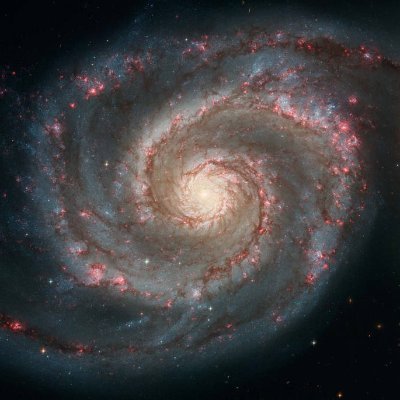
Researchers developed a method that can find pulsars in data from our Fermi telescope a million times faster. With a technique that uses algorithms based on cryptography, the team found a pulsar spinning 261 times per second in much less time than before: go.nasa.gov/4zAErKi
Alexander retweeted

Look who brought a friend to the Gulf today.

ALT Two military ships, the USS Gabrielle Giffords and the USS Omaha, are sailing on the ocean under a clear sky.

ALT Two military vessels with modern design are partially visible on calm blue water. The ships have angular, gray exteriors with red-painted waterlines and a distinctive black lightning bolt pattern. The sky is clear and blue.

ALT A military vessel is traveling across calm sea waters with several shipping containers on its deck. In the distance, an aircraft carrier is visible on the horizon under a clear sky.



Alexander retweeted

Lean experts are currently investigating the validity of the claimed formalised proof of the Riemann Hypothesis - follow along at
leanprover.zulipchat.com/#na…
