

CPC is the leading conservative non-profit in Kentucky, standing for life, marriage, religious freedom, and fiscal responsibility.
Frankfort, KY
Joined December 2014
- Tweets5.3K
- Following566
- Followers1.6K
- Likes2.4K
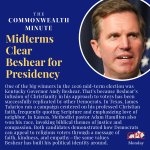


One of the big winners in the 2026 mid-term election was Kentucky Governor Andy Beshear. That’s because Beshear’s infusion of Christianity in his approach to voters has been successfully replicated by other Democrats. In Texas, James Talarico ran a campaign centered on his professed Christian faith, frequently quoting Scripture and emphasizing love of neighbor. In Kansas, Methodist pastor Adam Hamilton also won his race, invoking biblical themes of justice and compassion. Both candidates demonstrated how Democrats can appeal to religious voters through a message of faith, kindness, and empathy—the same values Beshear has built his political identity around. Regardless of the doctrinal orthodoxy, the wins suggest that the same formula might help Democrats capture the White House in 2028.

Kentucky voters have overwhelmingly approved Amendment One, which places new constitutional limits on the governor's power to issue pardons and commute criminal sentences. The amendment prohibits governors from exercising that power beginning 60 days before a gubernatorial election and continuing until the fifth Tuesday after the election. The measure was the result of a bipartisan effort and is particularly timely as Governor Andy Beshear enters the final year of his governorship. Regardless of party affiliation, governors are accountable to the people. This amendment is a reminder that the power of public office comes with limits, and that no governor should be beyond accountability to the voters they serve. Nearly 70 percent of Kentuckians voted to ratify the amendment.

1
75
One of the biggest upsets in Kentucky on election night was the loss of the 6th Congressional District to Democrats. After seven terms of Republican representation, the seat flipped as Democrat Zach Dembo defeated Republican Ralph Alvarado. What's especially striking is that Donald Trump carried this same district by 15 points in 2024. This time, voters delivered a different message. The result suggests that Republican enthusiasm for Trump and his endorsed candidates has seriously weakened, particularly in suburban areas. Alvarado had Trump's endorsement, but that endorsement wasn't enough to overcome voter frustration with Washington. For Republicans, it's a reminder that no district is safely Republican when voters lose confidence in their leadership or in the direction they’re taking the country.

63
Midterm elections are often a referendum on the sitting president, and this year was no exception. Republicans suffered major losses across the country, losing control of both the House and Senate. And it wasn't just ordinary Republican candidates who lost their seats. Several candidates personally endorsed by President Trump lost their bids, including in traditionally Republican states like Texas, Kansas, and South Carolina. Trump's approval ratings are sitting around 38%, and voters are expressing frustration over the economy, rising prices, and the war with Iran. The question now is whether Republicans will take these results as a warning about their own political future. CBS News projects that Congressional Democratic candidates will end up with 251–268 seats.

33
The progressive wing of the Democratic Party is gaining ground, and this year's elections offered another sign of its growing influence. In Michigan, progressive candidate Abdul El-Sayed defeated establishment-backed Democrat Haley Stevens in the Senate primary. He went on to win the general election against Mike Rogers. El-Sayed campaigned on Medicare for All, higher taxes on the wealthy, and a sharp critique of corporate influence in politics. Progressive candidates also scored victories in other parts of the country, including Democratic socialist Donavan McKinney, who unseated incumbent Congressman Shri Thanedar. These victories reveal a growing divide within the Democratic Party. The question now is whether this increasingly progressive movement will reshape the party's future, or create new challenges for Democrats in competitive elections.

144
Kentucky Democrats rode a national blue wave to some significant victories in Tuesday's election, particularly in Louisville, Lexington, and Northern Kentucky. Seven Republican incumbents with districts touching Jefferson County lost their seats, including House Majority Whip Jason Nemes and State Senator Julie Raque Adams. Republicans also suffered losses in Lexington and Northern Kentucky. But Democrats shouldn't declare victory just yet. Republicans retain commanding supermajorities in Frankfort, holding a 74-26 advantage in the House and 30-8 margin in the Senate. While Democrats made significant inroads in some of Kentucky's largest population centers, they failed to break the Republican supermajority or capture any open legislative seats. Nearly half of the legislative seats went unopposed leaving some wondering if they would've done better if credible candidates were on the ballot.

93
Kentucky Auditor Allison Ball’s nominees for Kentucky’s Executive Branch Ethics Commission were rejected by Gov. Andy Beshear. He called her nominations a “political stunt.” Ball proposed former Kentucky Supreme Court Chief Justice Laurance VanMeter, attorney Christine Trout Van Tatenhove, and former Kentucky Venues CEO David Beck. Beshear’s spokesperson called the nominations a “clear political stunt,” citing the nominees’ connections to Republican leaders and past disputes with the governor. Ball countered that all three were highly qualified and warned that rejecting them undermines public trust in the ethics process. It's no secret that Governor Beshear hasn't gotten along well with Republican office holders across the state but when it comes to following procedures for commission appointments, the governor is bound to follow the rules too.

74
Conservative commentator and Kentucky native Scott Jennings is being sued for $72.5 million by Hasan Piker, a progressive political streamer with millions of followers on the social media platform “Twitch.” Piker filed a defamation suit against Jennings after Jennings claim that Piker pushed for the lynching of Black people in one of his podcasts. Piker says Jennings misrepresented him by pointing to a highly edited video and claims he removed crucial context from his remarks. Piker’s lawsuit argues he was sarcastically mocking another commentator. There’s a tension in this case between free speech and slanderous speech. There’s a high bar for proving slander, but that’s for the courts to decide. Jennings has not publicly responded to the lawsuit.

Republicans pulled ahead last night in KY. Learn more on this week's Election Analysis: youtu.be/MCczvsfs9zk
35
Attorney General Russell Coleman has joined a $664 million settlement with Snap Finance—a predatory loan company that took advantage of Kentuckians. The settlement involved 17 state attorneys general and will bring a hefty sum back to the pockets of Kentuckians. Since the settlement, Snap has cancelled over $12 million in payments owed by Kentuckians. These borrowers are also allowed to maintain possession of their purchases without further payments. The state itself is also receiving $150,000, which will be stewarded by the Legislature. The case reminds us of the necessity of protecting the consumer from predatory businesses. Snap violated consumer protection laws by withholding information about how their loans functioned. But thanks to General Coleman, they are being held accountable.

46
Election Results Livestream nitter.cf/i/broadcasts/2NglqejeN…
1
123
Welcome to our live show! nitter.cf/i/broadcasts/2lgkJKlJZ…

57
Election Day is finally here! If you haven’t voted yet, you have until 6:00 pm today to do so. It appears that voter enthusiasm is down this mid-term election. But there are many important races on the ballot, from city council and the General Assembly to Congress and the U.S. Senate. There's also an important constitutional amendment. A free people must care enough about who leads them in order to remain free—even if they’re not enthused about their choices. So make sure you get out today and cast your vote if you haven’t already done so. If you don’t know where to vote, you can call your county clerk’s office. To learn more about candidates and the election, go to commonwealthpolicycenter.org

41

Early voting began Thursday, but tomorrow is election day. Elections are about who is most capable of leading well. They're also about which candidate will work to preserve freedom and opportunity in alignment with American principles. Good leaders demonstrate virtues like honesty and integrity. They also realize the limits of government—that its primary job is to preserve our inalienable rights and freedoms. Serving in public office is a high calling, and more than ever, we need people of integrity serving in all levels of government. So if you've not gotten out to vote, please make sure you do so. Every city, county, state House, and Congressional race is on the ballot. The polls open at 6 AM tomorrow.

41
A recent federal investigation found that nine major banks had policies that could restrict services based on political or religious beliefs. The report by the federal Office of the Comptroller of the Currency (OCC) found that vague “reputational risk” standards allowed subjective judgments to influence their banking decisions. This included concerns about associations with Christian conservative groups. Comptroller of the Currency Jonathan V. Gould said the report provided “irrefutable evidence” of discrimination. The report also found that the far-left Southern Poverty Law Center, which brands some Christian organizations as “hate groups” had widespread influence with some of the bank’s decisions. Of course, banks have every right to manage legitimate financial risks. But when their financial power becomes a tool of discrimination, it hurts everyone.

1
65
Early voting for the midterm elections begins today. Between now and Saturday Kentucky voters can go to the polls at their convenience to vote for local, state, and federal offices on the ballot. It’s likely that turnout will be less than 50%. This is based on the last mid-term election in 2022, where the turnout was 45%. Even though many of the races were decided in the spring primary, it's still important that every Kentuckian get out to vote. It's both a privilege and a responsibility. Good citizenship requires us to show up and vote for leaders who would best work for the common good in our communities. Congressional, state, and local offices are on the ballot. For more information on the elections go to commonwealthpolicycenter.org.

70
Kentucky Secretary of State Michael Adams has removed 318,918 deceased voters from Kentucky’s voter rolls since he took office. He’s also removed those who’ve moved out of state or lost voting privileges for committing a felony. This brings the overall total of removals since January 2020 to 753,181 ineligible voters. Adams said [his office has] vigorously purged voters who have moved away, passed away, or been put away”. Adams first ran on the issue of election integrity with the slogan to “make it easy to vote and harder to cheat.” And the removal of a record number of non-eligible voters should give us confidence in the Commonwealth that our elections will be fair. Adams said “Kentucky is a national success story for clean elections.”

2
142
According to a new poll from the Associated Press-NORC Center for Public Affairs Research, less than half of all U.S. voters have “a great deal” or “quite a bit” of confidence in the accuracy of the vote. Only 45% of Americans have confidence that the vote will be accurate. In 2022 that number was 50%. Democrats have more confidence than Republicans that the vote will be fair. In either case, it's troubling that a majority of Americans believe that the vote will somehow be tainted. When confidence drops in free and fair elections, it clouds the legitimacy of those who serve in office. Election integrity is a staple to our democratic republic. And it’s in the interest of both political parties to make sure our elections are fair.

31