

A Private Ethereum Treasury Company Our Thesis & Research Below⬇️
Chicago, IL
Joined May 2022
- Tweets17.6K
- Following991
- Followers18.5K
- Likes30.6K



In 2016, almost nobody understood why the world needed a $300,000 AI supercomputer.
Today, companies are investing billions into the infrastructure required to power artificial intelligence. The lesson is simple: Infrastructure comes before mass adoption.
Before AI applications can scale, the world needs semiconductors, optical networking, power distribution, cooling systems, and data centers.
As AI becomes embedded across every industry, demand for the physical infrastructure supporting compute will continue to grow.
Software will evolve. Applications will come and go. But the underlying infrastructure remains essential. We believe the opportunity is not just in building applications on top of AI, but in supplying the critical infrastructure that makes AI possible. Own the infrastructure powering the next generation of computing. #corestack #ai #infrastructure

Jensen Huang says the first AI supercomputer he ever built had exactly one customer on earth:
Elon Musk.
Back in 2016, he had just created a machine called the DGX1.
It cost $300,000 dollars.
He announced it on stage, and the room went completely silent since nobody understood it, so nobody wanted to buy it.
Since Elon knew him because Nvidia had built the first self-driving computer for the Tesla Model S, Elon bought & tried it.
Elon said he had a small company that could use it.
Jensen boxed one up himself and drove it to San Francisco. He carried it up to a room full of researchers. That tiny company turned out to be OpenAI.
The machine nobody wanted went on to launch the AI revolution.
237

When everyone is bearish, we see opportunity.
Markets move on sentiment in the short term, but long-term value is driven by fundamentals. We understand the infrastructure being built, the institutional adoption taking place, and the role Ethereum could play in the future of global finance.
Our conviction isn’t driven by today’s price. It’s driven by where we believe this technology is heading over the next decade. We remain focused on accumulating while others overlook the opportunity.
$ETH


A post like this makes me laugh because in 2021, these prices represented the peak of one of the largest bull markets in crypto history.
Fast-forward five years, and the fundamentals of the industry have changed dramatically. We now have major financial institutions embracing blockchain infrastructure, tokenizing real-world assets, and exploring on-chain settlement. Yet many digital assets are trading significantly below their 2021 highs.
Markets can remain disconnected from technological progress for extended periods. Our conviction remains unchanged: The greatest opportunity isn’t simply speculating on digital assets. It’s owning the infrastructure that will power the next generation of global finance.
Price and value are not always the same thing. Time will tell. ethereum:native


$ETH will win. There’s no question in our minds.

The market can wait. It’s the weekend! 🌴🍻
Close the charts, touch some grass, and enjoy life with your fellow sloths.
Remember, we’re all going to make it. 🦥💚
Stay Casual.
#CasualSloths #WAGMI

ethereum:native

Why ETH is the store of value for what's coming
We are almost certainly heading into a period of high inflation and extreme economic and social volatility. As inflation and risk erode the purchasing power of nation-state money and many other assets, it will matter more than ever to hold assets that keep or grow their value.
Gold and BTC are high-powered money and excellent stores of value. ETH goes further.
Not debt-based. Like gold and BTC, ETH is not debt-based or credit-based money.
Censorship resistant. Like BTC, or gold and silver held physically, ETH transactions on Ethereum L1 can't be censored. That's true for simple payments and for complex smart contract programs like DeFi, and those programs are guaranteed to execute.
Cheap to hold. Like BTC, ETH is relatively cheap to hold and store securely.
Cheap to use at any scale. Ethereum is cheap and easy to use whether a transaction moves $1 or billions. Any well-formed transaction is guaranteed to execute.
Sound, and getting sounder. ETH is disinflationary and becomes ultrasound, meaning deflationary, during periods of high network activity.
Broadly useful. ETH has many uses across the Ethereum economy, and that economy will grow by orders of magnitude as finance, and eventually every industry, moves onchain. Global adoption of the Web protocols in the '90s and '00s transformed the world economy. Ethereum is the foundation of Web3, the user-centric, decentralized web.
Collateral money. ETH works as collateral, and collateral that grows in value over time is a powerful thing.
Home of stablecoins. Ethereum hosts the bulk of stablecoin activity. Stablecoins serve as payment money and as unit-of-account money.
Despot-proof. Like BTC, ETH can't be used by a despot to financially exploit or repress citizens. Over time that should have positive geopolitical effects.
Programmable. ETH is programmable money. You can attach arbitrary logic to transactions and build an entire economy on smart-contract-based agreements and business processes (see shodai.network).
Transparent or private, and auditable either way. Money and financial instruments on Ethereum can be public or private, and in both cases selectively disclosable and auditable. Privacy tools for retail and institutional users include VPNs, mix networks, shielded and privacy pools, Railgun, stealth addresses, Kohaku, and zero-knowledge proofs in many forms, including on L2s and on private permissioned EVM networks linked through bridgeless synchronous composability.
Future-proof. By the end of 2027, or partway through 2028 at the latest, ETH will be quantum-safe and AI-safe money.
ETH is the base money of an exponentially growing ecosystem that should keep growing for decades. Its monetary premium will keep rising, because retail, corporate, and government users will all need to hold some. Part of today's premium is speculative: Ethereum dominates smart contract blockchains, but it hasn't fully hit its stride or gone mainstream yet.
Machine intelligence will supercharge every scientific and technological pursuit and grow global GDP bigger and faster than any of us can imagine. Ethereum L1 and modular Ethereum L2s will undergird most of the high-value agreements, transactions, payment flows, and complex business processes behind the coming hybrid human-machine decentralized economy.

253
We are pleased to announce that CoreStack Treasury has exceeded its year-end accumulation target of 30 ETH ahead of schedule, bringing our total holdings to 30.75 ETH.
Building on this milestone, we have established our next strategic objective of 40 ETH by March 31, 2027, representing approximately 30% growth in our current Ethereum holdings.
Our long-term strategy remains focused on disciplined capital allocation, systematic ETH accumulation, and the reinvestment of staking rewards to support sustainable treasury growth.
We believe Ethereum will play a foundational role in the evolution of global financial infrastructure, particularly as institutional adoption, asset tokenization, and blockchain-based settlement continue to develop. #corestack ethereum:native

221
ethereum:native

Europe’s largest asset manager has brought a flagship European equity index fund onto @ethereum, extending its tokenization efforts beyond cash management.
@Amundi_FR, which manages €2.4 trillion, has launched a tokenized share class of Amundi Core STOXX Europe 600, issued on Ethereum and developed with @CACEIS.
The fund tracks the STOXX Europe 600, an index of 600 large, mid and small cap companies across Europe, and is used as a core building block for portfolio allocation.
Amundi’s first tokenized share class, a money market fund launched with CACEIS in November 2025, was also issued on Ethereum.
Ethereum is the home of onchain finance.

241

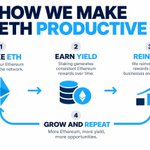
At CoreStack Treasury, we view ourselves as an infrastructure company.
By staking Ethereum, we help secure the blockchain and get paid in Ethereum for doing so. This allows us to generate yield while supporting the financial infrastructure being built onchain.
Our long-term strategy is simple: accumulate Ethereum, earn staking rewards, and reinvest those rewards into other businesses to build additional revenue streams.
We own the infrastructure, help secure the network, and earn from its operation. ethereum:native

1
209
Our Ethereum treasury has reached 27.3 ETH, representing 91% of our year-end target.
October has been a significant month for accumulation, with our treasury growing by approximately 15.3 ETH in just 28 days.
At our current pace, we are on track to significantly exceed our goal of 30 ETH by December 31, 2026.
We remain focused on disciplined accumulation, reinvesting staking rewards, and building a long-term Ethereum treasury. #corestack ethereum:native


Treasury Update: We have surpassed 24 ETH, reaching 80% of our year-end target of 30 ETH.
Our focus remains on the long-term accumulation and staking of Ethereum as we continue building our treasury. Next milestone is 30 ETH by December 31, 2026. #corestack ethereum:native

ethereum:native
"Crypto in America means leading a fundamental rewiring of the financial system...
This is going to go from an American crypto story to an American financial leadership story."
CEO @joechalom on @CryptoAmerica_

