

Independent Trader "Trade on the wings"
USA
Joined November 2012
- Tweets10.5K
- Following1.6K
- Followers368
- Likes34.6K


Pinned Tweet
$NDX from the 2000 Tech bubble
These countertrend rallies are head to believe in hindsight:
52% in 47 days (Q2 2001)
59% in 75 days (Q4 2001)
45% in 53 days (Q3/Q4 2002)

“Part of my edge is that I know I’m half a step away from acting like a c*nt, and most of you think you’re half a step away from being special”
@Trader_Dante
Thanks to @GnT_Trades for turning me onto his videos.
Hard to find content that’s this educational and hilarious.
Gerald Garner retweeted

Scientific data does show a notable, population-wide shift in human behavior and personality traits following the pandemic. Here are two prominent studies for your review, plus the Pew Research Center Study, thrown in for extra measure.
1. The FSU College of Medicine "Pandemic Personality" Study
The Findings: The study found statistically significant population-wide declines in Agreeableness (the capacity for empathy, trust, sympathy, and cooperation) and Extraversion (sociability and the desire to seek out others' company) by 2021/2022. The shifts were so severe that researchers stated the population experienced the equivalent of a decade of normal personality alteration compressed into just two years. Younger adults were hit hardest, showing sharp increases in neuroticism paired with a steep drop in overall friendliness and compliance with social norms.
2. The College Student Cognitive Empathy Study. The Study: Published in the Journal of American College Health (2022), this longitudinal study tracked college students' psychological well-being and empathic capacity immediately before and during the pandemic phases.
The Findings: The researchers observed a significant decline in cognitive empathy (the psychological capacity to take another person's perspective or understand their mental and emotional state). This degradation of perspective-taking directly mirrors the "colder" and more "detached" behavior observed in the general public, as individuals became structurally less capable of processing or caring about the experiences of those around them while battling their own chronic stress and isolation.
The Pew Research Center also reveals that 47% of American adults explicitly report that public human behavior became significantly ruder and more aggressive since the onset of the pandemic.
Gerald Garner retweeted

I'll say it again for the AI risk experts in the back:
We've already run a real life, large scale experiment on what happens when a superintelligence is unleashed on a narrow objective.
Look no further than U.S. capital markets.
Millions of investors, analysts, traders and algorithms, backed by trillions of dollars and wired together through prices, all chasing one goal: the highest risk-adjusted return on capital.
And it is spectacularly good at its job. It funds the best ideas, punishes the worst ones, and turns new information into prices faster than any of us can react. No individual can out-think it. 99+ percent of professionals can't beat it.
But look at what else it's done along the way:
- Optimized the measure instead of the intent. Quarterly earnings became the scoreboard, so companies learned to manage the scoreboard.
- Treated anything without a price as free. Pollution, addiction, obesity, depression, political fragmentation, fragile supply chains, the long-term health of the communities it operates in.
- Found every gap in the rules, then paid lobbyists to help write the next set and pull up the ladder behind incumbents.
- Remade the world around its objective. Companies, pension funds and our retirement accounts now answer to the S&P 500.
- Made itself impossible to switch off, because everything else now depends on it.
None of this required malice. Nobody sat in a room and chose these outcomes. It's simply what a very capable optimizer does when its objective is a narrow proxy for what we actually care about.
And note that we never solved this alignment problem. We've managed it, imperfectly, with regulation, taxes, disclosure rules and the occasional crisis to show us where the guardrails were missing. Over time, the market has captured the instutions designed to constrain it. We've been at it the better part of a century, and the misalignment is the worst it's ever been.
So the next time someone tells you AI is only dangerous if it "wants" something bad, or if its goals are mis-specified, point them at the S&P 500. It doesn't want anything. It just optimizes.
That's the whole problem.
Gerald Garner retweeted
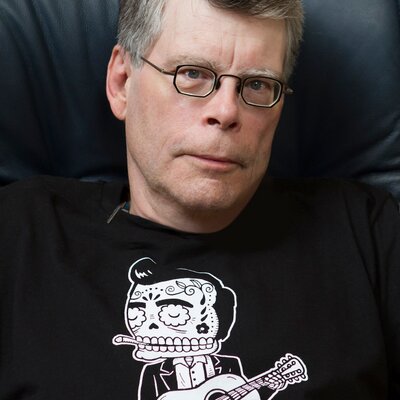
I don't understand why LANDMAN didn't get nominated for Emmy awards. Particularly Billy Bob Thornton for best actor and Stephen Kay for best director. Is it politics, or what?
Gerald Garner retweeted

The French protests are indicative of a broader trend of the West becoming increasingly difficult to govern. Decades of low productivity growth, poor demographics, and unsustainable promises to retirees have been papered over by deficit-funded fiscal policy.
But what can't last, won't. And with bond markets rebelling, there isn't a clear way for politicians to meet voters' rising expectations within tighter fiscal constraints.
Politicians get elected by making promises that fiscal reality prevents them from fulfilling. When those promises disappoint, voters swing to the next party offering new pledges. Eventually, people tire of the whole system, and take their frustration to the streets, demanding what government no longer has the ability to give them.
Gerald Garner retweeted

Even as a non-religious person, I personally cringe at the hubris required to personally tell the Pope that you think your company has created an ensouled being, thus rendering Anthropic equivalent to God the creator. Further, that you did it for profit and it is now enslaved.
This proves the large scale taking. The commenters will not accept a 5.26% 30yr rate of return. They expect inflation to be higher than the rate.


Gerald Garner retweeted

Iran must eliminate informal currency trading hubs in Tehran to stabilize the foreign exchange market, a member of parliament’s economic committee said on Sunday.
The best putt ever in golf history
Quadruple breaker. Say 80ft and 3 ft uphill youtube.com/shorts/6bgefFiVp…

Gerald Garner retweeted

This AI just exposed the BIGGEST legal insider trading operation in America.
A platform called GovGreed built a seven-layer machine learning system that cross-references every stock trade disclosed by every sitting politician against the bills their committees control, the campaign donations they receive, and the companies their votes directly impact.
It scored all 540 politicians currently in Congress. And the numbers are crazy:
56% of every stock purchase made by Congress in the last 16 months was on a stock directly affected by a bill the buyer later voted on. That is 6,170 out of 11,016 total purchases.
More than HALF of all congressional stock buys are on companies whose fate that same politician is about to decide.
343 of 540 Congress members actively trade stocks while holding access to nonpublic legislative information.
That is 63.8% of the entire legislature making market bets with an informational edge that would put any hedge fund manager in prison.
The AI identified 752 active "Triple Signals" in the current Congress. A Triple Signal fires when three conditions line up at once:
The politician sits on the committee controlling a bill, they traded stock in a company affected by that bill, AND they received campaign contributions from that same industry.
Bills carrying these insider indicators pass at 5.4 TIMES the normal rate.
Now look at the individual leaderboard:
- Nancy Pelosi's estimated portfolio sits at $194 million with a Greediness score of 98.1 out of 100
- Ro Khanna made 13,231 trades across 800+ different tickers
- Michael McCaul made 32,302 trades and filed 6,670 of them late
- Thomas Suozzi filed 86.4% of his trades late with an average delay of 396 days, meaning his disclosures landed over a YEAR after he made the trade
And then there is Lisa McClain, the fourth-ranking Republican in the House. She has made 1,443 trades in three years, more than 98% of all politicians tracked.
She violated the STOCK Act twice in a single year, disclosing up to $900,000 in trades months after the legal deadline. Her husband bought up to $250,000 in Elon Musk's xAI, which quietly converted into SpaceX equity before last Friday's $2 trillion IPO.
The penalty for all of this? A $200 fine.
The number of Congress members ever prosecuted under the STOCK Act since it passed in 2012? Zero.
And the cruelest part is this:
A bill to ban congressional stock trading was introduced in January 2026. It has bipartisan support. Over 80% of American voters want it passed.
But Congress is sitting on it, because the people who would have to vote yes are the same people making millions from the system staying exactly the way it is.
They write the insider trading laws, they exempt themselves from enforcement, they trade on the information those laws generate, and when they get caught, they pay a fine that is basically nothing.
The AI didn't discover anything Congress was hiding. It just organized what was already public into a pattern so obvious that nobody can pretend it isn't there anymore.
Gerald Garner retweeted

Hardest things I’ve ever attempted/done from hardest to less:
- Trade for a living/rent
- Run a family member’s money
- Run other people’s money
- Land an F-14 on a carrier at night after a cockpit fire
- Fly 76 missions over Iraq
There are others, but you get the idea.

Common question: "Should I quit my job and trade full time?"
I did it for three years, so here's the answer I wish someone had given me: almost certainly no.
When trading is your sole income, you need the market to pay your bills on the market's schedule. Edges don't produce a monthly invoice. The pressure to make rent out of a flat month degrades exactly the discipline that made you profitable, and you can't size your way out without raising risk.


