

The Canary Center at Stanford is the first research center in the world entirely dedicated to cancer early detection.
Stanford, CA
Joined February 2018
- Tweets512
- Following127
- Followers637
- Likes433


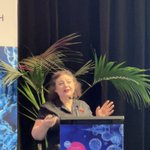


💡 Dr. Erin Grady shares a clear vision for advancing theranostics in practice: precision targeting drives effective treatment.
“If we can see it well, we can treat it well.”
💡 Dr. Corinne Beinat highlights the power of medicinal chemistry in designing stable peptide ligands for radiotherapeutics. Her lab’s [¹⁷⁷Lu]Lu-CMT2 targeting B7H3 shows improved binding affinity and tumor uptake in prostate cancer mice models for more precise targeted therapy
💡Dr. Christina Curtis’s “Big Bang Theory of Cancer” explains tumor evolution: many pre-malignant lesions are polyclonal, with identifiable high-risk subgroups.
Measure. Model. Predict.
Precision medicine must capture how tumors evolve, not just what they are.
💡Prostate cancer is one of most heritable cancers, presenting a unique and strong case for risk-stratified screening. Dr. Burcu Darst shares her lab’s findings that polygenic risk scores are highly predictive and work well across diverse populations.
💡 Lung cancer screening saves lives.
Dr. Natalie Liu, a thoracic surgeon, strongly advocates for early screening. Having cared for patients at the late stages, she’s seen firsthand what delayed detection costs. Expanding outreach and community awareness is essential.
💡Stroke intervention is highly time-sensitive, with thrombectomy established as the clinical gold standard. But what comes next in supporting recovery? Dr. Jeremy Heit’s lab is developing a non-invasive neuromodulation device targeting arteries to promote post-stroke recovery.
💡Dr. Beth Mormino shares exciting progress in blood-based Alzheimer’s detection (p-Tau-217, Aβ42/40). Earlier detection means earlier action: supporting better planning and quality of life before symptoms emerge.
💡 Skin as a window into whole-body disease. Dr. Kavita Sarin’s lab is turning the once-impossible into reality, using simple skin biopsies to detect early conditions like Parkinson’s.
💡 Dr. @utkandemirci’s lab is tackling one of the extracellular vesicles field’s isolation engineering challenge. These nanoscale carriers hold a wealth of promising biomarkers across multiple cancers, but have long been difficult to reliably capture and analyze.
💡Dr. Sharon Pitteri’s lab is advancing the search for cancer biomarkers through glycoproteimics, tacking one of the field’s biggest challenges: the low specificity of protein-based cancer detection.
💡 Keynote speaker Dr. Stephen Quake shows the power of liquid biopsy, cfDNA and cfRNA, to detect multiple diseases: fetal aneuploidy, heart transplant rejection, pre-term birth, dementia, and pancreatic cancer. A lot of efforts going to push the boundary of early Dx.
💡Pancreatic cancer early detection is really an unmet need. No blood test can effectively detect pancreatic cancer early. With many numbers of commercial test, the sensitivity numbers are still low to detect stage I/II, although ultrasound is getting traction.
💡Screening of skin lesion at home? It’s possible in the future. Dr. Daneshjou shared her lab’s research on developing a low-cost imaging system to triage and monitor high-risk skin cancer.
💡 X-Ray mammogram or MRI? Breast cancer screening and early Dx truly benefits survival. Ongoing research (by Dr. Bruce Daniels) shows MRI and DWI (MRI w/o contrast agent), coupled with AI risk-predictor could benefit screening the high-risk population.
💡Keynote lecture by Prof. Ronny Drapkin. Lack of early Dx in ovarian cancer is a major problem. Pre-clinical phase is biologically active. Most OvCa started in the fallopian tube, and the precursor lesions aren’t created equal. This shows importance of precision diagnostics.

“How things become things?” It’s science & people. We emphasize early detection of disease matters.
“Early detection must not remain a matter of luck, geography, or wealth. It must become affordable, accessible and real—for everyone, everywhere”
- @Joseph_DeSimone
-pds

Canary Center Symposium is happening now! radweb.su.domains/canary/sym…
We’re discussing the science of seeing disease earlier.
@PDSinawang reporting live.
-pds

Live from the Canary Center at Stanford Symposium! 📡 Taking over @CanaryCenter's account today to bring you insights and key takeaways. Can't be here? Follow along. Catching disease earlier means more time, more options, more life. That's what's in this room today. 🔬

🎉 That’s a wrap, folks! #EDxConf2024 may have come to an end, but our mission to revolutionize cancer early detection continues stronger than ever. 🚀
We are beyond grateful to all the speakers, attendees, sponsors, and partners who made this event unforgettable. Your ideas, collaborations, and passion will keep driving innovation forward. 💡💙
Mark your calendars—we’ll see you next year
📍Portland, OR, USA
🗓️October 21-23, 2025
Together, we can change the future of cancer detection. 🌍🔬
@CRUKresearch | @OHSUKnight
#EDxConf2025 #EarlyDetection #CancerResearch
Prima (@PDSinawang) signing off.
-pds

🎬And that's a wrap! #EDxConf24 has come to an inspiring close. Thank you all for contributing to this incredible event over the last few days.
📌Save the date for the next edition: 21-23 October 2025, Portland, USA!
@ThuyMinhNgo | @OHSUKnight | @utkandemirci | @Stanford | @ucl | @TalisiaQ | @CanaryCenter

💡 Azra Raza (@AzraRazaMD) delivered a powerful talk on her mission to prevent and cure cancer effectively.
Drawing from her book The First Cell, she emphasized the importance of identifying stress biomarkers that trigger cancer—shifting the focus from treating advanced disease to stopping it at its earliest stages.
Her lifelong goal is not just scientific discovery but building a compassionate, patient-centered approach to cancer care, ensuring that innovation serves those who need it most. 🌱💙
#CancerPrevention #EarlyDetection #PatientCare #CompassionInMedicine
#EDxConf24 | @CRUKresearch | @OHSUKnight | @ColumbiaMed | @columbiacancer
-pds


💡 Sylvia Plevritis (@PlevritisLab | @StanfordMed) and Cathie Sudlow (@HDR_UK) led today’s AI discussion session with @bissanao, @JensRittscher, and @suinleelab.
👉The discussion emphasized that predictive models are powerful, but AI must be treated like any diagnostic tool.
👉Balancing explainability vs. accuracy is crucial—understanding models can reveal biology to guide clinical decisions.
👉They also highlighted challenges of generalization and the importance of sample attribution for robust results. 🤖🧬
#AIinMedicine #EDxConf24 |@CRUKresearch | @OHSUKnight
-pds
