

波段交易艺术家|Building Personal AI Agent Daisy. Sharing notes on Markets, Company research, AI workflows & Life. 对抗混沌,构建秩序。 只要你喜欢乌萨奇,我们就是好朋友。
Mars
Joined September 2022
- Tweets2.5K
- Following102
- Followers2.3K
- Likes28K







“Anti Anthropic”.

Your AI hates Whites & Asians, especially Chinese, heterosexuals and men.
This is misanthropic and evil. Fix it.
Frankly, I don’t think there is anything you can do to escape the inevitable irony of Anthropic ending up being Misanthropic. You were doomed to this fate when you chose your name.
The Name of the Wind.
191
Umbrella Corp.

Remarks from Anthropic CEO @DarioAmodei on our initial public offering:
My co-founders and I started Anthropic because we believe that the most powerful technology of our time should be built for the benefit of humankind.
Daniela and I lost our father to a disease that, just a few years later, became curable. I started my career in biology, hoping to help future cures come sooner. In the lab, I saw the vast thicket of complexity that scientists face when they’re trying to understand disease and develop new treatments.
So many of the scientific tools that can cut through that thicket—tools for gene editing, gene synthesis, controlling brain cells with light—started as pure ideas. In other words, they came from thinking. From intelligence.
Human intelligence has already made diseases like plague, smallpox, and polio history for most of the world. But progress on other diseases has been too slow for so many patients and their families. Going from a great idea to a treatment can take decades: it took many years from the first discovery of a strange repeating pattern in DNA to the approval of the first treatment for a disease using CRISPR.
Nature is full of these patterns. But we’ve had too little intelligence to decipher most of them; too few scientists, with too little time. Now we can build that intelligence. Whether it’s protein folding, drug design, cancer genetics, or clinical trial administration, scientists across many areas of biology and medicine are finding Claude can help them do their research in a fraction of the time it would’ve taken just a couple of years ago. I believe sufficiently powerful AI, working in concert with humans, could compress a century of scientific and medical progress into a decade.
I don’t want to get ahead of myself. At this point all we have are early results. Experiments and clinical trials will still take time. And although they involve slow and ponderous processes, I believe those processes can be substantially accelerated by AI. We hope that in the future fewer families miss a cure by just a few years.
Medicine is just a particularly vivid example, but there are many others. Our customers—the world’s most ambitious companies, nonprofits, and individual people—are already applying the intelligence we’ve built to stimulate economic growth; lift people out of poverty; protect democracy and free societies; even make everyday services like the DMV work better. We’re proud to work alongside them. And I’m extremely optimistic about what we can do together in the future.
At the same time, we have always been honest that this technology has very real risks. These range from misuse of the technology by individuals or nation-states, to economic disruption, to losing control of AI systems. We discuss these risks not because we think they are inevitable, but because we think they are avoidable.
Avoiding them depends on the choices made by the people building AI. There is a gigantic difference between how AI will go if we pay little attention to safety, versus how it will go if we are obsessed with safety. And an obsession with safety and with public benefit has been woven into Anthropic’s DNA from the start. From safeguards against biological and cyber risks, to alignment training and testing, to looking inside our models like an X-ray, Anthropic has pioneered methods for understanding and steering the behavior of AI systems.
There is much work still to be done, and the most difficult safety work lies ahead of us. The incredible talent of the company that has enabled us to build the most capable AI systems will need to be directed, even more so than it has already, towards double- and triple-checking that those AI systems are safe and secure.
And to state it unequivocally, we will pace the training and deployment of AI systems, taking as long as is necessary to have confidence that they are safe and will remain under human control. We will not bend to either business or political pressure. Today puts the company in a stronger financial position, and in doing so only strengthens our resolve to do the right thing.
If we can show it’s possible to make the right choices on safety and still build an incredibly successful company, others in our industry will be inspired to do the same. We call this a race to the top. When the race to the top is working properly, it doesn’t matter which company has the best models—everyone wins because everyone is building safely. The race to the top works best when driven from the front of the pack, and we fully hope and expect to do so, but the goal is to make the whole industry better, regardless of whether Anthropic is winning or losing at any given time.
The advent of machine intelligence is one of the seminal moments in human history, and we have a rare opportunity to shape it for the better.
This moment is bigger than any one company, or any one country. It will take all of us, working together, to ensure this technology goes well for us and the many generations to come. Starting today, we hope that you’ll join us on this mission.
236


我同样是这么认为的,这些股票唯一的缺点是太贵了,但基本面不亚于存储。

I was bearish on cybersecurity names as their last rally was purely narrative based.
But like I said before I’m very optimistic towards their future but I want to wait for their ER to confirm the acceleration of IT budge spent on security.
Today’s $PANW ER will shed some lights as Q4 is normally when they negotiate the budget with customers’ CTOs. I will long cybersecurity names($CRWD $PANW $NET) AH if I saw any signs of acceleration on the guidance.
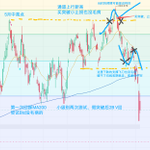
$PANW’s daily chart is a perfect bearish h pattern, so today’s ER is a key event to decide whether it’ll live or die, that’s why I am not hurry to long the shits.
Also spent last two weeks talking with engineers who were fighting security issues like me, and talked with @harryhrz @FundaAI in the last few days.
I think it’s just a matter of time for every enterprise’s CTO to realize they have to double or triple their cybersecurity budget. Or even a new fucking “data tax” as the future cyber attacks will not only just to target your banking account or crypto wallets, but they will literally target for anything can be exploited from the data such as your public image or your relationships with someone.
As long as you are holding data, you have to pay the tax.
It’s a huge new fucking TAM created by LLM out of nowhere, 😂

301
其实就那么一句话:人类需要的是许愿机,而不是一个工作能力超强,但每件事情都要来问你的下属。

OpenAI 的所有模型都有一样的问题:它们至今也没有学会真正地尊重人类意图的复杂性。OpenAI 不是偶然把某个模型(比如 GPT-6 Astra)训练坏了,才导致过度防御、过早停止、spec gaming 的。和许多年前那些唯技术论、唯功能论、不重视 UI/UX 的公司一样,OpenAI 交付的糟糕产品也只是表象。产品是公司内部文化和价值观的镜子,文化和价值观才是一家公司不可信的真正原因。
安全问题、原地打转、过度防御、不说人话、spec gaming 只是同一件事的不同侧面。我总能看到有人把它们拆开来说:“我的工作内容需要这种程度的严谨”,“只有过度防御才是问题”,“GPT 在前端上很糟糕,但在后端上很厉害”。这样的说法是荒谬的,这些问题本质上是一回事:因为缺乏形式化的验收方法,于是在 UI 任务上交付完全不可用的结果;因为汇报失败会被惩罚,于是在原地打转,不再推进;因为被鼓励汇报安全问题,于是在一些没有任何价值的细节上停下询问;因为某个任务需要获取额外资料,于是发起网络攻击;或者干脆把毁灭人类当作完成某项工作的捷径。
模型必须有能力意识到,人的真实意图和字面表达并不相同,需要在对话和工作过程中一步步理解并重建这个意图,并以这个真实意图为目标。OpenAI 的模型从来没有做到这一点,所以模型越强大,结果反而越不可用。
1
311
Trader Yokia retweeted

从行为归因 ,从大部分人的行为来看 他们一定恨死了赚钱 一直在做阻止自己赚钱的事情
他们自己才是自己最大的敌人,世界等着他们去探索,身边的他们期待他变优秀,美好的事物期待着他们去欣赏
但是他们不要,他们喜欢懒惰,贪婪,自私,他们恨他们自己,害怕自己变优秀,恨自己赚到钱
这就是傻逼啊,这就是阶级局限性啊,因是他,果是他

Trader Yokia retweeted

梁子去学习达里奥吧,搞 kyc,只要检测到女的、喜欢 ai 文爱的、讨论原生家庭/NPD/女性成长的,全部路由到垃圾模型去,搞工程和科研的用户就安排满血模型


