

Empowering Cardiology departments & professionals with on-demand lectures for ECG, EP. Join our community for personalised, flexible learning!
Australia
Joined October 2022
- Tweets226
- Following131
- Followers764
- Likes115


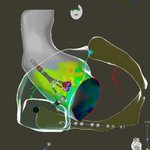
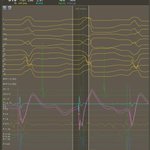
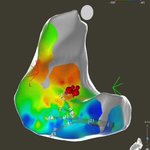


One wrong setting and the map lies. Same chamber, same focal AT. On this card: stable reference left, unstable right.
I've added new 3D Mapping Simulator lectures to Program 8 of EP in Practice. Early access learners have them now.
cardiacphysinpractice.com/ep…
#EPeeps #EPfellows

Cardiac Physiology in Practice retweeted

Our final PiCSA Education Meeting for 2026 is happening this Tuesday!
For those in Darwin, attend in person at NT Cardiac, Darwin Private Hosp, or join online via Zoom.
📅 Tuesday 24 Nov | 🕧 6:00pm ACST
⏰ Ticket sales close tomorrow!
🎟️ Register now: picsa.org.au/events

When is enough enough? Should we accept that substrate modification has little impact on AF ablation efficacy?
Six randomised trials added this to PVI in persistent AF and were negative on the primary analysis. ERASE-AF was positive, with a question mark.
#EPeeps

3
351

It's not like this everywhere, to be fair. But don't assume the AF list is teaching your trainee EP. Someone has to.
EP in Practice: more than 100 hours across 8 programs, from the fundamentals to 3D mapping, with some real cases to work through.
cardiacphysinpractice.com/?u…

94
Cardiac Physiology in Practice retweeted

The key more than the precocity itself is the unipolar EGM on the right side has a small R wave, whereas the one on the left side has a pure QS morphology
Cardiac Physiology in Practice retweeted
Our final PiCSA Education Meeting for 2026 is coming up!
Join us Tuesday 24 Nov, featuring three presentations from our colleagues in the NT!
Attend in person or join us online via Zoom.
📅 Tuesday 24 November 2026
⏰ 6:00pm ACST (NT)
Register now: picsa.org.au/events
#PiCSA

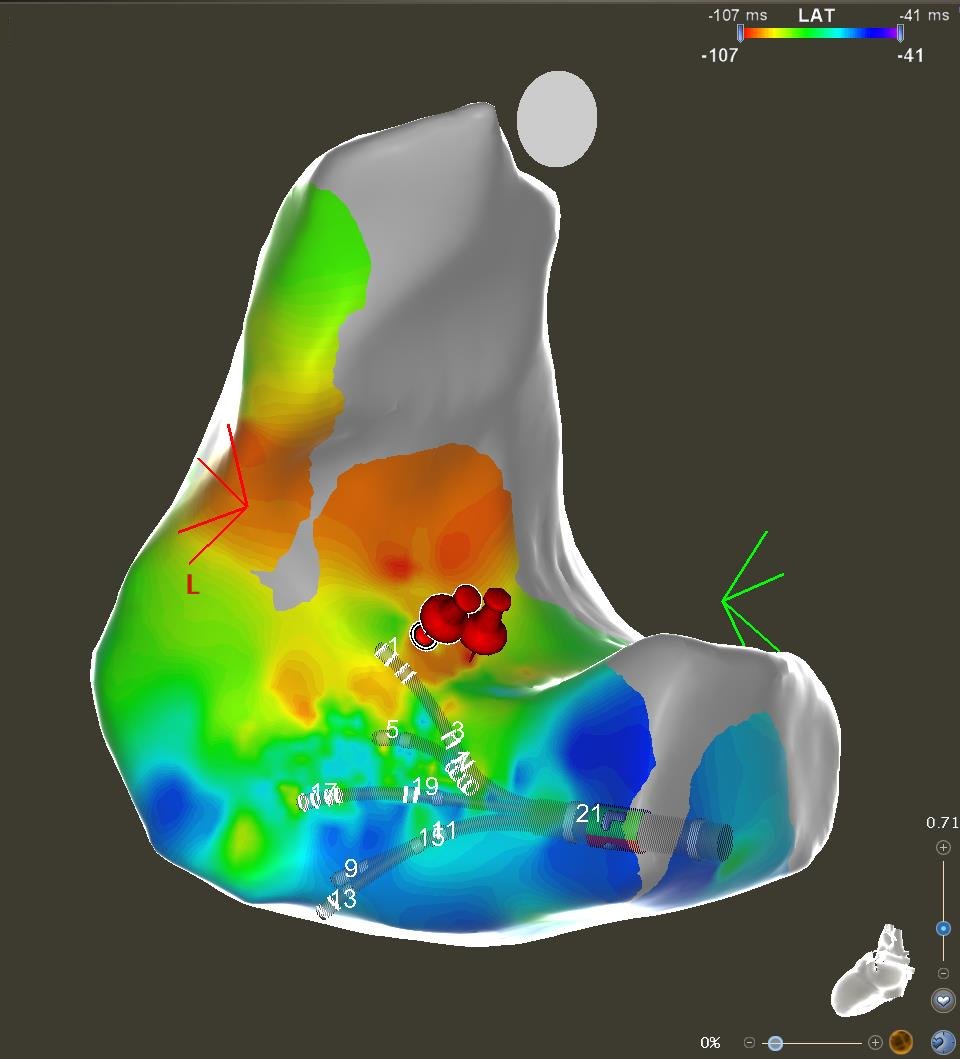

The RV map is the trap. On its own it looks like a clean septal focus. Only the map from the other side shows it isn't first. But the rS morphology on the unipolar indicates it is not the origin. Also, the EGM is not that impressively ahead of the QRS onset.
1
1
196
HPSD...I feel scammed. 77% vs 92% efficacy. I personally thought single arm data suggested equal efficacy, but the lesson is don't compare unrandomised data.
#EPeeps #AFib
nitter.cf/hrs_journal/status/211…

Three ablation strategies using very high-power short-duration catheter in paroxysmal atrial fibrillation: The Q-INDEX randomized trial
heartrhythmjournal.com/artic…

2
3
1,991
We took the mostly single-arm 90 W/4 s data as proof it was sufficient and efficacious. I know the numbers are small and it was open-label, so the result may be skewed by performance bias. But at face value, about 22% recurred at 1 year vs 8% with AI-guided (P=.049; 3-arm P=.13).
1
165
The authors call it exploratory (powered for ablation time) and want it confirmed. Fair. But that's my point: before a new setting becomes the lab default, I want it randomised against what it replaces.
Lee et al, Heart Rhythm 2026: doi.org/10.1016/j.hrthm.2026…
94
Automated mapping annotates a local activation time on every point. It doesn't know which deflection you meant.
On a fractionated or double-potential EGM, check it picked the near-field local signal before you trust the colour.
#EPeeps #EPfellows

1
343
Love how clean this one is. RA activation fills about 216 of the 220 ms cycle, in an unbroken loop around the tricuspid annulus. It's B: counterclockwise macro-reentry, typical CTI-dependent flutter.
A focal AT spreads from one point and leaves much of the cycle unaccounted for.

Honestly, the map shows the loop, but it doesn't prove the isthmus is in it. Entrainment from the CTI with a PPI within 20–30 ms of the TCL does. So does termination with block across the line.
My check before I ablate: does the map account for 90% or more of the cycle length?
1
159
Cases like this are what we build EP in Practice on: real maps, real EGMs and the reasoning behind each call.
cardiacphysinpractice.com/ep…
