
Ph.D student at INRIA in the @FlowersINRIA. I am working on the how language and RL interact
Joined February 2023
- Tweets73
- Following196
- Followers87
- Likes17


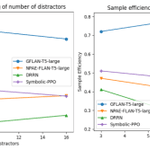
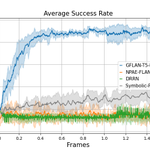
After four incredible years in the Flowers AI & CogSci Lab, I’m thrilled to share that I’ve officially become a Doctor! 🎓💫
My thesis: “Language as a Cognitive Tool for Open Agents.”
It explores how language helps artificial agents explore, adapt, and learn efficiently.
And to my brilliant co-authors — @ClementRomac, @LorisGaven, @cedcolas, @GuillaumeAP, @GuillaumelLevy, and @KovacGrgur — your ideas, energy, and discussions made this adventure unforgettable.
Couldn’t have done it without you all. 🙏✨
2
5
198
Finally, a big thank you to the jury members for their time, questions, and insights:
👨🏫 Jean Ponce (president)
🧠 Reviewers @pierrelux & @GMartius
💡 @edwardfhughes & @white_martha for their excellent questions and engagement alongside my supervisors.
2
93
Carta Thomas retweeted

Phase 1 of Physics of Language Models code release
✅our Part 3.1 + 4.1 = all you need to pretrain strong 8B base model in 42k GPU-hours
✅Canon layers = strong, scalable gains
✅Real open-source (data/train/weights)
✅Apache 2.0 license (commercial ok!)
🔗github.com/facebookresearch/…

ALT https://huggingface.co/facebook/PhysicsLM4.2__LlamaCanon-1B-Nemo-2T-lr0.005

(1/8)🍎A Galileo moment for LLM design🍎
As Pisa Tower experiment sparked modern physics, our controlled synthetic pretraining playground reveals LLM architectures' true limits. A turning point that might divide LLM research into "before" and "after." physics.allen-zhu.com/part-4…

ALT Physics of Language Models: Part 4.1, Architecture Design and the Magic of Canon Layers. Joint work with Alberto Alfarano
Carta Thomas retweeted

The automation of innovation is within reach! Delighted that my @raais talk is now available for anyone to watch, alongside an excellent blogpost summary by the inimitable @nathanbenaich.

"2025 is the year of open-endedness"
at @raais, @edwardfhughes argued that we’re entering a new phase in the evolution of ai: one where open-endedness becomes the central organizing principle.
Not just solving problems, but defining them.
Not just predicting the next token, but surfacing previously unknown unknowns.
If he’s right, the next generation of AI systems won’t just be tools, they’ll be participants in the scientific process itself.
Carta Thomas retweeted
Human ideation beats AI ideation when measured on execution outcomes: arxiv.org/abs/2506.20803. There's a clear path to fixing this - work to be done!
Carta Thomas retweeted

🔔 Join our MAGELLAN talk on July 2!
We'll explore how LLM agents can monitor their own learning progress and choose what to learn next, like curious humans 🤔
1h presentation + 1h Q&A on autotelic agents & more!
📅 July 2, 4:30 PM CEST
🎟️ forms.gle/1PC2fxJx1PZYfqFr7


🚀 Introducing 🧭MAGELLAN—our new metacognitive framework for LLM agents! It predicts its own learning progress (LP) in vast natural language goal spaces, enabling efficient exploration of complex domains.🌍✨Learn more: 🔗 arxiv.org/abs/2502.07709 #OpenEndedLearning #LLM #RL

Carta Thomas retweeted

📰 Check out the full paper here: arxiv.org/abs/2506.06725
Don't hesitate to reach out if you want to discuss WorldLLMs or RL for grounding LLMs! Or come see us at the poster session on Thursday!
Carta Thomas retweeted
I'll be at RLDM this week to present our new paper: WorldLLM 😃
In the same spirit as our previous works — e.g. GLAM, MAGELLAN... — which investigate how to ground LLMs through interactions with external environments, WorldLLM takes a deep dive into the world modeling aspect.
Carta Thomas retweeted
New Paper: Continuous Thought Machines 🧠
Neurons in brains use timing and synchronization in the way that they compute, but this is largely ignored in modern neural nets. We believe neural timing is key for the flexibility and adaptability of biological intelligence.
We propose a new neural architecture, “Continuous Thought Machines” (CTMs), which is built from the ground up to use neural dynamics as a core representation for intelligence. By using neural dynamics as a first-class representational citizen, CTMs naturally perform adaptive computation.
Many emergent, interesting behaviors arise as a result: CTMs solve mazes by observing a raw maze image and producing step-by-step instructions directly from its neural dynamics. When tasked with image recognition, the CTM naturally takes multiple steps to examine different parts of the image before making its decision. This step-by-step approach not only makes its behavior more interpretable but also improves accuracy: the longer it “thinks,” the more accurate its answers become.
We also found that this allows the CTM to decide to spend less time thinking on simpler images, thus saving energy. When identifying a gorilla, for example, the CTM’s attention moves from eyes to nose to mouth in a pattern remarkably similar to human visual attention.
I think this work underscores an important, yet often lost, synergy between neuroscience and AI. While modern AI is ostensibly brain-inspired, the two fields often operate in surprising isolation. By starting with such inspiration and iteratively following the emergent, interesting behaviors, we developed a model with unexpected capabilities, such as its surprisingly strong calibration in classification tasks, a feature that was not explicitly designed for.
When we initially asked, “why do this research?”, we hoped the journey of the CTM would provide compelling answers. By embracing light biological inspiration and pursuing the novel behaviors observed, we have arrived at a model with emergent capabilities that exceeded our initial designs. We are committed to continuing this exploration, borrowing further concepts to discover what new and exciting behaviors will emerge, pushing the boundaries of what AI can achieve.
Carta Thomas retweeted

Checkout Generative Hierarchical Materials Search (GenMS) – a framework for generating crystal structures from natural language.
Website: generative-materials.github.…
Paper: arxiv.org/abs/2409.06762