
Oregon's free market think tank: Based on the principles of individual liberty, personal responsibility, & economic opportunity.
Portland, Oregon
Joined September 2009
- Tweets7.8K
- Following1.4K
- Followers4.6K
- Likes1.6K




Washington may be gridlocked, but states aren't waiting for permission to lead.
From school choice and tax reform to occupational licensing and higher education, states are challenging the status quo and exploring new solutions.
At Cascade's 35th Anniversary Dinner, Wall Street Journal columnist Kimberley Strassel delivered a compelling message: The next wave of policy reform may not come from Washington, D.C. It may begin right here at home.
Could Oregon be next?
$70 MILLION in taxpayer dollars. Two rail centers. Where are the results?
Nearly a decade later, one facility remains unfinished, the other sits largely idle, and both have run millions over budget.
Meanwhile, ODOT faces budget challenges, and Oregonians are being asked to dig deeper into their pockets.
Before taxpayers are asked to pay more, shouldn't they get answers about where their money went?
Where's the accountability?
bit.ly/4yImg4Q
@PortlandBizTrib

New article: Kimberley Strassel’s anniversary keynote offered Oregon both a warning and a hopeful path forward—policy renewal led by states, communities, civic groups, and engaged citizens.
Read Here: bit.ly/47EC9ON

A child's ZIP code shouldn't determine their educational opportunities.
Reason Foundation's new "Public Schools Without Boundaries: 2026" report finds that 80% of public school students live in states with weak or ineffective open enrollment laws.
Whether families seek smaller classes, advanced courses, or a safer learning environment, students deserve access to public schools that meet their needs.
At Cascade Policy Institute, we believe educational opportunity should be driven by students' needs, not geographic boundaries.
bit.ly/4yC2S9v
@ReasonFdn

A child's ZIP code should never determine the quality of their education.
Yet 80% of public school students live in states with weak or ineffective open enrollment laws, according to Reason Foundation.
Parents know their children best. They should have the freedom to choose public schools that meet their children's needs, whether that means stronger academics, smaller classes, or specialized programs.
Educational opportunity shouldn't stop at a school district boundary. Families deserve choices, not barriers.
Read the report: bit.ly/4hLZeVu
@ReasonFdn

Oregon could expand educational opportunities for students without taking a dollar from existing state or local school budgets.
The new federal scholarship tax credit allows taxpayers to support K-12 scholarships through charitable contributions.
Yet Governor Tina Kotek has declined to participate in 2027.
Oregon families deserve more educational opportunities. Why turn down a program that could help provide them without diverting funding from public schools?

Oregon taxpayers can claim a new federal scholarship tax credit beginning in 2027, but Oregon students won't benefit unless the state participates.
Governor Tina Kotek has declined to join for 2027, meaning Oregon taxpayers could support scholarships in other states while Oregon students miss out.
Why is Oregon sitting out an opportunity to expand educational choice for its own families?

Oregon families could benefit from thousands of dollars in new educational scholarship opportunities beginning in 2027. But Oregon has chosen not to participate.
New federal guidance clarifies that married couples may qualify for up to $3,400 in scholarship tax credits, helping fund educational opportunities in participating states.
Oregon taxpayers can support scholarships elsewhere. Why shouldn't Oregon students benefit from those same opportunities?
It's time to revisit that decision.

When emergencies strike, first responders answer the call.
Every day, Oregon's firefighters, law enforcement officers, paramedics, EMTs, and emergency personnel put service above self to protect our families, neighborhoods, and communities.
Their courage, sacrifice, and commitment to public safety deserve more than our gratitude. They deserve our respect, support, and recognition.
At Cascade Policy Institute, we recognize the essential role first responders play in keeping Oregon's communities safe, strong, and resilient.
To those who run toward danger when others run away: Thank you for your service.
🚒🚑🚓 Happy National First Responders Day!

Beginning in 2027, Oregon taxpayers could claim a new federal tax credit for contributions to qualifying K-12 scholarship organizations. But with Oregon sitting out the program, those contributions would support students in other states.
Oregon families could benefit from those same scholarship opportunities if the state participates.
The question is straightforward: What is preventing Oregon from joining, and when will families get an answer?

New article: Federal guidance clarifies that married couples filing jointly may qualify for a combined scholarship tax credit of up to $3,400. Cascade explains what that could mean for Oregon students.
Read here: bit.ly/4BDoSnt

New York is joining 30 other states in the new Federal Scholarship Tax Credit program, opening the door to millions in additional K-12 scholarship funding without reducing public school budgets.
Even Governor Kathy Hochul sees the opportunity.
So why isn't Oregon participating?
Beginning in 2027, the program could provide new educational opportunities for Oregon students at no direct cost to the state budget.
Oregon families deserve an answer: What's holding our state back?
@Comm4Prosperity
Another education reform. But where are the results?
Oregon continues to rank near the bottom nationally in reading and math, despite decades of new programs, policies, and promises.
A new OPB report reveals a troubling cycle of shifting priorities, confusing mandates, and little meaningful improvement in student achievement.
Oregon students don't need another round of bureaucracy. They need results.
It's time to put student success, accountability, and educational opportunity first.
bit.ly/3UlsTvP
@OPB
A new name. Same tax burden?
Oregon's proposed government-run healthcare system is raising serious questions about affordability, transparency, and accountability.
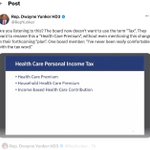
Rep. Dwayne Yunker warns the plan could cost $94 billion annually by 2032, while a proposed healthcare income tax has been renamed a “Household Healthcare Contribution.”
Changing the name doesn't change the cost.
Oregonians deserve transparency, real healthcare choices, and answers before being asked to pay more.
bit.ly/4yoBETY
@oregoncatalyst
How much more can Oregon taxpayers afford?
As living costs continue to climb, Oregon faces growing scrutiny over taxes, government spending, and whether taxpayers are getting results for their money.
The debate isn't just about how much revenue the state collects. It's about where that money goes, how effectively it's spent, and why additional taxes remain part of the conversation.
Oregonians are demanding answers.
bit.ly/4dE8RTJ
@oregoncatalyst
Who pays? Who decides? Who controls your healthcare?
Oregon's proposed single-payer system could mean massive new taxes, the loss of most private insurance, and unprecedented government control over healthcare.
Supporters promise lower costs. But who's paying the bill?
Oregonians deserve real numbers, real answers, and a clear understanding of what they'll be giving up.
bit.ly/47eJlRs

Oregon spends more per student than 31 other states. So why are our students still struggling to read?
A new OPB investigation exposes a troubling pattern: layers of bureaucracy, political pressures, and shifting priorities while student achievement continues to lag.
More spending and more mandates haven't delivered the results Oregon families deserve.
It's time to put students first—not politics, paperwork, or special interests.
bit.ly/4hTtL2p
@OPB

Oregonians want better roads. But is another gas tax the answer?
As La Grande voters consider a new gas tax, questions about ODOT's budget shortfalls and transportation spending priorities remain.
Cascade has long called for responsible spending and greater accountability.
The difference in La Grande? Voters get a direct say.
Read more from @OPB
@lagrandelife
bit.ly/3W4o3n3

From Cascade's founding to building a national powerhouse!
Tracie Sharp helped launch Cascade Policy Institute in 1991 as its founding executive director before transforming State Policy Network into a nationally influential network of state-based policy organizations.
A remarkable legacy of leadership and impact! We were honored to welcome Tracie back to Portland as a featured speaker at Cascade's 35th Anniversary Dinner, celebrating the ideas and vision that continue to shape the future of public policy.
@StatePolicy

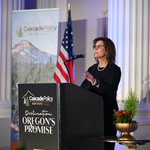
ALT A person stands at a podium with a Cascade Policy Institute sign, delivering a speech. Behind them are two banners and an American flag. The setting is a formal event space with large white columns.
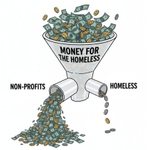
Millions spent. But how much is reaching the people who need help?
Oregon continues to pour public dollars into homelessness programs, yet serious questions remain about accountability, results, and whether resources are reaching those most in need.
At Cascade, we believe success should be measured by outcomes—not the size of the budget.
More spending isn't the same as more solutions.
Oregonians deserve to know: Where is the money going, and what results are we getting?

ALT A funnel labeled "Money for the Homeless" is filled with cash. Two spouts emerge from the funnel: one labeled "Non-Profits" with a large stream of money flowing out, and another labeled "Homeless" with a trickle of coins.