Christopher Manning (@chrmanning) header
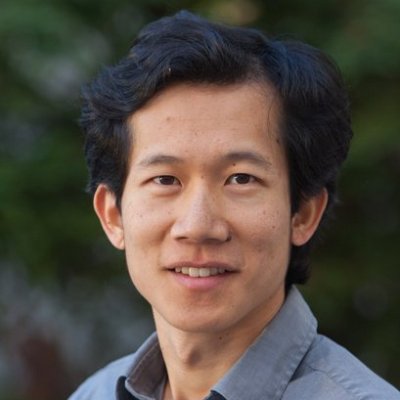
Christopher Manning (@chrmanning) profile picture

Founder @stanfordnlp & cs224n—Senior Fellow @StanfordHAI—Prof. CS & Linguistics @Stanford—GP @aixventureshq—MTS @moonlake—Australian🇦🇺—Do #NLProc & #AI 👋

Palo Alto
Joined September 2014
Photo by Christopher Manning (@chrmanning)Photo by Christopher Manning (@chrmanning)Photo by Christopher Manning (@chrmanning)Photo by Christopher Manning (@chrmanning)Photo by Christopher Manning (@chrmanning)Photo by Christopher Manning (@chrmanning)Photo by Christopher Manning (@chrmanning)Photo by Christopher Manning (@chrmanning)Photo by Christopher Manning (@chrmanning)Photo by Christopher Manning (@chrmanning)
Christopher Manning retweeted
What's the opposite of doomscrolling? Hopescrolling?
4
2
1
38
3,319
Christopher Manning retweeted
I have friends who have been killed simply because they wanted the opportunity to vote in free and fair elections. So, Americans, please exercise the right you have to vote on Tuesday! Or today! #VOTE!
37
1,196
14
4,591
36,385
Christopher Manning retweeted
What happens if you put Tversky similarity inside an RNN cell? I added a Tversky branch to mLSTM in Vision-LSTM and xLSTM. At equal params, half the depth matched or beat full depth, with ~20% fewer FLOPs and up to 2x faster training. Read the Article: arian32.medium.com/tversky-s…
1
3
6
4,604
Christopher Manning retweeted
Synthetic data is used all the time now for LM pretraining...but can we carefully quantify the gains in compute efficiency and data efficiency?
Synthetic rewrites are now standard to improve data quality and when data is limited. But how much compute should you spend rewriting? And can a model trained on rewrites beat the rewriting model? We fit scaling laws to answer both: 1/🧵
12
17
1
220
18,756
Great that @cityofpaloalto is building some new housing – but extremely little of it near the University Ave downtown transit and shopping hub, where it would be so useful 😿🌇 paloalto.gov/City-Hall/Housi…
3
2
24
10,750
Congratulations to @aixventureshq on a great event. You are all so impressive… and it’s just the beginning! @RichardSocher @chrmanning @ellie Krish, Nick, Sebastian, Sara
1
4
1,818
Christopher Manning retweeted
Meet Pika H3 Flex, debuting today as the #1 open weight model on DesignArena’s t2v board. It’s built for professional iteration, with exportable audio stems, resolutions up to 4k, and faster-than-realtime generation. It can produce a 15-second clip with soundtrack in as little as 7 seconds. So, yeah. It’s kind of a flex 💅
385
355
401
3,252
1,435,061
Christopher Manning retweeted
Introducing Fern, Mirendil’s first model: pretrained from scratch, with up to 10M tokens of context! That’s ~0.5M lines of code (roughly Megatron-LM scale) or days of an agent’s work, all in context at once. Its first version, Fern 0.1, had a short round of post-training 🚢
132
196
60
2,336
214,442
Shoutout to Christopher Manning (@chrmanning)! He founded the Stanford NLP Group, co-introduced GloVe word vectors, and taught CS224N nearly every year from 2000 to 2024. So many people learned NLP from his work. 🙌 aipeoplewiki.com/people/chri… #NLP #Stanford #AI
3
18
3,729
Christopher Manning retweeted
Introducing Kimi K3.1 Pro: our most capable 3T-class open-weight model. 🔹 1M-token context, 2.8T total / 104B active params (MoE), Multimodal. 🔹 Full-project coding: games in Unreal, Unity & Godot. 🔹 Excels at parametric 3D modeling in Blender & CAD. 🔹 More reliable at finance work: Accurate modeling with hallucination down by 65%. 🔹 Matching the strongest proprietary models across coding, agentic and knowledge benchmarks. Kimi K3.1 Pro and K3.1 Pro Highspeed (2–3× faster) are now live on Kimi.ai, Kimi Work, Kimi Code, and the Kimi API. Open weights by Nov 4, 2026. 🔗 API: platform.kimi.ai 🔗 Tech blog: kimi.ai/blog/kimi-k3-1-pro
1,291
3,235
2,376
30,287
4,182,316
Christopher Manning retweeted
I’m still working through it, but this work is incredibly cool and (unless there’s some kind of serious mistake) the lineage of work including this and “Why Larger Models Learn More” is exactly the kind of work that I think is necessary to develop a science of DL. I’m a huge fan
The wonderful “Don’t just Fix it in Post” paper identifies predicting memorization as a key open problem. A progress report: we can now accurately predict verbatim memorization using just three well-understood variables. Experiments by Jing Huang, using the Hubble model suite:
4
7
112
8,243
Impressive performance, just a little below @thinkymachines’s Inkling with an over 10x smaller model. But I think I’m still going to wait a little before buying my Mac Studio….
Recursive Flint is here: our first model, built with the Eureka Machine. Fast, local coding. Open weights available on Hugging Face.
14
7
143
17,527
I reacted with excitement but also skepticism to @bneyshabur’s plan for making frontier-performance LM pre-training possible by a single researcher. Could 1 person compete with the huge teams at big co’s? $10M is generous for an academic budget, but @mirendil has delivered!!!
Today, we're sharing a major milestone in our mission to democratize frontier AI development: Pretraining at scale without a pretraining team. We set out to answer an ambitious question: Can we significantly reduce the time, human expertise, and compute needed to pretrain a competitive foundation model from scratch? The result is Mirendil-Base, our first pretrained coding model, built by one researcher in just 3.5 months with less than $10M in compute, including all research, experimentation, and the final training run. Our approach is already showing promising results as we scale to even larger models. This is an important step toward a future where a single researcher, empowered by AI, can accomplish what once required an entire research organization. As these capabilities improve, we believe frontier AI development can become accessible to far more people and teams. More to come soon, including independent evaluations, post-training benchmarks, and API access.
6
8
1
131
19,318
Christopher Manning retweeted
Best decision models in the world, free, and open-source, with all the details of how we trained it at @baselabs. Enjoy!
Today we’re releasing two decision models, elephant-1 (9B) and mammoth-1 (27B), trained by the @baselabs team, available for free for one week on our Model APIs. mammoth-1 is #1 on the Jev Decision Index and elephant-1 is tied for #1 on the Artificial Analysis Decision Index. It’s a new model, but more importantly, this is an open-source model you can access, deploy, and post-train on Baseten (or wherever you do your best work). The free week ends 10/27/26 at 11:59 PM PT. Try it and let us know what you think. Try mammoth-1 here: baseten.co/library/mammoth-1… Try elephant-1 here: baseten.co/library/elephant-…
3
1
60
7,895
Thank you!!! But I certainly can’t take credit for the whole group. So much of it due to all the students and the other faculty: @jurafsky @percyliang @ChrisGPotts @YejinChoinka @MonicaSLam @Diyi_Yang @tatsu_hashimoto
which AI labs turn into startups? counted lab size vs startups founded by members, public sources only stanford hazy: 7 startups from 13 people stanford NLP: 12 berkeley sky lab: 7 @chrmanning your group is the only big lab up top
5
13
1
157
34,555
Christopher Manning retweeted
Beam is now available across platforms, with open weights under the Apache 2.0 license - in collaboration with an ecosystem of 40+ partners. We're releasing: - Weights, tokenizer, and reference implementation - BF16, FP8 and NVFP4 weights and a DFlash2 drafter - The open source harness we built and trained Beam on: Mirror CLI Weights and model card on Hugging Face: huggingface.co/reflection
161
201
207
956
523,580
Christopher Manning retweeted
We developed a model reaching frontier-level multimodal performance, matching or exceeding Astra on 5 of 12 benchmarks, all with 17x lower token prices. The model is smaller and cheaper than Gemini 3.8 Flash while dominating it in real world vision workloads. We achieved this by inventing a technique for visual reasoning, where the model is no longer restricted to text chain-of-thought. Conditioned on visual tokens, Glimpse can perform recurrent computation over latent internal representations and can even orchestrate subagents that send messages over internal visual states. Really proud of what our small team and only hundreds of GPUs could accomplish. elorian.ai/blog/introducing-…
20
39
3
251
17,505
Christopher Manning retweeted
Introducing Muse Wonder, our new family of frontier models with state of the art performance for personal and professional agentic work.
2,463
3,073
2,839
38,876
6,184,117
Christopher Manning retweeted
Mike was my colleague at Berkeley, and he's been fairly skeptical of deep learning's trajectory for years. Most scientists are skeptics, and it can take a big shock to get someone to consider a possibility that goes against the anchoring effect coded in our DNA. I too was somewhat of a skeptic until ~6 months ago, and people ask me all the time why I joined Anthropic. It started in April, when a friend I've known for 20 yrs messaged me saying he'd be in the Bay Area in a week, and he suggested we meet up. I invited him to my house for dinner, and he told me he had just joined Anthropic. He said the models were becoming increasingly more capable, and he believed both that they'd soon be smarter than him and also that all intellectual work would be highly devalued in the near future, and lastly that society was not at all ready for what's coming. I'd of course heard claims similar to this before, but not from a friend I'd known for this long, and who I trusted, at my dining room table. It was the initial shock needed to destabilize my own anchoring. Also, I've been fortunate to work with and/or mentor many smart people in my life (e.g. Fields medalists, a 4x Putnam Fellow, IOI first place winners, etc.), so I feel pretty calibrated in recognizing very smart people, and this was someone who is definitely very smart and with impressive such credentials. So, it was hard to ignore this friend saying the models would be smarter than even him in particular. After that dinner, I decided to do an informal survey, calling and meeting up with a lot of my friends who now work on improving model capabilities at these frontier labs. They all agreed with that first friend. These were all people I'd known 10, 15, 20 years, who mentored me, or I mentored them, or we met professionally in academia. These are people I trust, and their beliefs on this topic were consistent. I then spent a whole lot of time understanding the missions of different companies, and talking to current and former employees and people in leadership. I read Dario's (long) essays and watched videos on YouTube of company leaders being interviewed. Anthropic's stated mission "to ensure that the world safely makes the transition through transformative AI" felt like exactly the right guiding principle to handle such a society-disrupting technology, and everyone I spoke to at the company was very aligned with this mission. It's easily the most mission-focused place I've ever been at, and everyone takes the work extremely seriously and with a profound sense of responsibility. And now here I am. And being on the inside, the pace of progress has surprised me more than I first imagined. The moment that pure mathematicians are in, to me, is just a microcosm of what I predict a much larger of society will be grappling with in the not too distant future, and I really hope our leaders and the general public internalize sooner than later just how significant a moment we're in.
Michael Jordan (the machine learning one): "Superintelligence is Science Fiction" 🔥🔥🔥 di.ens.fr/~fbach/MJordan_ITW…
72
208
37
1,967
329,359
It sure looks like LLMs’ models of the world and visual “world models” aren’t as different as some people think!
This is a result I’ve dreamt about for many years: *unpaired translation between images and text* I thought it might be only slightly possible, the kind of thing you have to really squint at. But Dominik proved this wrong. You don’t have to squint. Worth looking for yourself:
14
14
1
136
13,119