

CoinHubKorea is a Cryptocurrency and Blockchain Media Portal with a focus on relaying news from Korea to English-speaking audiences. We deliver breaking stories
Joined December 2022
- Tweets481
- Following55
- Followers78
- Likes481

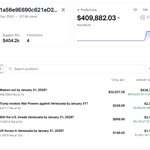


Betting on Venezuela’s Political Crisis — Prediction, or Just Perfect Timing?
In December 2025, a new account appeared on Polymarket. Instead of spreading bets around, it focused on one thing only: Venezuela’s political and military future.
The questions were straightforward. Would the Maduro regime fall? Would the U.S. intervene? Would military action escalate?
At the time, the market wasn’t convinced. These outcomes were priced at 6–7% probability, with contracts selling for just 6–7 cents. Cheap bets — because most people didn’t expect much to happen.
The account bought them anyway.
Days later, Venezuela became headline news. U.S. military action followed, political instability intensified, and markets that once looked unlikely flipped decisively to YES.
Bets that had cost a few cents were suddenly worth a dollar each. The result: over $400,000 from a single account, with returns exceeding 1,000%.
Was it a sharp political read? Possibly. But the timing was exact, the focus was narrow, and the account showed up right before everything unfolded.
That’s why the question stuck: Was this really a prediction about Venezuela — or did someone simply know which way events were headed?
#PredictionMarket #Polymarket #Venezuela #Geopolitics #CryptoNews #MarketDrama #InsideInformation #Web3

3
4
126
베네수엘라 정치·군사 이슈에 베팅 — 예측일까, 너무 정확한 타이밍일까?
2025년 12월, 폴리마켓에 새 계정 하나가 등장한다.
이 계정은 다른 주제엔 눈길도 주지 않고 베네수엘라의 정치·군사 상황에만 베팅했다. 마두로 정권이 흔들릴지, 미국이 개입할지, 군사 충돌이 현실화될지 — 모두 베네수엘라 정국을 둘러싼 질문들이었다.
당시 시장의 평가는 낮았다. 확률은 6~7%, 가격은 6~7센트.
“가능성은 있지만, 크진 않다”는 분위기였다.
하지만 이 계정은 주저하지 않았다. 그리고 며칠 뒤, 상황이 급변했다. 미국의 군사 행동이 시작됐고, 베네수엘라 정국은 실제로 흔들리기 시작했다.
시장은 연이어 YES로 돌아섰고, 몇 센트에 샀던 베팅은 달러 단위의 가치가 됐다. 한 계정에서만 40만 달러 이상, 수익률은 1,000%를 넘겼다.
정치 상황을 잘 읽은 걸까. 아니면 타이밍이 너무 좋았던 걸까.
그래서 이런 말이 나온다. 베네수엘라를 ‘예측’한 게 아니라,
이미 방향을 알고 있었던 건 아니냐는 이야기다.
#베네수엘라 #예측시장 #타이밍논란 #PredictionMarket

4
80
은행 자회사 규제 완화 가시화…원화 스테이블코인 경쟁 본궤도 금융당국이 원화 스테이블코인 발행업을 은행 자회사 업종에 포함하는 방안을 유력하게 검토하면서, 은행이 발행사 지분을 15%를 초과해 보유할 수 있는 길이 열릴 전망이다. 정부의 디지털자산기본법 국회 제출이 임박한 상황에서, 은행과 핀테크·가상자산 업계 전반의 합종연횡이 본격화될 것이라는 관측이 힘을 얻고 있다.
금융권에 따르면 당국은 은행업 감독규정 개정 또는 유권해석을 통해 기존 ‘지분 15% 제한’의 예외를 적용하는 방안을 살피고 있다. 디지털자산기본법이 은행 중심 컨소시엄(지분 50%+1주) 구조를 전제로 설계되는 것과, 현행 은행법 간의 충돌을 해소하기 위한 조치다. 규제가 정비될 경우 은행이 스테이블코인 발행사를 사실상 직접 지배하거나, 주도적으로 설계하는 구조도 가능해진다.
다만 업계에서는 은행이 단독으로 발행사를 설립하는 시나리오는 제한적일 것으로 보고 있다. 원화 스테이블코인의 성패는 발행 자체보다 어디에서 쓰이고, 얼마나 빠르게 유통되느냐에 달려 있어서다. 대규모 이용자를 확보한 플랫폼, 가상자산거래소, 증권사와의 컨소시엄이 현실적인 선택지로 거론되는 이유다. 은행 입장에서도 컨소시엄 구조를 통해 초기 시장 리스크를 분산하고 네트워크 효과를 극대화할 수 있다.
증권사와 카드사의 역할도 주목된다. 증권사는 토큰증권(STO)과 투자상품 설계, 유통 구조에서 강점을 갖고 있고, 카드사는 결제 네트워크와 가맹점 인프라를 무기로 삼을 수 있다. 원화 스테이블코인이 단순한 디지털 자산을 넘어 지급결제·플랫폼·디지털자산 전략을 관통하는 핵심 인프라로 인식되면서, 금융권의 경쟁 구도는 한층 입체적으로 바뀌고 있다.
결국 이번 규제 완화 논의는 ‘허용 여부’의 문제가 아니라, 원화 스테이블코인을 어떤 구조로 제도권에 안착시킬 것인가에 대한 선택에 가깝다. 디지털자산기본법을 기점으로, 국내 금융권의 원화 스테이블코인 경쟁은 이제 준비 단계를 넘어 실행 국면으로 접어들고 있다.
#원화스테이블코인 #디지털자산기본법 #은행자회사 #지분규제완화 #핀테크 #가상자산정책

4
83
Banks Get Green Light to Control Won-Based Stablecoin Issuers via Subsidiaries
South Korea’s financial authorities are moving closer to allowing banks to hold more than 15% ownership in won-based stablecoin issuers by adding stablecoin issuance to the list of permitted bank subsidiary businesses. As the government prepares to submit the long-awaited Digital Asset Framework Act, expectations are rising that alliances between banks, fintech firms, and crypto platforms will accelerate.
According to industry sources, regulators are reviewing amendments to supervisory rules or issuing regulatory interpretations that would exempt stablecoin issuers from the existing 15% ownership cap imposed by the Banking Act. The move is aimed at resolving a structural conflict with the Digital Asset Framework Act, which is expected to allow won-based stablecoin issuance through bank-led consortiums holding a majority stake (50% + one share).
Without such an exemption, multiple banks would need to participate just to meet the majority requirement, complicating governance and slowing execution. By recognizing stablecoin issuance as an eligible subsidiary business, authorities would allow banks to take a controlling stake — or even full ownership — in a stablecoin issuer, while still separating operational risk from the core banking entity.
Despite this flexibility, industry observers believe consortium models will remain the dominant approach. The success of a won-based stablecoin is expected to hinge less on issuance and more on distribution, usability, and platform integration. Partnerships with major platforms, crypto exchanges, securities firms, and payment networks are therefore seen as critical for early adoption.
Securities firms and card companies are also positioning themselves within this emerging ecosystem. With strengths in tokenized securities, investment product design, and payment infrastructure, these players are expected to play supporting but strategically important roles. As won-based stablecoins begin to be viewed as payment and platform infrastructure rather than experimental assets, competition within the financial sector is shifting from discussion to execution.
#WonStablecoin #DigitalAssetFrameworkAct #StablecoinRegulation #BankingReform
#FinancialInnovation #CryptoInfrastructure
#FintechPartnership #DigitalFinance
#PaymentsInnovation #TokenizedEconomy

1
4
53
코인 수익 22% 과세 ‘초읽기’
가상자산 투자 수익에 대한 22% 과세가 다시 수면 위로 올라왔다. 수년간 유예를 거듭해 온 과세안이 더 이상 미뤄지기 어렵다는 신호가 곳곳에서 감지되면서, 시장은 사실상 ‘초읽기 국면’에 들어섰다는 평가가 나온다.
현행 방안의 골자는 명확하다. 가상자산 매매로 발생한 연간 소득에서 250만 원을 공제한 뒤, 초과분에 대해 20%의 소득세와 2%의 지방소득세를 합산해 22%를 과세하는 구조다. 주식 양도소득세와는 별도 체계로 설계돼 있어, 투자자 입장에서는 동일한 투자 수익임에도 과세 기준이 다르다는 점이 가장 큰 논쟁 지점이다.
정책 당국은 “가상자산 시장이 일정 수준 이상 성숙 단계에 접어든 만큼, 더 이상의 예외는 어렵다”는 입장에 가깝다. 특히 세수 형평성과 국제 기준을 근거로 들며, 주요국 다수가 이미 가상자산 과세를 제도권 안으로 끌어들였다는 점을 강조한다. 관련 논의는 국회 기획재정위원회를 중심으로 재개되고 있으며, 국회와 기획재정부 내부에서도 “추가 유예는 정치적 부담이 크다”는 기류가 확산되고 있다.
반면 시장과 투자자들의 반발도 여전하다. 가장 큰 불만은 인프라 미비다. 거래소별 취득가 산정 방식, 해외 거래소 이용 내역 추적, 디파이·에어드롭·보상형 토큰의 과세 기준 등 실무적으로 정리되지 않은 영역이 여전히 많다. 투자자 보호 장치와 제도 정비가 선행되지 않은 상태에서 과세부터 강행하는 것은 순서가 뒤바뀌었다는 주장이다.
그럼에도 불구하고 분위기는 이전과 다르다. 가상자산을 더 이상 ‘일시적 투기 자산’이 아닌 하나의 금융 자산으로 분류하려는 정책 기조가 분명해졌고, 과세는 그 마지막 퍼즐에 가깝다. 실제로 금융당국과 세정당국은 거래 데이터 표준화와 신고 체계 정비를 병행하며 실행 가능성을 높이는 쪽으로 움직이고 있다.
이제 시장의 관심은 “과세하느냐 마느냐”가 아니라 “언제, 어떤 디테일로 들어오느냐”로 옮겨가고 있다. 투자자 입장에서는 막연한 기대나 공포보다는, 손익 관리 방식과 거래 기록 정리, 향후 세제 변화 시나리오까지 현실적으로 점검해야 할 시점이다. 과세는 피할 수 없는 방향일 가능성이 높고, 준비 여부가 체감 수익률을 가르는 변수가 될 가능성도 커지고 있다.

22% Crypto Tax in Korea Nears Reality
South Korea’s long-debated plan to tax cryptocurrency profits at an effective rate of 22% is once again approaching the implementation stage. After years of repeated postponements, signals from policymakers suggest that further delays are becoming increasingly difficult, pushing the issue into what many describe as a “countdown phase.”
Under the current framework, annual crypto investment gains exceeding KRW 2.5 million would be subject to taxation. The taxable portion would face a 20% capital gains tax plus an additional 2% local income tax, bringing the total burden to 22%. Notably, crypto income would be taxed separately from stock investments, a structural distinction that has fueled persistent controversy over fairness and consistency within the broader investment tax system.
Authorities argue that the crypto market has matured beyond its early speculative phase and should now be treated as a taxable financial asset class. From their perspective, taxing crypto gains is a matter of equity and alignment with global standards, as many major economies have already incorporated digital assets into their tax regimes. Within the National Assembly of South Korea and the Ministry of Economy and Finance, sentiment is reportedly shifting toward implementation rather than continued deferral.
Investor opposition, however, remains strong. Critics point to unresolved practical issues, including inconsistent cost-basis calculations across exchanges, difficulties in tracking overseas transactions, and unclear tax treatment for DeFi yields, airdrops, and reward-based tokens. Many argue that taxation is being prioritized before sufficient investor protection and reporting infrastructure are in place.
Despite these concerns, the policy environment has noticeably changed. Cryptocurrencies are no longer framed solely as speculative instruments but increasingly as recognized financial assets within the formal system. Regulatory bodies are simultaneously working on data standardization and reporting mechanisms, suggesting that technical readiness is improving alongside legislative momentum.
As a result, the central question for the market is no longer whether crypto taxation will happen, but when and under what specific conditions. For investors, preparation is becoming more important than prediction. Record-keeping, profit-loss management, and scenario planning around tax enforcement may soon have a direct impact on net returns. The direction appears set, and readiness could be the key differentiator once the rules take effect.

1
3
37
From Speculation to Infrastructure: Crypto’s Quiet Reinvention in the New Year
As the new year begins, the narrative surrounding digital assets is undergoing a subtle but meaningful transformation. Once framed primarily as speculative instruments driven by price volatility, cryptocurrencies are increasingly being discussed as foundational components of modern financial infrastructure.
This shift is not the result of a single breakthrough, but rather the accumulation of structural changes across the global financial system. The approval and expansion of spot crypto ETFs have altered the composition of market participants, drawing in long-term institutional capital rather than short-term retail speculation. At the same time, stablecoins have begun to function as practical settlement tools, enabling faster and cheaper cross-border payments than traditional banking rails.
Regulatory discourse has evolved alongside these developments. Policymakers are no longer focused solely on suppressing speculative excess, but on defining standards for custody, settlement, accounting, and investor protection. This transition reflects a broader recognition that digital assets are becoming embedded within existing financial systems rather than operating outside them.
In this context, blockchain technology is increasingly viewed not as an alternative financial universe, but as an extension of it — a programmable layer that enhances efficiency, transparency, and interoperability. The market’s core question is no longer whether crypto prices will rise or fall, but how these technologies will integrate with banks, asset managers, and payment networks.
As speculation gradually gives way to structure, the crypto market is entering a phase defined less by hype and more by utility. The transformation may be quiet, but its implications for global finance are anything but small.

1
5
36
Bank of Korea Accelerates Preparations for Second Phase of CBDC Pilot
The Bank of Korea is accelerating internal preparations for the second phase of its central bank digital currency (CBDC) pilot, signaling renewed momentum after months of uncertainty surrounding the project. While no official launch date has been announced, discussions with commercial banks and related institutions have resumed, indicating that the project is moving beyond a dormant stage.
The second phase is expected to go beyond the limited technical verification conducted during the first pilot earlier this year. Unlike the initial test, which focused on basic issuance and retail payment functionality, the upcoming phase is likely to explore more advanced use cases, including conditional payments, government-linked transfers, and integration with existing financial infrastructure.
Market observers note that the timing of the renewed push is closely tied to delays in domestic legislation governing won-denominated stablecoins. As regulatory uncertainty persists, the central bank appears increasingly inclined to position the CBDC as a public-sector alternative capable of ensuring monetary sovereignty and payment stability.
Despite the renewed pace, the Bank of Korea remains cautious. Officials have emphasized that the second pilot will remain experimental in nature and will not imply an immediate transition toward full-scale issuance. Cost efficiency, user experience, and the burden placed on participating financial institutions are expected to be key evaluation criteria.
For now, the acceleration reflects a strategic recalibration rather than a definitive policy shift. However, the resumption of concrete preparations suggests that the central bank is unwilling to let its digital currency initiative fall behind global peers as international CBDC development continues to advance.

1
5
38
en.bloomingbit.io/feed/news/…
Bloomingbit coverage on Mirae Asset’s acquisition of Korbit
@bloomingbit @miraeasset @Korbit_exchange

2
5
51
Hashed and VIDAN Explore Region-Based Crypto Use Cases at Busan Blockchain Week
Korean blockchain venture capital firm Hashed and Busan-based blockchain company VIDAN held discussions on region-based cryptocurrency use cases during Busan Blockchain Week. The conversation focused on moving beyond technology demonstrations or token issuance toward practical models that integrate digital assets into local economies and everyday services.
During the event, both sides highlighted the potential of combining blockchain technology with Busan’s existing strengths in logistics, tourism, and cultural infrastructure. In particular, they emphasized the need for cryptocurrency use cases centered on real-world applications such as local commerce, cultural content, and tourism services. This reflects a broader global trend in the blockchain industry, which is gradually shifting away from speculative models toward demand-driven, utility-based ecosystems.
Hashed, drawing on its experience investing in global Web3 projects, stressed the importance of blockchain models that can be tested and validated at the regional level. The firm noted that long-term sustainability depends more on user participation and ecosystem design than on short-term price movements. VIDAN also pointed to Busan’s experience as a blockchain regulatory sandbox city, emphasizing the need for structures that enable collaboration among local governments, businesses, and citizens.
While Busan has promoted itself as a blockchain-focused city and launched multiple pilot projects, critics have noted that many initiatives have remained technology-centric. Industry observers see this discussion as meaningful in that it addressed how region-based digital assets could function naturally as tools for payment, rewards, and participation within local communities.
Market participants are watching whether Busan Blockchain Week will mark a turning point toward decentralized, region-specific crypto use cases rather than centralized, one-size-fits-all models. How effectively regulatory frameworks and market demands can be aligned is expected to be a key factor in determining the success of such initiatives going forward.

4
104
₩6,400 Trillion Digital Asset Custody Market:
Korean Banks Take the First Step, but Regulatory Barriers Force Joint Ventures
As the digital asset custody market is increasingly discussed as the next-generation financial infrastructure worth nearly 6,400 trillion won, Korean banks have finally begun to make their first moves. However, their entry has been cautious. Rather than directly entering the market, banks have chosen indirect participation through joint ventures and equity investments, constrained by regulatory uncertainty.
Under Korea’s current legal framework, banks are not permitted to directly provide digital asset custody services. As a result, banks have positioned specialized custody firms at the forefront, while limiting their own role to infrastructure development and trust reinforcement. Major banks such as KB Kookmin Bank, Shinhan Bank, NH NongHyup Bank, and Woori Bank have entered the market by forming joint ventures or strategic partnerships with digital asset custodians.
This joint-investment structure is more than a tentative experiment. For banks, it is a strategic move to accumulate technological capabilities, operational know-how, and institutional experience in preparation for future regulatory changes. At the same time, operational and compliance risks are effectively transferred to specialized custody entities.
While global financial institutions are expanding direct custody services as regulations mature, Korea remains in the policy discussion phase. Meanwhile, the market continues to grow rapidly. Industry estimates suggest that the global digital asset custody market, currently valued at around one quadrillion won, could expand to approximately 6,400 trillion won in the mid to long term. Against this backdrop, Korea’s cautious but strategic joint-venture approach may prove decisive in determining future competitiveness once regulatory barriers are lifted.

5
80
North Korea Steals $2 Billion in Crypto This Year, Advancing a State-Level “High-Yield Hacking” Strategy
North Korean hackers stole approximately $2 billion worth of cryptocurrency in 2025, marking a 51% increase from the previous year, according to a recent report by blockchain analytics firm Chainalysis. The figure highlights the scale of North Korea’s cyber operations, with attacks linked to the regime accounting for more than half of the estimated $3.4 billion in global crypto thefts recorded this year.
The report notes a clear shift in strategy. Rather than conducting numerous small-scale attacks, North Korean hacking groups have increasingly focused on high-value targets such as centralized exchanges and major crypto service providers, aiming to maximize returns per operation. A notable example cited is the February breach of the Dubai-based exchange Bybit, where roughly $1.5 billion in digital assets was stolen. U.S. authorities, including the FBI, have publicly linked the incident to North Korea-associated actors.
While the total number of attacks declined compared to previous years, the average size of each theft increased significantly. Chainalysis attributes this trend to the use of sophisticated social-engineering tactics, including the infiltration of crypto firms through fake job applications, developer roles, and technical interviews. By gaining internal access, attackers were able to execute large-scale thefts in single incidents.
Once assets are stolen, the funds are typically split into smaller transactions, often below $500,000, and routed through multiple wallets, bridges, and mixing services. The report identifies a recurring laundering pattern involving Chinese-language payment intermediaries and cross-chain infrastructure, with most stolen assets being laundered within approximately 45 days.
Analysts emphasize that these activities go beyond ordinary cybercrime. The stolen cryptocurrency is widely believed to be a key source of funding for North Korea’s sanctioned programs, including weapons development, allowing the regime to bypass international financial restrictions. Cumulatively, North Korea-linked hacking operations are estimated to have generated over $6.7 billion in illicit crypto proceeds to date.
Security experts warn that the evolving tactics underscore a broader risk facing the digital-asset industry. The threat is no longer limited to technical vulnerabilities in code, but increasingly involves human factors, internal access control, and organizational security practices, calling for more comprehensive defensive strategies across the crypto ecosystem.

3
68
Eight Years of ICO Ban in Korea: Overseas Workarounds Fuel Disputes and Investor Losses
South Korea’s ban on initial coin offerings (ICOs) has now persisted for eight years, leaving the country’s virtual asset industry in a prolonged state of regulatory stagnation. As a result, overseas workarounds have become widespread, and disputes and investor losses tied to these structures are increasingly surfacing.
In late 2017, financial authorities imposed a blanket ban on ICOs, citing concerns over excessive speculation, fraud risks, and the difficulty of protecting investors. Although the measure was introduced as an administrative guideline rather than through formal legislation, it effectively shut down all domestic channels for issuing virtual assets. Token issuance disappeared from the local market, leaving only secondary trading, while the broader ecosystem steadily contracted.
As the ban dragged on, domestic blockchain companies and projects sought survival and fundraising alternatives by establishing overseas entities or issuing tokens through foreign exchanges. These projects typically conduct issuance and listings abroad before distributing tokens to Korean investors, creating a structure in which regulatory constraints at home actively incentivize offshore detours.
However, these overseas issuance models have generated new problems. Because the tokens are issued under foreign jurisdictions, legal protections for Korean investors are weak, and dispute resolution is often unclear. When conflicts arise, investors face significant challenges in pursuing legal remedies, while compensation mechanisms remain largely undefined.
Critics argue that this situation has produced a form of structural reverse discrimination. While domestic ICOs remain prohibited, overseas-issued tokens can still access the Korean market, placing compliant domestic startups and projects at a disadvantage. As a result, frustration within the industry continues to build.
Globally, many jurisdictions have moved toward integrating token issuance into formal regulatory frameworks, aiming to balance innovation with investor protection. In contrast, Korea’s prolonged policy vacuum has raised concerns that its competitiveness in the digital asset sector is steadily eroding.
With the ICO ban still firmly in place, industry participants are increasingly calling for clearer policy direction and a legal framework that can bring token issuance back within regulatory oversight. Until such changes occur, overseas workarounds will remain the practical reality—along with the disputes and investor risks that accompany them.

3
71