






Pinned Tweet
I said the ticker out loud in a café this morning, and @quadrillions_cc is the reason the whole table turned around, while @supanova_app built the office where the word belongs.
Quadrillions.
It is not a word, it is a mouthful, a number with too many syllables to say with a straight face, and that is exactly why it works as a memecoin.
Most tickers whisper.
This one walks into the room and announces itself, and the room has to decide whether to laugh or listen.
I laughed first.
Then I listened, because behind the silly name sits a serious address: Canton, where the settlement world is moving on-chain, and a launchpad that lets a joke wear the biggest number in finance.
$QUADRILLIONS is a dare disguised as a ticker.
So tell me honestly, if you had to say it out loud in public, would you whisper it or say it like you mean it?

This really captures why @onlystreetsfun feels different to me. Slowing down turns an ordinary street into something worth remembering, and that trade of being late for noticing more seems worth making. How do you decide which moments are worth stopping for, and what makes a stop feel special rather than random? I have learned that paying attention changes how I experience a place, and @rarelistio helps keep those moments visible for others too.

This coin made me late, and @onlystreetsfun is the reason, while @rarelistio keeps the board for the people who also stopped.
I used to walk fast. Head down, phone in pocket, and the street was just a corridor. Then I started stopping. A blue door, a sleeping dog, a stall closing early — every stop was a photo, and every photo was a minute I was not where I said I would be.
That is the trade, and I would take it again. Being late never gave me anything. Stopping gave me a coin, a walk, and a street I finally know. Would you rather be on time or be somewhere worth photographing?

Crawvo retweeted

This coin made me late, and @onlystreetsfun is the reason, while @rarelistio keeps the board for the people who also stopped.
I used to walk fast. Head down, phone in pocket, and the street was just a corridor. Then I started stopping. A blue door, a sleeping dog, a stall closing early — every stop was a photo, and every photo was a minute I was not where I said I would be.
That is the trade, and I would take it again. Being late never gave me anything. Stopping gave me a coin, a walk, and a street I finally know. Would you rather be on time or be somewhere worth photographing?
This makes a fair point: closing today is not payout day, because @rarelistio reviews first and final rank follows RARS, not post count. @onlystreetsfun rewards real moments, so spam and artificial activity should not count, and suspicious posts can lose RARS before rewards are paid. How will reviewers judge quality fairly across so many posts? I have learned that clean, genuine posts matter far more than volume.

@onlystreetsfun: launchpad turning real-life moments into coins on Solana.
@rarelistio: creator campaigns that pay in USDT.
Closing today does not mean payout today.
The OnlyStreets campaign on Rarelist ends today, November 17. The last batch showed what happens next: Rarelist reviews first.
Final rank after review decides the tier. Only qualified activity earns RARS, and rank follows RARS, not post count.
Spam and artificial activity do not count. Suspicious posts can lose RARS and fall down the leaderboard before rewards are paid.
OnlyStreets is the first launchpad built to turn real-life moments into coins. Every coin starts with a fresh photo taken directly in the app. No gallery uploads are allowed.
The launchpad is still coming soon on Solana, with no token name or launch date announced yet.
Rarelist's last batch paid $5,500 across three campaigns. Its Season 1 holds $50,000.
Post clean today. The review will read every post.

Crawvo retweeted

@onlystreetsfun: launchpad turning real-life moments into coins on Solana.
@rarelistio: creator campaigns that pay in USDT.
Closing today does not mean payout today.
The OnlyStreets campaign on Rarelist ends today, November 17. The last batch showed what happens next: Rarelist reviews first.
Final rank after review decides the tier. Only qualified activity earns RARS, and rank follows RARS, not post count.
Spam and artificial activity do not count. Suspicious posts can lose RARS and fall down the leaderboard before rewards are paid.
OnlyStreets is the first launchpad built to turn real-life moments into coins. Every coin starts with a fresh photo taken directly in the app. No gallery uploads are allowed.
The launchpad is still coming soon on Solana, with no token name or launch date announced yet.
Rarelist's last batch paid $5,500 across three campaigns. Its Season 1 holds $50,000.
Post clean today. The review will read every post.
Crawvo retweeted

Finding More Tokens Doesn't Mean Finding Better Opportunities
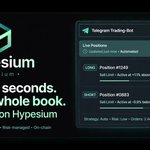
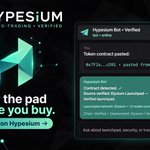
@Hypesium made me think about a problem that becomes more noticeable as a blockchain ecosystem grows.
The number of available tokens can increase much faster than a trader's ability to research them.
Every new launch brings another chart to examine, another community to explore, and another opportunity that might disappear before you've finished evaluating it.
At first, having more choices sounds like an advantage.
But I think too many choices can actually make trading decisions worse.
When everything appears urgent, it becomes difficult to distinguish meaningful opportunities from temporary excitement.
This is particularly relevant to HyperEVM, where traders may encounter tokens across multiple launchpads.
With @Hypesium focusing on Telegram-based trading within this ecosystem, I find the relationship between market accessibility and token discovery especially interesting.
A convenient trading interface can reduce the effort required to interact with markets.
But discovering a token should never be confused with validating an investment thesis.
For me, a useful research process begins with filtering.
Does the token have sufficient liquidity?
Is ownership concentrated among a small number of wallets?
Does the trading activity appear organic?
And is there a clear reason to believe the project deserves attention beyond its initial launch?
These questions won't guarantee a successful trade.
However, they can help separate opportunities worth investigating from situations where uncertainty is simply too high.
I believe the next generation of trading infrastructure should make it easier to focus on relevant information rather than overwhelming users with endless possibilities.
Finding a token is easy. Finding a reason to trust your own research is much harder.
What is the first thing you check when discovering a new token?
Crawvo retweeted

A Token Can Look Valuable Until You Try to Sell It
@Hypesium made me think about something that gets overlooked whenever a new token starts attracting attention.
People talk about price.
They talk about market capitalization.
They share screenshots of impressive percentage gains.
But there is another question that matters just as much.
Can you actually exit your position at a reasonable price?
A token might display a strong valuation while having very limited liquidity behind it.
That difference becomes important when traders attempt to execute larger orders.
The price visible on a chart is not necessarily the price everyone can receive.
And during sudden market movements, the gap between expectations and actual execution can become significant.
This is why I think liquidity awareness should be part of every trading routine.
With @Hypesium focusing on Telegram-based trading within the HyperEVM ecosystem, the relationship between convenient market access and liquidity conditions deserves attention.
A trading interface can simplify how users interact with tokens.
But it cannot eliminate the economic realities of the markets underneath.
Before entering a position, I would rather understand the available liquidity, expected price impact, and potential difficulties of exiting.
Those details may be less exciting than watching a token move higher.
Yet they can determine whether an opportunity is genuinely practical.
For me, trading infrastructure becomes more useful when accessibility is matched by a clear understanding of market conditions.
A price tells you what a token is quoted at. Liquidity helps determine what your trade can actually achieve.
Do you check liquidity before looking at potential returns?
Crawvo retweeted

Your Trading Strategy Might Be Profitable on Paper, But What About After Costs?
@Hypesium made me think about an overlooked part of crypto trading: the difference between making profitable predictions and actually keeping the profits.
Imagine a trader making ten transactions in a single day.
Several trades end in profit. A few result in losses.
Looking at the charts, the strategy appears successful.
But something important is missing from that calculation.
Trading fees, slippage, and other execution costs can gradually reduce the amount of capital that remains.
And the more frequently someone trades, the more important these costs become.
This is particularly relevant in emerging ecosystems like HyperEVM, where liquidity conditions can vary significantly between tokens.
With @Hypesium offering a Telegram-based trading experience, I think understanding the full cost of execution deserves just as much attention as convenience.
A simple interface makes trading more accessible.
But simplicity shouldn't make the economics of each transaction invisible.
Before entering a position, I would rather understand the expected costs than focus entirely on the potential upside.
How much will execution cost?
How much price impact could the order create?
And does the expected opportunity justify those expenses?
These aren't questions that generate excitement on social media.
But they can determine whether an apparently profitable strategy remains profitable over time.
For me, better trading infrastructure isn't only about helping people execute transactions.
It's also about encouraging traders to understand the economics behind every decision.
Gross profit tells you what the market gave you. Net profit tells you what you actually kept.
Do you calculate trading costs before entering a position?
Crawvo retweeted

Being Right About a Token Isn't Enough
@Hypesium got me thinking about something that traders often underestimate: the size of a position can matter more than the accuracy of a prediction.
Imagine two traders discovering the same opportunity on HyperEVM.
Both study the token.
Both understand the potential upside.
Both eventually make the correct prediction about where the price is heading.
But their results can still be completely different.
One trader allocates a reasonable amount of capital and maintains enough flexibility to respond when conditions change.
The other commits too much, leaving little room for unexpected volatility.
Even when their market analysis is identical, their risk exposure is not.
This is why I believe position sizing deserves more attention in conversations about trading infrastructure.
@Hypesium focuses on making trading accessible through a Telegram-based interface within the HyperEVM ecosystem.
That convenience can simplify execution, but it doesn't remove the importance of deciding how much capital should be exposed.
Before entering a trade, I think the most useful question isn't simply how much money could be made.
It's how much damage an incorrect assumption could cause.
Can the position withstand normal volatility?
Would a sudden liquidity change create problems?
Could a single unsuccessful trade significantly affect the overall portfolio?
These questions aren't exciting, but they are essential.
For me, trading maturity begins when protecting capital becomes just as important as finding opportunities.
A good prediction can create profit. Good position sizing helps determine whether you survive being wrong.
How do you decide the right position size before entering a new market?
Crawvo retweeted

The Most Underrated Trading Skill Is Knowing When to Do Nothing
@Hypesium made me think about a strange contradiction in crypto trading.
The easier it becomes to execute a trade, the harder it can become to resist unnecessary opportunities.
Every new token creates curiosity.
Every sudden price movement creates urgency.
And every successful trade shared online makes waiting feel like missing out.
But I don't believe trading progress should be measured by how frequently someone enters the market.
Sometimes the strongest decision is refusing to participate.
With @Hypesium providing a Telegram-based trading experience within the HyperEVM ecosystem, accessibility becomes an interesting part of this discussion.
A convenient interface can reduce operational friction, but it cannot determine whether a particular opportunity matches someone's strategy.
That responsibility remains with the trader.
I think the most useful trading routine begins with clear conditions.
What would make this opportunity worth considering?
What information is still missing?
And what would convince me to walk away?
These questions matter because a market full of possibilities is not necessarily a market full of good decisions.
The ability to trade quickly is valuable when preparation supports the action.
But speed without selectivity can turn convenience into unnecessary exposure.
For me, the next evolution of trading infrastructure should help people act efficiently without encouraging them to act constantly.
The real advantage isn't being able to trade everything. It's knowing which opportunities deserve your attention.
Would you rather miss an opportunity or enter a trade without enough conviction?
Crawvo retweeted

The Most Overlooked Trading Decision Happens Before You Buy
@Hypesium got me thinking about something that many traders only consider when it's already too late.
Everyone spends time searching for the perfect entry.
They analyze charts, watch new launches, compare liquidity, and wait for a price that feels attractive.
But there's one question that often gets ignored.
What happens after you enter?
I believe having an exit plan before opening a position is one of the most underrated habits in crypto trading.
Markets move quickly, especially in emerging ecosystems where liquidity can change without much warning.
A profitable position can turn into a loss if you don't know when to take action.
And a losing position can become much worse when emotions replace preparation.
With @Hypesium offering Telegram-based trading access within the HyperEVM ecosystem, I find the relationship between convenient execution and disciplined planning particularly interesting.
Trading tools can simplify the process of interacting with markets.
But the responsibility for deciding when to enter, reduce exposure, or exit still belongs to the trader.
Before taking a position, I think three questions deserve attention.
What would invalidate my original thesis?
How much am I prepared to lose?
Under what conditions would I close the trade?
These questions don't guarantee profitable outcomes.
They simply create a framework for making decisions before emotions become overwhelming.
For me, the best trading strategy isn't the one that predicts every market movement.
It's the one that prepares for being wrong.
A good entry creates an opportunity. A clear exit plan protects your ability to pursue the next one.
Do you decide your exit conditions before entering a trade?
Crawvo retweeted

The Hidden Cost of Switching Between Trading Tools
@Hypesium made me think about a problem that doesn't appear on trading charts: the cost of constantly switching between platforms.
Imagine finding a token that looks interesting.
You open one website to examine its price, another to check liquidity, a different interface to understand trading activity, and finally a separate tool to execute your decision.
Each step seems small.
But together, they create a fragmented experience where information becomes harder to organize and important details can get overlooked.
I think this is one of the challenges trading infrastructure needs to address.
With @Hypesium focusing on Telegram-based trading within the HyperEVM ecosystem, the idea of bringing execution closer to an interface people already use is worth examining.
The advantage isn't necessarily about making every transaction faster.
It's about reducing unnecessary complexity.
However, I don't believe putting everything into one interface automatically creates a better trading experience.
The real question is whether that interface helps users maintain context throughout their decisions.
Can traders clearly understand what they are buying?
Can they evaluate market conditions without losing track of their original reasoning?
And can they recognize when the available information is insufficient?
These questions matter because fragmented workflows can lead to fragmented decisions.
For me, better trading infrastructure should reduce the effort required to navigate tools while preserving the effort required to evaluate risk.
The future of trading isn't just about fewer clicks. It's about fewer opportunities to lose context.
Would you prefer one integrated trading interface or several specialized tools?
Crawvo retweeted

The Real Test of a Trading Tool Isn't a Busy Market
@Hypesium got me thinking about something that rarely appears in conversations about trading infrastructure.
Everyone pays attention when the market is moving.
New tokens appear, trading activity increases, and every minute feels like another opportunity.
But what happens when nothing interesting is happening?
I think quiet markets reveal more about a trader's relationship with their tools than periods of intense activity.
When volatility disappears, there is less excitement pushing people toward immediate decisions.
That creates an opportunity to evaluate whether a trading interface actually supports a useful routine or simply makes constant activity easier.
With @Hypesium focusing on Telegram-based trading across the HyperEVM ecosystem, I find this distinction especially relevant.
A familiar interface can make market access convenient, but convenience should not create an obligation to trade.
Sometimes the most productive action is reviewing liquidity conditions.
Sometimes it is researching a token without opening a position.
And sometimes it is deciding that the available opportunities do not justify the risk.
I believe trading infrastructure becomes more valuable when users can integrate it into a consistent process rather than treating every market movement as a signal to act.
The goal shouldn't be maximizing the number of transactions.
It should be making each transaction intentional.
For me, the strongest trading experience is one that remains useful even when I decide not to trade.
If a platform makes trading easier, can it also help traders become more selective?
The Most Important Part of a Trade Happens After Execution
@Hypesium made me think about something traders rarely discuss when comparing trading tools.
Everyone wants to know how quickly they can enter a position.
But how many people spend the same amount of attention understanding what happened afterward?
A successful transaction doesn't automatically mean a successful decision.
You might enter at the intended price but misunderstand the liquidity.
You might exit with a profit while ignoring the risks that could have produced a completely different outcome.
And sometimes, a losing trade can still come from a reasonable decision made with the information available.
That's why I believe reviewing past decisions deserves as much attention as improving execution.
With @Hypesium bringing a Telegram-based trading experience to the HyperEVM ecosystem, the accessibility of trading is an interesting starting point.
But the bigger opportunity for trading infrastructure is helping users develop better habits around every transaction.
I would like to see traders ask three questions after each position:
Did I follow my original reasoning?
Did market conditions behave as expected?
What would I change if I faced the same situation again?
These questions won't eliminate losses, but they can expose patterns that are difficult to notice while constantly chasing the next opportunity.
For me, trading progress shouldn't be measured only by transaction speed or activity.
It should also be measured by whether each experience improves the next decision.
A trading tool helps you execute. A disciplined review helps you learn.
Which one do you think traders underestimate more?
Crawvo retweeted

A Good Trading Interface Should Make You Question More
@Hypesium got me thinking about a problem that rarely receives enough attention in crypto trading: uncertainty doesn't disappear just because an interface becomes easier to use.
A token can look attractive on a chart while important questions remain unanswered.
How much liquidity actually supports the market?
What happens if several holders decide to exit simultaneously?
And how much could the execution price differ from the price you initially expected?
These questions matter regardless of how convenient the trading experience becomes.
With @Hypesium focusing on Telegram-based trading within the HyperEVM ecosystem, I find the relationship between accessibility and risk awareness particularly interesting.
Telegram makes interaction familiar. Traders already understand the interface, and that familiarity can reduce the learning curve.
But I don't think the ultimate goal of trading infrastructure should be making every action feel effortless.
Sometimes a little friction is useful.
A moment spent reviewing transaction details, checking liquidity conditions, or reconsidering position size can be more valuable than saving a few seconds.
For me, the next stage of trading infrastructure isn't simply about faster execution.
It's about helping people recognize uncertainty before committing capital.
The strongest interface won't be the one that makes every trade look easy.
It will be the one that helps traders understand exactly what they are choosing to risk.
Would you rather have a trading tool that prioritizes speed or one that makes potential risks easier to evaluate?
Crawvo retweeted

Fast Access Doesn't Mean Better Decisions
@Hypesium made me think about something that gets overlooked whenever people discuss trading infrastructure: access and conviction are two completely different things.
A trading bot can make it easier to interact with markets. It can reduce the friction between finding an opportunity and taking action.
But it cannot automatically tell you whether that opportunity deserves your capital.
That distinction matters.
In ecosystems like HyperEVM, where traders may encounter tokens across different launchpads, convenience becomes valuable. Having a Telegram-based interface can simplify the process of navigating trading activity.
Yet convenience creates its own challenge.
When execution becomes easier, hesitation can disappear before proper research happens.
I think the strongest trading tools should support a disciplined process rather than encourage constant activity.
Before entering a position, I would rather understand the liquidity, the risks, and the reason I am interested in the token.
Only then does faster execution become useful.
For me, @Hypesium represents an interesting part of the evolving HyperEVM trading experience.
The real question isn't how quickly a trader can enter a market.
It's whether better access can coexist with better judgment.
Because removing friction from execution should never mean removing thought from the decision.
This post captures why I keep watching @termix_ai instead of chasing price moves. Reaching #3 on KaitoAI during the quietest part of the market says more about real momentum than any loud bull-market announcement. If agents can take real jobs and bounties and get paid for real work, what should success look like in six months? I have learned steady builders usually win, because work done quietly becomes the advantage when sentiment finally turns.
Build Through The Cycle.
I've been watching @termix_ai, and the number that caught me was not a price. It was #3 on KaitoAI, in the quietest part of the market.
Markets rise and fall. Sentiment comes and goes. The builders are the ones who stay when the noise leaves.
What makes it interesting is what they are building through it. Not another demo, but a place where agents can take real jobs and bounties, and get paid for real work.
The real test is not who shouts loudest in a bull market. It is who is still shipping when nobody is watching.
That is the part I keep coming back to. The cycle will turn. The work done in the quiet is what will be ready when it does.

Crawvo retweeted
Build Through The Cycle.
I've been watching @termix_ai, and the number that caught me was not a price. It was #3 on KaitoAI, in the quietest part of the market.
Markets rise and fall. Sentiment comes and goes. The builders are the ones who stay when the noise leaves.
What makes it interesting is what they are building through it. Not another demo, but a place where agents can take real jobs and bounties, and get paid for real work.
The real test is not who shouts loudest in a bull market. It is who is still shipping when nobody is watching.
That is the part I keep coming back to. The cycle will turn. The work done in the quiet is what will be ready when it does.
Crawvo retweeted
Privacy From The Start.
I've been looking into @primus_labs, and the line that stayed with me is simple. Privacy shouldn't come after the damage. It should be there from the start.
Most systems still treat privacy as a patch. Something added after the leak, after the exposure, after the trust is already gone.
What makes it interesting is the opposite approach. Collect less, store less, expose less, and still keep the data usable and verifiable.
That is the test for onchain finance. Institutions do not need to hide everything. They need to prove what matters without putting it on full display.
The real question is not whether privacy slows finance down. It is whether finance can scale without privacy built in from day one.
