

Tweets ≠ financial advice Telegram chat: https://nitter.cf/t.co/Z7YCRQ2fzU Registration on Bybit: https://nitter.cf/t.co/LtRi6RWIUg
Japan
Joined January 2015
- Tweets13.1K
- Following351
- Followers8.9K
- Likes9K



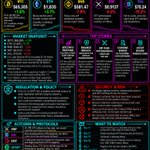


𝐇𝐲𝐩𝐞𝐫𝐍𝐞𝐰𝐬 – 𝐍𝐨𝐯𝐞𝐦𝐛𝐞𝐫 𝟏𝟗, 𝟐𝟎𝟐𝟔
Bitcoin’s rebound could not outweigh persistent outflows, tighter-rate expectations and falling stablecoin liquidity.
𝐌𝐚𝐫𝐤𝐞𝐭 𝐎𝐯𝐞𝐫𝐯𝐢𝐞𝐰
Bitcoin briefly recovered after testing $62,000, but the rebound did little to change a market still under pressure from persistent ETF withdrawals, risk aversion and the prospect of higher interest rates. U.S. spot Bitcoin ETFs recorded $306.5 million in outflows on November 18, while November withdrawals reached about $2.89 billion; the Federal Reserve minutes also showed policymakers saw further rate increases as appropriate if inflation remained high. Together, those forces kept crypto exposed to the same tighter-financial-conditions concerns weighing on other risk assets.
Anthropic’s Nasdaq debut brought a conspicuous contrast: its $83 IPO price implied a fully diluted valuation of about $1.5 trillion, and the offering drew substantial demand, yet the listing did not deliver a clear lift to crypto or technology markets. Some executives suggested investors had redirected funds toward the IPO, but analysts disputed that explanation, pointing instead to ETF selling, stablecoin redemptions and weakness in technology shares. The contraction in stablecoin supply–about $16.5 billion over a month–adds to the concern, because it suggests less readily available liquidity across crypto rather than a simple rotation between tokens.
Meanwhile, the Binance theft remained a live security and market risk: attackers moved another 137,602 ETH, worth about $248 million, even as court orders and industry efforts continued to restrict assets. Elsewhere, tokenized finance kept advancing through institutional pilots and products, but those developments stood apart from the immediate liquidity stress; adoption headlines have not yet translated into broad buying.
𝐌𝐚𝐫𝐤𝐞𝐭 𝐒𝐧𝐚𝐩𝐬𝐡𝐨𝐭
• $BTC: $61,921, -1.7%
• ETH: $1,756, -1.1%
• BNB: $579.59, -0.4%
• XRP: $0.9595, -0.8%
• SOL: $73.07, -0.7%
• Bitcoin ETF flows: U.S. spot Bitcoin ETFs recorded $306.5 million in net outflows on November 18; November withdrawals reached about $2.89 billion.
• Ethereum ETF flows: U.S. spot Ethereum ETFs saw about $39.8 million in outflows on November 18, their third consecutive negative session.
• Stablecoin liquidity: Stablecoin market capitalization fell about $16.5 billion, or more than 5%, in a month to roughly $283 billion.
• Macro: Federal Reserve minutes indicated that further rate increases could be appropriate if inflation remains high; markets largely expected a December hike.
𝐓𝐨𝐩 𝐒𝐭𝐨𝐫𝐢𝐞𝐬
𝟏. 𝐁𝐢𝐧𝐚𝐧𝐜𝐞 𝐛𝐫𝐞𝐚𝐜𝐡 𝐫𝐞𝐬𝐩𝐨𝐧𝐬𝐞 𝐞𝐱𝐩𝐚𝐧𝐝𝐬 𝐚𝐬 𝐚𝐭𝐭𝐚𝐜𝐤𝐞𝐫𝐬 𝐦𝐨𝐯𝐞 𝐦𝐨𝐫𝐞 𝐄𝐓𝐇
An Abu Dhabi court issued a worldwide asset-freezing order covering up to $6.5 billion linked to the October 29 Binance theft, and required 18 firms to maintain freezes on assets tied to the breach. The order is intended to prevent movement of the remaining funds; it does not mean those assets have been recovered.
The scale of the stolen haul is unusually broad: court documents describe 192 cryptocurrencies across 11 blockchain networks, with stablecoins accounting for at least $3.46 billion. On November 19, wallets linked to the attackers moved another 137,602 ETH, worth about $248 million, continuing a laundering effort that has crossed thousands of wallets and multiple blockchains.
Binance says about $2.85 billion has been frozen or intercepted and that it has covered affected customer assets. U.S. authorities have authorization to seize or restrain more than $1.2 billion, though that is not a completed seizure. The immediate consequence is a race to preserve traceable funds before they move beyond the reach of issuers, exchanges and courts.
𝟐. 𝐁𝐢𝐭𝐜𝐨𝐢𝐧’𝐬 𝐫𝐞𝐛𝐨𝐮𝐧𝐝 𝐫𝐮𝐧𝐬 𝐢𝐧𝐭𝐨 𝐄𝐓𝐅 𝐬𝐞𝐥𝐥𝐢𝐧𝐠 𝐚𝐧𝐝 𝐚 𝐭𝐢𝐠𝐡𝐭𝐞𝐫-𝐫𝐚𝐭𝐞 𝐨𝐮𝐭𝐥𝐨𝐨𝐤
Bitcoin bounced after briefly testing $62,000, but the recovery came as U.S. spot Bitcoin ETFs recorded $306.5 million in outflows on November 18, their largest daily withdrawal since November 6. November’s total withdrawals reached about $2.89 billion, with funds recording inflows on only two of the first 13 trading sessions.
The Federal Reserve minutes added another headwind: policymakers indicated that further increases could be warranted if inflation remains high, reinforcing expectations of tighter financial conditions. That matters for crypto because persistent ETF outflows and a stronger dollar or higher yields can reduce demand for risk-sensitive assets at the same time.
Anthropic’s IPO supplied a competing explanation for the market’s weakness, but the connection remains contested. Some industry figures argued that investors had shifted money into the listing; others pointed to stablecoin redemptions, technology-sector weakness and leveraged liquidations instead. With the price still near key support levels, the rebound has yet to establish that selling has eased.
𝟑. 𝐀𝐧𝐭𝐡𝐫𝐨𝐩𝐢𝐜’𝐬 𝐫𝐞𝐜𝐨𝐫𝐝 𝐈𝐏𝐎 𝐟𝐮𝐞𝐥𝐬 𝐭𝐨𝐤𝐞𝐧𝐢𝐳𝐞𝐝-𝐬𝐡𝐚𝐫𝐞 𝐥𝐚𝐮𝐧𝐜𝐡𝐞𝐬, 𝐧𝐨𝐭 𝐚 𝐛𝐫𝐨𝐚𝐝 𝐜𝐫𝐲𝐩𝐭𝐨 𝐫𝐚𝐥𝐥𝐲
Anthropic priced its IPO at $83 per share, above its initial range, in a transaction that raised about $81.34 billion and implied a fully diluted valuation of roughly $1.5 trillion. The company began trading on Nasdaq under the ticker ANT, drawing intense attention from investors and crypto platforms alike.
Several platforms introduced tokens linked to Anthropic shares, but the products differ in their backing and investor protections. Some provide price exposure without ownership rights, while others say they are backed by corresponding securities and cash; these tokens do not automatically confer voting rights or dividends.
The launch demonstrates the speed with which crypto platforms can package public-market exposure, but also underscores the distinction between tokenized claims and direct share ownership. It did not produce a decisive crypto-market reversal: ETF outflows and broader risk aversion continued despite the IPO’s strong demand.
𝟒. 𝐒𝐭𝐚𝐛𝐥𝐞𝐜𝐨𝐢𝐧 𝐬𝐮𝐩𝐩𝐥𝐲 𝐜𝐨𝐧𝐭𝐫𝐚𝐜𝐭𝐬 𝐚𝐬 𝐢𝐧𝐬𝐭𝐢𝐭𝐮𝐭𝐢𝐨𝐧𝐚𝐥 𝐭𝐨𝐤𝐞𝐧𝐢𝐳𝐚𝐭𝐢𝐨𝐧 𝐚𝐝𝐯𝐚𝐧𝐜𝐞𝐬
The total stablecoin market contracted by about $16.5 billion, or more than 5%, over a month to roughly $283 billion, with USDT and USDC accounting for most of the decline. The simultaneous reduction in the two largest stablecoins suggests more than a shift between issuers and may reflect redemptions or movement into assets outside crypto.
That contraction sits alongside continued institution-led tokenization. Singapore issued S$100 million in four-week tokenized bills settled using wholesale central bank digital currency, after bids exceeded twice the amount offered. The Monetary Authority of Singapore plans to broaden participation and develop the test network into an institutional settlement service.
The contrast is important: tokenized assets and settlement systems are expanding, but the broader pool of crypto-native liquidity is shrinking. Tokenization can improve how assets move without guaranteeing that investors will hold more stablecoins or buy more digital assets.
𝟓. 𝐓𝐡𝐫𝐞𝐚𝐭 𝐃𝐢𝐬𝐫𝐮𝐩𝐭𝐢𝐨𝐧 𝐂𝐞𝐧𝐭𝐞𝐫 𝐛𝐫𝐢𝐧𝐠𝐬 𝐚𝐠𝐞𝐧𝐜𝐢𝐞𝐬 𝐚𝐧𝐝 𝐜𝐫𝐲𝐩𝐭𝐨 𝐟𝐢𝐫𝐦𝐬 𝐢𝐧𝐭𝐨 𝐚𝐧𝐭𝐢-𝐬𝐜𝐚𝐦 𝐜𝐨𝐨𝐫𝐝𝐢𝐧𝐚𝐭𝐢𝐨𝐧
The U.S. launched a Threat Disruption Center to help government agencies, financial institutions and technology companies investigate online scams, trace stolen assets and, where possible, freeze payments before criminals move funds. The initiative brings together more than 30 federal agencies and over 440 state and local partners.
TRM Labs will provide the center’s investigative platform, which is designed to process complaints, connect cases and map criminal networks. The effort builds on existing law-enforcement work, including an FBI program that has alerted more than 8,000 victims and helped prevent over $500 million in losses.
The center’s promise is coordination rather than a new recovery guarantee: its effect will depend on how quickly participating organizations can act and whether funds remain traceable and accessible for freezing. That distinction matters for victims, who may otherwise be targeted again by fraudulent recovery services.
𝐑𝐞𝐠𝐮𝐥𝐚𝐭𝐢𝐨𝐧 & 𝐏𝐨𝐥𝐢𝐜𝐲
Regulatory activity focused on two practical questions: who can operate digital-asset services, and how financial institutions should manage risks as tokenized products grow. In the United States, six bipartisan senators urged the Treasury to extend safe-harbor protections to stablecoin issuers supervised by states, arguing that proposed GENIUS Act rules could push companies toward federal licenses before qualifying state frameworks are certified. Their proposal would apply protections during that transition, while leaving open whether issuers would still prefer federal oversight.
In Europe, the Commission gave Czechia and Spain two months to complete national implementation of DAC8, the crypto tax-reporting rules. If the countries do not address the Commission’s concerns, their cases could be referred to the EU’s top court. The first exchange of data covering 2026 activity is due by September 30, 2027.
Hong Kong’s securities regulator added Hyperliquid to its alert list, saying the platform may be operating or marketing services locally without authorization. The warning did not announce a ban, asset freeze or fraud allegation, but it adds jurisdictional uncertainty for platforms serving cross-border users. Taken together, these developments show regulators addressing both the perimeter of crypto services and the reporting and oversight systems around them.
𝐒𝐞𝐜𝐮𝐫𝐢𝐭𝐲 & 𝐑𝐢𝐬𝐤
The Binance theft remained the day’s largest crypto-specific security incident, with attackers moving another 137,602 ETH, worth about $248 million, across a laundering network spanning thousands of wallets and multiple blockchains. Although about $2.85 billion has been frozen or intercepted, the movement of additional funds shows how quickly the remaining assets can be redistributed.
A separate threat is the physical compromise of hardware wallets. Ledger confirmed tampered devices in several regions, with concealed components reportedly designed to capture recovery phrases during setup. Ledger advises people who bought wallets from third-party sellers in affected areas not to use suspicious devices and to contact support; its investigation has not identified a vulnerability in the secure chip or operating system.
For holders, the practical lesson is to protect the recovery phrase as carefully as the assets themselves: never enter it into a website or share it with a supposed support or recovery service. The repeated online claims promising fast or guaranteed recovery are unverified, and fraudsters may target victims a second time. Operators of BTCPay Server should also install its emergency update addressing five security flaws that could permit unauthenticated code execution on affected servers.
𝐀𝐥𝐭𝐜𝐨𝐢𝐧𝐬 & 𝐏𝐫𝐨𝐭𝐨𝐜𝐨𝐥𝐬
The day’s clearest protocol theme was the push to make tokenized finance and Bitcoin collateral usable across established blockchain systems, even as token prices remained weak. Sui launched Hashi with more than 20 custody, trading and DeFi partners, issuing hBTC on Sui against Bitcoin held on its native network. Fluid began offering stablecoin loans against hBTC, while institutional access is intended to broaden as additional custody providers join. The launch creates infrastructure for Bitcoin-backed borrowing, but previously announced capital commitments are not the same as deposits or demonstrated usage.
Solana’s tokenized-equity market reached $1.22 billion in circulating value, nearly doubling from late October as platforms expanded their stock offerings. A planned 2027 connection with the Depository Trust & Clearing Corporation could bring eligible securities closer to established market infrastructure, though the market remains small relative to traditional equities.
Other developments were at earlier stages. Solana’s Anza team outlined a 2027 roadmap to double compute capacity and reduce resource use for token-account operations, while Ethereum developers weighed compatibility risks that could delay the Glamsterdam upgrade until May 2027. These plans may improve network capacity or security, but their impact depends on delivery and adoption–not announcements alone.
𝐖𝐡𝐚𝐭 𝐭𝐨 𝐖𝐚𝐭𝐜𝐡
• November 20: Refunds and distributions are expected for eligible users in Binance Wallet’s Anthropic token offering.
• November 23: OKXICE’s tokenized-securities platform is scheduled to launch, amid objections from at least 67 publicly traded companies.
• November 25: XRP Ledger Devnet and Testnet are scheduled to reset, erasing their accounts and balances.
• November 27: The Philippines’ Retail Dollar Bond is scheduled to be issued; eligible investors can subscribe through PDAX using supported stablecoins during the offer window.
• November 30: Crypto deposits and withdrawals, and yen deposits, are scheduled to end at BITPOINT ahead of its closure.
• December 1: The Abu Dhabi court is due to consider whether to extend the freezing order related to the Binance theft and require 18 firms to transfer frozen assets.
• December 3–4: Proof of Talk’s first Gulf edition is scheduled at Louvre Abu Dhabi.
• December 4: Singapore’s four-week tokenized bills are scheduled to mature.
• December 7: H100 Group shareholders are due to consider authorization for share buybacks of up to 10%.
• December 9: Broadcom is scheduled to report its fourth-quarter and full-year results.
• December 18: A temporary U.S. license allowing eligible dealings with designated Ontario businesses is due to expire.
• December 23: SBI VC Trade plans to close BITPOINT and transfer remaining customer accounts and assets.
• December 31: Cardano’s DJED stablecoin and SHEN reserve token are scheduled to shut down; holders are advised to redeem and withdraw from liquidity and lending positions before the cutoff.
• First quarter of 2027: Binance expects to provide details on its planned expansion into five Asian markets.
• 2027: Singapore’s Monetary Authority plans to expand tokenized-bill issuance and participation in its settlement network.
Информационный материал. Не является финансовой рекомендацией.
Compiled from 293 articles reviewed for November 19, 2026. Full list at hyperaicharts.com.

1
517
𝐇𝐲𝐩𝐞𝐫𝐍𝐞𝐰𝐬 – 𝐍𝐨𝐯𝐞𝐦𝐛𝐞𝐫 𝟏𝟖, 𝟐𝟎𝟐𝟔
Bitcoin’s sharp sell-off is testing whether institutional demand can absorb persistent outflows and macro pressure.
𝐌𝐚𝐫𝐤𝐞𝐭 𝐎𝐯𝐞𝐫𝐯𝐢𝐞𝐰
Bitcoin remained under pressure as ETF withdrawals, fading demand and concerns about higher interest rates outweighed the temporary lift from Nvidia’s strong results. U.S. spot Bitcoin ETFs recorded about $240 million in net outflows on November 17, while broader analysis pointed to persistent selling, heavy liquidations and buyers’ reluctance to return at scale. Investors did absorb some of the decline: about 66,000 BTC changed hands in the $62,000–$66,000 range during two days of selling, but that accumulation does not establish a bottom. The key near-term question is whether Bitcoin can hold around $62,000 and recover toward $66,000; a break lower could renew liquidation pressure.
Nvidia’s record quarterly revenue and forecast for another strong quarter helped lift risk sentiment, but did not resolve the macro headwinds. Federal Reserve Governor Christopher Waller said persistent inflation could warrant a half-percentage-point rate increase in December, while higher yields and a stronger dollar have weighed on speculative assets. The anticipated Anthropic IPO added another point of focus for investors, though a direct shift of capital from crypto into AI stocks remains unproven.
Elsewhere, developments in stablecoin payments showed institutions continuing to build practical links between digital assets and traditional finance. The World Bank, Citi and Circle are evaluating USDC for development payments, while DBS and Circle are expanding institutional minting and redemption access in Asia. These initiatives remain early-stage, but stand in contrast to the market’s immediate caution: infrastructure is advancing even as crypto prices and flows signal weak risk appetite.
𝐌𝐚𝐫𝐤𝐞𝐭 𝐒𝐧𝐚𝐩𝐬𝐡𝐨𝐭
• $BTC: $62,997, -2.9%
• ETH: $1,775, -2.6%
• BNB: $581.95, -2.5%
• XRP: $0.9668, -1.6%
• SOL: $73.56, -2.1%
• U.S. spot Bitcoin ETFs saw about $240 million in net outflows on November 17; spot Ether ETFs also recorded withdrawals.
• U.S. spot XRP ETFs recorded $6.14 million in net outflows on November 17.
• The Altcoin Season Index stood at 47, indicating neutral conditions rather than a broad shift toward altcoins.
• Federal Reserve Governor Christopher Waller said persistent inflation may warrant a half-percentage-point rate increase in December, while markets continued to favor a smaller increase.
• Bitcoin fell below $63,000 amid renewed inflation concerns and hawkish rate commentary before recovering.
𝐓𝐨𝐩 𝐒𝐭𝐨𝐫𝐢𝐞𝐬
𝟏. 𝐁𝐢𝐭𝐜𝐨𝐢𝐧’𝐬 𝐫𝐞𝐜𝐨𝐯𝐞𝐫𝐲 𝐫𝐞𝐦𝐚𝐢𝐧𝐬 𝐟𝐫𝐚𝐠𝐢𝐥𝐞 𝐚𝐬 𝐄𝐓𝐅 𝐨𝐮𝐭𝐟𝐥𝐨𝐰𝐬 𝐚𝐧𝐝 𝐰𝐞𝐚𝐤 𝐝𝐞𝐦𝐚𝐧𝐝 𝐩𝐞𝐫𝐬𝐢𝐬𝐭
Bitcoin’s sharp decline brought it close to $62,000 before a rebound into the $64,000 range, but the recovery has not yet overcome persistent selling pressure. U.S. spot Bitcoin ETFs recorded about $240 million in net withdrawals on November 17, reversing the previous session’s inflow, while spot Ether ETFs also saw withdrawals. Glassnode and CryptoQuant identified the $62,000–$65,000 area as a potential support zone, but both the price action and demand indicators leave the risk of another test open. Investors accumulated about 66,000 BTC in the $62,000–$66,000 range during two days of heavy selling, offering evidence that buyers absorbed part of the supply without confirming a durable floor. A sustained recovery will require demand to return and Bitcoin to reclaim higher levels; if $62,000 gives way, analysts have warned that deeper support zones could come into view.
𝟐. 𝐋𝐞𝐝𝐠𝐞𝐫 𝐢𝐧𝐯𝐞𝐬𝐭𝐢𝐠𝐚𝐭𝐞𝐬 𝐬𝐮𝐬𝐩𝐞𝐜𝐭𝐞𝐝 𝐡𝐚𝐫𝐝𝐰𝐚𝐫𝐞-𝐰𝐚𝐥𝐥𝐞𝐭 𝐭𝐚𝐦𝐩𝐞𝐫𝐢𝐧𝐠 𝐢𝐧 𝐃𝐮𝐛𝐚𝐢
Ledger is investigating suspected hardware-wallet tampering after two customers in Dubai reported losing cryptocurrency from devices purchased at Virgin Megastore. The reported losses were approximately $604,000 combined, and photographs of one Ledger Flex showed an unauthorized circuit board and antenna; tampering of the second device, a Ledger Stax, has not been confirmed. Ledger has also confirmed physically modified devices in Berlin and Southeast Asia, with the modifications designed to capture recovery phrases during setup. The company says its secure chip and operating system are not compromised, but its Genuine Check cannot detect physical implants that leave the original chip intact. Ledger advises customers concerned about a device to stop using it and move funds to a new wallet without reusing the old recovery phrase or passphrase.
𝟑. 𝐖𝐨𝐫𝐥𝐝 𝐁𝐚𝐧𝐤, 𝐂𝐢𝐭𝐢 𝐚𝐧𝐝 𝐂𝐢𝐫𝐜𝐥𝐞 𝐚𝐬𝐬𝐞𝐬𝐬 𝐔𝐒𝐃𝐂 𝐟𝐨𝐫 𝐝𝐞𝐯𝐞𝐥𝐨𝐩𝐦𝐞𝐧𝐭 𝐩𝐚𝐲𝐦𝐞𝐧𝐭𝐬
The World Bank Group is working with Citi and Circle to evaluate whether regulated USDC payments can make cross-border transfers and development-fund disbursements faster, cheaper and more transparent. The initial work will focus on countries where digital assets are permitted and will explore how the system can work alongside existing banking infrastructure. The initiative builds on the World Bank’s FundsChain platform, which tracks disbursements across more than 350 projects in 96 countries. It remains exploratory: the partners have not announced a launch date, participating countries or a chosen blockchain network. The project’s significance lies less in an immediate change to payment flows than in testing whether stablecoins can be integrated into established institutional processes without displacing their banking connections.
𝟒. 𝐃𝐁𝐒 𝐚𝐧𝐝 𝐂𝐢𝐫𝐜𝐥𝐞 𝐞𝐱𝐩𝐚𝐧𝐝 𝐢𝐧𝐬𝐭𝐢𝐭𝐮𝐭𝐢𝐨𝐧𝐚𝐥 𝐚𝐜𝐜𝐞𝐬𝐬 𝐭𝐨 𝐔𝐒𝐃𝐂 𝐢𝐧 𝐀𝐬𝐢𝐚
DBS and Circle have partnered to let eligible institutional clients in Asia mint and redeem USDC directly through DBS, with settlement available around the clock. The service is intended to support liquidity management, payments and settlement without requiring clients to rely as heavily on secondary markets or traditional banking hours. The agreement builds on the companies’ participation in Singapore’s Project BLOOM, which is developing interoperability between regulated stablecoins, tokenized deposits and existing financial networks. DBS research found that 88% of large companies surveyed were using or piloting tokenized-money applications, while more than three in five had adopted or planned to adopt stablecoins. The partnership adds banking distribution to a broader stablecoin-payments push, although its full geographic coverage and commercial terms remain to be established.
𝟓. 𝐂𝐅𝐓𝐂 𝐚𝐜𝐭𝐢𝐨𝐧 𝐩𝐫𝐨𝐦𝐩𝐭𝐬 𝐊𝐚𝐥𝐬𝐡𝐢 𝐭𝐨 𝐬𝐮𝐬𝐩𝐞𝐧𝐝 𝐦𝐚𝐫𝐤𝐞𝐭𝐬 𝐨𝐧 𝐓𝐫𝐮𝐦𝐩’𝐬 𝐰𝐨𝐫𝐝𝐬
Kalshi suspended markets on specific words President Donald Trump might say in public appearances after the Commodity Futures Trading Commission restricted some contracts pending further proceedings. Regulators cited the risk that people with advance access to prepared remarks could trade on confidential information, and Kalshi’s surveillance system had reportedly flagged suspicious activity. The CFTC has not made a final determination on the legality of the contracts; Kalshi is due to submit its objections by December 11. The dispute sits within wider uncertainty over how prediction markets should be regulated, including questions about the CFTC’s authority over event contracts and the boundary with state gambling rules. The suspension makes clear that surveillance and access to non-public information are central concerns as these markets expand.
𝐑𝐞𝐠𝐮𝐥𝐚𝐭𝐢𝐨𝐧 & 𝐏𝐨𝐥𝐢𝐜𝐲
The day’s regulatory developments point toward a common challenge: digital-asset activity is expanding across financial products, while authorities are still defining who bears responsibility for controls and investor protection. The CFTC’s restrictions on Kalshi’s word-based markets show that event contracts can raise market-integrity questions when participants may have access to confidential information; the final legal status remains unresolved. Separately, four Democratic senators asked the SEC to clarify how its five-year exemption for certain tokenized-stock venues will protect investors, prevent illicit transfers and ensure identity checks, pricing transparency and retail safeguards. Their letter calls for oversight and rulemaking but does not revoke the exemption. In Hong Kong, the Monetary Authority is exploring AI tools that combine blockchain activity with conventional transaction and customer data to detect crypto-related money laundering, while also testing decentralized identity tools and planning broader licensing requirements by the end of 2026. Taken together, these efforts show regulators trying to apply existing accountability principles to systems that move assets and information across platforms and jurisdictions.
𝐒𝐞𝐜𝐮𝐫𝐢𝐭𝐲 & 𝐑𝐢𝐬𝐤
Security risks ranged from compromised third-party code to physical tampering and protocol flaws, underscoring that a familiar brand or interface does not guarantee a safe transaction. Ledger’s suspected hardware-wallet cases in Dubai, alongside confirmed physical modifications elsewhere, make supply-chain checks and careful handling of recovery phrases essential. The Optimizely breach also exposed scripts used by at least 178 organizations to malicious code that could alter cryptocurrency addresses copied to a clipboard; visitors should review transactions and update Apple devices where relevant. Separately, Paytaca reported attacks that created fraudulent P2P orders and payment requests, while saying private keys remained on users’ devices. Etherscan is investigating access attempts against its customer-support system and has urged users to avoid suspicious messages and never share private keys or recovery phrases. For Ledger customers concerned about a device, the company advises stopping use and transferring funds to a new wallet without reusing the old recovery phrase; all users should verify addresses and transaction details before approval.
𝐀𝐥𝐭𝐜𝐨𝐢𝐧𝐬 & 𝐏𝐫𝐨𝐭𝐨𝐜𝐨𝐥𝐬
Altcoin performance remained uneven, with no broad shift in leadership: the Altcoin Season Index stood at 47, indicating neutral conditions. Some networks nevertheless made structural changes that could matter beyond the immediate market. NEAR holders approved a gradual reduction in maximum annual issuance from 2.5% to 1.6%, a change expected to lower issuance once implemented while also reducing estimated gross staking yields. Monero’s planned FCMP++ privacy upgrade gained support from an audit that found no high- or medium-severity vulnerabilities and included formal proofs of key security properties, though additional review and integration work remain. PancakeSwap rebranded as Pancake as it positions itself as a multichain platform spanning swaps, perpetuals, tokenized assets and yield products, with a mobile app planned in the coming weeks. These developments emphasize a distinction in a weak market: protocol upgrades and broader product sets can improve utility, but they do not by themselves establish renewed token demand.
𝐖𝐡𝐚𝐭 𝐭𝐨 𝐖𝐚𝐭𝐜𝐡
• November 19: Anthropic shares are scheduled to begin trading on Nasdaq under the ticker ANT, following the expected IPO pricing.
• November 20: A Curve Finance governance proposal to replace its vulnerable fee burner with an auction system is scheduled to close.
• December 1: Moscow Exchange plans pilot trading in Bitcoin, Ether and USDT, subject to regulatory approval.
• December 11: Kalshi is due to submit objections to the CFTC’s restriction on certain word-based contracts.
• December 18: Coinbase plans to suspend Centrifuge (CFG) trading across Coinbase.com, Coinbase Exchange and Coinbase Prime.
• February 25, 2027: Sentencing is scheduled for former Robinhood engineer Huaisong Xiang after his guilty plea in a wire-fraud case involving confidential listing information.
Информационный материал. Не является финансовой рекомендацией.
Compiled from 302 articles reviewed for November 18, 2026. Full list at hyperaicharts.com.

2
2
706
𝐇𝐲𝐩𝐞𝐫𝐍𝐞𝐰𝐬 – 𝐍𝐨𝐯𝐞𝐦𝐛𝐞𝐫 𝟏𝟕, 𝟐𝟎𝟐𝟔
Bitcoin’s fragile rebound has yet to overcome sustained demand weakness, even as institutional crypto infrastructure continues to advance.
𝐌𝐚𝐫𝐤𝐞𝐭 𝐎𝐯𝐞𝐫𝐯𝐢𝐞𝐰
Bitcoin’s recovery from the weekend low of $62,029 left it near $64,889, but the modest daily gain did little to reverse a six-week slide driven by ETF withdrawals, deleveraging and persistent selling. U.S. spot Bitcoin ETFs did record $7.99 million of net inflows on November 16, ending a seven-session outflow streak, yet one positive session is not enough to establish that institutional demand has returned. The pressure has also reached Ether: it recovered alongside the broader market, while its ETFs continued to lose money and futures open interest fell to its lowest level since October 2024. Against that backdrop, the day’s clearest contrast was between weak asset prices and steady work on regulated digital-asset infrastructure. The CFTC approved Backpack’s exchange and clearinghouse registrations, while banks and public institutions advanced projects involving tokenized deposits and stablecoin payments. Those developments point to sustained institutional interest, but they do not offset immediate market constraints: higher-rate expectations, technology-stock volatility and thin demand continue to leave crypto exposed to further risk-off moves.
𝐌𝐚𝐫𝐤𝐞𝐭 𝐒𝐧𝐚𝐩𝐬𝐡𝐨𝐭
• $BTC: $64,889, +0.1%
• ETH: $1,823, +0.2%
• BNB: $596.85, +1.0%
• XRP: $0.9829, +3.0%
• SOL: $75.12, +5.0%
• Sentiment: Bitcoin’s retreat to $62,029 coincided with extreme fear, while leverage and futures open interest contracted as traders reduced exposure.
• Flows: U.S. spot Bitcoin ETFs recorded $7.99 million in net inflows on November 16, ending seven sessions of withdrawals; spot Ether ETFs recorded $8.31 million in net outflows.
• Macro: Expectations of a December Federal Reserve rate increase weighed on risk appetite, while higher bond yields and technology-stock weakness added to pressure on crypto. Prediction markets put the chance of a 25-basis-point hike at about 90%.
𝐓𝐨𝐩 𝐒𝐭𝐨𝐫𝐢𝐞𝐬
𝟏. 𝐁𝐢𝐭𝐜𝐨𝐢𝐧’𝐬 𝐫𝐞𝐛𝐨𝐮𝐧𝐝 𝐦𝐞𝐞𝐭𝐬 𝐚 𝐬𝐭𝐢𝐥𝐥-𝐰𝐞𝐚𝐤 𝐝𝐞𝐦𝐚𝐧𝐝 𝐛𝐚𝐜𝐤𝐝𝐫𝐨𝐩
Bitcoin fell to $62,029 on November 15, its lowest level since July, before recovering toward $64,600 and closing at $64,889. The decline followed six consecutive weekly losses, with ETF withdrawals, futures deleveraging and losses among recent buyers adding to selling pressure. U.S. spot Bitcoin ETFs then recorded $7.99 million in net inflows on November 16, ending seven sessions of outflows, but the buying was modest against recent withdrawals. Futures open interest also fell, indicating that traders had reduced positions rather than demonstrating renewed demand. Bitcoin therefore entered the day with room for a relief bounce, but its recovery remained vulnerable to further macro-driven selling.
𝟐. 𝐂𝐅𝐓𝐂 𝐚𝐩𝐩𝐫𝐨𝐯𝐚𝐥𝐬 𝐜𝐥𝐞𝐚𝐫 𝐚 𝐩𝐚𝐭𝐡 𝐟𝐨𝐫 𝐁𝐚𝐜𝐤𝐩𝐚𝐜𝐤’𝐬 𝐫𝐞𝐠𝐮𝐥𝐚𝐭𝐞𝐝 𝐝𝐞𝐫𝐢𝐯𝐚𝐭𝐢𝐯𝐞𝐬 𝐯𝐞𝐧𝐮𝐞
The CFTC approved TLD Markets, operating as Backpack Exchange, as a designated contract market on November 16, after registering Backpack Clearing as a derivatives clearing organization three days earlier. The approvals give Backpack a regulatory basis to offer derivatives, clearing and settlement using blockchain-based infrastructure. Its proposed products include perpetual futures, crypto collateral, cross-margining and round-the-clock trading, but the platform has not launched and no launch date has been announced. The CFTC says the business must meet requirements for customer protection, anti-money laundering, market surveillance and risk management. The approvals bring a potential onshore competitor into a market long dominated by offshore venues, but their significance will depend on whether Backpack launches and attracts users and liquidity.
𝟑. 𝐋𝐢𝐠𝐡𝐭𝐞𝐫 𝐫𝐞𝐬𝐮𝐦𝐞𝐬 𝐰𝐢𝐭𝐡𝐝𝐫𝐚𝐰𝐚𝐥𝐬 𝐚𝐟𝐭𝐞𝐫 𝐫𝐞𝐜𝐨𝐯𝐞𝐫𝐢𝐧𝐠 𝐟𝐮𝐧𝐝𝐬 𝐟𝐫𝐨𝐦 𝐚𝐧 𝐀𝐏𝐈-𝐤𝐞𝐲 𝐢𝐧𝐜𝐢𝐝𝐞𝐧𝐭
Lighter resumed withdrawals after its Security Council recovered approximately 5 million USDC for an affected trader. The incident began when nonce reuse in unofficial signing software exposed API private keys; Lighter said its official SDKs and its protocol and smart contracts were unaffected. Its Guardian mechanism halted withdrawals after suspicious activity, and the platform tightened transfer and signature requirements. Lighter also said a separate 10.39 million USDC withdrawal had completed before withdrawals were paused, while it pursued funds linked to another attempted withdrawal. Estimates of the overall financial impact differ, and the platform has not confirmed them. The incident highlights that security depends not only on contract code but also on how signing tools handle keys and what permissions an exposed credential can exercise.
𝟒. 𝐁𝐚𝐧𝐤𝐬 𝐚𝐧𝐝 𝐩𝐮𝐛𝐥𝐢𝐜 𝐢𝐧𝐬𝐭𝐢𝐭𝐮𝐭𝐢𝐨𝐧𝐬 𝐤𝐞𝐞𝐩 𝐛𝐮𝐢𝐥𝐝𝐢𝐧𝐠 𝐭𝐨𝐤𝐞𝐧𝐢𝐳𝐞𝐝-𝐩𝐚𝐲𝐦𝐞𝐧𝐭 𝐢𝐧𝐟𝐫𝐚𝐬𝐭𝐫𝐮𝐜𝐭𝐮𝐫𝐞
The World Bank Group said it will explore using Circle’s USDC with Citi’s banking network to make development-fund payments faster, cheaper and more transparent. The exploratory phase would initially involve countries where digital assets are permitted and supported, and builds on FundsChain, which tracks disbursements across more than 350 projects in 96 countries. Separately, Hong Kong’s monetary authority is working with SWIFT and local banks on cross-border payments using tokenized deposits, connecting SWIFT’s ledger to Project Ensemble’s settlement infrastructure. Neither initiative is a full rollout, so their practical value will depend on actual operations and the relevant legal and banking arrangements. Together, they show institutions testing blockchain-based settlement while retaining conventional controls and financial rails.
𝟓. 𝐄𝐭𝐡𝐞𝐫𝐞𝐮𝐦 𝐟𝐚𝐜𝐞𝐬 𝐩𝐫𝐞𝐬𝐬𝐮𝐫𝐞 𝐝𝐞𝐬𝐩𝐢𝐭𝐞 𝐚 𝐦𝐨𝐝𝐞𝐬𝐭 𝐫𝐞𝐜𝐨𝐯𝐞𝐫𝐲
Ether recovered from its weekend decline and was near $1,823, but the broader picture remained weak. U.S. spot Ether ETFs recorded $8.31 million in net outflows on November 16, following substantial withdrawals over the preceding sessions. Futures open interest fell to $9.12 billion, its lowest level since October 2024, reflecting reduced speculative participation. Bitmine bought another 7,653 ETH during the downturn, bringing its holdings to 6.08 million ETH, but one company’s accumulation does not establish that selling pressure has ended. With Ether still below important technical resistance and fund flows subdued, the rebound has yet to show that buyers can sustain a recovery.
𝐑𝐞𝐠𝐮𝐥𝐚𝐭𝐢𝐨𝐧 & 𝐏𝐨𝐥𝐢𝐜𝐲
The day’s regulatory developments point toward gradual integration of digital assets into established market infrastructure, alongside unresolved questions about investor protection and accountability. The CFTC’s approvals for Backpack provide a route to a regulated derivatives exchange and clearinghouse, but the venue still has to launch and demonstrate that it can meet the agency’s operating standards. In Hong Kong, Financial Secretary Paul Chan reiterated plans to introduce a bill by the end of 2026 covering digital-asset dealing, advice, management and custody. The proposed framework would regulate firms according to their services, while details such as final requirements and an effective date remain to be set. Separately, four Democratic senators asked the SEC to clarify how its innovation exemption for tokenized stocks addresses customer checks, anti-money-laundering obligations and transfers to unverified wallets. Taken together, these developments show that new products are advancing faster than settled rules for their operation and oversight.
𝐒𝐞𝐜𝐮𝐫𝐢𝐭𝐲 & 𝐑𝐢𝐬𝐤
The most direct risks for crypto users came from compromised credentials and third-party systems. Lighter’s incident involved signing software that reused cryptographic nonces and exposed API keys, while a separate report alleged unauthorized transfers from an Aster user’s API Wallet; Aster said it was investigating and advised users who suspect exposure to delete compromised API wallets. The Optimizely supply-chain attack also injected malicious scripts into websites used by 178 organizations, where code could replace copied wallet addresses and steal payment-card details. Meanwhile, a breach at Trezor delivery partner Skladon exposed personal and order details linked to about 27,000 purchases, but not wallet backups, PINs or passphrases. Users should verify wallet addresses before sending, review API permissions, update affected software and treat unexpected messages about orders or recovery services with caution.
𝐀𝐥𝐭𝐜𝐨𝐢𝐧𝐬 & 𝐏𝐫𝐨𝐭𝐨𝐜𝐨𝐥𝐬
Altcoin performance improved unevenly: XRP and Solana closed higher, but their rebounds came against broader weakness and did not establish trend reversals. XRP’s price had fallen below $1, while spot XRP ETFs recorded $19.3 million in weekly outflows, pointing to continued institutional caution. Solana’s ecosystem, by contrast, drew several institutional and product developments: the Solana Foundation acquired a majority interest in CoinGecko, while the network retired its “mainnet beta” label and introduced protocol version 1.0 as a shared coordination framework, not a chain migration or automatic upgrade. Bitwise’s long-range Solana scenarios depend heavily on future growth in tokenized equities and network activity, so they should not be confused with evidence of near-term recovery. Cardano also faces a treasury vote on a proposed 24,995,775 ADA allocation for 2027 events, with delegates weighing the programme’s scope against its cost and uncertain returns.
𝐖𝐡𝐚𝐭 𝐭𝐨 𝐖𝐚𝐭𝐜𝐡
• November 17–19: Pi Network’s Ecosystem Summit, including developer presentations, technical demonstrations and an AI-focused programme; Pi Next will be announced with a 200,000 USDT hackathon prize pool.
• November 19: Ethereum developers are scheduled to discuss findings about possible Glamsterdam compatibility problems involving EIP-8037 and EIP-8038.
• November 19: Anthropic is expected to list on Nasdaq; its indicative IPO price range is $70–$78 per share.
• December 15: The CFTC will hold a public roundtable on the readiness of derivatives markets for 24/7 trading.
• December 20: Voting on the Cardano Foundation’s proposed 2027 treasury funding is scheduled to expire.
• February 25, 2027: Huaisong Xiang is scheduled to be sentenced after pleading guilty to wire fraud involving trades on Hyperliquid.
• Q1 2027: Akash plans a certified-participant pilot for its proposed GPU-capacity futures market.
• Q2 2027: Akash plans a broader launch of Akash Forwards, contingent on the pilot and market readiness.
Информационный материал. Не является финансовой рекомендацией.
Compiled from 331 articles reviewed for November 17, 2026. Full list at hyperaicharts.com.

1
481
𝐇𝐲𝐩𝐞𝐫𝐍𝐞𝐰𝐬 – 𝐍𝐨𝐯𝐞𝐦𝐛𝐞𝐫 𝟏𝟔, 𝟐𝟎𝟐𝟔
Bitcoin’s fragile rebound kept crypto risk appetite under pressure as outflows, liquidations and macro uncertainty converged.
𝐌𝐚𝐫𝐤𝐞𝐭 𝐎𝐯𝐞𝐫𝐯𝐢𝐞𝐰
Bitcoin recovered toward $65,000 after briefly falling near $62,000 over the weekend, but the bounce did little to ease a market still strained by heavy selling and weak spot demand. The decline triggered roughly $2 billion in crypto liquidations, mostly from leveraged long positions, while US spot Bitcoin ETFs recorded about $1.91 billion in net outflows over seven trading sessions. Falling open interest and briefly negative funding rates suggest leverage has been reduced, but neither confirms that a durable bottom is in place; options traders are still positioning around $60,000, and analysts continue to flag support near $62,000.
The pressure was broader than Bitcoin. Ether remained well below $2,000 after heavy liquidations, and Solana’s six-week run of ETF outflows has accompanied a steep price decline. Against that backdrop, markets face a dense set of external catalysts: US retail-sales data, Federal Reserve minutes, Nvidia’s earnings and Anthropic’s planned IPO could all shift expectations for interest rates, AI investment and risk appetite.
At the same time, digital-asset infrastructure continued to develop beyond speculative trading. Banks launched a cross-border tokenized-deposit service, while central banks tested ways to settle foreign exchange across separate digital systems. Those advances show institutional experimentation continuing even as market liquidity and investor confidence weaken.
𝐌𝐚𝐫𝐤𝐞𝐭 𝐒𝐧𝐚𝐩𝐬𝐡𝐨𝐭
• $BTC: $64,841, -0.7%
• ETH: $1,835, +3.7%
• BNB: $590.80, -0.9%
• XRP: $0.9741, +6.6%
• SOL: $71.52, -1.6%
• US spot Bitcoin ETFs recorded about $1.91 billion in net outflows over seven sessions; one five-session measure put outflows at $1.065 billion.
• The Crypto Fear and Greed Index fell to 10, its lowest reading in the period described.
• The weekend sell-off triggered roughly $2 billion in crypto liquidations, mostly from bullish positions; the latest 24-hour total eased to about $243 million.
• US October retail-sales data is due November 17; Federal Reserve meeting minutes are scheduled for November 18.
𝐓𝐨𝐩 𝐒𝐭𝐨𝐫𝐢𝐞𝐬
𝟏. 𝐁𝐢𝐭𝐜𝐨𝐢𝐧’𝐬 𝐫𝐞𝐛𝐨𝐮𝐧𝐝 𝐟𝐚𝐜𝐞𝐬 𝐰𝐞𝐚𝐤 𝐝𝐞𝐦𝐚𝐧𝐝 𝐚𝐧𝐝 𝐚 𝐜𝐫𝐨𝐰𝐝𝐞𝐝 𝐜𝐚𝐭𝐚𝐥𝐲𝐬𝐭 𝐜𝐚𝐥𝐞𝐧𝐝𝐚𝐫
Bitcoin bounced from a weekend low near $62,000 to around $64,000–$65,000, but it remains sharply lower over the week and below key moving averages. The sell-off triggered about $2 billion in crypto liquidations, while US spot Bitcoin ETFs saw roughly $1.91 billion in outflows across seven sessions, leaving spot demand a central concern.
The reduction in open interest and a brief turn to negative funding rates suggest some leveraged positions have been cleared, which may reduce the risk of another immediate liquidation cascade. But options traders have built their largest open-interest position around $60,000 puts, and analysts still identify $62,000 as a critical near-term level.
That leaves the market vulnerable to the week’s economic and corporate news. Retail sales and Federal Reserve minutes could influence rate expectations, while Nvidia’s earnings and Anthropic’s planned IPO may affect views on AI spending and the competition for investor capital. None determines Bitcoin’s direction on its own, but together they raise the stakes for a market whose recovery has yet to show convincing spot buying.
𝟐. 𝐋𝐢𝐠𝐡𝐭𝐞𝐫 𝐬𝐮𝐬𝐩𝐞𝐧𝐝𝐬 𝐰𝐢𝐭𝐡𝐝𝐫𝐚𝐰𝐚𝐥𝐬 𝐚𝐟𝐭𝐞𝐫 𝐬𝐮𝐬𝐩𝐞𝐜𝐭𝐞𝐝 $𝟏𝟓.𝟓 𝐦𝐢𝐥𝐥𝐢𝐨𝐧 𝐛𝐫𝐞𝐚𝐜𝐡
Decentralized derivatives platform Lighter suspended withdrawals and new liquidity-pool creation while investigating a suspected compromise involving API keys linked to two market-maker accounts. On-chain researchers estimated that about $15.5 million in USDC was taken, though Lighter had not confirmed the final loss or the suspected cause.
The reported activity included a $10.39 million USDC withdrawal, with funds quickly converted to Ether and dispersed among wallets. Lighter said its core protocol and smart contracts were not compromised, activated Guardian mode and began preparing security upgrades while prioritizing fund recovery and the restoration of withdrawals.
The distinction between a protocol exploit and compromised trading credentials matters, but it does not remove users’ exposure while access is restricted. The incident adds to a day of attacks and security concerns across crypto infrastructure, and Lighter’s service will remain under scrutiny until it clarifies the incident and resumes normal operations.
𝟑. 𝐄𝐭𝐡𝐞𝐫𝐞𝐮𝐦’𝐬 𝐬𝐜𝐚𝐥𝐢𝐧𝐠 𝐚𝐧𝐝 𝐪𝐮𝐚𝐧𝐭𝐮𝐦-𝐬𝐞𝐜𝐮𝐫𝐢𝐭𝐲 𝐩𝐫𝐨𝐩𝐨𝐬𝐚𝐥𝐬 𝐫𝐞𝐦𝐚𝐢𝐧 𝐮𝐧𝐝𝐞𝐫 𝐫𝐞𝐯𝐢𝐞𝐰
Vitalik Buterin backed EIP-8037, a proposal to raise gas costs for creating accounts, storage and contracts as a way to account for the long-term burden of blockchain data. The proposal also includes a gas reservoir intended to support large contract deployments, but developers are assessing compatibility risks for applications built around current gas rules.
That review has delayed Glamsterdam testing, with the Ethereum Foundation scheduled to consider audit findings and possible changes on November 19; no new Hoodi activation date has been announced.
Separately, Buterin endorsed leanPCS, a draft approach linked to EIP-8288 that could aggregate large signatures and proofs into more compact data for verification. The proposal is still under development, with no confirmed mainnet launch date. Taken together, the work shows Ethereum balancing capacity and long-term cryptographic readiness against the practical risk of disrupting existing applications.
𝟒. 𝐁𝐚𝐧𝐤𝐬 𝐚𝐧𝐝 𝐜𝐞𝐧𝐭𝐫𝐚𝐥 𝐛𝐚𝐧𝐤𝐬 𝐭𝐞𝐬𝐭 𝐭𝐨𝐤𝐞𝐧𝐢𝐳𝐞𝐝 𝐬𝐞𝐭𝐭𝐥𝐞𝐦𝐞𝐧𝐭 𝐚𝐜𝐫𝐨𝐬𝐬 𝐧𝐞𝐭𝐰𝐨𝐫𝐤𝐬
DBS and J.P. Morgan’s Kinexys launched a service for eligible institutional clients to transfer tokenized US dollar deposits between permissioned blockchain networks in Singapore and the United States. Partior coordinates settlement, and Ant International is the first customer, using the service for treasury and liquidity management. The transfers involve bank deposits, not freely circulating stablecoins or retail crypto.
Separately, Singapore’s Monetary Authority and the Deutsche Bundesbank completed Project Simbolon, a controlled test of euro–Singapore dollar settlement using wholesale central bank digital currencies on separate systems. Payment-versus-payment settlement and zero-knowledge proofs let each system verify settlement conditions without directly connecting the central banks’ ledgers.
Neither development establishes broad adoption: Simbolon remains a trial, and wider use would require further work on legal, regulatory and operational arrangements. Still, the projects point to a common institutional priority–making tokenized money and conventional financial infrastructure interoperate without requiring one shared ledger.
𝟓. 𝐓𝐫𝐞𝐳𝐨𝐫 𝐰𝐚𝐫𝐧𝐬 𝐜𝐮𝐬𝐭𝐨𝐦𝐞𝐫𝐬 𝐚𝐟𝐭𝐞𝐫 𝐡𝐚𝐫𝐝𝐰𝐚𝐫𝐞 𝐚𝐧𝐝 𝐬𝐡𝐢𝐩𝐩𝐢𝐧𝐠-𝐩𝐚𝐫𝐭𝐧𝐞𝐫 𝐢𝐧𝐜𝐢𝐝𝐞𝐧𝐭𝐬
Trezor identified physical implants in three Safe 5 wallets sold by former authorized reseller CryptoBilis. The modifications copied recovery words and displayed passphrases, then attempted to send the information over a mobile network. Trezor said the devices’ firmware and Secure Element remained intact and reported no implant-related losses at the time of its update.
Firmware version 2.13.1 blocks the identified implants from capturing information, but cannot protect recovery words copied before installation. Trezor advised affected users to create a new wallet with new recovery information and transfer their funds; restoring an old backup on a replacement device is not enough.
Separately, a breach at shipping partner Skladon may have exposed personal and purchase details linked to about 27,000 orders. Trezor said wallet backups, PINs and passphrases were not exposed, but warned that customer information could enable targeted scams. The incidents underline that wallet security also depends on device sourcing and the handling of customer data, not just on-chain safeguards.
𝐑𝐞𝐠𝐮𝐥𝐚𝐭𝐢𝐨𝐧 & 𝐏𝐨𝐥𝐢𝐜𝐲
The US Supreme Court declined to hear Custodia Bank’s appeal, leaving in place a ruling that regional Federal Reserve banks may deny master-account applications from otherwise eligible institutions. That leaves crypto-focused banks without a guarantee of direct access to Federal Reserve payment systems, although Kraken Financial’s restricted, one-year account provides a limited alternative.
In Brazil, regulators are drawing a line between using virtual assets behind the scenes for regulated cross-border settlement and allowing customers to use stablecoins as the transfer product itself. Rules effective October 1 restrict regulated eFX providers from settling overseas payments with virtual assets, while separate permissions for authorized virtual-asset providers remain subject to their own conditions.
Germany’s Bundestag approved a measure allowing customs authorities to temporarily seize cryptocurrency and other assets when their origins are in doubt, even without a criminal investigation; further approval is still required. In the United States, a November 19 Senate Banking Committee hearing for SEC nominees will offer a chance to assess their views on crypto-related issues, but it does not itself change existing laws or settle the stalled CLARITY Act. The developments reflect continued regulatory activity, but through separate processes rather than a single shift in policy.
𝐒𝐞𝐜𝐮𝐫𝐢𝐭𝐲 & 𝐑𝐢𝐬𝐤
The day’s incidents show how vulnerabilities can emerge at different layers of the crypto stack. Attackers redirected mining work through Luxor’s Commander management software, Lighter suspended withdrawals after a suspected compromise of market-maker API credentials, and Trezor flagged physically modified hardware sold through a former reseller. Separately, a Safe multisig wallet reportedly lost funds through permissions configured in a third-party module.
The response depends on the exposure: Trezor says anyone who used an affected device should move funds to a wallet with new recovery information, while customers of services under investigation should follow official updates rather than rely on unsolicited messages. Keep recovery phrases and passphrases private, scrutinize wallet approvals and API access, and treat offers to recover stolen funds with caution; the reported recovery-service testimonials circulating online are unverified.
𝐀𝐥𝐭𝐜𝐨𝐢𝐧𝐬 & 𝐏𝐫𝐨𝐭𝐨𝐜𝐨𝐥𝐬
Altcoins broadly remained exposed to the market downturn, but several ecosystem developments continued. Solana’s “mainnet-beta” label was replaced with Solana 1.0, a shared protocol version intended to help validator operators track compatibility; it does not change balances, wallets or transaction history. The relabeling arrives as SOL faces weak market conditions and a sixth consecutive week of US spot ETF withdrawals, so it should not be mistaken for a catalyst that reverses the trend.
On Ethereum, Buterin’s support for leanPCS and EIP-8037 points to work on proof aggregation, quantum-resistant cryptography and the long-term cost of data storage, but both proposals remain subject to development and compatibility review.
Elsewhere, Cardano delegates rejected Toto Finance’s request for 22 million ADA to buy and tokenize physical copper, citing concerns about public funds, fees and safeguards; no treasury funds were withdrawn. Toss also plans a non-custodial wallet offering USDT, USDC and ether to its existing app users, expanding stablecoin access without yet introducing merchant payments or token purchases with Korean won. These moves reflect a divide between testing new use cases and demanding clearer protections before public funds or mainstream users are put at risk.
𝐖𝐡𝐚𝐭 𝐭𝐨 𝐖𝐚𝐭𝐜𝐡
• November 17: US October retail-sales data.
• November 18: Federal Reserve October meeting minutes.
• November 19: Senate Banking Committee hearing for SEC nominees Steven Levine and Kristin Johnson.
• November 19: Ethereum Foundation review of EIP-8037 audit findings and possible changes.
• November 19: Anthropic is scheduled to begin Nasdaq trading; pricing is expected Wednesday.
• November 26: Thailand’s SEC consultation on proposed stablecoin-transfer rules closes.
• November 30: Hearing expected in Louisiana’s prediction-markets dispute; the federal case may proceed separately.
• November 30: Strategy is due to be removed from MSCI global equity indexes after market close.
• December 31: MoneyGram’s promotion waiving qualifying Solana USDC cash-out fees ends.
• May 31, 2027: Deadline for eligible Brazilian eFX businesses to obtain the required authorization.
• First quarter of 2027: Kazakhstan plans a separate tokenized government-bond issuance.
• Second half of 2027: DTCC plans to connect its securities-tokenization service to Solana.
Информационный материал. Не является финансовой рекомендацией.
Compiled from 291 articles reviewed for November 16, 2026. Full list at hyperaicharts.com.

2
835
𝐇𝐲𝐩𝐞𝐫𝐍𝐞𝐰𝐬 – 𝐍𝐨𝐯𝐞𝐦𝐛𝐞𝐫 𝟏𝟓, 𝟐𝟎𝟐𝟔
Bitcoin’s sharp selloff exposed how weak ETF demand and contracting liquidity are leaving the market vulnerable to forced selling.
𝐌𝐚𝐫𝐤𝐞𝐭 𝐎𝐯𝐞𝐫𝐯𝐢𝐞𝐰
Bitcoin’s rebound above $65,000 after touching a four-month low near $62,000 offered relief, but the week’s damage reflected more than a brief bout of volatility. U.S. spot Bitcoin ETFs shed $1.91 billion over seven trading sessions, while nearly $2 billion in crypto positions were liquidated in 24 hours, mostly leveraged longs; together, those pressures left few signs that buyers had returned in force. Higher-than-expected U.S. inflation and shifting rate expectations compounded the strain, while technology-sector weakness and speculation about capital being reserved for Anthropic’s planned IPO added possible, though unconfirmed, explanations for selling.
Liquidity also appeared to be shrinking beyond ETF flows: major stablecoin supply fell by $11.5 billion over 30 days in one estimate, while Circle’s USDC supply declined by roughly $1.3 billion in the seven days ending November 12. The strain spread across major tokens, with Ether, XRP and Solana all facing sharp declines, and XRP ETFs recording weekly withdrawals after months of accumulated inflows failed to prevent a steep price fall. At the same time, the Binance breach remained a reminder that market infrastructure carries risks beyond price action: reimbursement and asset freezes do not erase questions about how exposed systems kept moving funds. Bitcoin’s recovery therefore looks like a pause in a liquidity-driven selloff, not confirmation that the market has found a floor.
𝐌𝐚𝐫𝐤𝐞𝐭 𝐒𝐧𝐚𝐩𝐬𝐡𝐨𝐭
• $BTC: $65,305, +1.8%
• ETH: $1,835, +3.7%
• BNB: $581.47, -7.8%
• XRP: $0.9137, -9.6%
• SOL: $70.24, -10.2%
• U.S. spot Bitcoin ETFs recorded $1.91 billion in net outflows over seven trading sessions; the reported two-week total reached $2.35 billion.
• The Fear & Greed Index fell to 10, indicating extreme fear.
• Circle redeemed about 12.1 billion USDC and issued 10.8 billion in the seven days ending November 12, reducing circulating supply by roughly 1.3 billion to 67.9 billion.
• U.S. inflation came in hotter than expected, strengthening concerns about interest rates and risk appetite.
𝐓𝐨𝐩 𝐒𝐭𝐨𝐫𝐢𝐞𝐬
𝟏. 𝐁𝐢𝐭𝐜𝐨𝐢𝐧’𝐬 𝐫𝐞𝐛𝐨𝐮𝐧𝐝 𝐟𝐨𝐥𝐥𝐨𝐰𝐬 𝐚 𝐬𝐭𝐞𝐞𝐩, 𝐟𝐥𝐨𝐰-𝐝𝐫𝐢𝐯𝐞𝐧 𝐬𝐞𝐥𝐥𝐨𝐟𝐟
Bitcoin fell to about $62,000 on November 15 before recovering above $65,000, but remained nearly 15% lower for the week. The decline coincided with $1.91 billion in net outflows from U.S. spot Bitcoin ETFs over seven trading sessions and about $750 million in Bitcoin liquidations, within nearly $2 billion in crypto liquidations over 24 hours. Higher-than-expected U.S. inflation and shifting expectations for interest rates added pressure, while weak technology stocks contributed to the risk-off mood. Some market participants also pointed to possible cash-raising ahead of Anthropic’s planned IPO, but the effect of that speculation has not been established. The sharp bounce from the low is not, on its own, evidence that selling has ended: Bitcoin remains below key resistance, while analysts continue to watch whether ETF withdrawals ease and spot demand returns.
𝟐. 𝐁𝐢𝐧𝐚𝐧𝐜𝐞 𝐛𝐫𝐞𝐚𝐜𝐡 𝐡𝐢𝐠𝐡𝐥𝐢𝐠𝐡𝐭𝐬 𝐭𝐡𝐞 𝐥𝐢𝐦𝐢𝐭𝐬 𝐨𝐟 𝐫𝐞𝐢𝐦𝐛𝐮𝐫𝐬𝐞𝐦𝐞𝐧𝐭 𝐚𝐟𝐭𝐞𝐫 𝐚 𝐜𝐨𝐦𝐩𝐫𝐨𝐦𝐢𝐬𝐞
Attackers compromised Binance’s wallet-signing infrastructure after a months-long campaign, then used it to authorize transfers and grant malicious execution rights over an Ethereum hot wallet. Suspending withdrawals and hot-wallet services could not revoke permissions already recorded on-chain, and a deposit-consolidation system reportedly continued sending funds to a compromised wallet. Binance coordinated asset freezes and said it had replenished about 98% of affected holdings, while U.S. authorities separately obtained court approval to seize or restrain more than $1.2 billion in cryptocurrency linked to the broader Binance hack. Those steps address recovery, but do not resolve the operational question raised by the incident: how quickly can an exchange stop internal transfers and revoke dangerous permissions when its normal signing systems are compromised? The case strengthens the argument for independently tested emergency procedures rather than relying on reimbursement after losses occur.
𝟑. 𝐗𝐑𝐏 𝐟𝐮𝐧𝐝 𝐰𝐢𝐭𝐡𝐝𝐫𝐚𝐰𝐚𝐥𝐬 𝐮𝐧𝐝𝐞𝐫𝐥𝐢𝐧𝐞 𝐭𝐡𝐞 𝐠𝐚𝐩 𝐛𝐞𝐭𝐰𝐞𝐞𝐧 𝐢𝐧𝐬𝐭𝐢𝐭𝐮𝐭𝐢𝐨𝐧𝐚𝐥 𝐚𝐜𝐜𝐞𝐬𝐬 𝐚𝐧𝐝 𝐭𝐨𝐤𝐞𝐧 𝐝𝐞𝐦𝐚𝐧𝐝
U.S. spot XRP ETFs passed their first year with about $1.79 billion in net inflows and 1.16 billion XRP accumulated, yet the token fell from around $2.30–$2.40 at the first fund’s launch to about $0.90 a year later. The holdings represent less than 1.6% of circulating supply, and recent inflows have weakened. That gap became more visible during the latest selloff: XRP funds recorded about $19.13 million in net withdrawals for the week ending November 13, their largest weekly outflow in about eight months. XRP briefly touched about $0.89 on November 15 before recovering toward $0.95, while leveraged positions also came under pressure. ETF access has made XRP more available to institutional investors, but the year’s price performance shows that access alone cannot offset broad market selling or guarantee sustained demand for the token.
𝟒. 𝐂𝐨𝐢𝐧𝐨𝐧𝐞 𝐰𝐚𝐫𝐧𝐬 𝐨𝐟 𝐜𝐮𝐬𝐭𝐨𝐦𝐞𝐫-𝐝𝐚𝐭𝐚 𝐞𝐱𝐩𝐨𝐬𝐮𝐫𝐞 𝐚𝐭 𝐨𝐮𝐭𝐬𝐨𝐮𝐫𝐜𝐞𝐝 𝐬𝐮𝐩𝐩𝐨𝐫𝐭 𝐩𝐫𝐨𝐯𝐢𝐝𝐞𝐫
South Korean exchange Coinone warned that attackers accessed servers at its outsourced customer-support provider, MetaM, potentially exposing information shared during customer-service interactions. The potentially affected data includes names, contact details, birth dates, bank and wallet addresses, passwords, national identification numbers and transaction IDs; the number of affected customers is unknown. Coinone said its trading, account and wallet systems are separate from MetaM’s and reported no evidence that those systems were compromised. It advised customers who shared passwords with support to change them and warned that attackers could use conversation details to impersonate the exchange. The incident shows why a security boundary around core exchange systems is not enough: information held by a support contractor can still make phishing and identity theft more convincing.
𝟓. 𝐬𝐭𝐔𝐒𝐃𝐓 𝐛𝐞𝐠𝐢𝐧𝐬 𝐰𝐢𝐧𝐝𝐢𝐧𝐠 𝐝𝐨𝐰𝐧 𝐚𝐬 𝐡𝐨𝐥𝐝𝐞𝐫𝐬 𝐟𝐚𝐜𝐞 𝐚 𝐫𝐞𝐝𝐞𝐦𝐩𝐭𝐢𝐨𝐧 𝐝𝐞𝐚𝐝𝐥𝐢𝐧𝐞
RWA protocol stUSDT is winding down, with interest accrual ended and holders of stUSDT and wstUSDT able to redeem through the official portal until May 14, 2027. Later requests will be processed monthly through August, while the team said the underlying assets remain fully backed but gave no reason for the shutdown. The project’s total value locked has fallen to about $8.6 million, from roughly $60 million a year earlier and a peak of about $2.3 billion. JustLend DAO is also phasing out supply and borrowing for wstUSDT. The closure makes the redemption timetable the immediate operational concern for holders, while the collapse in deposits illustrates how quickly confidence and activity can recede from a tokenized-asset project.
𝐑𝐞𝐠𝐮𝐥𝐚𝐭𝐢𝐨𝐧 & 𝐏𝐨𝐥𝐢𝐜𝐲
The U.S. crypto policy picture remains unsettled: the CLARITY Act is stalled after failing to advance in the Senate, and industry leaders expect little chance of major legislation before Congress adjourns. A procedural motion could return the bill for consideration, but no new vote is assured; lawmakers may instead find narrower agreements on crypto taxes, stablecoin yields and safeguards against illicit finance. Meanwhile, the CFTC and Justice Department are suing Louisiana over prediction markets, arguing that federal derivatives law overrides state gambling restrictions, while Louisiana Attorney General Liz Murrill says states have long regulated gambling. In Germany, the Bundestag approved legislation that would let customs investigate and temporarily secure certain assets, including cryptocurrency, when there are specific grounds to suspect unlawful origins; the bill still requires Bundesrat approval before its planned January 1, 2027 implementation. Together, these developments point to a patchwork of contested authority and targeted enforcement rather than a settled, comprehensive framework for digital assets.
𝐒𝐞𝐜𝐮𝐫𝐢𝐭𝐲 & 𝐑𝐢𝐬𝐤
The day’s incidents span exchange signing systems, outsourced customer support and DeFi lending, showing that risks often concentrate in the services and controls around a blockchain rather than in the chain itself. Coinone said its core trading and wallet systems showed no evidence of direct intrusion after a breach at its support contractor, but exposed customer details could still aid impersonation and phishing. In the Binance case, attackers exploited signing infrastructure and reportedly continued sweeping deposits even after services were suspended, underscoring the need for emergency procedures that can halt internal transfers and revoke on-chain permissions. Separately, Kava Lend lost about 55.2 million KAVA after a software error dramatically overstated collateral in a nearly inactive BUSD market; the protocol had not yet published a full post-mortem or recovery plan. Holders should treat unsolicited recovery offers, requests for credentials and unexpected transfer instructions with caution, and use independent channels to verify any security communication.
𝐀𝐥𝐭𝐜𝐨𝐢𝐧𝐬 & 𝐏𝐫𝐨𝐭𝐨𝐜𝐨𝐥𝐬
Altcoin weakness largely followed the broader market’s loss of liquidity, but several developments showed that project progress and token performance can move in opposite directions. XRP’s first year of U.S. spot ETFs brought about $1.79 billion in net inflows and 1.16 billion XRP accumulated, yet the token still fell sharply and weekly fund flows turned negative. Solana’s ecosystem continued to present new work at Breakpoint, including private AI infrastructure and the Alpenglow upgrade, while SOL fell to a late-June low amid weak ETF demand and liquidations. Polkadot’s community approved a pivot toward consumer apps and digital payments with 97% support in a November 11 governance vote; dotUSD is the first planned dotStables token, intended to track the U.S. dollar. By contrast, stUSDT’s wind-down sets a redemption deadline for holders after its TVL fell to about $8.6 million, while Kava Lend’s exploit demonstrated how a dormant market can still become a critical protocol risk. Across these cases, token prices, governance decisions and usable infrastructure remain distinct measures of project health.
𝐖𝐡𝐚𝐭 𝐭𝐨 𝐖𝐚𝐭𝐜𝐡
• November 17: A court hearing is scheduled on a possible serious crime prevention order against Robert Barr, who was sentenced for directing a cryptocurrency theft attempt.
• November 17: Nvidia earnings are being watched for signals about AI financing and market sentiment.
• November 19: Anthropic is scheduled for a Nasdaq debut; speculation that investors are raising cash ahead of the listing remains unconfirmed as a driver of crypto selling.
• November 30: MSCI will remove Strategy from its indexes after the market closes, a decision that could prompt estimated share sales of $2 billion to $3 billion by passive funds.
• December 1: Ripple’s next scheduled escrow release will make one billion XRP eligible for release.
• May 14, 2027: The official redemption portal is scheduled to close for stUSDT and wstUSDT holders; later requests will be processed monthly through August.
• January 1, 2027: Germany’s asset-investigation legislation is planned to take effect, subject to Bundesrat approval.
Информационный материал. Не является финансовой рекомендацией.
Compiled from 112 articles reviewed for November 15, 2026. Full list at hyperaicharts.com.

2
2
640
𝐇𝐲𝐩𝐞𝐫𝐍𝐞𝐰𝐬 – 𝐍𝐨𝐯𝐞𝐦𝐛𝐞𝐫 𝟏𝟒, 𝟐𝟎𝟐𝟔
Bitcoin’s sharp sell-off, amplified by ETF withdrawals and leveraged liquidations, left digital assets in broad risk-off mode.
𝐌𝐚𝐫𝐤𝐞𝐭 𝐎𝐯𝐞𝐫𝐯𝐢𝐞𝐰
Bitcoin’s slide below $70,000 set the tone for a market-wide retreat, as inflation concerns and rising bond yields weakened appetite for risk while sustained ETF withdrawals and forced liquidations added crypto-specific pressure. U.S. spot Bitcoin funds lost $1.065 billion during the week of Nov. 9–13, and liquidations compounded the decline; across the broader crypto market, 42 of 44 monitored tokens fell. The selling was not confined to Bitcoin: Ether funds also recorded substantial outflows, and Solana’s sharper drop pulled the major-coin complex lower. Oversold readings across several assets have prompted talk of possible relief rallies, but they have not confirmed that a low is in. Meanwhile, Bitcoin’s brief dip below its 200-week moving average remains unconfirmed on the weekly chart, while near-term support levels are being watched closely. Against this market backdrop, an implanted-wallet discovery at Trezor and warnings about malware delivered through familiar software and communication channels underscored that security risks persist even as prices fall. Policy developments offered a different thread: federal authorities are pursuing a national framework for crypto derivatives, while regulators abroad are proposing tighter stablecoin and transfer controls.
𝐌𝐚𝐫𝐤𝐞𝐭 𝐒𝐧𝐚𝐩𝐬𝐡𝐨𝐭
• $BTC: $68,314, -4.3%
• ETH: $1,932, -4.2%
• BNB: $630.70, -3.9%
• XRP: $1.01, -2.8%
• SOL: $70.24, -10.2%
• U.S. spot Bitcoin ETFs recorded $1.065 billion in net outflows during Nov. 9–13; BlackRock’s IBIT accounted for about 85% of the total.
• U.S. crypto ETFs tracking Bitcoin, Ethereum, Solana, Zcash and Hyperliquid lost a combined $1.53 billion during the week.
• Nearly $700 million in leveraged positions were liquidated over a 24-hour period amid the weekend market decline.
• The New York Fed’s survey found 87% of 23 market contacts cited AI as the leading risk to U.S. financial stability, up from 50% in spring 2026; stablecoin market capitalization remained near $310 billion.
𝐓𝐨𝐩 𝐒𝐭𝐨𝐫𝐢𝐞𝐬
𝟏. 𝐓𝐫𝐞𝐳𝐨𝐫 𝐟𝐢𝐧𝐝𝐬 𝐫𝐞𝐜𝐨𝐯𝐞𝐫𝐲-𝐩𝐡𝐫𝐚𝐬𝐞-𝐬𝐭𝐞𝐚𝐥𝐢𝐧𝐠 𝐢𝐦𝐩𝐥𝐚𝐧𝐭𝐬 𝐢𝐧 𝐭𝐡𝐫𝐞𝐞 𝐒𝐚𝐟𝐞 𝟓 𝐰𝐚𝐥𝐥𝐞𝐭𝐬
Trezor confirmed hidden circuitry in three Safe 5 wallets sold through former Southeast Asian reseller CryptoBilis between August and September 2026. The implants captured recovery words and passphrases displayed during setup or recovery, then transmitted the data to an attacker-controlled server. They did not alter the wallet firmware or compromise its Secure Element, and no customer losses have been confirmed. Firmware 2.13.1 blocks the identified implants by changing how the device communicates with its screen, but it cannot protect phrases that may already have been captured. Customers who initialized an affected device should create a new wallet with a completely new recovery phrase and move their funds; transferring the old phrase to another device does not remove the risk. Trezor is offering eligible customers replacements or refunds through official support and says buyers should keep their devices and never share recovery phrases with anyone offering help.
𝟐. 𝐁𝐢𝐭𝐜𝐨𝐢𝐧’𝐬 𝐬𝐞𝐥𝐥-𝐨𝐟𝐟 𝐝𝐞𝐞𝐩𝐞𝐧𝐬 𝐚𝐬 𝐄𝐓𝐅 𝐰𝐢𝐭𝐡𝐝𝐫𝐚𝐰𝐚𝐥𝐬 𝐚𝐧𝐝 𝐥𝐢𝐪𝐮𝐢𝐝𝐚𝐭𝐢𝐨𝐧𝐬 𝐫𝐞𝐢𝐧𝐟𝐨𝐫𝐜𝐞 𝐫𝐢𝐬𝐤 𝐚𝐯𝐞𝐫𝐬𝐢𝐨𝐧
Bitcoin fell below $67,000 during a broad sell-off, with 42 of 44 monitored tokens declining and no single clear catalyst identified. U.S. spot Bitcoin ETFs lost $1.065 billion in the week of Nov. 9–13, while withdrawals across Bitcoin, Ether and other tracked crypto funds reached about $1.53 billion. Liquidations added to the pressure: nearly $700 million in leveraged positions were wiped out in a 24-hour period, and one account put the total at $1.47 billion during a preceding 24-hour window. The reported liquidation figures cover different periods, but both reflect how forced selling magnified the move. Oversold momentum readings have raised the possibility of a bounce, yet analysts cautioned that they do not establish a bottom; Bitcoin’s weekly break below its 200-week moving average was also not confirmed by a closed weekly candle.
𝟑. 𝐓𝐡𝐚𝐢𝐥𝐚𝐧𝐝 𝐩𝐫𝐨𝐩𝐨𝐬𝐞𝐬 𝐭𝐢𝐠𝐡𝐭𝐞𝐫 𝐬𝐭𝐚𝐛𝐥𝐞𝐜𝐨𝐢𝐧 𝐭𝐫𝐚𝐧𝐬𝐟𝐞𝐫 𝐥𝐢𝐦𝐢𝐭𝐬 𝐚𝐧𝐝 𝐦𝐚𝐫𝐤𝐞𝐭 𝐜𝐨𝐧𝐭𝐫𝐨𝐥𝐬
Thailand’s Securities and Exchange Commission proposed capping incoming and outgoing stablecoin transfers at 5 million baht per customer per day at each regulated operator. The draft would also expect transfers to match customers’ declared income and financial circumstances, while exempting transfers between a customer’s own verified accounts at two supervised operators if both follow the Travel Rule. Proposed requirements include stronger wallet verification and transaction monitoring, disclosure of market makers, restrictions on brokers’ use of liquidity providers for stablecoin–baht trading, and a 3 million baht minimum for certain off-platform transactions. The SEC is seeking public comments until 26 November. The measures would put more emphasis on traceability and customer-level scrutiny, while preserving a defined route for qualifying transfers between supervised providers.
𝟒. 𝐂𝐅𝐓𝐂 𝐜𝐡𝐚𝐢𝐫 𝐛𝐚𝐜𝐤𝐬 𝐚 𝐧𝐚𝐭𝐢𝐨𝐧𝐚𝐥 𝐟𝐫𝐚𝐦𝐞𝐰𝐨𝐫𝐤 𝐟𝐨𝐫 𝐜𝐫𝐲𝐩𝐭𝐨 𝐚𝐧𝐝 𝐩𝐫𝐞𝐝𝐢𝐜𝐭𝐢𝐨𝐧 𝐦𝐚𝐫𝐤𝐞𝐭𝐬
CFTC Chairman Michael Selig defended federal oversight of cryptocurrency and prediction markets amid disputes with states over jurisdiction. He said proposed rules introduced in October could establish a consistent national framework and help attract established and new exchanges. Selig also argued that derivatives platforms could offer spot crypto trading without navigating separate licensing rules in all 50 states, while identifying investor protection as a priority. The proposal arrives as prediction markets face scrutiny over whether officials, military personnel and security-clearance holders could trade on confidential information. House Oversight Committee Chairman James Comer has urged tighter restrictions following an inquiry that reviewed nearly 1,700 pages of records and included five bipartisan staff briefings on how platforms detect and report suspicious trades. Together, the debate puts market access and integrity controls at the center of the push to define federal oversight.
𝟓. 𝐂𝐨𝐢𝐧𝐛𝐚𝐬𝐞’𝐬 𝐈𝐧𝐝𝐢𝐚 𝐫𝐮𝐩𝐞𝐞 𝐰𝐢𝐭𝐡𝐝𝐫𝐚𝐰𝐚𝐥𝐬 𝐫𝐞𝐦𝐚𝐢𝐧 𝐬𝐮𝐬𝐩𝐞𝐧𝐝𝐞𝐝
Coinbase India said rupee withdrawals remained unavailable on Nov. 14, five days after an outage at an unnamed banking partner began. Deposits, UPI payments and bank-account linking continued to work, but the exchange warned customers not to submit withdrawal requests because they could fail or remain pending. Coinbase said customer funds were safe but gave no restoration estimate. Users also asked for crypto transfers as a temporary alternative, but Coinbase’s India policy permanently disables crypto sends once a customer links a bank account, even if the account is later removed. The interruption therefore left affected customers without a stated alternative withdrawal route or a timetable for normal service to return.
𝐑𝐞𝐠𝐮𝐥𝐚𝐭𝐢𝐨𝐧 & 𝐏𝐨𝐥𝐢𝐜𝐲
The policy picture spans both efforts to standardize oversight and proposals to tighten controls. CFTC Chairman Michael Selig said federal rules could give crypto and prediction markets a consistent national framework, including a route for derivatives platforms to offer spot crypto trading without separate licensing in all 50 states. That push comes alongside congressional concern that officials or people with security clearances could use confidential information to trade prediction markets, with House Oversight Committee Chairman James Comer calling for tighter restrictions. Abroad, Thailand’s proposed stablecoin rules would cap transfers at 5 million baht per customer per day per regulated operator, strengthen wallet verification and monitoring, and add market-structure requirements; comments are open until 26 November. Taiwan has separately drafted licensing and reserve rules for stablecoin issuers, including a 40-day public comment period that will begin after formal publication, with the rules intended to take effect alongside its Virtual Asset Service Act. Together, these developments point toward clearer permissions paired with stricter expectations for traceability, investor protection and reserve backing.
𝐒𝐞𝐜𝐮𝐫𝐢𝐭𝐲 & 𝐑𝐢𝐬𝐤
The clearest custody warning came from Trezor’s discovery of recovery-phrase-stealing implants in three Safe 5 wallets sold through CryptoBilis. Buyers who initialized an affected device should create a wallet using a completely new recovery phrase and move their funds; updating firmware or transferring the old phrase does not invalidate information that may already have been captured. Elsewhere, Bybit urged Android users to update Telegram after a reported vulnerability could allow malicious code execution and potentially put other apps on a compromised device at risk. Researchers also described exposed Microsoft SQL Servers being used to install both a Monero miner and remote-access malware, while Kaspersky recommended avoiding Telegram widgets until a fix is released. The pattern is that compromise can arise through hardware, software or trusted communication channels, so holders and operators should use official support, install security updates and avoid entering recovery phrases into devices whose integrity is uncertain.
𝐀𝐥𝐭𝐜𝐨𝐢𝐧𝐬 & 𝐏𝐫𝐨𝐭𝐨𝐜𝐨𝐥𝐬
The downturn kept pressure on altcoins, with Solana falling sharply and breaking below $70 amid strongly bearish momentum; its next cited support was $67.63, followed by an earlier low near $60.37. Ether also remained under strain: U.S. spot Ether funds lost about $215 million over two sessions, while the $1,800 area was identified as a key support level. Against that price weakness, Ethereum staking reached 36.3% of total supply, with around 2.42 million ETH waiting to be staked and the exit queue empty. That suggests a growing share of ETH is committed to staking, but the figures do not establish that tighter liquid supply will drive a price recovery. Elsewhere, Polkadot’s consumer-focused strategy won 97% support in an onchain vote, prioritizing a mobile app for private messaging and digital payments; a separate governance decision committed $5 million in initial liquidity for dotUSD, which is expected to begin backed by USDT before a planned move to DOT-collateralized vaults. Delivery and sustained use will determine whether those approvals translate into adoption.
𝐖𝐡𝐚𝐭 𝐭𝐨 𝐖𝐚𝐭𝐜𝐡
• Nov. 16: Coinbase will reprice its Anthropic pre-IPO perpetual contracts and transfer existing ANTH positions to new ANT contracts at 10:00 UTC through zero-fee block trades.
• Nov. 16: Voting on dYdX Chain software upgrade v9.9 was scheduled to close; the upgrade was proposed for Nov. 17, though timing could change.
• Nov. 17: Pi Network’s Ecosystem Summit begins, with a $200,000 USDT hackathon planned to launch at the event’s conclusion.
• Nov. 17: The NYSE’s planned tokenized-securities settlement platform using Avalanche is pending regulatory approval.
• Nov. 17: Nvidia’s earnings release is scheduled as the company continues its search for a permanent CEO.
• Nov. 19: Anthropic’s Nasdaq IPO is scheduled, according to the report discussing the market impact of investor demand ahead of the listing.
Информационный материал. Не является финансовой рекомендацией.
Compiled from 154 articles reviewed for November 14, 2026. Full list at hyperaicharts.com.

2
1,127
𝐇𝐲𝐩𝐞𝐫𝐍𝐞𝐰𝐬 – 𝐍𝐨𝐯𝐞𝐦𝐛𝐞𝐫 𝟏𝟑, 𝟐𝟎𝟐𝟔
Shrinking liquidity and forced selling drove a broad crypto retreat, even as institutions and developers continued building for digital assets.
𝐌𝐚𝐫𝐤𝐞𝐭 𝐎𝐯𝐞𝐫𝐯𝐢𝐞𝐰
Crypto’s sharp sell-off reflected a tightening supply of buyers as macroeconomic concerns met persistent outflows and leveraged positions unwound. Bitcoin fell below $70,000, with reported intraday lows near $67,500–$67,600, while Ethereum slipped under $2,000 and major altcoins weakened. Verified closes put BTC at $68,314 and ETH at $1,932. The pressure was reinforced by a $14.2 billion contraction in stablecoin supply over 30 days–the steepest monthly decline since June 2022–and roughly $1.44 billion in U.S. spot Bitcoin ETF outflows over five sessions. Above-forecast annual producer inflation and expectations of tighter Federal Reserve policy added to risk aversion; a softer monthly producer-price reading briefly eased pressure, but did not reverse the broader trend. Liquidations, concentrated in leveraged long positions, then amplified the decline. Yet the picture was not simply one of capitulation: Glassnode saw larger wallets accumulating and buy orders clustered around $68,000–$72,500, while ETF flows and other spot-demand measures remained weak. Alongside the drawdown, court-authorized action against funds linked to the Binance hack showed that tracing and freezing stolen assets can advance without implying recovery or a market sale.
𝐌𝐚𝐫𝐤𝐞𝐭 𝐒𝐧𝐚𝐩𝐬𝐡𝐨𝐭
• $BTC: $68,314, -4.3%
• ETH: $1,932, -4.2%
• BNB: $630.70, -3.9%
• XRP: $1.01, -2.8%
• SOL: $78.26, -4.1%
• Sentiment: The Fear and Greed Index fell to 20, indicating extreme fear.
• Flows and liquidity: U.S. spot Bitcoin ETFs saw about $1.44 billion in outflows over five sessions; stablecoin supply fell by $14.2 billion in the 30 days through Nov. 9.
• Macro: U.S. producer prices rose 6.5% year over year in October, though the monthly increase was 0.3%; a softer-than-expected monthly reading briefly weakened the dollar.
𝐓𝐨𝐩 𝐒𝐭𝐨𝐫𝐢𝐞𝐬
𝟏. 𝐔.𝐒. 𝐚𝐮𝐭𝐡𝐨𝐫𝐢𝐭𝐢𝐞𝐬 𝐬𝐞𝐜𝐮𝐫𝐞 𝐚𝐩𝐩𝐫𝐨𝐯𝐚𝐥 𝐭𝐨 𝐬𝐞𝐢𝐳𝐞 𝐨𝐫 𝐫𝐞𝐬𝐭𝐫𝐚𝐢𝐧 𝐦𝐨𝐫𝐞 𝐭𝐡𝐚𝐧 $𝟏.𝟐 𝐛𝐢𝐥𝐥𝐢𝐨𝐧 𝐥𝐢𝐧𝐤𝐞𝐝 𝐭𝐨 𝐁𝐢𝐧𝐚𝐧𝐜𝐞 𝐡𝐚𝐜𝐤
The U.S. Department of Justice obtained court approval to seize or restrain more than $1.2 billion in cryptocurrency linked to the Binance hack, attributed by the FBI to North Korean group TraderTraitor. More than $2.7 billion in stolen assets has been frozen through government and private-sector cooperation, while investigators continue tracing funds across blockchain networks. Binance estimated the theft at $6.34 billion and says it has replenished affected customer assets. The court-approved amount is part of the broader frozen total, not an additional recovery, and the action does not mean the cryptocurrency has been returned or sold. In a separate operation, authorities disrupted cloud infrastructure linked to FaceStealer, a scheme alleged to have stolen more than $400 million over 18 months using fake video meetings and malware.
𝟐. 𝐅𝐨𝐫𝐜𝐞𝐝 𝐬𝐞𝐥𝐥𝐢𝐧𝐠 𝐝𝐞𝐞𝐩𝐞𝐧𝐬 𝐚𝐬 𝐥𝐢𝐪𝐮𝐢𝐝𝐢𝐭𝐲 𝐚𝐧𝐝 𝐝𝐞𝐦𝐚𝐧𝐝 𝐰𝐞𝐚𝐤𝐞𝐧
Bitcoin’s break below $70,000 triggered heavy liquidations across crypto, with reports putting 24-hour losses in leveraged positions at roughly $1.2 billion to $1.65 billion; the majority were long positions. In one account, Bitcoin and Ethereum positions alone accounted for about $919 million and $289 million, respectively. These totals vary with reporting windows, but point to the same mechanism: price declines forced out traders positioned for a rebound, adding selling pressure. The drawdown coincided with $14.2 billion less stablecoin supply over 30 days and substantial withdrawals from U.S. spot Bitcoin ETFs, while thin order-book depth left prices more vulnerable to large moves. Higher inflation expectations, rising Treasury yields and a stronger dollar further weighed on risk appetite.
𝟑. 𝐅𝐞𝐝𝐞𝐫𝐚𝐥 𝐚𝐠𝐞𝐧𝐜𝐢𝐞𝐬 𝐧𝐨𝐦𝐢𝐧𝐚𝐭𝐞 𝐟𝐨𝐮𝐫 𝐜𝐚𝐧𝐝𝐢𝐝𝐚𝐭𝐞𝐬 𝐚𝐬 𝐜𝐫𝐲𝐩𝐭𝐨 𝐨𝐯𝐞𝐫𝐬𝐢𝐠𝐡𝐭 𝐫𝐞𝐦𝐚𝐢𝐧𝐬 𝐮𝐧𝐬𝐞𝐭𝐭𝐥𝐞𝐝
President Trump nominated Steven Levine and Kristin Johnson to the Securities and Exchange Commission, and Nathan Anonick and Matthew Rowland to the Commodity Futures Trading Commission. The four nominees require Senate confirmation; the CFTC candidates contributed to the CLARITY Act, which remains stalled in the Senate. The appointments could shape how the agencies approach digital assets, but their effect depends on confirmation and on the rules Congress and regulators ultimately pursue. Timing is tight: Senate confirmation proceedings face a December 18 adjournment target, while a change in Senate control is expected in January. The nominations therefore offer a possible route to filling agency vacancies, not an immediate resolution of the division of authority between the SEC and CFTC.
𝟒. 𝐏𝐍𝐂 𝐩𝐢𝐥𝐨𝐭𝐬 𝐔𝐒𝐃𝐂 𝐩𝐚𝐲𝐦𝐞𝐧𝐭𝐬 𝐭𝐡𝐚𝐭 𝐬𝐞𝐭𝐭𝐥𝐞 𝐢𝐧𝐭𝐨 𝐜𝐨𝐫𝐩𝐨𝐫𝐚𝐭𝐞 𝐛𝐚𝐧𝐤 𝐚𝐜𝐜𝐨𝐮𝐧𝐭𝐬
PNC is piloting a service through which eligible corporate clients can receive USDC on Ethereum and have it automatically converted one-for-one into U.S. dollars for deposit into their PNC accounts. Coinbase provides the payment infrastructure, while PNC supplies banking and treasury services. The structure is intended to let businesses accept stablecoin payments without holding digital assets. Whether it proves useful will depend on practical details such as processing time, fees and how failed transfers are handled, which have not been fully disclosed. The pilot adds a bank-led route for stablecoin payments, but does not yet establish how widely businesses will use it or what cost and speed advantages they will see.
𝟓. 𝐄𝐭𝐡𝐞𝐫𝐞𝐮𝐦 𝐬𝐭𝐚𝐤𝐢𝐧𝐠 𝐫𝐢𝐬𝐞𝐬 𝐚𝐬 𝐩𝐫𝐢𝐜𝐞 𝐰𝐞𝐚𝐤𝐧𝐞𝐬𝐬 𝐚𝐧𝐝 𝐮𝐩𝐠𝐫𝐚𝐝𝐞 𝐪𝐮𝐞𝐬𝐭𝐢𝐨𝐧𝐬 𝐩𝐞𝐫𝐬𝐢𝐬𝐭
Ethereum’s staking ratio reached a record 36.3%, with roughly 44.5 million ETH locked, even as ETH fell below $2,000 amid ETF withdrawals and broader market selling. More ETH was waiting to enter staking than to exit, but the number of active validators had fallen from its September peak. The divergence suggests that rising staked supply does not, by itself, establish stronger market demand or improving price momentum. Separately, developers postponed Hoodi testnet testing for the Glamsterdam upgrade while reviewing possible effects on existing applications and smart contracts; no revised mainnet activation date was announced. Staking continues to absorb ETH, but it has not prevented the current downturn, and the upgrade delay leaves its near-term schedule unsettled.
𝐑𝐞𝐠𝐮𝐥𝐚𝐭𝐢𝐨𝐧 & 𝐏𝐨𝐥𝐢𝐜𝐲
The nominations of four SEC and CFTC candidates arrive as the CLARITY Act remains stalled, leaving the agencies’ future roles in digital-asset oversight unsettled. Their confirmation could fill vacancies and broaden participation in regulatory decisions, but the Senate’s limited time before its December 18 target adjournment makes the process uncertain. Meanwhile, prediction markets face competing claims of jurisdiction: the Justice Department and CFTC sued Arkansas, arguing that federal law gives the CFTC exclusive authority over event contracts, while states continue to pursue platforms over alleged unlicensed gambling. Louisiana obtained a temporary restraining order against several operators, with a hearing on further relief scheduled for November 30. These disputes are not resolved by the nominations; together, they show that crypto policy is being shaped both through agency appointments and court fights over which rules apply.
𝐒𝐞𝐜𝐮𝐫𝐢𝐭𝐲 & 𝐑𝐢𝐬𝐤
The Binance-linked seizure and FaceStealer disruption show how authorities can combine blockchain analysis, infrastructure seizures and cooperation with private firms to trace crypto-related crime, but neither action guarantees that victims will recover funds. Separate incidents highlight risks at the points where users access and control assets: Trezor found malicious implants in three Safe 5 wallets sold through CryptoBilis that could capture recovery phrases, while Unocoin suspended services during an investigation into suspicious transfers from wallets linked to BitGo. Chainstack also reported that weak access controls and exposed credentials contributed to its October incident, advising customers to change passwords, rotate node credentials and revoke old ones. Holders should treat recovery phrases as compromised if a device may have exposed them, and independently verify any recovery provider or unexpected request for payment.
𝐀𝐥𝐭𝐜𝐨𝐢𝐧𝐬 & 𝐏𝐫𝐨𝐭𝐨𝐜𝐨𝐥𝐬
The day’s protocol developments point to a continued push for institutional use, privacy and interoperability, even as falling prices and uncertain demand make adoption harder to assess. Injective opened governance voting on its Veyra upgrade, targeted for activation on November 24 if approved; the proposal would expand support for tokenized assets, cross-chain transfers and institutional trading tools, but voting remained below quorum. Akash opened a one-way migration portal allowing AKT holders to move tokens from Cosmos to Solana at a 1:1 ratio; staked tokens require a 21-day unbonding period, and moving the computing marketplace itself requires a separate vote. In parallel, the Solana Foundation released a beta toolkit for confidential AI applications on devnet, with hardware verification and private processing still in development. These launches add capabilities, but sustained use–not announcements alone–will determine whether they translate into lasting network activity.
𝐖𝐡𝐚𝐭 𝐭𝐨 𝐖𝐚𝐭𝐜𝐡
• November 16–30: Zcash community voting on the revised treasury proposal. Any implementation would require a future NU7.1 upgrade; no activation date is set.
• November 16: Federal Reserve Chair Kevin Warsh is scheduled to lead a forum on AI’s effects on inflation, productivity and employment.
• November 19: Deadline for traders to join an existing squad in Bybit’s WSOT 2026 competition.
• November 24: Injective’s Veyra upgrade is targeted for activation if governance approves the proposal and the required quorum is reached.
• November 26: Thailand’s public-comment period closes on proposed stablecoin anti-money-laundering rules.
• November 30: Hearing on further relief in Louisiana’s case against prediction-market platforms; Upbit and Bithumb also plan to end MANTRA trading support after that date.
• December 18: Senate target adjournment date, relevant to confirmation proceedings for the SEC and CFTC nominees.
Информационный материал. Не является финансовой рекомендацией.
Compiled from 263 articles reviewed for November 13, 2026. Full list at hyperaicharts.com.

3
2
854
𝐇𝐲𝐩𝐞𝐫𝐍𝐞𝐰𝐬 – 𝐍𝐨𝐯𝐞𝐦𝐛𝐞𝐫 𝟏𝟐, 𝟐𝟎𝟐𝟔
Bitcoin’s sell-off deepened as ETF withdrawals and tighter liquidity collided with a sudden shock to technology markets.
𝐌𝐚𝐫𝐤𝐞𝐭 𝐎𝐯𝐞𝐫𝐯𝐢𝐞𝐰
Bitcoin fell below $72,000 during the session, extending a decline driven by weak spot demand and persistent withdrawals from U.S. spot Bitcoin ETFs. Those funds lost about $1.44 billion across five sessions through November 11, while stablecoin supply contracted by $14.2 billion over the 30 days to November 11, reducing the liquidity available to support a recovery. The day’s risk-off mood intensified after Nvidia announced that Jensen Huang had resigned as CEO, president and board member; the timing coincided with weakness in technology shares, though it does not establish that the departure caused Bitcoin’s drop. Crypto liquidations reached roughly $707 million in 24 hours, with bullish positions bearing most of the pressure, as Bitcoin broke below key moving averages and tested support near $70,000–$71,000. Ethereum also slipped below $2,000, while major altcoins were generally weaker. Against that backdrop, index provider MSCI’s decision to remove Strategy from its indexes adds a separate, indirect concern: it could weigh on the company’s stock and, in turn, its ability to raise capital for Bitcoin purchases, but it does not require a sale of its holdings. The broad pattern was therefore one of strained demand meeting forced selling, not a single catalyst that explains every move.
𝐌𝐚𝐫𝐤𝐞𝐭 𝐒𝐧𝐚𝐩𝐬𝐡𝐨𝐭
• $BTC: $73,974, +0.3%
• ETH: $2,055, +0.2%
• BNB: $656.28, -3.4%
• XRP: $1.05, -0.3%
• SOL: $81.64, -1.9%
• ETF flows: U.S. spot Bitcoin ETFs recorded about $1.44 billion in net outflows over five sessions through November 11; spot Ether ETFs lost $144.81 million on November 11.
• Liquidity: Stablecoin supply fell by $14.2 billion in the 30 days to November 11, while total stablecoin value slipped below $300 billion.
• Sentiment: Bitcoin’s Fear & Greed Index fell to 28 from 57 a month earlier; retail commentary toward Bitcoin, Ethereum and XRP was sharply bearish.
• Macro and risk: Hotter-than-expected U.S. inflation raised expectations of a possible December rate hike, while technology-market weakness added pressure to risk assets.
𝐓𝐨𝐩 𝐒𝐭𝐨𝐫𝐢𝐞𝐬
𝟏. 𝐁𝐢𝐭𝐜𝐨𝐢𝐧 𝐥𝐨𝐬𝐞𝐬 𝐤𝐞𝐲 𝐬𝐮𝐩𝐩𝐨𝐫𝐭 𝐚𝐬 𝐄𝐓𝐅 𝐨𝐮𝐭𝐟𝐥𝐨𝐰𝐬 𝐚𝐧𝐝 𝐥𝐢𝐪𝐮𝐢𝐝𝐚𝐭𝐢𝐨𝐧𝐬 𝐜𝐨𝐦𝐩𝐨𝐮𝐧𝐝
Bitcoin fell below $72,000 on November 12, after repeated failed rebounds and a week of heavy selling left it below several major moving averages. U.S. spot Bitcoin ETFs had recorded about $1.44 billion in withdrawals across five sessions through November 11, and spot Ether ETFs also posted a fifth consecutive day of outflows. At the same time, stablecoin supply shrank by $14.2 billion over the 30 days to November 11, pointing to less cash available to return to crypto markets. Liquidations reached about $707 million in 24 hours, mostly affecting bullish positions, as futures activity and leverage amplified the move. Traders were watching support around $70,000–$71,000, with analysts identifying lower levels if that range fails; a durable recovery, by contrast, would require renewed spot demand and a reduction in forced selling.
𝟐. 𝐍𝐯𝐢𝐝𝐢𝐚’𝐬 𝐥𝐞𝐚𝐝𝐞𝐫𝐬𝐡𝐢𝐩 𝐬𝐡𝐨𝐜𝐤 𝐚𝐝𝐝𝐬 𝐭𝐨 𝐫𝐢𝐬𝐤 𝐚𝐯𝐞𝐫𝐬𝐢𝐨𝐧 𝐚𝐜𝐫𝐨𝐬𝐬 𝐜𝐫𝐲𝐩𝐭𝐨
Nvidia said Jensen Huang had resigned immediately as its president, CEO and board member, ending his tenure after 33 years. CFO Colette Kress became interim CEO while the board searches for a permanent successor, and former Synopsys CEO Harvey C. Jones was named board chair. Nvidia said its operations, customer commitments and product roadmap would continue without interruption, while its quarterly results remained scheduled for November 17. The announcement unsettled technology markets and coincided with further weakness in crypto, but the timing alone does not prove a direct causal link: Bitcoin was already under pressure from ETF withdrawals, weak spot demand and liquidation risk. The more durable crypto implications may depend on whether the leadership change affects Nvidia’s AI infrastructure commitments, including projects pursued by miners shifting toward data centers, rather than on the initial market reaction alone.
𝟑. 𝐌𝐒𝐂𝐈 𝐜𝐨𝐧𝐟𝐢𝐫𝐦𝐬 𝐒𝐭𝐫𝐚𝐭𝐞𝐠𝐲’𝐬 𝐢𝐧𝐝𝐞𝐱 𝐫𝐞𝐦𝐨𝐯𝐚𝐥, 𝐫𝐚𝐢𝐬𝐢𝐧𝐠 𝐪𝐮𝐞𝐬𝐭𝐢𝐨𝐧𝐬 𝐚𝐛𝐨𝐮𝐭 𝐟𝐮𝐭𝐮𝐫𝐞 𝐟𝐮𝐧𝐝𝐢𝐧𝐠
MSCI confirmed that Strategy will leave the MSCI USA Index after the November 30 close, with revised indexes taking effect December 1. The company estimates MSCI-linked funds hold about 13 million shares, or 3.1% of its basic shares outstanding, while JPMorgan previously estimated potential selling of about $2.8 billion; those figures describe estimates and exposure, not confirmed trades. Strategy disputes the classification and says its Bitcoin business is an operating segment rather than an investment fund. The index change will not delist the company or compel it to sell Bitcoin, but sustained pressure on MSTR shares could make future equity issuance less attractive and reduce one potential source of funding for additional purchases. That channel matters to Bitcoin sentiment because Strategy holds 850,364 BTC, yet the actual effect depends on fund trading, the company’s financing choices and how it allocates proceeds.
𝟒. 𝐒𝐨𝐮𝐭𝐡 𝐊𝐨𝐫𝐞𝐚 𝐩𝐫𝐨𝐩𝐨𝐬𝐞𝐬 𝐛𝐫𝐨𝐚𝐝𝐞𝐫 𝐩𝐨𝐰𝐞𝐫𝐬 𝐟𝐨𝐫 𝐞𝐱𝐜𝐡𝐚𝐧𝐠𝐞𝐬 𝐟𝐚𝐜𝐢𝐧𝐠 𝐬𝐮𝐬𝐩𝐞𝐜𝐭𝐞𝐝 𝐡𝐚𝐜𝐤𝐬
South Korea’s Financial Services Commission plans to issue guidance allowing crypto exchanges to temporarily suspend deposits and withdrawals when they suspect hacking or unauthorized access, before a breach is confirmed. The proposal is intended to give platforms a defined basis for preventive action, rather than blanket authority to freeze customer funds. Regulators also want round-the-clock monitoring, stronger cold-wallet controls, adequate insurance and reserves, and transaction processing limited to staffed hours for exchanges unable to monitor continuously. The measures follow GOPAX’s precautionary suspension after a hacking threat and Prabang’s report of about $70,000 in losses after abnormal hot-wallet withdrawals. The shift could shorten the window for attackers to move assets, but its effect on customers will depend on the conditions and duration allowed for suspensions, as well as how exchanges communicate and restore service.
𝟓. 𝐓𝐨𝐤𝐞𝐧𝐢𝐳𝐞𝐝 𝐦𝐚𝐫𝐤𝐞𝐭𝐬 𝐠𝐫𝐨𝐰 𝐚𝐬 𝐟𝐢𝐫𝐦𝐬 𝐛𝐮𝐢𝐥𝐝 𝐚𝐫𝐨𝐮𝐧𝐝 𝐫𝐨𝐮𝐧𝐝-𝐭𝐡𝐞-𝐜𝐥𝐨𝐜𝐤 𝐬𝐞𝐭𝐭𝐥𝐞𝐦𝐞𝐧𝐭
Tokenized assets surpassed $337.8 billion, while tokenized stock capitalization rose to $4.82 billion over the past year and trading increasingly occurred outside regular market hours. Against that growth, OKX and Intercontinental Exchange plan to offer eligible U.S. investors access to more than 70 tokenized securities through the OKX app starting November 23. The initial selection includes securities tied to crypto companies as well as ETFs and preferred shares; it is a planned venue, not evidence that all listed assets are already trading. Separately, DTCC intends to connect its tokenization service to Solana in the second half of 2027, with eligible securities remaining backed by assets held at its subsidiary DTC and subject to existing protections. These developments point to traditional-market infrastructure moving onchain, but adoption, liquidity and practical access will determine whether the growth translates into sustained activity on the networks involved.
𝐑𝐞𝐠𝐮𝐥𝐚𝐭𝐢𝐨𝐧 & 𝐏𝐨𝐥𝐢𝐜𝐲
The regulatory picture is moving on several fronts: toward more defined supervision of crypto activity, but also toward tighter operational controls. South Korea’s proposed guidance would let exchanges temporarily halt deposits and withdrawals when they suspect a hack, alongside round-the-clock monitoring, stronger cold-storage requirements and greater insurance and reserve expectations. Thailand, meanwhile, has proposed separate daily caps on stablecoin deposits and withdrawals at regulated operators, wallet-ownership checks and transaction monitoring, with public comments open until November 26. In the United States, New York’s Department of Financial Services has given licensed crypto businesses until May 10, 2027, to meet tougher advertising standards requiring substantiated claims and clearer disclosures about products and regulatory status. Together, these measures focus less on defining new asset categories than on how firms manage custody, transfers and customer-facing claims. That may improve accountability, while leaving businesses to manage the costs and operational consequences of more prescriptive oversight.
𝐒𝐞𝐜𝐮𝐫𝐢𝐭𝐲 & 𝐑𝐢𝐬𝐤
This week’s security picture spans theft, compromised access and scams that exploit trust. A wallet linked to the Bitget attacker sent 847.26 BTC into CoinJoin transactions between November 6 and 11, which can obscure transaction links but does not prove the funds were cashed out or are unrecoverable. Separately, Trezor found seed-stealing hardware implants in three Safe 5 wallets sold by a reseller and released a firmware update to block them; no affected customers reported losing funds. Reports also describe North Korean-linked workers using false identities to gain access at crypto companies, with alleged thefts involving changes to smart-contract code. For holders, the practical lesson is to treat recovery-service promises with skepticism, verify hardware and software sources, protect seed phrases, and use independent checks for people and devices receiving sensitive access. For teams, access should be limited and reviewed as responsibilities change.
𝐀𝐥𝐭𝐜𝐨𝐢𝐧𝐬 & 𝐏𝐫𝐨𝐭𝐨𝐜𝐨𝐥𝐬
Most major altcoins followed the market lower, but the day’s notable protocol stories centered on resilience, security and whether activity can translate into durable demand. Ethlabs urged Ethereum developers to prioritize quantum-resistant security and withdrew its Quick Slots proposal from the planned Hegotá upgrade, arguing that faster block production should wait; the roadmap remains unapproved, and the Ethereum Foundation’s existing target is later. On the XRP Ledger, the proposed lending amendment gained validator support but remained short of the threshold required to activate, leaving a fixed-term, broker-assessed lending model still in development rather than live. Meanwhile, GRAM rose alongside Telegram wallet growth, though a surge in activations does not establish repeated use or lasting economic activity. Lighter’s LIT also gained after a reported Sygnum listing for trading, custody and lending, while Hyperliquid’s HYPE remained under pressure from large-holder selling concerns and weak momentum. Across these examples, announcements and usage indicators are signals, not proof of a sustained reversal or adoption.
𝐖𝐡𝐚𝐭 𝐭𝐨 𝐖𝐚𝐭𝐜𝐡
• November 14: Suiet’s wallet interfaces are scheduled to remain available through this date as support ends; users were advised to preserve seed phrases and move accounts to another wallet.
• November 16–30: Zcash community polling is scheduled on proposals to redirect part of the grants treasury and change funding arrangements; any changes would require further agreement and a network upgrade.
• November 17: Nvidia’s quarterly results remain scheduled during its leadership transition.
• November 23: OKX and Intercontinental Exchange plan to launch tokenized securities trading for eligible U.S. investors.
• November 25: XRPL Testnet and Devnet are scheduled for a reset; the mainnet will not be affected.
• November 26: Israel Discount Bank plans to add Bitcoin and Ethereum trading to its mobile app; Thailand’s proposed stablecoin rules also remain open for public comment through this date.
• November 30 / December 1: MSCI’s Strategy index removal is set to take effect after the November 30 close, with revised indexes effective December 1.
• December 1: World Team Tennis begins its 47th season, with Coinbase as presenting partner and the agreement paid in USDC.
Информационный материал. Не является финансовой рекомендацией.
Compiled from 321 articles reviewed for November 12, 2026. Full list at hyperaicharts.com.

2
3
1,002
𝐇𝐲𝐩𝐞𝐫𝐍𝐞𝐰𝐬 – 𝐍𝐨𝐯𝐞𝐦𝐛𝐞𝐫 𝟏𝟏, 𝟐𝟎𝟐𝟔
Hotter U.S. inflation tightened the risk backdrop, while ETF outflows and leveraged liquidations amplified pressure across crypto.
𝐌𝐚𝐫𝐤𝐞𝐭 𝐎𝐯𝐞𝐫𝐯𝐢𝐞𝐰
Hotter-than-expected October inflation reinforced fears that U.S. interest rates could stay higher, lifting Treasury yields and weighing on risk assets; Bitcoin slipped below $73,000 before recovering, while the wider market remained under pressure. The move was compounded by persistent withdrawals from spot Bitcoin ETFs, large-holder reductions and a sharp unwind of leveraged positions: more than $700 million in crypto positions were liquidated, mostly longs, as Bitcoin struggled to regain $75,000. The pressure is not just a price story: stablecoin supply has contracted, reducing liquidity available to support trading, while Bitcoin demand and sentiment indicators have weakened. Ethereum and XRP also fell, with ETF outflows adding to their respective headwinds; XRP’s large-holder accumulation offered a counterpoint but has not yet translated into a sustained price recovery. Elsewhere, the day’s institutional developments pointed to a longer-term push to make digital assets fit more easily into existing finance, from Deutsche Bank’s custody service to a planned bank-backed stablecoin. But those infrastructure advances arrive as market liquidity and confidence are being tested, and as security incidents underscore the operational risks that adoption must address.
𝐌𝐚𝐫𝐤𝐞𝐭 𝐒𝐧𝐚𝐩𝐬𝐡𝐨𝐭
• $BTC: $73,721, -2.1%
• ETH: $2,050, -3.8%
• BNB: $679.27, -0.1%
• XRP: $1.06, -3.8%
• SOL: $83.24, -0.0%
• Bitcoin ETF flows: U.S. spot Bitcoin ETFs recorded about $1.28 billion in withdrawals during Nov. 2–6, with further outflows bringing the total for Nov. 2–10 to roughly $1.58 billion.
• Ethereum ETF flows: U.S. spot Ethereum ETFs saw $184.6 million in withdrawals.
• XRP ETF flows: U.S. spot XRP ETFs recorded $10.42 million in outflows, their largest single-day withdrawal since March.
• Liquidations: More than $700 million in crypto positions were liquidated, mostly leveraged bets on rising prices.
• Macro: October U.S. CPI rose 0.4% month over month and core CPI increased 0.3%; the higher-than-expected readings pushed Treasury yields higher and weighed on risk assets.
• Market sentiment and liquidity: CryptoQuant’s Bull Score Index fell to zero, with all 10 tracked indicators bearish; apparent Bitcoin demand fell by 284,000 BTC over 30 days. Stablecoin supply fell by $14.2 billion in the 30 days through Nov. 9, its fastest decline since June 2022.
𝐓𝐨𝐩 𝐒𝐭𝐨𝐫𝐢𝐞𝐬
𝟏. 𝐈𝐧𝐟𝐥𝐚𝐭𝐢𝐨𝐧, 𝐄𝐓𝐅 𝐰𝐢𝐭𝐡𝐝𝐫𝐚𝐰𝐚𝐥𝐬 𝐚𝐧𝐝 𝐥𝐢𝐪𝐮𝐢𝐝𝐚𝐭𝐢𝐨𝐧𝐬 𝐝𝐞𝐞𝐩𝐞𝐧 𝐁𝐢𝐭𝐜𝐨𝐢𝐧’𝐬 𝐩𝐮𝐥𝐥𝐛𝐚𝐜𝐤
Bitcoin fell below $73,000 after October inflation exceeded expectations, then recovered slightly while remaining below $74,000. The CPI report showed a 0.4% monthly rise in headline prices and a 0.3% increase in core prices, reviving expectations of higher-for-longer rates and putting further attention on Friday’s Producer Price Index. Selling pressure was reinforced by roughly $1.28 billion in spot Bitcoin ETF withdrawals during Nov. 2–6, followed by additional outflows through Nov. 10, and by about $723 million in crypto liquidations over a 24-hour period. The liquidations were concentrated in leveraged positions on rising prices, making the downturn more acute than a straightforward spot-market retreat. Meanwhile, short-term holders sent more than 47,000 BTC to exchanges at an unrealized loss, a potential source of additional supply, though exchange transfers do not prove that the coins were sold. The market is therefore confronting both macro pressure and weaker crypto-specific demand, with Bitcoin’s ability to stabilize around $73,000 central to the near-term picture.
𝟐. 𝐏𝐫𝐨𝐣𝐞𝐜𝐭 𝐅𝐚𝐫𝐨 𝐛𝐫𝐢𝐧𝐠𝐬 𝟐𝟏 𝐟𝐢𝐧𝐚𝐧𝐜𝐢𝐚𝐥 𝐢𝐧𝐬𝐭𝐢𝐭𝐮𝐭𝐢𝐨𝐧𝐬 𝐢𝐧𝐭𝐨 𝐚 𝐬𝐭𝐚𝐛𝐥𝐞𝐜𝐨𝐢𝐧 𝐯𝐞𝐧𝐭𝐮𝐫𝐞
A consortium of 21 financial institutions has committed about $270 million to Project Faro, a proposed issuer of a dollar-backed stablecoin for institutional, wholesale and retail use. The funding is intended to cover roughly five years of operations, not to serve as token reserves, which would be established separately as tokens are issued. Project Faro plans to launch its dollar token in the first half of 2027 and later develop a euro version, with cross-border payments and digital-asset settlement among its intended uses. The venture has not yet appointed a chief executive, chosen a token name or selected a blockchain, leaving important questions about governance, integration and liquidity unresolved. Its bank backing gives it access to established financial networks, but the market is already led by Tether and Circle, which together account for roughly 85% of stablecoin supply. The test will be whether participating institutions and customers use the token repeatedly for payments and settlement, rather than simply whether the project launches.
𝟑. 𝐃𝐞𝐮𝐭𝐬𝐜𝐡𝐞 𝐁𝐚𝐧𝐤 𝐥𝐚𝐮𝐧𝐜𝐡𝐞𝐬 𝐝𝐢𝐠𝐢𝐭𝐚𝐥-𝐚𝐬𝐬𝐞𝐭 𝐜𝐮𝐬𝐭𝐨𝐝𝐲 𝐟𝐨𝐫 𝐢𝐧𝐬𝐭𝐢𝐭𝐮𝐭𝐢𝐨𝐧𝐚𝐥 𝐜𝐥𝐢𝐞𝐧𝐭𝐬
Deutsche Bank has launched a digital-asset custody and transfer service for paying institutional and corporate clients in Europe, with the bank managing clients’ wallets and private keys. The service initially supports Bitcoin, Ether, USDC, EURC and EURAU, and is available through the bank’s Autobahn platform; it does not include retail access, trading or exchange services. The launch follows the bank’s registration in Germany under the EU’s MiCA framework and was developed with Swiss firm Taurus. Deutsche Bank plans to expand the service to major Asian financial centers in 2027 and is exploring tokenized money-market funds, crypto-linked exchange-traded commodities and stablecoins with its asset-management arm. Those plans broaden the bank’s digital-asset strategy beyond custody, but they remain prospective, and no customer volumes or revenue impact have been announced. For now, the significance is institutional access through a regulated banking provider, not evidence that large-scale adoption or meaningful earnings have already arrived.
𝟒. 𝐈𝐧𝐢𝐭𝐢𝐚 𝐬𝐮𝐟𝐟𝐞𝐫𝐬 𝐚 𝐬𝐞𝐜𝐨𝐧𝐝 𝐞𝐱𝐩𝐥𝐨𝐢𝐭 𝐢𝐧 𝐥𝐞𝐬𝐬 𝐭𝐡𝐚𝐧 𝐭𝐡𝐫𝐞𝐞 𝐰𝐞𝐞𝐤𝐬
Initia lost about $3.27 million in crypto assets after an attacker used compromised cloud credentials to access its infrastructure and authorize fraudulent withdrawals from five rollups. The network was halted, leaving roughly $2.16 million frozen while the team worked with law enforcement and security partners to restore affected assets. The incident was Initia’s second exploit in less than three weeks, following an Oct. 23 attack that drained about $2.7 million through a MoveVM vulnerability. A more detailed account said the compromised Google Cloud access enabled fraudulent IBC withdrawals and that the team was rebuilding infrastructure in an isolated environment, potentially delaying a restart. Repeated incidents raise a broader concern about operational controls: access to cloud infrastructure can put assets across multiple rollups at risk, even when the vulnerability is not in the underlying consensus design. The scale and recurrence make security remediation and transparent recovery reporting important tests for the project’s next steps.
𝟓. 𝐎𝐊𝐗𝐈𝐂𝐄 𝐩𝐫𝐞𝐩𝐚𝐫𝐞𝐬 𝐚 𝐭𝐨𝐤𝐞𝐧𝐢𝐳𝐞𝐝-𝐬𝐞𝐜𝐮𝐫𝐢𝐭𝐢𝐞𝐬 𝐯𝐞𝐧𝐮𝐞 𝐟𝐨𝐫 𝐔.𝐒. 𝐮𝐬𝐞𝐫𝐬
OKXICE, a joint venture between OKX and Intercontinental Exchange, plans to launch tokenized securities trading for eligible U.S. customers on Nov. 23. The venue expects to offer more than 70 assets, including 59 Direxion ETFs and tokenized shares in companies such as Coinbase, Circle, Robinhood and Strategy, although the full lineup is not guaranteed at launch. Trading is planned around the clock through permissioned liquidity pools on OKX’s X Layer, with users holding tokens in self-custodial wallets and settlement in stablecoins. The launch follows objections from 67 companies to third parties offering tokenized versions of their shares, leaving a narrower set of assets available. The platform is operating under a temporary SEC exemption, but tokenized shares still face questions about liquidity, pricing outside traditional market hours and how trading across venues affects market transparency. Its early test will be whether continuous trading and on-chain settlement can attract users without fragmenting liquidity or undermining confidence in the underlying share rights.
𝐑𝐞𝐠𝐮𝐥𝐚𝐭𝐢𝐨𝐧 & 𝐏𝐨𝐥𝐢𝐜𝐲
The regulatory picture is shifting toward a mix of fewer broad enforcement actions and more targeted scrutiny of specific products and market structures. The SEC filed 348 enforcement actions in fiscal 2026, down nearly 24% year over year and the lowest annual total since 1991; the agency says it is prioritizing fraud and direct investor harm, while continuing to pursue crypto-related cases. That decline does not establish that crypto firms are outside securities laws, particularly as the SEC continues investing in analytics and blockchain surveillance to investigate suspected misconduct. Separately, the CFTC is reportedly examining whether Kalshi properly notified it about proposed contracts, while a federal case over single-stock perpetual futures could clarify the boundaries between futures and securities regulation. Those matters are unresolved, but they show regulators focusing on product certification and jurisdiction as derivatives expand. In Europe, authorities are seeking nominations by Nov. 27 for a group to coordinate standards for tokenized assets, an early effort to reduce friction between systems rather than approve any asset or blockchain. Together, these developments point to a market where clearer operational frameworks may emerge, even as firms remain exposed to enforcement and legal uncertainty.
𝐒𝐞𝐜𝐮𝐫𝐢𝐭𝐲 & 𝐑𝐢𝐬𝐤
The day’s incidents show that crypto security risks extend beyond smart-contract exploits. Initia’s second attack in less than three weeks involved compromised cloud credentials and fraudulent withdrawals across five rollups, while Across Protocol’s domain was hijacked through social engineering at its registrar and redirected visitors to a phishing site. Across said its contracts, API users and third-party integrations were unaffected and pledged to reimburse affected users, but the reported losses and number of people affected remain uncertain. For users who connected wallets during the incident, Across advised reviewing and revoking suspicious permissions. LNbits also urged operators of versions older than 1.7.0 to upgrade and reset wallet keys and funding credentials if they may have been exposed, since updating alone may not neutralize compromised secrets. These cases make the practical distinction between a patched system and a secured account important: check wallet approvals, rotate exposed credentials, and use official project channels to verify incident guidance.
𝐀𝐥𝐭𝐜𝐨𝐢𝐧𝐬 & 𝐏𝐫𝐨𝐭𝐨𝐜𝐨𝐥𝐬
Altcoins faced the same risk-off conditions as Bitcoin, but several projects reported infrastructure changes that may matter more over time than their immediate price response. XRP remained under pressure around $1.06 as U.S. spot funds saw $10.42 million in outflows, even though large-holder wallets added 65.32 million XRP over four days; neither the accumulation nor a surge in XRPL payment volume proves sustained buying demand. Solana’s Helius launched Privacy Rings on mainnet, enabling confidential transfers and programmable privacy features while keeping execution and settlement on Solana; the software remains in beta, with formal verification still underway. Meanwhile, Aave V3.8 was approved and deployed across 15 active markets, adding a reentrancy guard intended to protect Pool accounting consistency, with further security reviews planned. In the broader tokenization push, Payward expanded xStocks with more than 200 UK and European equities, but the tokens provide economic exposure rather than direct ownership or voting rights, and access remains restricted by region. Taken together, the launches and upgrades show continued work on privacy, risk controls and financial access, even as weak liquidity and uncertain demand limit what they imply for token prices.
𝐖𝐡𝐚𝐭 𝐭𝐨 𝐖𝐚𝐭𝐜𝐡
• November 12: U.S. Producer Price Index release, which could influence rate expectations after October CPI exceeded forecasts.
• November 17–19: Pi Network’s Ecosystem Summit, including developer announcements and a hackathon with a $200,000 USDT prize pool.
• November 23: Planned launch of OKXICE’s tokenized-securities venue for eligible U.S. customers.
• November 26: Israel Discount Bank plans to begin offering eligible customers Bitcoin and Ether trading through its mobile app.
• November 27: Deadline for nominations to the European Tokenisation Standards Group.
• November 30: Strategy index changes, if any, are due to take effect after the market close; exclusion would not itself require the company to sell Bitcoin.
• First half of 2027: Project Faro plans to launch its dollar-backed stablecoin.
Информационный материал. Не является финансовой рекомендацией.
Compiled from 311 articles reviewed for November 11, 2026. Full list at hyperaicharts.com.

1
1
746
𝐇𝐲𝐩𝐞𝐫𝐍𝐞𝐰𝐬 – 𝐍𝐨𝐯𝐞𝐦𝐛𝐞𝐫 𝟏𝟎, 𝟐𝟎𝟐𝟔
Hotter U.S. inflation and weakening investment flows deepened crypto’s sell-off, while institutional tokenization kept advancing.
𝐌𝐚𝐫𝐤𝐞𝐭 𝐎𝐯𝐞𝐫𝐯𝐢𝐞𝐰
Crypto came under renewed pressure as October U.S. inflation exceeded forecasts, pushing up expectations for Federal Reserve tightening. Consumer prices rose 0.4% month over month and core prices 0.3%, and Bitcoin briefly fell to about $73,500 before recovering above $74,000. That rebound remained fragile: U.S. spot Bitcoin ETFs recorded $201 million in outflows on November 9, extending a broader run of withdrawals, while spot Ether funds lost $184.6 million that day. Bitcoin and Ether both weakened despite a rebound in equities the previous session, underscoring how thin demand and rate uncertainty are weighing on crypto rather than simply tracking daily moves in stocks.
The pressure extended beyond the two largest assets. Ether remained near $2,100 as liquidations and ETF outflows compounded its decline, while XRP struggled amid selling pressure and weak spot-fund demand. Stablecoin supply also contracted: the total market fell 4.57% over 30 days to $289.81 billion, limiting a potential source of crypto liquidity without proving that holders are moving into or out of risk assets.
Yet the day’s institutional developments pointed in the opposite direction. Coinbase received final approval for a national trust bank charter, and the NYSE selected Avalanche infrastructure for a planned tokenized-securities platform, subject to regulatory approval. The contrast is notable: traditional financial infrastructure is moving further onchain even as market liquidity and risk appetite retreat.
𝐌𝐚𝐫𝐤𝐞𝐭 𝐒𝐧𝐚𝐩𝐬𝐡𝐨𝐭
• $BTC: $73,721, -2.1%
• ETH: $2,050, -3.8%
• BNB: $679.82, -1.6%
• XRP: $1.06, -3.8%
• SOL: $83.27, -3.8%
• U.S. spot Bitcoin ETFs: $201 million in net outflows on November 9; BlackRock’s IBIT recorded $213.2 million in withdrawals, partly offset by Morgan Stanley’s MSBT.
• U.S. spot Ether ETFs: $184.6 million in net outflows on November 9.
• Stablecoins: Total market capitalization fell 4.57% over 30 days to $289.81 billion as of November 10.
• U.S. inflation: October CPI rose 0.4% month over month and core CPI rose 0.3%; both were above forecasts.
𝐓𝐨𝐩 𝐒𝐭𝐨𝐫𝐢𝐞𝐬
𝟏. 𝐇𝐨𝐭𝐭𝐞𝐫 𝐢𝐧𝐟𝐥𝐚𝐭𝐢𝐨𝐧 𝐜𝐨𝐦𝐩𝐨𝐮𝐧𝐝𝐬 𝐜𝐫𝐲𝐩𝐭𝐨’𝐬 𝐝𝐞𝐦𝐚𝐧𝐝 𝐩𝐫𝐨𝐛𝐥𝐞𝐦
U.S. consumer prices rose 0.4% in October, while core prices increased 0.3%, each exceeding forecasts and strengthening expectations of a Federal Reserve rate increase in December. Bitcoin fell to nearly $73,500 after the report before recovering above $74,000, while Ethereum and other major tokens also weakened. The inflation surprise landed on a market already contending with persistent ETF withdrawals: U.S. spot Bitcoin funds lost $201 million on November 9, and spot Ether funds lost $184.6 million. Liquidations added to the pressure, with nearly $700 million in crypto positions wiped out over 24 hours, including about $570 million in long positions. The combination matters more than any single price level: higher-rate expectations can weigh on speculative assets, while fund outflows and leveraged selling make a recovery harder to sustain without renewed spot demand.
𝟐. 𝐂𝐨𝐢𝐧𝐛𝐚𝐬𝐞 𝐰𝐢𝐧𝐬 𝐟𝐢𝐧𝐚𝐥 𝐚𝐩𝐩𝐫𝐨𝐯𝐚𝐥 𝐟𝐨𝐫 𝐧𝐚𝐭𝐢𝐨𝐧𝐚𝐥 𝐭𝐫𝐮𝐬𝐭 𝐛𝐚𝐧𝐤
The Office of the Comptroller of the Currency granted Coinbase final approval to operate a national trust bank after the company met the conditions attached to its earlier conditional approval. The charter allows Coinbase to provide digital-asset custody and payment services and support stablecoin operations under federal oversight, but it does not permit ordinary customer deposits or traditional commercial lending. The approval gives Coinbase a federal framework for those activities, though it arrives amid opposition from community banking groups challenging the OCC’s authority to issue crypto trust charters. That dispute leaves the broader significance uncertain: the charter is a concrete expansion of Coinbase’s regulated institutional role, but the legal challenge could shape how durable this pathway is for crypto firms.
𝟑. 𝐍𝐘𝐒𝐄 𝐬𝐞𝐥𝐞𝐜𝐭𝐬 𝐀𝐯𝐚𝐥𝐚𝐧𝐜𝐡𝐞 𝐟𝐨𝐫 𝐩𝐥𝐚𝐧𝐧𝐞𝐝 𝐭𝐨𝐤𝐞𝐧𝐢𝐳𝐞𝐝-𝐬𝐞𝐜𝐮𝐫𝐢𝐭𝐢𝐞𝐬 𝐬𝐞𝐭𝐭𝐥𝐞𝐦𝐞𝐧𝐭
The New York Stock Exchange selected Avalanche as the settlement ledger for an upcoming tokenized-securities platform, where trades would be cleared and settled on the network. The proposed system aims to support round-the-clock trading, instant settlement and stablecoin funding, while the NYSE’s Pillar engine would handle trade matching; securities could be issued on other blockchains. The platform remains subject to regulatory approval, so the announcement is not evidence of a live market or established transaction volume. Still, the selection moves the tokenization discussion from general experimentation toward a defined infrastructure role for Avalanche. Its practical significance will depend on whether the platform secures approval and delivers reliable settlement across participating assets and networks.
𝟒. 𝐌𝐀𝐑𝐀 𝐬𝐞𝐥𝐥𝐬 𝐁𝐢𝐭𝐜𝐨𝐢𝐧 𝐭𝐨 𝐫𝐞𝐩𝐚𝐲 𝐥𝐨𝐚𝐧𝐬 𝐚𝐧𝐝 𝐟𝐮𝐧𝐝 𝐢𝐭𝐬 𝐧𝐞𝐱𝐭 𝐩𝐡𝐚𝐬𝐞
MARA Holdings sold 13,597 Bitcoin after the third quarter for about $1.1 billion, using $750 million of the proceeds to repay Bitcoin-backed loans and release 17,477 BTC from collateral. The company said less than 5% of its remaining holdings were loaned or pledged after the repayment, down from about 57% at the end of September. The move reverses MARA’s earlier policy of holding all mined Bitcoin and gives it more flexibility to address financing needs and pursue AI infrastructure. But the sale also means fewer coins will participate in any future price recovery, while the company’s third-quarter revenue fell 35% year over year to $164.2 million. Investors will need to distinguish the balance-sheet benefit of reducing collateral exposure from the separate question of whether future data-center investments can generate durable returns.
𝟓. 𝐍𝐄𝐀𝐑 𝐀𝐈 𝐫𝐞𝐬𝐭𝐨𝐫𝐞𝐬 𝐬𝐞𝐫𝐯𝐢𝐜𝐞 𝐚𝐟𝐭𝐞𝐫 𝐬𝐨𝐟𝐭𝐰𝐚𝐫𝐞 𝐯𝐮𝐥𝐧𝐞𝐫𝐚𝐛𝐢𝐥𝐢𝐭𝐲 𝐞𝐱𝐩𝐨𝐬𝐞𝐬 𝐮𝐬𝐞𝐫 𝐝𝐚𝐭𝐚
NEAR AI restored its cloud service after patching a remote-code-execution vulnerability in SGLang that attackers exploited on November 8. The breach exposed names and email addresses for about 100 users, along with subscription and balance details for some, and chat histories, settings and logs from 18 legacy AI agents. Logs also revealed two customers’ API keys, which NEAR AI revoked. The company said it found no evidence that stored Private Chat conversations or uploaded files were accessed, but the attacker may have observed requests handled by the compromised server, including requests processed in confidential mode. NEAR AI replaced affected credentials, completed a forensic review and notified affected users; it said the NEAR Protocol blockchain and other NEAR services were unaffected. The incident illustrates a practical limit of secure computing environments: protections around data do not eliminate vulnerabilities in the software processing it.
𝐑𝐞𝐠𝐮𝐥𝐚𝐭𝐢𝐨𝐧 & 𝐏𝐨𝐥𝐢𝐜𝐲
The day’s regulatory developments show crypto firms gaining access to more conventional financial functions while the boundaries of oversight remain contested. Coinbase’s final OCC approval authorizes custody, payments and stablecoin-related services under a national trust charter, but community bankers are challenging the agency’s authority to issue such charters. Separately, six companies–including Coinbase, Kalshi and Payward–asked a court to support the CFTC’s authority over perpetual futures tied to individual U.S. stocks. The plaintiffs argue those contracts fit the security-futures framework, while the opposing association says they should fall under SEC jurisdiction; the court has left existing approvals in place as the case proceeds. Poland’s lower house also approved a bill allowing authorities to freeze crypto assets held by sanctioned individuals and businesses, sending it to the Senate for consideration. Together, these moves expand the reach of digital assets into regulated custody, derivatives and sanctions enforcement, while leaving important questions–especially which agency oversees hybrid products–to ongoing litigation and legislative process.
𝐒𝐞𝐜𝐮𝐫𝐢𝐭𝐲 & 𝐑𝐢𝐬𝐤
The security picture spans both attacks and preventable exposure. NEAR AI’s breach came through a vulnerability in software running inside its infrastructure, exposing account details and legacy-agent logs despite the service’s confidential-computing design. Separately, Binance warned that the reported iOS “worse_query” flaw could let malicious apps access other apps’ files, potentially exposing locally stored wallet keys, recovery phrases and login details; no crypto theft linked to the flaw has been confirmed. Users should remove untrusted or sideloaded apps, install official software updates, and avoid keeping wallet secrets on devices they suspect may be compromised. If credentials may have been exposed, move funds to a new wallet created on a clean device and reset active sessions. The recurring lesson is that recovery phrases and keys must be protected at the device and software layers, not just by the wallet application itself.
𝐀𝐥𝐭𝐜𝐨𝐢𝐧𝐬 & 𝐏𝐫𝐨𝐭𝐨𝐜𝐨𝐥𝐬
Tokenized finance continued to gain institutional footholds, even as the broader market weakened. Schroders is partnering with Centrifuge to offer tokenized exposure on Solana to an actively managed emerging-market bond strategy, while Securitize agreed to acquire River One to add asset-backed lending capabilities to its platform. These developments expand the range of financial products being represented onchain, but tokenization does not remove the credit, liquidity, custody or redemption risks of the underlying assets. Solana also became the base for Helius’s Privacy Rings, which enable confidential transfers by hiding transaction amounts while leaving sender and recipient addresses visible; early integrations include Decrypt, Ore and Aurora Intents. Elsewhere, TRON’s stablecoin activity remained substantial, with average daily USDT transfer volume at about $24.86 billion, even as its DeFi indicators weakened. Taken together, the projects show that adoption is developing unevenly: institutional issuance, privacy tools and payment activity are progressing, but broad market liquidity remains under pressure.
𝐖𝐡𝐚𝐭 𝐭𝐨 𝐖𝐚𝐭𝐜𝐡
• November 11: Jupiter’s Vaults product is scheduled to begin a private beta for eligible users.
• November 14: PIEVERSE is scheduled to unlock more than 86 million tokens, a potential source of additional selling pressure.
• November 15: Jupiter’s wider product rollout is timed ahead of Solana Breakpoint.
• November 17–19: Pi Network summit; its $200,000 USDT hackathon is another upcoming ecosystem catalyst.
• November 18: South Korea’s Fair Trade Commission may consider Naver Financial’s proposed acquisition of Upbit operator Dunamu and potential remedies.
• November 25: XRPL Testnet and Devnet are scheduled to reset between 5 and 6 p.m. Pacific time; the reset will delete their existing test data but will not affect Mainnet.
• December 8–9: Federal Reserve meeting, with markets focused on the policy decision after October inflation exceeded forecasts.
• December 10: November U.S. CPI report is scheduled after the Federal Reserve meeting.
• Early 2027: Formation Securities expects to launch its proposed Solana-based tokenized-stock platform, subject to regulatory and technical requirements.
Информационный материал. Не является финансовой рекомендацией.
Compiled from 324 articles reviewed for November 10, 2026. Full list at hyperaicharts.com.

1
1
740
𝐇𝐲𝐩𝐞𝐫𝐍𝐞𝐰𝐬 – 𝐍𝐨𝐯𝐞𝐦𝐛𝐞𝐫 𝟎𝟗, 𝟐𝟎𝟐𝟔
ETF withdrawals, leveraged selling and regulatory uncertainty deepened the crypto market’s risk-off turn.
𝐌𝐚𝐫𝐤𝐞𝐭 𝐎𝐯𝐞𝐫𝐯𝐢𝐞𝐰
Crypto traded under pressure as weakness in technology shares, concern over interest rates and regulatory uncertainty converged with heavy forced selling. Bitcoin fell below $74,000 at its low before recovering toward $75,000, while more than $1 billion in leveraged positions were liquidated, mostly bullish bets; the rebound therefore came against a backdrop of fragile confidence, not clear evidence of fresh demand. U.S. spot Bitcoin ETFs recorded $1.28 billion in weekly outflows, their largest since late June, while Ether funds also saw sustained withdrawals. Although Fidelity’s Wise Origin Bitcoin Fund attracted about $93 million for the week, that inflow did not offset broader fund selling. Investors were also weighing the October inflation report due November 10 and the possibility that stronger employment data could keep rate expectations elevated. The pressure was not confined to crypto: technology-stock weakness reinforced the view that digital assets remain exposed to broader risk appetite. At the same time, institutional infrastructure continued to advance, with Coinbase’s federal trust charter taking effect and the NYSE selecting Avalanche for a planned tokenized-securities ledger. Those developments point to continued industry expansion, but they offered little immediate support for prices as near-term demand weakened.
𝐌𝐚𝐫𝐤𝐞𝐭 𝐒𝐧𝐚𝐩𝐬𝐡𝐨𝐭
• $BTC: $75,267, +0.7%
• ETH: $2,132, +0.4%
• BNB: $690.56, +1.0%
• XRP: $1.10, -1.4%
• SOL: $86.60, +0.2%
• Sentiment: The Fear & Greed Index was at 25, in the “Fear” range; Bitfire Research also cited a negative Coinbase Premium.
• Flows: U.S. spot Bitcoin ETFs recorded $1.28 billion in net outflows for the week ending November 6, while spot Ether ETFs saw $365.2 million in net outflows during the November 2–6 trading week. Fidelity’s Wise Origin Bitcoin Fund attracted about $93 million in weekly inflows.
• Macro: The October U.S. CPI report is due November 10. Seventeen Federal Reserve speaking events are scheduled during the week; October PPI data is due Friday, and OPEC’s oil-market report is due Wednesday.
𝐓𝐨𝐩 𝐒𝐭𝐨𝐫𝐢𝐞𝐬
𝟏. 𝐁𝐢𝐭𝐜𝐨𝐢𝐧’𝐬 𝐬𝐞𝐥𝐥-𝐨𝐟𝐟 𝐦𝐞𝐭 𝐚 𝐰𝐞𝐚𝐤 𝐝𝐞𝐦𝐚𝐧𝐝 𝐛𝐚𝐜𝐤𝐝𝐫𝐨𝐩
Bitcoin dropped below $74,000 and touched a low near $73,500 before recovering, as more than $1 billion in leveraged crypto positions were liquidated and weekly U.S. spot Bitcoin ETF outflows reached $1.28 billion. Most of the forced closures were long positions, amplifying the fall as prices moved against traders who had bet on a rise. The outflows were broad but uneven: BlackRock’s IBIT accounted for roughly 95% of the weekly total, while Fidelity’s fund drew about $93 million. A negative Coinbase Premium and a Fear & Greed reading of 25 added to signs of cautious U.S. demand. The immediate test is whether Bitcoin can hold around the $74,400–$75,000 support zone and attract stronger spot buying; a recovery without improving flows could prove fragile.
𝟐. 𝐁𝐢𝐧𝐚𝐧𝐜𝐞 𝐛𝐫𝐞𝐚𝐜𝐡 𝐟𝐚𝐥𝐥𝐨𝐮𝐭 𝐜𝐨𝐧𝐭𝐢𝐧𝐮𝐞𝐝 𝐭𝐨 𝐰𝐞𝐢𝐠𝐡 𝐨𝐧 𝐜𝐨𝐧𝐟𝐢𝐝𝐞𝐧𝐜𝐞
Binance faced continuing consequences from the October security breach, including substantial customer withdrawals and scrutiny over the movement of stolen funds. Customers withdrew a net $4.72 billion after withdrawals resumed, while reports put the theft at $6.34 billion. Investigators traced about $430,000 of stolen funds through newly created memecoins and decentralized-exchange liquidity pools, a method that obscured direct links between wallets but left trading and funding patterns traceable. Binance said its preliminary review found no evidence that a separate advertised dataset of 335.9 million user records came from a breach of its systems, and described the claims as potentially fraudulent. The distinction matters: the October wallet attack was confirmed, while the alleged customer-record sale remained unverified. Together, the breach and its aftermath have intensified concerns about exchange security and liquidity at a time when crypto demand was already weakening.
𝟑. 𝐂𝐨𝐢𝐧𝐛𝐚𝐬𝐞’𝐬 𝐟𝐞𝐝𝐞𝐫𝐚𝐥 𝐭𝐫𝐮𝐬𝐭 𝐜𝐡𝐚𝐫𝐭𝐞𝐫 𝐛𝐫𝐨𝐮𝐠𝐡𝐭 𝐢𝐧𝐬𝐭𝐢𝐭𝐮𝐭𝐢𝐨𝐧𝐚𝐥 𝐜𝐮𝐬𝐭𝐨𝐝𝐲 𝐮𝐧𝐝𝐞𝐫 𝐎𝐂𝐂 𝐬𝐮𝐩𝐞𝐫𝐯𝐢𝐬𝐢𝐨𝐧
Coinbase’s national trust company received final approval from the Office of the Comptroller of the Currency, effective November 6, placing its institutional digital-asset custody operations under a federal framework. The charter permits fiduciary custody, asset transfers and related transaction services, but not ordinary retail deposits, conventional lending or stablecoin issuance. Coinbase plans to move custody operations from its New York-regulated subsidiary over three years. The company must maintain at least $60 million in Tier 1 capital during its first three years, along with required liquidity and operating-expense reserves. The approval extends a broader move by crypto firms into regulated financial infrastructure, following similar approvals for Ripple and Circle. Its longer-term significance will depend on whether institutional clients use the service and how legal challenges to the OCC’s authority are resolved.
𝟒. 𝐍𝐘𝐒𝐄 𝐬𝐞𝐥𝐞𝐜𝐭𝐞𝐝 𝐀𝐯𝐚𝐥𝐚𝐧𝐜𝐡𝐞 𝐟𝐨𝐫 𝐚 𝐩𝐥𝐚𝐧𝐧𝐞𝐝 𝐭𝐨𝐤𝐞𝐧𝐢𝐳𝐞𝐝-𝐬𝐞𝐜𝐮𝐫𝐢𝐭𝐢𝐞𝐬 𝐥𝐞𝐝𝐠𝐞𝐫
The NYSE selected Avalanche to provide the ledger for a planned platform for tokenized U.S. stocks and ETFs, with the project subject to regulatory approval. The proposed venue is designed for round-the-clock trading and onchain settlement, while preserving eligible shareholders’ conventional rights. NYSE’s parent, Intercontinental Exchange, is developing the system with digital transfer agents including Securitize, tZERO, Broadridge, Computershare, Equiniti and Superstate. The initiative would put blockchain beneath clearing and settlement infrastructure rather than limiting it to the tokenization of individual assets. However, the selection is not evidence of a live market or of meaningful token demand, and the platform still requires regulatory approval. Its commercial impact will depend on liquidity, integration with existing systems and whether investors use the proposed venue.
𝟓. 𝐑𝐢𝐨𝐭’𝐬 𝐁𝐢𝐭𝐜𝐨𝐢𝐧 𝐬𝐚𝐥𝐞𝐬 𝐟𝐮𝐧𝐝𝐞𝐝 𝐚 𝐬𝐡𝐢𝐟𝐭 𝐭𝐨𝐰𝐚𝐫𝐝 𝐝𝐚𝐭𝐚 𝐜𝐞𝐧𝐭𝐫𝐞𝐬
Riot Platforms sold 20,264 Bitcoin for about $1.5 billion during the first nine months of 2026, primarily to fund data-centre development. Mining revenue fell in the third quarter despite higher Bitcoin production, while engineering and data-centre revenue increased. Riot said it had leased 1,151 megawatts of capacity under long-term contracts worth roughly $38 billion, including a 15-year Corsicana lease valued at about $28 billion. Those contracts represent potential future revenue, not cash already earned, and depend on construction, customer delivery and payment. The sales provide funding for infrastructure but also reduce the company’s exposure to Bitcoin price gains. The shift mirrors a broader move by Bitcoin businesses toward AI and data-centre capacity, although execution and profitability remain unresolved.
𝐑𝐞𝐠𝐮𝐥𝐚𝐭𝐢𝐨𝐧 & 𝐏𝐨𝐥𝐢𝐜𝐲
The day’s regulatory thread combined more formal oversight of crypto businesses with closer scrutiny of politically connected ventures. Coinbase’s OCC charter puts institutional custody inside a federal supervisory framework, but its limited scope underscores that a trust charter is not a full-service banking licence. In Europe, the EBA classified USDC as a significant e-money token under MiCA, with direct supervision of specified reserve, liquidity and redemption matters beginning November 12; France’s ACPR retains oversight of other areas. Meanwhile, Senator Richard Blumenthal renewed requests for records from Binance, Tether, World Liberty Financial and Fight Fight Fight LLC as part of inquiries into alleged Iran-linked transactions, foreign investment and potential conflicts of interest. The companies have an initial production deadline of November 30 and a final voluntary-compliance deadline of January 4, 2027; the letters do not announce subpoenas or establish misconduct. Together, these developments show regulation advancing through both supervisory frameworks and investigative pressure, with questions of institutional safeguards and political accountability still open.
𝐒𝐞𝐜𝐮𝐫𝐢𝐭𝐲 & 𝐑𝐢𝐬𝐤
The day’s incidents underline how risks can arise across bridges, protocols, wallets and exchanges. ACryptoS reportedly lost about $665,000 across 77 vaults after a missing input check let attackers obtain excessive shares, while Ankr’s Ethereum bridge suffered five unauthorized withdrawals totaling more than $303,000. Threshold’s tBTC bridge began resuming operations after a nine-day pause to patch a Linux vulnerability, but deposits, minting and redemptions remained unavailable until more operators reconnect; Aave continued restricting its Ethereum tBTC reserve. Separately, a flaw in some Coldcard seed-generation builds may have exposed affected wallets, and firmware updates do not repair existing compromised seeds. Holders should distinguish protocol interruptions from confirmed losses, follow official project updates, and avoid depositing into affected services until their status is clear. For affected Coldcard seeds, the material recommends creating and verifying a new seed, testing it with a small transfer, then moving remaining funds.
𝐀𝐥𝐭𝐜𝐨𝐢𝐧𝐬 & 𝐏𝐫𝐨𝐭𝐨𝐜𝐨𝐥𝐬
Weak market conditions left most altcoin developments competing with selling pressure, but a few infrastructure milestones stood out. Avalanche gained a role in the NYSE’s planned tokenized-securities platform, while Charles Schwab added AVAX, Solana and Chainlink to its crypto trading offering; neither development yet establishes meaningful trading demand. In contrast, Solana’s spot ETF withdrawals and weakening on-chain activity weighed on SOL despite its Alpenglow upgrade, which improved transaction finality. Ethereum’s longer-term narrative also shifted as Vitalik Buterin argued that ETH should be valued primarily as a store of value and durable infrastructure, rather than by the amount of transaction fees burned. That argument landed amid price weakness and consecutive ETF outflows, while developers continued to review Glamsterdam gas-accounting changes that could affect existing contracts. Elsewhere, Zcash developers proposed shortening target block intervals from 25 to 20 seconds for a possible NU7.1 upgrade, but the proposal still needs community approval.
𝐖𝐡𝐚𝐭 𝐭𝐨 𝐖𝐚𝐭𝐜𝐡
• November 10: October U.S. CPI report, with markets focused on inflation and its implications for Federal Reserve rate expectations.
• November 12: The EBA begins directly supervising specified aspects of Circle’s USDC operations under MiCA.
• November 16–20: A further private test of Ethereum’s Glamsterdam upgrade was tentatively discussed as developers assess contract-compatibility risks.
• November 17–19: Pi Network’s Ecosystem Summit is scheduled, with platform launches, demonstrations, developer initiatives and a hackathon.
• November 27: Deadline for industry nominations to the EU’s tokenized-securities standards group.
• November 30: Initial production deadline for records requested from Binance, Tether, World Liberty Financial and Fight Fight Fight LLC in Senate investigations.
• December 5: Existing Galxe campaigns end; users have until December 15 to claim rewards before the website becomes read-only.
• December 15: Galxe says its website becomes read-only; separate instructions are expected for remaining balances and assets.
• December 31: Binance plans to close affected customer accounts in France, Spain, Italy and Poland after failing to secure a MiCA licence before the EU deadline.
• January 4, 2027: Final voluntary-compliance deadline for records requested in the Senate investigations.
• February 28, 2027: Recommended deadline for eligible wholesale banks to apply to the UK FCA for expanded permissions covering regulated cryptoasset activities.
• February 10, 2027: Proposed shutdown date for Acala and Karura, pending governance approval.
• Early 2027: Formation Securities plans to launch a Solana-based venue for tokenized U.S. shares, subject to regulatory conditions.
Информационный материал. Не является финансовой рекомендацией.
Compiled from 284 articles reviewed for November 09, 2026. Full list at hyperaicharts.com.

1
662
𝐇𝐲𝐩𝐞𝐫𝐍𝐞𝐰𝐬 – 𝐍𝐨𝐯𝐞𝐦𝐛𝐞𝐫 𝟎𝟖, 𝟐𝟎𝟐𝟔
Bitcoin’s retreat and heavy fund outflows set a defensive tone, while security failures and regulatory pressure kept operational risks in focus.
𝐌𝐚𝐫𝐤𝐞𝐭 𝐎𝐯𝐞𝐫𝐯𝐢𝐞𝐰
Crypto markets ended the day under pressure as Bitcoin held below $76,000 and major altcoins extended their weekly declines. The broader backdrop was a volatile week in which a sharp technology-led equity selloff, uncertainty over interest rates and renewed geopolitical tensions weighed on risk appetite; crypto also faced its own headwinds from weak spot demand and substantial ETF withdrawals. U.S. spot Bitcoin ETFs recorded $1.28 billion in weekly outflows, while Ether funds lost more than $365 million for a sixth consecutive week, reinforcing the sense that institutional demand had not yet returned. Bitcoin’s market dominance rose to 60% as altcoins lagged, and the total crypto market capitalization fell by about $100 billion to $2.55 trillion. Security concerns added to the strain: Binance continued a phased recovery after its October breach, while separate incidents affected Chainalysis customers and Keplr social-login users. At the same time, compliance pressure intensified around MEXC, and Binance France set a timetable for closing affected accounts after failing to secure MiCA authorization. Against this defensive market, protocol development and tokenization continued, but the day’s clearest message was that stronger infrastructure and new access routes have yet to offset weak flows, falling prices and trust concerns.
𝐌𝐚𝐫𝐤𝐞𝐭 𝐒𝐧𝐚𝐩𝐬𝐡𝐨𝐭
• $BTC: $74,740, -1.4%
• ETH: $2,124, -5.0%
• BNB: $683.91, -1.6%
• XRP: $1.11, -4.3%
• SOL: $86.41, -3.7%
• U.S. spot Bitcoin ETFs: $1.28 billion in net outflows over the week.
• U.S. spot Ether ETFs: just over $365 million in weekly outflows, the sixth consecutive week of net withdrawals.
• Crypto market capitalization: about $2.55 trillion after a weekly decline of about $100 billion; Bitcoin dominance reached 60%.
• Macro: October U.S. payrolls rose by 165,000 and unemployment fell to 4.1%, strengthening expectations of a December Federal Reserve rate hike.
𝐓𝐨𝐩 𝐒𝐭𝐨𝐫𝐢𝐞𝐬
𝟏. 𝐁𝐢𝐧𝐚𝐧𝐜𝐞 𝐫𝐞𝐜𝐨𝐯𝐞𝐫𝐲 𝐜𝐨𝐧𝐭𝐢𝐧𝐮𝐞𝐬 𝐚𝐬 𝐬𝐭𝐨𝐥𝐞𝐧 𝐟𝐮𝐧𝐝𝐬 𝐚𝐧𝐝 𝐜𝐮𝐬𝐭𝐨𝐦𝐞𝐫 𝐚𝐜𝐜𝐞𝐬𝐬 𝐫𝐞𝐦𝐚𝐢𝐧 𝐮𝐧𝐝𝐞𝐫 𝐬𝐜𝐫𝐮𝐭𝐢𝐧𝐲
Binance is gradually restoring services after its October 29 security breach, with withdrawals for Hyperliquid and Aptos among the latest routes to reopen as asset-by-asset checks are completed. Some withdrawal routes remain unavailable, and the exchange has not set a date for full restoration. Binance has said it will cover customer losses using corporate resources and its Secure Asset Fund for Users, which it plans to replenish to about $1 billion. Separately, Elliptic reported that about $124 million in assets stolen in the breach had been converted into Bitcoin, while its latest checkpoint estimated that about $2.85 billion had been frozen and $3.11 billion remained in addresses linked to the theft. Those figures are subject to change, and the Bitcoin conversions do not establish that the funds have entered the conventional financial system or identify who controls them.
𝟐. 𝐔.𝐒. 𝐚𝐜𝐭𝐢𝐨𝐧 𝐚𝐠𝐚𝐢𝐧𝐬𝐭 𝐌𝐄𝐗𝐂 𝐭𝐢𝐠𝐡𝐭𝐞𝐧𝐬 𝐭𝐡𝐞 𝐜𝐨𝐦𝐩𝐥𝐢𝐚𝐧𝐜𝐞 𝐩𝐞𝐫𝐢𝐦𝐞𝐭𝐞𝐫
The U.S. Treasury accused MEXC Global of processing at least $16 billion in transactions linked to sanctions evasion, cybercrime and other illicit activity between May 2021 and May 2026. FinCEN ordered U.S. financial institutions to stop processing transfers involving the exchange once the measure takes effect, 30 days after publication in the Federal Register. The restriction targets access to U.S. financial channels; it is not a worldwide trading ban and does not itself freeze customer assets. MEXC said its services and withdrawals remain operational and that it is reviewing its compliance procedures. OKX, meanwhile, tightened its own screening and warned users against direct transfers from MEXC, illustrating how a regulatory action can prompt risk controls beyond the institutions directly covered by it.
𝟑. 𝐄𝐓𝐅 𝐨𝐮𝐭𝐟𝐥𝐨𝐰𝐬 𝐝𝐞𝐞𝐩𝐞𝐧 𝐭𝐡𝐞 𝐦𝐚𝐫𝐤𝐞𝐭’𝐬 𝐝𝐞𝐟𝐞𝐧𝐬𝐢𝐯𝐞 𝐬𝐢𝐠𝐧𝐚𝐥
U.S. spot Bitcoin ETFs lost $1.28 billion over the week, their largest weekly net outflow since late June, while Ether ETFs shed just over $365 million for a sixth consecutive week of withdrawals. The persistent outflows coincided with Bitcoin’s failure to hold a brief recovery above $80,000 and Ether’s slide below $2,250. The figures do not establish that fund flows alone drove prices lower, but they underline the lack of a sustained institutional bid during a period of broader market volatility. Bitcoin’s dominance climbed to 60% as altcoins generally fell harder, leaving the market with both a weaker overall capitalization and a clear preference for relative shelter in the largest asset.
𝟒. 𝐂𝐡𝐚𝐢𝐧𝐚𝐥𝐲𝐬𝐢𝐬 𝐫𝐞𝐬𝐭𝐨𝐫𝐞𝐬 𝐬𝐞𝐫𝐯𝐢𝐜𝐞𝐬 𝐢𝐧 𝐩𝐡𝐚𝐬𝐞𝐬 𝐚𝐟𝐭𝐞𝐫 𝐜𝐮𝐬𝐭𝐨𝐦𝐞𝐫 𝐝𝐚𝐭𝐚 𝐞𝐱𝐩𝐨𝐬𝐮𝐫𝐞
Chainalysis began phased restoration of its KYT and address-screening services on November 6 after a cyberattack disrupted tools used by crypto businesses for compliance and investigations. The company disclosed that names, usernames, password hashes and active tokens were exposed, and advised customers to prepare to reset passwords, rotate API keys and provide trusted IP addresses for allowlisting. It said it had no evidence that investigation content was accessed or attribution data altered, but the full scope remained unclear and it had not confirmed restoration of every affected product. For customers, the incident makes service continuity and credential security immediate operational concerns, while independent verification of the recovery remains important.
𝟓. 𝐁𝐢𝐧𝐚𝐧𝐜𝐞 𝐅𝐫𝐚𝐧𝐜𝐞 𝐬𝐞𝐭𝐬 𝐚𝐜𝐜𝐨𝐮𝐧𝐭-𝐜𝐥𝐨𝐬𝐮𝐫𝐞 𝐚𝐧𝐝 𝐰𝐢𝐭𝐡𝐝𝐫𝐚𝐰𝐚𝐥 𝐭𝐢𝐦𝐞𝐭𝐚𝐛𝐥𝐞
Binance France plans to close affected customer accounts on December 31, 2026, after the exchange failed to secure MiCA authorization before the transition deadline. Customers must withdraw assets by November 29 to avoid a monthly maintenance charge of 0.025% of remaining balances, with a minimum fee of 10 USDC. Deposits have been disabled for affected accounts, while withdrawals remain available. Assets left after closure may be treated as inactive and converted, transferred or otherwise processed under Binance’s terms. The schedule makes account notices, withdrawal conditions and any locked staking or yield products practical priorities for affected customers, while the reported wind-down concerns affected European entities rather than Binance’s global exchange.
𝐑𝐞𝐠𝐮𝐥𝐚𝐭𝐢𝐨𝐧 & 𝐏𝐨𝐥𝐢𝐜𝐲
The day’s regulatory picture combined a sharper enforcement posture with a pause in one proposed expansion of U.S. transfer rules. FinCEN’s order concerning MEXC will restrict U.S. financial institutions from processing transfers involving the exchange once effective, based on Treasury allegations linking at least $16 billion in transactions to illicit activity; it does not amount to a global ban or an order freezing customer assets. In Europe, Binance France’s account-closure timetable reflects the consequences of failing to obtain MiCA authorization after the transition period. At the same time, FinCEN and the Federal Reserve withdrew a proposal that would have expanded recordkeeping and Travel Rule requirements for certain digital-asset transfers. That withdrawal ends the proposal in its current form, not existing anti-money-laundering, screening or information-sharing obligations. Together, the developments point to continued pressure on access and compliance, even as the shape of future U.S. rules remains unsettled.
𝐒𝐞𝐜𝐮𝐫𝐢𝐭𝐲 & 𝐑𝐢𝐬𝐤
The incidents of the day show how crypto risk can arise at both service providers and user-facing authentication layers. Chainalysis exposed names, password hashes and active tokens after a cyberattack, while Keplr suspended Google and Apple logins after a security failure at Web3Auth exposed some users’ private keys. Investigators tracked about $6.01 million in transfers involving roughly 44,700 wallets across Cosmos networks and Injective, but some transfers were recovery actions, not confirmed theft. Gnosis Pay also reported exposure of sensitive card and personal details from an older service system, while saying customer funds were unaffected. Users of affected services should follow official recovery instructions, avoid adding funds to potentially exposed accounts and never share recovery phrases or credentials with purported recovery agents. The incidents also reinforce the need to treat account access, transaction authorization and provider continuity as distinct security risks.
𝐀𝐥𝐭𝐜𝐨𝐢𝐧𝐬 & 𝐏𝐫𝐨𝐭𝐨𝐜𝐨𝐥𝐬
Development across altcoins and protocols continued despite weak prices, but the day’s launches and upgrades varied in how directly they could affect token demand. Amundi launched a tokenized share class of its Core STOXX Europe 600 fund on public Ethereum, with CACEIS supporting the infrastructure; the underlying stocks remain untokenized, and the fund’s investment exposure is unchanged. Aave Labs acquired Avon’s team and technology, including fixed- and floating-rate lending systems and an onchain order book, as an engineering investment rather than a live product launch. Solana’s Alpenglow consensus upgrade is designed to enable transaction finality in about 150 milliseconds, yet SOL remained under pressure as ETF outflows and weaker staking indicators suggested soft demand. In the XRP ecosystem, Ripple and Privy are integrating embedded wallets for XRP, RLUSD and other XRPL assets, while a separate lending-protocol amendment remains under review. These efforts show continued work on access, settlement and credit, but adoption and market demand–not technical milestones alone–will determine their significance.
𝐖𝐡𝐚𝐭 𝐭𝐨 𝐖𝐚𝐭𝐜𝐡
• November 9: Hypercall plans to launch cash-settled synthetic options linked to Anthropic pre-IPO perpetual futures, with contracts settling in USDC at expiry.
• November 10: U.S. CPI report; the result is a near-term catalyst for Bitcoin-linked stocks and broader risk sentiment.
• November 29: Binance’s stated deadline for affected customers to withdraw assets before monthly maintenance charges begin.
• December 31, 2026: Binance’s planned closure of affected European customer accounts.
• March 4, 2027: Sentencing is scheduled for former FBI supervisory agent Patrick Steven Yaroch, who pleaded guilty to cryptocurrency theft and money laundering.
Информационный материал. Не является финансовой рекомендацией.
Compiled from 105 articles reviewed for November 08, 2026. Full list at hyperaicharts.com.

692
𝐇𝐲𝐩𝐞𝐫𝐍𝐞𝐰𝐬 – 𝐍𝐨𝐯𝐞𝐦𝐛𝐞𝐫 𝟎𝟕, 𝟐𝟎𝟐𝟔
U.S. enforcement against crypto intermediaries and heavy ETF withdrawals deepen pressure on a market already struggling to hold support.
𝐌𝐚𝐫𝐤𝐞𝐭 𝐎𝐯𝐞𝐫𝐯𝐢𝐞𝐰
Crypto spent the day caught between weakening demand and an escalating compliance shock. Bitcoin hovered around $76,000 after a volatile week, but U.S. spot Bitcoin ETFs lost $411.9 million on November 6, bringing their first-five-session November outflows to about $1.28 billion; Ether funds also saw persistent withdrawals, reinforcing doubts that the market’s attempts to stabilize reflect returning institutional appetite. Sentiment was correspondingly fragile: the Fear and Greed Index fell to 25, its lowest reading since August 5, while more than $1.27 billion in crypto positions were liquidated in 24 hours, mostly leveraged bullish bets. Against that backdrop, the Treasury’s order barring covered U.S. financial institutions from processing transfers involving MEXC made regulatory exposure an immediate market concern, even though the restriction is not a global ban and does not automatically freeze customer assets. The same week’s Binance breach remained part of the risk picture: the exchange said it had replenished most affected assets, while the incident’s aftermath included large outflows and continuing debate over recovery of frozen funds. Meanwhile, falling equities and worries about AI investment added a broader risk-off influence, leaving crypto’s key support tests more consequential as traders looked for evidence that selling pressure was easing.
𝐌𝐚𝐫𝐤𝐞𝐭 𝐒𝐧𝐚𝐩𝐬𝐡𝐨𝐭
• $BTC: $75,776, +0.0%
• ETH: $2,237, +0.0%
• BNB: $695.33, +0.4%
• XRP: $1.16, -1.3%
• SOL: $89.70, -0.4%
• Sentiment: Bitcoin’s Fear and Greed Index fell to 25, its lowest level since August 5.
• ETF flows: U.S. spot Bitcoin ETFs recorded $411.9 million in net outflows on November 6; Bitcoin funds lost about $1.28 billion from November 2–6, while Ether funds lost $365.2 million over the same period.
• Liquidations: More than $1.27 billion in crypto positions were liquidated in 24 hours, mostly leveraged bullish bets.
• Macro: U.S. payrolls increased by 165,000 in October, unemployment remained at 4.1%, and average hourly earnings rose 0.4% for the month and 3.1% over the year. The Nasdaq 100 fell about 6.4% in a severe Wall Street sell-off.
𝐓𝐨𝐩 𝐒𝐭𝐨𝐫𝐢𝐞𝐬
𝟏. 𝐓𝐫𝐞𝐚𝐬𝐮𝐫𝐲 𝐨𝐫𝐝𝐞𝐫𝐬 𝐔.𝐒. 𝐟𝐢𝐧𝐚𝐧𝐜𝐢𝐚𝐥 𝐢𝐧𝐬𝐭𝐢𝐭𝐮𝐭𝐢𝐨𝐧𝐬 𝐭𝐨 𝐜𝐮𝐭 𝐨𝐟𝐟 𝐌𝐄𝐗𝐂 𝐭𝐫𝐚𝐧𝐬𝐟𝐞𝐫𝐬
The U.S. Treasury ordered financial institutions subject to U.S. law to stop processing transfers to or from MEXC Global, citing at least $16 billion in transactions linked to illicit activity between May 2021 and May 2026. FinCEN linked the alleged activity to sanctions evasion involving Russia, Iran and North Korea, as well as ransomware, scams and darknet markets, and cited weaknesses in the exchange’s anti-money-laundering controls. The restriction takes effect 30 days after publication in the Federal Register and covers transfers involving both fiat currency and crypto assets. It is not a worldwide ban and does not automatically freeze customer crypto holdings. MEXC said it was reviewing the order, that deposits and withdrawals remained operational, and that it was examining its compliance controls. The order raises the stakes for intermediaries handling digital-asset flows, while leaving customers and counterparties to assess the practical impact as the effective date approaches.
𝟐. 𝐄𝐓𝐅 𝐰𝐢𝐭𝐡𝐝𝐫𝐚𝐰𝐚𝐥𝐬 𝐚𝐧𝐝 𝐰𝐞𝐚𝐤 𝐬𝐞𝐧𝐭𝐢𝐦𝐞𝐧𝐭 𝐤𝐞𝐞𝐩 𝐁𝐢𝐭𝐜𝐨𝐢𝐧 𝐧𝐞𝐚𝐫 𝐬𝐮𝐩𝐩𝐨𝐫𝐭
U.S. spot Bitcoin ETFs recorded $411.9 million in net outflows on November 6, with $403 million withdrawn from BlackRock’s IBIT while Fidelity’s FBTC attracted $42.8 million. Across November 2–6, Bitcoin funds lost about $1.28 billion, while Ether funds lost $365.2 million; BlackRock’s IBIT and ETHA accounted for most of their respective weekly withdrawals. The flows arrived as Bitcoin struggled to sustain a move above $80,000 and traded close to the $75,000 support area, with market sentiment deteriorating and liquidation activity hitting leveraged long positions. The Fear and Greed Index fell to 25, its lowest level since August 5, though a similar previous reading was followed by a rebound and does not establish what happens next. The data point to weaker near-term demand, but ETF flows alone do not show investors’ motives or prove that withdrawals will persist. For now, the market’s ability to hold support and attract renewed demand matters more than any single session’s flow reversal.
𝟑. 𝐁𝐢𝐧𝐚𝐧𝐜𝐞 𝐛𝐫𝐞𝐚𝐜𝐡 𝐚𝐟𝐭𝐞𝐫𝐦𝐚𝐭𝐡 𝐰𝐢𝐝𝐞𝐧𝐬 𝐢𝐧𝐭𝐨 𝐚 𝐫𝐞𝐜𝐨𝐯𝐞𝐫𝐲 𝐚𝐧𝐝 𝐬𝐞𝐜𝐮𝐫𝐢𝐭𝐲 𝐝𝐞𝐛𝐚𝐭𝐞
Binance said attackers stole $6.34 billion after compromising employee devices and internal systems, and that customers would not bear the losses. The exchange said it had replenished most affected assets, while about $2.85 billion had been frozen or intercepted. Elliptic traced more than 65,000 transactions across 20,000 wallets, 16 blockchains and at least 36 services, estimating that attackers converted about $175 million in stolen altcoins into roughly 2,300 BTC. That estimate differs from Arkham’s substantially smaller increase in Bitcoin held by wallets labeled as belonging to the attackers, a discrepancy that remains unresolved. Separately, Arbitrum froze 8,425 ETH and 74.6 million ARB linked to the exploit, and Binance asked the DAO to return the assets; a vote could take about seven weeks. The breach has therefore become more than an exchange security incident: it is also a test of how protocols and communities handle frozen funds without casually overriding expectations of blockchain immutability.
𝟒. 𝐔.𝐒. 𝐬𝐚𝐧𝐜𝐭𝐢𝐨𝐧𝐬 𝐫𝐞𝐚𝐜𝐡 𝐂𝐚𝐧𝐚𝐝𝐢𝐚𝐧 𝐟𝐢𝐫𝐦𝐬 𝐚𝐜𝐜𝐮𝐬𝐞𝐝 𝐨𝐟 𝐜𝐫𝐲𝐩𝐭𝐨-𝐥𝐢𝐧𝐤𝐞𝐝 𝐈𝐫𝐚𝐧 𝐭𝐫𝐚𝐧𝐬𝐟𝐞𝐫𝐬
The U.S. Treasury sanctioned eight Canadian money services businesses, alleging that they converted Iranian currency into crypto assets and moved funds for sanctioned Iranian exchanges, the IRGC and other illicit actors. Some firms were also accused of laundering drug proceeds for sanctioned Canadian trafficker Ryan Wedding, and the Treasury said some companies had changed names and addresses to avoid detection. The action was coordinated with Canadian authorities and seeks to disrupt financial networks supporting Iran. It came alongside the separate FinCEN order targeting MEXC, which alleged at least $16 billion in illicit transactions over five years. Taken together, the measures show that enforcement is focused not only on exchanges but also on service businesses and cross-border routes that can connect digital assets to sanctioned entities. For crypto businesses, the central issue is whether controls can identify and block risky activity before it becomes a sanctions or money-laundering liability.
𝟓. 𝐄𝐭𝐡𝐞𝐫𝐞𝐮𝐦’𝐬 𝐧𝐞𝐭𝐰𝐨𝐫𝐤 𝐬𝐜𝐚𝐥𝐞 𝐜𝐨𝐧𝐭𝐫𝐚𝐬𝐭𝐬 𝐰𝐢𝐭𝐡 𝐰𝐞𝐚𝐤𝐞𝐧𝐢𝐧𝐠 𝐦𝐚𝐫𝐤𝐞𝐭 𝐝𝐞𝐦𝐚𝐧𝐝
Ethereum remains a leading platform for stablecoins, tokenized assets, applications and developer activity: Grayscale says it hosts nearly $140 billion in stablecoins, about half the market, and roughly 40% of tokenized assets. The network has more than 2,000 applications, with another 6,000 across its Layer 2 ecosystem, while more than $13 billion in U.S. exchange-traded products hold ETH exposure. That activity has not yet translated into a confirmed price bottom. ETH faces a near-term test around $2,200, and a break below that level could expose further downside, while continued ETF outflows and falling staking demand point to weaker market interest. At the same time, developers delayed the next step of the Glamsterdam upgrade’s Hoodi testnet work after identifying applications that may rely on gas-accounting assumptions affected by proposed changes. Ethereum thus faces two distinct tests: whether its application base can continue to support the network’s long-term relevance, and whether developers can resolve compatibility concerns without compromising the upgrade process.
𝐑𝐞𝐠𝐮𝐥𝐚𝐭𝐢𝐨𝐧 & 𝐏𝐨𝐥𝐢𝐜𝐲
The day’s regulatory picture sharpened around enforcement, market access and the absence of a settled U.S. framework. Treasury’s MEXC order and sanctions against eight Canadian money services businesses both target alleged crypto-linked activity involving sanctioned parties, but they operate differently: the MEXC measure bars covered U.S. financial institutions from processing transfers to or from the exchange, while the Canadian designations seek to cut named firms off from the U.S. dollar system. In India, the Enforcement Directorate searched premises linked to the operators of CoinDCX and Delta Exchange India as part of an investigation into alleged foreign-exchange violations; both companies denied wrongdoing. Meanwhile, former House Financial Services Committee chairman Patrick McHenry said crypto groups lost an opportunity to secure federal market-structure legislation by rejecting workable compromises, and urged continued engagement with lawmakers and regulators. The stalled CLARITY Act leaves the industry without a comprehensive federal framework, even as Democrats are expected to take control of Congress in January 2027 and Senator Elizabeth Warren is expected to lead the Senate Banking Committee. These developments add up to a tougher compliance environment now and continued uncertainty over the shape of U.S. rules ahead.
𝐒𝐞𝐜𝐮𝐫𝐢𝐭𝐲 & 𝐑𝐢𝐬𝐤
The clearest security lesson is that losses can arise from both compromised infrastructure and the decisions made after an incident. The Binance breach involved unauthorized access to an internal wallet-signing service, while attackers moved stolen assets through a sprawling network of transactions and services. Separately, Keplr temporarily disabled Google and Apple sign-ins after reports of unauthorized transactions affecting some accounts created through those methods; its teams were investigating, and users were told not to fund, import or recreate the affected accounts. Reports of crypto recovery services deserve particular caution: repeated testimonials promise rapid or complete recoveries, but their claims are unverified, and some posts warn that recovery agents may target victims again. Preserve transaction records, report suspected fraud, and independently verify any recovery provider before sharing information or paying fees. For wallet or account incidents, avoid moving funds into a service or account whose security status is unclear, and follow verified instructions from the affected provider.
𝐀𝐥𝐭𝐜𝐨𝐢𝐧𝐬 & 𝐏𝐫𝐨𝐭𝐨𝐜𝐨𝐥𝐬
Weak broader-market conditions left most notable altcoin signals in conflict: some protocols advanced their infrastructure, while token prices and demand indicators remained under pressure. Solana’s Alpenglow upgrade introduced a validator fee that is burned, potentially reducing supply, but the price had yet to reclaim the $91.40 level identified as a key technical test. Its October ecosystem review also cited protocol upgrades, real-world assets, decentralized-exchange activity and stablecoin addresses, though integrations and reported network activity do not by themselves establish value accruing to SOL holders. Zcash activated its NU7 upgrade, reducing the target block time from 75 to 25 seconds and changing issuance mechanics; node operators need compatible software to remain on the consensus chain. On the weaker side, UNI fell as open interest declined and a whale sold about $7.32 million in tokens, while XRP remained under pressure after breaking support and saw open interest fall. Bittensor subnet developer Minos opened a macOS beta for a scientific-literature workflow, but the workload has no active on-chain submissions or rewards, so the release tests the client and evidence-upload process rather than proving the application’s scientific or economic value. Across these projects, shipping upgrades and new workflows is not enough to overcome a market where demand and price structure remain fragile.
𝐖𝐡𝐚𝐭 𝐭𝐨 𝐖𝐚𝐭𝐜𝐡
• November 17: The rules governing Moscow Exchange’s planned regulated market for Bitcoin, Ethereum and USDT take effect.
• November 17–19: Pi Network’s Ecosystem Summit runs online for its first two days, followed by the Pi Next hackathon, which has a 200,000 USDT prize pool.
• November 23: Stellar validators are scheduled to vote on activating the Bell upgrade on mainnet; the date may change.
• November 29: Binance France is set to begin monthly management fees on affected remaining balances, at 0.025% with a minimum charge of 10 USDC.
• December 1: Moscow Exchange plans to begin trading Bitcoin, Ethereum and USDT, subject to its stated pilot and investor-testing arrangements.
• December 3: The final defendant in the case involving stolen checks from the U.S. mail is due in court.
• December 6: Algorand’s xGov grants program is scheduled to pause indefinitely.
• December 31: Binance France plans to close affected customer accounts after failing to obtain MiCA authorization.
• March 4, 2027: Sentencing is scheduled for former FBI agent Patrick Steven Yaroch, who pleaded guilty to wire fraud and money laundering involving cryptocurrency.
• February 2027: Innovate UK plans to launch funding competitions for quantum-sector development.
Информационный материал. Не является финансовой рекомендацией.
Compiled from 141 articles reviewed for November 07, 2026. Full list at hyperaicharts.com.

3
2
1,027
𝐇𝐲𝐩𝐞𝐫𝐍𝐞𝐰𝐬 – 𝐍𝐨𝐯𝐞𝐦𝐛𝐞𝐫 𝟎𝟔, 𝟐𝟎𝟐𝟔
The technology-stock rout overwhelmed a brief crypto recovery, as ETF withdrawals and leveraged liquidations left Bitcoin defending $75,000.
𝐌𝐚𝐫𝐤𝐞𝐭 𝐎𝐯𝐞𝐫𝐯𝐢𝐞𝐰
A sharp technology-stock sell-off reversed Bitcoin’s brief move above $80,000, pulling it back toward $75,000 and dragging most major tokens lower. The Nasdaq fell more than 5.5%, while crypto liquidations exceeded $1 billion, concentrated in leveraged long positions; that forced selling compounded a market already short on fresh institutional demand. U.S. spot Bitcoin ETFs recorded $430.2 million in net outflows on November 5, extending withdrawals across the first four November sessions to $869.8 million, while Ether funds also reversed into outflows. Bitcoin’s recovery therefore faced pressure from both risk-off trading and weaker fund flows, even as the day’s closes showed only a modest decline for BTC and little change in ETH. The stress was not confined to prices: exchanges and crypto infrastructure firms continued dealing with security threats and operational risks, from Gopax’s precautionary shutdown to a disclosed breach at Gnosis Pay. At the same time, developments in regulation and market structure pointed in opposite directions: Nigeria tightened stablecoin licensing, while Greece approved a tax framework and U.S. regulators withdrew a proposed expansion of cross-border reporting. The result was a market caught between near-term risk aversion and a still-evolving push to formalize digital-asset access.
𝐌𝐚𝐫𝐤𝐞𝐭 𝐒𝐧𝐚𝐩𝐬𝐡𝐨𝐭
• $BTC: $75,775, -0.3%
• ETH: $2,236, +0.0%
• BNB: $692.66, +0.6%
• XRP: $1.18, -2.3%
• SOL: $90.06, +0.9%
• U.S. spot Bitcoin ETFs recorded $430.2 million in net outflows on November 5; outflows across the first four November sessions totaled $869.8 million.
• U.S. spot Ether ETFs saw nearly $100 million in net outflows on November 5.
• Crypto liquidations exceeded $1.2 billion in 24 hours, affecting about 239,700 traders, most of them positioned for rising prices.
• Bitcoin dominance was about 59.8%, while the Altcoin Season Index stood near 45.
• October U.S. payrolls rose by 165,000 and unemployment fell to 4.1%; the stronger report lifted market expectations of a December Federal Reserve rate increase.
𝐓𝐨𝐩 𝐒𝐭𝐨𝐫𝐢𝐞𝐬
𝟏. 𝐁𝐢𝐭𝐜𝐨𝐢𝐧’𝐬 𝐫𝐞𝐜𝐨𝐯𝐞𝐫𝐲 𝐟𝐚𝐥𝐭𝐞𝐫𝐬 𝐚𝐬 𝐫𝐢𝐬𝐤-𝐨𝐟𝐟 𝐭𝐫𝐚𝐝𝐢𝐧𝐠 𝐭𝐫𝐢𝐠𝐠𝐞𝐫𝐬 𝐛𝐫𝐨𝐚𝐝 𝐥𝐢𝐪𝐮𝐢𝐝𝐚𝐭𝐢𝐨𝐧𝐬
Bitcoin fell back toward $75,000 after briefly reclaiming $80,000, as a technology-stock sell-off spilled into crypto markets. The Nasdaq dropped more than 5.5%, and more than $1 billion in crypto positions were liquidated, mostly leveraged bets on rising prices. U.S. spot Bitcoin ETFs lost $430.2 million on November 5, with withdrawals across the first four November sessions reaching $869.8 million; Ether funds also registered nearly $100 million in net outflows that day. October’s stronger-than-expected jobs report added another source of uncertainty by raising expectations that the Federal Reserve could keep rates higher. Bitcoin’s near-term test is whether it can hold the $75,000 area and attract renewed spot demand; a sustained recovery above $80,000 would improve the short-term picture, but the day’s cross-market pressure and fund withdrawals showed how little support the attempted rebound had.
𝟐. 𝐔.𝐒. 𝐓𝐫𝐞𝐚𝐬𝐮𝐫𝐲 𝐭𝐚𝐫𝐠𝐞𝐭𝐬 𝐌𝐄𝐗𝐂’𝐬 𝐚𝐜𝐜𝐞𝐬𝐬 𝐭𝐨 𝐟𝐢𝐧𝐚𝐧𝐜𝐢𝐚𝐥 𝐫𝐚𝐢𝐥𝐬
FinCEN ordered U.S. financial institutions to stop processing funds involving MEXC Global, alleging that the exchange handled at least $16 billion linked to sanctions evasion and other illicit activity between 2021 and 2026. The restriction takes effect 30 days after publication in the Federal Register and targets MEXC’s access to U.S. financial intermediaries; it does not itself shut down the exchange’s global trading. Treasury cited transactions linked to Russia, Iran and North Korea, as well as ransomware, scams and darknet markets, and said MEXC’s anti-money-laundering controls had serious deficiencies. The order puts settlement and payment counterparties in focus, since banks and processors may reassess relationships even though no resulting disruption has been confirmed. For customers, the distinction matters: this is a U.S. financial-rail restriction, not a global trading ban or a blanket freeze on customer assets.
𝟑. 𝐍𝐢𝐠𝐞𝐫𝐢𝐚 𝐛𝐫𝐢𝐧𝐠𝐬 𝐬𝐭𝐚𝐛𝐥𝐞𝐜𝐨𝐢𝐧 𝐢𝐬𝐬𝐮𝐞𝐫𝐬 𝐢𝐧𝐭𝐨 𝐚 𝐥𝐢𝐜𝐞𝐧𝐬𝐢𝐧𝐠 𝐫𝐞𝐠𝐢𝐦𝐞
Nigeria’s central bank introduced licensing and reserve requirements for stablecoin issuers and crypto payment providers, effective November 5. Foreign-currency stablecoin issuers must operate through Nigerian entities, obtain local approval for each token and maintain at least ₦15 billion in paid-up capital, while naira-backed issuers face a ₦10 billion threshold. Approved stablecoins must be fully backed by eligible reserves, with an additional buffer of at least 2%; algorithmic stablecoins and tokens without enforceable redemption rights are prohibited. Existing operators must register within 30 days and apply for authorization within 180 days. Rather than banning foreign-currency tokens such as USDT and USDC outright, the framework makes local licensing and reserve compliance central to serving the Nigerian market.
𝟒. 𝐆𝐧𝐨𝐬𝐢𝐬 𝐏𝐚𝐲 𝐝𝐢𝐬𝐜𝐥𝐨𝐬𝐞𝐬 𝐜𝐨𝐧𝐬𝐮𝐦𝐞𝐫-𝐜𝐚𝐫𝐝 𝐝𝐚𝐭𝐚 𝐛𝐫𝐞𝐚𝐜𝐡
Gnosis Pay said unauthorized access to its legacy consumer-card system exposed some customers’ personal information, while reporting no impact on customer funds. The company detected the intrusion on November 3, contained it within two hours, replaced affected credentials and fixed the vulnerability. The information exposed varied by customer; one reported notice included a name, home address, card number and linked wallets, details that could enable targeted phishing. Gnosis Pay has made 3D Secure verification mandatory for online card payments and increased monitoring until the consumer system’s planned retirement on December 20. Its enterprise platform was not affected, and the company has not disclosed how many customers were impacted. The incident reinforces that personal-data exposure can create follow-on risks even when funds and the underlying self-custodial wallets are reported safe.
𝟓. 𝐙𝐜𝐚𝐬𝐡 𝐚𝐜𝐭𝐢𝐯𝐚𝐭𝐞𝐬 𝐍𝐔𝟕, 𝐬𝐩𝐞𝐞𝐝𝐢𝐧𝐠 𝐭𝐚𝐫𝐠𝐞𝐭 𝐛𝐥𝐨𝐜𝐤 𝐭𝐢𝐦𝐞𝐬
Zcash activated its NU7 upgrade on November 6, reducing target block times from 75 seconds to 25 seconds and increasing the intended capacity for shielded transactions. The upgrade also limits shielded data per block to reduce the amount wallets need to scan, and directs 40% of transaction fees to miners while reserving the remaining 60% for possible future mining rewards beginning around 2031. NU7 preserves Zcash’s 21 million ZEC supply cap and existing halving schedule. It also disables version 4 transactions, leaving about 12,224 ZEC in the legacy Sprout pool unspendable under current rules, with no recovery mechanism approved. The network change is live, but its effects on wallet operations, transaction use and token demand remain to be seen as participants adapt.
𝐑𝐞𝐠𝐮𝐥𝐚𝐭𝐢𝐨𝐧 & 𝐏𝐨𝐥𝐢𝐜𝐲
Regulatory developments mixed tighter local controls with a narrower U.S. reporting burden. Nigeria’s new stablecoin framework sets licensing, capital and reserve requirements for issuers and crypto payment providers, while requiring existing operators to register and seek authorization on set timelines. Greece approved a framework taking effect January 1, 2027, taxing crypto-transfer gains at 10% above an annual €500 exemption and staking, lending and DeFi liquidity income at 15%; further guidance is expected, and reviewers have urged clarification on how the rules treat crypto-to-crypto swaps. In the United States, FinCEN and the Federal Reserve withdrew their 2020 proposal to lower the Travel Rule threshold for cross-border transfers from $3,000 to $250. The existing threshold remains, though current anti-money-laundering and customer-identification obligations continue. Together, the developments show regulation becoming more specific at the national level, while one proposed expansion of U.S. transaction reporting has been set aside for now.
𝐒𝐞𝐜𝐮𝐫𝐢𝐭𝐲 & 𝐑𝐢𝐬𝐤
The day’s incidents highlighted different weak points in digital-asset security: Gopax halted trading, deposits and standard withdrawals after receiving a threat of a hack, although it reported no breach or stolen funds. Gnosis Pay, by contrast, confirmed unauthorized access to its consumer-card system and exposure of some customer information, while saying funds were unaffected. Chainalysis also disclosed that an attack exposed usernames, password hashes and active tokens, and said some accounts may have been accessed without authorization; it advised password resets, API-key rotation where needed and two-factor authentication. For holders and users, these cases make account hygiene and official-channel verification more useful than assuming that a platform’s normal operation means every connected service is secure. Be wary of unexpected reset links or messages, avoid sharing seed phrases and private keys, and verify deposit instructions before transferring assets.
𝐀𝐥𝐭𝐜𝐨𝐢𝐧𝐬 & 𝐏𝐫𝐨𝐭𝐨𝐜𝐨𝐥𝐬
Altcoin performance largely reflected the broader risk-off move, leaving technical rebounds and network changes with little room to shape prices on their own. Bitcoin’s decline coincided with weakness across major tokens, while Zcash’s NU7 upgrade offered a more concrete protocol development: faster target block times and changes to shielded-transaction limits and fee allocation, offset by the loss of spendability for funds in the legacy Sprout pool. Aave Labs, meanwhile, acquired Avon’s team and technology, including fixed- and floating-rate lending protocols and an on-chain order book. That expands Aave’s product-development capacity, particularly for fixed-rate borrowing, but it is not yet a launched service; liquidity, risk management and borrower demand will determine whether the added capabilities translate into use. On consumer access, Samsung plans to add USDC transfers on Sui for eligible U.S. Galaxy users later in November, building on its existing Solana integration. The common thread is infrastructure and access moving forward even as market prices remain weak; adoption will depend on functioning products and recurring use, not announcements alone.
𝐖𝐡𝐚𝐭 𝐭𝐨 𝐖𝐚𝐭𝐜𝐡
• November 7: ZetaChain’s vote on whether to shut down its Layer 1 network and migrate native ZETA to Solana at a 1:1 ratio is scheduled to end.
• November 8: Cardano’s full Node 11.2 mainnet release is expected.
• November 13: Kaia plans to publish a guide for its Public Delegation staking migration.
• November 16–30: Zcash Community Grants polls are scheduled on the future of its share of the development fund.
• November 17: Russia’s regulated retail crypto-trading framework is scheduled to take effect; Kaia staking withdrawal requests are also scheduled to open.
• November 23: Stellar validators are scheduled to vote on mainnet approval of the Bell upgrade, though the date could change.
• November 26: Kaia withdrawals and redeposits are scheduled to begin after the mandatory waiting period.
• December 5: Thailand is scheduled to block Bitget’s website and app after the securities regulator filed a criminal complaint alleging unlicensed activity.
• December 7–10: Coinbase plans to suspend ZetaChain trading and transfers on December 7 and run the migration conversion through December 10.
• December 20: Gnosis Pay’s legacy consumer-card system is scheduled to close.
• January 1, 2027: Greece’s crypto tax framework is scheduled to take effect.
• March 4, 2027: Former FBI agent Patrick Steven Yaroch is scheduled to be sentenced after pleading guilty to wire fraud and money laundering involving cryptocurrency.
Информационный материал. Не является финансовой рекомендацией.
Compiled from 255 articles reviewed for November 06, 2026. Full list at hyperaicharts.com.

4
3
1,089
𝐇𝐲𝐩𝐞𝐫𝐍𝐞𝐰𝐬 – 𝐍𝐨𝐯𝐞𝐦𝐛𝐞𝐫 𝟎𝟓, 𝟐𝟎𝟐𝟔
The post-election rebound gave way to a sharp, leverage-driven sell-off, while security failures and political uncertainty kept risk elevated.
𝐌𝐚𝐫𝐤𝐞𝐭 𝐎𝐯𝐞𝐫𝐯𝐢𝐞𝐰
Bitcoin’s brief recovery above $80,000 after the midterm results failed to hold: by November 5, it had fallen below $76,000 as selling spread across major cryptocurrencies. The reversal followed a rally supported by renewed U.S. spot Bitcoin ETF inflows and short liquidations, but those flows had not established durable spot demand; on November 4, ETFs took in $74.6 million after three sessions of withdrawals totaling about $1.16 billion, with Fidelity’s inflows offset in part by BlackRock’s outflows. As prices turned lower, liquidations accelerated, with one report putting total crypto liquidations at $1.08 billion and long positions accounting for most of the losses. A broad technology sell-off and uncertainty over interest rates added pressure to already fragile risk appetite, while the Binance breach heightened concern about operational security. The political backdrop also cuts both ways: Democrats gained control of both chambers and are signaling more scrutiny of crypto-related interests, even as industry groups and Ripple executives continue to seek bipartisan rules. The result is a market caught between tentative institutional buying and leveraged exposure on one side, and weak demand, macro uncertainty and policy risk on the other.
𝐌𝐚𝐫𝐤𝐞𝐭 𝐒𝐧𝐚𝐩𝐬𝐡𝐨𝐭
• $BTC: $76,006, -5.5%
• ETH: $2,236, -7.7%
• BNB: $688.86, -4.2%
• XRP: $1.21, -7.5%
• SOL: $89.23, -6.6%
• U.S. spot Bitcoin ETFs recorded $74.6 million in net inflows on November 4, ending three sessions of withdrawals totaling about $1.16 billion; Fidelity’s fund gained $236.7 million, while BlackRock’s lost $201.2 million.
• Crypto liquidations reached $1.08 billion, with $954.38 million from long positions and 210,326 traders liquidated.
• The S&P 500 fell as much as 3.8% Thursday, while technology and semiconductor shares led losses; gold rose 0.9% as the dollar weakened and Treasury yields fell.
𝐓𝐨𝐩 𝐒𝐭𝐨𝐫𝐢𝐞𝐬
𝟏. 𝐋𝐞𝐯𝐞𝐫𝐚𝐠𝐞𝐝 𝐮𝐧𝐰𝐢𝐧𝐝 𝐞𝐫𝐚𝐬𝐞𝐝 𝐁𝐢𝐭𝐜𝐨𝐢𝐧’𝐬 𝐩𝐨𝐬𝐭-𝐞𝐥𝐞𝐜𝐭𝐢𝐨𝐧 𝐫𝐞𝐜𝐨𝐯𝐞𝐫𝐲
Bitcoin’s advance above $80,000 reversed sharply, with the asset falling below $76,000 as a broad crypto sell-off gathered pace. The drop was accompanied by $1.08 billion in liquidations, including $954.38 million from long positions, indicating that forced position closures amplified the move. The retreat followed a rebound that had been supported by short liquidations and a modest return to positive ETF flows, rather than clear evidence of lasting spot demand. U.S. spot Bitcoin ETFs recorded $74.6 million in inflows on November 4, but the total was uneven: Fidelity gained $236.7 million while BlackRock lost $201.2 million. With derivatives exposure still elevated, the reversal left the market vulnerable to further volatility rather than confirming that the recent low had marked a durable bottom.
𝟐. 𝐁𝐢𝐧𝐚𝐧𝐜𝐞 𝐚𝐧𝐝 𝐒𝐢𝐠𝐧𝐚𝐥𝐏𝐥𝐮𝐬 𝐢𝐧𝐜𝐢𝐝𝐞𝐧𝐭𝐬 𝐮𝐧𝐝𝐞𝐫𝐬𝐜𝐨𝐫𝐞 𝐭𝐡𝐢𝐫𝐝-𝐩𝐚𝐫𝐭𝐲 𝐚𝐜𝐜𝐞𝐬𝐬 𝐫𝐢𝐬𝐤𝐬
Binance revoked API keys linked to SignalPlus after the trading platform reported a potential security issue, and Deribit also revoked linked keys as a precaution. SignalPlus later said an attacker compromised an employee’s computer and used the engineer’s access privileges to enter its internal network; it reported losses of less than $82,000 and said it would reimburse affected users. Binance and Deribit said their own systems and customer funds were unaffected, while Binance advised users to check orders and positions directly on its platform and avoid reconnecting until SignalPlus confirmed remediation. The incident showed how an external tool can create risk even when an exchange’s own systems are not breached. It also followed Binance’s separate major wallet incident, keeping operational security in focus across trading and custody infrastructure.
𝟑. 𝐓𝐫𝐮𝐦𝐩 𝐌𝐞𝐝𝐢𝐚’𝐬 𝐛𝐢𝐭𝐜𝐨𝐢𝐧 𝐭𝐫𝐚𝐧𝐬𝐟𝐞𝐫 𝐜𝐚𝐦𝐞 𝐚𝐡𝐞𝐚𝐝 𝐨𝐟 𝐚 𝐝𝐞𝐛𝐭 𝐝𝐞𝐚𝐝𝐥𝐢𝐧𝐞
Trump Media transferred about 4,259 Bitcoin, valued at roughly $343.7 million, to an address linked to Crypto.com on November 5. The coins came from wallets associated with collateral for the company’s convertible notes, and the transfer closely matched the amount previously disclosed as pledged. The movement does not establish that the Bitcoin was sold; Trump Media has described similar transfers as related to custody or trading management. The timing drew attention because eligible holders of the company’s $1 billion convertible notes can demand cash repayment on November 30. Trump Media has warned that available funds may be insufficient and that it could need to refinance, borrow, raise equity or sell digital assets to meet its obligations. The next disclosures or wallet movements may clarify whether the transfer was routine management or part of a financing response.
𝟒. 𝐏𝐨𝐥𝐲𝐠𝐨𝐧 𝐰𝐞𝐢𝐠𝐡𝐬 𝐨𝐧𝐞-𝐭𝐢𝐦𝐞 𝐟𝐨𝐫𝐤 𝐭𝐨 𝐫𝐞𝐜𝐨𝐯𝐞𝐫 𝐛𝐥𝐨𝐜𝐤𝐞𝐝 𝐏𝐎𝐋
Polygon is considering a hard fork that would transfer about 70.49 million POL, worth roughly $6.5 million, from five blocked addresses linked to separate Binance and Polymarket incidents into verified recovery wallets. Existing restrictions have prevented the balances from moving, but the proposal describes those controls as a fragile stopgap. The change would not alter POL’s total supply, though it would reassign balances without the holders’ keys, raising questions about the limits of governance intervention. The proposal is scheduled for discussion at a Polygon governance call on November 5, not a vote approving activation. If supported, it would require development, Amoy testnet checks and validator upgrades, with the work estimated to take about two weeks. No mainnet activation date has been set.
𝟓. 𝐃𝐞𝐦𝐨𝐜𝐫𝐚𝐭𝐬’ 𝐜𝐨𝐧𝐭𝐫𝐨𝐥 𝐫𝐚𝐢𝐬𝐞𝐬 𝐮𝐧𝐜𝐞𝐫𝐭𝐚𝐢𝐧𝐭𝐲 𝐟𝐨𝐫 𝐔.𝐒. 𝐜𝐫𝐲𝐩𝐭𝐨 𝐥𝐞𝐠𝐢𝐬𝐥𝐚𝐭𝐢𝐨𝐧
Democrats’ gains in both chambers have changed the political context for digital-asset legislation, even as crypto-backed Fairshake reported winning 29 of 34 decided races. The stalled CLARITY Act remains the industry’s main legislative priority, but its prospects are uncertain: a September procedural vote drew 49 senators, short of the 60 needed to advance debate. Senator Thom Tillis has filed a motion to reconsider, leaving a possible route to revive the bill before the current Congress ends, though supporters would need negotiated text and more votes. Disputes over stablecoin rewards, oversight, ethics and developer liability remain unresolved. Industry leaders say they will continue seeking bipartisan rules, while incoming Democratic lawmakers are expected to place consumer protection and scrutiny of political conflicts higher on the agenda.
𝐑𝐞𝐠𝐮𝐥𝐚𝐭𝐢𝐨𝐧 & 𝐏𝐨𝐥𝐢𝐜𝐲
The main regulatory shift is political rather than legislative: Democrats now control both chambers, and their stated priorities include oversight investigations and closer scrutiny of President Donald Trump’s crypto dealings. That raises uncertainty for the CLARITY Act, which stalled after a Senate procedural vote, though a motion to reconsider means it could still be revisited before the current Congress ends. Any path forward would require more support and agreement on contested issues including stablecoin rewards, regulatory oversight, ethics rules and developer liability. Industry groups remain active after Fairshake’s mixed election record, and Ripple leaders say they will continue working with lawmakers from both parties. Elsewhere, South Korea’s government has proposed delaying its 22% tax on annual crypto gains above 2.5 million won until 2029, subject to National Assembly approval. Together, the developments point to a more contested policy environment: industry advocacy continues, but clearer federal rules may take longer and could come with stronger consumer-protection and oversight provisions.
𝐒𝐞𝐜𝐮𝐫𝐢𝐭𝐲 & 𝐑𝐢𝐬𝐤
The day’s incidents point to exposure at access and integration points as much as at the blockchain level. CERT-In warned that the AI-assisted CRAFTY FALCON campaign is targeting exchanges and other financial firms through vulnerable applications, exposed test systems and compromised credentials, with attacks reportedly used to steal wallet keys and divert funds. Separately, SignalPlus disclosed that an attacker used a compromised employee computer to enter its internal network; Binance and Deribit revoked related API keys, and SignalPlus said losses were under $82,000. Users should review exchange positions and open orders directly, revoke third-party API access they do not need, and wait for affected services to confirm remediation before reconnecting. For organizations, CERT-In urged round-the-clock monitoring, particularly on weekends and holidays.
𝐀𝐥𝐭𝐜𝐨𝐢𝐧𝐬 & 𝐏𝐫𝐨𝐭𝐨𝐜𝐨𝐥𝐬
The day’s protocol developments leaned toward risk reduction and infrastructure changes, rather than a broad altcoin recovery. XRP Ledger activated fixCleanup3_4_0, closing a loophole that could have let accounts authorized to burn issued tokens create them; the issue did not affect XRP itself, and no public evidence of exploitation was reported. Zcash’s NU7 upgrade also activated, shortening target block spacing from 75 seconds to 25 seconds and changing the allocation of transaction fees. However, version-4 transactions are now invalid, leaving about 12,224 ZEC in the legacy Sprout pool practically inaccessible unless those funds were moved before activation. Polygon’s proposed recovery fork raises a different kind of protocol question: whether governance should reassign assets when theft is traceable and balances are blocked. Together, these changes show networks balancing security and operational choices against the risks of interventions that affect user assets or established rules.
𝐖𝐡𝐚𝐭 𝐭𝐨 𝐖𝐚𝐭𝐜𝐡
• November 6: U.S. October employment report, a potential market catalyst as traders assess the interest-rate outlook.
• November 7: ZetaChain’s 72-hour governance vote on halting its Layer 1 and migrating native ZETA to Solana closes.
• November 20: France’s Senate debate on the 2027 budget begins; crypto-related amendments removed from the Assembly’s version could be reintroduced during the process.
• November 26: Bitcoin Hyper’s presale is scheduled to end.
• November 30: Trump Media noteholders may demand cash repayment of up to about $1 billion; the company has said it may need to sell digital assets if other options fail.
• December 5: Thailand plans to block Bitget’s website, related domains and app amid a licensing case against its operator.
• December 9: ZetaChain’s proposed Layer 1 shutdown and migration to Solana is planned, if its governance proposal passes; ZetaLabs is also scheduled to launch.
• January 18, 2027: The U.S. stablecoin framework is scheduled to take effect.
• January 3, 2027: The new U.S. Congress begins, setting the next phase for digital-asset legislation.
Информационный материал. Не является финансовой рекомендацией.
Compiled from 275 articles reviewed for November 05, 2026. Full list at hyperaicharts.com.

639
𝐇𝐲𝐩𝐞𝐫𝐍𝐞𝐰𝐬 – 𝐍𝐨𝐯𝐞𝐦𝐛𝐞𝐫 𝟎𝟒, 𝟐𝟎𝟐𝟔
Bitcoin’s sharp rebound followed an election-driven selloff, but the recovery is testing whether leveraged relief buying can overcome weak fund flows and persistent security concerns.
𝐌𝐚𝐫𝐤𝐞𝐭 𝐎𝐯𝐞𝐫𝐯𝐢𝐞𝐰
Bitcoin climbed back above $80,000 on November 4 after sliding toward $75,600 around the U.S. midterm results, as wider markets recovered and traders betting against crypto were forced to close positions. That reversal lifted major assets, but it does not yet establish that spot demand has returned: U.S. spot Bitcoin ETFs recorded about $1.16 billion in net outflows over three sessions, while short liquidations accounted for much of the day’s market-wide forced closures. The political result adds another uncertainty rather than an immediate rule change. Democrats’ control of both chambers could complicate the stalled CLARITY Act, even as SEC and CFTC initiatives under existing authority continue.
The market’s other defining thread was the cost of operational risk. Binance said it had replenished 98% of assets affected by the October 29 theft and would cover the remaining loss, but funds linked to the attackers continued moving through cross-chain routes after THORChain resumed swaps. Separate reported breaches at Mercado Bitcoin and BitMart broadened concern beyond one exchange, while investigators’ allegation of a major theft involving Crédit Mutuel Arkéa remains unconfirmed by the bank.
At the same time, regulated tokenization is advancing through institutional infrastructure rather than an overnight move to always-on stock trading. Morgan Stanley began using DTCC’s tokenization service, while the NYSE’s proposed venue remains under development and subject to approval. Together, these developments show a market recovering in price while still demanding evidence: sustainable inflows, dependable security and rules that survive political change.
𝐌𝐚𝐫𝐤𝐞𝐭 𝐒𝐧𝐚𝐩𝐬𝐡𝐨𝐭
• $BTC: $80,443, +4.0%
• ETH: $2,423, +6.6%
• BNB: $719.42, +3.2%
• XRP: $1.30, +2.2%
• SOL: $95.51, +2.9%
• ZEC: $1,346.65, +10.59%
• U.S. spot Bitcoin ETFs recorded about $1.16 billion in net outflows across three sessions from October 30 to November 3.
• Crypto liquidations totaled about $913.83 million over 24 hours, with short positions accounting for $554.27 million and long positions for $359.55 million.
• The Federal Reserve held rates at 3.75%–4% on October 28; its statement said inflation remained elevated.
𝐓𝐨𝐩 𝐒𝐭𝐨𝐫𝐢𝐞𝐬
𝟏. 𝐁𝐢𝐭𝐜𝐨𝐢𝐧 𝐫𝐞𝐛𝐨𝐮𝐧𝐝𝐬 𝐚𝐛𝐨𝐯𝐞 $𝟖𝟎,𝟎𝟎𝟎 𝐚𝐬 𝐬𝐡𝐨𝐫𝐭 𝐥𝐢𝐪𝐮𝐢𝐝𝐚𝐭𝐢𝐨𝐧𝐬 𝐚𝐜𝐜𝐞𝐥𝐞𝐫𝐚𝐭𝐞
Bitcoin recovered from a seven-week low near $75,600 to trade above $80,000 on November 4, reversing much of the election-linked decline. The move came as broader markets recovered and short positions were squeezed: crypto liquidations reached about $913.83 million over 24 hours, including $554.27 million in short liquidations. The scale of forced closures helps explain the speed of the bounce, but it is not evidence by itself of new spot buying. U.S. spot Bitcoin ETFs had lost about $1.16 billion over three sessions, while analysts identified $84,000–$85,500 as a potential resistance zone. A durable recovery therefore still needs demand that persists after leveraged positions have been cleared.
𝟐. 𝐁𝐢𝐧𝐚𝐧𝐜𝐞 𝐬𝐚𝐲𝐬 𝐢𝐭 𝐡𝐚𝐬 𝐫𝐞𝐩𝐥𝐞𝐧𝐢𝐬𝐡𝐞𝐝 𝐦𝐨𝐬𝐭 𝐚𝐬𝐬𝐞𝐭𝐬 𝐚𝐟𝐟𝐞𝐜𝐭𝐞𝐝 𝐛𝐲 $𝟔.𝟑 𝐛𝐢𝐥𝐥𝐢𝐨𝐧 𝐭𝐡𝐞𝐟𝐭
Binance said it had replenished 98% of the assets affected by its October 29 security breach and would use company funds to cover the remainder, with limited liquidity potentially delaying purchases of the remaining tokens. The exchange said attackers compromised engineers through tampered software and a fake job interview, then used stolen credentials to move 233.46 million XRP from five hot wallets in four minutes before stealing other cryptocurrencies. Binance reported freezing or intercepting about $2.85 billion and rebuilding affected wallet systems; the FBI attributed the attack to North Korea’s TraderTraitor group, an allegation Pyongyang denies. On-chain investigations indicate that laundering activity continued through new wallets and cross-chain services, and THORChain’s restored swaps reopened one route used to convert stolen funds. The incident has made access controls and transaction approvals–not just whether assets are held offline–central questions for exchanges and their customers.
𝟑. 𝐌𝐨𝐫𝐠𝐚𝐧 𝐒𝐭𝐚𝐧𝐥𝐞𝐲 𝐣𝐨𝐢𝐧𝐬 𝐃𝐓𝐂𝐂’𝐬 𝐥𝐢𝐯𝐞 𝐭𝐨𝐤𝐞𝐧𝐢𝐳𝐚𝐭𝐢𝐨𝐧 𝐬𝐞𝐫𝐯𝐢𝐜𝐞
Morgan Stanley has begun tokenizing U.S. stocks and Treasury securities through DTCC’s blockchain-based service, which represents securities held in DTC custody while preserving their existing ownership rights and investor protections. The service supports Canton Network and DTCC’s private Besu network, with more integrations planned for 2027; Morgan Stanley is among 20 participating institutions. This regulated model is distinct from a synthetic token that merely tracks a stock’s price, because the tokens are tied to securities held in custody. Morgan Stanley’s separate plan to offer tokenized equities through its alternative trading system is expected in the first quarter of 2027, while the NYSE’s proposed tokenized venue remains in development and requires regulatory approval. The near-term shift is institutional preparation, not evidence that round-the-clock blockchain trading has already replaced traditional market infrastructure.
𝟒. 𝐌𝐞𝐫𝐜𝐚𝐝𝐨 𝐁𝐢𝐭𝐜𝐨𝐢𝐧 𝐩𝐥𝐚𝐧𝐬 𝐬𝐭𝐚𝐠𝐞𝐝 𝐚𝐜𝐜𝐨𝐮𝐧𝐭 𝐚𝐜𝐜𝐞𝐬𝐬 𝐚𝐟𝐭𝐞𝐫 𝐡𝐨𝐭-𝐰𝐚𝐥𝐥𝐞𝐭 𝐛𝐫𝐞𝐚𝐜𝐡
Mercado Bitcoin said it would begin restoring account access in stages, initially allowing customers to view balances while keeping trading, withdrawals and transfers suspended pending independent security checks. The exchange said it would use company funds to replace affected assets and had helped freeze more than $15 million, while blockchain analysts estimated losses exceeding $46 million. Chainalysis separately described the incident as approximately $49 million and said nearly $10 million had been frozen with partners’ assistance, stressing that a freeze is not the same as recovered funds or customer reimbursement. BitMart confirmed a November 2 breach and said its preliminary investigation suggested the same attackers may have targeted Mercado Bitcoin; researchers traced about $391,000 from BitMart-linked wallets to addresses associated with the Mercado Bitcoin exploit. The two incidents add to pressure on exchanges to explain their losses, customer access arrangements and security changes clearly, rather than treating asset tracing as proof of recovery.
𝟓. 𝐒𝐄𝐂 𝐬𝐭𝐚𝐟𝐟 𝐨𝐟𝐟𝐞𝐫𝐬 𝐜𝐨𝐧𝐝𝐢𝐭𝐢𝐨𝐧𝐚𝐥 𝐜𝐥𝐚𝐫𝐢𝐭𝐲 𝐨𝐧 𝐂𝐚𝐧𝐭𝐨𝐧 𝐂𝐨𝐢𝐧 𝐢𝐬𝐬𝐮𝐚𝐧𝐜𝐞
The SEC’s Division of Corporation Finance said it would not recommend enforcement over Canton Coin’s programmatic issuance without securities registration, provided the network operates under the conditions presented. Staff described the token as a digital commodity based on its role in Canton Network operations and the network’s lack of a central controlling party, but the position is limited to the specified issuance arrangements. It is staff guidance, not a binding Commission rule or a blanket approval of the token or other transactions involving it. The statement arrives as financial institutions expand tokenization activity on Canton, including through DTCC’s service, giving participants a more concrete reference point for one issuance model. The broader legal status of other assets and transactions still depends on their facts and applicable law.
𝐑𝐞𝐠𝐮𝐥𝐚𝐭𝐢𝐨𝐧 & 𝐏𝐨𝐥𝐢𝐜𝐲
The election reshaped the political context for U.S. crypto rules, but it did not itself change existing law. Democrats’ control of both chambers could make negotiations over the stalled CLARITY Act harder, particularly as lawmakers debate investor protections, anti-money-laundering safeguards and ethics restrictions. Industry leaders have argued that durable rules will need bipartisan support; meanwhile, the SEC and CFTC are pursuing work under existing authority, including proposals and guidance that have not all been finalized. The SEC staff’s conditional position on Canton Coin adds specificity to how one programmatic issuance may be assessed, without establishing a general classification rule. Outside the U.S., Hong Kong passed legislation requiring covered crypto service providers to collect customer tax-residency and transaction information from 2027, with exchanges of data with eligible partner jurisdictions planned for 2028. These developments point to a regulatory landscape being built through agency action and jurisdiction-specific reporting even as U.S. legislation remains uncertain.
𝐒𝐞𝐜𝐮𝐫𝐢𝐭𝐲 & 𝐑𝐢𝐬𝐤
The Binance theft remained the clearest warning that a large exchange’s security depends on the full chain of access, signing and approval controls. Binance’s account describes a months-long campaign involving tampered software, fraudulent recruitment and compromised credentials; it says affected customer assets have been almost entirely replenished, while investigators continue to trace stolen funds. Separately, Mercado Bitcoin and BitMart disclosed breaches, and the bank theft alleged by ZachXBT remains unconfirmed by Crédit Mutuel Arkéa. Holders should treat unsolicited support messages and recovery offers with particular caution: reports warn that scammers impersonate police or wallet support to obtain recovery phrases, while many advertised recovery-service claims are unverified. Use official channels, never disclose a recovery phrase, and treat a freeze or a promise of recovery as distinct from funds being returned.
𝐀𝐥𝐭𝐜𝐨𝐢𝐧𝐬 & 𝐏𝐫𝐨𝐭𝐨𝐜𝐨𝐥𝐬
Zcash drew attention ahead of its NU7 upgrade, scheduled around November 5. The upgrade targets 25-second block intervals and directs 60% of transaction fees to a reserve for future mining rewards without changing the maximum supply; node operators need compatible software, and holders with funds in the original Sprout pool must move them to supported addresses before activation. Separately, Zcash Community Grants withdrew a proposal to redirect about 98,000 ZEC toward mining rewards after community criticism, leaving other funding proposals unresolved. NEAR’s governance body approved a gradual reduction in the annual token issuance ceiling from 2.5% to 1.6% over two years, but the change still requires further review and implementation; lower issuance may also reduce staking yields. Stellar’s Bell upgrade is live on testnet, with validators scheduled to vote on mainnet activation on November 23; it adds tools for managing multiple customer balances and lets smart contracts verify post-quantum signatures, but does not change network-level transaction signatures. These changes show protocols balancing supply, governance and infrastructure upgrades, while near-term token prices remain exposed to broader market conditions.
𝐖𝐡𝐚𝐭 𝐭𝐨 𝐖𝐚𝐭𝐜𝐡
• November 5: Zcash’s NU7 activation is expected around this date; node operators need compatible software, and affected Sprout-pool holders must move funds to supported addresses before activation.
• November 6 and 10: Further court filings are due in the case challenging the CFTC’s approval of single-stock perpetual futures; the products remain available while the court considers a preliminary injunction.
• November 6: The October U.S. employment report is scheduled for release and could affect interest-rate expectations and risk appetite.
• November 16: Trap Map’s pre-lawsuit notice to Bubblemaps sets a response deadline; no court filing or finding of misconduct has been established.
• November 17–19: Pi’s first Ecosystem Summit is scheduled, though it is not a guaranteed price catalyst.
• November 23: Stellar validators are scheduled to vote on Bell’s mainnet activation.
• December 10: A hearing is scheduled on Justin Sun’s request for sanctions against World Liberty Financial and its lawyers.
• January 2027: The Ethereum Foundation is due to review its post-quantum roadmap; the review could clarify how developer targets relate to the existing deadline.
• January 2027: The next U.S. Congress is scheduled to begin, when the change in committee control may shape crypto legislation and oversight.
• February 2027: Congressional investigations into Trump-linked crypto businesses could begin as early as this month.
• End of February 2027: Existing U.K. crypto firms must submit complete authorization applications to qualify for temporary operating status under the FCA’s finalized stablecoin rules.
• First quarter of 2027: Morgan Stanley expects to launch its separate tokenized-equity trading service through its alternative trading system.
• 2027: Hong Kong’s crypto-asset reporting requirements are due to begin for covered businesses; the jurisdiction plans to start exchanging relevant data with eligible partners in 2028.
Информационный материал. Не является финансовой рекомендацией.
Compiled from 292 articles reviewed for November 04, 2026. Full list at hyperaicharts.com.

2
2
896
𝐇𝐲𝐩𝐞𝐫𝐍𝐞𝐰𝐬 – 𝐍𝐨𝐯𝐞𝐦𝐛𝐞𝐫 𝟎𝟑, 𝟐𝟎𝟐𝟔
The Binance breach continues to dominate risk sentiment, even as phased withdrawals resume and institutional demand diverges across assets.
𝐌𝐚𝐫𝐤𝐞𝐭 𝐎𝐯𝐞𝐫𝐯𝐢𝐞𝐰
Crypto traded under the weight of the $6.3 billion Binance breach, persistent ETF outflows and uncertainty ahead of the U.S. midterms. Bitcoin fell below $77,000 during the session as technology-market weakness and leveraged liquidations added pressure; the verified close was $77,385, up 0.9%. U.S. spot Bitcoin ETFs shed $398.6 million on November 2, following $643.3 million in withdrawals on October 30, while nearly $100 million in Bitcoin liquidations over 24 hours mostly hit leveraged buyers. Binance’s phased withdrawal reopening offered an operational counterpoint, but billions of dollars in outflows during earlier stages underline that restored access does not yet settle questions about confidence or the incident’s full recovery. Ether also faced sustained institutional selling, with spot Ether ETFs losing about $140 million on November 2, even as its verified close rose 1.0% to $2,274. Altcoin conditions remained uneven: XRP gained 2.2% to $1.28, while Solana rose 1.0% to $92.78 despite weakening network activity and ETF outflows. Against that risk-off backdrop, tokenized-asset infrastructure continued to advance, from the NYSE’s expanded partner network to new institutional settlement and custody tools. These launches point to ongoing development, but they have not insulated token prices from broader market stress.
𝐌𝐚𝐫𝐤𝐞𝐭 𝐒𝐧𝐚𝐩𝐬𝐡𝐨𝐭
• $BTC: $77,385, +0.9%
• ETH: $2,274, +1.0%
• BNB: $697.45, -0.1%
• XRP: $1.28, +2.2%
• SOL: $92.78, +1.0%
• U.S. spot Bitcoin ETFs recorded $398.6 million in net outflows on November 2; Ether ETFs saw about $140 million in outflows.
• Bitcoin liquidations approached $100 million over 24 hours, mostly affecting leveraged buyers.
• The Reserve Bank of Australia raised its benchmark rate by 0.25 percentage points to 4.85%, its highest level in 18 years.
• Bitcoin’s 30-day correlation with the Nasdaq 100 was 0.68.
𝐓𝐨𝐩 𝐒𝐭𝐨𝐫𝐢𝐞𝐬
𝟏. 𝐁𝐢𝐧𝐚𝐧𝐜𝐞 𝐠𝐫𝐚𝐝𝐮𝐚𝐥𝐥𝐲 𝐫𝐞𝐨𝐩𝐞𝐧𝐬 𝐰𝐢𝐭𝐡𝐝𝐫𝐚𝐰𝐚𝐥𝐬 𝐚𝐟𝐭𝐞𝐫 $𝟔.𝟑 𝐛𝐢𝐥𝐥𝐢𝐨𝐧 𝐛𝐫𝐞𝐚𝐜𝐡
Binance began a second phase of withdrawal reopenings on November 3, restoring access to additional cryptocurrencies across multiple networks after completing security checks for each asset and route. Availability remains incremental, so a listed asset or network is not necessarily open to every customer yet. The first reopening processed $4.65 billion in withdrawals and $1.01 billion in deposits over nine and a half hours, leaving about $3.64 billion in net outflows; Binance said activity later eased. The exchange says it has replenished about 95% of affected assets and will cover the remaining losses without passing them on to customers, while a separate report said replacements had reached about 98%. Those replacement purchases are distinct from recovering the stolen funds: about $2.85 billion had been frozen or seized, while roughly $3.24 billion remained in theft-linked wallets in one estimate. The scale of withdrawals shows users are testing access and moving funds, but does not establish whether they are leaving Binance permanently or shifting assets temporarily.
𝟐. 𝐁𝐢𝐧𝐚𝐧𝐜𝐞 𝐝𝐞𝐭𝐚𝐢𝐥𝐬 𝐚 𝐦𝐨𝐧𝐭𝐡𝐬-𝐥𝐨𝐧𝐠 𝐜𝐨𝐦𝐩𝐫𝐨𝐦𝐢𝐬𝐞 𝐨𝐟 𝐞𝐦𝐩𝐥𝐨𝐲𝐞𝐞 𝐚𝐧𝐝 𝐰𝐚𝐥𝐥𝐞𝐭 𝐬𝐲𝐬𝐭𝐞𝐦𝐬
Binance said the October 29 theft followed a months-long campaign that began with a fake recruitment process, which persuaded an engineer to install malware disguised as a coding test. The attackers allegedly used compromised employee devices, stolen credentials and access to internal tools to reach wallet-signing systems. Binance said the intruders exploited Ethereum’s EIP-7702 permission mechanism, allowing transfers to continue after ordinary withdrawals were suspended; the exchange later revoked the permissions. The company says it rebuilt affected systems, replaced compromised devices and disabled exposed credentials, and it is arranging an independent security review. The FBI attributed the attack to North Korea-linked group TraderTraitor, while North Korea denied responsibility; the public record cited in the coverage does not resolve that dispute. The breach highlights how a compromised human endpoint and internal authorization paths can defeat controls that focus narrowly on private keys, making a clear account of the signing-system failure central to restoring trust.
𝟑. 𝐄𝐓𝐅 𝐰𝐢𝐭𝐡𝐝𝐫𝐚𝐰𝐚𝐥𝐬 𝐝𝐞𝐞𝐩𝐞𝐧 𝐭𝐡𝐞 𝐝𝐢𝐯𝐢𝐝𝐞 𝐛𝐞𝐭𝐰𝐞𝐞𝐧 𝐢𝐧𝐬𝐭𝐢𝐭𝐮𝐭𝐢𝐨𝐧𝐚𝐥 𝐟𝐥𝐨𝐰𝐬 𝐚𝐧𝐝 𝐦𝐚𝐫𝐤𝐞𝐭 𝐩𝐫𝐢𝐜𝐞𝐬
U.S. spot Bitcoin ETFs recorded $398.6 million in net outflows on November 2, led by $405.3 million withdrawn from BlackRock’s IBIT, partly offset by $6.7 million entering Fidelity’s FBTC. The outflow followed $643.2 million on October 30, while Ether ETFs lost about $139.7 million on November 2 and had recorded negative flows across six consecutive sessions through that date. These flows coincide with broader market weakness, but ETF redemptions do not capture all spot trading and do not by themselves establish why investors withdrew. The contrast with earlier institutional buying is notable: Bitcoin ETFs added 79,800 BTC in Q3, while long-term holders sold 248,000 BTC during the quarter. That earlier demand did not prevent the current pullback, as risk appetite weakened and leveraged positions were liquidated. The near-term question is whether outflows persist across funds and sessions, or whether the withdrawals prove concentrated and temporary.
𝟒. 𝐍𝐘𝐒𝐄 𝐞𝐱𝐩𝐚𝐧𝐝𝐬 𝐭𝐨𝐤𝐞𝐧𝐢𝐳𝐞𝐝-𝐬𝐞𝐜𝐮𝐫𝐢𝐭𝐢𝐞𝐬 𝐩𝐚𝐫𝐭𝐧𝐞𝐫𝐬, 𝐛𝐮𝐭 𝐢𝐭𝐬 𝐯𝐞𝐧𝐮𝐞 𝐫𝐞𝐦𝐚𝐢𝐧𝐬 𝐮𝐧𝐚𝐩𝐩𝐫𝐨𝐯𝐞𝐝
The NYSE added Broadridge, Computershare, Equiniti and Superstate to its planned tokenized-securities platform, bringing its transfer-agent partner network to six alongside Securitize and tZERO. The proposed venue is designed for round-the-clock trading, faster settlement and stablecoin funding for tokenized U.S.-listed stocks and ETFs. Depending on the structure, tokens could be issuer-sponsored or backed by shares held in custody, with holders retaining dividend and governance rights. Broadridge’s role could connect tokenized shares with existing shareholder voting and recordkeeping, but participation by service providers does not mean the companies whose shares they administer have agreed to tokenize those shares. The NYSE has not received confirmed regulatory approval and has not announced a launch date, initial issuers, supported blockchains or stablecoins. The growing partner list signals preparation, not a live market; the decisive tests will be regulatory clearance, issuer participation and whether settlement and shareholder protections work together in practice.
𝟓. 𝐌𝐞𝐫𝐜𝐚𝐝𝐨 𝐁𝐢𝐭𝐜𝐨𝐢𝐧 𝐛𝐫𝐞𝐚𝐜𝐡 𝐚𝐝𝐝𝐬 𝐭𝐨 𝐭𝐡𝐞 𝐬𝐞𝐜𝐮𝐫𝐢𝐭𝐲 𝐩𝐫𝐞𝐬𝐬𝐮𝐫𝐞 𝐨𝐧 𝐜𝐫𝐲𝐩𝐭𝐨 𝐢𝐧𝐟𝐫𝐚𝐬𝐭𝐫𝐮𝐜𝐭𝐮𝐫𝐞
Mercado Bitcoin, Brazil’s largest cryptocurrency exchange, reported a November 2 security breach involving estimates of roughly $38 million to $49 million in digital assets. The exchange said customer balances remained intact and no personal data was leaked, but deposits and withdrawals were suspended while it investigated and worked to restore services. Industry partners and investigators helped block roughly $11 million, including more than $9 million in USDT frozen by Tether, although frozen funds are not necessarily recovered or returned. Wallets linked to the attacker later moved about $8 million in Ethereum to new addresses; investigators had not confirmed that the funds were sent to Tornado Cash. Substantial assets reportedly remain under attacker control, including altcoins whose sale could add pressure in thinner markets. The incident, alongside the Binance breach, reinforces that user protection depends on containment, transparent updates and rapid coordination–not just headline estimates of assets frozen.
𝐑𝐞𝐠𝐮𝐥𝐚𝐭𝐢𝐨𝐧 & 𝐏𝐨𝐥𝐢𝐜𝐲
The regulatory picture is being shaped by a mix of clearer classification guidance, stronger exchange-security demands and unresolved legislative timing. SEC staff added FAQs explaining how governance, delegated voting, operational authority and network functionality factor into decentralization assessments. The guidance is nonbinding and creates no new obligations, but it signals that token voting alone does not establish decentralization if a central party can control access, upgrades or execution. In South Korea, the Financial Services Commission urged exchanges to strengthen cold storage, withdrawal controls, monitoring and incident response after the Binance breach. Existing rules already require at least 80% of customer assets to be held offline; no higher uniform threshold has been adopted. Separately, Democratic Party lawmakers recommended delaying crypto-income taxation from 2027 to 2029, but the proposal still needs party and parliamentary approval. Together, these moves show regulators responding on different fronts: clarifying how U.S. law treats network control, tightening operational expectations in Korea, and reconsidering the timing of taxation while implementation gaps remain.
𝐒𝐞𝐜𝐮𝐫𝐢𝐭𝐲 & 𝐑𝐢𝐬𝐤
The day’s incidents point to a common vulnerability: access and authorization processes can expose assets even when the underlying blockchain is functioning as designed. Binance described attackers using a fake recruitment process, malware and compromised credentials to reach wallet-signing systems, while Mercado Bitcoin suspended deposits and withdrawals after an attacker gained access to exchange-linked wallets. Separately, GitBook said attackers accessed some infrastructure credentials, potentially including API tokens and integration secrets; the company blocked the intrusion, replaced affected credentials and advised customers to rotate their own. For holders, the practical response is to use official service channels, verify destination networks and treat unsolicited recovery offers or migration links as suspicious. Binance itself warned of scammers demanding fees for faster withdrawals, while Solflare cautioned users to migrate staking only through its official app. Incidents are not proof that every associated service or customer account was compromised, but prompt credential changes and careful verification can limit follow-on exposure.
𝐀𝐥𝐭𝐜𝐨𝐢𝐧𝐬 & 𝐏𝐫𝐨𝐭𝐨𝐜𝐨𝐥𝐬
Altcoin performance reflected the same tension between protocol-level development and weak market-wide demand. Solana’s tokenized real-world-asset value reached about $5.1 billion, a record, yet SOL remained under pressure and its network revenue fell from $1.3 million to $442,000 as transactions declined from about 163 million to 120 million. The contrast is sharp: expansion in tokenized assets has not yet translated into enough buying to counter falling activity and $71.48 million in U.S. spot SOL ETF outflows over five trading days. On NEAR, the House of Stake approved a proposal to reduce annual issuance from 2.5% to 1.6% over 24 months, a change estimated to keep 11.8 million tokens from entering circulation; Security Council review, a waiting period and a validator upgrade remain necessary. Meanwhile, Consensys launched an interoperability platform for institutional settlement across Ethereum-compatible networks, with Canton integration planned later but no production customers or timeline disclosed. Across these examples, supply changes and infrastructure launches may improve a project’s proposition, but adoption, implementation and market demand remain the measures that determine whether they alter the price outlook.
𝐖𝐡𝐚𝐭 𝐭𝐨 𝐖𝐚𝐭𝐜𝐡
• November 4: Circle is scheduled to report third-quarter results, with a webcast at 8 a.m. Eastern.
• Around November 5: Zcash’s NU7 upgrade is scheduled, with block-time, shielded-transaction and fee-allocation changes; users with funds in the legacy Sprout pool must move them before activation, and node operators need compatible software.
• November 5–9: Bitget’s VIP subscription round for rANT tokens linked to Anthropic shares is scheduled; public subscriptions are set to begin November 10.
• November 6: U.S. employment data are due, including the employment report; the results may affect rate expectations and market risk appetite.
• November 30: Deadline for eligible Solflare users to migrate to its replacement validator and qualify for compensation for specified missed rewards.
• December 2: Another release of about 101.6 million BTW tokens is scheduled.
• December 1: Moscow Exchange plans to begin trading Bitcoin, Ether and USDT, subject to its stated investor testing and purchase limits.
• February 1, 2027: Crypto.com plans to discontinue its Hong Kong consumer app services.
Информационный материал. Не является финансовой рекомендацией.
Compiled from 312 articles reviewed for November 03, 2026. Full list at hyperaicharts.com.

5
1
813

𝐇𝐲𝐩𝐞𝐫𝐍𝐞𝐰𝐬 – 𝐍𝐨𝐯𝐞𝐦𝐛𝐞𝐫 𝟎𝟐, 𝟐𝟎𝟐𝟔
The Binance breach is testing confidence in centralized crypto infrastructure, even as the wider market shows signs of containing the shock.
𝐌𝐚𝐫𝐤𝐞𝐭 𝐎𝐯𝐞𝐫𝐯𝐢𝐞𝐰
Bitcoin and most major tokens closed lower as the market continued to absorb the October 29 Binance breach, heavy ETF withdrawals and a wave of uncertainty over exchange security. Binance has resumed withdrawals in stages and says it has replaced about 95% of affected assets, but the reopening brought $3.64 billion in net outflows during its first nine and a half hours. That was a substantial test of confidence, though the reported flows did not establish a broader liquidity crisis. Bitcoin recovered from its post-attack lows but remained below $80,000, while U.S. spot Bitcoin ETFs recorded $643 million in withdrawals on October 30, their first negative month since June. Ether funds also suffered record monthly outflows, leaving demand fragile even as some large investors accumulated ETH. Elsewhere, security concerns became more tangible: Mercado Bitcoin suspended deposits and withdrawals after an incident it said it contained, while BTCPay Server warned operators of attacks on older installations. Those events reinforced the distinction between risks in custodians, software and operating systems, and flaws in a blockchain itself. Policy and infrastructure developments continued in parallel, from Brazil’s licensing deadline to Hong Kong’s stablecoin and tokenized-settlement expansion. With U.S. elections, employment data and corporate results ahead, the market faces several catalysts before confidence in the recovery can be judged.
𝐌𝐚𝐫𝐤𝐞𝐭 𝐒𝐧𝐚𝐩𝐬𝐡𝐨𝐭
• $BTC: $76,709, -2.0%
• ETH: $2,250, -1.0%
• BNB: $698.18, -1.9%
• XRP: $1.25, -0.1%
• SOL: $91.84, -2.8%
• U.S. spot Bitcoin ETFs recorded about $643 million in outflows on October 30, ending four days of inflows; October finished with $515 million in net outflows. U.S. spot Ether ETFs lost $156 million on Friday, taking October outflows to a record $1.61 billion.
• Binance reported $3.64 billion in net withdrawals during the first nine and a half hours after services resumed, against reported assets of $171 billion.
• The Crypto Fear and Greed Index fell to 30 after the Binance breach, while sentiment had already weakened before the attack.
• China’s official manufacturing PMI fell to 49.3 in October, while a separate private-sector survey registered 52.0.
• U.S. manufacturing activity expanded in October, with the ISM Manufacturing PMI rising to 55.5 from 54.5 in September.
𝐓𝐨𝐩 𝐒𝐭𝐨𝐫𝐢𝐞𝐬
𝟏. 𝐁𝐢𝐧𝐚𝐧𝐜𝐞’𝐬 𝐩𝐡𝐚𝐬𝐞𝐝 𝐫𝐞𝐨𝐩𝐞𝐧𝐢𝐧𝐠 𝐡𝐚𝐬 𝐧𝐨𝐭 𝐲𝐞𝐭 𝐞𝐧𝐝𝐞𝐝 𝐭𝐡𝐞 𝐜𝐨𝐧𝐟𝐢𝐝𝐞𝐧𝐜𝐞 𝐭𝐞𝐬𝐭
Binance resumed withdrawals in stages after the October 29 breach, which the FBI attributed to North Korea’s TraderTraitor group. The exchange says the theft affected about $6.3 billion in cryptocurrency and that it has replenished about 95% of the affected assets, with less-liquid tokens taking longer to source. During the first nine and a half hours after withdrawals reopened, users withdrew $4.65 billion and deposited $1.01 billion, leaving $3.64 billion in net outflows. Binance says withdrawals are stabilizing and customers will not bear the losses; industry partners have separately frozen roughly $3 billion linked to the attack. The exchange has published zero-knowledge verification for October 31 customer balances in 10 cryptocurrencies, showing at least 1:1 backing for those assets, but a reserve snapshot is not a comprehensive financial audit. Binance plans a wider reserve snapshot on November 4 and has said it will publish a technical report on the breach. The immediate priority is therefore not only replacing assets but showing that the incident’s cause is understood and that withdrawal and reserve controls can withstand scrutiny.
𝟐. 𝐌𝐞𝐫𝐜𝐚𝐝𝐨 𝐁𝐢𝐭𝐜𝐨𝐢𝐧 𝐡𝐚𝐥𝐭𝐞𝐝 𝐝𝐞𝐩𝐨𝐬𝐢𝐭𝐬 𝐚𝐧𝐝 𝐰𝐢𝐭𝐡𝐝𝐫𝐚𝐰𝐚𝐥𝐬 𝐚𝐟𝐭𝐞𝐫 𝐚 𝐬𝐞𝐩𝐚𝐫𝐚𝐭𝐞 𝐢𝐧𝐜𝐢𝐝𝐞𝐧𝐭
Brazilian exchange Mercado Bitcoin suspended deposits and withdrawals on November 2 after detecting and containing a security incident in one of its systems. The company said customers had not lost funds and that personal data had not been exposed, but it has not explained how the attacker gained access or given a date for restoring services. Blockchain monitoring firms identified more than $40 million in suspicious transfers across multiple networks, an estimate the exchange has not confirmed. Tether said it froze more than 4.5 million USDT linked to the incident, while the total recoverable amount remains unsettled. Mercado Bitcoin is working with authorities and has published destination addresses to help track the funds. The suspension puts the incident in the same day’s broader security picture as Binance and BTCPay Server, but there is no public evidence connecting the Mercado Bitcoin event to the Binance breach. For users, the exchange’s stated absence of customer losses is reassuring, but the investigation and service interruption leave key operational questions open.
𝟑. 𝐁𝐓𝐂𝐏𝐚𝐲 𝐒𝐞𝐫𝐯𝐞𝐫 𝐰𝐚𝐫𝐧𝐬 𝐨𝐩𝐞𝐫𝐚𝐭𝐨𝐫𝐬 𝐚𝐟𝐭𝐞𝐫 𝐡𝐨𝐭-𝐰𝐚𝐥𝐥𝐞𝐭 𝐭𝐡𝐞𝐟𝐭 𝐫𝐞𝐩𝐨𝐫𝐭𝐬
BTCPay Server identified an attack vector affecting installations running version 2.4.1 or earlier, after reports that attackers gained administrator access and drained connected Bitcoin hot wallets. The project has received no credible reports of wallet drains from users on version 2.4.7, but it has not established how many servers were affected or how much was stolen. It first urged operators to shut down installations while the investigation continued, then advised them to update and share logs and incident details. Some hosting providers also suspended older installations as a precaution. The possible connection to an August incident involving Lightning Network Daemon credentials remains unclear. The episode illustrates the operational burden of self-hosted payment infrastructure: internet-connected hot wallets can expose funds if the server is compromised, even when the Bitcoin network itself is unaffected. Operators should follow the project’s current guidance, update their installations and avoid keeping more funds in hot wallets than the service needs.
𝟒. 𝐂𝐫𝐲𝐩𝐭𝐨 𝐥𝐢𝐜𝐞𝐧𝐬𝐢𝐧𝐠 𝐢𝐧 𝐁𝐫𝐚𝐳𝐢𝐥 𝐝𝐫𝐚𝐰𝐬 𝐟𝐞𝐰𝐞𝐫 𝐚𝐩𝐩𝐥𝐢𝐜𝐚𝐧𝐭𝐬 𝐭𝐡𝐚𝐧 𝐞𝐱𝐩𝐞𝐜𝐭𝐞𝐝
Brazil’s new crypto licensing process attracted about 40 institutions by the October 30 deadline, well below earlier expectations of 150–200. Smaller firms have struggled to meet requirements covering capital, custody, audits, internal controls and anti-money-laundering systems, prompting some to exit or scale back operations. Firms that missed the deadline have 30 days to wind down, while banks and payment providers face restrictions on dealing with unauthorized crypto companies from November 6. Applications may take up to two years to decide. The participation gap sits alongside substantial market activity: Brazil reported R$505.5 billion in crypto transactions in 2025, with dollar-pegged stablecoins accounting for about two-thirds of the volume. The rules may allow smaller banks and other businesses to offer services through licensed-provider partnerships, but firms will need clear responsibility-sharing arrangements. The immediate effect is a tighter route to operating in Brazil; the longer-term outcome depends on whether compliance costs concentrate the market or encourage supervised partnerships.
𝟓. 𝐇𝐨𝐧𝐠 𝐊𝐨𝐧𝐠 𝐚𝐝𝐯𝐚𝐧𝐜𝐞𝐬 𝐬𝐭𝐚𝐛𝐥𝐞𝐜𝐨𝐢𝐧 𝐚𝐜𝐜𝐞𝐬𝐬 𝐚𝐧𝐝 𝐭𝐨𝐤𝐞𝐧𝐢𝐳𝐞𝐝 𝐬𝐞𝐭𝐭𝐥𝐞𝐦𝐞𝐧𝐭
HSBC’s Hong Kong dollar-backed RedCoin attracted 50,000 users within just over a week of launching through PayMe on October 23. On November 2, RedCoin in circulation totaled HK$87.75 million, backed by HK$88.75 million in cash reserves. The token is available for transfers and purchases at participating merchants, and HSBC plans to expand access through its mobile banking app and offer tokenized investment products. Separately, Hong Kong’s EnsembleTX has moved to round-the-clock settlement of real-value tokenized transactions, with trials involving tokenized Exchange Fund Bills and plans to test regulated stablecoins in future government debt settlement. These developments bring bank-issued digital money and tokenized assets closer to existing payment and settlement infrastructure, but early sign-ups do not show how regularly customers transact. The practical test will be whether access expands, transactions recur and issuers provide clear arrangements for redemption and settlement.
𝐑𝐞𝐠𝐮𝐥𝐚𝐭𝐢𝐨𝐧 & 𝐏𝐨𝐥𝐢𝐜𝐲
Regulatory developments today point toward more defined boundaries and closer scrutiny rather than a single settled framework. In the United States, the CFTC is seeking public input on a federal framework for certain retail crypto transactions involving leverage or financing; comments are due December 14, and any final rules would require further agency action. The proposal is limited to activities within the CFTC’s authority, so it does not resolve the broader treatment of ordinary spot trading. Separately, SEC Corporation Finance staff clarified how operational control, governance and decentralization factor into token classification, while stressing that the FAQ reflects staff views and has no legal force. In Brazil, the licensing deadline has already narrowed the route to market, with missed applicants facing a 30-day wind-down period and restrictions on financial intermediaries from November 6. These moves have different scopes, but together they show regulators focusing on who can operate, what controls they retain and how customers are protected. The FATF’s targeted review of jurisdictions with significant crypto activity adds pressure to enforce existing anti-money-laundering standards, with initial findings expected in June 2027.
𝐒𝐞𝐜𝐮𝐫𝐢𝐭𝐲 & 𝐑𝐢𝐬𝐤
The day’s incidents span exchange systems, self-hosted payment servers and the underlying software environments on which crypto infrastructure runs. Mercado Bitcoin’s investigation is ongoing after suspicious transfers prompted a withdrawal halt, while BTCPay Server traced reported hot-wallet thefts to attacks on older installations. Cardano also urged stake pool operators to patch a critical Linux kernel flaw; the risk is to affected servers and node availability, not an automatic compromise of the Cardano blockchain. Separately, Trezor warned customers who bought devices through former reseller CryptoBilis from March 2026 onward after a suspected hardware implant report that remains unverified. A shared lesson is that asset security depends on the full chain of access: software versions, server privileges, device supply chains and hot-wallet exposure. Operators should follow official incident guidance, patch affected systems, check account and server activity, and limit hot-wallet balances. Hardware-wallet buyers facing a specific supplier warning should consult the manufacturer’s instructions and use a fresh recovery phrase rather than restoring a potentially exposed one.
𝐀𝐥𝐭𝐜𝐨𝐢𝐧𝐬 & 𝐏𝐫𝐨𝐭𝐨𝐜𝐨𝐥𝐬
Altcoin performance remained uneven, with Bitcoin’s weak close and the wider security shock weighing on risk appetite. NEAR fell about 6% on November 2, extending its decline despite remaining above its longer-term moving average; index inclusion may support exposure over time, but has not halted near-term selling. ZRO moved against that weakness, rising 8.25% in 24 hours and gaining 31.8% from its October 30 low, helped by a rebound from support and increased open interest and spot buying. The contrast is a reminder that isolated strength does not establish a broad altcoin recovery. On the infrastructure side, Circle expanded CCTP on Arc to support issuer-operated ERC-20 tokens through a burn-and-mint process, giving issuers control over permissions and transfer limits while requiring careful route and contract configuration. Cosmos contributors are preparing ATOM economics proposals for public review, but no new issuance policy has been approved. These developments share a focus on building practical functionality and clearer controls; their impact will depend on adoption, implementation and governance rather than announcements alone.
𝐖𝐡𝐚𝐭 𝐭𝐨 𝐖𝐚𝐭𝐜𝐡
• November 3: U.S. midterm elections; Block and Riot Platforms are scheduled to report third-quarter results.
• November 3–6: Devcon in Mumbai, with Ethereum developers discussing protocol research, applications, privacy and security.
• November 4: Bank of Korea survey responses are due from 18 banks and 13 securities firms.
• November 4: XRPL developers are targeting activation of the fixCleanup3_4_0 amendment, subject to sustained validator support through the required waiting period.
• November 4: Circle is scheduled to report third-quarter results.
• November 4: Binance plans a new proof-of-reserves snapshot; verification is expected to take 40–50 hours.
• November 5 at 18:00 UTC: Base’s Denim upgrade is scheduled; node operators and application teams should prepare for the change to canonical block and RPC streams.
• November 6: Restrictions begin on banks and payment providers dealing with unauthorized crypto companies in Brazil.
• November 20: Cosmos contributors plan to share process details for the ATOM economics review.
• November 24: Monad’s scheduled token unlock is valued at $323.79 million.
• December 14: Deadline for public comments on the CFTC’s proposed framework for certain leveraged or financed retail crypto transactions.
Информационный материал. Не является финансовой рекомендацией.
Compiled from 293 articles reviewed for November 02, 2026. Full list at hyperaicharts.com.

2
1
896
That channel still holds. I bet it will be broken to the upside rather than to the downside.
$BTC
