Alex (@CryptoMicra) header
Alex (@CryptoMicra) profile picture
Joined January 2021
Photo by Alex (@CryptoMicra)Photo by Alex (@CryptoMicra)Photo by Alex (@CryptoMicra)Photo by Alex (@CryptoMicra)Photo by Alex (@CryptoMicra)Photo by Alex (@CryptoMicra)Photo by Alex (@CryptoMicra)Photo by Alex (@CryptoMicra)Photo by Alex (@CryptoMicra)Photo by Alex (@CryptoMicra)
Following his ouster as CEO of Nvidia Jensen Huang is reportedly considered for a high executive position at Mistral. Some experts, however, warn that for a high-profile position in France, two affairs might not be enough.
230
1,943
181
33,629
837,171
What a beautiful day to use a french LLM in a french harness, running on french managed kubernetes on french datacenters.
6
22
3
329
10,660
Alex retweeted
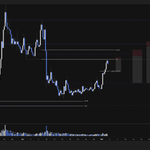
I'm begging you, learn this one setup. If you close above the support leading to a significant high, you will almost ALWAYS make a new high. It won't necessarily be immediately, but it will come.
7
5
106
9,495
TradingView charges $2,399 a year to plot 16 charts on one screen. Starting today, you can do the same for free on OpenMarket. Everyone now gets: → up to 16 charts per layout, any grid from 1x1 to 4x4 → no limit on classic indicators: RSI, MACD, moving averages, Bollinger and more → 5,000+ economic series from 200+ countries and 50+ central banks And beyond candles: footprints from every trade, not estimates, and live order book heatmaps from real depth, on crypto, CME futures and more. Every market, one terminal: • US stocks and tokenized stocks • Crypto • CME futures • Forex, commodities, indices • Prediction markets • Macro: CPI, GDP, rates, M2 for 200+ countries openmarket.xyz
1,174
1,702
405
14,471
3,032,670
A new kind of LLM tech has entered the chat. Jev has been popping up all over my timeline the past few days - kinda reminds me of a new crypto coin or something in that way haha - but the proposition is undeniably intriguing. Way faster, way way way way cheaper (almost free). It's different to an LLM, there are things an LLM can do that Jev can't. It's not "generative". It's more of a deterministic decision-maker, in real-time. The automation use-cases especially intriguing (i mean trading bots alone are gonna completely level up industry-wide presumably). I'm gonna use this thread as like an on-going journal and drop various interesting Jev use-cases i find on my timeline over the coming weeks. Check it out below
After co-inventing ChatGPT, I kept asking myself: why have superhuman chat models not led to AGI? I’ve spent the last 2 years in stealth building a new way to train models (RLCD), and a new type of frontier AI model that we are releasing today: Jev • 20-200x faster • 40-400x cheaper (w/ output tokens free) • Frontier composable intelligence optimized for decisions AFAICT the shortest path to AI-based economic revolution
21
1
21
3,889
When calories became cheap, convenient, and abundant, bodies decayed. Thinking is now cheap.
442
1,228
247
13,147
619,435
🚨 EDUCATIONAL POSTS I’m going to compile all my educational posts under this pinned post and will continue adding new ones (or series of them) as and when I publish them. ⬜️Wick Fill Strategy: nitter.cf/Trader_Vantage/status/… ⬜️VRVP & FRVP: nitter.cf/Trader_Vantage/status/… ⬜️OBs/BBs (Do they really work?) nitter.cf/Trader_Vantage/status/… ◽️BTC 4 Year Cycle Theory nitter.cf/Trader_Vantage/status/… ⬜️BTC 4 Year Cycle Theory (Version 2): nitter.cf/Trader_Vantage/status/… ⬜️✔️The Power of Simplicity: Why Your Chart Needs Less, Not More: nitter.cf/Trader_Vantage/status/… ⬜️A little educational post on trading psychology: nitter.cf/Trader_Vantage/status/… ⬜️A quick Educational Post on TFs: nitter.cf/Trader_Vantage/status/…
🚨EDUCATIONAL POST: 🔨 VRVP & FRVP VRVP and FRVP are, imho, some of the most underrated advanced charting tools out there. Not many traders I come across use them, yet they pack a serious punch and can add valuable confluence to your trades, no matter the TFs you’re applying them on. Before jumping in, let’s break down the basics. Volume Profile is a histogram shown vertically along the side of a price chart, plotting the total volume traded at each price level over a specific period, creating "nodes" where high or low activity took place. Key components include: 👉POC (Point of Control): The price level with the highest traded volume, often viewed as the "fair value" where buyers and sellers found the most agreement. 👉Value Area: Covers 70% of the total trading volume, bounded by VAH (Value Area High) and VAL (Value Area Low), which also act as dynamic support and resistance (S/R) levels. 👉HVN (High Volume Nodes): Zones of heavy trading activity, serving as price magnets or strong support/resistance, often aligning with the POC. 👉LVN (Low Volume Nodes): Gaps with low trading volume, where minimal activity occurs, allowing price to move through these levels quickly. What is VRVP? VRVP, also known as Volume Profile Visible Range, is a dynamic indicator that calculates and displays the volume profile based solely on the visible portion of your chart. As you zoom in, zoom out, or scroll, the histogram updates automatically to match your current view. It works across any TF to quickly pinpoint S/R levels or HVN/POC levels. In the example below $AR, you’re looking at 3 key components: 👉VAH (Yellow Line): As noted, it acts as dynamic resistance. You can see how it could align with your trading approach for extra confluence. In this case, it lined up with HTF supply/HTF RH at $8.6, triggering a solid correction. 👉POC/HVN (Red Line): As mentioned, this serves as a pivot point where price often bounces or consolidates since it’s the level with the highest trading volume. Losing this area signals weakness. In the example, after rejecting from the VAH (resistance) at $8.6, price bounced off the POC at $7.3% before breaking below, showing bearish momentum with a clear break of structure (BOS). 👉VAL (Blue Line): Acts as dynamic support, likely where price is headed before potentially finding a bounce back to the POC or VAH. You can see how price clearly oscillates between these 3 KLs: VAL (support) aligning with HTF demand, POC (fair value), and VAH (resistance) matching HTF supply. This provides additional confluence for your trades to hunt longs or shorts. If you check the HTF chart (shown below), you could’ve milked this HTF range using S&D in confluence with this powerful tool for extra edge. Let’s dive into one more example on the HTF: The chart below highlights: 👉VAH: Serving as resistance, capping the price below it. Acceptance above this level would flip it into support, making it a dynamic S/R zone. 👉POC: Every touch at the POC (HVN) is met with rejection here, as it’s deemed “fair value” or S/R until price breaks above and holds, turning it into support. Check the PA to the left on the chart below — price found acceptance above the POC and took off! 👉VAL: Acting as support. You can see how these zones can be used to spot potential S/R levels or identify where maximum volume has been recorded (HVN), adding an extra layer of confluence to your trading approach. NOTE: The VRVP indicator on TradingView requires a paid subscription — it’s not available on the free plan. However, there’s a free version I used to use by AlphaViz. You can stick with the default settings but bump up the number of ROWS to 200 for clearer volume bars. 🔨FRVP: One of my favorite tools personally—I use this more often than VRVP. FRVP (Fixed Range Volume Profile) lets you manually select a specific price or time range on the chart and calculates the volume profile just for that fixed segment. Unlike VRVP, it’s static — once drawn, it doesn’t adjust with chart movements. You can apply it to ranges, downtrends, or uptrends on any TFs to get detailed price/volume data at each level within that swing or range. It functions much like VRVP with the same components discussed earlier, but as noted, you can target any specific price and range to spot where maximum volume was traded. Price often PB into these volume clusters before continuing higher or lower. Components: 👉POC: As mentioned, the price level with the highest traded volume, viewed as "fair value" where buyers and sellers aligned most. 👉Value Area: Covers 70% of total trading volume, bounded by VAH (Value Area High) and VAL (Value Area Low), which also serve as dynamic support/resistance (S/R). How to Apply It: 💪Range: Anchor it from the origin of the range to the end (e.g., the most recent bar or a key swing point). For a horizontal range, set it from the SH to the SL to analyze volume distribution within that zone. Trend:Identify the trend. 💪Uptrend: Anchor from SL to SH. 💪Downtrend: Anchor from SH to SL. This reveals the highest-volume areas, often aligning with the POC, which can provide a strong entry on a PB if it coincides with your Fib levels or liquidity zones. Example: For a bearish swing in this example, anchor from SH to SL to reveal buyer/seller activity and where the market found fair value. On the $MANA chart, the current volume cluster aligns with the POC, which is also a HTF partial 1D HOB with 0.5 Fib confluence and an HVN. You can see the clear reaction — bounced 42% — and now price has returned to the exact same level, this time with a 4D OB and 0.705 Fib confluence at the POC and HVN, delivering another strong reaction. I hope you enjoyed the post and would appreciate it if you’d share it. If you’ve got any questions, feel free to drop them in the comments below.
4
13
134
13,019
every strategy you paid for is on this list 💸- ❌ ICT- ❌ SMC- ❌ CRT- ❌ moving averages, trend lines, fib, ORB- ✅ trend + momentum. thats it. thats the listsorry about your $2k course, champ
8
2
2
39
6,284
Some people have asked for my opinion on the recent post around this 'mentor' so here it is. The issue is not that someone was once new as everyone starts somewhere. The issue is not that someone improves as people can improve as times goes on. You can be genuine and improve. You can be deceptive and improve. Growth alone does not prove integrity. The issue is not that someone sells coaching, writes a book, or uses AI to polish their writing. Tools are tools. Business is business, and growth is growth. The issue begins when all of that gets wrapped inside a manufactured image of wealth, authority, experience, and success that does not appear to match the receipts. That is where it stops looking like growth and it becomes identity inflation. And when identity inflation gets monetized, it becomes credibility laundering. I believe i first read this term in Barncore's timeline during Zero Ika's drama. Credibility laundering is simple: Borrow the symbols of success before earning the substance of success. Borrowed luxury, lifestyle, confidence, authority, depth, and scenery. Then sell access to the persona as if the persona itself is proof. That is the danger, because beginners do not only buy information. They buy belief, certainty, and proximity to success. They buy the illusion that the person selling them advice has already crossed the bridge they are trying to cross. From what is being shown, there are serious questions. Luxury car-key images allegedly found through reverse image search on Pinterest or Instagram from someone else's account. Travel and suitcase photos that appear to belong to someone else. A timeline that allegedly goes from asking for signals, promoting questionable micro-cap crypto projects, and behaving like a beginner not long ago, to suddenly presenting as a high-level mentor of future successful people, and millionaires. A coaching program reportedly costing thousands. A book often pushed to beginners while the account simultaneously sells a rich-and-successful lifestyle image. Posts polished aggressively to sound hyper-intelligent while the real-world receipts behind the persona look increasingly questionable. None of these things alone prove everything, but together they create a pattern. The issue is not whether he knows more than a beginner. He probably does. The issue is not whether someone learned something from him. They probably did. The issue is not whether he has a selection of good trades. Maybe he has. The issue is whether the authority being sold is honest, because someone can help a newbie and still misrepresent themselves. Someone can improve over time and still pretend the image was earned long before the receipts existed. That is the part gullible people miss. The standard is not: 'Did one person say the mentorship helped?' The standard is: 'Is the person selling the mentorship honest about who they are, what they have done, where their credibility comes from, and what their real lifestyle actually is?' Because if someone needs borrowed luxury photos to look successful, that tells you something. If someone was asking for signals not long ago but now markets himself like a veteran mentor, that tells you something. If someone was promoting shady micro caps two years ago but now acts like a polished authority figure, that tells you something. If someone needs AI to make ordinary thoughts sound profound while the timeline behind the persona does not match the image, that tells you something. This is why i do not trust aesthetics. I trust timelines. Who were you two or three years ago? What were you promoting? Were you asking for signals? Were you selling garbage? Were you deleting mistakes? Were you chasing referrals? Were you pretending to live a life that reverse image search says belonged to someone else? Did the authority come before the receipts, or did the marketing come first? Real credibility compounds slowly while fake credibility gets assembled quickly. Anyone can repost luxury, steal scenery, polish words, use AI to sound deeper than they are, call themselves a mentor, and charge thousands to pretend the price itself proves value. But real authority has weight, history, scars, timing, consistency, receipts that do not need manipulation. And this is where the second layer begins. In this space, a lot of people are not only looking for market education. They are lonely, confused, ambitious, lost desperate for direction. They want someone to talk to about markets, life, dreams, struggles, fear, failure, money, purpose, past mistakes, and the future. That creates a dangerous business model, because some people online are not really selling mentorship. They are selling emotional access. A 'high-status' friend. A private confidence dealer. A paid source of certainty. Someone who listens, validates, answers, makes the mentee feel seen. Someone who makes success feel inevitable, just delayed. That is powerful, and that is exactly why it is dangerous. Because once someone pays thousands, the relationship is no longer only about information. It becomes proximity, attachment, access to a character the mentee believes has already reached the place he is trying to reach. That is how weak mentors can still receive strong testimonials. Not because they are elite, but because they are available. A beginner usually cannot properly audit the quality of the advice, but he can audit how the mentor made him feel: Supported, motivated, understood, important, closer to the dream. That feeling can be real, but that does not mean the authority is real. That does not mean the track record is real, neither the lifestyle. That does not mean the person is who they are presenting themselves to be. Availability can masquerade as expertise. Emotional support can masquerade as mentorship. Confidence can masquerade as competence. And now, with AI, the costume is easier to maintain than ever. If they do not know the answer, they can dodge it with 'I use a completely different system' or 'You are thinking about it the wrong way because you learned from the wrong sources' Or they can ask AI for the cleanest, deepest, most polished, most human-sounding answer possible. Then the mentee receives something calm, structured, intelligent, and profound, but it may not be earned. It may not be lived. The mentee thinks he is receiving wisdom from someone who carried the lesson, but sometimes he is receiving polished output from someone who only knows how to stay two steps ahead of the person paying him. That is the trap. The mentor does not need to be elite. He only needs to know slightly more than the mentee. He only needs to sound certain, to stay available, to keep the mentee believing he is close, improving, and asking the right questions. And often the mentee does improve, learns something, and maybe conversations help, but none of that answers the real question: Is the person selling the mentorship genuinely who they are presenting themselves to be? Time is the cleanest audit. Everyone gets 24 hours per day. The broke person gets 24 hours. The millionaire gets 24 hours. The trader gets 24 hours. The builder gets 24 hours. The person scaling something real gets 24 hours. And the more serious your life becomes, the more selective you become with your time. That does not mean successful people never help others. Of course they do. Some teach because they care. Some mentor because they enjoy it, and some guide because they want to build something bigger than themselves. But when someone is supposedly wealthy, successful, trading, scaling, building, living the dream, and somehow has endless daily hours for one new mentee who paid thousands, people should ask a simple question: What is really the main business? Someone wealthy does not accidentally sell unlimited access. Someone wealthy is never chasing small payments. The more valuable your real work becomes, the more expensive your attention becomes. So if someone is going the extra mile every day, for hours, for a paying stranger, that usually tells you something. That client may not be a side mission. That client may be the business, and that is not automatically wrong but it becomes a problem when the person presents as if the money comes from trading, investing, elite success, and lifestyle dominance, while the real monetization appears to come from selling access to that image. That is where mentorship becomes performance, availability becomes a funnel, and where emotional support becomes a product. This is why fake lifestyle matters. The car keys are not random. The trips are not random. The suitcases are not random. The polished writing is not random. The calm authority is not random. The 'I mentor millionaires' language is not random. The high-ticket offer is not random. It all works together as the mentee may 'need' to see a lifestyle that makes sense for the price he's paid. It tells the potential mentee: 'This person is where i want to be' But if the lifestyle is borrowed, the authority is inflated, the answers are AI-polished, and the time availability does not match the claimed level of success, then people should ask what is really being sold, because maybe they are not buying trading education. Maybe they are buying emotional access to a character. A character built to look wealthy, to sound wise, to feel close enough to trust. That is why i call it credibility laundering, because the product is not always the book, the course, or the mentorship. Sometimes the product is the illusion of proximity to success.
21
33
3
421
31,591
anthropic: if we release this humanity might end. qwen: here is god in a zip file please star our repo
Meet Qwen3.8-Max: A New Bar for Coding and Cowork.
131
1,522
44
28,763
1,515,907
🧵EDUCATIONAL POSTS I’ve put together a focused collection of all of my educational content on technical analysis, everything I use from order blocks and refining entries to order flow and execution. Whether you’re starting from zero or sharpening an existing approach, a few focused months here can compound into years of better decisions. 📌 Bookmark this post — it’s designed as your ongoing reference. More breakdowns like this on @OverlordEins — a repost helps more people see it. Table of Contents: 1. Order blocks/Breaker blocks 2. Refining across timeframes 3. Fibonacci Guides 4. Wyckoff/Ranges/Market Structure 5. Trade Execution 6. Order flow + Why the concepts work 7. Strategy Summary/Cheat sheet for revision 8. Additional Concepts(MS, Confluence, FVGs etc) 9. Sorted @Moneytaur_ Decoding Posts 10. Best Moneytaur Post Compilation 11. Q&A 12. Older Summaries 13. Terminology 1) Order blocks(OB)/Breaker blocks(BB) • Beginner guide nitter.cf/OverlordEins/status/19… • OB/BB Video Explanation (+FVGs) nitter.cf/OverlordEins/status/20… • Order block Strength Criteria nitter.cf/OverlordEins/status/20… • Order block Search Shortcut using only one TF nitter.cf/OverlordEins/status/20… • Order block Sorted Posts nitter.cf/OverlordEins/status/19… • OB strength wick to body ratio nitter.cf/OverlordEins/status/20… =>Reason: Why we refine entries nitter.cf/OverlordEins/status/20… 2) Refining: Narrow down the entry to maximize RR • Beginner Guide nitter.cf/OverlordEins/status/19… • Refining Guide Part 2 nitter.cf/OverlordEins/status/19… • Advanced FVG Timeframe refining nitter.cf/OverlordEins/status/19… • Refining Breakers into OB within the FVG nitter.cf/OverlordEins/status/19… • New Partial Breaker variation nitter.cf/OverlordEins/status/19… • Advanced Refining explanation nitter.cf/OverlordEins/status/19… • Refining using Gaps nitter.cf/OverlordEins/status/19… • Refining Wicks nitter.cf/OverlordEins/status/19… • Laddering of TFs nitter.cf/OverlordEins/status/19… • Refining CME Gaps nitter.cf/OverlordEins/status/19… 3) Fibonacci Guides • Fibonacci Guide Part 1 nitter.cf/OverlordEins/status/19… • Fibonacci Guide Part 2 nitter.cf/OverlordEins/status/19… 4) Wyckoff/Ranges/Market Structure • Simplified Wyckoff/Ranges nitter.cf/OverlordEins/status/20… • Wyckoff + Market Structure Concepts nitter.cf/OverlordEins/status/19… 5) Trade Execution • Entry Checklist nitter.cf/OverlordEins/status/19… • Entry using Candle Closes/VSA Intro nitter.cf/OverlordEins/status/19… • Signs to look for before entering nitter.cf/OverlordEins/status/20… • Trendline method for entries nitter.cf/OverlordEins/status/20… • Sorted Execution Posts nitter.cf/OverlordEins/status/19… • Candle Range Theory nitter.cf/OverlordEins/status/20… • Stop Placement nitter.cf/OverlordEins/status/19… • Take Profit Rules nitter.cf/OverlordEins/status/19… 6) Order flow + Why the concepts work • Full Order flow Guide nitter.cf/OverlordEins/status/20… • What is Liquidity and why does price even move nitter.cf/OverlordEins/status/20… • Order flow Trade Example nitter.cf/OverlordEins/status/19… • MT Volume Spread Analysis (VSA) explanation nitter.cf/OverlordEins/status/20… • How to use Volume Profile nitter.cf/OverlordEins/status/19… • Order flow notes on a video nitter.cf/OverlordEins/status/19… The Mechanics behind the Market Why do Order blocks work? • TPO explanation of candle patterns like OB/BBs nitter.cf/OverlordEins/status/20… • Order blocks through the lens of a footprint chart. nitter.cf/OverlordEins/status/20… • OB explanation from an Order flow perspective nitter.cf/OverlordEins/status/20… • How MMs Engineer Liquidity nitter.cf/OverlordEins/status/19… 7) Strategy Summary/Cheat sheet for revision • Strategy Summary nitter.cf/OverlordEins/status/19… • Liquidity Cheat sheet nitter.cf/OverlordEins/status/19…
⚠️ Liquidity Cheatsheet ⚠️ The Algos that run the markets are programmed "To go after liquidity levels, to respect fibs, to close imbalances, (...)" -@Moneytaur_ I will explain how to find those liquidity levels: 🔹Image 1: Liquidity Blocks Order Block (OB) = Candle + Larger Candle (opposite color) Breaker Block (BB) = Order Block fully hidden behind a FVG (see Image 2 for FVG explanation). The more hidden it is (behind more FVGs), the more powerful it becomes. And the higher the timeframe, the more powerful it is. Partial BB: If the Order Block was wicked into, narrow it down to the unwicked portion. It’s only valid if the equilibrium (EQ=0,5 fib) of the OB wasn’t taken. Undivided FVGs are weaker, but they can still be used. Melted Breaker Blocks (BBs) are the weakest. A Breaker is stronger when price moves quickly through it. For example, a 1D Breaker Block (BB) with a 12H wick inside isn’t fully untouched as it would appear on the 1D timeframe. But if the Breaker Block is ignored even on lower time frames through FVGs, it becomes much stronger because its liquidity remains fully intact. That’s also why refinement works, it reveals the untouched areas on lower timeframes. For better entries, you want to see a Break of Structure and a retracement into those liquidity levels. 🔹Image 2: Wicks FVG = Grey Zone 3-candle pattern: One large candle between two candles with wicks. The zone between those wicks is the Fair Value Gap. The EQ of an FVG can act as an important confluence since algorithms often use it. Opposite Poles are wicks located behind an FVG. You can use a single pole and the zone above/below it, or the area between two poles. Wicks (Swing High/Low): The majority of stops are usually located above swing highs or below swing lows. These stops provide liquidity before market makers reverse price. (SFP=Swing Failure Pattern) The zone between wicks marks an area where price action could execute an SFP on the nearby swing high or low. An SFP of the major swing high is possible, though price might front-run the most obvious wick. 🔹Image 3: S&R, TL, VP Support and Resistance offer liquidity because retail traders commonly use these levels. Market makers identify liquidity or stop clusters below support and above resistance, similar to how they view trendlines. The Volume Profile shows where most positions were opened. These areas often contain breakeven stops or intentions to exit at breakeven, making them zones that provide counterparty Liquidity for MMs. Value Area Highs (VAH) and Value Area Lows (VAL) are also important levels. If price fails to trade outside these levels, aka as a failed auction, it often returns back into the value area. "Once you see it, you can’t unsee it." -MT
48
140
15
848
74,918
You've watched it. So have we. Every year this industry adds a rule. Or ten. A payout cap here. A hidden clause there. A withdrawal denied the day before you finally win. You can't fix a machine like that. You unplug it. TRADEFUNDED Which rule would you unplug first?
23
16
4
77
45,379
1/🧵 WHY DO I CARE? Dude told me " Just to Shut the fuck up" "Stop hating on new prop firms like Lucid. It's my choice." A drunk gambler chances are 3x more than we have ever had. 96% of the revenue returned to the players. Why I care You're already ruining my opportunity
1
2
1
10
2,511
I don't know which 3 to 5 coins will be the biggest gainers by 2030. But i do know which ones will be the biggest losers: the coins that aren't on institutional portfolios, and that's basically almost every coin in this market.
6
19
1
469
30,401
«Twenty years from now, the only people who'll remember you worked late are your kids»
7
40
2
477
34,139
Alex retweeted
Replying to @ImreSG
What's the swing that produced the ATH? Did the market close above it? Yes. Are those highs tested? Yes. Expectation becomes new ATH to satisfy trend. Of note: the level gained must hold to produce the new ATH. The trade becomes invalid if it does not. Stop should be just below the low that produced the ATH. You will never find this in a book.
1
3
21
1,220
Alex retweeted
Replying to @MaroonDawg_
This convo will go on and on because you simply do not know enough to understand what I'm actually saying. Highs and lows only matter when they create new trends (like the yellow ones you see above). Each trend formed gets two significant levels. (I'm simplifying). A swing high or low is only violated to accomplish one thing structurally: create a new trend. You are taught it's to run stops. You completely miss the part about the significant levels the trends create. We can prove this logically. What are the only two things markets can do? -Make new trends (highs and lows) -Test levels of significance derived from said trends. Every other reason you can come up with is an over complication, and likely outside of the chart. What do I mean by outside of the chart? I mean, you come up with an excuse for why something happens, that you cannot empirically identify by simply looking at the chart. A tweet. A data point. A stop run. Outside of the chart...not empirical.
1
1
9
738
Alex retweeted
I think most people approach trading backwards. They assume profitability *requires* some secret strategy (an edge nobody else has discovered yet). So they spend their time hunting for that hidden key and fail miserably. No wonder, though, because this is quant-fund, PhD, millions-in-research hard. For the average trader, this is a misguided premise. The information that would actually make you profitable is already out there, freely available. You could probably head to Google, type "trend following strategy" or some other keyword, and find something that works today. So, the real constraint is not access, but rather one of two things: • You don't like the risk Running it means sitting through drawdowns, stomaching volatility, etc. The profit is priced in discomfort and it genuinely sucks ass. • Capturing it takes infrastructure you don't have The idea is real, you'd happily take it, but the way it actually pays out demands things you can't put on the table. Data feeds, automation, capital, tooling, etc. So once you strip away the fantasy of the secret strategy, what you're actually left with is quite simple. It always comes back to risk. Either getting comfortable holding risk you were previously unwilling to hold, or learning to take on the specific risk that actually compensates you for carrying it.
19
22
5
347
24,743
Alex retweeted
Some of you missed the importance because you needed me to say it directly.
Do I need to say anything here?
3
1
26
4,869
