

🇦🇲Armenian Conquistador֎ 🇦🇲Inhabitant of The Land of Haya֎ ֎ Araratian Sage ֎ Philosopher from Ararat/Part-Time Shitposter
Հայոց Կայսրութիւն
Joined July 2020
- Tweets9.1K
- Following810
- Followers3.5K
- Likes80.9K




Deus Armenicus 🦅 retweeted
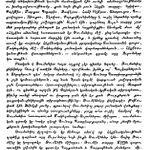
«Although there existed Vlach people, Hellenism had long since [conquered/assimilated] them; their language was Greek, as was their script. The Vlachs were educated in Greek schools and would call themselves "Hellenes." The "Great Idea" of Hellenism was theirs as well; they worked toward its realization with equal fervor, and they participated in the struggle for Greek independence with even greater self-sacrifice and enthusiasm than the real Hellenic element itself.
Grivas, Kolettis, Markos Botsaris, Tzavelas, Hadji Petros, Androutsos, Boukovalas, Diakos, Tzervas, the Kolokotronis family, and other heroes who made the uprising successful were Vlachs. Indeed, the Vlach element provided the Greek fatherland with many great benefactors.
A segment of them, under the name of "Hellenes," had established themselves in Romania. They were generally wealthy merchants, and it was largely through their capital that the propaganda of Hellenism propaganda outside of Greece, was sustained, such as in Macedonia. The Greek schools of Macedonia, — the furnaces of Hellenism, were given the necessary [funding/money] by these Vlachs.
Naturally, Romania did not look upon what had happened with a peaceful eye. The natives of Romania had long harbored a deep-seated hatred towards the Greeks, because they, like the Bulgarians and Serbs, had long been under the domination not only of the Greek Patriarchate and Greek clergy, but also of a succession of Greek hospodars (rulers) appointed by the Sublime Porte, and we already know that the religious-educational hegemony of the Greeks was something more ruthless and savage than the political-social rule of the Turks.
The Romanians had finally shaken off the yoke of the Phanar [Patriarchate] by seizing all the Greek monasteries, churches, and their associated properties in Romania; yet, through another channel, specifically through the Macedo-Vlachs settled in Romania, Romanian funds continued to flow toward the Greek Patriarchate, serving to lavishly finance the realization of its ulterior motives.
Romania’s indignation was compounded by the fact that these Vlachs, who had become instruments of Hellenism, were, in reality, Romanians themselves. The Greek was plundering the Romanian by using a Romanian.
During the early Middle Ages, the Romanian element occupied the entire territory situated between the Balkan and Carpathian mountains. The Slavic incursion shattered it, splitting it into three segments. One group of Romanians remained in the north, in the highlands of the Transylvanian mountains, from where they later descended into the Danube valley; these are the modern-day Romanians, a branch of whom also originated within the Transylvanian region.
A second group fled the Slavic advance as far as Istria, where, over time, they became completely assimilated into their Italian Latin kin. A third group moved southward, finding refuge among the crags of the Balkans and the Pindus mountains; the Vlachs of Macedonia, better known as "Kutso-Vlachs", constituted this particular segment of the Romanian population.
However, they lacked a national consciousness; they would call themselves Hellenes instead, seeking all their well-being solely in the triumph of Hellenism. Furthermore, there was no longer any relationship whatsoever between them and Romania.
Between 1850-1860, a full decade, Romania endeavored to win over this Hellenized Romanian element. Naturally, such a rapprochement could not be achieved without distancing them from the Greeks and strengthening their own ethnic consciousness.
Driven by this objective, many enthusiastic Romanians traveled to Macedonia, where, according to their own estimates, there were more than 1,200,000 Vlachs: 450,000 in Macedonia, 200,000 in Thessaly, 350,000 in Epirus-Albania, and 200,000 in Thrace.
In reality, the figures were far from these estimates, amounting to barely one-third of that number. But, ultimately, there was a Vlach element, a rather resilient people, capable of becoming an effective instrument for the struggle, had it been [brought/seized] under one’s influence.
For ten long years, and subsequently for another five, Romanian missions labored toward this end, but in vain. The Turks, too, lent a hand to the Romanian propagandists; Reshid Pasha, in particular, with the aim of weakening Hellenism, did not hesitate to employ even "Turkish" methods to drive a wedge between the Vlachs and the Greeks. All these efforts proved fruitless: the Vlachs declared themselves to be Hellenes with even greater conviction and sincerity than the real Greeks themselves.
Such was the state of affairs when, in 1865, a Vlach merchant named Apostolo Margariti arrived from Macedonia to Bucharest, a man who had amassed a considerable fortune through trade. Even before his time in Romania, this Vlach had been an ardent instrument of the Hellenic cause and Hellenism; yet, once in Romania, he was easily persuaded that he was, in fact, a Romanian, just as his Vlach brethren in Macedonia were Romanians.
What Father Paisius had been for the Bulgarians, and Mr. Gorčević for the Serbs, Margariti became for the Romanians. Like Mr. Gorčević, he too was a "Saul" who suddenly transformed into a "Paul." This Saul, however, was not a man of the pen, but a man of action and the spoken word, tenacious, combative, and quick-witted, endowed with indomitable vigor and an incomparable power of persuasion.
Having returned to Macedonia, he began traveling among the Vlach centers, stirring up immense enthusiasm everywhere he went. It was no easy task; not only was Hellenic influence exceptionally strong, but the history, that is the history of the Vlachs' origins, was also sufficiently obscure to make finding solid, reliable arguments within it quite difficult.
Margariti, however, was not a man to lose heart. Far from being daunted by this obscurity, he turned it to his advantage, tracing the origins of the Vlachs back to as remote a period as possible.
The Greeks, naturally, fought fiercely against the reawakening of the Vlachs, specifically against Margariti. The Vlach element served as one of the strongest bulwarks of Hellenism in Macedonia; its loss would have posed a grave threat to Greek interests. The Bulgarians on one side, and the Serbs on the other, were already working to block every path for the Greeks; had the Vlachs and Albanians also joined their ranks, the Greek position would have become precarious indeed.
The Patriarchate of Constantinople and Athens soon joined forces, initiating a campaign of brutal persecution. The primary agents in this effort were chetes (i.e. armed bands) operating under the command of undercover Greek officers. For a time, the Turkish government even lent them its support. Relying on the cooperation of Greek chetes to counter the expansion of the Bulgarians, he allowed them to strike at the Vlachs as well. At one point, they even had Margariti imprisoned.
Emboldened by this authorization, the Greeks escalated their extremist actions to a terrifying degree; Apostolo Margariti alone was the target of four assassination attempts. First, he was stabbed with a dagger in Thessaloniki; subsequently, he was thrown into the Vardar River on two separate occasions; and finally, he was pursued with gunfire across the mountains of Ohrid. Yet, they could neither kill him nor diminish his zeal. Over the course of nearly a quarter of a century (1878–1890), Margariti succeeded in driving the Greeks out of five towns and thirty villages across Macedonia and Epirus.
With his death, the propaganda weakened, but it did not cease. He had succeeded in interesting his bloodkin (i.e. kinsmen) in Romania in the cause of the Vlachs of Macedonia; eventually, Romania, provoked, in particular, by the atrocities committed by Greek chetes, officially took up the cause. The Romanian government, which had always maintained a cautious attitude toward Turkey, soon managed to convince the Sublime Porte that the separation of the Vlachs from Hellenism would be more beneficial than harmful to Turkey. On this basis, the Romanian ambassador in Constantinople, Mr. Lahovari, succeeded in securing the firman (i.e. imperial decree) of May 23, 1905, which formalized the separation of the Vlachs from the Greek element by recognizing them as a distinct community.
The Phanar and Athens were thrown into an uproar. The late Patriarch Joachim lodged one protest after another with the Sublime Porte. Meanwhile, Greek officers, once again placing themselves at the head of chetes, crossed the border and resumed their ruthless operations within the Vlach communities. The latter sent impassioned appeals to their brethren in Romania; consequently, the governments in Bucharest and Athens began exchanging diplomatic notes regarding matters that concerned a third state. Athens denied any involvement, arguing that the Greek chetes in Macedonia were organized locally; it likewise disavowed any collaboration with the Greek Patriarchate in Constantinople.
The Romanian government had no time for protracted negotiations. The streets of Bucharest had become the scene of boisterous demonstrations; the public demanded decisive action to alleviate the plight of their brethren in Macedonia. The consequence was that the Greeks settled in Romania became the targets of severe harshness, and the government began to expel them en masse; many merchants were ruined as a result of this persecution and the ruthless boycott that accompanied it.
Romania also severed its relations with Greece, most notably by annulling the Greco-Romanian commercial treaty, which proved to be an absolute catastrophe for the Greek merchant class. Thus, the Greeks lost everything without gaining a single thing in return; for the Vlachs remained a distinct community, and even today, following the victories of the Balkan League, the issue of the Vlachs in Macedonia persists, under the protection of the Romanian government. It will undoubtedly play a role in the final settlement that follows the peace.
Along with Thrace and Macedonia, Albania was also part of Turkey’s European possessions, which, despite the semi-independence it enjoyed, was perhaps the most loyal territory of the Ottoman Empire. For a long time, the people of this land served as the natural defenders of European Turkey; against them, foreign incursions were crushed, and through them, internal rebellions were suppressed.»
- Պատկերազարդ ընդարձակ պատմութիւն Պալքանեան պատերազմին, կազմեց Արամ ԱՆտոնեան, Պոլիս, 1912 (An illustrated and extensive history of the Balkan War, compiled by Aram Antonyan, Constantinople, 1912).


«The Greeks had expanded in Macedonia through violence and oppression; it was also through violence and oppression that they could be forced to retreat. The roots of Greek influence, or, more accurately, Greek domination within the Slavic population ran deep, and they could not be dislodged merely by persuasion or promises.
Sooner or later, the need for brute force would inevitably make itself felt, and that is precisely what happened. Chetes (i.e. armed bands) began to operate throughout Macedonia; where words failed, a bullet or a dagger would quickly convince even the most stubborn.
The Greeks, too, resorted to chetes, and both sides began to slaughter one another with merciless fury. What more could the Turkish authorities have asked for? This fratricidal conflict, occurring among the Christian elements, served the interests of the Turkish government perfectly; rather than putting an end to it, they actively created opportunities for it to intensify.
Both the Serbs and the Vlachs had chosen this very method as the most effective way to communicate with one another; for the Turks, inciting them further was mere child’s play.
Let us not forget that, at the time, the true ruler of Turkey was Hamid, a consummate master at sowing division not only among the Christian populations but even among the Muslims themselves, using such discord to shore up his own precarious throne.
During the current war, while being transported from Thessaloniki to Constantinople aboard the German ship Lorasha, he asked the captain why he was being moved. The captain recounts the events that have unfolded, the formation of the Balkan League, the declaration of war, the successes of the Allies, the likely fall of Salonika, and so on.
Hamid listens, dumbfounded, struck, above all, by the surprise formation of a Balkan League. "Astonishing," he remarks at last. "In all of Turkey, could no one be found to keep the age-old hatred between the Greeks and the Bulgarians alive? Was it really such a difficult thing to do?..."
In his day, not only would an alliance among the Balkan nations have been impossible to achieve, but even a purely formal or superficial agreement would have been highly unlikely.
After all, the policy of division he had devised was being implemented with great precision and unfailing method: he would bolster the Greeks in regions where the Bulgarians were numerous. He encouraged the Bulgarians in areas where the Greeks were in the majority, and the same applied to other ethnic elements.
However, neither the Serbs nor the Greeks posed a real threat to him; a mere empty threat was enough to bring them to heel. The Bulgarians, by contrast, could not be deterred by threats. They had evolved into a powerful state, essentially a militaristic one, fully conscious of their own strength.
Moreover, regardless of how well-founded the claims of the other groups might have been, the vast majority of the Macedonian people sympathized with the Bulgarians; after all, power is always a decisive factor.
Forced to adopt a policy of "divide and rule," Hamid naturally found it more advantageous to bolster the elements opposed to the Bulgarians. For this reason, the Turkish government did not act as a deterrent to the Greek chetes; on the contrary, it consistently served as a source of encouragement. Whenever a Greek chete killed Bulgarians, the government allowed the perpetrators to depart freely, arresting Bulgarians in their stead.
The Greek chetes took on the appearance of a quasi-legal organization, whereas a Bulgarian chete, the moment it emerged, would be immediately pursued by substantial military forces. Thanks to this protection, the Greeks were soon able to deal a severe blow to the Bulgarian cause.
A significant portion of the dioceses that had been under the jurisdiction of the Exarchate reverted to the Patriarchate. It was the result achieved in Macedonia by the Bulgarians through years of struggle and patient labor that led to Bulgarians being disarmed, who, in turn, exacted their revenge.»
- Պատկերազարդ ընդարձակ պատմութիւն Պալքանեան պատերազմին, կազմեց Արամ ԱՆտոնեան, Պոլիս, 1912 (An illustrated and extensive history of the Balkan War, compiled by Aram Antonyan, Constantinople, 1912).


«Although there existed Vlach people, Hellenism had long since [conquered/assimilated] them; their language was Greek, as was their script. The Vlachs were educated in Greek schools and would call themselves "Hellenes." The "Great Idea" of Hellenism was theirs as well; they worked toward its realization with equal fervor, and they participated in the struggle for Greek independence with even greater self-sacrifice and enthusiasm than the real Hellenic element itself.
Grivas, Kolettis, Markos Botsaris, Tzavelas, Hadji Petros, Androutsos, Boukovalas, Diakos, Tzervas, the Kolokotronis family, and other heroes who made the uprising successful were Vlachs. Indeed, the Vlach element provided the Greek fatherland with many great benefactors.
A segment of them, under the name of "Hellenes," had established themselves in Romania. They were generally wealthy merchants, and it was largely through their capital that the propaganda of Hellenism propaganda outside of Greece, was sustained, such as in Macedonia. The Greek schools of Macedonia, — the furnaces of Hellenism, were given the necessary [funding/money] by these Vlachs.
Naturally, Romania did not look upon what had happened with a peaceful eye. The natives of Romania had long harbored a deep-seated hatred towards the Greeks, because they, like the Bulgarians and Serbs, had long been under the domination not only of the Greek Patriarchate and Greek clergy, but also of a succession of Greek hospodars (rulers) appointed by the Sublime Porte, and we already know that the religious-educational hegemony of the Greeks was something more ruthless and savage than the political-social rule of the Turks.
The Romanians had finally shaken off the yoke of the Phanar [Patriarchate] by seizing all the Greek monasteries, churches, and their associated properties in Romania; yet, through another channel, specifically through the Macedo-Vlachs settled in Romania, Romanian funds continued to flow toward the Greek Patriarchate, serving to lavishly finance the realization of its ulterior motives.
Romania’s indignation was compounded by the fact that these Vlachs, who had become instruments of Hellenism, were, in reality, Romanians themselves. The Greek was plundering the Romanian by using a Romanian.
During the early Middle Ages, the Romanian element occupied the entire territory situated between the Balkan and Carpathian mountains. The Slavic incursion shattered it, splitting it into three segments. One group of Romanians remained in the north, in the highlands of the Transylvanian mountains, from where they later descended into the Danube valley; these are the modern-day Romanians, a branch of whom also originated within the Transylvanian region.
A second group fled the Slavic advance as far as Istria, where, over time, they became completely assimilated into their Italian Latin kin. A third group moved southward, finding refuge among the crags of the Balkans and the Pindus mountains; the Vlachs of Macedonia, better known as "Kutso-Vlachs", constituted this particular segment of the Romanian population.
However, they lacked a national consciousness; they would call themselves Hellenes instead, seeking all their well-being solely in the triumph of Hellenism. Furthermore, there was no longer any relationship whatsoever between them and Romania.
Between 1850-1860, a full decade, Romania endeavored to win over this Hellenized Romanian element. Naturally, such a rapprochement could not be achieved without distancing them from the Greeks and strengthening their own ethnic consciousness.
Driven by this objective, many enthusiastic Romanians traveled to Macedonia, where, according to their own estimates, there were more than 1,200,000 Vlachs: 450,000 in Macedonia, 200,000 in Thessaly, 350,000 in Epirus-Albania, and 200,000 in Thrace.
In reality, the figures were far from these estimates, amounting to barely one-third of that number. But, ultimately, there was a Vlach element, a rather resilient people, capable of becoming an effective instrument for the struggle, had it been [brought/seized] under one’s influence.
For ten long years, and subsequently for another five, Romanian missions labored toward this end, but in vain. The Turks, too, lent a hand to the Romanian propagandists; Reshid Pasha, in particular, with the aim of weakening Hellenism, did not hesitate to employ even "Turkish" methods to drive a wedge between the Vlachs and the Greeks. All these efforts proved fruitless: the Vlachs declared themselves to be Hellenes with even greater conviction and sincerity than the real Greeks themselves.
Such was the state of affairs when, in 1865, a Vlach merchant named Apostolo Margariti arrived from Macedonia to Bucharest, a man who had amassed a considerable fortune through trade. Even before his time in Romania, this Vlach had been an ardent instrument of the Hellenic cause and Hellenism; yet, once in Romania, he was easily persuaded that he was, in fact, a Romanian, just as his Vlach brethren in Macedonia were Romanians.
What Father Paisius had been for the Bulgarians, and Mr. Gorčević for the Serbs, Margariti became for the Romanians. Like Mr. Gorčević, he too was a "Saul" who suddenly transformed into a "Paul." This Saul, however, was not a man of the pen, but a man of action and the spoken word, tenacious, combative, and quick-witted, endowed with indomitable vigor and an incomparable power of persuasion.
Having returned to Macedonia, he began traveling among the Vlach centers, stirring up immense enthusiasm everywhere he went. It was no easy task; not only was Hellenic influence exceptionally strong, but the history, that is the history of the Vlachs' origins, was also sufficiently obscure to make finding solid, reliable arguments within it quite difficult.
Margariti, however, was not a man to lose heart. Far from being daunted by this obscurity, he turned it to his advantage, tracing the origins of the Vlachs back to as remote a period as possible.
The Greeks, naturally, fought fiercely against the reawakening of the Vlachs, specifically against Margariti. The Vlach element served as one of the strongest bulwarks of Hellenism in Macedonia; its loss would have posed a grave threat to Greek interests. The Bulgarians on one side, and the Serbs on the other, were already working to block every path for the Greeks; had the Vlachs and Albanians also joined their ranks, the Greek position would have become precarious indeed.
The Patriarchate of Constantinople and Athens soon joined forces, initiating a campaign of brutal persecution. The primary agents in this effort were chetes (i.e. armed bands) operating under the command of undercover Greek officers. For a time, the Turkish government even lent them its support. Relying on the cooperation of Greek chetes to counter the expansion of the Bulgarians, he allowed them to strike at the Vlachs as well. At one point, they even had Margariti imprisoned.
Emboldened by this authorization, the Greeks escalated their extremist actions to a terrifying degree; Apostolo Margariti alone was the target of four assassination attempts. First, he was stabbed with a dagger in Thessaloniki; subsequently, he was thrown into the Vardar River on two separate occasions; and finally, he was pursued with gunfire across the mountains of Ohrid. Yet, they could neither kill him nor diminish his zeal. Over the course of nearly a quarter of a century (1878–1890), Margariti succeeded in driving the Greeks out of five towns and thirty villages across Macedonia and Epirus.
With his death, the propaganda weakened, but it did not cease. He had succeeded in interesting his bloodkin (i.e. kinsmen) in Romania in the cause of the Vlachs of Macedonia; eventually, Romania, provoked, in particular, by the atrocities committed by Greek chetes, officially took up the cause. The Romanian government, which had always maintained a cautious attitude toward Turkey, soon managed to convince the Sublime Porte that the separation of the Vlachs from Hellenism would be more beneficial than harmful to Turkey. On this basis, the Romanian ambassador in Constantinople, Mr. Lahovari, succeeded in securing the firman (i.e. imperial decree) of May 23, 1905, which formalized the separation of the Vlachs from the Greek element by recognizing them as a distinct community.
The Phanar and Athens were thrown into an uproar. The late Patriarch Joachim lodged one protest after another with the Sublime Porte. Meanwhile, Greek officers, once again placing themselves at the head of chetes, crossed the border and resumed their ruthless operations within the Vlach communities. The latter sent impassioned appeals to their brethren in Romania; consequently, the governments in Bucharest and Athens began exchanging diplomatic notes regarding matters that concerned a third state. Athens denied any involvement, arguing that the Greek chetes in Macedonia were organized locally; it likewise disavowed any collaboration with the Greek Patriarchate in Constantinople.
The Romanian government had no time for protracted negotiations. The streets of Bucharest had become the scene of boisterous demonstrations; the public demanded decisive action to alleviate the plight of their brethren in Macedonia. The consequence was that the Greeks settled in Romania became the targets of severe harshness, and the government began to expel them en masse; many merchants were ruined as a result of this persecution and the ruthless boycott that accompanied it.
Romania also severed its relations with Greece, most notably by annulling the Greco-Romanian commercial treaty, which proved to be an absolute catastrophe for the Greek merchant class. Thus, the Greeks lost everything without gaining a single thing in return; for the Vlachs remained a distinct community, and even today, following the victories of the Balkan League, the issue of the Vlachs in Macedonia persists, under the protection of the Romanian government. It will undoubtedly play a role in the final settlement that follows the peace.
Along with Thrace and Macedonia, Albania was also part of Turkey’s European possessions, which, despite the semi-independence it enjoyed, was perhaps the most loyal territory of the Ottoman Empire. For a long time, the people of this land served as the natural defenders of European Turkey; against them, foreign incursions were crushed, and through them, internal rebellions were suppressed.»
- Պատկերազարդ ընդարձակ պատմութիւն Պալքանեան պատերազմին, կազմեց Արամ ԱՆտոնեան, Պոլիս, 1912 (An illustrated and extensive history of the Balkan War, compiled by Aram Antonyan, Constantinople, 1912).
«The Greeks had expanded in Macedonia through violence and oppression; it was also through violence and oppression that they could be forced to retreat. The roots of Greek influence, or, more accurately, Greek domination within the Slavic population ran deep, and they could not be dislodged merely by persuasion or promises.
Sooner or later, the need for brute force would inevitably make itself felt, and that is precisely what happened. Chetes (i.e. armed bands) began to operate throughout Macedonia; where words failed, a bullet or a dagger would quickly convince even the most stubborn.
The Greeks, too, resorted to chetes, and both sides began to slaughter one another with merciless fury. What more could the Turkish authorities have asked for? This fratricidal conflict, occurring among the Christian elements, served the interests of the Turkish government perfectly; rather than putting an end to it, they actively created opportunities for it to intensify.
Both the Serbs and the Vlachs had chosen this very method as the most effective way to communicate with one another; for the Turks, inciting them further was mere child’s play.
Let us not forget that, at the time, the true ruler of Turkey was Hamid, a consummate master at sowing division not only among the Christian populations but even among the Muslims themselves, using such discord to shore up his own precarious throne.
During the current war, while being transported from Thessaloniki to Constantinople aboard the German ship Lorasha, he asked the captain why he was being moved. The captain recounts the events that have unfolded, the formation of the Balkan League, the declaration of war, the successes of the Allies, the likely fall of Salonika, and so on.
Hamid listens, dumbfounded, struck, above all, by the surprise formation of a Balkan League. "Astonishing," he remarks at last. "In all of Turkey, could no one be found to keep the age-old hatred between the Greeks and the Bulgarians alive? Was it really such a difficult thing to do?..."
In his day, not only would an alliance among the Balkan nations have been impossible to achieve, but even a purely formal or superficial agreement would have been highly unlikely.
After all, the policy of division he had devised was being implemented with great precision and unfailing method: he would bolster the Greeks in regions where the Bulgarians were numerous. He encouraged the Bulgarians in areas where the Greeks were in the majority, and the same applied to other ethnic elements.
However, neither the Serbs nor the Greeks posed a real threat to him; a mere empty threat was enough to bring them to heel. The Bulgarians, by contrast, could not be deterred by threats. They had evolved into a powerful state, essentially a militaristic one, fully conscious of their own strength.
Moreover, regardless of how well-founded the claims of the other groups might have been, the vast majority of the Macedonian people sympathized with the Bulgarians; after all, power is always a decisive factor.
Forced to adopt a policy of "divide and rule," Hamid naturally found it more advantageous to bolster the elements opposed to the Bulgarians. For this reason, the Turkish government did not act as a deterrent to the Greek chetes; on the contrary, it consistently served as a source of encouragement. Whenever a Greek chete killed Bulgarians, the government allowed the perpetrators to depart freely, arresting Bulgarians in their stead.
The Greek chetes took on the appearance of a quasi-legal organization, whereas a Bulgarian chete, the moment it emerged, would be immediately pursued by substantial military forces. Thanks to this protection, the Greeks were soon able to deal a severe blow to the Bulgarian cause.
A significant portion of the dioceses that had been under the jurisdiction of the Exarchate reverted to the Patriarchate. It was the result achieved in Macedonia by the Bulgarians through years of struggle and patient labor that led to Bulgarians being disarmed, who, in turn, exacted their revenge.»
- Պատկերազարդ ընդարձակ պատմութիւն Պալքանեան պատերազմին, կազմեց Արամ ԱՆտոնեան, Պոլիս, 1912 (An illustrated and extensive history of the Balkan War, compiled by Aram Antonyan, Constantinople, 1912).
Deus Armenicus 🦅 retweeted

Благодараност 🤝
«Hellenism had also suffered a severe blow as a result of the disastrous war of 1897 and the ill-fated policy regarding Crete.
Greece’s defeat had caused many Macedonians to lose their faith in the future of Hellenism; doubting Greece’s success, and impatient to cast off the Turkish yoke, they began to turn their expectations elsewhere.
The Bulgarians in particular, and the Slavic element in general, were well-positioned to take advantage of this growing skepticism among the Macedonians regarding Hellenism, and indeed, they did so.
It is clear, then, why Russia left the Greek nation so vulnerable during the Greco-Turkish War: the weakening of Greece served the interests of Pan-Slavism. The Greeks based their aspirations regarding Macedonia on historical records and traditions, seeking to substantiate their claims by looking to the distant past.
The Bulgarians, too, began to invoke this past to bolster their own claims. While it is true that they had not been present in the region for as long as the Greeks ‘believed’ themselves to have been, the fundamental question remained: were the Macedonians of the present day truly the same Macedonians through whom Philip and Alexander the Great had forged their vast empires? If even Pella, the birthplace of Alexander the Great, had vanished without a trace, how could the Macedonian people who once inhabited it have possibly survived? Furthermore, these Macedonians were not even Greek, given that Demosthenes declared them to be alien and hostile to the Hellenic element.
Meanwhile, it is an undeniable historical fact that during the 6th and 7th centuries, numerous groups of Slavic origin arrived and settled throughout the Balkan Peninsula. The Serbs, who are pure-blooded Slavs, and subsequently the Bulgars, who were at first Slavonized Tatars, established powerful empires, against which the Byzantine Empire struggled for a long time.
In the 10th century, Tsar Simeon of the Bulgarians ruled over a vast territory, which encompassed present-day Bulgaria, Serbia, Macedonia, and Albania. The Slavs even reached as far as the Peloponnese, where traces of them still remain today. If the issue were based on historical traditions, then the Bulgarians would have just as much claim to Macedonia as the Greeks.
As for the Greeks’ further contention, that since Hellenism civilized the Slavs, it ought to remain dominant over them and incorporate their territories, this argument collapsed in the face of a clever counterpoint raised by the Bulgarians: "Ancient Gaul (France) & Great Britain," they argued, "were civilized by the Romans; by this same logic, today’s Italians could lay claim to France and England." On the other hand, it was further argued that while the Greeks may have brought civilization to these peoples, the latter, in turn, infused their own vigorous, vital blood into a Hellenic population that had become degenerate, enfeebled & effete; and that it was precisely thanks to this, especially in the case of Byzantium, that they were able to successfully and triumphantly withstand the Islamic incursions for such a long period.
All these debates & objections are products of more recent times. Prior to this, the Hellenic element held absolute sway over all the nationalities of the Balkans, having taken full advantage of the privilege granted by Fatih [Mehmed the Conqueror], a decree that placed the entire Christian population of European Turkey, under the collective designation of "Rum," under the spiritual & administrative jurisdiction of the Greek Patriarch of Constantinople. The national consciousness of the Bulgarians, and, indeed, of all other Slavs, was not strong enough for them to rise up against this established order; because, generally speaking, they possessed no knowledge of their own past; of their glorious ancestors, who had once founded vast empires upon that very same soil, remained unknown, for there was no recorded history.
Recall the frenzied persecution during the Hamidian era, a persecution directed specifically at our national history. The policy then pursued, aimed at erasing the Armenian nation’s self-awareness & extinguishing its ancestral pride, thereby reducing it to a passive, inert element, could never succeed, no matter how savage or merciless it might have been. For national history served as the very source of inspiration, a wellspring that fostered courage, struggle, heroic self-sacrifice, & martyrdom.
Long before the time of Hamid, the Greek Patriarch employed this very method to "Hellenize" the Slavic peoples of the Balkans. The Turks, shortsighted & still far from perceiving the threat posed by Hellenism, became mere instruments in the hands of the Patriarchate of the Phanar, facilitating its agenda.
The Slavic people bore not only the political & social yoke of the Turks, but also the intellectual & religious yoke of the Greeks, a burden that, in many respects, weighed even more heavily upon them than the former.
The Patriarchate of the Phanar [banned/suppressed] their language, their ecclesiastical rites, their literature, and, above all, their history. Countless Slavic manuscripts were consigned to the flames with blind, fanatical zeal; what Muslims would not do, the Greek clergy did.
To possess a book in the Bulgarian language was tantamount to a crime. It would soon be seized and burned, and its owner, too, would not escape punishment.
Falling victim to this relentless persecution was the rich library of the former Bulgarian Patriarchate of Tarnovo, which Greek clergy consigned to the flames, an act of vandalism reminiscent of the loss of the historic Library of Alexandria.
By the 18th century, the Patriarchate of the Phanar considered its [hegemony/domination] complete. There were no Slavs, and what Slavs were, they retained only distant, vague & disjointed recollections of their ancestors; these fragmentary scraps of knowledge were so insufficient that they could not even awaken the awareness that they constituted a nation [distinct/independent] from the Greeks.
Emboldened by this, the Patriarchate of Phanar abolished the Serbian Archbishopric of Peć in 1766 & a year later, the Bulgarian Patriarchate in Ohrid. Prior to this, it had also eliminated the various liturgical distinctivenesses in their religious worship, ensuring that, in effect, no Slavic element remained to oppose it.
The Greek Patriarchate was simultaneously a slave & a master, much like everyone else within the Turkish state, from the highest-ranking official down to the humblest individual among the populace. On one hand, they were compelled to submit blindly to those of higher rank, while on the other, they ruthlessly oppressed those beneath them. The Greek Patriarchate was a slave before the state, yet a master over the peoples subject to its authority. And we have already seen with what barbarity he exercised on his right of dominion.
Yet, no matter how severe or merciless the persecutions might have been, a spark would always manage to escape them, remaining immortal & one day, that very spark could ignite a great conflagration. Such is the fate of all persecutions. And the Greeks were no exception.
Certain manuscript works and chronicles, which had been kept hidden here & there, deep within monasteries, managed to survive these inquisitorial pursuits. It was from these monasteries, & through these written records, that the awakening would begin.
In 1762, a Bulgarian priest from Rila named Paisius, a monk at a monastery on Mount Athos, set out to write the history of his own race, despite the fact that, having received a Hellenic education, he had become almost entirely Hellenized. National pride became the impetus for this decision, a decision that would serve as the starting point for the reawakening of the Bulgarians.
The Greeks labeled them "barbarians," and the Serbs held them in equal contempt. Both groups dismissed the Bulgarian element, arguing that it possessed no history, that it was neither a nation nor a distinct people.
"My heart ached, and I wept for my Bulgarian people. The Greeks and the Serbs would often taunt us, claiming that we had no history... Disregarding the persistent headaches that plagued me for so long, as well as the hardships I endured, I managed, with great difficulty, to gather the remnants of many centuries, which had long been buried and forgotten..."
With these heartfelt lines, the priest Paisius introduced his work: "A History of the Slav-Bulgarian People, and of the Tsars and Saints of Bulgaria."
Through it, he revived a glorious past that Greek oppression had consigned to oblivion. This work served as a clarion call for future independence; by extolling the heroes of old, it paved the way for the emergence of new ones. By recounting the great deeds of their ancestors, it instilled in the Bulgarians the belief that they, too, could achieve results just as glorious.
The Greek Patriarchate, sensing the danger, promptly sought to [ban/suppress] the circulation of the work. Persecutions and searches were renewed with great intensity, yet their efforts proved fruitless. Inspired by the example of Paisius, new apostles emerged; they entered the huts, roamed the fields, and stopped in the gardens, everywhere and among every Bulgarian, sharing what Paisius had gathered into his work with such extraordinary devotion.
This labor by the Bulgarian monk would find an even greater resonance in Russia. There, too, it came as a revelation; statesmen, steeped in the traditions of Peter the Great, saw in it a sure means to extend Slavic influence as far as the gates of Constantinople, to the long-dreamed-of "Tsargrad", by winning over their kinsmen in the Balkans.
To achieve this goal, the doors of Russian universities were thrown wide open to the Bulgarians. For half a century, the Russians continuously provided young Bulgarians with a Slavic education, imbued them with enthusiasm for Slavic traditions, taught them about their past and their history, and, most significantly, inspired them with hopes for future independence, made possible by the protection of a powerful Slavic state.
These young men returned from Russia to their fatherland having completely shed any Hellenic influence; in their respective villages, towns, or cities, they waged a fierce struggle against the Greeks. Moreover, the more intense the persecution by the Greeks became, the more vigorous the Bulgarian resistance grew.
Paisius was followed by successors, such as Venelin and Aprilov, who presented the Bulgarian people with more comprehensive and compelling historical accounts. Until the Hatt-ı Hümayun of 1856, the second article of which mandated an inquiry concerning the Christian population of the Empire, the Greek Patriarchate clung to its former prerogatives over all the Christian peoples of Rumelia, never abandoning its long-standing objective of Hellenizing them by every possible means, including the use of violent measures.
Undoubtedly, it could have achieved this goal more securely had it governed the Slavic peoples under a permissive administration, respecting their national dignity and leaving them free to manage their own internal affairs.
It sought to rule through terror, whereas it would have better served the cause of Hellenism had it ruled through affection. Had that been the case, they might not have been tempted to rise up against it. The Greek Patriarchate was making the very same mistake as the [Turkish] state, by keeping its fist clenched against the non-Turkish elements that made up the Empire, and by steadily alienating them further.
All ecclesiastical offices were entrusted to Hellenes, or to Slavs who had become thoroughly Hellenized, and, without exception, they all exploited the people in the most ruthless manner.
"Clad in their long, venerable robes, with their beards flowing, they mount their well-fed horses and set out to collect money, barley, seed grain, spelt, corn, oats, onions, garlic, radishes, cabbage, peppers, beans, fava beans, lentils, peas, and all manner of fruits, as well as hemp, wool, goat and sheep hides, in short, whatever they can lay their hands on.
Behold these 'Popes', these Greek ecclesiastics, who lay claim to being national benefactors and pious custodians of Sinai, the Tomb of Jesus, and the Holy Mountain..."
This is how a Bulgarian publicist described them, and there was nothing exaggerated in this portrayal. Wherever a Greek priest appeared, the land would simply wither away; he was the very embodiment of greed.
The Bulgarians were, to some extent, spared this scourge because, within their own communities, at least among the lower clergy, the priests were Bulgarian; a result they had managed to secure through bribery.
It was likewise through bribery that a few Bulgarian ecclesiastics succeeded in attaining high ranks and becoming prelates. It was these individuals who spearheaded the opposition movement of the 1850s, which sought to extricate the Slavic element from the influence of the Greek Patriarchate.
In 1857, when the Patriarch of Constantinople convened an assembly of representatives from all the provinces under his ecclesiastical jurisdiction, the Bulgarians demanded the formation of an independent church and community. The Sublime Porte was quite inclined to accept their demand; we have already explained its apprehension regarding the expansion of Hellenism, as well as the advantage it perceived in creating a division among the Christians of European Turkey.
Grand Vizier Kibrisli Mehmed Pasha, in a memorandum submitted to the Sultan, drew attention to the Greek Metropolitans in European Turkey, who had engaged in activities unrelated to their spiritual jurisdiction or office, activities that were entirely contrary to the interests of the state. This memorandum served as an additional factor prompting the Sublime Porte to accede to the Bulgarians' demand. There was also pressure from Russia, exerted in favor of the Slavic element.
The government, however, feared the displeasure of France and England. Ever since the Crimean War, both countries had taken a keen interest in Turkish affairs, especially given that the question of Slavdom, and consequently that of Russia, lay at their core.
The memory of the war was still fresh, barely a year had passed, and Turkey did not wish to upset those who had been its saviours just a short while before.
Caught in this difficult position, trying to serve both its own interests and those of its allies, Turkey saw the dispute between the Bulgarians and the Greeks drag on for a full decade (1860–1870). During this period, France and Russia acted in concert against the Greek Patriarchate, though each was pursuing its own agenda.
Russia championed the cause of Slavdom, while France sought to cultivate a Catholic presence in Macedonia; to this end, the Lazarists and Jesuits had already established missions throughout European Turkey. From the outset, their efforts met with ‘considerable’ success. Sobolski, a Bulgarian monk who had embraced Catholicism and been ordained a bishop by the Pope, stated on June 9, 1861, that allegedly the number of Catholic Macedonians had reached 14,000.
At the insistence of France, the Sublime Porte recognized them as a distinct community without any difficulty; the emergence of a Catholic element was doubly advantageous to the Porte, as it served to weaken both Hellenism and Pan-Slavism.
However, on June 18, 1861, the Most Reverend Sobolski suddenly vanished, taking with him the Pope’s bull, the berat (imperial decree) from the Porte, and the gifts from France. No one knew what had become of him. In all likelihood, he was killed by agents of either Hellenism or Pan-Slavism. Whoever the assassin may have been, the blow he struck also dealt a death blow to Catholicism.
No one dared to repeat Sobolski’s experiment, and the Catholic Macedonian element, which had been granted official recognition by the Sublime Porte, for the most part returned to the Slavic Church.
The Greek Patriarchate had greater reason to fear the spread of Catholicism than it did the strengthening of the Slavic element; consequently, it attempted a conciliatory approach and made certain concessions to the Bulgarian clergy, whose demands were championed by Bishops Auxentius and Hilarion.
However, under pressure from Russia, they rejected the concessions offered by the Greeks. The Patriarchate excommunicated them and decreed that they should perform penance at the monastery on Halki (in the Princes' Islands).
In order to resolve the dispute, the Sublime Porte exiled the Bulgarian bishops in 1862, some to Konya, others to Volos. Yet, at Russia’s insistence, they returned from exile two years later. The unrest did not cease; Russia continued its relentless activity in Macedonia. At its instigation, in April 1867, the Bulgarians expelled the Greek bishop and priests from Tarnovo.
A month later, the "Bulgarian Central Secret Committee" submitted the following demands to the Sultan in a formal document:
1. — Bulgaria shall have an autonomous administration, with the Sultan as the sovereign of Bulgaria. He shall assume the title of King.
2. — Bulgaria shall have its own Church, a Synod, and a Patriarch, who shall reside in Tarnovo.
The Committee threatened that if the Porte did not accept these terms, it would rouse the Bulgarians to arms and cross the Balkans.
The Cretan uprising, which was at its most intense phase at that moment, provided a favorable backdrop for this bold move. The Sublime Porte dragged the matter out for another three years, though without severing ties with the Bulgarians. During this same period, Midhat Pasha was occupied with pacifying the Danubian provinces. He also advised accepting at least the second of the Bulgarians' demands; for the establishment of a separate Bulgarian Church would harm only the Patriarchate of the Phanar, whereas Turkey, by creating yet another bone of contention among the Christians, would actually stand to gain.
On March 10, 1870, the Sultan finally issued the firman (decree) establishing the Bulgarian Exarchate. The Exarch was to be the Bulgarian Metropolitan with the greatest seniority in terms of ordination, and he would preside over a Synod assigned to assist him.
His powers and jurisdiction were to be defined by a specific organizational statute, in accordance with the established order and religious principles of the Orthodox Church. According to the provisions of this Statute, the Greek Patriarchate was not to interfere, neither directly nor indirectly, in ecclesiastical affairs, particularly in the election of the Exarch and the bishops.
Upon the election of an Exarch, the Bulgarian Synod was to notify the Greek Patriarchate, which was then required to ratify the election without delay. An Imperial berat would confirm the Exarch’s election; this confirmation had to be communicated to the Sublime Porte before the Exarch could receive his ecclesiastical consecration.
During the Divine Liturgy, the Exarch was obligated to commemorate the name of the Greek Patriarch of Constantinople; he was also to obtain the Holy Chrism (myron) from him. The Bulgarian monastery and church in the Phanar were to fall under the jurisdiction of the Exarch. These were the principal provisions of the firman of March 10, 1870. A Bulgarian Exarchate was established, though it was not entirely independent of the Greek Patriarchate.
Who knows, perhaps the latter might have accepted this partial defeat; however, the firman contained a dangerous provision that could have dealt a severe blow to the Patriarchate, and, by extension, to the cause of Hellenism. After explicitly enumerating the specific areas under the Exarch’s jurisdiction, the firman stipulated that if at least two-thirds of the population in any district, outside of those specifically named, wished to come under the Exarch’s authority, that district would immediately be placed under his jurisdiction.
We have already seen the poor reputation the Greek clergy held in Macedonia. Taking advantage of this, the Bulgarians began to conduct an effective propaganda campaign in favor of the Exarchate. It sufficed to tell the Macedonian peasant that the priests of the Exarchate, unlike the Greek priests, would not extort them under the pretext of collecting tithes, and they would immediately shift their allegiance to the Exarch.
Even before the Greek Patriarchate had reached a decision, the Bulgarians had already won over many other regions, in addition to those mentioned in the berat.
This energetic activity, which, moreover, signaled what was to come, compelled the Greek Patriarchate to oppose the firman. The elected Exarch, Anthimos, was unable to obtain the imperial berat confirming his position until 1872. Grand Vizier Ali Pasha deliberately delayed the berat, as this procrastination was doubly advantageous to the government.
The Bulgarian element remained calm so as not to jeopardize the establishment of the Exarchate; the Greek element likewise remained calm, fearing that the establishment of the Exarchate would indeed be confirmed.
Ali Pasha left the matter in this state until his death; however, his successor, Mahmud Nedim Pasha, yielding to the insistence of General Ignatiev, finally gave way. The position of Anthimos was confirmed on April 16, 1872; eight days later, he received the Grand Cordon of the Order of the Medjidie. No sooner had the berat been received than the Bulgarian Synod appealed to the Greek Patriarchate to consecrate the Exarch; receiving no response, Anthimos, on May 24, in the very heart of the Phanar, just a stone's throw from the Greek Patriarchate, celebrated a solemn Divine Liturgy without commemorating the Patriarch’s name; on the same day, the firman proclaiming the independence of the Bulgarian Church was also read.
Meanwhile, an ecclesiastical council convened at the Greek Patriarchate, with the exception of the Patriarch of Jerusalem, which expelled the entire Bulgarian clergy from the Orthodox Church and declared them schismatics. Perhaps one of the potential outcomes of the current war will be the resolution of this schism, which would greatly contribute to ensuring the durability of the Balkan Alliance.
Following their separation from the Greek Patriarchate, the Bulgarians pursued the process of separation with even greater vigor and determination. The article in the firman of 1870, which placed under the Exarch’s jurisdiction all dioceses that, while not explicitly mentioned in the firman, voted to join the Bulgarian Church by a majority of at least two-thirds, served as a powerful impetus for them to advance their propaganda by any means possible.
By 1872, within the span of just two years, a significant Bulgarian population had emerged in Macedonia, a region where, only five years earlier, everything had been Greek. The major episcopal sees of Skopje, Ohrid, and Veles also joined the Exarchate, following a vote by their respective populations. The Greek Patriarchate protested vehemently against this incorporation, arguing that the popular vote had been conducted under duress and threats, an objection that contained a substantial element of truth. Under the guise of this religious activity, political propaganda was also being carried out covertly, and the groundwork for an imminent uprising was being laid through the efforts of zealous agitators directed from Russia. [Note: The Armenian author treats ‘Bulgarian’ & ‘Greek’ as ecclesiastic identities rather than national.]
Terrified by the threat of Hellenism, the Turkish government, by driving a wedge between the Bulgarians and the Greeks and turning them into enemies, had believed it had secured its European possessions.
In reality, however, it had, unwittingly, paved the way for the liberation of Bulgarians. Once they had attained ecclesiastical independence, political independence, too, began to seem within their reach. Subsequently, having shaken off the oppression and obstructive tyranny of the Greek Patriarchate, they found the freedom to delve more deeply into their own history and language, to revive their traditions, and to re-establish the customs and mores of their race.
With the memory of ancient heroes reawakened, the Bulgarian spirit was revitalized. This people, who had once even renounced their own ethnic name to escape the indignities or persecutions inflicted by the Greeks, now began to take pride in calling themselves Bulgarians. This sense of pride, in particular, served as an impetus to look toward the future with faith; and that future appeared entirely promising, for its sun was rising from the North, from the Russian Empire, their protector.»
- Պատկերազարդ ընդարձակ պատմութիւն Պալքանեան պատերազմին, կազմեց Արամ ԱՆտոնեան, Պոլիս, 1912 (An illustrated and extensive history of the Balkan War, compiled by Aram Antonyan, Constantinople, 1912).


Deus Armenicus 🦅 retweeted
"Thus, we pray: With a golden hammer you struck the abysmal depths and put to flight the bands of demons."
"What a splendid prayer to Thor."
"Thor?"

Deus Armenicus 🦅 retweeted

Thor comes from Taru, a hatto-hurrian god from the region of Armenia.
nitter.cf/DArmenicus/status/1930…


Deus Armenicus 🦅 retweeted
In AD 300, Jesus mugged Thor with his own hammer and cast him into the pit.
Anyone wearing the Carpenter's tool declares that Christ is King!


«The Greeks had expanded in Macedonia through violence and oppression; it was also through violence and oppression that they could be forced to retreat. The roots of Greek influence, or, more accurately, Greek domination within the Slavic population ran deep, and they could not be dislodged merely by persuasion or promises.
Sooner or later, the need for brute force would inevitably make itself felt, and that is precisely what happened. Chetes (i.e. armed bands) began to operate throughout Macedonia; where words failed, a bullet or a dagger would quickly convince even the most stubborn.
The Greeks, too, resorted to chetes, and both sides began to slaughter one another with merciless fury. What more could the Turkish authorities have asked for? This fratricidal conflict, occurring among the Christian elements, served the interests of the Turkish government perfectly; rather than putting an end to it, they actively created opportunities for it to intensify.
Both the Serbs and the Vlachs had chosen this very method as the most effective way to communicate with one another; for the Turks, inciting them further was mere child’s play.
Let us not forget that, at the time, the true ruler of Turkey was Hamid, a consummate master at sowing division not only among the Christian populations but even among the Muslims themselves, using such discord to shore up his own precarious throne.
During the current war, while being transported from Thessaloniki to Constantinople aboard the German ship Lorasha, he asked the captain why he was being moved. The captain recounts the events that have unfolded, the formation of the Balkan League, the declaration of war, the successes of the Allies, the likely fall of Salonika, and so on.
Hamid listens, dumbfounded, struck, above all, by the surprise formation of a Balkan League. "Astonishing," he remarks at last. "In all of Turkey, could no one be found to keep the age-old hatred between the Greeks and the Bulgarians alive? Was it really such a difficult thing to do?..."
In his day, not only would an alliance among the Balkan nations have been impossible to achieve, but even a purely formal or superficial agreement would have been highly unlikely.
After all, the policy of division he had devised was being implemented with great precision and unfailing method: he would bolster the Greeks in regions where the Bulgarians were numerous. He encouraged the Bulgarians in areas where the Greeks were in the majority, and the same applied to other ethnic elements.
However, neither the Serbs nor the Greeks posed a real threat to him; a mere empty threat was enough to bring them to heel. The Bulgarians, by contrast, could not be deterred by threats. They had evolved into a powerful state, essentially a militaristic one, fully conscious of their own strength.
Moreover, regardless of how well-founded the claims of the other groups might have been, the vast majority of the Macedonian people sympathized with the Bulgarians; after all, power is always a decisive factor.
Forced to adopt a policy of "divide and rule," Hamid naturally found it more advantageous to bolster the elements opposed to the Bulgarians. For this reason, the Turkish government did not act as a deterrent to the Greek chetes; on the contrary, it consistently served as a source of encouragement. Whenever a Greek chete killed Bulgarians, the government allowed the perpetrators to depart freely, arresting Bulgarians in their stead.
The Greek chetes took on the appearance of a quasi-legal organization, whereas a Bulgarian chete, the moment it emerged, would be immediately pursued by substantial military forces. Thanks to this protection, the Greeks were soon able to deal a severe blow to the Bulgarian cause.
A significant portion of the dioceses that had been under the jurisdiction of the Exarchate reverted to the Patriarchate. It was the result achieved in Macedonia by the Bulgarians through years of struggle and patient labor that led to Bulgarians being disarmed, who, in turn, exacted their revenge.»
- Պատկերազարդ ընդարձակ պատմութիւն Պալքանեան պատերազմին, կազմեց Արամ ԱՆտոնեան, Պոլիս, 1912 (An illustrated and extensive history of the Balkan War, compiled by Aram Antonyan, Constantinople, 1912).
«Hellenism had also suffered a severe blow as a result of the disastrous war of 1897 and the ill-fated policy regarding Crete.
Greece’s defeat had caused many Macedonians to lose their faith in the future of Hellenism; doubting Greece’s success, and impatient to cast off the Turkish yoke, they began to turn their expectations elsewhere.
The Bulgarians in particular, and the Slavic element in general, were well-positioned to take advantage of this growing skepticism among the Macedonians regarding Hellenism, and indeed, they did so.
It is clear, then, why Russia left the Greek nation so vulnerable during the Greco-Turkish War: the weakening of Greece served the interests of Pan-Slavism. The Greeks based their aspirations regarding Macedonia on historical records and traditions, seeking to substantiate their claims by looking to the distant past.
The Bulgarians, too, began to invoke this past to bolster their own claims. While it is true that they had not been present in the region for as long as the Greeks ‘believed’ themselves to have been, the fundamental question remained: were the Macedonians of the present day truly the same Macedonians through whom Philip and Alexander the Great had forged their vast empires? If even Pella, the birthplace of Alexander the Great, had vanished without a trace, how could the Macedonian people who once inhabited it have possibly survived? Furthermore, these Macedonians were not even Greek, given that Demosthenes declared them to be alien and hostile to the Hellenic element.
Meanwhile, it is an undeniable historical fact that during the 6th and 7th centuries, numerous groups of Slavic origin arrived and settled throughout the Balkan Peninsula. The Serbs, who are pure-blooded Slavs, and subsequently the Bulgars, who were at first Slavonized Tatars, established powerful empires, against which the Byzantine Empire struggled for a long time.
In the 10th century, Tsar Simeon of the Bulgarians ruled over a vast territory, which encompassed present-day Bulgaria, Serbia, Macedonia, and Albania. The Slavs even reached as far as the Peloponnese, where traces of them still remain today. If the issue were based on historical traditions, then the Bulgarians would have just as much claim to Macedonia as the Greeks.
As for the Greeks’ further contention, that since Hellenism civilized the Slavs, it ought to remain dominant over them and incorporate their territories, this argument collapsed in the face of a clever counterpoint raised by the Bulgarians: "Ancient Gaul (France) & Great Britain," they argued, "were civilized by the Romans; by this same logic, today’s Italians could lay claim to France and England." On the other hand, it was further argued that while the Greeks may have brought civilization to these peoples, the latter, in turn, infused their own vigorous, vital blood into a Hellenic population that had become degenerate, enfeebled & effete; and that it was precisely thanks to this, especially in the case of Byzantium, that they were able to successfully and triumphantly withstand the Islamic incursions for such a long period.
All these debates & objections are products of more recent times. Prior to this, the Hellenic element held absolute sway over all the nationalities of the Balkans, having taken full advantage of the privilege granted by Fatih [Mehmed the Conqueror], a decree that placed the entire Christian population of European Turkey, under the collective designation of "Rum," under the spiritual & administrative jurisdiction of the Greek Patriarch of Constantinople. The national consciousness of the Bulgarians, and, indeed, of all other Slavs, was not strong enough for them to rise up against this established order; because, generally speaking, they possessed no knowledge of their own past; of their glorious ancestors, who had once founded vast empires upon that very same soil, remained unknown, for there was no recorded history.
Recall the frenzied persecution during the Hamidian era, a persecution directed specifically at our national history. The policy then pursued, aimed at erasing the Armenian nation’s self-awareness & extinguishing its ancestral pride, thereby reducing it to a passive, inert element, could never succeed, no matter how savage or merciless it might have been. For national history served as the very source of inspiration, a wellspring that fostered courage, struggle, heroic self-sacrifice, & martyrdom.
Long before the time of Hamid, the Greek Patriarch employed this very method to "Hellenize" the Slavic peoples of the Balkans. The Turks, shortsighted & still far from perceiving the threat posed by Hellenism, became mere instruments in the hands of the Patriarchate of the Phanar, facilitating its agenda.
The Slavic people bore not only the political & social yoke of the Turks, but also the intellectual & religious yoke of the Greeks, a burden that, in many respects, weighed even more heavily upon them than the former.
The Patriarchate of the Phanar [banned/suppressed] their language, their ecclesiastical rites, their literature, and, above all, their history. Countless Slavic manuscripts were consigned to the flames with blind, fanatical zeal; what Muslims would not do, the Greek clergy did.
To possess a book in the Bulgarian language was tantamount to a crime. It would soon be seized and burned, and its owner, too, would not escape punishment.
Falling victim to this relentless persecution was the rich library of the former Bulgarian Patriarchate of Tarnovo, which Greek clergy consigned to the flames, an act of vandalism reminiscent of the loss of the historic Library of Alexandria.
By the 18th century, the Patriarchate of the Phanar considered its [hegemony/domination] complete. There were no Slavs, and what Slavs were, they retained only distant, vague & disjointed recollections of their ancestors; these fragmentary scraps of knowledge were so insufficient that they could not even awaken the awareness that they constituted a nation [distinct/independent] from the Greeks.
Emboldened by this, the Patriarchate of Phanar abolished the Serbian Archbishopric of Peć in 1766 & a year later, the Bulgarian Patriarchate in Ohrid. Prior to this, it had also eliminated the various liturgical distinctivenesses in their religious worship, ensuring that, in effect, no Slavic element remained to oppose it.
The Greek Patriarchate was simultaneously a slave & a master, much like everyone else within the Turkish state, from the highest-ranking official down to the humblest individual among the populace. On one hand, they were compelled to submit blindly to those of higher rank, while on the other, they ruthlessly oppressed those beneath them. The Greek Patriarchate was a slave before the state, yet a master over the peoples subject to its authority. And we have already seen with what barbarity he exercised on his right of dominion.
Yet, no matter how severe or merciless the persecutions might have been, a spark would always manage to escape them, remaining immortal & one day, that very spark could ignite a great conflagration. Such is the fate of all persecutions. And the Greeks were no exception.
Certain manuscript works and chronicles, which had been kept hidden here & there, deep within monasteries, managed to survive these inquisitorial pursuits. It was from these monasteries, & through these written records, that the awakening would begin.
In 1762, a Bulgarian priest from Rila named Paisius, a monk at a monastery on Mount Athos, set out to write the history of his own race, despite the fact that, having received a Hellenic education, he had become almost entirely Hellenized. National pride became the impetus for this decision, a decision that would serve as the starting point for the reawakening of the Bulgarians.
The Greeks labeled them "barbarians," and the Serbs held them in equal contempt. Both groups dismissed the Bulgarian element, arguing that it possessed no history, that it was neither a nation nor a distinct people.
"My heart ached, and I wept for my Bulgarian people. The Greeks and the Serbs would often taunt us, claiming that we had no history... Disregarding the persistent headaches that plagued me for so long, as well as the hardships I endured, I managed, with great difficulty, to gather the remnants of many centuries, which had long been buried and forgotten..."
With these heartfelt lines, the priest Paisius introduced his work: "A History of the Slav-Bulgarian People, and of the Tsars and Saints of Bulgaria."
Through it, he revived a glorious past that Greek oppression had consigned to oblivion. This work served as a clarion call for future independence; by extolling the heroes of old, it paved the way for the emergence of new ones. By recounting the great deeds of their ancestors, it instilled in the Bulgarians the belief that they, too, could achieve results just as glorious.
The Greek Patriarchate, sensing the danger, promptly sought to [ban/suppress] the circulation of the work. Persecutions and searches were renewed with great intensity, yet their efforts proved fruitless. Inspired by the example of Paisius, new apostles emerged; they entered the huts, roamed the fields, and stopped in the gardens, everywhere and among every Bulgarian, sharing what Paisius had gathered into his work with such extraordinary devotion.
This labor by the Bulgarian monk would find an even greater resonance in Russia. There, too, it came as a revelation; statesmen, steeped in the traditions of Peter the Great, saw in it a sure means to extend Slavic influence as far as the gates of Constantinople, to the long-dreamed-of "Tsargrad", by winning over their kinsmen in the Balkans.
To achieve this goal, the doors of Russian universities were thrown wide open to the Bulgarians. For half a century, the Russians continuously provided young Bulgarians with a Slavic education, imbued them with enthusiasm for Slavic traditions, taught them about their past and their history, and, most significantly, inspired them with hopes for future independence, made possible by the protection of a powerful Slavic state.
These young men returned from Russia to their fatherland having completely shed any Hellenic influence; in their respective villages, towns, or cities, they waged a fierce struggle against the Greeks. Moreover, the more intense the persecution by the Greeks became, the more vigorous the Bulgarian resistance grew.
Paisius was followed by successors, such as Venelin and Aprilov, who presented the Bulgarian people with more comprehensive and compelling historical accounts. Until the Hatt-ı Hümayun of 1856, the second article of which mandated an inquiry concerning the Christian population of the Empire, the Greek Patriarchate clung to its former prerogatives over all the Christian peoples of Rumelia, never abandoning its long-standing objective of Hellenizing them by every possible means, including the use of violent measures.
Undoubtedly, it could have achieved this goal more securely had it governed the Slavic peoples under a permissive administration, respecting their national dignity and leaving them free to manage their own internal affairs.
It sought to rule through terror, whereas it would have better served the cause of Hellenism had it ruled through affection. Had that been the case, they might not have been tempted to rise up against it. The Greek Patriarchate was making the very same mistake as the [Turkish] state, by keeping its fist clenched against the non-Turkish elements that made up the Empire, and by steadily alienating them further.
All ecclesiastical offices were entrusted to Hellenes, or to Slavs who had become thoroughly Hellenized, and, without exception, they all exploited the people in the most ruthless manner.
"Clad in their long, venerable robes, with their beards flowing, they mount their well-fed horses and set out to collect money, barley, seed grain, spelt, corn, oats, onions, garlic, radishes, cabbage, peppers, beans, fava beans, lentils, peas, and all manner of fruits, as well as hemp, wool, goat and sheep hides, in short, whatever they can lay their hands on.
Behold these 'Popes', these Greek ecclesiastics, who lay claim to being national benefactors and pious custodians of Sinai, the Tomb of Jesus, and the Holy Mountain..."
This is how a Bulgarian publicist described them, and there was nothing exaggerated in this portrayal. Wherever a Greek priest appeared, the land would simply wither away; he was the very embodiment of greed.
The Bulgarians were, to some extent, spared this scourge because, within their own communities, at least among the lower clergy, the priests were Bulgarian; a result they had managed to secure through bribery.
It was likewise through bribery that a few Bulgarian ecclesiastics succeeded in attaining high ranks and becoming prelates. It was these individuals who spearheaded the opposition movement of the 1850s, which sought to extricate the Slavic element from the influence of the Greek Patriarchate.
In 1857, when the Patriarch of Constantinople convened an assembly of representatives from all the provinces under his ecclesiastical jurisdiction, the Bulgarians demanded the formation of an independent church and community. The Sublime Porte was quite inclined to accept their demand; we have already explained its apprehension regarding the expansion of Hellenism, as well as the advantage it perceived in creating a division among the Christians of European Turkey.
Grand Vizier Kibrisli Mehmed Pasha, in a memorandum submitted to the Sultan, drew attention to the Greek Metropolitans in European Turkey, who had engaged in activities unrelated to their spiritual jurisdiction or office, activities that were entirely contrary to the interests of the state. This memorandum served as an additional factor prompting the Sublime Porte to accede to the Bulgarians' demand. There was also pressure from Russia, exerted in favor of the Slavic element.
The government, however, feared the displeasure of France and England. Ever since the Crimean War, both countries had taken a keen interest in Turkish affairs, especially given that the question of Slavdom, and consequently that of Russia, lay at their core.
The memory of the war was still fresh, barely a year had passed, and Turkey did not wish to upset those who had been its saviours just a short while before.
Caught in this difficult position, trying to serve both its own interests and those of its allies, Turkey saw the dispute between the Bulgarians and the Greeks drag on for a full decade (1860–1870). During this period, France and Russia acted in concert against the Greek Patriarchate, though each was pursuing its own agenda.
Russia championed the cause of Slavdom, while France sought to cultivate a Catholic presence in Macedonia; to this end, the Lazarists and Jesuits had already established missions throughout European Turkey. From the outset, their efforts met with ‘considerable’ success. Sobolski, a Bulgarian monk who had embraced Catholicism and been ordained a bishop by the Pope, stated on June 9, 1861, that allegedly the number of Catholic Macedonians had reached 14,000.
At the insistence of France, the Sublime Porte recognized them as a distinct community without any difficulty; the emergence of a Catholic element was doubly advantageous to the Porte, as it served to weaken both Hellenism and Pan-Slavism.
However, on June 18, 1861, the Most Reverend Sobolski suddenly vanished, taking with him the Pope’s bull, the berat (imperial decree) from the Porte, and the gifts from France. No one knew what had become of him. In all likelihood, he was killed by agents of either Hellenism or Pan-Slavism. Whoever the assassin may have been, the blow he struck also dealt a death blow to Catholicism.
No one dared to repeat Sobolski’s experiment, and the Catholic Macedonian element, which had been granted official recognition by the Sublime Porte, for the most part returned to the Slavic Church.
The Greek Patriarchate had greater reason to fear the spread of Catholicism than it did the strengthening of the Slavic element; consequently, it attempted a conciliatory approach and made certain concessions to the Bulgarian clergy, whose demands were championed by Bishops Auxentius and Hilarion.
However, under pressure from Russia, they rejected the concessions offered by the Greeks. The Patriarchate excommunicated them and decreed that they should perform penance at the monastery on Halki (in the Princes' Islands).
In order to resolve the dispute, the Sublime Porte exiled the Bulgarian bishops in 1862, some to Konya, others to Volos. Yet, at Russia’s insistence, they returned from exile two years later. The unrest did not cease; Russia continued its relentless activity in Macedonia. At its instigation, in April 1867, the Bulgarians expelled the Greek bishop and priests from Tarnovo.
A month later, the "Bulgarian Central Secret Committee" submitted the following demands to the Sultan in a formal document:
1. — Bulgaria shall have an autonomous administration, with the Sultan as the sovereign of Bulgaria. He shall assume the title of King.
2. — Bulgaria shall have its own Church, a Synod, and a Patriarch, who shall reside in Tarnovo.
The Committee threatened that if the Porte did not accept these terms, it would rouse the Bulgarians to arms and cross the Balkans.
The Cretan uprising, which was at its most intense phase at that moment, provided a favorable backdrop for this bold move. The Sublime Porte dragged the matter out for another three years, though without severing ties with the Bulgarians. During this same period, Midhat Pasha was occupied with pacifying the Danubian provinces. He also advised accepting at least the second of the Bulgarians' demands; for the establishment of a separate Bulgarian Church would harm only the Patriarchate of the Phanar, whereas Turkey, by creating yet another bone of contention among the Christians, would actually stand to gain.
On March 10, 1870, the Sultan finally issued the firman (decree) establishing the Bulgarian Exarchate. The Exarch was to be the Bulgarian Metropolitan with the greatest seniority in terms of ordination, and he would preside over a Synod assigned to assist him.
His powers and jurisdiction were to be defined by a specific organizational statute, in accordance with the established order and religious principles of the Orthodox Church. According to the provisions of this Statute, the Greek Patriarchate was not to interfere, neither directly nor indirectly, in ecclesiastical affairs, particularly in the election of the Exarch and the bishops.
Upon the election of an Exarch, the Bulgarian Synod was to notify the Greek Patriarchate, which was then required to ratify the election without delay. An Imperial berat would confirm the Exarch’s election; this confirmation had to be communicated to the Sublime Porte before the Exarch could receive his ecclesiastical consecration.
During the Divine Liturgy, the Exarch was obligated to commemorate the name of the Greek Patriarch of Constantinople; he was also to obtain the Holy Chrism (myron) from him. The Bulgarian monastery and church in the Phanar were to fall under the jurisdiction of the Exarch. These were the principal provisions of the firman of March 10, 1870. A Bulgarian Exarchate was established, though it was not entirely independent of the Greek Patriarchate.
Who knows, perhaps the latter might have accepted this partial defeat; however, the firman contained a dangerous provision that could have dealt a severe blow to the Patriarchate, and, by extension, to the cause of Hellenism. After explicitly enumerating the specific areas under the Exarch’s jurisdiction, the firman stipulated that if at least two-thirds of the population in any district, outside of those specifically named, wished to come under the Exarch’s authority, that district would immediately be placed under his jurisdiction.
We have already seen the poor reputation the Greek clergy held in Macedonia. Taking advantage of this, the Bulgarians began to conduct an effective propaganda campaign in favor of the Exarchate. It sufficed to tell the Macedonian peasant that the priests of the Exarchate, unlike the Greek priests, would not extort them under the pretext of collecting tithes, and they would immediately shift their allegiance to the Exarch.
Even before the Greek Patriarchate had reached a decision, the Bulgarians had already won over many other regions, in addition to those mentioned in the berat.
This energetic activity, which, moreover, signaled what was to come, compelled the Greek Patriarchate to oppose the firman. The elected Exarch, Anthimos, was unable to obtain the imperial berat confirming his position until 1872. Grand Vizier Ali Pasha deliberately delayed the berat, as this procrastination was doubly advantageous to the government.
The Bulgarian element remained calm so as not to jeopardize the establishment of the Exarchate; the Greek element likewise remained calm, fearing that the establishment of the Exarchate would indeed be confirmed.
Ali Pasha left the matter in this state until his death; however, his successor, Mahmud Nedim Pasha, yielding to the insistence of General Ignatiev, finally gave way. The position of Anthimos was confirmed on April 16, 1872; eight days later, he received the Grand Cordon of the Order of the Medjidie. No sooner had the berat been received than the Bulgarian Synod appealed to the Greek Patriarchate to consecrate the Exarch; receiving no response, Anthimos, on May 24, in the very heart of the Phanar, just a stone's throw from the Greek Patriarchate, celebrated a solemn Divine Liturgy without commemorating the Patriarch’s name; on the same day, the firman proclaiming the independence of the Bulgarian Church was also read.
Meanwhile, an ecclesiastical council convened at the Greek Patriarchate, with the exception of the Patriarch of Jerusalem, which expelled the entire Bulgarian clergy from the Orthodox Church and declared them schismatics. Perhaps one of the potential outcomes of the current war will be the resolution of this schism, which would greatly contribute to ensuring the durability of the Balkan Alliance.
Following their separation from the Greek Patriarchate, the Bulgarians pursued the process of separation with even greater vigor and determination. The article in the firman of 1870, which placed under the Exarch’s jurisdiction all dioceses that, while not explicitly mentioned in the firman, voted to join the Bulgarian Church by a majority of at least two-thirds, served as a powerful impetus for them to advance their propaganda by any means possible.
By 1872, within the span of just two years, a significant Bulgarian population had emerged in Macedonia, a region where, only five years earlier, everything had been Greek. The major episcopal sees of Skopje, Ohrid, and Veles also joined the Exarchate, following a vote by their respective populations. The Greek Patriarchate protested vehemently against this incorporation, arguing that the popular vote had been conducted under duress and threats, an objection that contained a substantial element of truth. Under the guise of this religious activity, political propaganda was also being carried out covertly, and the groundwork for an imminent uprising was being laid through the efforts of zealous agitators directed from Russia. [Note: The Armenian author treats ‘Bulgarian’ & ‘Greek’ as ecclesiastic identities rather than national.]
Terrified by the threat of Hellenism, the Turkish government, by driving a wedge between the Bulgarians and the Greeks and turning them into enemies, had believed it had secured its European possessions.
In reality, however, it had, unwittingly, paved the way for the liberation of Bulgarians. Once they had attained ecclesiastical independence, political independence, too, began to seem within their reach. Subsequently, having shaken off the oppression and obstructive tyranny of the Greek Patriarchate, they found the freedom to delve more deeply into their own history and language, to revive their traditions, and to re-establish the customs and mores of their race.
With the memory of ancient heroes reawakened, the Bulgarian spirit was revitalized. This people, who had once even renounced their own ethnic name to escape the indignities or persecutions inflicted by the Greeks, now began to take pride in calling themselves Bulgarians. This sense of pride, in particular, served as an impetus to look toward the future with faith; and that future appeared entirely promising, for its sun was rising from the North, from the Russian Empire, their protector.»
- Պատկերազարդ ընդարձակ պատմութիւն Պալքանեան պատերազմին, կազմեց Արամ ԱՆտոնեան, Պոլիս, 1912 (An illustrated and extensive history of the Balkan War, compiled by Aram Antonyan, Constantinople, 1912).
Deus Armenicus 🦅 retweeted
«This covert political activity by the Bulgarians alarmed the Hellenic element first and foremost, as it threatened to dismantle their plans for the future. The Ottoman government, unaccustomed to such long-range foresight, perceived only the surface of events; it viewed the Bulgarian propaganda as nothing more than a deepening rift between the Greek and Bulgarian communities, a development it deemed favorable to its own interests.
Undoubtedly, the Greek Patriarchate was jolted into awareness by the issue surrounding the episcopal sees of Skopje, Ohrid, and Veles. The Sublime Porte had not yet issued the berats (official imperial decrees of appointment) for these sees to the Bulgarian bishops; furthermore, when the Porte consulted Midhat Pasha, who was serving as the Governor of the Danube Province at the time, he strongly advised against granting them.
He himself, who, just a few years earlier, had been motivated by the idea of realizing the independence of the Bulgarian Church, was, in turn, influenced by information stemming from Greek sources, leading him to attempt to limit the sphere of influence of the new Church, a Church he had, in part, helped to establish.
He was to become the architect of a new concept regarding the state of Turkey, the "Young Turk" concept, which was, in essence, nothing more than preserving the integrity of the Ottoman Empire by strengthening the Turkish element at the expense of all other elements; and this was to be achieved by any means possible, including through acts of violence and massacres.
We know, in particular, that the Young Turks became the implementers of this very concept following the revolution of 1908. Furthermore, we know that this conception served as an unshakable creed and a condition of existence for them; even during the days of their exile, they contemplated nothing else. Along with Ahmed Riza Bey, other Young Turks did not hesitate to declare that if, in the pursuit of this path, they encountered Armenians, or any other element, standing in their way, they would not waver; they would slaughter them without mercy, just as they indeed did in Adana.
Midhat Pasha became the implementer of this very same concept within the Danube Province, once he began to discern the true underlying objective of Bulgarian propaganda. Thus began an era of coercive measures, persecutions, and massacres for the Bulgarians.
From 1872-1876, the four years leading up to the uprising, exile, confiscations, the closure of schools and churches, imprisonment, and torture, along with terrible arbitrariness, became the established order for the Bulgarian people.
Following this, a series of events unfolded in rapid succession over a short two-year span: the uprising, the great massacres of Bulgarians, the Russo-Turkish War, the Armistice of Edirne, the Treaty of San Stefano, and the plan for a "Greater Bulgaria." Then came the Congress of Berlin, and finally, the recognition of the Principality of Bulgaria.
This outcome was as unfavorable to the Turks as it was to the Greeks. The prospect of Bulgarian independence frightened them to such an extent that, during the Bulgarian uprising, many Greeks voluntarily joined the Turkish repressive forces, striking at the insurgents even more ruthlessly than the Turks themselves. Shortly thereafter, the Treaty of Berlin confronted a disappointed Hellenic world with a fait accompli: Bulgaria had, in part, achieved its objective.»
- Պատկերազարդ ընդարձակ պատմութիւն Պալքանեան պատերազմին, կազմեց Արամ ԱՆտոնեան, Պոլիս, 1912 (An illustrated and extensive history of the Balkan War, compiled by Aram Antonyan, Constantinople, 1912).


Deus Armenicus 🦅 retweeted
«Hellenism had also suffered a severe blow as a result of the disastrous war of 1897 and the ill-fated policy regarding Crete.
Greece’s defeat had caused many Macedonians to lose their faith in the future of Hellenism; doubting Greece’s success, and impatient to cast off the Turkish yoke, they began to turn their expectations elsewhere.
The Bulgarians in particular, and the Slavic element in general, were well-positioned to take advantage of this growing skepticism among the Macedonians regarding Hellenism, and indeed, they did so.
It is clear, then, why Russia left the Greek nation so vulnerable during the Greco-Turkish War: the weakening of Greece served the interests of Pan-Slavism. The Greeks based their aspirations regarding Macedonia on historical records and traditions, seeking to substantiate their claims by looking to the distant past.
The Bulgarians, too, began to invoke this past to bolster their own claims. While it is true that they had not been present in the region for as long as the Greeks ‘believed’ themselves to have been, the fundamental question remained: were the Macedonians of the present day truly the same Macedonians through whom Philip and Alexander the Great had forged their vast empires? If even Pella, the birthplace of Alexander the Great, had vanished without a trace, how could the Macedonian people who once inhabited it have possibly survived? Furthermore, these Macedonians were not even Greek, given that Demosthenes declared them to be alien and hostile to the Hellenic element.
Meanwhile, it is an undeniable historical fact that during the 6th and 7th centuries, numerous groups of Slavic origin arrived and settled throughout the Balkan Peninsula. The Serbs, who are pure-blooded Slavs, and subsequently the Bulgars, who were at first Slavonized Tatars, established powerful empires, against which the Byzantine Empire struggled for a long time.
In the 10th century, Tsar Simeon of the Bulgarians ruled over a vast territory, which encompassed present-day Bulgaria, Serbia, Macedonia, and Albania. The Slavs even reached as far as the Peloponnese, where traces of them still remain today. If the issue were based on historical traditions, then the Bulgarians would have just as much claim to Macedonia as the Greeks.
As for the Greeks’ further contention, that since Hellenism civilized the Slavs, it ought to remain dominant over them and incorporate their territories, this argument collapsed in the face of a clever counterpoint raised by the Bulgarians: "Ancient Gaul (France) & Great Britain," they argued, "were civilized by the Romans; by this same logic, today’s Italians could lay claim to France and England." On the other hand, it was further argued that while the Greeks may have brought civilization to these peoples, the latter, in turn, infused their own vigorous, vital blood into a Hellenic population that had become degenerate, enfeebled & effete; and that it was precisely thanks to this, especially in the case of Byzantium, that they were able to successfully and triumphantly withstand the Islamic incursions for such a long period.
All these debates & objections are products of more recent times. Prior to this, the Hellenic element held absolute sway over all the nationalities of the Balkans, having taken full advantage of the privilege granted by Fatih [Mehmed the Conqueror], a decree that placed the entire Christian population of European Turkey, under the collective designation of "Rum," under the spiritual & administrative jurisdiction of the Greek Patriarch of Constantinople. The national consciousness of the Bulgarians, and, indeed, of all other Slavs, was not strong enough for them to rise up against this established order; because, generally speaking, they possessed no knowledge of their own past; of their glorious ancestors, who had once founded vast empires upon that very same soil, remained unknown, for there was no recorded history.
Recall the frenzied persecution during the Hamidian era, a persecution directed specifically at our national history. The policy then pursued, aimed at erasing the Armenian nation’s self-awareness & extinguishing its ancestral pride, thereby reducing it to a passive, inert element, could never succeed, no matter how savage or merciless it might have been. For national history served as the very source of inspiration, a wellspring that fostered courage, struggle, heroic self-sacrifice, & martyrdom.
Long before the time of Hamid, the Greek Patriarch employed this very method to "Hellenize" the Slavic peoples of the Balkans. The Turks, shortsighted & still far from perceiving the threat posed by Hellenism, became mere instruments in the hands of the Patriarchate of the Phanar, facilitating its agenda.
The Slavic people bore not only the political & social yoke of the Turks, but also the intellectual & religious yoke of the Greeks, a burden that, in many respects, weighed even more heavily upon them than the former.
The Patriarchate of the Phanar [banned/suppressed] their language, their ecclesiastical rites, their literature, and, above all, their history. Countless Slavic manuscripts were consigned to the flames with blind, fanatical zeal; what Muslims would not do, the Greek clergy did.
To possess a book in the Bulgarian language was tantamount to a crime. It would soon be seized and burned, and its owner, too, would not escape punishment.
Falling victim to this relentless persecution was the rich library of the former Bulgarian Patriarchate of Tarnovo, which Greek clergy consigned to the flames, an act of vandalism reminiscent of the loss of the historic Library of Alexandria.
By the 18th century, the Patriarchate of the Phanar considered its [hegemony/domination] complete. There were no Slavs, and what Slavs were, they retained only distant, vague & disjointed recollections of their ancestors; these fragmentary scraps of knowledge were so insufficient that they could not even awaken the awareness that they constituted a nation [distinct/independent] from the Greeks.
Emboldened by this, the Patriarchate of Phanar abolished the Serbian Archbishopric of Peć in 1766 & a year later, the Bulgarian Patriarchate in Ohrid. Prior to this, it had also eliminated the various liturgical distinctivenesses in their religious worship, ensuring that, in effect, no Slavic element remained to oppose it.
The Greek Patriarchate was simultaneously a slave & a master, much like everyone else within the Turkish state, from the highest-ranking official down to the humblest individual among the populace. On one hand, they were compelled to submit blindly to those of higher rank, while on the other, they ruthlessly oppressed those beneath them. The Greek Patriarchate was a slave before the state, yet a master over the peoples subject to its authority. And we have already seen with what barbarity he exercised on his right of dominion.
Yet, no matter how severe or merciless the persecutions might have been, a spark would always manage to escape them, remaining immortal & one day, that very spark could ignite a great conflagration. Such is the fate of all persecutions. And the Greeks were no exception.
Certain manuscript works and chronicles, which had been kept hidden here & there, deep within monasteries, managed to survive these inquisitorial pursuits. It was from these monasteries, & through these written records, that the awakening would begin.
In 1762, a Bulgarian priest from Rila named Paisius, a monk at a monastery on Mount Athos, set out to write the history of his own race, despite the fact that, having received a Hellenic education, he had become almost entirely Hellenized. National pride became the impetus for this decision, a decision that would serve as the starting point for the reawakening of the Bulgarians.
The Greeks labeled them "barbarians," and the Serbs held them in equal contempt. Both groups dismissed the Bulgarian element, arguing that it possessed no history, that it was neither a nation nor a distinct people.
"My heart ached, and I wept for my Bulgarian people. The Greeks and the Serbs would often taunt us, claiming that we had no history... Disregarding the persistent headaches that plagued me for so long, as well as the hardships I endured, I managed, with great difficulty, to gather the remnants of many centuries, which had long been buried and forgotten..."
With these heartfelt lines, the priest Paisius introduced his work: "A History of the Slav-Bulgarian People, and of the Tsars and Saints of Bulgaria."
Through it, he revived a glorious past that Greek oppression had consigned to oblivion. This work served as a clarion call for future independence; by extolling the heroes of old, it paved the way for the emergence of new ones. By recounting the great deeds of their ancestors, it instilled in the Bulgarians the belief that they, too, could achieve results just as glorious.
The Greek Patriarchate, sensing the danger, promptly sought to [ban/suppress] the circulation of the work. Persecutions and searches were renewed with great intensity, yet their efforts proved fruitless. Inspired by the example of Paisius, new apostles emerged; they entered the huts, roamed the fields, and stopped in the gardens, everywhere and among every Bulgarian, sharing what Paisius had gathered into his work with such extraordinary devotion.
This labor by the Bulgarian monk would find an even greater resonance in Russia. There, too, it came as a revelation; statesmen, steeped in the traditions of Peter the Great, saw in it a sure means to extend Slavic influence as far as the gates of Constantinople, to the long-dreamed-of "Tsargrad", by winning over their kinsmen in the Balkans.
To achieve this goal, the doors of Russian universities were thrown wide open to the Bulgarians. For half a century, the Russians continuously provided young Bulgarians with a Slavic education, imbued them with enthusiasm for Slavic traditions, taught them about their past and their history, and, most significantly, inspired them with hopes for future independence, made possible by the protection of a powerful Slavic state.
These young men returned from Russia to their fatherland having completely shed any Hellenic influence; in their respective villages, towns, or cities, they waged a fierce struggle against the Greeks. Moreover, the more intense the persecution by the Greeks became, the more vigorous the Bulgarian resistance grew.
Paisius was followed by successors, such as Venelin and Aprilov, who presented the Bulgarian people with more comprehensive and compelling historical accounts. Until the Hatt-ı Hümayun of 1856, the second article of which mandated an inquiry concerning the Christian population of the Empire, the Greek Patriarchate clung to its former prerogatives over all the Christian peoples of Rumelia, never abandoning its long-standing objective of Hellenizing them by every possible means, including the use of violent measures.
Undoubtedly, it could have achieved this goal more securely had it governed the Slavic peoples under a permissive administration, respecting their national dignity and leaving them free to manage their own internal affairs.
It sought to rule through terror, whereas it would have better served the cause of Hellenism had it ruled through affection. Had that been the case, they might not have been tempted to rise up against it. The Greek Patriarchate was making the very same mistake as the [Turkish] state, by keeping its fist clenched against the non-Turkish elements that made up the Empire, and by steadily alienating them further.
All ecclesiastical offices were entrusted to Hellenes, or to Slavs who had become thoroughly Hellenized, and, without exception, they all exploited the people in the most ruthless manner.
"Clad in their long, venerable robes, with their beards flowing, they mount their well-fed horses and set out to collect money, barley, seed grain, spelt, corn, oats, onions, garlic, radishes, cabbage, peppers, beans, fava beans, lentils, peas, and all manner of fruits, as well as hemp, wool, goat and sheep hides, in short, whatever they can lay their hands on.
Behold these 'Popes', these Greek ecclesiastics, who lay claim to being national benefactors and pious custodians of Sinai, the Tomb of Jesus, and the Holy Mountain..."
This is how a Bulgarian publicist described them, and there was nothing exaggerated in this portrayal. Wherever a Greek priest appeared, the land would simply wither away; he was the very embodiment of greed.
The Bulgarians were, to some extent, spared this scourge because, within their own communities, at least among the lower clergy, the priests were Bulgarian; a result they had managed to secure through bribery.
It was likewise through bribery that a few Bulgarian ecclesiastics succeeded in attaining high ranks and becoming prelates. It was these individuals who spearheaded the opposition movement of the 1850s, which sought to extricate the Slavic element from the influence of the Greek Patriarchate.
In 1857, when the Patriarch of Constantinople convened an assembly of representatives from all the provinces under his ecclesiastical jurisdiction, the Bulgarians demanded the formation of an independent church and community. The Sublime Porte was quite inclined to accept their demand; we have already explained its apprehension regarding the expansion of Hellenism, as well as the advantage it perceived in creating a division among the Christians of European Turkey.
Grand Vizier Kibrisli Mehmed Pasha, in a memorandum submitted to the Sultan, drew attention to the Greek Metropolitans in European Turkey, who had engaged in activities unrelated to their spiritual jurisdiction or office, activities that were entirely contrary to the interests of the state. This memorandum served as an additional factor prompting the Sublime Porte to accede to the Bulgarians' demand. There was also pressure from Russia, exerted in favor of the Slavic element.
The government, however, feared the displeasure of France and England. Ever since the Crimean War, both countries had taken a keen interest in Turkish affairs, especially given that the question of Slavdom, and consequently that of Russia, lay at their core.
The memory of the war was still fresh, barely a year had passed, and Turkey did not wish to upset those who had been its saviours just a short while before.
Caught in this difficult position, trying to serve both its own interests and those of its allies, Turkey saw the dispute between the Bulgarians and the Greeks drag on for a full decade (1860–1870). During this period, France and Russia acted in concert against the Greek Patriarchate, though each was pursuing its own agenda.
Russia championed the cause of Slavdom, while France sought to cultivate a Catholic presence in Macedonia; to this end, the Lazarists and Jesuits had already established missions throughout European Turkey. From the outset, their efforts met with ‘considerable’ success. Sobolski, a Bulgarian monk who had embraced Catholicism and been ordained a bishop by the Pope, stated on June 9, 1861, that allegedly the number of Catholic Macedonians had reached 14,000.
At the insistence of France, the Sublime Porte recognized them as a distinct community without any difficulty; the emergence of a Catholic element was doubly advantageous to the Porte, as it served to weaken both Hellenism and Pan-Slavism.
However, on June 18, 1861, the Most Reverend Sobolski suddenly vanished, taking with him the Pope’s bull, the berat (imperial decree) from the Porte, and the gifts from France. No one knew what had become of him. In all likelihood, he was killed by agents of either Hellenism or Pan-Slavism. Whoever the assassin may have been, the blow he struck also dealt a death blow to Catholicism.
No one dared to repeat Sobolski’s experiment, and the Catholic Macedonian element, which had been granted official recognition by the Sublime Porte, for the most part returned to the Slavic Church.
The Greek Patriarchate had greater reason to fear the spread of Catholicism than it did the strengthening of the Slavic element; consequently, it attempted a conciliatory approach and made certain concessions to the Bulgarian clergy, whose demands were championed by Bishops Auxentius and Hilarion.
However, under pressure from Russia, they rejected the concessions offered by the Greeks. The Patriarchate excommunicated them and decreed that they should perform penance at the monastery on Halki (in the Princes' Islands).
In order to resolve the dispute, the Sublime Porte exiled the Bulgarian bishops in 1862, some to Konya, others to Volos. Yet, at Russia’s insistence, they returned from exile two years later. The unrest did not cease; Russia continued its relentless activity in Macedonia. At its instigation, in April 1867, the Bulgarians expelled the Greek bishop and priests from Tarnovo.
A month later, the "Bulgarian Central Secret Committee" submitted the following demands to the Sultan in a formal document:
1. — Bulgaria shall have an autonomous administration, with the Sultan as the sovereign of Bulgaria. He shall assume the title of King.
2. — Bulgaria shall have its own Church, a Synod, and a Patriarch, who shall reside in Tarnovo.
The Committee threatened that if the Porte did not accept these terms, it would rouse the Bulgarians to arms and cross the Balkans.
The Cretan uprising, which was at its most intense phase at that moment, provided a favorable backdrop for this bold move. The Sublime Porte dragged the matter out for another three years, though without severing ties with the Bulgarians. During this same period, Midhat Pasha was occupied with pacifying the Danubian provinces. He also advised accepting at least the second of the Bulgarians' demands; for the establishment of a separate Bulgarian Church would harm only the Patriarchate of the Phanar, whereas Turkey, by creating yet another bone of contention among the Christians, would actually stand to gain.
On March 10, 1870, the Sultan finally issued the firman (decree) establishing the Bulgarian Exarchate. The Exarch was to be the Bulgarian Metropolitan with the greatest seniority in terms of ordination, and he would preside over a Synod assigned to assist him.
His powers and jurisdiction were to be defined by a specific organizational statute, in accordance with the established order and religious principles of the Orthodox Church. According to the provisions of this Statute, the Greek Patriarchate was not to interfere, neither directly nor indirectly, in ecclesiastical affairs, particularly in the election of the Exarch and the bishops.
Upon the election of an Exarch, the Bulgarian Synod was to notify the Greek Patriarchate, which was then required to ratify the election without delay. An Imperial berat would confirm the Exarch’s election; this confirmation had to be communicated to the Sublime Porte before the Exarch could receive his ecclesiastical consecration.
During the Divine Liturgy, the Exarch was obligated to commemorate the name of the Greek Patriarch of Constantinople; he was also to obtain the Holy Chrism (myron) from him. The Bulgarian monastery and church in the Phanar were to fall under the jurisdiction of the Exarch. These were the principal provisions of the firman of March 10, 1870. A Bulgarian Exarchate was established, though it was not entirely independent of the Greek Patriarchate.
Who knows, perhaps the latter might have accepted this partial defeat; however, the firman contained a dangerous provision that could have dealt a severe blow to the Patriarchate, and, by extension, to the cause of Hellenism. After explicitly enumerating the specific areas under the Exarch’s jurisdiction, the firman stipulated that if at least two-thirds of the population in any district, outside of those specifically named, wished to come under the Exarch’s authority, that district would immediately be placed under his jurisdiction.
We have already seen the poor reputation the Greek clergy held in Macedonia. Taking advantage of this, the Bulgarians began to conduct an effective propaganda campaign in favor of the Exarchate. It sufficed to tell the Macedonian peasant that the priests of the Exarchate, unlike the Greek priests, would not extort them under the pretext of collecting tithes, and they would immediately shift their allegiance to the Exarch.
Even before the Greek Patriarchate had reached a decision, the Bulgarians had already won over many other regions, in addition to those mentioned in the berat.
This energetic activity, which, moreover, signaled what was to come, compelled the Greek Patriarchate to oppose the firman. The elected Exarch, Anthimos, was unable to obtain the imperial berat confirming his position until 1872. Grand Vizier Ali Pasha deliberately delayed the berat, as this procrastination was doubly advantageous to the government.
The Bulgarian element remained calm so as not to jeopardize the establishment of the Exarchate; the Greek element likewise remained calm, fearing that the establishment of the Exarchate would indeed be confirmed.
Ali Pasha left the matter in this state until his death; however, his successor, Mahmud Nedim Pasha, yielding to the insistence of General Ignatiev, finally gave way. The position of Anthimos was confirmed on April 16, 1872; eight days later, he received the Grand Cordon of the Order of the Medjidie. No sooner had the berat been received than the Bulgarian Synod appealed to the Greek Patriarchate to consecrate the Exarch; receiving no response, Anthimos, on May 24, in the very heart of the Phanar, just a stone's throw from the Greek Patriarchate, celebrated a solemn Divine Liturgy without commemorating the Patriarch’s name; on the same day, the firman proclaiming the independence of the Bulgarian Church was also read.
Meanwhile, an ecclesiastical council convened at the Greek Patriarchate, with the exception of the Patriarch of Jerusalem, which expelled the entire Bulgarian clergy from the Orthodox Church and declared them schismatics. Perhaps one of the potential outcomes of the current war will be the resolution of this schism, which would greatly contribute to ensuring the durability of the Balkan Alliance.
Following their separation from the Greek Patriarchate, the Bulgarians pursued the process of separation with even greater vigor and determination. The article in the firman of 1870, which placed under the Exarch’s jurisdiction all dioceses that, while not explicitly mentioned in the firman, voted to join the Bulgarian Church by a majority of at least two-thirds, served as a powerful impetus for them to advance their propaganda by any means possible.
By 1872, within the span of just two years, a significant Bulgarian population had emerged in Macedonia, a region where, only five years earlier, everything had been Greek. The major episcopal sees of Skopje, Ohrid, and Veles also joined the Exarchate, following a vote by their respective populations. The Greek Patriarchate protested vehemently against this incorporation, arguing that the popular vote had been conducted under duress and threats, an objection that contained a substantial element of truth. Under the guise of this religious activity, political propaganda was also being carried out covertly, and the groundwork for an imminent uprising was being laid through the efforts of zealous agitators directed from Russia. [Note: The Armenian author treats ‘Bulgarian’ & ‘Greek’ as ecclesiastic identities rather than national.]
Terrified by the threat of Hellenism, the Turkish government, by driving a wedge between the Bulgarians and the Greeks and turning them into enemies, had believed it had secured its European possessions.
In reality, however, it had, unwittingly, paved the way for the liberation of Bulgarians. Once they had attained ecclesiastical independence, political independence, too, began to seem within their reach. Subsequently, having shaken off the oppression and obstructive tyranny of the Greek Patriarchate, they found the freedom to delve more deeply into their own history and language, to revive their traditions, and to re-establish the customs and mores of their race.
With the memory of ancient heroes reawakened, the Bulgarian spirit was revitalized. This people, who had once even renounced their own ethnic name to escape the indignities or persecutions inflicted by the Greeks, now began to take pride in calling themselves Bulgarians. This sense of pride, in particular, served as an impetus to look toward the future with faith; and that future appeared entirely promising, for its sun was rising from the North, from the Russian Empire, their protector.»
- Պատկերազարդ ընդարձակ պատմութիւն Պալքանեան պատերազմին, կազմեց Արամ ԱՆտոնեան, Պոլիս, 1912 (An illustrated and extensive history of the Balkan War, compiled by Aram Antonyan, Constantinople, 1912).
Deus Armenicus 🦅 retweeted

Giga-based thread. Stripped of romanticism, on how ecclesiastical issues were manipulated for political propaganda and for furthering assimilatory policies by nation states. And on greek "orthodox unity" which burned slavic manuscripts in order to keep their positions of power :)
«Hellenism had also suffered a severe blow as a result of the disastrous war of 1897 and the ill-fated policy regarding Crete.
Greece’s defeat had caused many Macedonians to lose their faith in the future of Hellenism; doubting Greece’s success, and impatient to cast off the Turkish yoke, they began to turn their expectations elsewhere.
The Bulgarians in particular, and the Slavic element in general, were well-positioned to take advantage of this growing skepticism among the Macedonians regarding Hellenism, and indeed, they did so.
It is clear, then, why Russia left the Greek nation so vulnerable during the Greco-Turkish War: the weakening of Greece served the interests of Pan-Slavism. The Greeks based their aspirations regarding Macedonia on historical records and traditions, seeking to substantiate their claims by looking to the distant past.
The Bulgarians, too, began to invoke this past to bolster their own claims. While it is true that they had not been present in the region for as long as the Greeks ‘believed’ themselves to have been, the fundamental question remained: were the Macedonians of the present day truly the same Macedonians through whom Philip and Alexander the Great had forged their vast empires? If even Pella, the birthplace of Alexander the Great, had vanished without a trace, how could the Macedonian people who once inhabited it have possibly survived? Furthermore, these Macedonians were not even Greek, given that Demosthenes declared them to be alien and hostile to the Hellenic element.
Meanwhile, it is an undeniable historical fact that during the 6th and 7th centuries, numerous groups of Slavic origin arrived and settled throughout the Balkan Peninsula. The Serbs, who are pure-blooded Slavs, and subsequently the Bulgars, who were at first Slavonized Tatars, established powerful empires, against which the Byzantine Empire struggled for a long time.
In the 10th century, Tsar Simeon of the Bulgarians ruled over a vast territory, which encompassed present-day Bulgaria, Serbia, Macedonia, and Albania. The Slavs even reached as far as the Peloponnese, where traces of them still remain today. If the issue were based on historical traditions, then the Bulgarians would have just as much claim to Macedonia as the Greeks.
As for the Greeks’ further contention, that since Hellenism civilized the Slavs, it ought to remain dominant over them and incorporate their territories, this argument collapsed in the face of a clever counterpoint raised by the Bulgarians: "Ancient Gaul (France) & Great Britain," they argued, "were civilized by the Romans; by this same logic, today’s Italians could lay claim to France and England." On the other hand, it was further argued that while the Greeks may have brought civilization to these peoples, the latter, in turn, infused their own vigorous, vital blood into a Hellenic population that had become degenerate, enfeebled & effete; and that it was precisely thanks to this, especially in the case of Byzantium, that they were able to successfully and triumphantly withstand the Islamic incursions for such a long period.
All these debates & objections are products of more recent times. Prior to this, the Hellenic element held absolute sway over all the nationalities of the Balkans, having taken full advantage of the privilege granted by Fatih [Mehmed the Conqueror], a decree that placed the entire Christian population of European Turkey, under the collective designation of "Rum," under the spiritual & administrative jurisdiction of the Greek Patriarch of Constantinople. The national consciousness of the Bulgarians, and, indeed, of all other Slavs, was not strong enough for them to rise up against this established order; because, generally speaking, they possessed no knowledge of their own past; of their glorious ancestors, who had once founded vast empires upon that very same soil, remained unknown, for there was no recorded history.
Recall the frenzied persecution during the Hamidian era, a persecution directed specifically at our national history. The policy then pursued, aimed at erasing the Armenian nation’s self-awareness & extinguishing its ancestral pride, thereby reducing it to a passive, inert element, could never succeed, no matter how savage or merciless it might have been. For national history served as the very source of inspiration, a wellspring that fostered courage, struggle, heroic self-sacrifice, & martyrdom.
Long before the time of Hamid, the Greek Patriarch employed this very method to "Hellenize" the Slavic peoples of the Balkans. The Turks, shortsighted & still far from perceiving the threat posed by Hellenism, became mere instruments in the hands of the Patriarchate of the Phanar, facilitating its agenda.
The Slavic people bore not only the political & social yoke of the Turks, but also the intellectual & religious yoke of the Greeks, a burden that, in many respects, weighed even more heavily upon them than the former.
The Patriarchate of the Phanar [banned/suppressed] their language, their ecclesiastical rites, their literature, and, above all, their history. Countless Slavic manuscripts were consigned to the flames with blind, fanatical zeal; what Muslims would not do, the Greek clergy did.
To possess a book in the Bulgarian language was tantamount to a crime. It would soon be seized and burned, and its owner, too, would not escape punishment.
Falling victim to this relentless persecution was the rich library of the former Bulgarian Patriarchate of Tarnovo, which Greek clergy consigned to the flames, an act of vandalism reminiscent of the loss of the historic Library of Alexandria.
By the 18th century, the Patriarchate of the Phanar considered its [hegemony/domination] complete. There were no Slavs, and what Slavs were, they retained only distant, vague & disjointed recollections of their ancestors; these fragmentary scraps of knowledge were so insufficient that they could not even awaken the awareness that they constituted a nation [distinct/independent] from the Greeks.
Emboldened by this, the Patriarchate of Phanar abolished the Serbian Archbishopric of Peć in 1766 & a year later, the Bulgarian Patriarchate in Ohrid. Prior to this, it had also eliminated the various liturgical distinctivenesses in their religious worship, ensuring that, in effect, no Slavic element remained to oppose it.
The Greek Patriarchate was simultaneously a slave & a master, much like everyone else within the Turkish state, from the highest-ranking official down to the humblest individual among the populace. On one hand, they were compelled to submit blindly to those of higher rank, while on the other, they ruthlessly oppressed those beneath them. The Greek Patriarchate was a slave before the state, yet a master over the peoples subject to its authority. And we have already seen with what barbarity he exercised on his right of dominion.
Yet, no matter how severe or merciless the persecutions might have been, a spark would always manage to escape them, remaining immortal & one day, that very spark could ignite a great conflagration. Such is the fate of all persecutions. And the Greeks were no exception.
Certain manuscript works and chronicles, which had been kept hidden here & there, deep within monasteries, managed to survive these inquisitorial pursuits. It was from these monasteries, & through these written records, that the awakening would begin.
In 1762, a Bulgarian priest from Rila named Paisius, a monk at a monastery on Mount Athos, set out to write the history of his own race, despite the fact that, having received a Hellenic education, he had become almost entirely Hellenized. National pride became the impetus for this decision, a decision that would serve as the starting point for the reawakening of the Bulgarians.
The Greeks labeled them "barbarians," and the Serbs held them in equal contempt. Both groups dismissed the Bulgarian element, arguing that it possessed no history, that it was neither a nation nor a distinct people.
"My heart ached, and I wept for my Bulgarian people. The Greeks and the Serbs would often taunt us, claiming that we had no history... Disregarding the persistent headaches that plagued me for so long, as well as the hardships I endured, I managed, with great difficulty, to gather the remnants of many centuries, which had long been buried and forgotten..."
With these heartfelt lines, the priest Paisius introduced his work: "A History of the Slav-Bulgarian People, and of the Tsars and Saints of Bulgaria."
Through it, he revived a glorious past that Greek oppression had consigned to oblivion. This work served as a clarion call for future independence; by extolling the heroes of old, it paved the way for the emergence of new ones. By recounting the great deeds of their ancestors, it instilled in the Bulgarians the belief that they, too, could achieve results just as glorious.
The Greek Patriarchate, sensing the danger, promptly sought to [ban/suppress] the circulation of the work. Persecutions and searches were renewed with great intensity, yet their efforts proved fruitless. Inspired by the example of Paisius, new apostles emerged; they entered the huts, roamed the fields, and stopped in the gardens, everywhere and among every Bulgarian, sharing what Paisius had gathered into his work with such extraordinary devotion.
This labor by the Bulgarian monk would find an even greater resonance in Russia. There, too, it came as a revelation; statesmen, steeped in the traditions of Peter the Great, saw in it a sure means to extend Slavic influence as far as the gates of Constantinople, to the long-dreamed-of "Tsargrad", by winning over their kinsmen in the Balkans.
To achieve this goal, the doors of Russian universities were thrown wide open to the Bulgarians. For half a century, the Russians continuously provided young Bulgarians with a Slavic education, imbued them with enthusiasm for Slavic traditions, taught them about their past and their history, and, most significantly, inspired them with hopes for future independence, made possible by the protection of a powerful Slavic state.
These young men returned from Russia to their fatherland having completely shed any Hellenic influence; in their respective villages, towns, or cities, they waged a fierce struggle against the Greeks. Moreover, the more intense the persecution by the Greeks became, the more vigorous the Bulgarian resistance grew.
Paisius was followed by successors, such as Venelin and Aprilov, who presented the Bulgarian people with more comprehensive and compelling historical accounts. Until the Hatt-ı Hümayun of 1856, the second article of which mandated an inquiry concerning the Christian population of the Empire, the Greek Patriarchate clung to its former prerogatives over all the Christian peoples of Rumelia, never abandoning its long-standing objective of Hellenizing them by every possible means, including the use of violent measures.
Undoubtedly, it could have achieved this goal more securely had it governed the Slavic peoples under a permissive administration, respecting their national dignity and leaving them free to manage their own internal affairs.
It sought to rule through terror, whereas it would have better served the cause of Hellenism had it ruled through affection. Had that been the case, they might not have been tempted to rise up against it. The Greek Patriarchate was making the very same mistake as the [Turkish] state, by keeping its fist clenched against the non-Turkish elements that made up the Empire, and by steadily alienating them further.
All ecclesiastical offices were entrusted to Hellenes, or to Slavs who had become thoroughly Hellenized, and, without exception, they all exploited the people in the most ruthless manner.
"Clad in their long, venerable robes, with their beards flowing, they mount their well-fed horses and set out to collect money, barley, seed grain, spelt, corn, oats, onions, garlic, radishes, cabbage, peppers, beans, fava beans, lentils, peas, and all manner of fruits, as well as hemp, wool, goat and sheep hides, in short, whatever they can lay their hands on.
Behold these 'Popes', these Greek ecclesiastics, who lay claim to being national benefactors and pious custodians of Sinai, the Tomb of Jesus, and the Holy Mountain..."
This is how a Bulgarian publicist described them, and there was nothing exaggerated in this portrayal. Wherever a Greek priest appeared, the land would simply wither away; he was the very embodiment of greed.
The Bulgarians were, to some extent, spared this scourge because, within their own communities, at least among the lower clergy, the priests were Bulgarian; a result they had managed to secure through bribery.
It was likewise through bribery that a few Bulgarian ecclesiastics succeeded in attaining high ranks and becoming prelates. It was these individuals who spearheaded the opposition movement of the 1850s, which sought to extricate the Slavic element from the influence of the Greek Patriarchate.
In 1857, when the Patriarch of Constantinople convened an assembly of representatives from all the provinces under his ecclesiastical jurisdiction, the Bulgarians demanded the formation of an independent church and community. The Sublime Porte was quite inclined to accept their demand; we have already explained its apprehension regarding the expansion of Hellenism, as well as the advantage it perceived in creating a division among the Christians of European Turkey.
Grand Vizier Kibrisli Mehmed Pasha, in a memorandum submitted to the Sultan, drew attention to the Greek Metropolitans in European Turkey, who had engaged in activities unrelated to their spiritual jurisdiction or office, activities that were entirely contrary to the interests of the state. This memorandum served as an additional factor prompting the Sublime Porte to accede to the Bulgarians' demand. There was also pressure from Russia, exerted in favor of the Slavic element.
The government, however, feared the displeasure of France and England. Ever since the Crimean War, both countries had taken a keen interest in Turkish affairs, especially given that the question of Slavdom, and consequently that of Russia, lay at their core.
The memory of the war was still fresh, barely a year had passed, and Turkey did not wish to upset those who had been its saviours just a short while before.
Caught in this difficult position, trying to serve both its own interests and those of its allies, Turkey saw the dispute between the Bulgarians and the Greeks drag on for a full decade (1860–1870). During this period, France and Russia acted in concert against the Greek Patriarchate, though each was pursuing its own agenda.
Russia championed the cause of Slavdom, while France sought to cultivate a Catholic presence in Macedonia; to this end, the Lazarists and Jesuits had already established missions throughout European Turkey. From the outset, their efforts met with ‘considerable’ success. Sobolski, a Bulgarian monk who had embraced Catholicism and been ordained a bishop by the Pope, stated on June 9, 1861, that allegedly the number of Catholic Macedonians had reached 14,000.
At the insistence of France, the Sublime Porte recognized them as a distinct community without any difficulty; the emergence of a Catholic element was doubly advantageous to the Porte, as it served to weaken both Hellenism and Pan-Slavism.
However, on June 18, 1861, the Most Reverend Sobolski suddenly vanished, taking with him the Pope’s bull, the berat (imperial decree) from the Porte, and the gifts from France. No one knew what had become of him. In all likelihood, he was killed by agents of either Hellenism or Pan-Slavism. Whoever the assassin may have been, the blow he struck also dealt a death blow to Catholicism.
No one dared to repeat Sobolski’s experiment, and the Catholic Macedonian element, which had been granted official recognition by the Sublime Porte, for the most part returned to the Slavic Church.
The Greek Patriarchate had greater reason to fear the spread of Catholicism than it did the strengthening of the Slavic element; consequently, it attempted a conciliatory approach and made certain concessions to the Bulgarian clergy, whose demands were championed by Bishops Auxentius and Hilarion.
However, under pressure from Russia, they rejected the concessions offered by the Greeks. The Patriarchate excommunicated them and decreed that they should perform penance at the monastery on Halki (in the Princes' Islands).
In order to resolve the dispute, the Sublime Porte exiled the Bulgarian bishops in 1862, some to Konya, others to Volos. Yet, at Russia’s insistence, they returned from exile two years later. The unrest did not cease; Russia continued its relentless activity in Macedonia. At its instigation, in April 1867, the Bulgarians expelled the Greek bishop and priests from Tarnovo.
A month later, the "Bulgarian Central Secret Committee" submitted the following demands to the Sultan in a formal document:
1. — Bulgaria shall have an autonomous administration, with the Sultan as the sovereign of Bulgaria. He shall assume the title of King.
2. — Bulgaria shall have its own Church, a Synod, and a Patriarch, who shall reside in Tarnovo.
The Committee threatened that if the Porte did not accept these terms, it would rouse the Bulgarians to arms and cross the Balkans.
The Cretan uprising, which was at its most intense phase at that moment, provided a favorable backdrop for this bold move. The Sublime Porte dragged the matter out for another three years, though without severing ties with the Bulgarians. During this same period, Midhat Pasha was occupied with pacifying the Danubian provinces. He also advised accepting at least the second of the Bulgarians' demands; for the establishment of a separate Bulgarian Church would harm only the Patriarchate of the Phanar, whereas Turkey, by creating yet another bone of contention among the Christians, would actually stand to gain.
On March 10, 1870, the Sultan finally issued the firman (decree) establishing the Bulgarian Exarchate. The Exarch was to be the Bulgarian Metropolitan with the greatest seniority in terms of ordination, and he would preside over a Synod assigned to assist him.
His powers and jurisdiction were to be defined by a specific organizational statute, in accordance with the established order and religious principles of the Orthodox Church. According to the provisions of this Statute, the Greek Patriarchate was not to interfere, neither directly nor indirectly, in ecclesiastical affairs, particularly in the election of the Exarch and the bishops.
Upon the election of an Exarch, the Bulgarian Synod was to notify the Greek Patriarchate, which was then required to ratify the election without delay. An Imperial berat would confirm the Exarch’s election; this confirmation had to be communicated to the Sublime Porte before the Exarch could receive his ecclesiastical consecration.
During the Divine Liturgy, the Exarch was obligated to commemorate the name of the Greek Patriarch of Constantinople; he was also to obtain the Holy Chrism (myron) from him. The Bulgarian monastery and church in the Phanar were to fall under the jurisdiction of the Exarch. These were the principal provisions of the firman of March 10, 1870. A Bulgarian Exarchate was established, though it was not entirely independent of the Greek Patriarchate.
Who knows, perhaps the latter might have accepted this partial defeat; however, the firman contained a dangerous provision that could have dealt a severe blow to the Patriarchate, and, by extension, to the cause of Hellenism. After explicitly enumerating the specific areas under the Exarch’s jurisdiction, the firman stipulated that if at least two-thirds of the population in any district, outside of those specifically named, wished to come under the Exarch’s authority, that district would immediately be placed under his jurisdiction.
We have already seen the poor reputation the Greek clergy held in Macedonia. Taking advantage of this, the Bulgarians began to conduct an effective propaganda campaign in favor of the Exarchate. It sufficed to tell the Macedonian peasant that the priests of the Exarchate, unlike the Greek priests, would not extort them under the pretext of collecting tithes, and they would immediately shift their allegiance to the Exarch.
Even before the Greek Patriarchate had reached a decision, the Bulgarians had already won over many other regions, in addition to those mentioned in the berat.
This energetic activity, which, moreover, signaled what was to come, compelled the Greek Patriarchate to oppose the firman. The elected Exarch, Anthimos, was unable to obtain the imperial berat confirming his position until 1872. Grand Vizier Ali Pasha deliberately delayed the berat, as this procrastination was doubly advantageous to the government.
The Bulgarian element remained calm so as not to jeopardize the establishment of the Exarchate; the Greek element likewise remained calm, fearing that the establishment of the Exarchate would indeed be confirmed.
Ali Pasha left the matter in this state until his death; however, his successor, Mahmud Nedim Pasha, yielding to the insistence of General Ignatiev, finally gave way. The position of Anthimos was confirmed on April 16, 1872; eight days later, he received the Grand Cordon of the Order of the Medjidie. No sooner had the berat been received than the Bulgarian Synod appealed to the Greek Patriarchate to consecrate the Exarch; receiving no response, Anthimos, on May 24, in the very heart of the Phanar, just a stone's throw from the Greek Patriarchate, celebrated a solemn Divine Liturgy without commemorating the Patriarch’s name; on the same day, the firman proclaiming the independence of the Bulgarian Church was also read.
Meanwhile, an ecclesiastical council convened at the Greek Patriarchate, with the exception of the Patriarch of Jerusalem, which expelled the entire Bulgarian clergy from the Orthodox Church and declared them schismatics. Perhaps one of the potential outcomes of the current war will be the resolution of this schism, which would greatly contribute to ensuring the durability of the Balkan Alliance.
Following their separation from the Greek Patriarchate, the Bulgarians pursued the process of separation with even greater vigor and determination. The article in the firman of 1870, which placed under the Exarch’s jurisdiction all dioceses that, while not explicitly mentioned in the firman, voted to join the Bulgarian Church by a majority of at least two-thirds, served as a powerful impetus for them to advance their propaganda by any means possible.
By 1872, within the span of just two years, a significant Bulgarian population had emerged in Macedonia, a region where, only five years earlier, everything had been Greek. The major episcopal sees of Skopje, Ohrid, and Veles also joined the Exarchate, following a vote by their respective populations. The Greek Patriarchate protested vehemently against this incorporation, arguing that the popular vote had been conducted under duress and threats, an objection that contained a substantial element of truth. Under the guise of this religious activity, political propaganda was also being carried out covertly, and the groundwork for an imminent uprising was being laid through the efforts of zealous agitators directed from Russia. [Note: The Armenian author treats ‘Bulgarian’ & ‘Greek’ as ecclesiastic identities rather than national.]
Terrified by the threat of Hellenism, the Turkish government, by driving a wedge between the Bulgarians and the Greeks and turning them into enemies, had believed it had secured its European possessions.
In reality, however, it had, unwittingly, paved the way for the liberation of Bulgarians. Once they had attained ecclesiastical independence, political independence, too, began to seem within their reach. Subsequently, having shaken off the oppression and obstructive tyranny of the Greek Patriarchate, they found the freedom to delve more deeply into their own history and language, to revive their traditions, and to re-establish the customs and mores of their race.
With the memory of ancient heroes reawakened, the Bulgarian spirit was revitalized. This people, who had once even renounced their own ethnic name to escape the indignities or persecutions inflicted by the Greeks, now began to take pride in calling themselves Bulgarians. This sense of pride, in particular, served as an impetus to look toward the future with faith; and that future appeared entirely promising, for its sun was rising from the North, from the Russian Empire, their protector.»
- Պատկերազարդ ընդարձակ պատմութիւն Պալքանեան պատերազմին, կազմեց Արամ ԱՆտոնեան, Պոլիս, 1912 (An illustrated and extensive history of the Balkan War, compiled by Aram Antonyan, Constantinople, 1912).
«This covert political activity by the Bulgarians alarmed the Hellenic element first and foremost, as it threatened to dismantle their plans for the future. The Ottoman government, unaccustomed to such long-range foresight, perceived only the surface of events; it viewed the Bulgarian propaganda as nothing more than a deepening rift between the Greek and Bulgarian communities, a development it deemed favorable to its own interests.
Undoubtedly, the Greek Patriarchate was jolted into awareness by the issue surrounding the episcopal sees of Skopje, Ohrid, and Veles. The Sublime Porte had not yet issued the berats (official imperial decrees of appointment) for these sees to the Bulgarian bishops; furthermore, when the Porte consulted Midhat Pasha, who was serving as the Governor of the Danube Province at the time, he strongly advised against granting them.
He himself, who, just a few years earlier, had been motivated by the idea of realizing the independence of the Bulgarian Church, was, in turn, influenced by information stemming from Greek sources, leading him to attempt to limit the sphere of influence of the new Church, a Church he had, in part, helped to establish.
He was to become the architect of a new concept regarding the state of Turkey, the "Young Turk" concept, which was, in essence, nothing more than preserving the integrity of the Ottoman Empire by strengthening the Turkish element at the expense of all other elements; and this was to be achieved by any means possible, including through acts of violence and massacres.
We know, in particular, that the Young Turks became the implementers of this very concept following the revolution of 1908. Furthermore, we know that this conception served as an unshakable creed and a condition of existence for them; even during the days of their exile, they contemplated nothing else. Along with Ahmed Riza Bey, other Young Turks did not hesitate to declare that if, in the pursuit of this path, they encountered Armenians, or any other element, standing in their way, they would not waver; they would slaughter them without mercy, just as they indeed did in Adana.
Midhat Pasha became the implementer of this very same concept within the Danube Province, once he began to discern the true underlying objective of Bulgarian propaganda. Thus began an era of coercive measures, persecutions, and massacres for the Bulgarians.
From 1872-1876, the four years leading up to the uprising, exile, confiscations, the closure of schools and churches, imprisonment, and torture, along with terrible arbitrariness, became the established order for the Bulgarian people.
Following this, a series of events unfolded in rapid succession over a short two-year span: the uprising, the great massacres of Bulgarians, the Russo-Turkish War, the Armistice of Edirne, the Treaty of San Stefano, and the plan for a "Greater Bulgaria." Then came the Congress of Berlin, and finally, the recognition of the Principality of Bulgaria.
This outcome was as unfavorable to the Turks as it was to the Greeks. The prospect of Bulgarian independence frightened them to such an extent that, during the Bulgarian uprising, many Greeks voluntarily joined the Turkish repressive forces, striking at the insurgents even more ruthlessly than the Turks themselves. Shortly thereafter, the Treaty of Berlin confronted a disappointed Hellenic world with a fait accompli: Bulgaria had, in part, achieved its objective.»
- Պատկերազարդ ընդարձակ պատմութիւն Պալքանեան պատերազմին, կազմեց Արամ ԱՆտոնեան, Պոլիս, 1912 (An illustrated and extensive history of the Balkan War, compiled by Aram Antonyan, Constantinople, 1912).
Deus Armenicus 🦅 retweeted

Alexander Mantashev (Mantashyan)’s magnificent Baroque/Rococo theatre on Rustaveli Avenue in Tbilisi, built by an Armenian for a city that was then predominantly inhabited by Armenians.
Unlike Armenian religious heritage, its civic heritage is maintained in pristine condition - a trait Georgians inherited from the Soviet Union.


«However, Mount Ararat already plays a role in the oldest religious legends of the jews, inferring an Armenian origin of these legends; and since the Armenian language is proving ever more clearly to be connected to Hebrew, one might well surmise that the family of Abraham, which, moreover, migrated into Canaan from the north, was of Armenian origin.
Furthermore, we know that this one family in particular that held the faith in Yahweh faith as a sacred heritage; it would therefore not be impossible that an Armenian ancestor of Abraham, during his nomadic wanderings in the vicinity of Arat [i.e. Ararat], had grown fond of the Aratian religion and perhaps, having simplified it into a pure monotheism, although the Teraphim persisted until the time of Jacob, had adopted it.
If these conjectures, which at least reconcile all the mutual contradictions of the legends extant on this matter, could be historically confirmed, then one would have to seek the origin of jewish monotheism in the roots of the Aratian religion of light and fire, and with this [descent/lineage] of the Yahweh worship it would also be geographically explicable that in its sacred documents so many [correspondences/parallels] with Indian religious legends are encountered.
Even the soil and climate of Armenia, where the stifling heat of summer drives people into the fresh air of the treeless, 7000-foot-high grassy plain, and the long, storm-filled winter of this wilderness drives them into the mild winter temperature of the valleys, would in itself be [suitable/sufficient] enough to help [draw/foster] the local population towards a northern spirituality and make them receptive to a purer religion, freer of sensuality, as appears to have been the case there in Aratia.»
- Über Ursprung und erste Bedeutung der griechischen und römischen Hauptgottheiten, von Prof. Hans Richter, Quedlinburg, 1838.


Deus Armenicus 🦅 retweeted
«Derbent was also called Alexandria, or Alexandretta, after its founder Alexander, who, whilst waging war against the Persians, had a great and deep trench and embankment dug from there all the way to the city of Tiflis in Armenia, of which some remains can still be seen.»
- Voyages Faits Principalement En Asie, par Pierre Bergeron, 1735.
Deus Armenicus 🦅 retweeted
Key Cities of Greek Cyprus and Armenia:
"In the Kingdom of Cyprus: Nicosia, Famagusta, Kyrenia, Paphos.
In Armenia: Erzurum, Van, Tiflis, Kars, Yerevan, Derbent."
- Epitome Cosmografica, dal Vincenzo Coronelli, Venezia, 1693.

Deus Armenicus 🦅 retweeted
«The name is said to derive from Armeus, or Armenius, a companion of Jason. Of the Armenian people. For a more probable etymology, see Bochart, Phaleg, page 22. By some, it is called Armenia, as if [derived] from Aram, the son of Shem. Aram, however, signifies ‘exalted’ or ‘lofty,’ whence the Armenians [are understood] as ‘the exalted ones.’
Or [the name derives] from the mountains by which this region is surrounded, for Ar means ‘mountain’; whence also [the mountain] is called Ararat, on whose summit Noah’s Ark rested after the Flood.
Almost the whole territory is under turkish occupation. The region was once exceedingly celebrated, but is now inhabited by fewer people.
Its cities of some importance are Yerevan, Erzerum on the Euphrates, Van, which some call Arthemita, Tiflis, which was called Artaxata, Kars, and others. The Armenians are the people who inhabit Armenia.»
- Sibylliakoi Chrēsmoi, hoc est Sibyllina Oracula (by Servaes Galle ), 1689.


Deus Armenicus 🦅 retweeted
«This was the Greater Armenia, entirely surrounded by the mountains called the Niphates, the Caspian, the Caucasus, and the Anti-Taurus, amongst which stands Mount Ararat, where the Ark came to rest after the Flood. There are two well-fortified strongholds: Erzerum, which was the ancient Artassata, and Kars. Then Van, Childir, Tiflis, Yerevan, and Derbent.»
- Trattenimenti Scientifici Su La Sfera, Geografia Istorica, Meteore, ed Astronomia, di Francisco-Saverio Brunetti, Roma, 1754.


