

Teacher, historian, and author of Wars of the Roses/Tudor #HistoricalFiction 🇺🇦🇬🇧
Leicester, England.
Joined November 2021
- Tweets18.9K
- Following419
- Followers835
- Likes53.6K



Pinned Tweet
Was Perkin Warbeck really one of the Princes in The Tower or a clever fraud?
The truth is finally revealed in Perkin Warbeck: Pretender or Prince.
Perkin Warbeck's true identity revealed through an investigation of art, medicine, & contemporary records.
darrenharrisauthor.substack.…

Darren Harris retweeted

1945年5月8日纳粹德国正式宣布无条件投降,欧洲战场全面停火,可在北极圈深处冰天雪地的挪威斯瓦尔巴群岛上,却有一支11人的德军气象特遣队被全世界给彻底遗忘了。
这支由威廉·德格中尉率领的小分队,负责在北极荒岛上为德军潜艇观测天气。德国战败当天,上级通过电台命令他们销毁密码本原地等待盟军军舰来受降,结果电台联系随后彻底中断,盟军压根忘了北极冰原上还蹲着十几个德国兵;
眼看短暂的夏天就要过去、零下四十度的极夜寒冬马上降临,没人来管他们的德军小队只好一边扛着步枪防备北极熊偷袭,一边自己劈柴打猎准备在荒岛上再熬一年,甚至每天照常拿着明码向全世界广播北极气象数据。
直到德国投降整整四个月后的1945年9月4日,一艘路过的挪威捕海豹小木船偶然发现了他们。德格中尉大喜过望,先请挪威船长进屋喝了一顿烈酒吃光罐头,随后郑重解下腰间配枪交给捕海豹船长并签下投降书,成为了二战历史上最后建制投降的一支德军部队。

Readers added context they thought people might want to know
这支德军气象队并非被一艘路过的挪威捕海豹船偶然发现,而是挪威方面在收到其信号后专门派船前往接应。
mdr.de/geschichte/ns-…
landmarkscout.com/the-last-germa…
Darren Harris retweeted

The Ainu people of the Haikkado prefecture in Japan look very different to what you might call a ‘typical’ Japanese person.
The Ainu are in fact direct descendants of the Jōmon people, the original hunter-gatherer population that inhabited the Japanese archipelago thousands of years before the arrival of the Yayoi agriculturalists from the Asian mainland.


Darren Harris retweeted

This might be the closest we'll ever get to seeing Julius Caesar's real face.
In 1825, Lucien Bonaparte, Napoleon's younger brother, dug up a small marble head in the old forum at Tusculum, outside Rome. It went to a castle near Turin and sat there for more than a century with no one knowing who it was.
Then in 1940, archaeologist Maurizio Borda compared its profile to the portraits on Caesar's coins. They matched.
This isn't the Caesar of statues and movies. His hairline is receding hard and his face is thin and lined. His skull is long with an odd saddle shape across the top. It's a man near the end of his life, shown more honestly than Roman portraits of the powerful usually were. Later portraits made under Augustus smoothed him into an idealized hero. This one didn't.
You'll often hear it called "the only portrait of Caesar made during his lifetime." That's close but not exact. The marble is most likely a copy of a lost bronze original made right around 44 BC, either shortly before or just after his assassination. Even so, it's the most contemporary likeness of Caesar we have.
It's only 33 cm tall and sits today in the Museum of Antiquities in Turin.

Darren Harris retweeted
November 16, 1272. The King of England died and his heir was two thousand miles away on crusade, and it did not matter at all.
Nobody claimed the throne. Nobody raised an army. Edward I took nearly two years to come home and found the kingdom still waiting for him.
That is a stranger thing than it sounds, and it is the best evidence of how completely the English monarchy had recovered from near-destruction seven years earlier.
Henry III had reigned 56 years, the longest of any medieval English king, and most of it badly.
He came to the throne at nine, in 1216, with a French army in the country and half the baronage in revolt against his father John. He spent his adult reign losing money on failed schemes in France and Sicily, promoting his wife's Savoyard relatives and his own Poitevin half-brothers over the English baronage, and running out of credit with everyone.
In 1258 the barons forced the Provisions of Oxford on him, putting a council of fifteen over the king, which is one of the earliest attempts in Europe to make a monarchy constitutionally accountable.
He repudiated them, and that produced the Second Barons' War.
In 1264 Simon de Montfort beat the royal army at Lewes and captured both Henry and his son Edward. For over a year, England was effectively governed by de Montfort, who summoned a parliament in 1265 that included elected representatives from the towns as well as the barons, which is why he gets called a founder of the English parliamentary tradition.
Then Edward escaped, raised the loyalists, and destroyed de Montfort at Evesham in August 1265. De Montfort was killed and his body mutilated on the field, and his head was sent to the wife of one of the men who killed him.
So within seven years England had gone from a king under baronial control, to civil war, to a royalist restoration achieved by the king's son.
Henry spent his last years on his real passion, which was rebuilding Westminster Abbey in the French Gothic style to house the shrine of Edward the Confessor. That building is his actual legacy and it is where every English coronation since has happened.
He died on November 16, 1272, probably of a stroke.
Edward was on the Ninth Crusade. He had been at Acre, where he had achieved very little militarily, and had survived an assassination attempt by a man with a poisoned dagger.
He got the news in Sicily. He did not hurry.
He travelled back through Italy, did homage for his French lands, put down a revolt in Gascony, and visited the Pope. He did not reach England until August 1274 and was crowned at Westminster Abbey on August 19, nearly 21 months after his father died.
And in all that time nothing happened.
The administration carried on. The barons swore allegiance to an absent king. There was no pretender, no French intervention, no renewed baronial movement.
Compare that to almost any other medieval succession. A king dying with his heir abroad was normally an invitation. In 1066 England had four claimants and three battles. The absence of Richard I on crusade produced his brother John's attempted coup. A twenty-month interregnum should have been a crisis.
What it shows is that Evesham had settled the question of who governed England, and that the royal administration had become a machine that ran without a king physically present. Chancery, Exchequer and the courts kept functioning.
Edward then spent 35 years using that machine.
He conquered Wales, stripping Llywelyn ap Gruffudd of his lands in 1276 and killing him in 1282, then building the great castles at Caernarfon, Conwy and Harlech and dividing the country into shires under the Statute of Rhuddlan in 1284. A rising under Madog ap Llywelyn was crushed in 1295, and Welsh independence was finished.
In Scotland he was invited to arbitrate the succession in 1292 and chose John Balliol, then treated him as a vassal until Balliol rebelled. Edward invaded in 1296, took the Stone of Scone, beat Wallace at Falkirk in 1298, and had Wallace executed in 1305.
Robert the Bruce made himself king in 1306, and Edward died of dysentery near Carlisle in July 1307 on his way north to deal with him.
He is remembered as Longshanks and the Hammer of the Scots. He also expelled the entire Jewish population of England in 1290, after decades of taxing them to ruin, and they were not legally readmitted for over 350 years.
His son lost to the Bruce at Bannockburn seven years after his death.

Darren Harris retweeted

#OTD (16th November) 1272, England's longest reigning medieval king, Henry III, died. His successor Edward I,having been on Crusade, where he was nearly assassinated, won't be crowned until August 1274. Henry III was a generally bad king with his reign riddled with financial problems and a destructive civil war.

Darren Harris retweeted
November 15, 655. Somewhere in northern England. The last great pagan king of the Anglo-Saxons dies in a flooded river.
Penda of Mercia had dominated England for more than twenty years. He killed two Christian kings of Northumbria in battle: Edwin at Hatfield Chase in 633, and Oswald at Maserfield in 642. Oswald's body was hacked apart and displayed on stakes.
In 655 Penda invaded Northumbria again with a huge coalition. Bede says he had thirty commanders under him, including the king of East Anglia and the Welsh king of Gwynedd.
Oswald's brother, King Oswiu, was desperate. He tried to buy peace with a great treasure. Penda refused. So Oswiu made a vow: if he won, he would give his infant daughter to the church and land for twelve monasteries.
The armies met by the River Winwaed, whose exact location is still unknown. The night before, the Welsh king slipped away with his men, earning himself the nickname "Battle-shirker." The river was swollen with autumn rain. In the fighting, Penda's army collapsed, and according to Bede, more of his men drowned in the river than died by the sword.
Penda was killed and beheaded, along with most of his commanders, including the king of East Anglia.
Oswiu kept his vow. His daughter grew up to become abbess of Whitby. Mercia accepted Christianity, and paganism never again had a great champion among the English kings.

Darren Harris retweeted

Marie Antoinette’s final handwritten note is inscribed inside her prayer book at 4:30 AM on October 16, 1793, just hours before her execution...
Written inside her cell at the Conciergerie prison in Paris after she was sentenced to death by the Revolutionary Tribunal. The emotional farewell was penned to her children and family, and the prayer book containing it has been preserved as a poignant artifact of the French Revolution, exhibited at institutions like the Victoria and Albert Museum and loaned from collections such as the library of Châlons-en-Champagne.
. . .
Translated to English this reads:
At 4:30 in the morning
My God, have mercy on me!
My eyes have no more tears
to weep for you, my poor
children. Farewell, farewell!
Marie Antoinette
After a two-day trial before the Revolutionary Tribunal, the former queen of France was found guilty of treason and sentenced to death. Prosecutors accused her of maintaining secret contacts with Austria and other foreign powers while France was at war, portraying her as an enemy of the Revolution who had worked to restore the monarchy.
At approximately 4:30 that morning, Marie Antoinette wrote a final letter from her cell in the Conciergerie. She addressed it to Madame Élisabeth, the sister of her late husband, Louis XVI. Knowing that she had only hours left to live, she focused largely on her children, her faith and the manner in which she hoped to face death.
She asked Élisabeth to comfort her daughter and expressed anguish over the fate of her young son, who had been separated from her.
She urged both children to remain devoted to one another and pleaded with them never to avenge the deaths of their parents.
Marie Antoinette also wrote that she forgave those who had harmed her and asked forgiveness from anyone she might have offended. The letter was confiscated and never reached Élisabeth, who would herself be executed the following year.
Later that morning, Marie Antoinette was placed in an open cart and taken through the streets of Paris to the Place de la Révolution. She was guillotined shortly after noon at the age of 37.
On the way to the scaffold, Marie Antoinette accidentally stepped on the executioner’s foot and reportedly apologized, saying, “Pardon me, sir. I did not do it on purpose.”
#archaeohistories

Darren Harris retweeted

#WarsoftheRoses
Another dilemma for #HenryVII & his first Parliament was how to refer to the first Yorkist King #EdwardIV. Should Edward be treated as a usurper or was his reign a golden time the new regime was seeking to return to?
We can see this in the oblique wording of the Colchester Roll from OTD in 1485, which records: ‘there were questions moved for the commonweal [due to the actions] of these false persons which hath reigned many days amongst us & no conclusion [reached.]’
Who were the ‘false persons’ referenced? #RichardIII evidently given Parliament’s earlier passing of an attainder against him on 7 November (see linked post below.) But equally the ‘reigned many days’ reference is suggestive of a longer period than simply 1483-85, implying that the actions of Richard’s brother & predecessor Edward IV were also being questioned.
This goes to heart of the central dilemma facing Henry VII in the early months of his reign. Who was he attempting to present himself as? Was he the Lancastrian heir to #HenryVI & therefore should Edward IV & Edward V also be treated as usurpers with no right to the crown? Or was he seeking to be a unifier who was bringing together the houses of Lancaster & York? This dilemma was further compounded by the conflicting interests of his supporters.
Henry eventually chose the second unifying option & honoured his pledge first made at Christmas 1483 to marry Edward IV’s oldest daughter Elizabeth of York. But it is interesting that Parliament petitioned Henry to remind him of this commitment. Henry also didn’t confirm his intention to wed Elizabeth until 10 December (& continued parallel negotiations about an alternative match with Joanna of Portugal) suggesting during his early months as King he was keeping his options open.


#WarsoftheRoses
OTD in 1485 - #HenryVII’s first Parliament attainted #RichardIII the King he had defeated & killed at Bosworth for treason. Yes, you read that right. Following their victory at Bosworth the rebel Tudor army were now rewriting history to claim the anointed sovereign at the time had been the rebel & not them.
This legal fiction was facilitated by the new King dating the start of his reign to 21 August (the eve of the battle) when of course he very much had not been King of England. However, it was a necessary precursor of Henry being able to also attaint those who had been loyal to Richard for treason & confiscate their lands & possessions to reward his own followers. Without first attainting Richard there would have been no justification for doing this, as those who had fought for the deceased King at Bosworth had the ultimate defence for their actions i.e. they were simply responding to the summons of the lawfully anointed monarch to defend the realm.
The text of Richard’s attainder reads:
‘Therefore, our sovereign lord, calling to his blessed remembrance this high and great charge enjoined on his royal majesty and estate, not oblivious or unmindful of the unnatural, wicked & great perjuries, treasons, homicides & murders, in shedding infants' blood, with many other wrongs, odious offences & abominations against God & man, & in particular against our said sovereign lord, committed & done by Richard, late duke of Gloucester, calling & naming himself, by usurpation, King Richard III; who... on 21st August in the first year of the reign of our said sovereign lord [1485], gathered a great host at Leicester.. traitorously intending, plotting and conspiring the destruction of the royal person of the king, our sovereign liege lord... from the said 21st August until the following 22nd August, when they led them to a field within the said county of Leicester, & there by premeditated intent traitorously levied war against our said sovereign lord and his true subjects present in his service & assistance under the banner of our said sovereign lord, to the overthrow of this realm & its common weal.’
The attainder is interesting as an early example of the development of the black legend of Richard III, which would become such a critical part of the justification for the new Tudor dynasty. It contains an oblique reference to the ‘shedding of infants blood’, which could be read as an accusation regarding the fate of the Princes in the Tower or alternatively might simply have been a rhetorical flourish given its place in a long list of highly generic crimes.
At 12 years old could the former King #EdwardV truly be described as ‘an infant?’ Especially not by the norms of the fifteenth century, when the Woodvilles & their allies had argued in April 1483 with some Privy Council support that the new King was of sufficient age to assume direct rule of England following his coronation.
If the Princes were widely assumed to be dead by 1485 & Richard believed to be the guilty party who had ordered their deaths, as per the traditional narrative, it is odd that the attainder is not more specific. Why not go further & explicitly accuse Richard of unlawfully killing the previous King Edward V, a much greater crime than the ‘treasons’ listed against him & then present Henry VII as the great avenger? The fact that this opportunity was not taken is fascinating. Clearly, being dead Richard would never be able to challenge the truthfulness of such accusations, but could Henry have been worried that the other party i.e. Edward V, might, suggesting perhaps Henry knew, or at least suspected, he was still alive?

Darren Harris retweeted
Few people know that there is a Viking-era church in Greenland, dating from the 1300s. Hvalsey church’s fabric still stands, despite being built almost 200 years before Columbus set sail from Europe.
The masonry is in superb order even in this super-harsh climate.
Darren Harris retweeted

En 1908, le Congrès interdit au ministère de la Justice d'emprunter les agents des services secrets.
Charles Bonaparte en embauche neuf pour de bon. C'est le noyau du futur FBI.
Darren Harris retweeted
Avant la Justice, Charles Bonaparte avait été ministre de la Marine du président Theodore Roosevelt.
Comme son grand-père, il a commencé par la mer.
Darren Harris retweeted
À 19 ans, il épouse une Américaine sans demander la permission à son frère. Son frère s'appelle Napoléon.
Un siècle plus tard, leur petit-fils fondera le FBI.
Le jeune marié, Jérôme Bonaparte, est né il y a 242 ans, le 15 novembre 1784, à Ajaccio. Il a 15 ans de moins que Napoléon.
Napoléon a des plans pour son petit frère. Une princesse, une alliance, un trône.
Jérôme, lui, part dans la Marine. En 1803, il débarque aux États-Unis.
À Baltimore, il rencontre Elizabeth Patterson, 18 ans. Il l'épouse la veille de Noël 1803.
Napoléon ne l'accepte pas. Il demande au pape d'annuler le mariage. Le pape refuse.
Alors, en 1805, l'Empereur l'annule lui-même. Par décret.
Elizabeth est enceinte. Elle tente de rejoindre l'Europe par Amsterdam. Napoléon interdit à son navire d'entrer au port.
Elle accouche à Londres, d'un garçon. Jérôme ne viendra pas. Il reste auprès de son frère.
En 1807, Napoléon le fait roi de Westphalie, en Allemagne. La même année, Jérôme épouse une princesse allemande.
Mais l'histoire continue de l'autre côté de l'Atlantique.
Le fils américain fait souche à Baltimore. Et le petit-fils, Charles Bonaparte, devient ministre de la Justice des États-Unis.
En 1908, Charles crée un petit service d'enquêteurs fédéraux.
Ce service porte aujourd'hui un autre nom : le FBI.

Darren Harris retweeted

A tricky encounter between French and English troops in a field
According to the French book Le Jouvencel, written by the French knight Jean de Bueil, we can learn what happened once during an encounter between French and English : In late 1434, near the town of Alençon in Normandy, the English commander Fastolf sought to meet his approaching adversary.
Outside Alençon, the men of John Fastolf, governor of the town for the King of England, were skirmishing with the French. In the heat of the battle, Fastolf was suddenly struck by a desire to meet the opposing captain, Jean de Bueil, French knight known to be fearless warrior : "I should very much like to see this 'Jouvencel', the one everyone speaks of, who, despite his youth, has already accomplished such remarkable feats."
His squire, who had recently been a prisoner of Bueil, still held a safe-conduct pass from him. Attaching a slip of paper to his headdress, the squire galloped through the ranks of the combatants to reach Bueil. He pledged, on his own honor and that of his master, that no harm would befall Bueil. Bueil agreed, though he took the precaution of having a small detachment of trusted men follow at a distance.
But just as he reached Fastolf, the French launched a charge with a great shout, driving the English back toward the town. Fastolf found himself alone with his squire, surrounded by French forces and facing Bueil’s small, well-ordered troop.
The complication: Fastolf had guaranteed Bueil’s safety, but Bueil had made no such promise in return. Fastolf was now at risk of being taken prisoner. He realized this immediately: "I shall trust in your countenance." Then he asked, "Is this little skirmish I see before us yours? Can you assure me that I might go and observe it?"
Bueil, while lifting his visor, took a mischievous pleasure in letting Fastolf feel that he held the upper hand, before finally putting his mind at ease. Fastolf goes to meet the small French troop, while Bueil enters Alençon, where Fastolf has the drawbridges lowered to welcome his companions. "And there, they drank and drank again, to their heart's content and ease."

Darren Harris retweeted

Æthelred II, king of the English, convinced of a plot to assassinate him, ordered the deaths of all Danish men within his realm #OTD in 1002. What followed became known as the St Brice’s Day massacre.

Darren Harris retweeted

15 November 1907. Claus von Stauffenberg was born in Jettingen, Germany. He’s best known for his failed attempt on 20 July 1944 to assassinate Adolf Hitler using a time bomb during a failed coup attempt codenamed Operation Valkyrie. He was executed by firing squad.

Darren Harris retweeted
#WarsoftheRoses
OTD in 1460 - the Lancastrian supporting Earls of Northumberland & Westmorland ordered the closure & reinforcement of Durham’s gates. They likely felt under threat on all sides with Richard, 3rd Duke of York in power in the south following the October Act of Accord & the ongoing danger from the Scots to the north.
Northumberland & Westmorland had mustered troops in response to Queen Margaret’s pleas for support following the Lancastrian defeat at the Battle of Northampton. Their habitual roles defending the border enabled them to assemble a large battle-hardened army at short notice. In this context it also makes eminent sense that they wanted to secure Durham behind them before they advanced south to York & Pontefract.
After the Battle of Northampton, Queen Margaret & her son Edward of Westminster had fled first to Wales & then northwards to Scotland. But Northumberland & Westmorland didn’t yet know Margaret would be successful in persuading the Scots to enter the conflict on the Lancastrian side & therefore their northern defensive precautions would prove unnecessary.
The choice of Pontefract as the destination point for the Lancastrian army was deliberate. Northumberland & Westmorland knew York could not ignore such a significant military threat in the heart of his own lands & that he would be compelled to come north to confront them.
York duly took the bait, mustered troops of his own & marched north to Sandal Castle. This resulted in his defeat & death at Wakefield on 30 December 1460 (along with the deaths of his ally the Earl of Salisbury & his second son the Earl of Rutland.)
According to the traditional narrative York’s s demise stemmed from him making a reckless sally out from Sandal Castle. However, recent research has suggested that Wakefield may not have been a battle at all. Instead, York, Salisbury & Rutland & their followers were likely ambushed & killed by the Lancastrians. This makes more sense as it fits better both with York’s own personality (he was known for his prudence & caution) & also with the calculated & strategic manoeuvres which the Lancastrians were making at this time.

Darren Harris retweeted
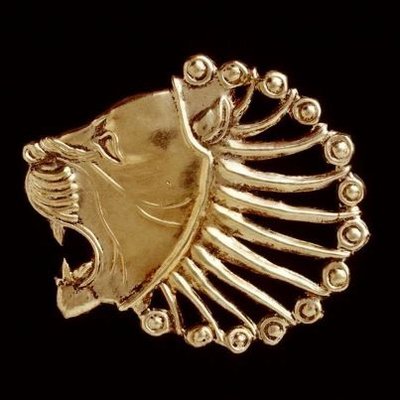
The mysterious fog of AD 536 was a massive, stratospheric dust and aerosol veil that plunged Europe, the Middle East, and parts of Asia into nearly 18 months of continuous darkness and extreme cold, widely considered by historians like Michael McCormick to be the start of "the worst year to be alive"...
Historical records indicate that the sun appeared dim and bluish, casting no clear shadows, and temperatures dropped significantly. This climatic event, now understood to be the result of a massive volcanic eruption—likely in Iceland—released vast amounts of ash and aerosols into the atmosphere, blocking sunlight for over a year. Ice core samples and tree ring studies support this theory, providing evidence of a dramatic climate shift and marking 536 AD as one of the coldest periods in millennia.
. . .
In 536 AD, a mysterious fog enveloped Europe, the Middle East, and parts of Asia, plunging the world into darkness and triggering what has been described as a "volcanic winter."
Scientific analyses of tree rings, ice cores, and historical records point to a massive volcanic eruption—or a series of synchronous volcanic events—that injected huge amounts of sulfur dioxide, ash, and silicate particles into the upper atmosphere. Research highlights major eruptions originating from Iceland, North America, or tropical regions (such as Krakatoa or an unidentified tropical volcano) in early AD 536, with follow-up eruptions in 539–540 and 547 that prolonged the cooling. The aerosols formed a persistent stratospheric sulfur haze that reflected and scattered sunlight, drastically reducing solar radiation reaching the Earth's surface.
Summer temperatures dropped by up to 1.5 °C to 2.5 °C (or even more locally), kicking off the coldest decade in 2,000 years and initiating the Late Antique Little Ice Age (536–660). Contemporary chroniclers (such as Procopius in the Byzantine Empire) noted that the sun gave off a dim, bluish, or lightless glow, casting no shadows at noon and making the sky look perpetually overcast or foggy. Frosts lingered through the summer months, and snow fell out of season across parts of Europe and China.
The consequences of this event were devastating. Agricultural production collapsed, leading to widespread famine and societal upheaval across regions. Millions died from famine and social upheaval. The crisis was compounded by the outbreak of the Justinian Plague, which followed shortly after, further exacerbating the human toll. The weakened, malnourished population became deeply vulnerable to disease, paving the way for the devastating outbreak of the first bubonic plague pandemic in AD 541, which wiped out a massive portion of the population in the Byzantine Empire and beyond. This combination of climatic and epidemiological disasters had profound impacts on populations, economies, and empires. Modern research continues to unravel the scale of this event, highlighting it as a pivotal moment in global history with far-reaching consequences.
#drthehistories
🤖 Made with AI

Darren Harris retweeted

🧵It is easy to imagine that everything in a museum has been carefully researched, its history understood and its mysteries solved. Yet the Ormside Bowl, one of the Yorkshire Museum’s most celebrated treasures, reminds us that this is not always the case. Some objects still hold

ALT Found around 1823 near St James' Church in Great Ormside the bowl is actually two separate vessels joined together. While the outer silver-gilt shell is 8th-century Anglo-Saxon work (likely looted from a Northumbrian monastery) the inner gilt-bronze cup was added roughly a century later. The blue glass studs used to decorate the newer inner bowl closely match glasswork produced at Coppergate in Viking-era York, suggesting Vikings adapted the ecclesiastical vessel into a personal drinking cup for feasts before bringing it to Cumbria. Image: York Museums Trust CC BY-SA 4,0
Darren Harris retweeted
During it's long history, the Tower of London was home to some notable prisoners. There would be escape attempts made, some of them successful including Ranulf De Flambard, the widely hated Bishop of Durham, who made a daring escape in 1101 and the infamous Roger Mortimer who escaped during the reign of Edward II and later allied himself with Queen Isabella. One attempt that wasn't successful was that of Gruffudd ap Llywelyn ab Iorwerth with Matthew Paris describing the Welsh Prince's demise in 1244;
"Though his wife had received permission to visit him, yet he was deeply affected by the tedious and unaccustomed long imprisonment, and meditated much how he could escape from the place of his confinement. One night, then, having deceived his gaolers, and made a cord out of his sheets, tapestries, and table-cloths, he let himself down perpendicularly by means of the same rope from the top of the Tower. And when he had thus descended some distance, from the weight of his body, the cord snapped, and he fell from a great height; for he was a big man, and very corpulent; and in this way he broke his neck, and died; and his pitiable corpse was found in the morning near the wall of the Tower, and afforded a lamentable spectacle to all who saw it, as his head, together with his neck, was almost buried in his breast between the shoulders. When the king (Henry III) heard of it, he scolded and punished the guards for their negligence, and ordered that the son of the said Griffin, who had been incarcerated with his father, should be forthwith more narrowly guarded. The said Griffin, who fell from the Tower, as has been stated, died on the 1st of March."

Darren Harris retweeted

The other side shows Charles II in the style of a Roman emperor. Simon employed a similar portrait on his designs for the Scottish coinage that was introduced in 1664. This specimen was acquired by William Hunter sometime between 1770 & 1783. It's now in the Hunterian collection.