




Pinned Tweet
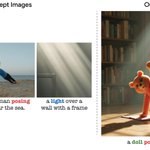
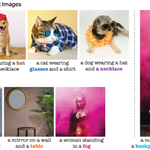
Thrilled to share that our paper TokenVerse received a Best Paper Award at #SIGGRAPH2025! 🎉

Excited to share that "TokenVerse: Versatile Multi-concept Personalization in Token Modulation Space" got accepted to SIGGRAPH 2025!
It tackles disentangling complex visual concepts from as little as a single image and re-composing concepts across multiple images into a coherent result.
token-verse.github.io
#SIGGRAPH2025
Daniel Garibi retweeted

Multi-turn image editing is notoriously challenging: as edits accumulate, unintended changes and artifacts build up.
Not anymore!😁
Introducing ACEdit ♠️
A training approach that counteracts accumulated drift across successive image edits, preserving scene details as the changes add up.
🌐 saradorfman1.github.io/ACEdi…
1/5
Daniel Garibi retweeted

When generating an image with an MM-DiT, the text tokens absorb information from the evolving image through multimodal attention. But what do these contextual tokens actually capture?
In our new work, “Learning to Read,” we show that contextual tokens can be read as plain text, revealing surprisingly detailed visual semantics. Building on this finding, we introduce a new way to train diffusion models: supervising their contextual tokens to improve generation quality and distributional coverage.
1/n

Daniel Garibi retweeted

Excited to share our work, “Token-to-Token Alignment of Text Embeddings for Semantic Blending,” accepted as a NeurIPS 2026 Spotlight 🌟
Can we directly interpolate between semantic concepts?
Text embedding spaces already encode a continuous semantic structure, the missing piece is alignment.
Once aligned, simple interpolation becomes meaningful, naturally enabling multiple applications.
Joint work with @MokadyRon @OPatashnik @DanielCohenOr1

Daniel Garibi retweeted

Excited to share that our paper "ParetoSlider: Diffusion Models Post-Training for Continuous Reward Control" has been accepted to @NeurIPSConf as an oral! 🎉
ParetoSlider enables continuous inference-time control over competing reward trade-offs with a single diffusion model, without retraining or maintaining multiple checkpoints.
Huge thanks to the great team @mikikiFin, @ArielBAMath, @YotamNitzan, @OPatashnik
Paper: arxiv.org/abs/2604.20816
Project page: shelley-golan.github.io/Pare…
Code: github.com/Shelley-Golan/Par…


1/7
When rewards conflict, what should RL post-training of diffusion models optimize?
In visual generation, objectives are often in tension:
Prompt adherence can conflict with source preservation.
Photorealism can conflict with stylization.
In our new paper, ParetoSlider, we introduce a multi-objective RL framework that trains a single diffusion model for continuous control over competing reward objectives 🧵
Daniel Garibi retweeted

You ask for a talking parrot, but the model makes the pirate talk AND gives him a beak! 🦜😮💨
-> Introducing The Attention Triangle in Audio-Video Models: how semantics leak between text, audio, and video, and how we steer them back. 🧵 [1/5]
Daniel Garibi retweeted

Excited to announce that "MV-Forcing" has been accepted to #ECCV2026! 🎉
Current methods generate long single-view videos or short multi-view videos, but not both. To bridge this gap, we present MV-Forcing, the first framework for long multi-view video generation.
[1/6]
Daniel Garibi retweeted
Generating images with AI is fun 🤓
Finding the image? Not so much…
The first result is rarely the one. Or the second. Or the third. 🥵
So we built a way to generate diverse possibilities along meaningful semantic axes 🧭 and organize them into a gallery you can effortlessly browse 🧚🏻
Introducing our #ECCV2026 paper: Semantic Browsing: Controllable Diversity for Image Generation ✨
1/5
Daniel Garibi retweeted

Thrilled to share that our paper "SAEdit: Token-level control for continuous image editing via Sparse AutoEncoder" has been accepted to #ECCV2026! 🥳
We use sparse autoencoders to find fine-grained editing directions, enabling controlled & precise image edits.

AutoEncoders normally have narrow bottlenecks, Sparse AutoEncoders (SAE) have large ones!
SAEdit leverages that to learn a high-dimensional, disentangled sprase space, where linear moves on text embeddings translate into fine-grained, visual edits ronen94.github.io/SAEdit/
1/5

Daniel Garibi retweeted

Even today, with powerful image editing models, making fine-grained structural changes to 3D shapes remains a major challenge.
In our new #SIGGRAPH2026 paper, Prox-E, we use primitive-based abstraction to leverage VLMs for precise, reasoning-based 3D editing!
👇
Daniel Garibi retweeted

Excited to share our work accepted to #SIGGRAPH2026 ! Video generation models struggle with something few talk about: their transformations don't evolve smoothly. You get long boring stretches... then a sudden semantic jump where everything "catches up" at once.
Daniel Garibi retweeted
1/7
When rewards conflict, what should RL post-training of diffusion models optimize?
In visual generation, objectives are often in tension:
Prompt adherence can conflict with source preservation.
Photorealism can conflict with stylization.
In our new paper, ParetoSlider, we introduce a multi-objective RL framework that trains a single diffusion model for continuous control over competing reward objectives 🧵
Daniel Garibi retweeted
Do you like image editing? Don't like prompt engineering? Want to see what a giraffe-duck hybrid looks like?
If you answered yes at least once, you may like our new #SIGGRAPH2026 paper: LooseRoPE, which presents a new, prompt-free way to edit images using simple visual cues 👇
Daniel Garibi retweeted

3D editing has long relied on workarounds: per-asset optimization, 2D view propagation, or hacking frozen priors. The bitter lesson is the same one image editing already learned. Train a native model, end-to-end.
Introducing ShapeUP, accepted to SIGGRAPH 2026 💫
Daniel Garibi retweeted

[1/5] Is Text Enough for Control? 🐇
Text-driven video editing lets you describe *what* to change. But what about *how much*?
We introduce Adaptive-Origin Guidance (AdaOr).
A joint work with @DecartAI and @TelAvivUni 🧪
accepted to #SIGGRAPH2026.
Daniel Garibi retweeted

Many styles are not just textures or colors — they reshape geometry.
Abstraction in Style (AiS) introduces an abstraction stage before stylization, enabling extreme abstraction-driven styles previously out of reach.
arxiv.org/pdf/2603.29924

Daniel Garibi retweeted
Modern T2I DiTs are incredibly powerful, but have a serious diversity problem.
We introduce a surprisingly simple and efficient inference-time fix
(+2s for Flux-dev, +1s for SD3.5-Turbo).
Excited to share our SIGGRAPH 2026 (conditional) paper:
“On-the-fly Repulsion in the Contextual Space for Rich Diversity in Diffusion Transformers”

Daniel Garibi retweeted

DLSS 5 is all over the timeline, and for good reason. In my internship at @AIatMeta we had the same idea: use a video model as a learned second-stage renderer on top of game engines. In our paper RealMaster, we make synthetic video look real while preserving scene fidelity 👇
Daniel Garibi retweeted

Check out DynaEdit - our new training free video editing method from @GoogleDeepMind .
It allows enough flexibility for the edit to induce dynamic changes without deviating from the original video.
Some cool examples in the video and on our website dynaedit.github.io/

Video editing just got more dynamic! 🚀
Thrilled to share DynaEdit: a training-free, text-based method for non-rigid video editing.
Work done during my internship at @GoogleDeepMind with @Roni_Paiss, @kusichan, @inbar_mosseri, @talidekel, @t_michaeli
dynaedit.github.io
Daniel Garibi retweeted
Cycle consistency is a powerful and cool idea.
Here we use it to learn image decomposition: decompose an image into components, recombine them, and enforce consistency both ways.
A cool training principle with surprisingly strong results.


Our paper on image decomposition is accepted at #CVPR2026!
We explore visual in-context learning to decompose nonlinearly mixed layers in images.
🌐 Project page: vcc.tech/research/2026/ImgDe…
📄 Paper: arxiv.org/abs/2602.20989
💻 Code (Coming soon): github.com/edward3862/ImgDec…

Daniel Garibi retweeted

New research from @bfl_ml 🥳
Meet Self-Flow: our self-supervised framework for image, audio, video & world models 🤖
bfl.ai/research/self-flow
Do generative models really need DINO to learn strong representations? We propose teaching them directly via a joint framework instead 🧵
