

Author of Producing Politics, Beacon Press also: https://nitter.cf/t.co/4eJOeLhswO Sociologist. Carnegie Fellow. Trans, parent.
- Tweets31.5K
- Following5.2K
- Followers12K
- Likes118K





ALT Flyer for Peopling Politics mini-conference at ESS 2027 - on a blue background with the US Capitol in the background. Can't fit all the text here, see peoplingpolitics.com or email [email protected] for more information. Apply at essnet.org, then select our mini-conference. This mini-conference will bring together sociologists, political scientists, other academics, and political practitioners who study and/or work in U.S. politics with a focus on race, class, inequality, and the influence of social and cultural forces. We believe that in order to understand and affect political institutions or electoral outcomes, we must begin with the contexts and cultures of the people who make political phenomena real - from non-voters and voters to grassroots organizers to elected officials and their staff. This requires empirical observations of actual people and their actions, rather than relying on abstracted models of how individuals, political groups, or institutions operate.

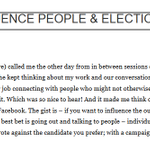
ALT image of the top of the post - text reads: how to influence people & elections Oct 21, 2026 A friend (and political operative) called me the other day from in between sessions of canvassing in Michigan for Abdul El-Sayed. She told me she kept thinking about my work and our conversations as she was canvassing, and thought she was doing a better job connecting with people who might not otherwise vote – or who might vote against El-Sayed – because of it. Which was so nice to hear! And it made me think of this post, which I wrote almost exactly 2 years ago on Facebook. The gist is – if you want to influence the outcome of an election (in this case, it’s the midterms) – your best bet is going out and talking to people – individually if you know people who might not vote, or who might vote against the candidate you prefer; with a campaign or organizing group of some sort.

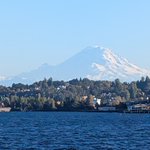
ALT Image of Mount Rainier seen across water (Puget Sound) with an uncharacteristically clear blue sky, and some land with trees & houses in between the water & the mountain (and a crane and some shipping containers visible on the left).

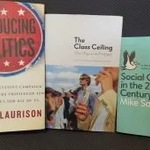
ALT a photograph of the 3 books I've published, from most recent left - right: 1. Producing Politics: Inside the Exclusive Campaign World where the Privileged Few shape Politics for All of Us) 2. The Class Ceiling: Why it Pays to Be Privileged (with Sam Friedman) 3. Social Class in the 21st Century (only Mike Savage is on the cover but all 7 of us are authors & are named inside). Also apparently each of my books has been taller than the last. Don't think I can keep that going!

ALT Image from a blog post. Text reads, in part: Here’s one version of my argument for the book: Electoral battles determine the economic circumstances of our lives; our resources and social milieu structure how and whether we engage with politics. Social class and politics, in other words, are mutually constitutive, and together with other axes of power and privilege (race, gender, sexuality, ability, and so on) they shape every aspect of our lives, from how we see the world to the quality of our kids’ lives to our rights over our own bodies. To make sense of our lives and the world around us, then, we have to have a grip on both the political and the social. However, scholarly and popular approaches to both class and politics are too often overly simplistic, if not outright inaccurate.

ALT Image of the headline ("national coming out day") and first 2 paragraphs or so of the blog post I wrote in 2020. It’s National Coming Out day. I’m a transgender man. If any of you didn’t know that, and want to ask me questions, you can. I came out as a dyke (fn1) at 15, started identifying as some kind of butch or genderqueer person in my 20s, hung out with mostly other queers and lesbians until grad school, and decided to transition physically & socially in 2005. Since then I’ve tried to be out as much as possible, but my gender history doesn’t tend to come up in casual conversation, so I need to make more of an effort than I did when I was a visibly queer female-bodied person with romantic partners who were women. Unlike many trans people, I don’t believe that I’m truly or essentially “a man,” I just figured out that I feel way more comfortable in my body & in the world having transitioned. [...]

ALT Flyer for Peopling Politics mini-conference at ESS 2027 - on a blue background with the US Capitol in the background. Can't fit all the text here, see peoplingpolitics.com or email [email protected] for more information. Apply at essnet.org, then select our mini-conference. This mini-conference will bring together sociologists, political scientists, other academics, and political practitioners who study and/or work in U.S. politics with a focus on race, class, inequality, and the influence of social and cultural forces. We believe that in order to understand and affect political institutions or electoral outcomes, we must begin with the contexts and cultures of the people who make political phenomena real - from non-voters and voters to grassroots organizers to elected officials and their staff. This requires empirical observations of actual people and their actions, rather than relying on abstracted models of how individuals, political groups, or institutions operate.

ALT Flyer for Peopling Politics mini-conference at ESS 2027 - on a blue background with the US Capitol in the background. Can't fit all the text here, see peoplingpolitics.com or email [email protected] for more information. Apply at essnet.org, then select our mini-conference. This mini-conference will bring together sociologists, political scientists, other academics, and political practitioners who study and/or work in U.S. politics with a focus on race, class, inequality, and the influence of social and cultural forces. We believe that in order to understand and affect political institutions or electoral outcomes, we must begin with the contexts and cultures of the people who make political phenomena real - from non-voters and voters to grassroots organizers to elected officials and their staff. This requires empirical observations of actual people and their actions, rather than relying on abstracted models of how individuals, political groups, or institutions operate.

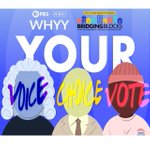
ALT Image of a flyer for the event, it says "your voice, choice, vote" over a 3 cartoon heads & torsos, one looks founding-fathers, one is dude in suit, one looks like a young Black man in a beanie. Also PBS & whyy & "building blocks" logos.

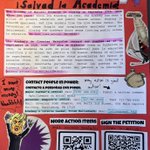
ALT A collage on a red background with text about how to try to save the Academy of Natural Sciences, and lots of cool art that I can't do justice to in words. The key info is at the links in the post.

ALT Screenshot of this webpage, key thing is the headline - "Swarthmore Expands Financial Aid With New Tuition Guarantee" https://www.swarthmore.edu/news-events/swarthmore-expands-financial-aid-new-tuition-guarantee -

ALT Cover of Ranita Ray's Making of a Teenage Service Class. Subtitle: poverty and mobility in an American City. Cover image: looking down at someone's feet, wearing a pair of scuffed red converse sneakers, the ratty/frayed cuffs of blue jeans visible above them.

ALT Drawing made with acrylic markers that kind of looks like a turquoise-slate-blue river with dirt and tree trunks in the foreground and more dark green trees/foliage in the background.

ALT Heading of a blog post Main text - "Bending Elite Opinion toward the Working Class" Above that - "Aug 31, written by Beth Baltzan" Below headline - image of a subway station, with "mind the gap" seen prominently on the platform.


ALT Small part of my new passport showing my first two names (Daniel Rebecca), birth date, and the M.

ALT Screenshot of google image search results for "encyclopedia of sociology"