

Strategist, Mentor, Investor, Tech Geek, AI Nerd,MMA Coach, Kettlebell Fanatic, Blockchain Enthusiast, Dad, Big Kid.
Auckland, New Zealand
Joined May 2010
- Tweets2.7K
- Following1.1K
- Followers662
- Likes16.6K



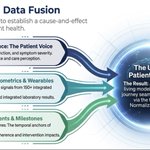

NZ votes this weekend.
The US midterms just delivered a Democratic sweep of Congress, 40+ local data-centre restriction votes, and a hard AI/chip selloff.
Compute is looking for friendlier ground.
Which party will be first to stand up for all New Zealanders and offer frontier AI labs a clean path: renewable power, available land, and another submarine cable — potentially co-funded by the labs themselves?
In exchange: training, R&D and inference work relocating here.
The moment is open. Who takes it or do we let it pass by?
2
39
Darryl Grauman retweeted

This video feels like I walked into a conversation halfway through.
The future is about to get crazy.


Looks like we did a thing!
TC-WIZ started as a concept to reduce the time for customers to create PREMS & PROMS Projects and Surveys.
RAI on voice mode acts as your design & build guide turning weeks of work into minutes.
TC-WIZ is going GA to all of our current customers alongside v3.2 - if you want to join our release webinar, drop me a DM with your details.

Most clinical project rollouts take weeks of specialist coordination.
For @theclinicianpro, building its clinical assistant on Google Cloud speeds up project setup by 325X — allowing teams to focus on delivering patient care. ⚡️
How else can AI improve healthcare processes?
3
41
After a few months of heavy agent orchestration and continuous task switching, I felt I’d fried my brain. I needed to find a new way of working.
Every agent you start is a future interruption YOU have already scheduled.
You give an agent a complex task. It says it will take a while. That creates an empty space, so you start another agent. Then another. Soon one is working in Codex, two are in Claude, Grok Bot is working hard & another is buried in a browser tab, and something else is running in the cloud. Why? Because, dammit, you can!!!
Then they begin returning…….
One needs approval, another misunderstood the task, and two have produced work that needs detailed review. You can’t remember which assumptions belong to which agent. The whiteboard comes out because agents execute in parallel while human attention doesn’t, and your brain feels like it’s glitching.
We are increasing production faster than our capacity to direct, verify and absorb it. The bottleneck moves from doing the work to supervising it. Starting another agent feels free because the cost is deferred. But it creates more and more review debt: remembering the brief, reconstructing context, checking evidence, resolving exceptions and deciding what happens next.
Run enough agents and you’ve built yourself a small company with no operating system. YOU are its manager, reviewer, security officer and integration layer. A whiteboard makes the problem visible. A control plane is needed to solve it.
My current rules:
1. Unless you can stay in a single harness, keep one register across every agent and every harness. (My physical whiteboard)
2. Limit work in progress. Don’t launch more work while completed work is waiting for review.
3. Batch your reviews into fixed windows. Agent progress is not an emergency. I’ve started booking meetings with my agents in my calendar, spaces to review specific agent progress.
4. Make sure your agents provide a completion packet: result, evidence, exceptions and the exact decision needed so you don't need to review verbose responses.
5. Give each agent enough authority and acceptance criteria to resolve routine ambiguity itself (not for beginners!!)
And what should the human do while agents work?
Sometimes, nothing!! #winning 🥂
Preserve your attention for judgement: talk to customers, integrate what you’ve already learned, focus on the one task that genuinely requires you, or walk the dog before the reviews arrive.
The useful measure of an agent system is how much completed, verified work reaches the other side without shredding the operator’s attention.
So maybe the real question isn’t how many agents you can run, it’s how many can you responsibly review when they all come back? 🖖🏼
2
3
132
Very happy with this!

Our TC-WIZ companion app is making waves, helping healthcare teams design outcomes projects directly. It's slashing setup times from weeks to hours.
cloud.google.com/customers/t…
#TheClinician

1
36
This is fascinating. It’s weird that I can stop the movement by focusing my eyes and brain on colours as the primary focus and shape as the secondary, whereas when reversed I see the illusion of movement.

41
Darryl Grauman retweeted

PREMs offer administrators insight into how patients experience care, beyond clinical outcomes. Understanding patient perspectives helps identify operational improvements and support staff training. It's key for delivering high-quality, patient-centered care.

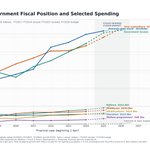
NZ spends more servicing past borrowing than on infrastructure.
Interest: $9bn+ a year and rising.
Estimated AI opportunity: $76bn of GDP. Government AI investment: tens of millions in talk and adoption attempts but insufficient on infrastructure.
We’re funding yesterday’s debt at scale while not funding tomorrow’s productivity! #nzpol

1
3
50

Welcome to the Hermit Kingdom.
New Zealand is less than twelve weeks from a general election. I can find no major party with a published, operational plan for sovereign compute: who controls critical AI capacity, who gets priority when it is constrained, and what continuity rights remain in New Zealand.
Datagrid says it has paid Transpower up front for four high-voltage transformers and associated equipment for a 360 MVA substation at Makarewa. Commissioning is targeted for late 2027.
That is a serious infrastructure commitment. It is not operating compute, and it does not tell us who will control the accelerators once they arrive.
The Overseas Investment Office approved Datagrid’s acquisition of the Makarewa site in December 2021. The 280 MW campus is targeting delivery in 2028. Across the Pacific, NVIDIA says xAI and NVIDIA built Colossus’s supporting facility and initial 100,000-GPU system in Memphis in 122 days.
These are not equivalent projects. xAI reused a former factory with existing utility connections and allowed permanent infrastructure to catch up later. Datagrid is sequencing a greenfield campus, its grid connection and international connectivity before operating at scale.
New Zealand still pays the time premium. A campus conceived in one technology cycle and delivered years later must compete in another. Time-to-compute can become time-to-obsolescence.
The political response remains incomplete and inadequate.
The Greens propose a one-year pause on new AI data-centre consents while rules are developed around electricity, water, community impact and local benefit (🙈 with zero understanding of the damage this will do to the NZ economy). The Government’s AI strategy emphasises adoption and application rather than foundational AI development.
Neither answers the sovereign-compute question. Who controls the accelerators? Which New Zealand organisations receive priority when capacity is constrained? What continuity and exit rights remain here if an operator, cloud platform or model provider changes terms?
Committed megawatts are not reserved inference hours.
Every party seeking a mandate on 7 November should publish a costed position on time-to-compute and control of compute. Otherwise New Zealand risks supplying the land, electricity and grid infrastructure while others retain the intelligence layer.
Buying the electrons does not secure the intelligence!
#nzpol
53
The AI Model Wars Continue. The Agent Control Plane Wars Have Begun.
We’re seeing the conversation shift from which frontier model is smartest to who controls the orchestration layer that directs them.
Recent signals make this clear:
xAI open-sourced the Grok Build agent harness, separating orchestration from its models.
Moonshot’s Open-Source Kimi K3 showed strong results on agentic and coding benchmarks.
Apple made local on-device agent loops a native pattern on the Mac at WWDC26.
As models become interchangeable, power shifts to the harness. This is the layer that manages memory, runs tools, routes tasks across models, and holds state.
This is driving policy moves. Anthropic restricted consumer credentials in third-party tools to protect margins. OpenAI continues allowing its models inside external open-source harnesses. These changes carry more weight amid IPO pressure and demands for predictable margins. The harness is now financial infrastructure.
The practical future is hybrid: local agents on-device for privacy-sensitive and routine work, private open-weight models for enterprise context, and frontier models only when the reasoning gets hard.
The central tension plays out differently across two groups.
Enterprises are consolidating around governed control planes. Microsoft Copilot and Agent 365 are well positioned here. They already control identity, compliance, security, and work context, and are extending governance across their own agents, local open-source harnesses, and third-party models.
Developers and independent builders are moving toward flexible, model-agnostic harnesses they can own and extend. Cursor, OpenClaw, Hermes are gaining traction because they let people choose models, run locally or in the cloud, and maintain their own memory and orchestration.
And let’s not forget our local team @autohiveai rapidly making waves in NZ and beyond.
The winner won’t be the company with the single best model. It will be the one that delivers the most useful control plane for routing work across the stack.
For anyone running real agent systems, the harness you choose determines how much actual control you keep over cost, compliance, data flow, and long-running execution.
2
5
293
Cost of production in NZ makes it impossible to compete.
When international suppliers can land quality stock into NZ at a lower cost to local producers, it’s time to ring an alarm bell. 🔔

Every day we see more evidence of the state of the NZ economy.
A state of affairs that has seen NZ, in my lifetime to go from #3 in the world to #50 in terms of our GDP per capita (in USD).
This didn’t happen infer just any recent government. I’m 80. It’s taken that long .

1
84

US Government suspends foreign-national access to Anthropic’s Mythos and Fable models (for well intentioned reasons); proving that this scenario is reasonably possible.
Does this make any NZ political or commercial leaders nervous that NZ could be “unplugged” instantaneously and the commercial effect could be disastrous?
anthropic.com/news/fable-myt…
#nzpol


47
Take 5 mins 👇
You’re unable to view this Post because this account owner limits who can view their Posts. Learn more
2
1
64
