

Lector, Abogado, Aprendiz, Storyvore, Legal and Smiling Samurai, Secret-keeper, Sobreviviente; prestidigitador de Magias Inútiles. MNK lvl 5. CLR lvl 4.
Joined May 2008
- Tweets27.5K
- Following669
- Followers242
- Likes9.4K








Pinned Tweet
Ella jugaba Marvel Rivals (Jeff! Tutoriales! Drama!), yo leía Age of X (Legacy me gusta un montón en las primeras 100 páginas; Basilisk es un grán concepto. Es la primer historia que me encuentro de Rogue y Cyclops de protas) .
Luego, vimos Chainsaw Man - The Movie: Reze Arc. ⊗ – at Benito Juárez, Distrito Federal


1
175
Sea como lo fuere, hoy es Viernes del Corona.
Y escuchar a Gorillaz 🧡 – at Miguel Hidalgo, Distrito Federal

2
39


Me está gustando este anime.
Me parece que es una buena mezcla, que tiene como base ya sea un isekai o bien algo así como realismo cyber mágico, con varios tropos y géneros cercanos pero distintos.
Sabe bien el resultado, recomiendo probar.
Es del autor de SAO.
#devilscrest

1
1
72
Dieciséis de noviembre de dos mil veintiseis; libros, comics, strudel de 🍎, conversación y cariño.
Feliz cumpleaños, old friend.

16
Quiero este libro.
Kamigawa: Neon Dinasty fue una de mis expansiones favoritas.
Cyber Punk + Magic: The Gathering [yes, please].

🌕 COVER REVEAL 🌕
Welcome to the neon streets of Kamigawa . . .
We are thrilled to share the cover of KAMIGAWA: MOON OVER THE NEON CITY by Akemi Dawn Bowman, an official tie-in novel to the upcoming Kamigawa: Titanbreach set from @wizards_magic! ⬇️


28
El gato me reclamó por no dejarla dormir a causa de escuchar a U2.
Disculpa, Emma, no sé cuántos álbumes nuevos de U2 voy a experimentar aún en la vida, y estoy disfrutando mucho éste.
«Do it for a dare, do it for a laugh/ Love is always somewhere at the back of the photograph»

1
37
Bueno, pusieron Avengers: Endgame Encore en Disney+, y pues le gana a mis demás planes sabatinos.
Veamos a Stark diciéndole Lebowski a Thor una vez más... – at Miguel Hidalgo, Distrito Federal

165
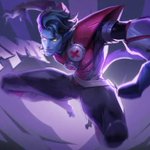
Y mi adolescente mutante estaba muy feliz por la inclusión de Nightcrawler en Rivals.
Grán diseño, de todo a todo, congruencia y se ve bien desgraciado el elfo. – at Benito Juárez, Distrito Federal

2
155
DeCarabás, Distopía Cyberpunk 2026 retweeted

U2: Carnaval De Luz #u2 #CarnavalDeLuz
The Carnival Is America
A First-Listen Review
I approached U2's Carnaval De Luz with some trepidation. I have been listening to this band for decades, and frankly, I've been waiting for them to sound like U2 again since 2009's No Line on the Horizon. The last two albums, Songs of Innocence and Songs of Experience, weren't without their moments, but too often they sounded like a band trying to figure out what U2 was supposed to sound like in the 21st century.
Well, I have some news. U2 finally sound like U2 again.
And what a relief.
The album opens with “Go,” a song that immediately recalls the U2 of the 1990s. Think “Zoo Station” at a carnival. There is something of Achtung Baby and Zooropa here, that sense of experimentation, theatricality and a band willing to make some noise.
“Zoo Station” announced a new U2 in 1991. “Go” announces the return of the old one, or at least the U2 that knew how to experiment without losing its identity.
I should be disappointed that U2 are reaching back into their history, but I'm not. In fact, I'm relieved. They've spent so much time trying to sound contemporary that they forgot how to sound like themselves.
“La Reina” follows, and this is the song U2 should have written in 2014. A real hit. Not a blockbuster, necessarily, but an honest-to-goodness hit with a driving rhythm, a terrific hook and, would you believe it, a proper middle eight!
This may be the best U2 song since 2005.
There's something of “Even Better Than the Real Thing” in its opening attack, and the comparison isn't a bad one. But “La Reina” stands on its own. It's a carefully constructed rock song that never sounds like it's trying too hard.
And Bono sounds like he stopped smoking.
Seriously, there's something different about his voice on this record. I'll come back to that.
“Street of Dreams” is another unmistakably classic U2 song. Any longtime fan will recognize the ingredients. There's something of “Vertigo” here, but with a slower, more deliberate beat. And then comes that enormous chorus, reaching for the stars the way U2 used to do almost effortlessly.
I'm not entirely sold on the vocoder effect. Does it really help the song? I'm not sure. It's a production trick that seems unnecessary when the band already has a perfectly good song underneath it.
Still, three songs in, I'm impressed. My only concern is that U2 might have front-loaded the album with its best material.
We'll see.
Then comes “The Mirror Maker.”
A rock song.
A ROCK song.
I don't think I've heard a proper ROCK song like this from anyone in a decade.
Adam Clayton and Larry Mullen drive this thing with a muscular rhythm section that reminds us what a formidable rock band U2 can be. Then the Edge's guitar takes over the chorus, and the song absolutely hits.
There's a reference to Saint Cecilia, the patron saint of music, which fits rather nicely into an album increasingly concerned with faith, music and the relationship between the sacred and the secular.
The middle eight is particularly impressive, briefly transporting us into the atmospheric world of Brian Eno-era U2. Think The Unforgettable Fire. But just as the atmosphere begins to take over, the rock returns.
And then the song ends, leaving me wanting more.
U2 clearly workshopped this material. You can hear the construction, the careful arrangements, the attention to detail. But you know what? I don't care. It works.
“Superficiality” is the first song that sounds a little forced.
The verses don't immediately convince me. The lyrics seem underdeveloped, almost as though this was a song written quickly that somehow made the final cut.
But the chorus is terrific, and there's the Edge's wonderful echoing guitar again, filling the instrumental passages with that unmistakable U2 sound.
And Bono reaches for his falsetto.
He struggles a little. He's 66 years old, after all, and nobody should expect the Bono of 1991. But he's working for those notes, and I have to say something I haven't said in years.
Bono sounds better than he has in decades.
He's not the old Bono, but he's singing again. Really singing. There's effort, conviction and a willingness to push his voice rather than hide its limitations.
“Superficiality” may take some getting used to, but it's another reminder that this band still has plenty left in the tank.
“The World Is at War” is a difficult song.
Almost a ballad, it doesn't reveal itself immediately. The vocoder makes another appearance, and frankly, I'm beginning to find it annoying.
This one may be a bomb or it may be brilliant. Only time and repeated listening will tell. There are songs in U2's catalog that took years to reveal their qualities, and I'm not prepared to dismiss this one after a single hearing.
But it doesn't hit me right away.
Then comes “Silencio,” which is anything but silent.
Mother Mary appears in the first verse, along with references to Carnival, the devil and rock and roll. The religious imagery is becoming impossible to ignore.
Musically, this is another near-classic U2 song. It recalls “Desire,” complete with that infectious Bo Diddley-style beat.
And it may be the catchiest song on the album.
It's got swagger, rhythm and an infectious energy that reminds me of the band that recorded Rattle and Hum. The religious references also seem entirely natural. U2 have been mixing Christianity, temptation and rock and roll since the beginning of their career.
At this point, I'm ready to say something I wasn't expecting to say tonight.
This is a solid U2 album.
Unless it completely collapses from here, U2 have delivered something they haven't managed in a long time.
And then comes “The Greatest Show on Earth.”
The Edge opens with that classic echoing guitar, while Bono begins singing in an almost deliberate monotone, as though he's trying to demonstrate what it would sound like if he couldn't sing anymore.
Then the music begins to rise.
And suddenly the hair on the back of my neck stands up.
There it is.
THAT is U2.
The song is mid-tempo, which makes the soaring anthem even more impressive. It doesn't depend on speed or volume. It depends on the gradual build, the interaction between the musicians and Bono's ability to turn a melody into something enormous.
He's swinging for the fences here.
And he's connecting.
The lyrics explore love, performance and the difficulty of distinguishing genuine emotion from show business. There's an almost self-aware theatricality to the whole thing.
I've heard U2 write this song two or three times before.
But I don't care.
I know every trick they're pulling. I know when the Edge is going to make that guitar soar. I know when Bono is going to reach for the big emotional payoff.
And it still works.
That's the thing about U2. At their best, they could make you feel something enormous, even when you knew exactly how they were doing it.
“The Greatest Show on Earth” is top-notch Bono, and one of the album's highlights.
“Glorify” follows, opening almost like a hymn.
It's an acoustic, nearly ballad-like U2 song, with the entire band eventually joining in on the refrain. There's a devotional quality to the arrangement, and after the emotional fireworks of the preceding tracks, it's a welcome change of pace.
This is a palate cleanser.
It's not quite up to the level of the songs that came before it, but here's the remarkable thing: this would have been a highlight on either of U2's last two albums.
On this record, it's simply a good little U2 song.
Nothing wrong with that.
“Midnight Sunshine” opens with something almost Beatlesque. I'm thinking Rubber Soul, with a warm, rubbery R&B feel.
This is another side of U2 that I've missed.
It recalls the best soulful moments of All That You Can't Leave Behind, although perhaps a notch below the strongest songs on that record.
There's even a piano tinkling away in the background, an instrument you don't often hear used this way on a U2 record.
And the middle eight is better than the song itself.
That's not necessarily a criticism. In fact, one of the things I'm noticing throughout this album is that U2 have rediscovered the art of writing a proper middle eight. Rather than simply repeating choruses until the song ends, they're actually developing musical ideas.
“Midnight Sunshine” isn't a masterpiece, but it's another welcome return to an aspect of U2's musical identity that has been missing for too long.
“Can't Stop Us Now” opens wistfully before developing into something rather unexpected.
A drum-and-bass-driven arrangement, almost trip-hop, with an atmospheric quality that initially recalls Zooropa and Pop.
At first, I find the song meandering. It doesn't immediately grab me, and Bono's lyrics seem to wander without a particularly obvious destination.
But the longer it goes on, the more interesting it becomes.
The music itself is very well structured. Clayton and Mullen establish a solid rhythmic foundation, while the atmospheric textures develop around them. The Edge even takes the sub-chorus, adding another dimension to the arrangement.
It's really the lyrics that meander, not the music.
And suddenly I realize that this may be something more important than another exercise in nostalgia.
This could be a new chapter in atmospheric U2.
The band aren't simply revisiting the Eno years. They're developing those ideas through a more contemporary, almost trip-hop musical landscape.
This may be a hidden classic. I won't know until I've listened to it several more times, but there's something here that deserves further exploration.
It's also a remarkably effective penultimate song because it flows almost seamlessly into the album's conclusion.
And then we hear Dolly Parton.
“Torn.”
This may be the best song on the album.
And not simply because Dolly is singing on it.
The song immediately reminds me of Johnny Cash and “The Wanderer,” the extraordinary closing track from Zooropa.
But there's a fundamental difference.
“The Wanderer” was about a man searching for meaning in a strange and increasingly unrecognizable world. Cash's voice gave that song an unmistakably American character, but there was something deeply lost about it.
“Torn” feels like a sequel, thirty-three years later.
It's as if the wanderer finally found his way home.
But he's an old man now.
And the America he remembers isn't the America he finds.
The land has changed. The people have changed. The familiar surroundings are still there, but something essential has been lost.
And it hurts.
Dolly Parton is the perfect voice for this song. Just as Johnny Cash represented something elemental about America in 1993, Dolly brings her own unmistakably American identity to this performance.
But this isn't simply a country-influenced U2 song.
It's a lament.
A lament for an America divided against itself, where the political fragmentation has become so deeply personal that everyone, regardless of which side they're on, seems to be hurting.
And here's what makes the song so effective.
It's not a sermon. It's a cry.
Bono has spent much of his career lecturing, pleading and demanding that the world change. Sometimes it's worked brilliantly. Other times, frankly, it has become tiresome.
But here, U2 aren't telling America what to do.
They're mourning what has happened to it.
There is no grand political solution offered, no triumphant declaration that everything will be all right. Just a recognition that the divisions have wounded something precious.
And this is where the album's title finally makes sense to me.
The Carnival is America.
The noise, the spectacle, the celebration, the religious imagery, the devil, the rock and roll, the show business, the promises, the disappointments.
America is the greatest show on earth.
And throughout this album, U2 have been taking us through that carnival. Sometimes it's exhilarating. Sometimes it's absurd. Sometimes it's spiritual. Sometimes it's loud enough to drown out everything else.
But eventually the music stops.
The lights go down.
And what remains?
An old wanderer who has finally come home, only to discover that home has changed beyond recognition.
That's where Carnaval De Luz leaves us.
Not with another enormous anthem, but with something sadder and perhaps more profound.
A country that still has its beauty, its faith, its music and its people, but whose divisions have wounded its soul.
And perhaps that's why “Torn” works so well as the closing song.
It doesn't ask us to choose a side.
It asks us to remember what we have in common.
It's a sad but poignant conclusion to an album that, musically, is remarkably uplifting.
So where does that leave U2?
For the first time in a very long time, I find myself genuinely excited about a new U2 record.
This isn't The Joshua Tree. It isn't Achtung Baby. And it isn't trying to reinvent rock and roll.
What it does accomplish is something I had almost given up expecting.
It sounds like U2.
The Edge's echoing guitars are back. Clayton and Mullen sound like a genuine rock rhythm section again. Bono's voice has aged, but he sounds better, and more committed, than he has in decades.
There are hooks, genuine middle eights, memorable choruses, atmospheric experiments and, incredibly, some actual ROCK songs.
Not everything works. The vocoder is overused, some of the lyrics are underdeveloped, and there are a couple of songs that may require repeated listening before I can decide what to make of them.
But the album never collapses.
And the best material is considerably better than anything I expected U2 to produce at this stage of their career.
There's a final irony here.
For years, U2 seemed to be searching for their musical identity, wandering through contemporary production techniques, commercial expectations and attempts to remain relevant.
On Carnaval De Luz, they finally find their way home.
And they close the album with a song about another wanderer who does exactly the same thing.
Only to discover that the world has changed.
The Carnival is America. And U2 have finally found their voice again to sing about it.

Al amparo de esta noche se disfrutaron grandes rolas, y en la tarde del viernes, sushi.
Disco nuevo de U2: escuchando y disfrutando.
Ahora, las rolas en discos 2 y 3 de la edición de lujo, uff! 🧡
Y, Dominic Fike, el descubrimiento de Nov/2026🔥
#U2CarnavalDeLuz #Dominicfike


2
89
Este día trae un álbum nuevo de U2, y ese pensamiento me hizo reír alegremente, a carcajadas.
Gracias. – at Benito Juárez, Distrito Federal

35
«Love... always leads to loss.
Someone will change. Someone will leave. And someone will die.»
—Vision, on Vision Quest, S01E01, Forever – at Benito Juárez, Distrito Federal

1
3
178


Curioso, inicia con la voz de sir Patrick Stewart, rest in power, a quien agradeceré siempre haber sido el Professor X. – at Miguel Hidalgo, Distrito Federal

2
45
Sigue siendo mi comfort movie.
Y ouch, Blink muriendo.
Eso es bonito de la era de Krakoa, están todos vivos, eventualmente. Para bien y para mal. Y enfrentar una noción de eternidad.
Y aí andaba Clarice Ferguson con Nightcrawler, lo que me da gusto.
⊗
#Xmendaysoffuturepast


1
46
«This is not a conversation for unstable systems.»
–Vision
#visionquest
(voy al día, pero había que rescatar esta cita del episodio 3) – at Benito Juárez, Distrito Federal

57
Traigo de fondos de pantalla estas dos imágenes de X-Men _07, de Hickman y Leinil Francis Yu, de la era de Krakoa.
Melody Guthrie (Aero), lucha sin poderes contra •-·|A|·-• en El Crisol, en un duelo ritual para recuperarlos mediante muerte y renacimiento.
Rifados ambos. – at Benito Juárez, Distrito Federal


1
59