

Researcher on income and wealth distribution, striving for a tax system that is equitable for everyone. PhD in Economics from @SantAnnaPisa
Joined January 2022
- Tweets87
- Following131
- Followers268
- Likes352



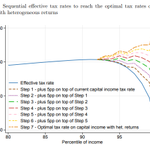
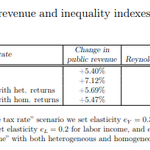
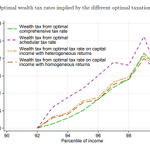
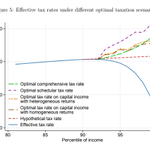
Our latest paper, co-authored with Dalle Luche,
@ElisaPalagi1, @AndreaRoventini, and Santoro, is now published in the Review of Income and Wealth. onlinelibrary.wiley.com/doi/…
We show that unequal returns to wealth amplify inequality and make Italy's tax system more regressive. 1/6


Grazie a @TV2000it per avermi invitato insieme a @MasloMisha a parlare del perché un'imposta sui super-ricchi, che oggi pagano un'imposta più bassa del cittadino medio, ci aiuterebbe a rendere il nostro sistema fiscale più equo per tutti!

Più tasse solo ai super ricchi? La richiesta arriva anche da alcuni milionari. Un'imposta rivolta allo 0,1% più ricco della popolazione, cioè a chi possiede patrimoni superiori a 5,4 milioni di euro. È una delle proposte avanzate dal movimento #TaxTheRich, sostenuta anche da economisti con l'obiettivo di ridurre le disuguaglianze. La puntata di @siamonoitv2000 è su Play2000
1
6
128
Il dibattito su un'imposta per i super-ricchi, che oggi beneficiano di un sistema fiscale regressivo, è pieno di falsi miti e distaccato da dati reali. In questa lettera sul @Corriere, con @ElisaPalagi1 e @AndreaRoventini, riportiamo il dibattito sui fatti corriere.it/opinioni/26_giug…

In uscita il 5 settembre il libro a cui ho contribuito, insieme a tanti e tante colleghe, sulle disuguaglianze in Italia: non solo redditi, ma anche patrimonio, lavoro, ambiente, genere, mobilità. Basato su ricerche scientifiche recenti, ma scritto per essere accessibile a tutti

Seguirà qualcosa di più elaborato perché il momento è un po' ingarbugliato, ma visto che oramai c'è fisicamente, inutile nasconderlo: in uscita il 5 settembre per @editorilaterza.
Qui l'indice con tutte le autrici e gli autori: laterza.it/scheda-libro/?isb…

👇Su @lavoceinfo spieghiamo il nostro ultimo lavoro e possibili vie per risolvere la regressività del sistema fiscale 🇮🇹 : Una maggiore tassazione del capitale, concentrata al top della distribuzione, aumenterebbe il gettito e ridurrebbe le disuguaglianze! lavoce.info/archives/106330/…


1/3 Su @lavoceinfo presentiamo il nostro ultimo lavoro che mostra l'elevata regressività del sistema fiscale italiano. Tassare di più il capitale - anche con una patrimoniale - ridurrebbe le disuguaglianze e generebbe un gettito fiscale consistente.
lavoce.info/archives/106330/…

New paper with M. Dalle Luche @ElisaPalagi1 @AndreaRoventini and A. Santoro show: how wealth returns disparities worsen Italy’s inequality and tax regressivity, and a surge in tax rates on capital can lead to a fairer tax system boosting tax revenues! lem.sssup.it/WPLem/files/202… 1/7


Together with @MorelliSal, we've used income tax data in 🇮🇹 since 1976 to estimate new measures of income concentration, enabling finer geographical detail down to the municipality level. Enormous potential for detailed policy implications! A 🧵 1/7 osf.io/preprints/socarxiv/b2…

"A New Geography of Inequality: Top Incomes in Italian Regions and Inner Areas," by the GC Wealth Project's @DemetrioGuzz & @MorelliSal, provides insights into the spatial dimensions of top income concentration & income inequality in Italy from 2000-2020.
bit.ly/4b0ZwBa

Ieri al Senato abbiamo presentato il Manifesto #TaxTheRich per l'Italia, coordinato da @OxfamItalia. È ora di una riforma fiscale progressiva, a favore di lavoratori e redditi modesti, che faccia pagare la giusta quota ai più ricchi. Link per firmare 👉docs.google.com/forms/d/e/1F…

1/3 Sono felice di aver presentato il Manifesto degli economisti e delle economiste per un'agenda TaxTheRich per l'Italia al convegno coordinato da
@OxfamItalia e Patriotic Millionaires al Senato. Un sistema fiscale più giusto è possibile!
ilfattoquotidiano.it/2024/05…

⚖️Il sistema fiscale italiano ad oggi, favorisce i più ricchi, serve una riforma fiscale che ne tenga conto 👇👇

Un ottimo @DemetrioGuzz della @ScuolaSantAnna riflette sulla #regressività al vertice del sistema fiscale italiano e su quanto la #delegafiscale rischi di allontanarci ulterioremente dal dettato costituzionale (art. 53). Via @fattoquotidiano 👉tinyurl.com/2cjwe7pm

🎓Happy to announce that I've successfully defended my PhD thesis on income inequality and climate change in Italy! Thanks to my supervisor @AndreaRoventini and especially to my committee members F. Lamperti @Roberto__Iacono @giovamarin @Leonie_Climate @gabriel_zucman !

Economists who want to be relevant and useful must offer concrete solutions to the central problems of our time: speeding the climate transition, creating inclusive economies, promoting economic development in poorer nations. But they must avoid cookie-cutter Econ 101 solutions.

This is a short essay on how economics must change to address our current challenges imf.org/en/Publications/fand…

5
563
📌Dai dati BankItalia il 5% delle famiglie detiene il 46% del patrimonio nazionale, con una media di 3.7 milioni a famiglia💰. La nostra ricerca evidenzia anche un'aliquota fiscale più bassa per il 5% più ricco. Ne parliamo con @ElisaPalagi1 per @JacobinItalia 👇👇👇

Tutti gli studi più recenti indicano forti disuguaglianze nella distribuzione di reddito, ricchezza e imposte in Italia. Per contrastare questo circolo vizioso bisogna invertire la rotta
jacobinitalia.it/patrimonio-…

👇Excited to share our new work 'Reconstructing income inequality in Italy: New evidence and tax system implications from Distributional National Accounts’, now published on the Journal of the European Economic Association! 🧵 1/6 @ElisaPalagi1 @AndreaRoventini @saintbull70

Forthcoming article by @DemetrioGuzz @ElisaPalagi1 @AndreaRoventini and @saintbull70 "Reconstructing Income Inequality in Italy: New Evidence and Tax System Implications from Distributional National Accounts" @EEANews @OUPEconomics
doi.org/10.1093/jeea/jvad073


@gabriel_zucman shows that in 🇺🇸🇫🇷🇳🇱the tax rate is largely unfair with billionaires paying less taxes than ordinary citizens in proportion to their income! Based on our work, we can include 🇮🇹 and show that the top 5% pays a lower tax rate than the rest of the citizens! 🧵1/3

📊It is officially online The GC Wealth Project with its brand-new website!💻🚀
It is the first to collect and present comprehensive data and academic research on wealth distribution and its components over time accross the globe!🌍
Stay tuned for upcoming research!📈🔍

Today we launch the GC Wealth Project! 📢📈📉stonecenter.gc.cuny.edu/the-…
The study of wealth — and of wealth inequality and its taxation — is now understood as central to our understanding of household well-being and to the functioning of our macroeconomy.
Italy's 'Golden Age' of occupational mobility is long gone, and occupational im-mobility is on the rise leaving many born after 1970 stuck in their parents' career footsteps. A great paper unvailing some important questions on this topic 👇👇

📢📢Happy to announce that my article on occupational mobility in post-WWII Italy has been published on @RivStoriaEcon!
Check it out on early access!
Link 👉rivisteweb.it/doi/10.1410/10…
A short summary 👇

13
938
ProPublica, found that in 🇺🇸 richest individual pays less taxes than the rest of the citizens. Unfortunately there is an increasing empirical evidance from US, France, Italy, Netherlands, UK all reporting the same fact. Richer individuals do not pay their fair share of taxes

In a very interesting seminar organized by IGIER
@Unibocconi, E.Saez explains why we need progressive wealth tax using also our new research with @ElisaPalagi1 @AndreaRoventini @saintbull70 on the progressivity of the tax system in Italy 👇
youtu.be/ybNawJ1e0V4
Il sistema fiscale in Italia è iniquo, poco progressivo per i redditi più modesti, regressivo per il 5% degli italiani più ricchi che godono di un aliquota effettiva più bassa del resto dei cittadini. Un'imposta dell'1% sui capitali dei più ricchi renderebbe il sistema più giusto

Due scenari di riforma fiscale per incrementare efficienza ed equità dell'attuale sistema blandamente progressivo e regressivo per i redditi più alti
Di @saintbull70, Demetrio Guzzardi, @ElisaPalagi1 e @AndreaRoventini
lavoce.info/archives/93887/s…
📜New paper with @ElisaPalagi1, @AndreaRoventini and @saintbull70!
Check it out! Link at: 👇lem.sssup.it/WPLem/files/202…
A thread 1/7

