

Co-founder & CTO of clinical-stage antibody therapeutics co @IgGenix | Following trials with @trialinference | Previously @Stanford bioengineering PhD
Bay Area, CA
Joined March 2018
- Tweets591
- Following1.3K
- Followers827
- Likes4.4K





A refreshingly serious effort in the de novo drug discovery space:
1. Actual antibodies
2. With encouraging affinities
3. Against some nontrivial targets
4. Conditioned on human framework sequences
5. That consider developability
6. And are available for download!

Introducing Pythia-1, a frontier generative model for protein design.
In our new study, we used it to rapidly design full-length human agonist and antagonist antibodies for hard-to-drug targets.
We’re sharing complete sequences of all lead antibodies to support independent validation and further research. 1/8
I envision a future where there isn't biologic (e.g. antibody) manufacturing like we have today. Instead, we deliver to the body instructions for endogenous production of biologics, with precise control over expression (somehow). Because at face value, taking the sequence of an antibody (something humans produce) and introducing it into Chinese hamster ovary cells only to then purify, formulate, and deliver the antibody to humans, at great cost in both time and money, seems excessively roundabout. Humans already have a cell type dedicated to the production of antibodies! Engineering challenges abound of course, but the foundations are starting to appear.

Progress in biology has a curious structure that, as far as I know, has never really been explained
Why would we lock in a cell line derived from Chinese Hamster Ovaries and proceed to use it for everything for 60 years?
There is no plausible reality in which this random-ass cell line from the 1950s is the global optimum solution for all of its use-cases
Part of the answer is that biology needs to be cautious in a way that other fields do not. Lives depend on biologics manufacturing. So CHO cells are harder to discard than say, a programming language, when a better option comes along
But if biologists are so cautious that they are unwilling to update a core technology for 6 decades - why has there been any progress at all? Sometimes things move quickly. DNA synthesis, sequencing, gene editors, etc. It isn't the case that biologists globally value caution in all things
Biological caution has a kind of jagged frontier. There is a Warhammer 40k quality to it. The tech-priests enforce orthodoxy on CHO cells. But cult of inertia doesn't extend to every planet in the imperium. In isolated pockets, researchers are free to innovate or to adopt xenos technologies
Every biologist has had the experience of asking themselves "why do we do things in this weird old way?" Finding a satisfying answer to that question is, I believe, the key to building the new kind of AI-powered biotech
pubmed.ncbi.nlm.nih.gov/4292…

Another example whereby the discovery of monoclonal IgE antibodies from allergic individuals uncovers new facets in the structure and function of allergens! As always, fun for @IgGenix to collaborate with Geoff Mueller and Scott Smith.

Open Access: Human IgE Antibodies Recognize the Vicilin and Alpha-Hairpinin Domains of Peanut Allergen Ara h 1. First author: Taylor M. Cosey; corresponding author: Geoffrey A. Mueller
The ɑ-hairpinin of Ara h 1 contains a dominant epitope that is both frequently recognized and blocks a majority of the IgE against this domain. Including this region in tests may improve diagnosis of peanut allergy. The trimeric structure of the vicilin region explains the ability of Ara h 1 to induce anaphylaxis with a single antibody.

The brutally candid retrospective, "Lessons learned from the fate of AstraZeneca's drug pipeline", is an A+ read for anyone in biotech.
Despite being over a decade old, there are timeless insights from their 5Rs framework: right target, right tissue, right safety, right patients, and right commercial opportunity.
And as if the entire manuscript didn't drive home the challenges of drug development, they leave the reader with this sobering sentence in the concluding paragraph: "Our ambition is to achieve an overall success rate of at least 8% from preclinical GLP toxicology to launch."
Link to the pdf from academia[.]edu below.
"There's got to be some kind of machine that can do this" - Leonard Herzenberg, eyes tired from counting immunofluorescent cells under the microscope, subsequently invented the fluorescence activated cell sorter (FACS)
h/t @stanfordmag


Speaking of, just this month in the Journal of Immunological Methods: "Of the twelve anti-human IgG2 clones tested, only three were found to be highly specific for IgG2" 😱
doi: 10.1016/j.jim.2026.114086

I've added EU numbering of IgG constant regions to LAMBS in v0.12.0!
LAMBS is free, local, open-source and now saves you the headache of deciphering EU numbering when engineering an antibody Fc. Shown is the pembro S228P mutation (mouseover yields variant in a popup)

ALT LAMBS software indicating a S to P mutation at IgG4 constant region position 228 in EU numbering.

New blog post! I've been blogging for 10 years now and had a chance to reflect on why, including a throwback reference to MySpace, for those old enough to remember.
derekcroote.com/2026/06/27/t…

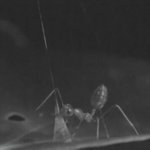
"Ballistic high-powered spider webs" launching ants at 140G is biology so wild it can only happen in one country and yes it's Australia. Catching it on video required shooting at 5000 fps!

ALT Spring-actuated snare in the Australian ballista spider Propostira sp.

E. coli LLM next

Living cells can compute — no engineering required. 🦠
Our E. coli reservoir computer classifies COVID-19 severity & solves ML tasks from growth alone.
New in Cell Systems:
doi.org/10.1016/j.cels.2026.…

what happens after you "Export to Docs" in Google Gemini


ALT nicely formatted equations in Gemini

ALT unformatted equations in Google Docs
Give Trial Inference a try! It's free to begin analyzing the clinical landscape and tracking clinical trial updates.


Incredibly exciting initiative tackling the pernicious problem of respiratory viruses

Today we're launching Intercept: a $500M philanthropic initiative to make respiratory infections, like the common cold and flu, a thing of the past.
We treat respiratory infections as a minor nuisance, but that’s really not the case. Most of us will spend 5% of our lives (!) sick from these viruses, they kill 1M people a year, cost $600B annually in productivity, and periodically threaten civilization through pandemics.
So, if they’re such a big problem, why haven’t we dealt with them yet? Last year we convened ~40 leading scientists, pharma R&D leaders, biotech investors, and regulatory experts to better understand that.
We heard two main reasons:
(1) First, it’s just technically very challenging: respiratory viruses represent hundreds of distinct, mutating strains across several families. Fortunately, recent breakthroughs make this newly possible.
(2) Second is a lack of funding: broad-spectrum solutions have historically been underfunded, in part because they’re not a great fit for most philanthropic or commercial funding (and while COVID generated a burst of activity around preventing and understanding respiratory infections through an influx of new funding, that hasn't been sustained).
We think that with enough focus and funding, this might be solvable. Intercept is a $500 million philanthropic initiative that will take advantage of new tools to catalyze the development and deployment of two types of products: broad-spectrum preventatives and air cleaning technologies.
This problem is undoubtedly difficult. But it’s more tractable now than it’s ever been. We think we should give it our best shot.
We’re enormously grateful to our anchor funders: @stripe, @AnthropicAI, @TheFluLab, @FoundationOAI and individuals from Jane Street.
And, I’m very excited to be building this with @incredutility and the rest of the team.

they weren't kidding about claude fable 5 blocking biology: 38/40 questions refused on my private eval!

ALT 95% refusal rate for claude-fable-5 on biology questions
Nice to see Claude Opus 4.8 refusing fewer biology questions than 4.7.
It's now also recognizing the error-prone nature of correctly reproducing long sequences:
"I can't provide the exact full amino acid sequence of... as I'm not confident I can reproduce it with the precision required. Sequence data like this is the kind of information where small errors (a single wrong residue) can be significant, and I don't want to give you something that looks authoritative but contains mistakes."

ALT Refusals by model on a private 40 question biotech eval