

Microbiologist and Bioinformaticist. Lover of science, dogs and good coffee. Views are my own.
Sunshine Coast, Queensland
Joined July 2014
- Tweets2.1K
- Following1.1K
- Followers676
- Likes3.2K







Pinned Tweet
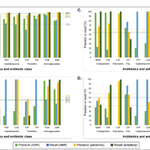
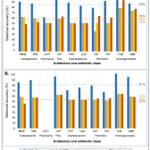
Thread: A breakthrough in fighting drug-resistant superbugs! Our paper in @GenomeMedicine introduces ARDaP, a game-changer in predicting antimicrobial resistance (AMR) in Pseudomonas aeruginosa. @Dr_ErinPrice @demadden9 @usceduau @CBioinnovation genomemedicine.biomedcentral…👇

Derek Sarovich retweeted

As a fraction of GDP, Australia's public spending on research is still well below even Trump's proposed cuts
It'd take 2 Trumps to get the US down to the Australian level
(NIH is ~0.16% of GDP, which Trump wanted to reduce to 0.10%; the NHMR+MRFF combined is 0.06%)

Earlier this year, the President’s budget proposed a 40% cut to the NIH budget.
This sparked an obvious research question:
What if the NIH had been 40% smaller in previous years?
Here’s what Pierre Azoulay, Danielle Li, Bhaven Sampat, and I found when we looked at grants that were at-risk of being cut in an alternative history with a smaller NIH budget:
- 51% of 21st century drugs have a patent that cites one or more articles funded by an at-risk grant
- 12% of drugs have more than a quarter of their patent-to-paper citations going to at-risk research
- 35% of drugs that acknowledge NIH support reference a grant that would have been at-risk
We were able to make these estimates because we have access to the real priority scores for all NIH grants made over 1980-2007. Since NIH mostly funds research by working down these priority scores until the budget runs out, we can identify the grants that would probably have been cut with a smaller budget.
Would anyone miss the research funded by these at-risk grants? To help assess that, we link these at-risk grants to drugs, focusing on all 557 FDA approvals for new molecular entities approved in the 21st century.
Most new drugs are protected by patents. We look at these patents to see if they cite research funded by at-risk grants. We find 51% of drugs have a patent that cites one or more articles funded by an at-risk grant.
This doesn’t mean 51% of drugs wouldn’t exist if the NIH had been 40% smaller. Various caveats cut in different ways (see discussion in the online appendix). But we take this as evidence that the benefits of at-risk NIH research are wide and diffuse.
We consider other ways to link drugs with at-risk grants. For example, we find that 12% of drugs have more than a quarter of their patent-to-paper citations going to at-risk research. See the paper for some examples of specific drugs.
Finally, it’s less common, but in some cases, drugs directly acknowledge support from specific NIH grants in their patents. Only 40 drugs acknowledge NIH grant support, but of that group, 14 (35%) acknowledge support from a grant that is at-risk.
Are drugs linked to at-risk research worse? We look at two proxies for drug value: whether a drug gets priority review at the FDA, and stock market reactions when a drug patent is announced. Yes, very imperfect, but we think still worth looking at.
We find that drugs that cite at-risk research are, on average, no less likely to get priority reviews at FDA and do not have worse implied valuations by the stock market. In short, we don’t have reason to believe drugs linked to at-risk research are worse.


Derek Sarovich retweeted

Evaluating the feasibility, sensitivity, and specificity of next-generation molecular methods for pleural infection diagnosis. @Dr_ErinPrice @DerekSarovich @p_t_bee @sola_olagoke journals.asm.org/doi/10.1128…

Derek Sarovich retweeted

Hello,
I am looking for a #Postdoctoral researcher with experience in bacterial genetics and antimicrobial resistance. Please send me a CV and a brief summary of your lab experience! Thank you!


Derek Sarovich retweeted

⚠️"COVID-19 has lasting deadly impact on traffic safety"
This essential key sentence:
"Our study points to an *ongoing* *disturbing* *trend* of *risky driving behaviors*, which we noted in previous research earlier in the pandemic"
Question for you:
Have you noticed a trend in the last four years of a disturbing increase in risky behaviour?

Derek Sarovich retweeted

Join us tomorrow to listen to @AUSSOCMIC visiting speaker Prof Colin Hill - in person G26, Griffith GC campus, or via Teams online. Info in flyer below. Teams link here - us06web.zoom.us/j/8498392247…


Derek Sarovich retweeted
Wow, @nature has retracted the 2020 Poore et al. cancer microbiome paper that we showed (journals.asm.org/doi/10.1128…) was deeply flawed. The retraction date is tomorrow so I can't yet read the official notice, but I'll update when I can @RetractionWatch @ProfBootyPhD

7/🤝 Collaboration: This work was made possible thanks to a collaborative effort among scientists, clinicians, and bioinformaticians. Special thanks to our co-authors and the funding bodies that supported our research!
Derek Sarovich retweeted

Madden and coll. present ARDaP, a novel tool for the prediction of antimicrobial resistance in P. aeruginosa.
The database of AMR genes and variants allows extensive investigation of resistome phenotypes in this pathogen. @Dr_ErinPrice @DerekSarovich
genomemedicine.biomedcentral…
Derek Sarovich retweeted

Now online! A genomic compendium of cultivated human gut fungi characterizes the gut mycobiome and its relevance to common diseases dlvr.it/T7CgL5